Hereditary Hematologic Malignancies
 Call Kai
 Learn
Learn Practice Test
 Spaced Repetition
 Match
Match Flashcards
 Knowt Play
1/45

There's no tags or description
Looks like no tags are added yet.
Name | Mastery | Learn | Test | Matching | Spaced | Call with Kai |
|---|
No analytics yet
Send a link to your students to track their progress
46 Terms
Red blood cells (RBCs)
Erythrocyte
Low RBCs
Anemia
**fatigue, pain
High RBCs
Erythrocytosis
**flushing, headache, blurred vision
White blood cells (WBCs)
Leukocytes
Low WBCs
Leukopenia
**infections, mouth sores
High WBCs
Leukocytosis
**fatigue, hives, itching
Platelets (Plts)
Thrombocytes
Low Plts
Thrombocytopenia
**bleeding, easy bruising
High Plts
Thrombocytosis
**blood clots, stroke
Hematopoiesis
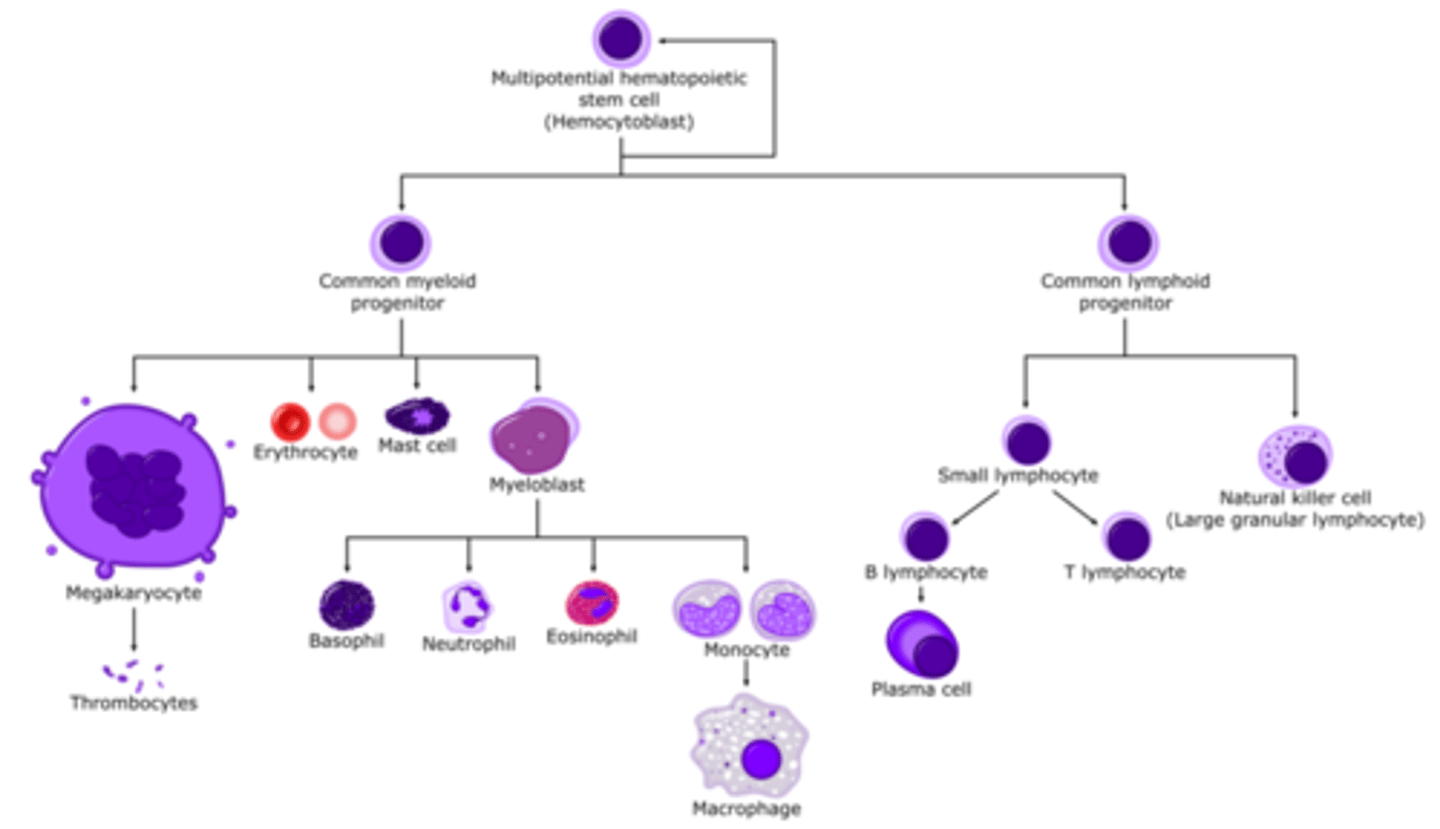
Leukemia
cancer cells are mainly in the bone marrow and blood
**acute vs chronic
**myeloid vs lymphoid
Acute
expedited diagnostic/treatment timeline
Chronic
has had leukemia for a while, monitoring, maybe no treatment yet
Lymphoma
cancer cells are mainly in the lymph nodes and other lymphatic tissue (blood can be involved)
**Hodgkin vs Non-Hodgkin
**b-cell vs t-cell
**indolent vs aggressive
Hodgkin lymphoma
Mr. Hodgkin is a young, cool guy, and you kinda want him, he's easier to treat (20s-30s or 70s-80s)
Non-Hodgkin lymphoma
That's not a name, that's something you should be seeing at older ages
MDS/AML average age of diagnosis
65
ALL average age of diagnosis
17
**ALL the children
HM workup
- peripheral blood sample (CBC)
- peripheral blood smear
- immunoglobulins (Ig)
- lymph node biopsy
- bone marrow aspiration and biopsy
- cytogenetics (i.e. karyotype, FISH, microarray)
- molecular genetics (site-specific testing, NGS panels/WES/WGS)
HM treatment
- chemotherapy (most types)
- radiation (lymphoma)
- HCT/HSCT/BMT
- immunotherapy
Important fhx questions for HMs
? HM dx and age
? abnormal blood counts
? easy bleeding and/or bruising
? recurrent or persistent infections
? immunodeficiency
? dermatologic findings
? congenital and/or developmental differences
? other tumors/cancers
? exposures
? consanguinity
Short telomeres cause...
ILD + pulmonary fibrosis
Increased risk for MDS/AML
What sample type should you use for a patient with a history of a HM?
Skin punch biopsy!
ANKRD26-related thrombocytopenia (thrombocytopenia 2)
Gene: ANKRD26 (mutations in 5' UTR)
Inheritance: AD
Characteristics: chronic thrombocytopenia, plt dysfunction, increased risk for MDS, AML, possibly other HMs
CEBPA-associated familial AML
Gene: CEBPA
Inheritance: AD
Characteristics: increased risk for early-onset AML (2y-50y)
RUNX1 familial platelet disorder with associated myeloid malignancies
Gene: RUNX1
Inheritance: AD
Characteristics: thrombocytopenia, plt dysfunction, eczema, psoriasis, increased risk for AML, MDS, ALL, possibly lymphomas
GATA2 deficiency
Gene: GATA2
Inheritance: AD (de novo)
Characteristics: cytopenias, immunodefiency, lung disease/infections, cutaneous and genital warts, lymphedema, hearing loss, blood clots, increased risk for BMF, MDS, AML, CMML in adolescence/young adulthood
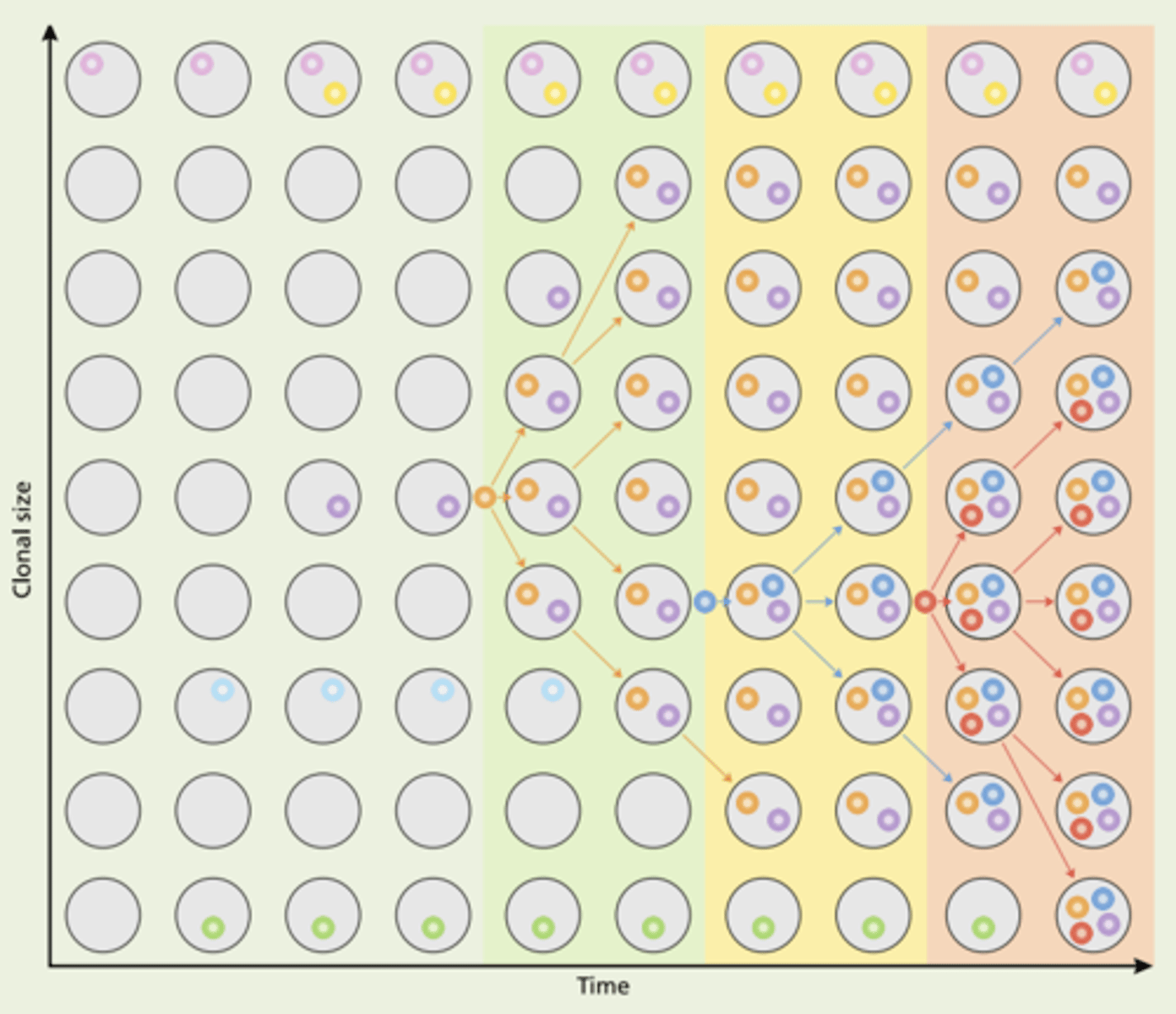
Clonal hematopoiesis
an age-related condition where hematopoietic stem cells acquire somatic mutations, causing them to produce blood cells with identical genetic changes, often leading to expansion of these clones
**increased risk for HM
Somatic reversion/rescue
A process by which a disease-causing allele is altered to escape the effect of a germline variant, can muddy genetic testing
**if suspicious, use cultured fibroblasts for germline testing
Hereditary HMs
1) Myeloid malignancy predisposition
2) Inherited bone marrow failure syndromes
3) Inherited platelet disorders
4) Lymphoid malignancy predisposition
DDX41-associated familial MDS and AML
Gene:
Inheritance: AD
Characteristics: cytopenias (aplastic anemia), macrocytosis, increased risk for MDS, AML, and possibly solid tumors
**two DDX41 variants in myeloid HM is highly suggestive of an underlying germline variant
Most common acquired variant in DDX41
p.Arg525His (R535H)
ETV6-thrombocytopenia and predisposition to leukemia (thrombocytopenia 5)
Gene: ETV6
Inheritance: AD
Characteristics: thrombocytopenia, increased risk for HM (B-ALL) and possibly other solid tumors
If you see a patient with B-ALL, think...
ETV6!
Li-Fraumeni syndrome
Gene: TP53
Inheritance: AD (de novo)
Characteristics: increased risk for HM and a wide variety of solid tumors
If you see a patient with low-hypodiploid ALL, think...
TP53!
Other conditions associated with ALL
AT
Bloom syndrome
CMMRD
Diamond-Blackfan anemia
Down syndrome
Fanconi anemia
DDX41-associated familial MDS & AML
GATA2 deficiency
RUNX1-associated familial B-cell ALL
Telomere biology disorders
Other conditions associated with MDS/AML
Diamond-Blackfan anemia
Thrombocytopenia 5
Fanconi anemia
Li-Fraumeni syndrome
Telomere biology disorders
X-linked immunodeficiency with magnesium defect, Epstein-Barr virus (EBV), and neoplasia (XMEN disease)
Gene: MAGT1
Inheritance: X-linked
Characteristics: chronic EBV infection, autoimmune cytopenias, cutaneous warts, mouth sores, sinopulmonary and ear infections, increased risk for EBV-associated lymphoproliferative disorders and lymphoms risk (lymphadenopathy, splenomegaly)
IBMF syndromes
1) Fanconi anemia
2) Shwachman-Diamond syndrome
3) Diamond-Blackfan anemia
4) telomere biology disorders
Telomere biology disorders
aka short telomere syndromes (STS) and dyskeratosis contenita
IMBF workup
Germline genetic testing
Functional laboratory studies (chromosomal breakage analysis, telomere length measurements, adenosine deaminase)
Fancona anemia (FA) characteristics
- bone marrow failure (pancytopenia)
- skeletal issues
- short stature
- microcephaly
- café au lait spots
- underdeveloped reproductive organs
- increased risk for AML
**usually diagnosed via chromosome breakage analysis
Genes associated with FA
AR: BRCA1, BRCA2, BRIP1, PALB2, RAD51C
AD: RAD51
X-linked: FANCB
FA clinical HM/CA timeline
5-15y: BMF
17-20s: HMs (AML, MDS)
Adulthood: solid tumor risk, especially oral cancers
Genes associated with telomere biology disorders
AR: CTC1, NHP2, NOP10, STN1, WRAP53
AR/AD: ACD, PARN, POT1, RTEL1, TERT
AD: NAF1, RPA1, TERC, TINF2, ZCCHC8
X-linked: DKC1