PSYC2012
 Call Kai
 Learn
Learn Practice Test
 Spaced Repetition
 Match
Match Flashcards
 Knowt Play
1/154

There's no tags or description
Looks like no tags are added yet.
Name | Mastery | Learn | Test | Matching | Spaced | Call with Kai |
|---|
No analytics yet
Send a link to your students to track their progress
155 Terms
What is the difference between an inquiry and a critical inquiry
An inquiry involves asking questions with the aim of discovering something knew - we do this in everyday life, whereas a critical inquiry is a form of inquiry that involves error detection and self correction - use the scientififc method
What is a research question
A research question is a focus for a critical inquiry and should be braod in that it doesnt need to specifiy details however should be specific enough to guide research
what is a hypothesis
A general claim about the world
what is a prediction
a more precise version of the hypothesis taking into account the details of the context
what is a theory
a set of ideas intended to explain facts or events
what is a variable
anything that varies
what is a constant
something that doesnt vary
what is the dependent variable
the outcome or response variable measured by the researcher
what is the independent variable
a potential cause of the depedent variable, manipulated by the researcher
what is a construct
an ab stract concept used to describe and explain mental processes, behaviours, or traits that cannot be directly observed
what is operationalisation
translate the experience of pain (construct) into a variable that can be analysed
operationalisation refers to the specification of procedures designed to represent a concept
what is measurement?
the assignement of numerals to objects or events accoriding to rules
features of nominal measurement
same vs different (eg Bpsych vs Barts)
features of ordinal meausrement
categorical, same vs different, greater vs less than (hierachy) eg 1st or 2nd year uni
features of interval meausrement
continous data, same vs different, greater vs less than, equal intervals eg temperature
features of ratio measurement
continous data, same as interval measurement but has an inherent 0 (distance, mass)
what is psycometric validity
the appropriateness, usefulness, meaningfulness of test scores and their interpretation
what is face validity
the degree to whihc a psycholigcal assesment appears to measure what it is intending to measure
what is convergent validity
high correlations with other instruments designed to measure the same construct
what is divergent validity
low correlations with other instruments deisgned to measure the same construct
what is criteria validity
the degree to which a test correlates with one or more criteria
what is construct validity
scores or outputs accurately represent the content area they are trying to represent
what is reliability
the degree of stability of measurement outputs across time and contexts
what is internal consistency
the degree of consistency in responses to scales measuring the same construct
what is test-retest reliability
the stability of scores across time - requires data collected on multiple occasions
what is inter-rater reliability
the relation between two or more independent judges of an item, scale, instrument or construct
what is a distrubutiuon?
a set of observations often represented by a frequency table or a histogram
what is central tendency?
what value best represents the centre of the distribution
what is dispressin?
how spread out the observations are
what is the mode?
the score with the highest frequency
what is the median?
the score that divides the distrubtuion into two equal parts
what is the mean?
the sum of scores divided by the number of scores
what is the formula for the median
N+1/2 where N = number of scores eg 150+1/2 = 75.5 -> avergae the 75th and 76th score = 5
why can means misrepresent data?
Because they are more sensitive to extreme values than modes and medians
what is range?
the difference between the largest and smallest score
what is the interquartile range?
the difference between the upper quartile (75%) and the lower quartile (25%) (Q3 - Q1)
how can we capture a variable?
deviation scores - how much a score deviaties from the mean (X - mean)
what is population variance?
the sum of the squared deviation scores divided by the number of scores
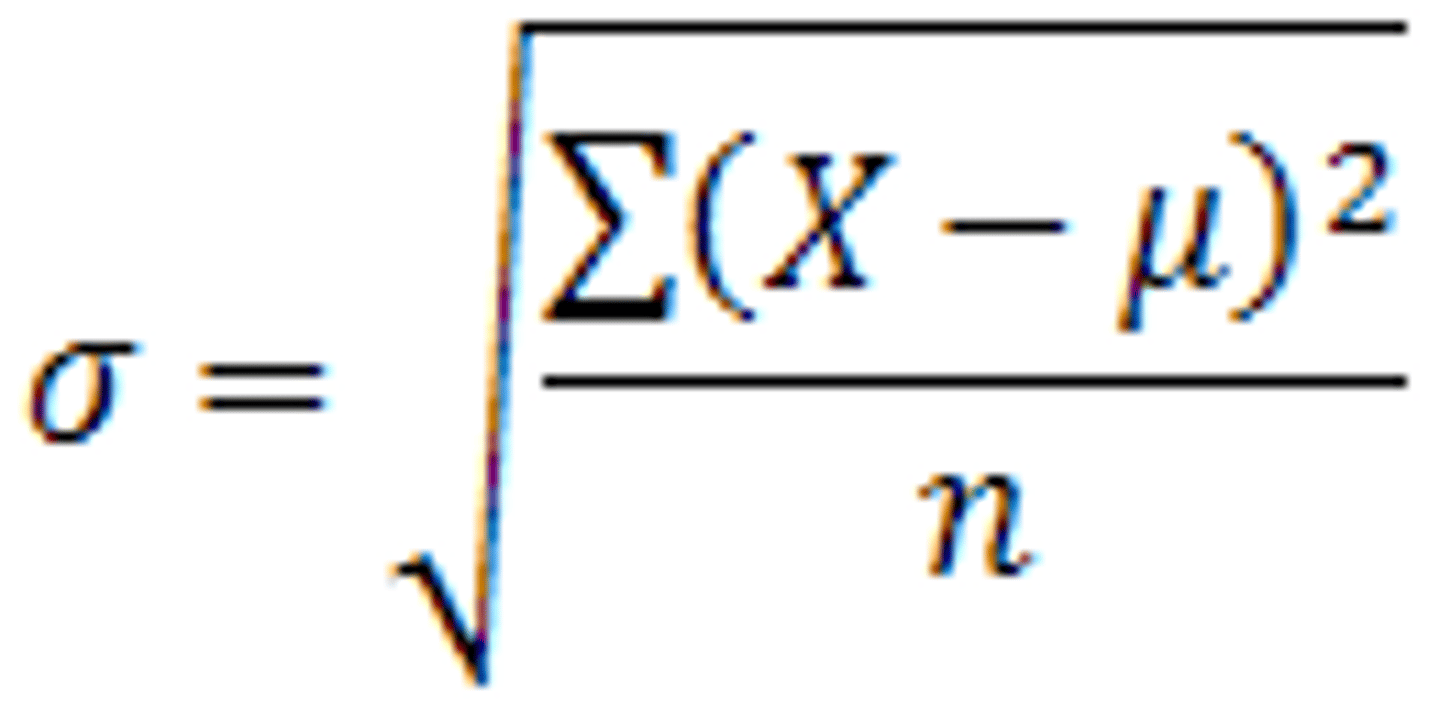
what is the standard deviation
the square root of the variance
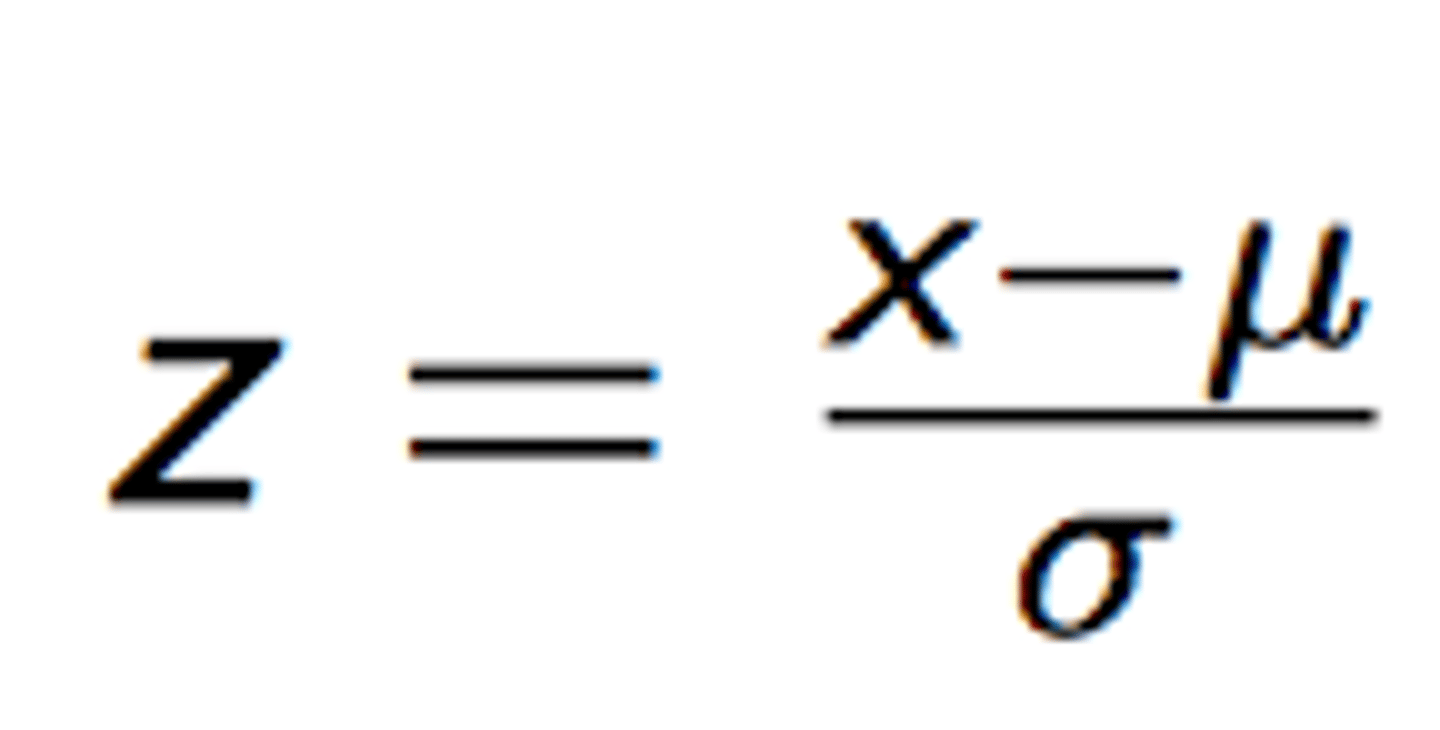
what is a z score
a standardised score that indicates har far above or below a score is from the mean
Z = (X - deviation score)/ standard deviation
standard distribution skews
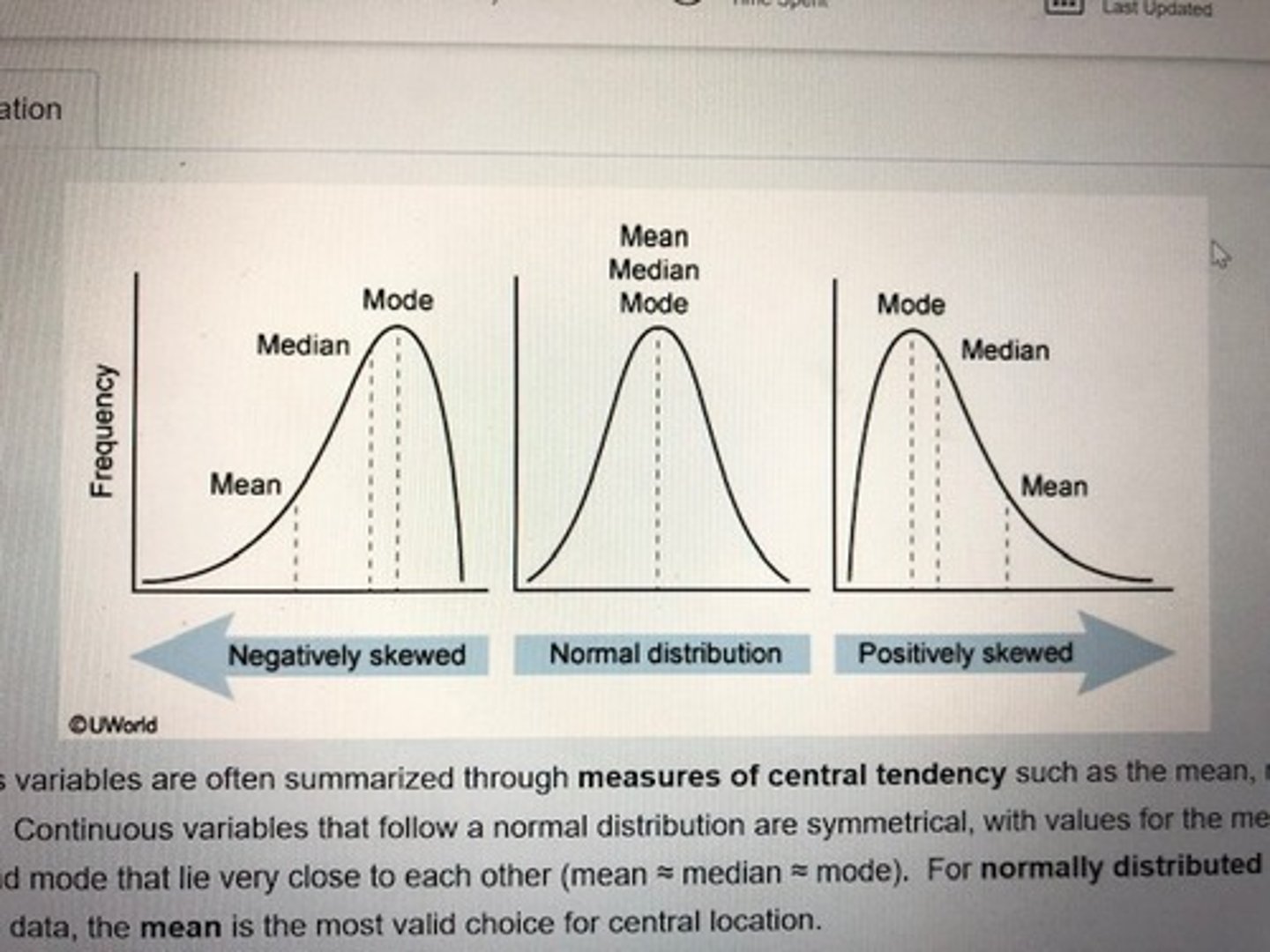
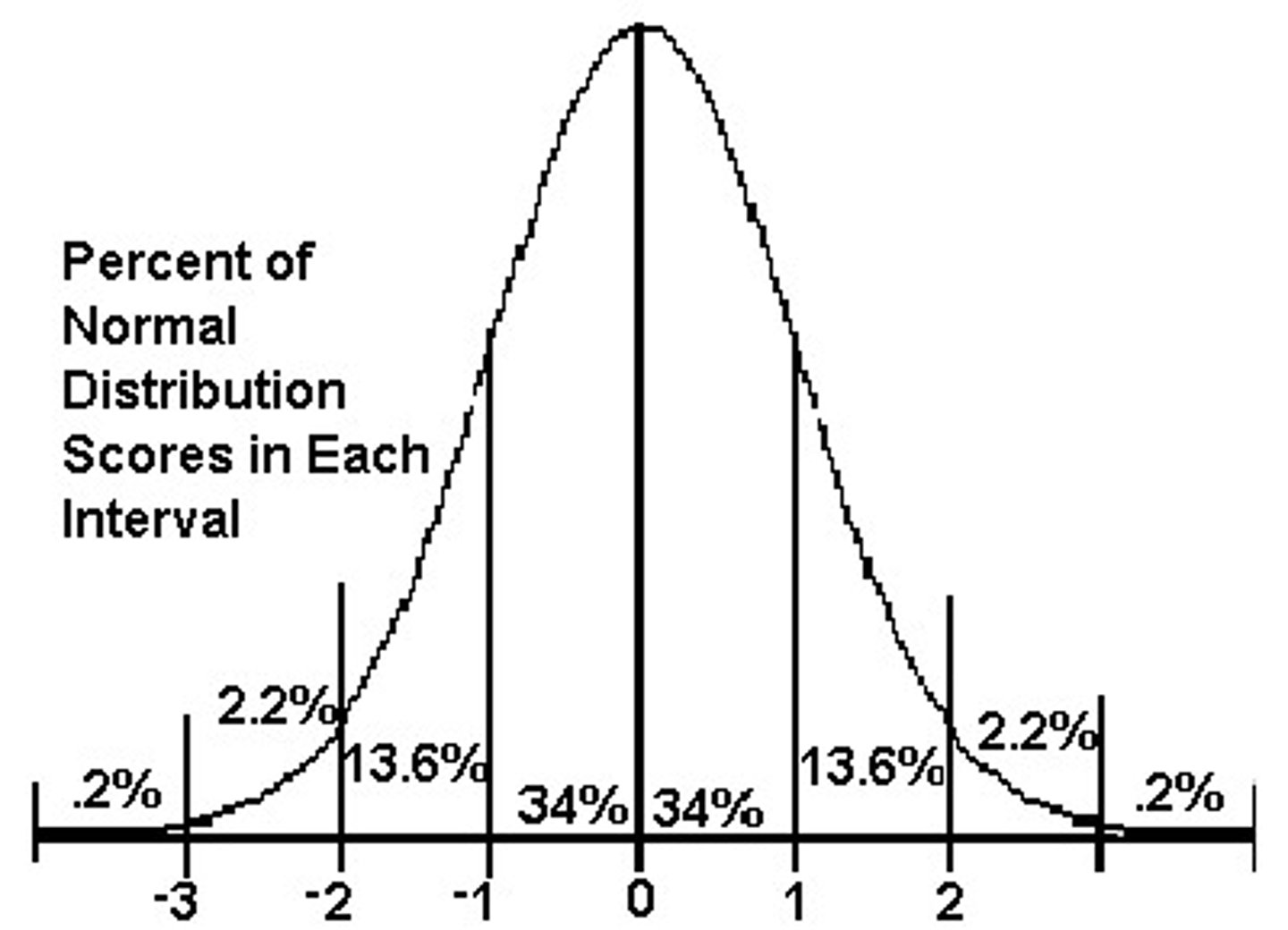
what are some properties of the standard normal distrubtution
- mean = 0 and sd = 1
- the total area under the curve is 1
standard normal distrubution
z score formula
standard deviation formula
what is a. population?
all cases with the target characteristic (eg people with chronic pain)
what is a sample?
a sample is a subset of the population (10 people with chronic pain were required from the clinic)
what is a null hypothesis
an assumption that the intervention had no effect/association
- denote by Ho
- we are seeking evidence against our null
what is an alternate hypothesis
when there is an affect or association
what is a p-value
the probability of obtaining the observed results if the null hypothesis is true
- if this probability is small (<0.05) we reject the null
- if this probability is big (>0.05) we obtain the null
what is the sampling distribution of the mean
The sampling distribution of the mean is the distribution of the means from all possible samples we could have obtained
- the mean of all the sample means = the population mean
- distribution of all the sample means = the sampling distribution of the mean
variance of the sampling distrubtuion of the mean
- will be smaller than the population variance becuase a sample will always better estimate the population mean than any other score will
what is the standard error
the standard error is the same as the standard devaition of the sampling distrubtuion of the mean found
what is the central limit theorum
- the shape of the sample distribution of means
- no matter what the shape of the original distribution as N increases the sampling distribution of the mean approximates a normal distribution
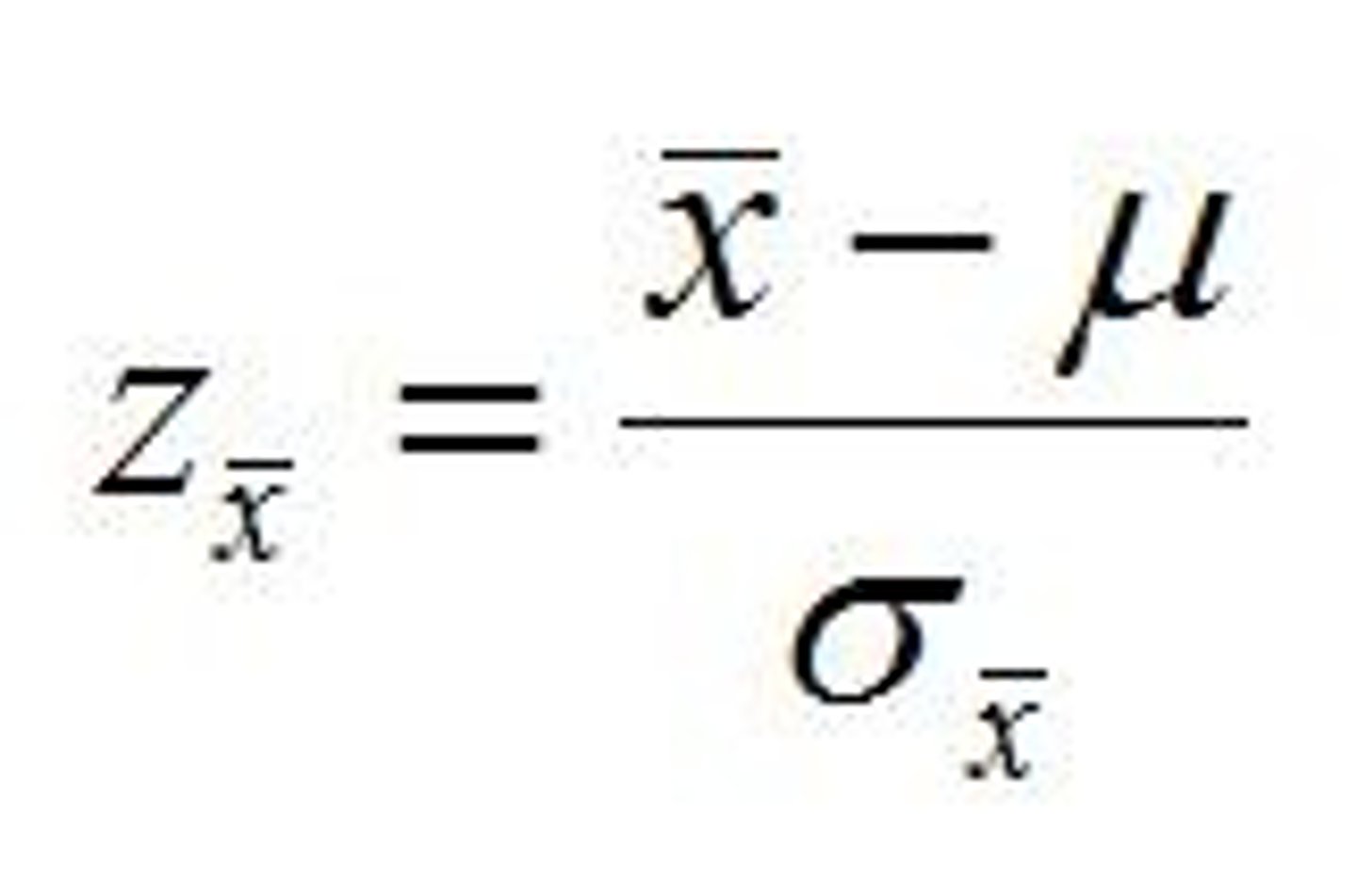
z test for a single mean (one sample z test)
- finding where our sample sits on the distribution of hypothetical sample under the null hypothesis
- if we assume the population variance is known we run a one sample z test
- formula = deviation of a sample mean/standard error
one tailed vs two-tailed test
non-directional HA = two tailed
directional HA = one tailed test
what is qualitative analysis
the analysis of non-numeric data (a phenoememn, a subjective experience)
when do we use qualitative analysis?
- when the research question demands it
- when we want to evaluate the process of implementing an intervention or to examine the experience of the people experiencing the intervention
when should i use qualitative analysis
usually conducted on its own or as part of a triangulation of research known as mixed methods research
- tends to be conducted in naturalistic settings rather than experimental
what is the philosiphical division in research methods
qualitative and quantitative methods of research have a history of philosophical division between them. qualitative methodologists have often labelled quantitative methodologists as "positivist" and themselves as "constructivists"
what is inductive reasoning?
qualitative research tends to be more inductive than deductive meaning it involves observation -> conclusion, where as decutive research has hypotheses-> data collection and analyses -> conclusion on hypothesis
what are features of qualitative research?
goals = aim to understand phenomena in rich detail
sampling = small, non random sample
variables = examine variables holistically
analysis = search for patterns and themes
less concerned with generalisability
build theory as you go
what are some limitations of qualitative research
- soft, because its not mathematical
- relies on the skills of the research
- high susceptibility to social desirability and confirmation bias
- methodology is less well understood
- less rigour
what is data saturation
continuing collecting data until no new information is being provided by participants
types of qualitative data collection
structured interviews, semi structured interviews, in depth interview, focus groups, observational methods
what is a structured interview
- a set of questions (around 20) asked in the same order and same way to each partipant
what is a semi-structured interview
- around 6-8 questions that vary based on the partipants response
what is an unstructured interview
around 1-3 question areas, an open statement
what is the role of the interviewer
to be objective (behave consistently and authentically) and interactive (acknowledge own subjectivity and interact in an interactive process
where to interviwew
hospital, in persons home, telephone
steps for interview process
preperation, beginning interview, warm up questions, interview questions, ending the interview
what is a focus group?
A focus group is a group of around 6-10 people who freely talk, guided by a facilitator on the themes considered important to the investigation
- partiapnts are selcted from a target group whose opions and ideas are important to the researcher
- may be selected to have variety
- usually recorded, researcher takes notes
- aim to promote confidentiality, freedom of expression, non judgement
what are some limitations of quantiative research
- ignores nuances and complexities of a construct
- doesnt say what aspects of the intervention are effective
- by treating the group as a homogenous group, overlooks individual and organsiational factors of the construct that cant be captured through scores alone
an example of a qualitative research question
How do healthcare workers experience and perceive the impact of an app-based mindfulness intervention on their burnout and overall well-being?
- acknowledges the parts of the intervention and the experience of burnout
- shows the features of the intervention that are sucessful
- state what type of data collection you're using
what is reflexivity in qualitative research?
a recognition that neutrality can never fully be attained and that research is influenced by the researcher
a set of continuous, collaborative and multi-faceted practices through which researchers self-consciously critique and appraise how their subjectivity and context influences the research process
what is the difference between a z-test for a single mean and a t-test
a z-test = comparing the mean of a single sample to a known value when you know the population variance.
A t-test is when you don't know the variance
- use of degrees of freedom estimates
what are biased and unbiased estimators?
the sample mean is an unbiased estimator of the population mean, the sample variance is a biased estimator of the population variance
what are degrees of freedom?
the number of observations minus the number of things being estimated
- N observations used to estimate one mean
what is the formula for the estimation of population variance
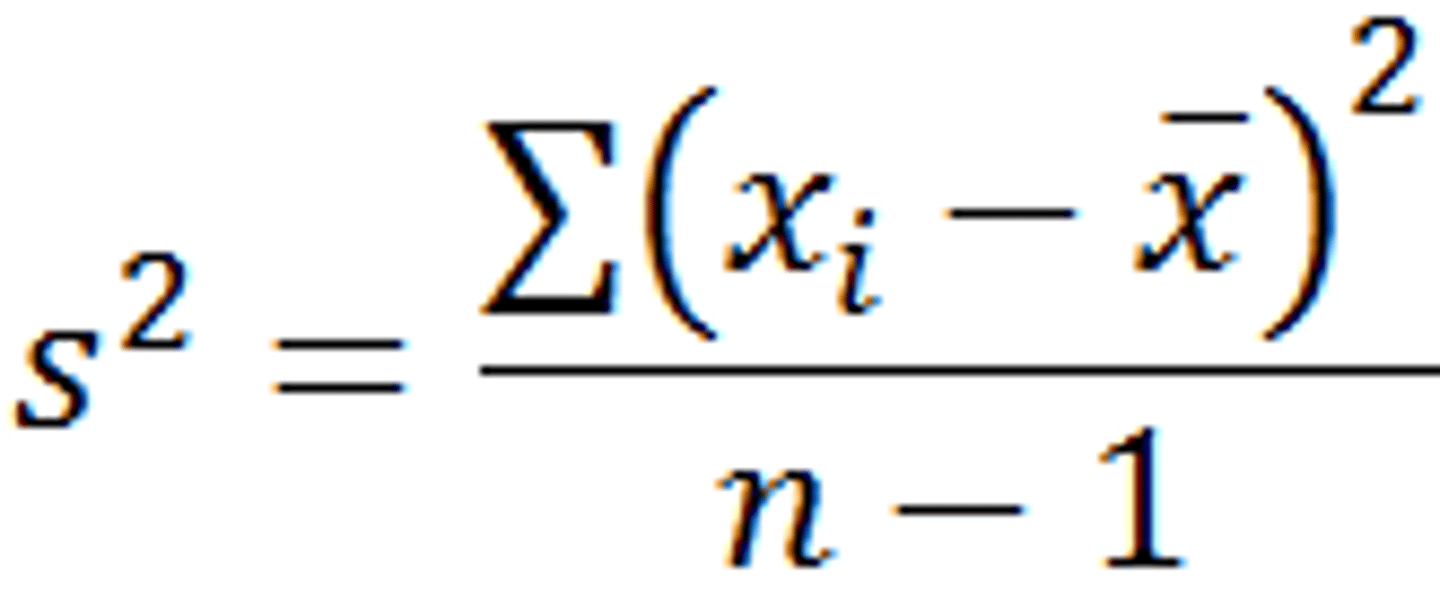
when should you do a z test vs a test
z test = when the population standard deviation is known
t test = when the population standard deviation is not known (estimated)
how to find estimated standard deviation
1. find sums of squared deviations
2. square root of the sums of squares divided by the degrees of freedom
what is the formula for standard error
estimated standard dviation/ square root of n
what is the t test formula
sample mean - mean/standard error
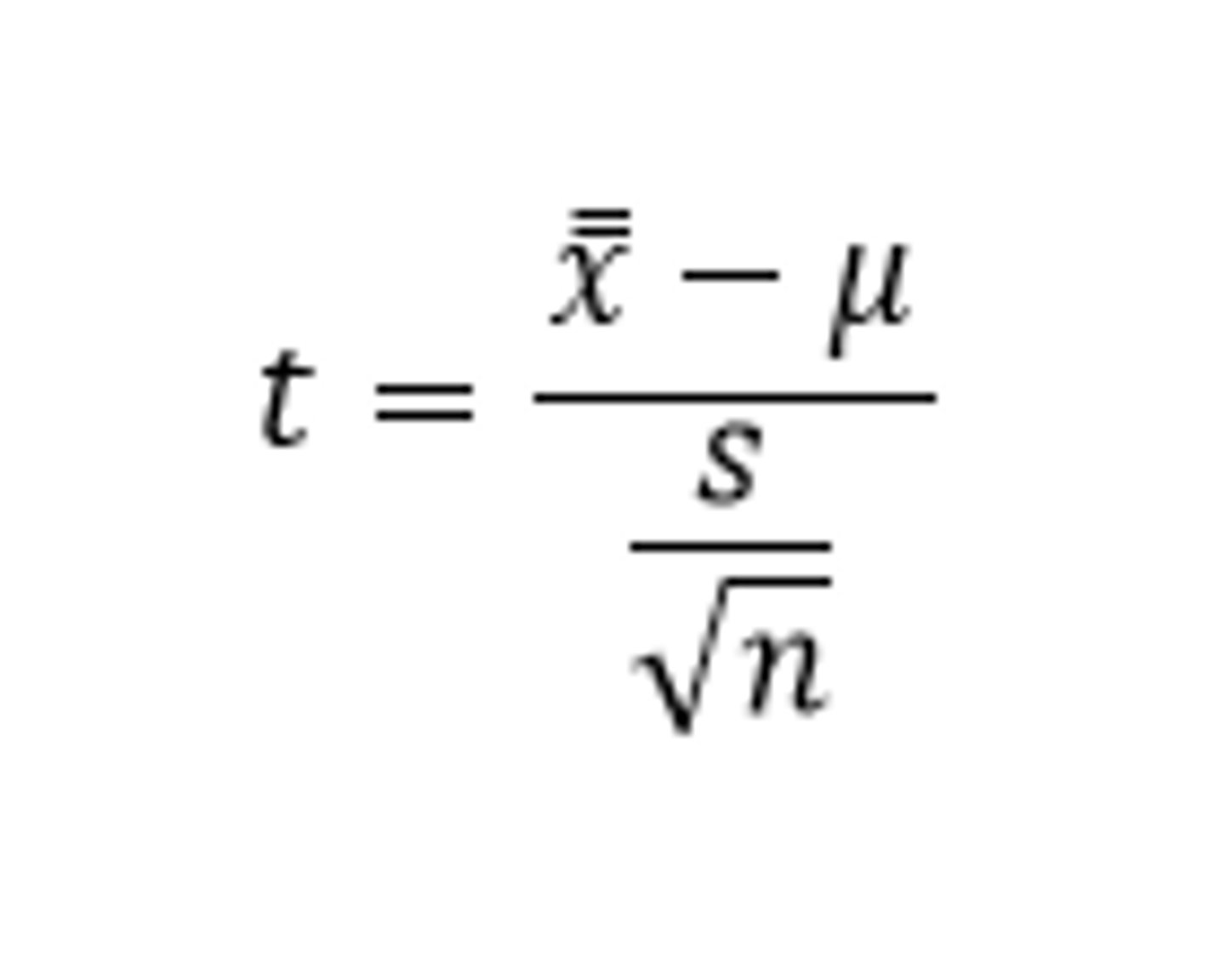
how to write a statistical conclusion
mean pain interference scores of a sample of people who completed a pain management intervetnion (M = ?, SD = ?) were signficantly lower than the normative mean for pain interference (M=7), t(9) = -2.68, p = 0.013
what id the alternative hypotheiss is non directional?
doesn't change our conclusion, still reject the null hypothesis
what is standard error?
standard error is how much on average we expect each sample mean to vary from another sample mean of the same sample size
what is the difference between a point estimate and an intervale estimate
a point estimate = sample mean
interval estimate = sample mean +/- errpr
what is a confidence interval?
sample mean +/- 2 standard errors
- usually 95%, 95% correspendods to a two tailed signficance test with alpha=.05
- sample mean +/1 (crititcal t (the value that cuts of .o5 x standard error)
what is a related or paired samples t-test
the data points are paired because they come from the same sample measured under the same conditions at two different points in time. (pre and post intervention)
- same formula except you use difference scores
X1 - X2 - find the diffrences mean and the difference sums of squares
what happens if you swap how you define the difference scores
same variability, variacance, standard deviation, standard error will be the same, p value will be the same whetehr you do X2-X1 or X2-X1
what is a matched sample?
two samples from which each individual in one sample is matched to an individual in another sample
what are the advantages of a repeated measures design
reduces error variance by reducing indiviidual differences
each person acts as their own control
what are the disadvantages of a repeated measures design
carry over effects, not always possible
what is within-subjects counterbalacing
each partipant tries the drug in an ABBA order
- drug followed by placebo, then placebo followed by drug
- if you have two or more treatments in a within subjects design you have to consider order effects
what is a type 1 error?
rejecting the null hypothesis when it is true (alpha)
what is a type 2 error
retaining the null hypothesis when it is false (Beta)
what is power
1 - beta (probability of rejecting null when it is false)
correct decision
retaining null when it is true = 1 - alpha
what is an independent samples t-test
used to examine whether there is a difference, on average, in scores between two participant groups
what assumptions do we need to make about a dataset?
1. the two groups are independent and randomly sampled
2. the dependent variable is meausred on an interval scale
3. the dependent variable is normally distrubuted - if groups have equal n not much of a problem
4. there is homogeneity of vairnace in the two groups - only a problem when n is not equal between groups