Sterilization/Disinfection
 Call Kai
 Learn
Learn Practice Test
 Spaced Repetition
 Match
Match Flashcards
 Knowt Play
1/11

There's no tags or description
Looks like no tags are added yet.
Name | Mastery | Learn | Test | Matching | Spaced | Call with Kai |
|---|
No analytics yet
Send a link to your students to track their progress
12 Terms
What are the two types of Sterilization/Disinfection
Two types
Physical
heat, irradiation, filtration, mechanical removal (washing)
Chemical
Use of any one of a variety of antimicrobial chemicals
Define:
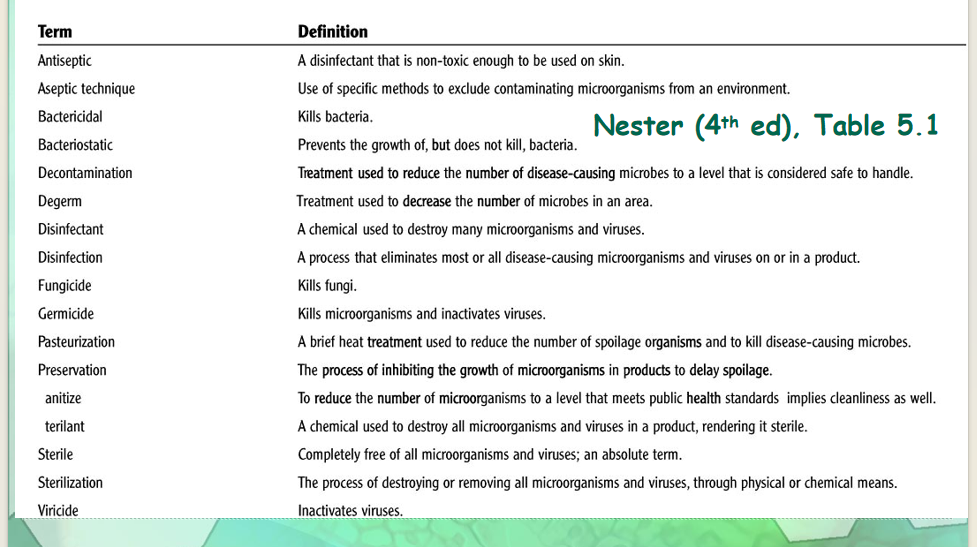
Sterilization
Disinfection
Sanitized
Preservation
Definitions:
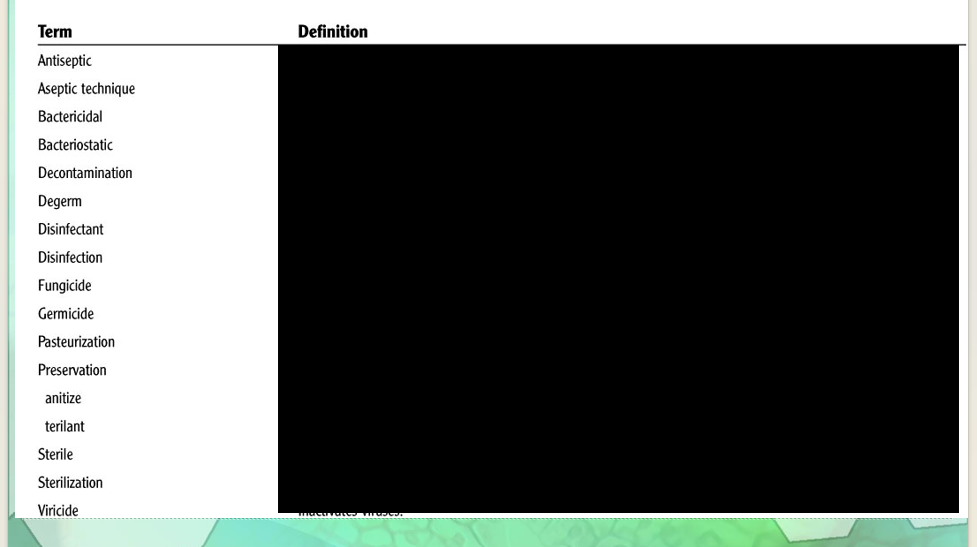
Sterilization: process of removing (destroying) all microorganisms
Disinfection: process which eliminates most (or all) disease-causing microorganisms and viruses on a surface
Biocides or (germicides)
Antiseptics: Disinfectants used on body surfaces (skin)
Sanitized: substantially-reduced numbers of microbes
Items are “clean” in appearance
Preservation: Delay spoilage of foods
What is Selection of an antimicrobial procedure is based on:
Type of microorganism
Number of microorganisms
Environmental conditions
Potential risks of infection
Describe the type of microorganisms and how they’re hard to disinfect
Bacterial endospores
Waxy Cell wall
Pseudomonas sp.
Naked Viruses
Describe how the environmental conditions can affect sterilization
Describe the different categories of potential risk of infection
Types:
Bacterial endospores
Highly resistant to standard sterilization treatments
Req. extreme heat + chemical treatments
Waxy cell wall (Mycobacterium)
Resistant to many chemical treatments
Require toxic forms of disinfectants
Pseudomonas sp.
can grow in presence of disinfectants
Common cause for hospital-acquired (nosocomial) infections
Naked viruses (lack a lipid envelope)
More resistant to disinfectants (polioviruses)
Enveloped viruses (HIV) is less resistant
Env. conditions:
Presence of dirt, grease, and body fluids can interfere
Therefore must clean items before sterilizing
Categories of Potential Risk of Infection
Critical
direct contact, penetration of body tissues
Needles, scalpels
Semi-critical
contact w/ mucus membranes but does not penetrate
Endoscopes, endotracheal tubes
Non-critical
contact with unbroken skin
Countertops, stethoscopes
Describe the different methods of Sterilization
Boiling Water
Pasteurization
Ultra-high-temperature method
Autoclave
Flash Autoclave
Dry heat
How do you know sterilization is complete?
Sterilization Techniques:
Boiling water
100 degC, 10 min
Pasteurization
Function:
Reduction of microorganisms which cause spoilage
Tuberculosis, salmonellosis, typhoid fever
NOTE: HISTORY: originally used to moderately heat wine to reduce the number of microorganisms present in wine
Method:
62 degC, 30 minutes
72 degC, 15 seconds
Ultra-high-temperature method
Function:
for Products such as single-serving cream containers
Lunch-size milk and boxed juices
Method:
140-150 degC for a few seconds, then cooled → aseptically packaged
Pressurized steam (autoclave)
Mech:
Heated water forms steam → pressure → increased temperature
can kill endospores
Method:
15 psi, 121 degC for 15 minutes
Flash Autoclaving (rapid sterilizing)
Method
135 degC, for 3 minutes
132 degC under pressure for approximately 4.5 hrs is believed to destroy prions
Dry Heat:
Flame-sterilizing an inoculating loop
Glass Petri dishes + pipettes are sterilized in ovens at temperatures in the range of 160 degC to 170 degC
can damage + deform
Sterilization indicators:
test using Bacillus stearothermophilus (optimal growth @ 55 degC)
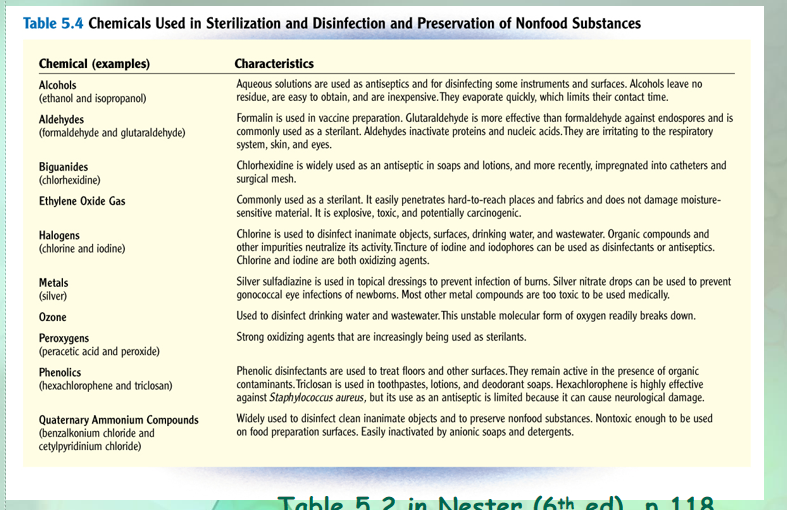
Describe the different Germicidal Chemicals
Alcohols
Not effective against
Mech:
Aldehydes
Mech:
Uses:
Drawback:
Ethylene oxide (gas)
Mech:
Uses:
Drawback:
Halogens
Chlorine
Ex:
Uses:
Drawback:
Iodine
Mech:
Hydrogen peroxide
Uses:
Drawback:
Phenol compounds
Mech:
Drawback:
Quaternary ammonium compounds (Quats)
Mech:
Germicidal Chemicals
Alcohols
Not effective against
bacterial endospores,
naked viruses
Mech:
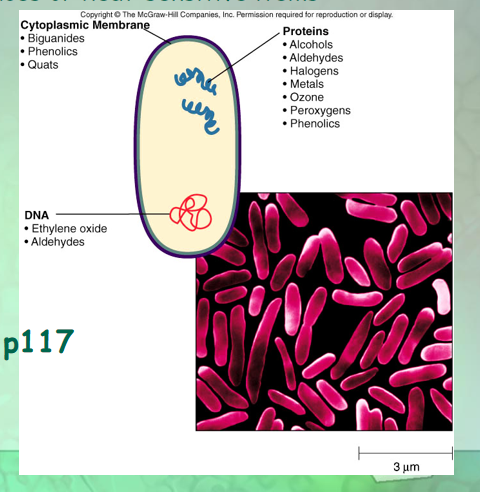
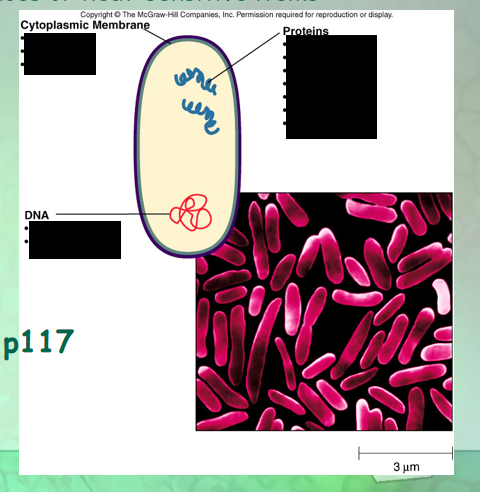
coagulating enzymes + essential proteins → damages lipid membranes
Aldehydes
Mech:
Inactivates proteins and nucleic acids
Uses:
2% alkaline glutaraldehyde: treat heat-sensitive medical items
10-12 hrs immersion kills all microbial life, endospores, and viruses
Drawback: Toxic
Ethylene oxide (gas)
Mech:
Reacts with proteins
Uses:
Kills microbes, endospores, viruses
Penetrates well into a variety of materials
implants, pacemakers, electrical equipment, disposables
Drawback: Mutagenic
Halogens
Chlorine
Ex:
10% bleach – cheap, effective for disinfecting surfaces
Uses:
Destroys all types of microorganisms, viruses
Drawback:
Irritating to skin and mucus membranes
Iodine
Mech:
Linked to carrier molecules (iodophores)
In this way, not as irritating to skin
Hydrogen peroxide
Uses:
good disinfectant
Drawback:
Cells that uses aerobic metabolism → inactivate hydrogen peroxide via catalse
however, enzyme activity is low in microorganisms
Phenol compounds
Mech:
Destroy cytoplasmic membranes of microorganisms
Denatures proteins
Wide range of activity, including Mycobacterium
Drawback: Irritating to skin, unpleasant odor
Quaternary ammonium compounds (Quats)
Mech:
Cationic detergents
Attracted to (-) charged cell surfaces of many microorganisms → rxt w/ cell membranes
Reduces Liquid surface tension → efficient in washing away organic material
Describe how filtration can be used to sterilize microorganisms
Filters
Composed of
Mech
USes
List the uses of HEPA
filters:
Composed of:
inert materials such as cellulose acetate, cellulose nitrate, polycarbonate
Mech:
Contain pores of varying sizes → microbes of certain sizes (0.2 – 0.45 microns) gets stuck
Uses:
sterilize liquids which are heat-sensitive
HEPA (High-efficiency particulate air filters)
Uses:
Removes microorganisms greater than 0.3 microns in size
specialized hospital rooms
Biological safety cabinets
Laminar flow hoods
handling infectious microorganisms
Describe how radiation can control microbial growth
X rays
Gamma Rays
UV
X-rays
Short wavelengths, high energy
Gamma rays
Produces reactive molecules
superoxide, hydroxyl free radicals
Ultraviolet
Damages DNA by creating thymine dimers
difficult for DNA replication
How does one make a non-perishable
Chemical
Benzoic, sorbic, propionic acids
Nitrates, nitrites
Hazrdous b/c conversion to nitrosamines (carcinogenic) via heat
Low-temperature
Growth = temperature-dependent
Enzyme Inhibition
ice damages microbial cells
Reducing water availability
Adding salt or sugar
Drying, lyophilization (freeze-drying)