Class V
 Call Kai
 Learn
Learn Practice Test
 Spaced Repetition
 Match
Match Flashcards
 Knowt Play
1/76

There's no tags or description
Looks like no tags are added yet.
Name | Mastery | Learn | Test | Matching | Spaced | Call with Kai |
|---|
No analytics yet
Send a link to your students to track their progress
77 Terms
use of what restoration material should be avoided in the esthetic zone
amalgam
what is the esthetic zone
MB of maxillary 1st molar to the MB of the opposing maxillary 1st molar
Type of lesion that class Vs are
smooth surface
direction of the triangles in a Class V lesion
apex to base at DEJ
(base of triangle in enamel, point at DEJ)
Class V caries are best detected by
visual and tactic evaluation
Where are you looking for Class V lesions
between the height of contour and the gingival margin
If there is a halo present around the Class V lesion, what does that indicate?
demineralization
extensive decay
in a class V lesion, decay can frequently extend
subgingival
extensive class V lesions can indicate ____ that will not become fixed just from restoration
underlying problems (poor hygiene, poor diet, medications)
If there is an ____ lesion in the class V lesion location, there is typically no evidence of decay
abrasion
* is this correct?
5 criteria when determining if a class V abrasive lesion needs restoration
possible pulp exposure
sensitivity issues
esthetics
caries prone
weakened tooth
what is the preparation design for a class V abrasive lesion
bevel the enamel at the incisal
create slots at the gingival
if the class V abrasive lesion is shiny, meaning it is in the dentin, what do you do for the preparation design
use a large round bur on the slow speed to create micro mechanical retention
which tooth structure does not hold bonding well: dentin or enamel
dentin
when would you chose amalgam as your restoration material for a class V lesion
tooth is outside of the esthetic zone
tooth is hard to isolate (back molars)
root surface decay
crown margin repair outside of the esthetic zone
if the class V lesion you are restoring is hard to isolate, but in the esthetic area, what restoration material will you use
RMGI
if the class V lesion you are restoring is a crown margin repair, but in the esthetic area, what restoration material will you use
RMGI
when would you chose RMGI as your restoration material for a class V lesion
lesion is subgingival or root surface
RMGI has tolerance for
moisture
the outline form a cavity preparation is determined by
decay
what is important in a cavity preparation to ensure it has a resistance form
no unsupported enamel
in a class V cavity preparation, when are secondary retention features required for amalgam
incisal and gingival grooves are required both above and below the CEJ
in a class V cavity preparation, when are secondary retention features required for composite
incisal and gingival grooves are required below the CEJ
bevels are recommended above the CEJ
in a class V cavity preparation, when are secondary retention features required for RMGI
incisal and gingival grooves are required below the CEJ
if you are using composite for a class V cavity preparation, when are you able to make rounded line angles
when you are not restoring a lesion on the root surface
how do you ensure resistance in a class V cavity preparation when starting out in the enamel
angle the bur to parallel the enamel rods
what are the preclinical dimensions for the initial class V cavity preparation
'decay' extends between the transitional line angles
2mm incisial wall, 1.5mm gingival wall, 1.5mm height
flare mesial and distal to stay parallel with the enamel rods
4 options for gingival retraction when restoring a class V lesion
retraction cord
electrosurgery
perio flap surgery
212 retraction clamp
at what point in the class V restoration process do you pack the restoration cord
after the preparation is completed
describe the rubber dam application for a class V preparation
same as class I/II except you punch the hole for the lesioned tooth slightly more facial
describe the 212 retraction clamp
2 bows (facial and lingual)
2 jaws (facial and lingual)
describe how you place the 212 retraction clamp
place the lingual jaw first below the height of contour and then pull the facial jaw below the decay and height of contour
how do you stabilize poor 212 clamp stability
green stick compound
how do you apply the green stick compound on the 212 clamp
above and below both of the clamp bows with contact to the tooth underneath the bows
how do you prepare the green stick compound
hold it about 6 inches above a flame until it is warm and appears 'slumped'
place it in warm water to bring down the temperature before application
class V lesion preparation requirements are based on
location of the lesion
walls of the class V preparation must remain parallel to
enamel rods (when above the CEJ)
the minimum depth on the root surface (for retention features) for a class V preparation
axial wall depth of about 0.75-1 mm
2 things that proper axial depth allows
placement of retention grooves entirely in the dentin
avoid pulp exposures
3 things that holding the top of the handpiece parallel to the tooth surface does
uniform depth
uniform contour of the axial wall
90 degree cavosurface angles
what burs do you use on the slow speed to create retention groove entirely in the dentin
1/4 round bur
33.5 or 34 inverted cone
2 hand instruments you can use to plane and remove unsupported enamel for refinement
gingival margin trimmer
enamel hatchet
hand instrument you use to check retention
#17 explorer
what rotary instrument do you use for refinement
slow speed
when extending a class V preparation into the proximal, what two things are required to complete the prep's extension
lingual wall is in sound structure
you are slightly before the contact (preclinical)
when you are above the CEJ for a class V prep, use the ____ as a guide
DEJ
when you are below the CEJ for a class V prep, use the ____ as a guide
1 mm rule
if less than 1 mm exists between class V and III preps, what do you do?
connect the preps
you should prepare and restore class II and V preps
separately
why do you prepare class II and V preps separately
provide a solid surface to condense the amalgam during the class V restoration
how should you pack amalgam into the retention grooves for a class V restoration
add layers a little bit at a time
what is the carving procedure after applying the restoration material in the class V preparation
carve away the incisal and gingival to leave a bulge in the middle of the prep
what are the carving instruments used after applying the restoration material in the class V preparation
hollenback, side of condenser
what are the carving instruments you should NOT use after applying the restoration material in the class V preparation & why?
discoid-cleoid & ball burnishers
will make the surface concave
why can you not use a tofflemire for a class V restoration
prevents access for proper amalgam condensation
when do amalgam and composite need butt joint margins in their preparations
amalgam - above and below the CEJ
composite - below the CEJ
3 burs to use to extend the class V prep into the proximal
round bur, 56, 245 (best option)
when preparing a root surface class V lesion, it is important to place a ___ around the preparation
gingival retention groove
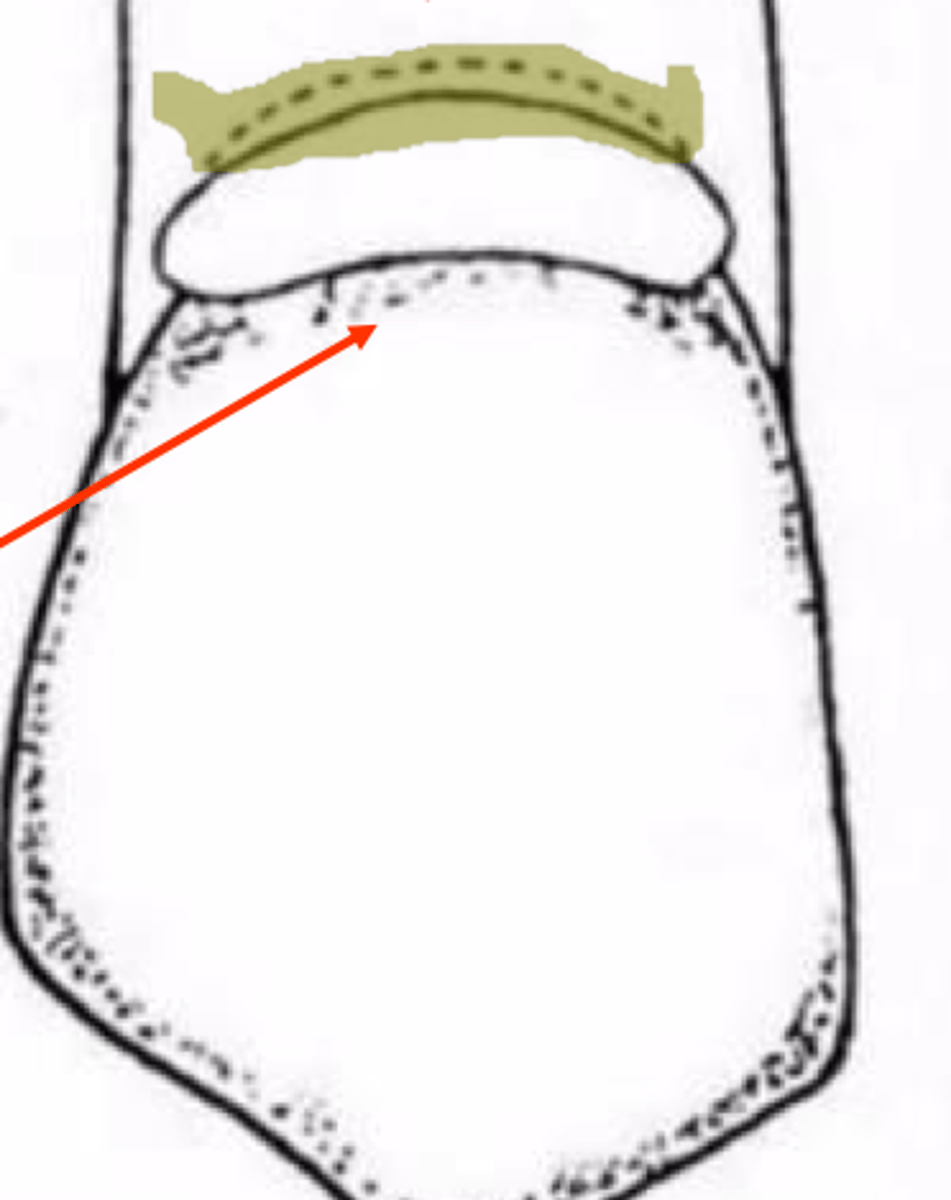
describe the sectional matrix placement
wrap the matrix around the lingual and both proximal surfaces
insert a wedge on both the mesial and distal
can add green stick for further stabilization
what does the sectional matrix help with in a class V amalgam restoration
dense packing and confinement
describe the dentist's seating position for an anterior class V restoration
between 11&1
behind the patient and over their nose
describe the dentist's seating position for a posterior class V restoration
rotate the patient's head to the side
what is Fuji LC capsule
radiopaque light cured reinforced glass ionomer
what class restorations can a Fuji LC capsule be used for
III, V
Sometimes class I (limited)
4 dental procedures you can use a Fuji LC capsule for
primary teeth restoration
core buildup
geriatric applications
base/liner
what part of the tooth is it recommend to not use Fuji LC on
marginal ridges
powder to liquid ratio (g) for Fuji LC
0.33/0.10
mixing time (sec) for Fuji LC
10
working time (minutes & seconds) for Fuji LC
3:15
light curing time (sec) for Fuji LC
20
depth of cure (A2, mm) for Fuji LC
1.8
when using Fuji LC, prepare the tooth using standard techniques and ___ is not necessary
extensive mechanical retention
when using Fuji LC for pulp capping (IF NEEDED ONLY), first place
calcium hydroxide
what is the cavity conditioner of Fuji LC recommended for
removal of smear layer
how to activate the Fuji LC capsule
shake the capsule
tap on side to loosen powder
push plunger for 2 seconds to activate
mix for 10 seconds at high speed
how to properly activate the Fuji LC capsule
fully press the plunger down (prevents incorrect mixing ratio)
right before mixing (use it ASAP after)
how to finish using Fuji LC
water-spray
either with a diamond bur, silicone paint, or polishing strips