Coenzymes cofactors and prosthetic groups
 Call Kai
 Learn
Learn Practice Test
 Spaced Repetition
 Match
Match Flashcards
 Knowt Play
1/4

There's no tags or description
Looks like no tags are added yet.
Name | Mastery | Learn | Test | Matching | Spaced | Call with Kai |
|---|
No analytics yet
Send a link to your students to track their progress
5 Terms
What are cofactors and how are they helpful
Cofactors are inorganic molecules which help enzyme and substrate bind together and do not directly participate so are not used up or change
What is precursor activation
Many enzymes initially ‘precursor’ enzyme and only activated in correct conditions, cofactors are added to change tertiary structure in active site
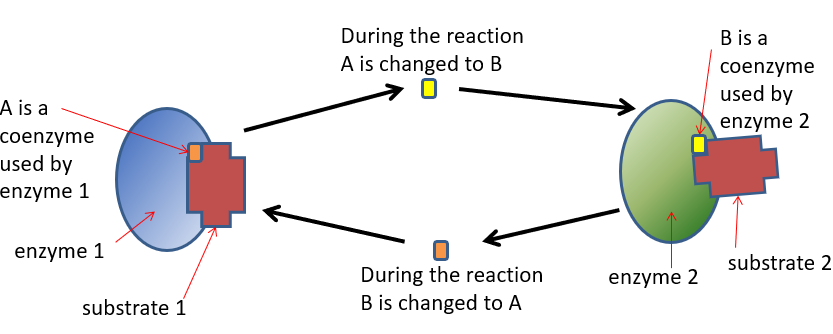
What are coenzymes and how are they useful
They are organic molecules often vitamin molecule, they bind temporarily to active site before or the same time substrate binds, and reduce activation energy by transferring chemical groups. They are chemically changed and need to be recycled to original state.
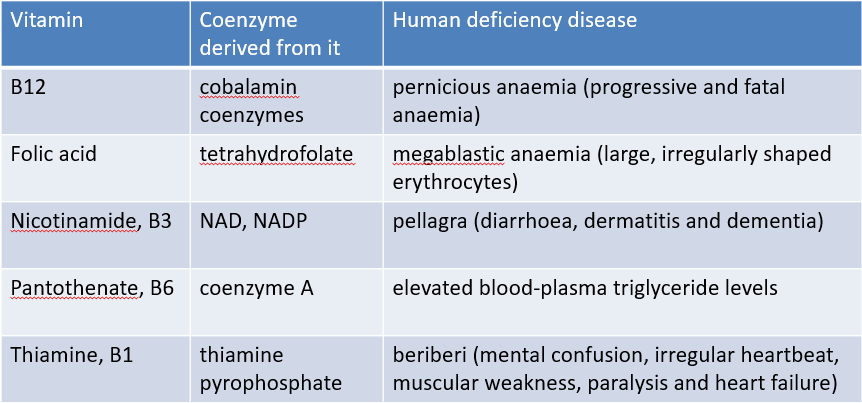
Some vitamins derived from coenzymes which you need to know
What are prosthetic groups and how are they helpful
These are permanent cofactors bound by covalent bonds and stabilise their structure ensuring active site functions properly. Enzyme carbonic anhydrase contains Zn2+ which helps enzyme catalyse reactions properly