Lecture 17 & 18 (4/14/26 & 4/21/26): Immune System
 Call Kai
 Learn
Learn Practice Test
 Spaced Repetition
 Match
Match Flashcards
 Knowt Play
1/29

There's no tags or description
Looks like no tags are added yet.
Name | Mastery | Learn | Test | Matching | Spaced | Call with Kai |
|---|
No analytics yet
Send a link to your students to track their progress
30 Terms
Why do new strains of the flu arise?
Genes of the flu virus can mutate, and versions of genes can be swapped within the host cells
pathogen
organisms and other agents that cause disease.
flu (reassortment)
the process where two different influenza viruses infect a single cell and swap genetic segments, creating a new hybrid strain
epidemic
a sudden increase in the number of disease cases above what is normally expected in a specific, localized population or region.
pandemic
an epidemic that has spread over several countries or continents, usually affecting a large number of people.
vaccine
stimulate the immune system (adaptive branch) to make memory cells specific to a particular pathogen, so the immune system has the tools to combat a particular infection
do not usually prevent a person from being infected
innate immune system
operate without previous exposure to a pathogen
external innate defenses
Skin, secretions, mucous membranes
internal innate defenses
phagocytic cells, natural killer cells, defensive proteins, inflammatory response
adaptive immune system
activated by exposure to specific pathogens
ex: antibodies, lymphocytes (B cells and T cells)
lymphatic system/lymph node
involved in internal innate defenses and adaptive defenses
How does the adaptive immune system differ from the innate immune system?
Only the adaptive has memory of a previous infection, and has the ability to target a specific pathogen
antigen
molecules that can trigger an immune response (pieces of the invader, not whole cell), and can destroy antibodies
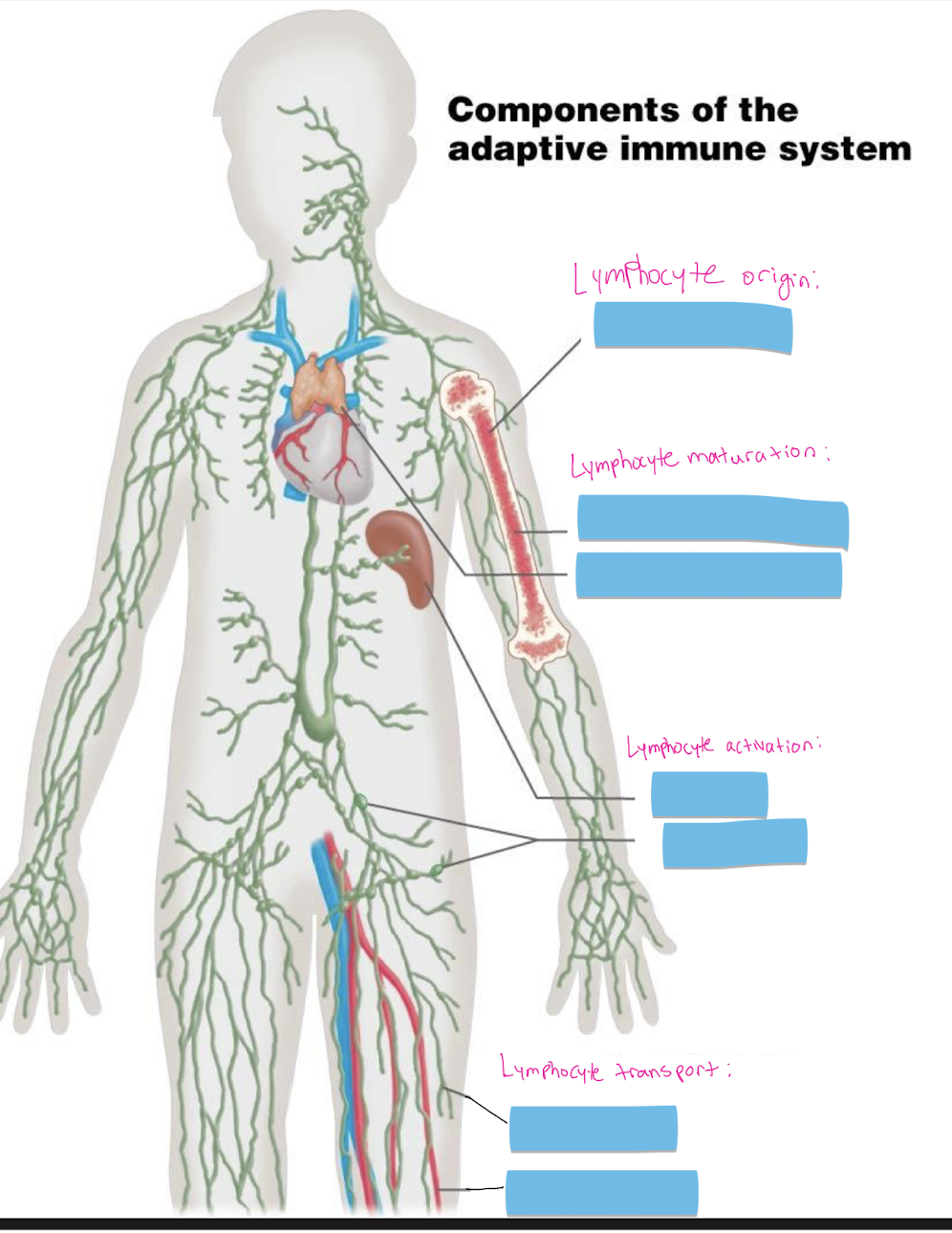
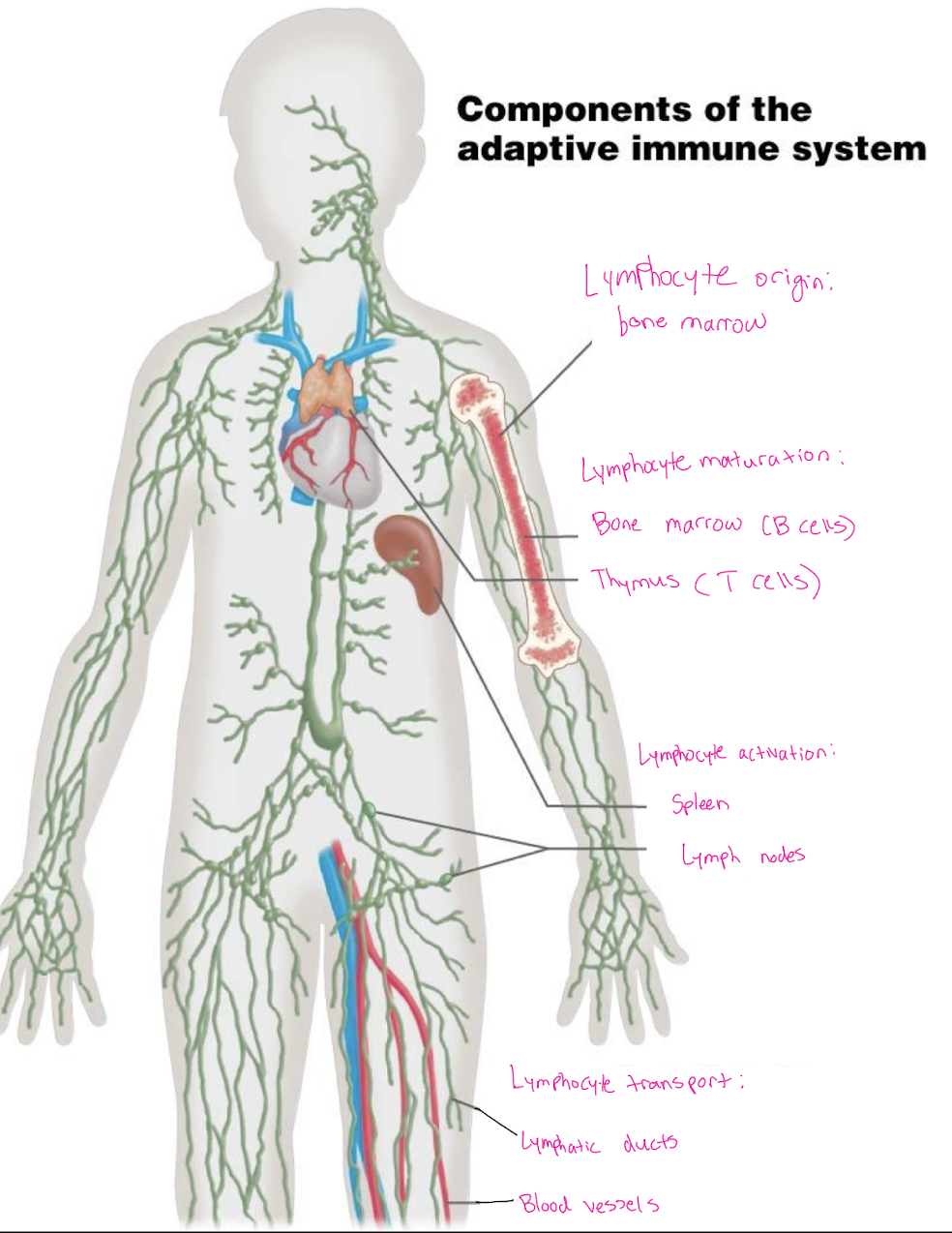
Components of the adaptive immune system:
Lymphocyte origin:
Lymphocyte maturation:
Lymphocyte activation:
Lymphocyte transport:
Lymphocyte origin: bone marrow
Lymphocyte maturation: Bone marrow (B cells), Thymus (T cells)
Lymphocyte activation: Spleen, Lymph nodes
Lymphocyte transport: Lymphatic ducts, blood vessels
What is a major advantage of adaptive immunity?
it enables a rapid defense against an antigen that has been previously encountered
Specificity
particular lymphocytes recognize only particular pathogens or their pieces
Immunological memory
primary & secondary immune response
antibody-mediated (humoral) immune response (AMI)
antibodies released from B cells attack pathogens in blood, lymph & tissue fluids - not in cells (free floating things)
B cells bind to antigens during the activation phase
cell-mediated immune response (CMI)
cytotoxic T cells attack pathogen-infected cells or cancer cells
T cells bind only to antigens displayed by other body cells during the activation phase
phagocytic cell
Crucial for CMI & AMI response, where they engulf many different pathogens/invaders and present foreign antigens that stimulate adaptive immune responses which activate helper T cells
cytokine
small signaling proteins secreted by immune and non-immune cells that act as mediators of inflammation, immune responses, and cell communication
helper T cell
coordinate adaptive response by stimulating both humoral and cell-mediated immunity by releasing cytokines
cytotoxic T cell
fight body cells infected by a virus, and have antigen receptors that bind to antigens presented on the surfaces of host cells
B cell
produce multiple antibodies
antibody
Y-shaped proteins produced by B-cells to identify and neutralize foreign invaders like bacteria and viruses
What can produce memory cells?
Helper T cells, Cytotoxic T cells, B cells
memory response
the immune system's ability to rapidly recognize and destroy pathogens it has previously encountered, resulting in a faster, stronger, and longer-lasting response
memory cells
Memory T cells and B cells confer future immunity to a certain virus
autoimmune disorder
immune reaxction against some of the body’s own cells
anti-self lymphocytes —> diabetes type 1, systemic lupus, multiple sclerosis
treatment (generally no cure): replacement therapy, immune suppression
What happens if immune system cells do not distinguish self from non-self?
autoimmune disorder