Back and vertebral Column
 Call Kai
 Learn
Learn Practice Test
 Spaced Repetition
 Match
Match Flashcards
 Knowt Play
1/18

There's no tags or description
Looks like no tags are added yet.
Name | Mastery | Learn | Test | Matching | Spaced | Call with Kai |
|---|
No analytics yet
Send a link to your students to track their progress
19 Terms
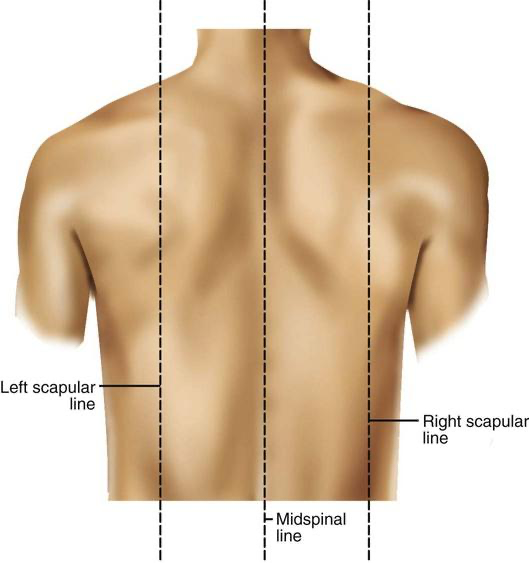
Mid-vertebral line and Scapular line
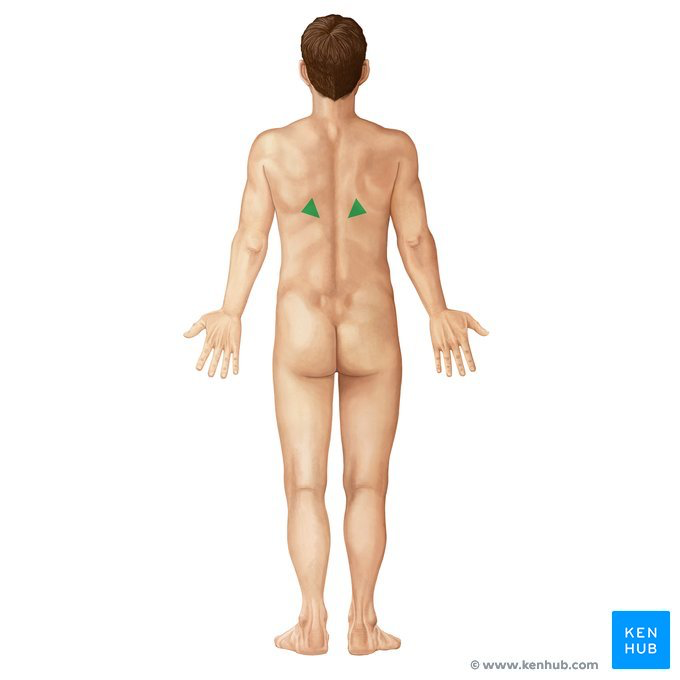
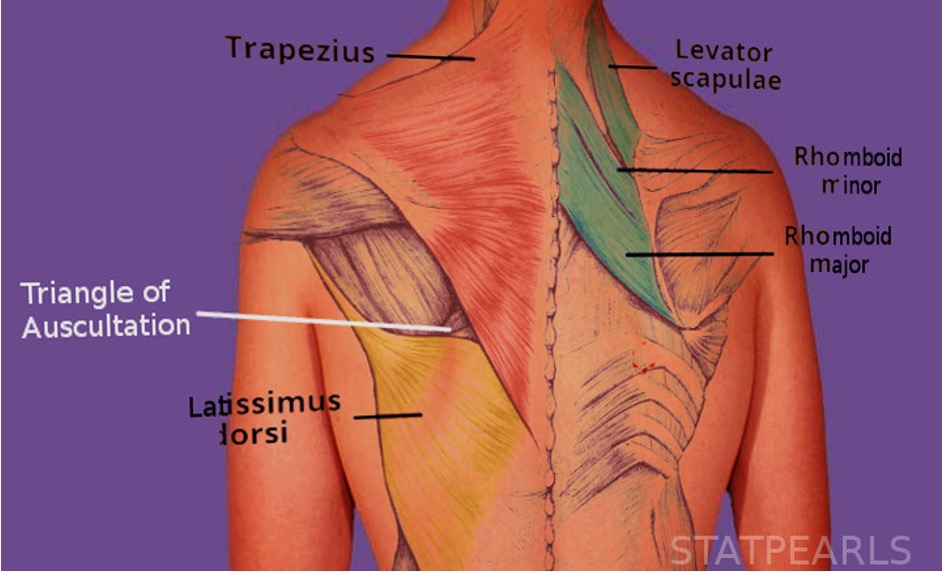
Triangle of auscultation
Landmark that indicates the location of the vertebral spines
Vertebral Furrow
Erector spinae muscles lie on both sides.
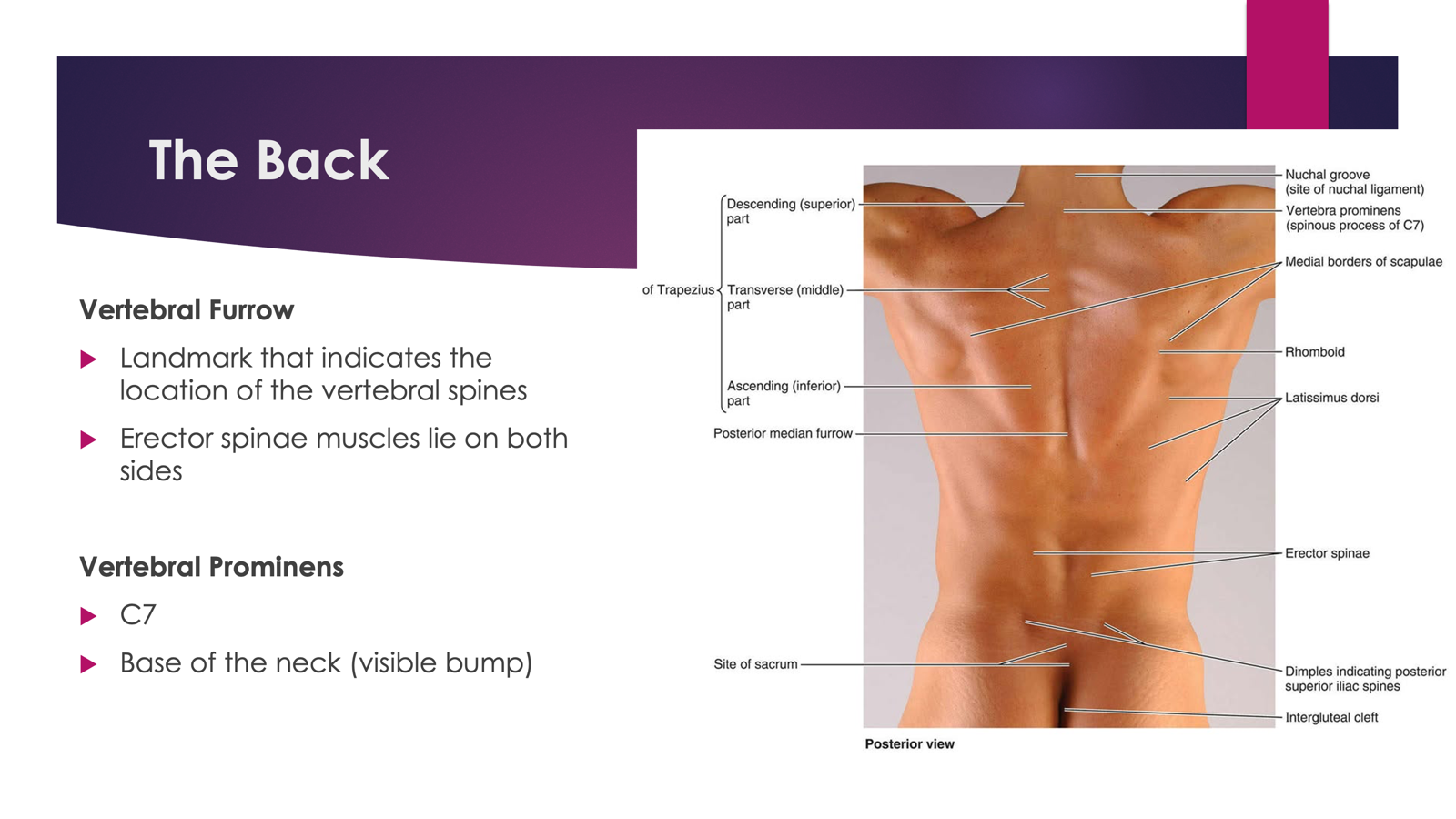
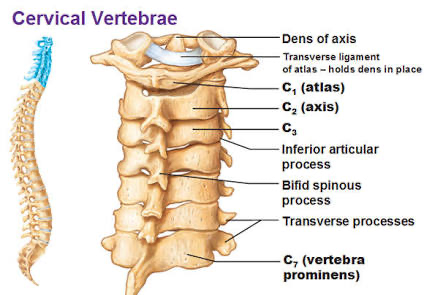
It sits at the very bottom of your neck, just above the first thoracic vertebra (T1)
Vertebral of Prominence is the seventh cervical vertebra (C7) and is easily palpable.
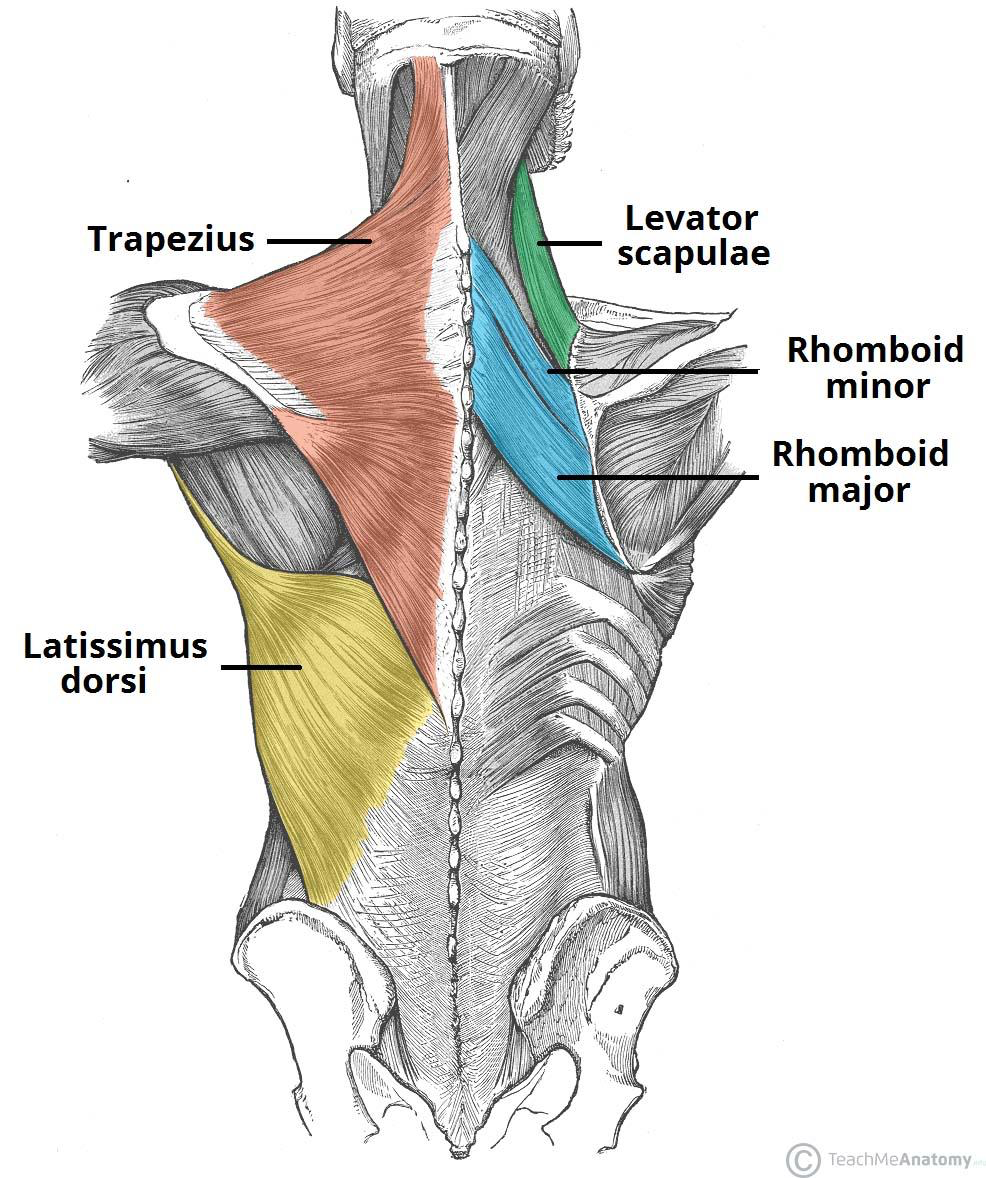
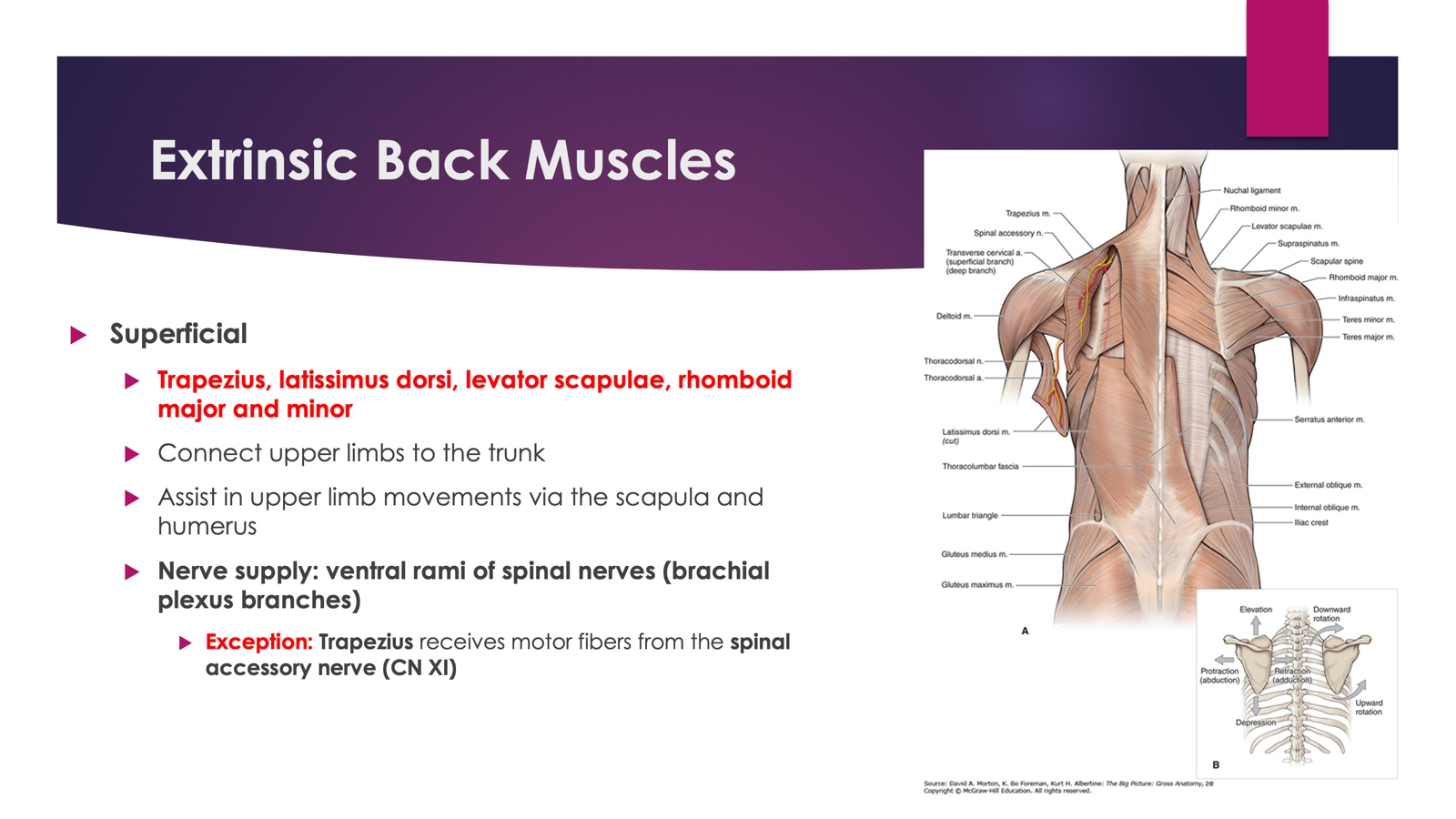
Identify the major superficial back muscles:
Trapezius, levator scapulae, rhomboid major, rhomboid minor, and latissimus dorsi.
Trapezius- the most superficial muscle
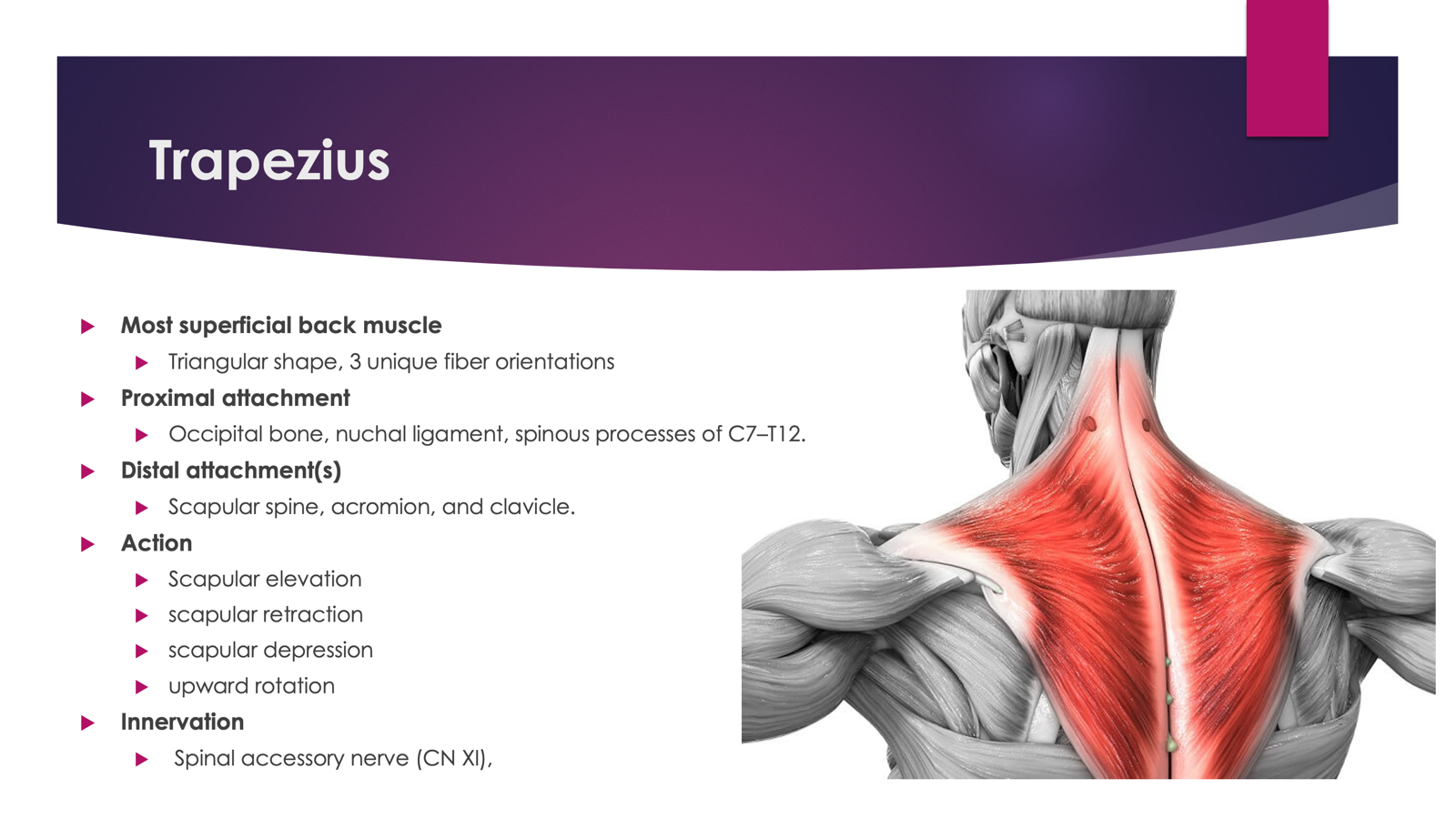
Innervations and Action of Trapezius:
Innerverted by Spinal Accessory Nerve (CN XI)
Action: Elevates, retracts, depresses, and upwardly rotates scapula.
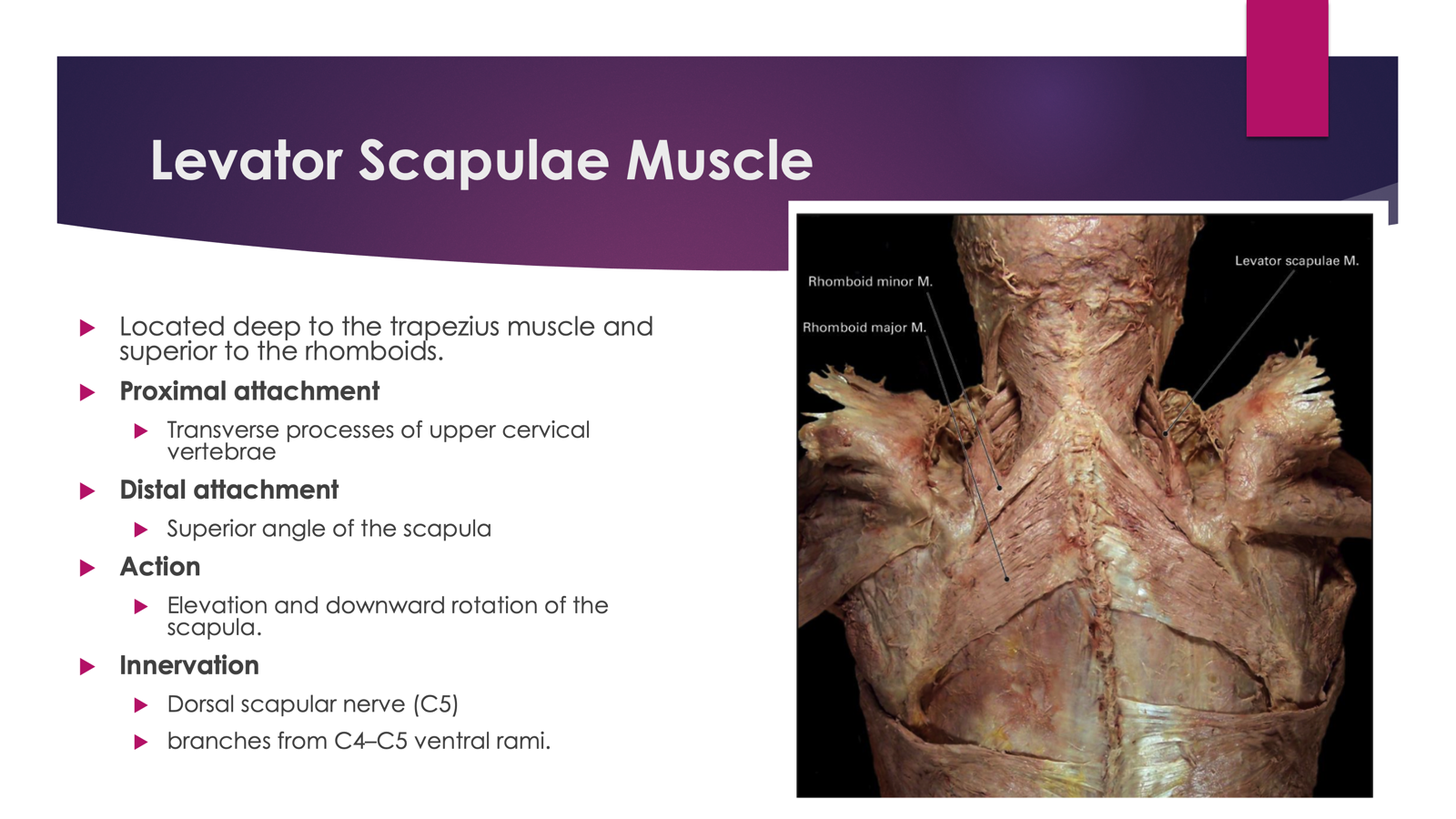
Innervation and action of levator scapule:
Innervated by: Dorsal Scapular Nerve (C5)
Action: Elevates scapula, downward rotation
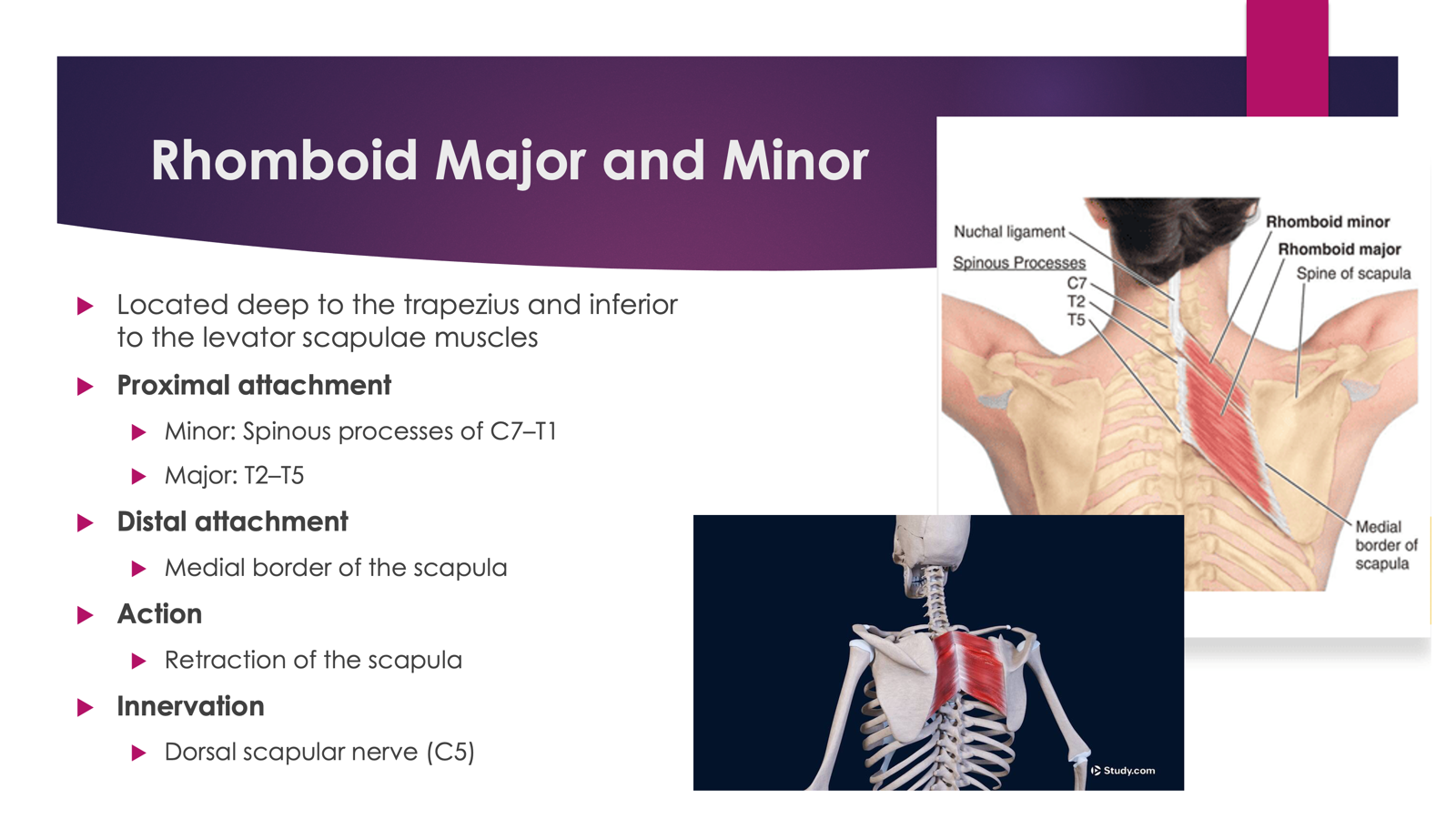
Innervation and action of rhomboid major and minor
Innervation: Dorsal Scapular Nerve (C5)
Action: Retracts and elevates scapula, downward rotation.
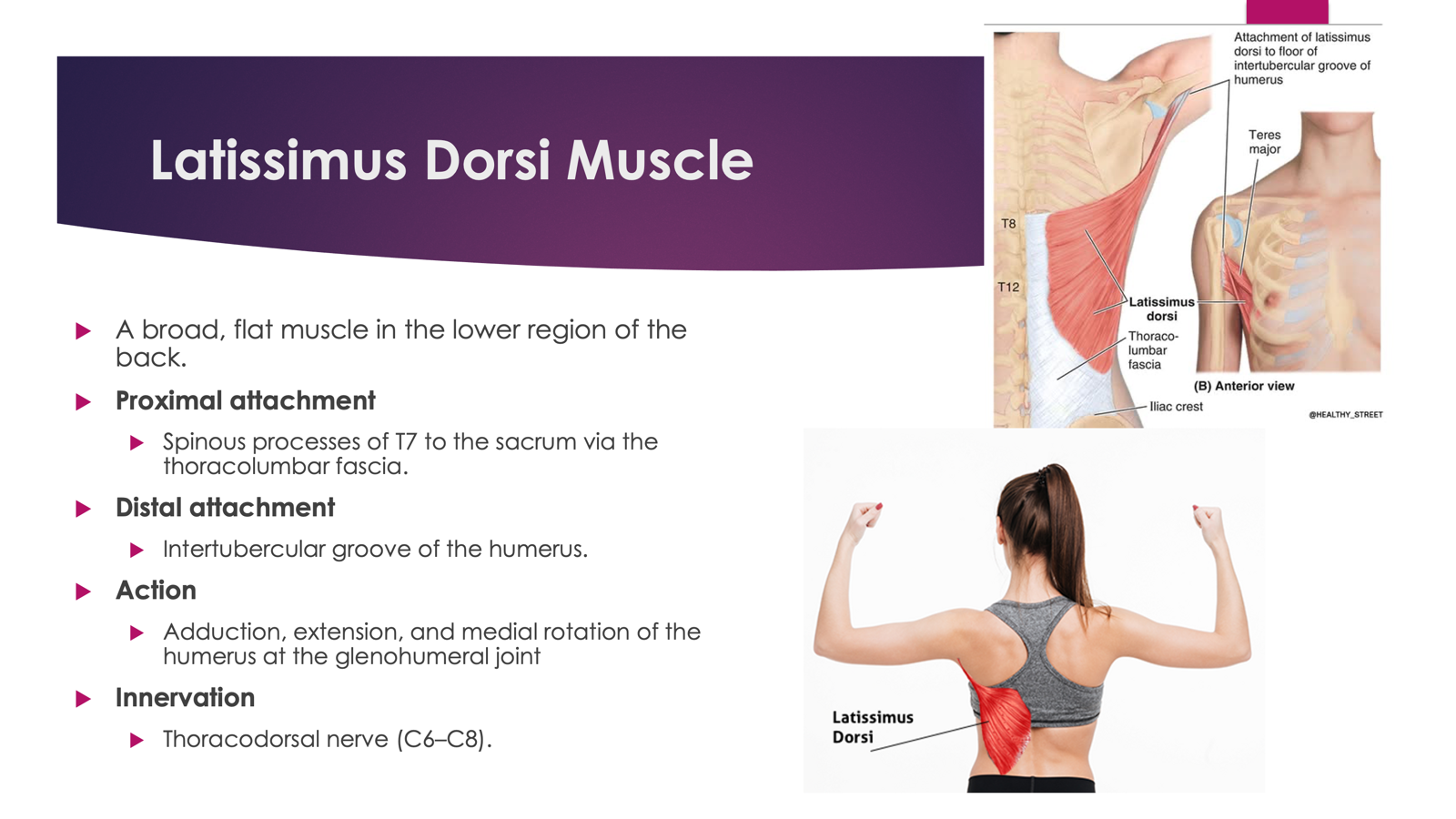
Innervation and action of Latissimus Dorsi
Innervation: Thoracodorsal Nerve (C6-C8)
Action: Extends, adducts, and medially rotates humerus.
Explain how the superficial back muscles contribute to scapular movement and
upper limb function.
Muscle | Scapular Action | Upper Limb Function |
|---|---|---|
Trapezius | Elevation, retraction, depression, upward rotation | Raises arm overhead |
Levator Scapulae | Elevation, downward rotation | Stabilizes scapula |
Rhomboid Major/Minor | Retraction, downward rotation | Pulling movements |
Latissimus Dorsi | Assists depression | Extension, adduction, medial rotation of humerus |
Elevation: trapezius, levator scapulae, rhomboids assist
Depression: Trap, latissimus dorsi, pectoralis minor
Protraction or Abduction- serratus anterior, pectoralis minor assists
Retraction or adduction: rhomboid major, minor and trapezius
Upward rotation- trapezius, serratus anterior
Downward rotation- rhomboid major and minor, levator scapulae, pectoralis minor
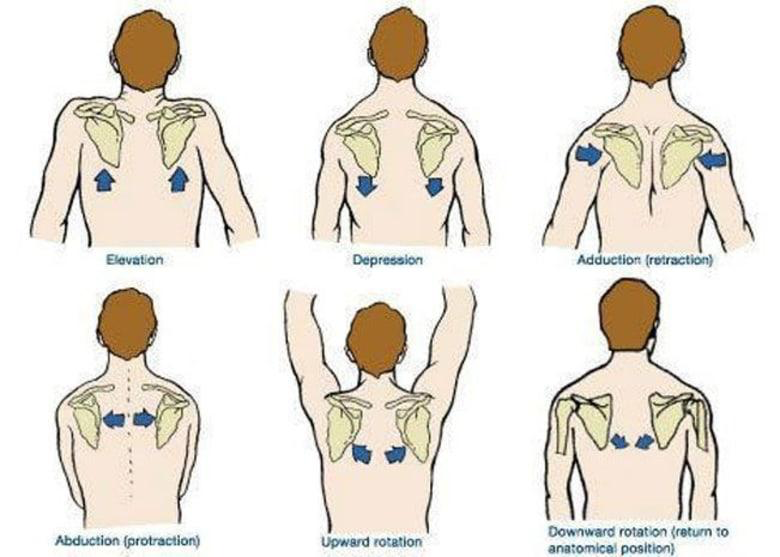
Differentiate the actions of scapular elevation, depression, protraction, retraction,
and rotation.
Elevation = shrug
Depression = push down
Protraction = punch
Retraction = row
Upward rotation = raise arm overhead
Downward rotation = lower arm back to side
Deep Intrinsic muscle
Primarily act on vertebral column.
Commonly referred as: Intrinsic back muscles, epaxial muscles, paraspinal muscles (clinically)
Innervated by dorsal (posterior) rami of spinal nerve at each vertebral level.
Responsible for maintaining posture, in constant use during body movements
Types of intrinsic muscle (deep muscle)
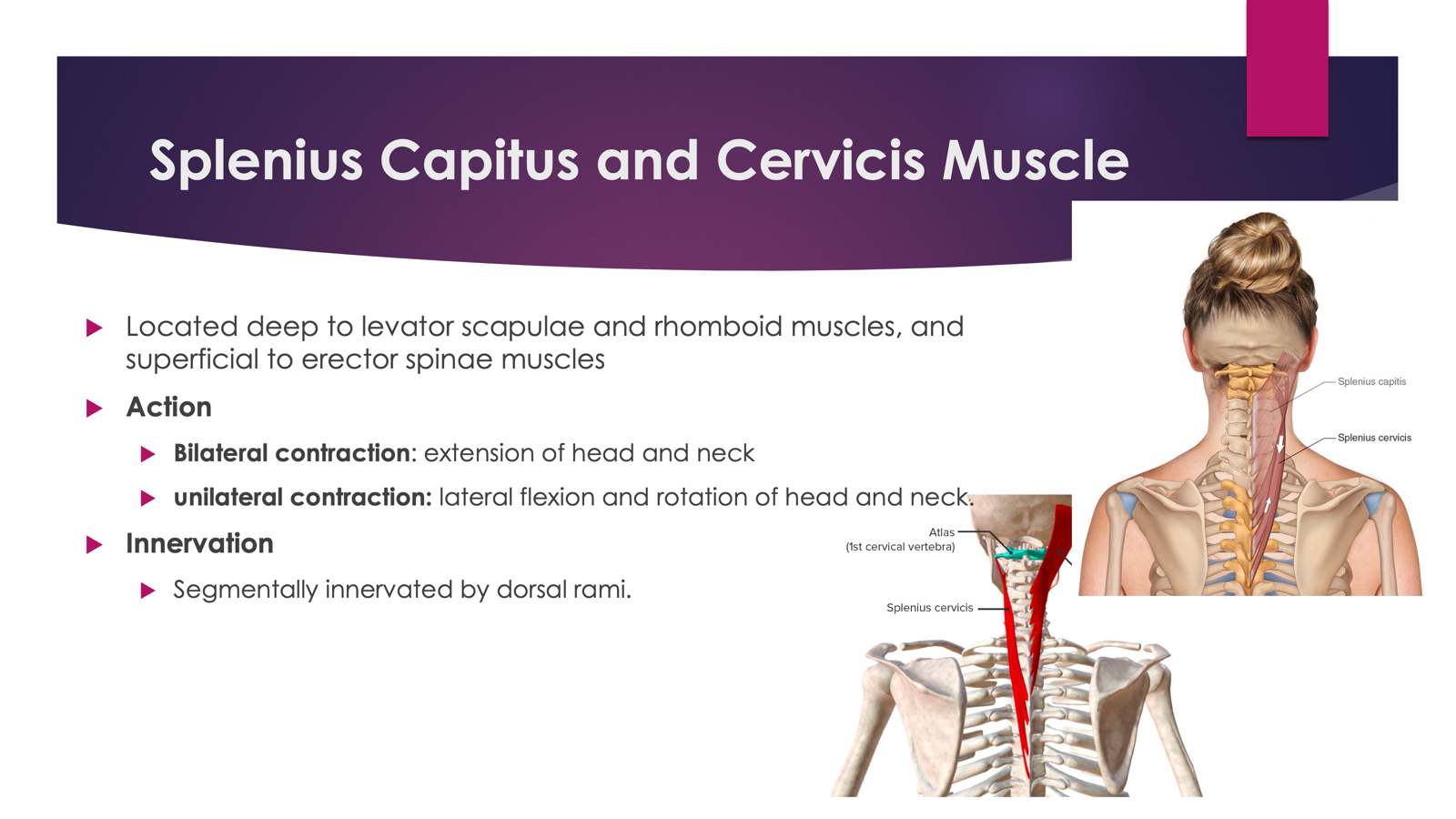
Superficial: Splenius capitus and cervicis
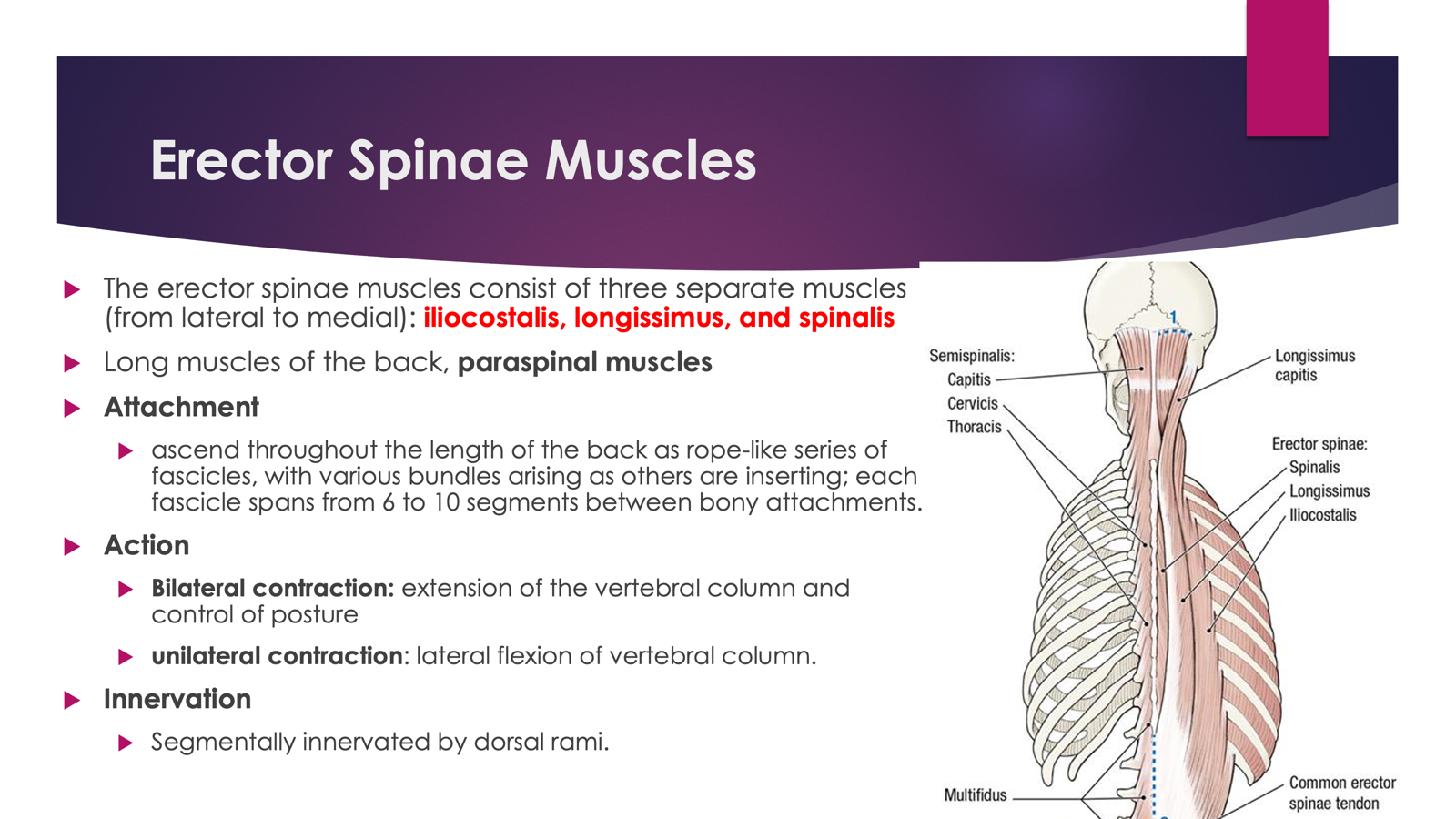
Intermediate: erector spinae
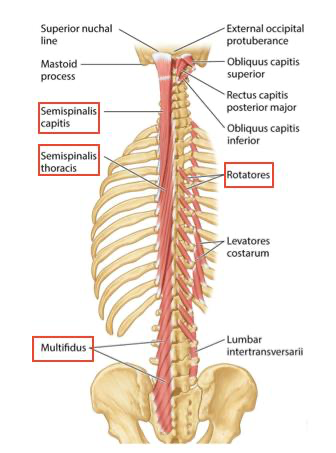
Deep: transversospinalis, suboccipital muscles
Splenius Capitus and Cervicis Muscle
Located deep to levator scapulae and rhomboid muscles, and superficial to erector spinae muscles
Action
Bilateral contraction: extension of head and neck
unilateral contraction: lateral flexion and rotation of head and neck.
Innervation
Segmentally innervated by dorsal rami. (Dorsal (posterior) rami of spinal nerves)
Erector Spinae
Three separate muscles (from lateral to medial): iliocostalis, longissimus, and spinalis
Long muscles of the back, paraspinal muscles
Location
Located in the deep (intrinsic) layer of the back
Runs on both sides of the vertebral column
Extends from the sacrum and iliac crest inferiorly to the skull superiorly
Action
Bilateral contraction: extension of the vertebral column and control of posture
unilateral contraction: lateral flexion of vertebral column.
Innervation
Segmentally innervated by dorsal rami.
Transversospinalis Muscle
Located deep to the erector spinae muscles.
From superficial to deep: semispinalis, multifidus, and rotatores
Attachment
Muscle fibers arise from a transverse process and ascend between one to six vertebral levels to attach to the spinous process of neighboring vertebrae.
Action
Stabilization
Bilateral contraction: extension of the vertebral column
unilateral contraction: rotation of vertebral column to the contralateral side of the contracting transversospinalis muscle.
Innervation
Segmentally innervated by dorsal rami.
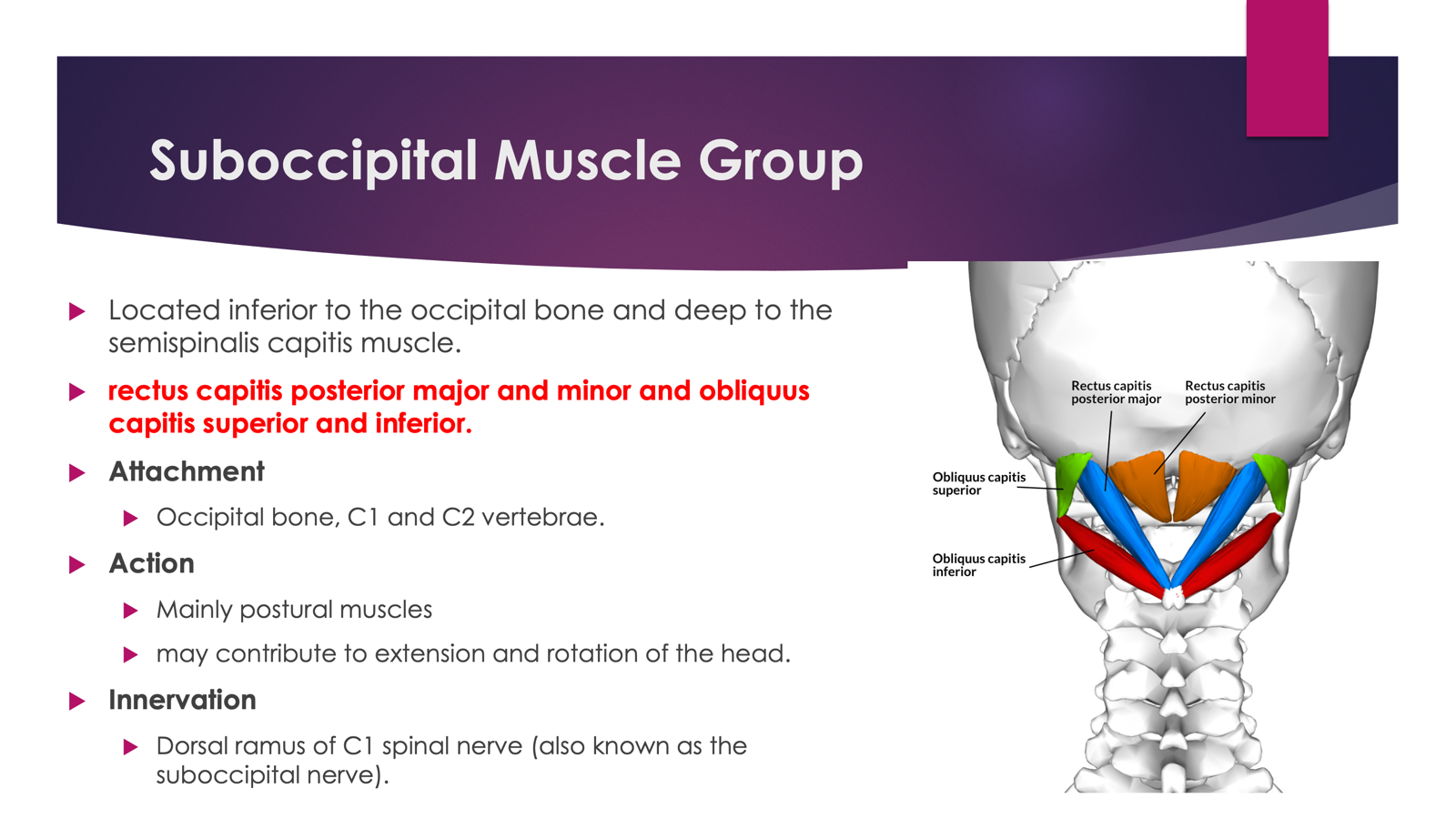
Suboccipital Muscles
Located inferior to the occipital bone and deep to the semispinalis capitis muscle.
rectus capitis posterior major and minor and obliquus capitis superior and inferior.
Action
Mainly postural muscles
may contribute to extension and rotation of the head.
Innervation
Dorsal ramus of C1 spinal nerve (also known as the suboccipital nerve).
Identify the major groups of deep back muscles including splenius, erector spinae,
transversospinalis, and suboccipital muscles.
Deep back muscles are the true back muscles. They lie deep to the superficial back muscles and are responsible for posture, stabilization, and movement of the vertebral column and head. All are innervated by the dorsal (posterior) rami of spinal nerves (except the suboccipital group, which receives the dorsal ramus of C1).