2G GAS EXCHANGE
 Call Kai
 Learn
Learn Practice Test
 Spaced Repetition
 Match
Match Flashcards
 Knowt Play
1/15

There's no tags or description
Looks like no tags are added yet.
Name | Mastery | Learn | Test | Matching | Spaced | Call with Kai |
|---|
No analytics yet
Send a link to your students to track their progress
16 Terms
what is diffusion’s role in gas exchange?
waste products are diffused through the stomata of leaves.
what happens during respiration at the stomata
oxygen diffuses from a high concentration outside the leaf to a low concentration inside the lead
carbon dioxide diffuses from a high concentration inside the leaf to a low concentration outside the leaf
what happens during photosynthesis at the stomata
carbon dioxide diffuses from a region of high concentration outside the leaf to a region of low concentration inside the leaf
oxygen diffuses from a region of high concentration inside the leaf to a region of low concentration outside the leaf
adaptions of the whole leaf for gas exchange
they are thin and have thin cell walls, giving a short diffusion distance
they are flat, which means large SA:V
they have many stomata
there are air spaces around the spongy mesophyll
adaptions of the stomata for gas exchange
guard cells open the stomata when they become turgid, allowing gases to diffuse in, when there is lots of water and sunlight
guard cells close the stomata when they become flaccid, stopping gas exchange, when there is low light and little water available.
how does gas exchange depend on light intensity
photosynthesis only happens when light is available, but plants must respire all the time to live
during the day plants photosynthesize too much, so they release oxygen and take in carbon dioxide.
at night plants only respire, so they just take in oxygen and release carbon dioxide
practical: investigating gas exchange in plants
add the same volume of hydrogen-carbonate indicator to four boiling tubes
put similar sized, healthy-looking leaves into three of the tube and seal with a rubber bung, trapping the leaf stem.
completely wrap one tube in aluminum foil and one in gauze.
place all the tubes in bright light
leave the tubes for an hour and check the colour of indicator
the control should stay the same, foil tube will be yellow, gauze tube will be orange, uncovered tube will be purple
what colour do hydrogen-carbonate indicator turn
CO2 concentration decreased - purple
CO2 concentration normal - orange
CO2 concentration increased - yellow
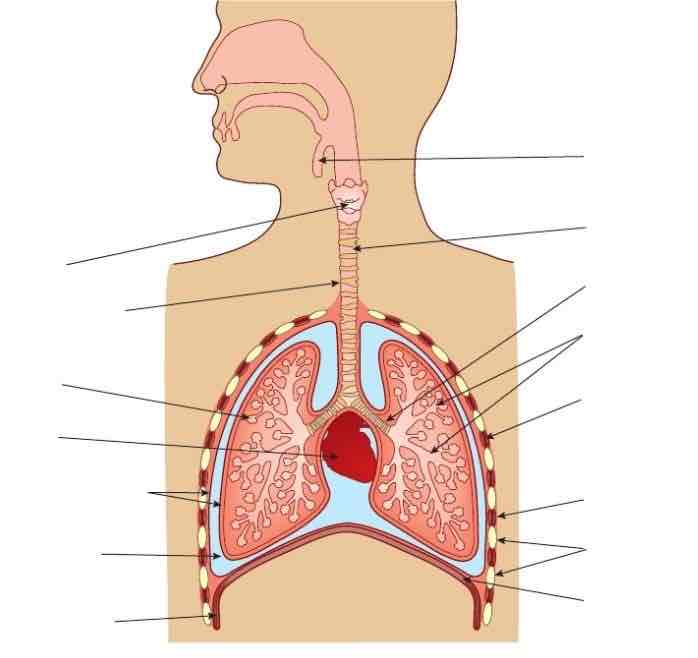
Label the diagram
oesophagus
Trachea
Bronchus
Alveoli
Bronchiole
Intercostal muscle
Heart
Pleural membranes
Rib
Diaphragm
role of intercostal muscles and diaphragm in ventilation
when breathing in, intercostal muscles and diaphragm contract, and thorax volume increases. this decreases pressure, drawing pressure in
when breath out, intercostal muscles and diaphragm relax and thorax volume decreases as air is forced out.
how do alveoli carry out gas exchange?
the lungs contain millions of air sacs, alveoli
the bloody passing next to the alveoli has just returned to the lungs so contains CO2 and little oxygen
oxygen diffuses out of the alveoli and into the blood
CO2 diffuses into the alveoli to be breathed out
how are alveoli specialized for gas exchange
the huge number of alveoli give the lungs a massive surface area
there is a moist lining for gases to dissolve in
alveoli have very thin walls
they have a great blood supply to maintain high concentration gradient
the walls are permeable
how does smoking cause smoker’s cough and bronchitis
smoking damages the walls inside the alveoli, reducing the surface area
the tar in cigs damage the cilia in lungs and trachea, making infection more likely
the cilia and mucus catch dust and bacteria before reaching the lungs and help keep the trachea clear
tar irritates the bronchi and bronchioles, encouraging mucus to be produced which cannot be cleared by damaged cilia
how does smoking cause coronary heart disease and cancer
the CO in smoke reduces the amount of oxygen the blood can carry, so heart rate increases, leading to increase of blood pressure
high blood pressure can damage the artery walls, forming blood clots and increasing risk of coronary heart disease
tobacco smoke also contains carcinogens, which are chemicals which can lead to cancer
INVESTIGATION: effect of exercise on breathing rate
sit still for five minutes and count number of breaths in one minute
do four minutes of exercise and count breaths for a minute as soon as you stop
repeat the steps and work out mean average for resting and exercise
results should show that exercise increases breathing rate as muscles respire more during exercise
INVESTIGATION: release of CO2 in breathing humans
set up two boiling tubes and place same amount of limewater in each
connect a mouthpiece to both and also the air out/in in one each
put your mouth around the mouthpiece and breath in and out several times
as you breath in, air is drawn from tube A, containing little CO2 so solution remains colourless
in tube B, the exhale bubbles are CO2, turning the limewater cloudy