Econs
 Call Kai
 Learn
Learn Practice Test
 Spaced Repetition
 Match
Match Flashcards
 Knowt Play
1/73

There's no tags or description
Looks like no tags are added yet.
Name | Mastery | Learn | Test | Matching | Spaced | Call with Kai |
|---|
No analytics yet
Send a link to your students to track their progress
74 Terms
Scarcity
The problem arising from limited resources and unlimited wants.
Opportunity cost
The value of the next best alternative forgone when a choice is made.
Choice
The act of selecting among alternatives including the selected option.
Marginal benefit
The additional benefit gained from consuming or producing one more unit of the good/service.
Marginal cost
The additional cost incurred from consuming or producing one more unit of the good/service.
MC=△TC/△Q
OR △TVC/△Q
Area under marginal benefit curve
The sum of marginal benefit for the quantity under consideration is equal to total benefit of those quantity under consideration.
Productive efficiency
Achieved when the firms in an economy are producing the maximum output for the given amount of inputs
Fully utilising all available resources
OR producing a given output with the least cost combination of inputs.
Allocative efficiency
Achieved when the current combination of gds & svcs produced and consumed allows the society to attain the greatest level of satisfaction.
Production Possibility Curve
Shift of 1. curve? 2. point?
Shows the maximum attainable combination of 2 gds & svcs that can be produced in an economy when all available resources are used fully and efficiently at a given state of technology.
Shift of curve: improvement in quality/quantity of FOP
Shift of point: greater utilisation of resources
Note: Do not say more efficiently used resources
Actual economic growth
The increase in the output actually produced in the economy and is measured by the % annual change in national output actually produced.
Shift of point on PPC→ greater utilisation of FOP
Potential economic growth (long-run economic growth)
The increase in the productive capacity of the economy
Shift of the PPC
↑ in quantity/quality of FOP, technological advancements
Factors affecting demand
-change in income
-change in price of related goods
-change in consumer taste and preferences
-change in expectations
Factors affecting supply
-increase in number of firms
-good weather
-lower COP
-change in price of related goods
Demand
The quantity of a well-defined commodity that consumers are both willing and able to buy at each and every price during a given period of time, ceteris paribus.
Supply
The quantity of a well-defined commodity that producers are both willing and able to produce at each and every price during a given period of time, ceteris paribus.
Complements in consumption
Goods used in conjuction with one another in the satisfaction of a particular purpose.
Increase in price of good A leads to fall in demand for good B.
Substitutes in consumption
Goods that can be used in place of one another for the satisfaction of a particular purpose.
Increase in price of good A leads to rise in demand for good B.
Goods in joint supply
Goods that are produced in the same production process.
Increase in price of good A will lead to increase in supply of good B.
Goods in competitive supply
Goods that use the same factors of production.
Increase in price of good A leads to lower supply for good B.
Law of demand
In a given time period, the quantity demanded of a product is inversely related to its price, ceteris paribus.
Supply curve
Shows the relationship between the price and quantity supplied of a well-defined commodity. It shows the quantity supplied of a well-defined commodity that producers are both willing and able to sell at each possible price during a given period of time, ceteris paribus.
Law of supply
In a given time period, the quantity supplied of a product is directly related to its price, ceteris paribus.
Law of diminishing marginal utility
Beyond a certain point of consumption, as more and more units of a good or service aer consumed, the additional utility a consumer derives from consuming successive units decreases.
Derived demand
Describes a market in which a good is demanded not for its own sake but for the purpose of producing another good.
→the demand for an input is derived from the dd for the output that uses the input e.g. ↑ dd for tables, ↑ dd for carpenters
Producer surplus
Difference between the price that producers in the market are prepared to sell their good or service and how much they actually receive.
Consumer surplus
Difference between the price producers in the mkt are prepared to pay and how much they actually pay
Price Elasticity of Demand
measures the degree of responsiveness of the quantity demanded of a good to a change in its price, ceteris paribus
%change in QD/%change in price
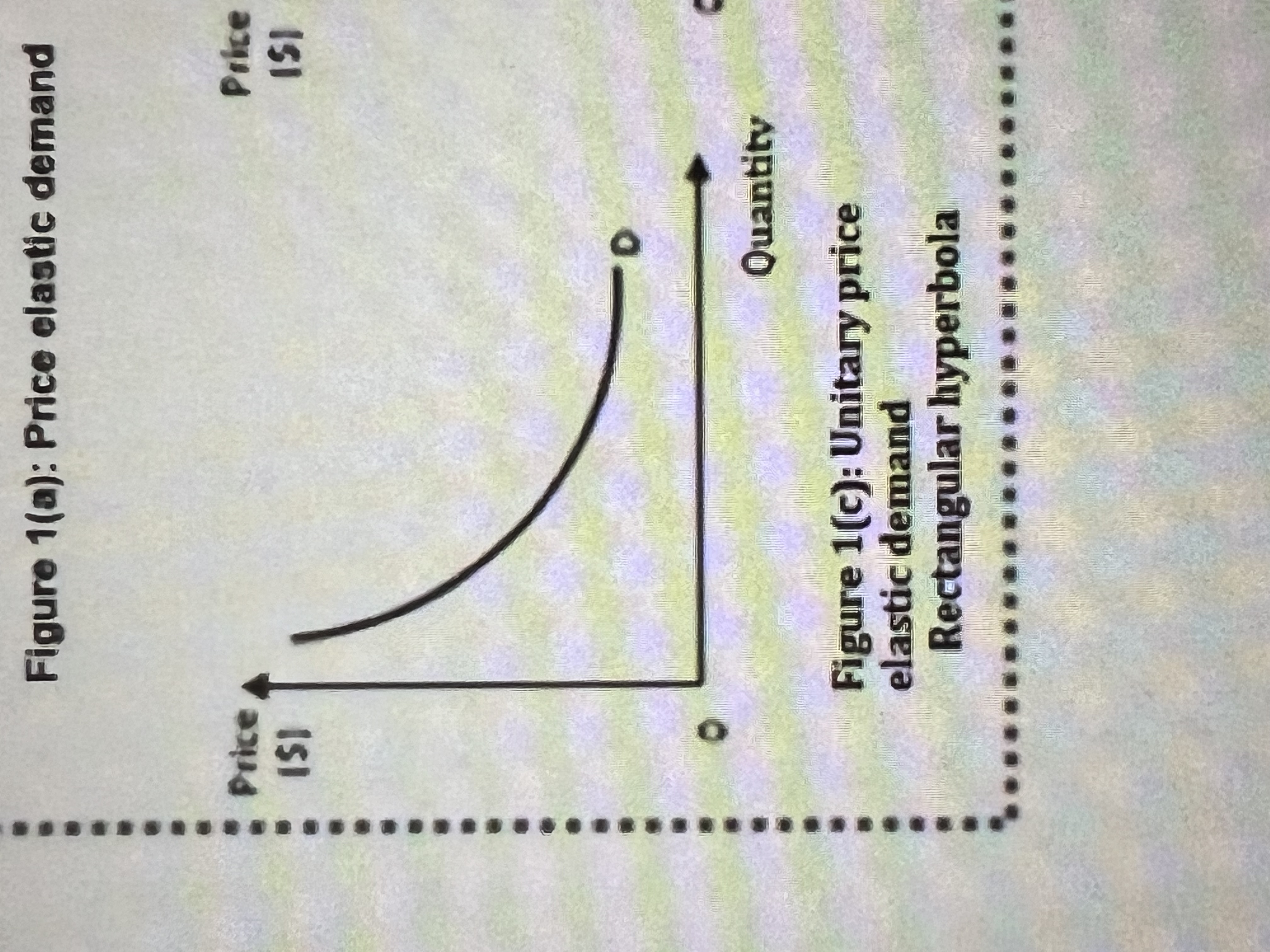
PED=1
unitary price elastic, change in the price of a good leads to an equal proportionate change in quantity demanded
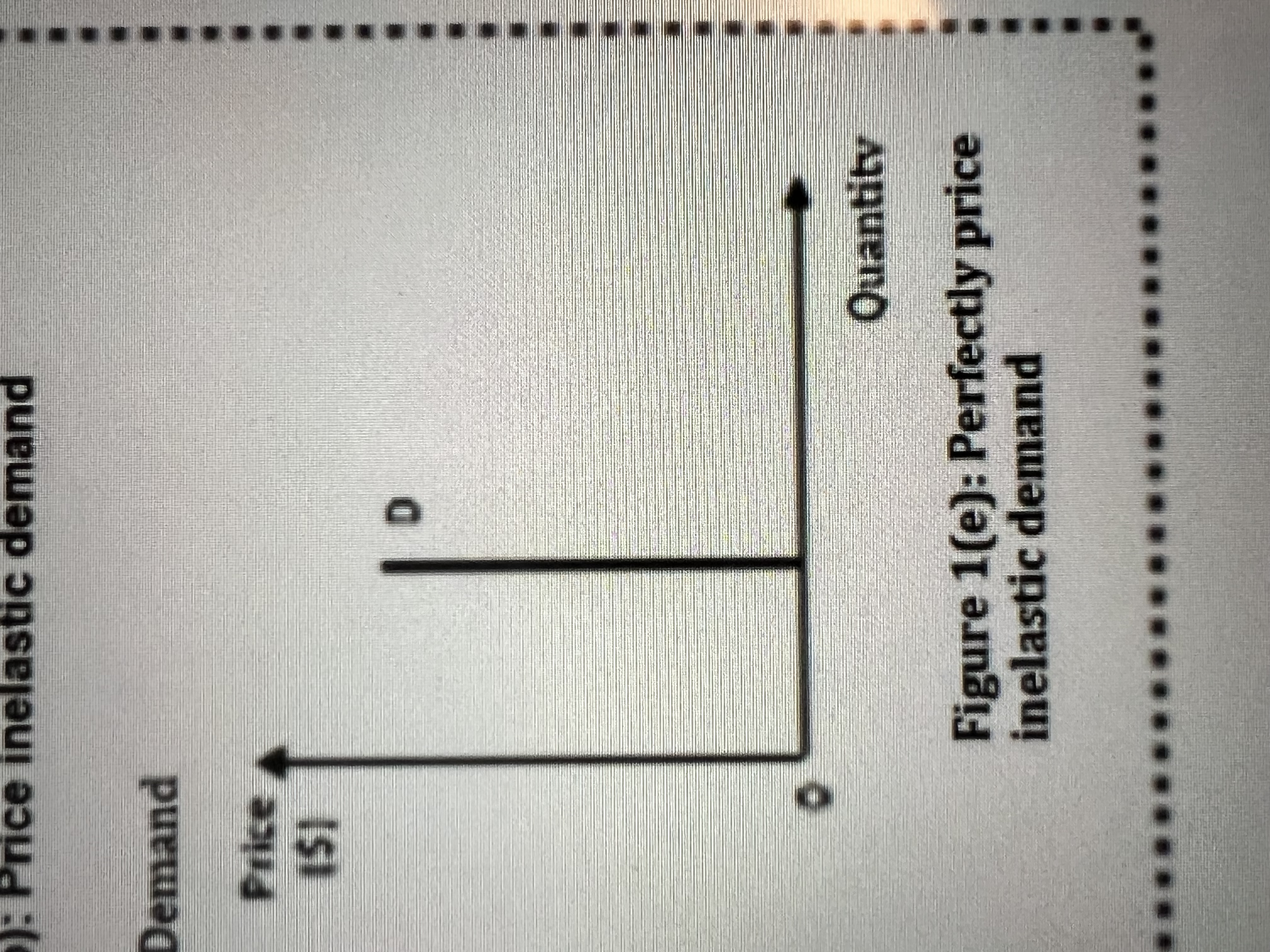
PED=0
perfectly price inelastic, change in price leads to no change in QD
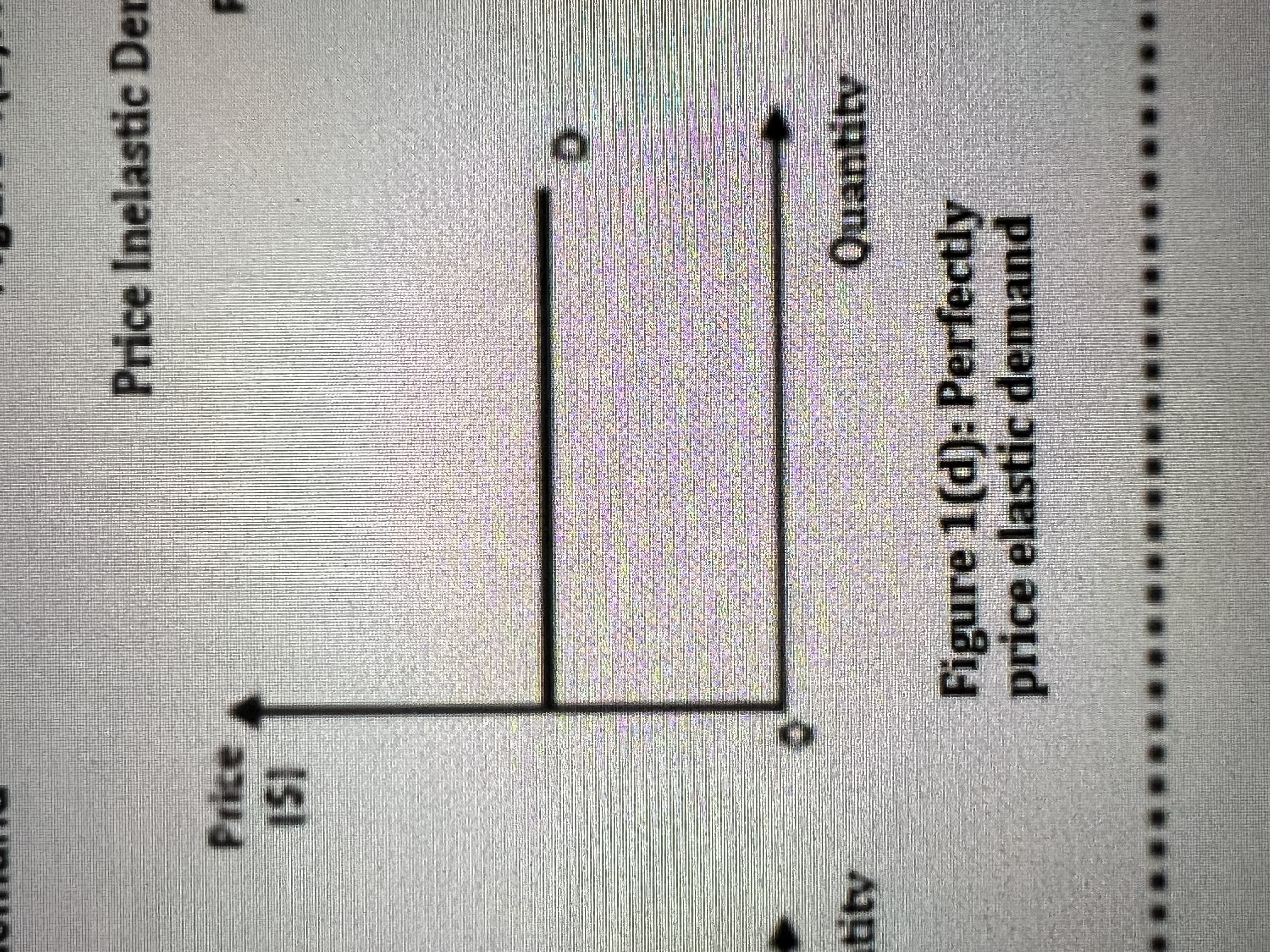
PED=∞
perfectly price elastic, change in price leads to an infinitely large effect on QD
Factors affecting price elasticity of demand
-Availability and closeness of substitutes eg greater number of substitues larger PED value
-Degree of neccessity eg food high neccessity hence demand is relatively price inelastic
-Proportion of income spent on the product eg greater proportion of income spent on good, greater its price elasticity of demand
-Time period (good is) considered eg consider substitutes
Price Elasticity of Supply
measures the degree of responsiveness of quantity supplied of a good to changes in its price, ceteris paribus
%change in QS/%change in price
PES<1
-long production time
-short shelf life
-immobile factors of production
XED
measures the degree of responsiveness of demand of one good to a change in price of another good, ceteris paribus
%change in QD at each price of good A/%change in price for good B
XED>0
XED>1
XED<0
XED< -1
substitutes
close substitutes
complements
close complements
YED
measures the degree of responsiveness of demand of a good to a change in income, ceteris paribus
%change in QD/%change in income
YED>0
YED>1
0<YED<1
YED<0
normal goods
luxury goods
necessities
inferior goods
price ceiiling
the maximum legal price set below the free market equilibrium price
purpose of price ceiling
reduce the price of necessities
limitations of price ceiling
shortage of the good
consumers will consume a lower quantity
rationing of the good
price ceiling on milk, price of milk ↓ , shortage as QD>QS
price floor
the minimum legal mkt price set and allowed by the govt above the free mkt equilibrium price
purpose of price floor
improve welfare
→ improve incomes of farmers by guaranteeing farmers a higher price for their crops so they can have more profit
raise minimum wage
→ reduce income inequality, low income workers can have higher incomes
taxes
involuntary payment of funds to the government by a household or firm for which the household or firm receives no good or service in return
purpose of tax
→ tax revenue subsidises healthcare, improve infrastructure
→ ↓ amt of demerit goods e.g. cigarettes, govt want to discourage
social surplus
consumer surplus + producer surplus + government
subsidies
direct & indirect
the payment of money to a household or firm by the government for which it receives no good or service in return
direct: cash benefits, old-age pensions
indirect: subsidised education/healthcare, concessionary bus fares for the elderly
purpose of subsidies
Increase consumption of merit goods (education, healthcare)
Lower price of basic necessities
e.g. Msia subsidised fuel to help low income households afford fuel
Help firms get through a recession and earn more profit e.g. farmers
quotas
the legal limit set by the government on the Qty of a good that can be transacted in a market
purpose of quotas
to protect domestic firms from foreign firms, reducing foreign supply
economic efficiency
where each good is produced at minimum cost and individuals & firms get maximum benefits from their resources
Law of increasing opp cost
the more a good is produced, opp cost of additional output ↑
Marginal Cost ↑
Public goods- 3 things and their definitions
Gds/svcs that have the features of non-rivalry, non-excludability and non-rejectability
Consumption of the good or service by an individual does not reduce the benefits of the good available to others
It is not possible to provide the good or service to only one person without it thereby being available for others to enjoy
Individuals are unable to choose to forgo consumption or prevent themselves from benefitting from the good once it is provided
free-rider problem
a situation in which an individual is able to enjoy the benefits from the consumption of a gd or svc without having to pay for the consumption of the gd or svc
Externality
occurs when some of the costs/benefits associated with the production/consumption of a gd ‘spillsover’ onto third parties, that is, to parties other than the immediate seller or buyer, for which no compensation is paid
Mkt failure
exists when the free mkt fails to allocate resources efficiently
Negative externality
Results in?
when priv consumption/production creates an external cost to the society that is not internalised by private consumers and/or firms
Results in divergence btw MPC & MSC
Mkt failure from
Productive efficiency
Allocative efficiency
Firms cannot use the lowest cost combination of labour & capital to produce goods and this leads to productive inefficiency→ mkt failure
When demand rises, firms want to ↑ Qty SS so they will need more labour and capital BUT firms cannot get these FOPs so they cannot ↑ Qty & the shortage of gds & svcs persists, resulting in a misallocation of resources and mkt failure
Asymmetric information
Example?
One party in the mkt (prod/consumers) has more info about the product than the other resulting in a distortion of incentives and inefficient mkt outcomes
2nd hand car market / insurance mkt