self-injury, suicide, personality
 Call Kai
 Learn
Learn Practice Test
 Spaced Repetition
 Match
Match Flashcards
 Knowt Play
1/13

There's no tags or description
Looks like no tags are added yet.
Name | Mastery | Learn | Test | Matching | Spaced | Call with Kai |
|---|
No analytics yet
Send a link to your students to track their progress
14 Terms
what is non-suicidal self-injury (NSSI)?
deliberate & immediate damage of body tissue without suicidal intent
cutting
scratching carving scraping
burning
self-hitting/self-battery
what are the reports of NSSI?
people of all ages and backgrounds
pre-adolescents: 6-9%
adolescents: ~17+%
university students: ~20-25%
adults: 5-6%
what are peak ages of onset?
early-mid adolescence & then early adulthood (university)
but, people of all ages self-injure
people who idenitify as nonbinary & LGBTQ2S+ are at greater risk for NSSI *content matters
some evidence indicates people marginalized & discriminated due to race are at higher risk*
what contributes to NSSI?
many factors involved
each person’s experience is unique
mental health difficulties
mental illness (e.g. major depression, EDs, BPD)
stress, adversity (e.g. bullying, trauma, marginalization, racism, transphobia)
stigmatization
social isolation & percieved lack of support
impact & role of scarring
adverse impact on academics
possible suicide risk
how is NSSI related to emotion?
many people who self-injure report difficulty with coping/emotion regulation
current lived experience → past lived experience → no lived experiene
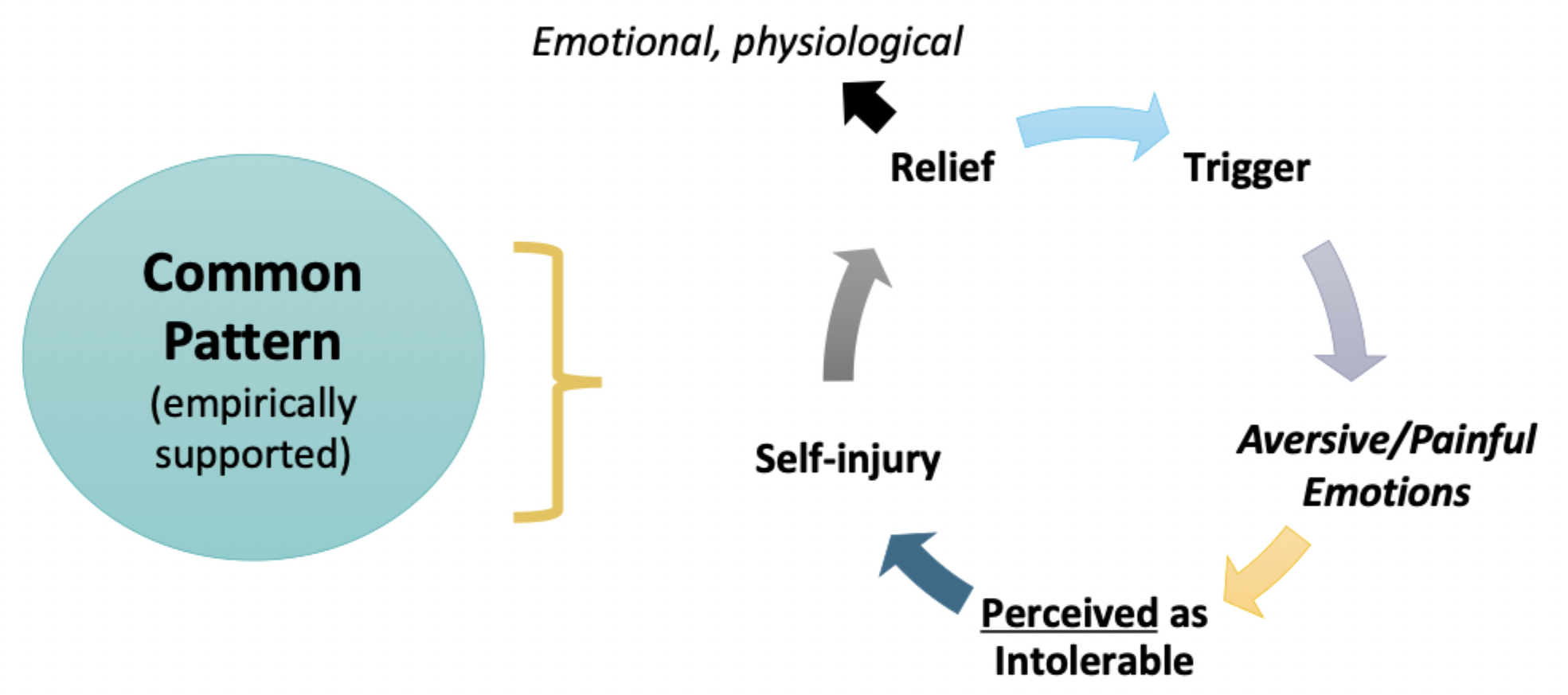
people who self-injure often report more difficulty tolerating difficult emotions & want to escape these experiences quickly
what is the intrapersonal reason for NSSI?
emotion regulation/coping - most common
to get relief from unwanted, painful, aversive emotion
self-punishment - 2nd most common
express hatred toward oneself, punish oneself, damage oneself
to feel something (aka anti-dissociation)
to feel calm, alive, to feel a physical sensation
anti-suicide
to reduce suicidal thinking/urges
avoid acting on an urge
what is the interpersonal reason for NSSI?
interpersonal reasons tend to be less common
interpersonal communication/messaging
to communicate or get a response (help, support)
stop a consequence (stop a relationship ending/avoid being alone)
NSSI is NOT attention-seeking or manipulation
what personality traits increase with NSSI?
perfectionsim
self-criticism/self-hatred
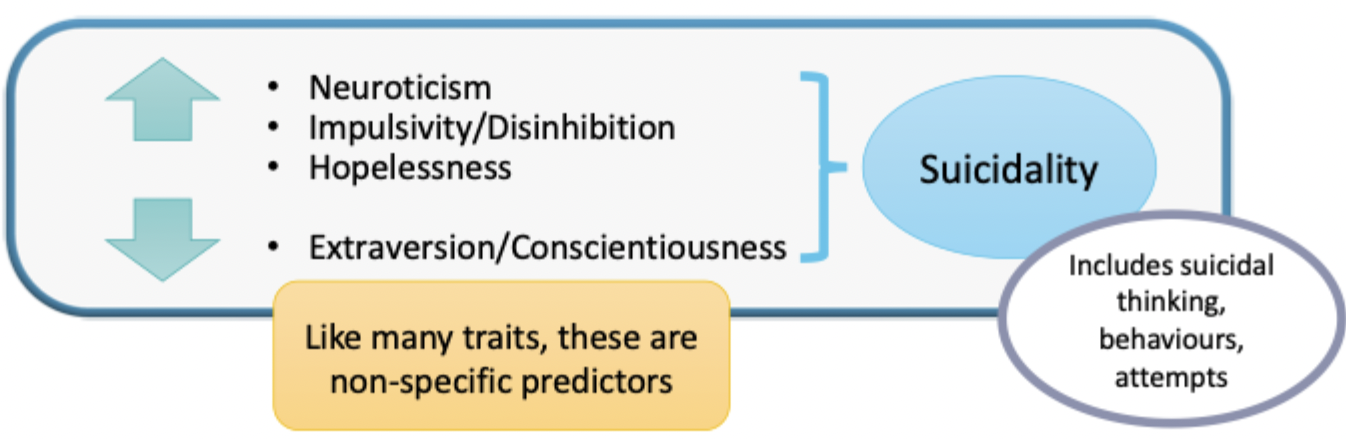
neuroticism
negative body image
like many traits, these are NON-SPECIFIC PREDICTORS
what are the 5 subtypes of impulsivity related to NSSI?
negative urgency: acting impulsively in context of negative emotion
may have particular relevance
positive urgency: acting impulsively in context of positive emotion
affective (emotional -+) subtypes may be most relevant
perseverance: ability to stay on a task until it’s completed
predetermination: stopping one’s actions so a plan can be made
sensation seeking: tendency to seek adventure/excitement
ALL have been linked to suicidal behaviour
how is the big 5 related to NSSI?
high:
neuroticism
openness to experience
may be due to feelings (subfacet)
feelings = experience of negative emotion
low:
extraversion
conscientiousness
how is suicide related to NSSI?
most reliable predictor of suicidal behaviour
emerging adults with NSSI history are 5.5x more likelyto attempt suicide
but, most people who self-injure do not attempt suicide
what are some examples of personality & suicide risk?
how is impulsivity linked to suicide?
McGirr et al., 2008:
examined impulsivity among 645 people ages 18-87 who died by suicide
METHOD: psychological autopsy
after death:
interviewing family/friends; collecting medical + psychiatric records
offers data/insight about what led to suicide
MAIN FINDING:
higher impulsivity played a larger role in the suicide of younger individuals — this was less the case the older the individual
how can we explain all of this together?
NSSI & suicide are significant mental health concerns globally
both are complex due to myriad (often intersecting) factors
recovery can be fostered & person-centred approaches hold promise