6. Attitudes
 Call Kai
 Learn
Learn Practice Test
 Spaced Repetition
 Match
Match Flashcards
 Knowt Play
1/58

There's no tags or description
Looks like no tags are added yet.
Name | Mastery | Learn | Test | Matching | Spaced | Call with Kai |
|---|
No analytics yet
Send a link to your students to track their progress
59 Terms
Attitudes
_____________: “A lasting, general evaluation of people (including oneself), objects or issues” —Allport
Allport once said Social Psychology is the study of __________, he also provided the definition.
Three Components of Attitudes
Affective (feelings/emotions),
Behavioural (on the basis of those attitudes), and
Cognitive
Allport said attitudes are saturated with emotions
Direct Measures of Attitudes
Ask people explicitly what they think or feel. One of the main jobs of a social psychologist is to measure attitudes. Best to use ________________:
Likert Scale
Semantic Differential
Social Distance Scale
Problems—Social Desirability Bias
Likert Scale
Direct Measures of Attitudes
_____________:Response options from: Strongly agree, agree, disagree, strongly disagree
Measures degree of agreement with statements
Ex. What do you think of the food on campus
Semantic Differential
Direct Measures of Attitudes
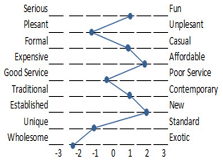
_____________:Participants rate an object using bipolar adjectives
Ex. Pleasant vs unpleasant, serious vs. fun, formal vs. casual
Social Distance Scale (Bogardus)
Direct Measures of Attitudes
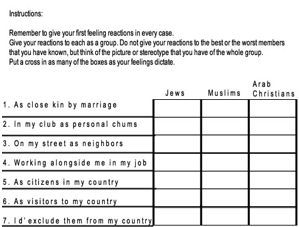
_____________:Measures willingness to engage in varying levels of closeness with a group, a measure of social distance
Often used in prejudice research—Groups may be based on race, gender, ethnicity, etc.
Ex. Are you willing to have them as neighbours? Club members? Married into the family?
Social Desirability Bias
Problems with Direct Measures
_____________: People may hide negative attitudes, lie to the researcher, or lie to themselves
They respond in ways that seem socially acceptable
There are measures to determine _________
Because of this, psychologists sometimes rely on indirect measures (about 1% of the time)
Indirect Measures of Attitude
________________: Based on the idea that people reveal attitudes without consciously trying to
Graffiti, Lost Letters, Garbage, Bumper Stickers, Circle of Seated Children, Pupils, Chairs
Bogus Pipeline
Examples of Indirect Measures
Graffiti
Lost Letters
Garbage (Garbology)
Bumper Stickers
Circle of Seated Children
Pupils
Chairs
Graffiti
Indirect Measures
______________: there is low concern for social desirability, reveals strong emotions, beliefs, passions
Lost Letters
Indirect Measures
______________: preaddressed, stamped letters are dropped in public, whether people mail them reflects attitudes.
Ex. If they’re addressed to the American Red Cross vs. The American Nazi Party
Garbage (Garbology)
Indirect Measures
______________: Studying what people throw away (recycling behaviour) Nixon famously had SS find someone going through his garbage to “know the real Richard Nixon”
Bumper Stickers
Indirect Measures
______________: Public expression of strong attitudes, people voluntarily displaying their beliefs
Circle of Seated Children
Indirect Measures
______________: Children listening to a scary story sit closer together over time, although they say they’re not scared.
Pupils
Indirect Measures
______________: dilate with arousal or interest. Used in sales, dating, guessing thoughts or what number a person is thinking of.
Chairs
Indirect Measures
______________: Two strangers choose where to sit, see where they put the chairs to see if they’re interested or uninterested.
Bogus Pipeline
Indirect Measures
______________:Convince participants that a machine can read their thoughts
Machine resembles a lie detector (but you use something else like pupil size)
Participants fill out a direct attitude questionnaire
Because they believe lying will be detected, they answer honestly
Rarely used
Ex. Attitudes toward women pilots or doctors differ when people believe the machine works
Explicit Attitudes
______________: conscious, deliberate, self-reported
Implicit Attitudes
______________: unconscious, automatic, hidden even from oneself
Implicit Association Test (IAT)
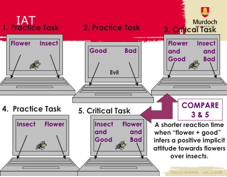
______________: Measures response time in milliseconds. Slower response times suggest internal conflict or hidden bias, used to see if you’re prejudiced
Faster pairings = stronger mental association
Good + insect (slow)
Good + European American vs. Bad + African American
Direct vs. Indirect Attitudes Measures?
______________: It’s questionable whether indirect attitudes predict behaviours, some psychologists believe it does, others don’t
Study with psychologists that believe vs. don’t believe in implicit attitudes
Explicit attitudes strongly predict behaviour
Implicit attitudes also uniquely predict behaviour, but more weakly
There is a relationship between explicit and implicit attitudes
Cognitive Dissonance Theory (Festinger 50s-70s)
______________: discomfort from holding inconsistent beliefs or behaviours
Festinger & Carlsmith Study
Festinger & Carlsmith Study
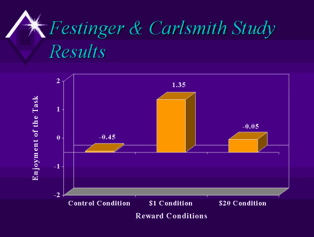
______________: Participants completed a boring task and are asked to lie and say it was enjoyable
Paid either $1 or $20
Results
Control Group: with no compensation, said the task was boring
$20 group: said task was okay (sufficient justification)
$1 group: said task was enjoyable
Explanation: $1 was not enough justification for lying, to reduce dissonance, participants changed their attitudes.
People come to believe in and love the things they have to suffer for
Predicts the opposite of behaviorism, which would say the more you’re rewarded, the more you’ll like the behaviour
Aronson and Mills
______________: Explains why initiation and hazing persist—People value groups more if they suffer to join them
Women interested in joining a discussion group on sex
Easy entry-> said the group was okay
Embarrassing initiation where you read something out loud while the others watch to see if you get embarrassed -> said the group was great
Giving smaller awards is more affective
University initiations (Acadia)
Suffering creates meaning and value. If everyone gets in easily, membership feels less special
Ways to Reduce Dissonance
Changing your attitude: Adjust your belief to match your behaviour “Smoking isn’t actually that harmful”
Distraction and Forgetting: Avoid thinking about the consistency, move on. Not looking at someone who’s fallen
Trivialization and Self-Affirmation: Focus on the positive aspects of yourself “Lots of things are unhealthy,” “I may smoke, but I’m a good person”
Denial of Responsibility: Blame external forces “it’s the cigarette company’s fault”
Adding Consonant Cognitions: Add new thoughts that justify the behaviour “Smoking helps me relax and it’s good for making friends”
Change Behaviour: Stop the behaviour causing the conflict. Quit smoking
Act Rationalization: Create logical-sounding justifications after the behaviour “I’ve had a stressful week, I deserve this”
Changing your attitude
Ways to Reduce Dissonance
______________: Adjust your belief to match your behaviour
“Smoking isn’t actually that harmful”
Distraction and Forgetting
Ways to Reduce Dissonance
______________: Avoid thinking about the consistency, move on.
Not looking at someone who’s fallen
Trivialization and Self-Affirmation
Ways to Reduce Dissonance
______________: Focus on the positive aspects of yourself
“Lots of things are unhealthy,” “I may smoke, but I’m a good person”
Denial of Responsibility
Ways to Reduce Dissonance
______________: Blame external forces
“it’s the cigarette company’s fault”
Adding Consonant Cognitions
Ways to Reduce Dissonance
______________: Add new thoughts that justify the behaviour
“Smoking helps me relax and it’s good for making friends”
Change Behaviour:
Ways to Reduce Dissonance
______________: Stop the behaviour causing the conflict
Quit smoking
Act Rationalization
Ways to Reduce Dissonance
______________: Create logical-sounding justifications after the behaviour
“I’ve had a stressful week, I deserve this”
When Prophecy Fails (Festinger)
______________: Real world study of cognitive dissonance
Mrs. Keech Case: claimed aliens warned of a catastrophic flood. Followers quit jobs, gave up possessions, and publicly committed
The flood did not happen, instead of abandoning the belief
She told the group their faith saved the world, sought publicity, becoming more committed
Why didn’t they leave? They had a deep conviction, not easily reversed (quitting jobs), and connected to the real world
Dissonance is strongest when… (Festinger)
Ex. Significant other is cheating on you
Deep conviction relevant to the behaviour (you love this person)
Must have committed behaviours not easily reversed (you’ve done things you can’t reverse, like a proposal or living together)
Belief must be connected to real world (they’re cheating on you)
Events must refute the belief (they’re cheating on you)
Others must support the beliefs
Greater commitment can reduce dissonance
What happens when you really believe in something or someone and they let you down? The rational thing is to leave, but what if you embrace them more
Festinger observed when you’re profoundly disappointed you actually become even more close
Deep conviction relevant to the behaviour
Dissonance is strongest when…
______________: The belief is very important to you.
Must have committed behaviours not easily reversed
Dissonance is strongest when…
______________:You have already made choices that are hard to undo.
Belief must be connected to real world
Dissonance is strongest when…
______________:The belief relates to real events or situations.
Events must refute the belief
Dissonance is strongest when…
______________:New evidence clearly contradicts what you believe.
Others must support the beliefs
Dissonance is strongest when…
______________:People around you reinforce the belief, making it harder to change.
New Look Model (Joel Cooper)
Dissonance occurs when:
Individual must realize the attitude discrepant action will have negative consequences
The individual must take responsibility for the action (if you’re not responsible, why would you experience any discomfort)
The individual must experience arousal (dissonance isn’t a physical thing, we think it’s related to this)
The individual must attribute arousal to action
Realize negative consequences
New Look Model
______________:The person recognizes their action conflicts with their attitude and may cause harm.
Take responsiblity for the action
New Look Model
______________:The person believes they freely chose the behaviour
Experience arousal
New Look Model
______________:The person feels psychological discomfort from the inconsistency
Attribute arousal to the action
New Look Model
______________:The person links their discomfort to their own behaviour
Dissonance and Choice
Students asked to argue for raising tuition
High choice (counterattitudnal) Participants chose to write the essay arguing for it
Low choice (required)
High choice (control) Participants chose to write about any topic
Cognitive dissonance theory predicts:
High choice + counter attitudinal behaviour → more dissonance -→ attitude change
Participants should shift their attitudes to be more favourable toward tuition increases
Low choices → less responsibility → less dissonance → less attitude change
Does choice matter?
Do attitudes affect behaviour?
For a long time, psychologists assumed yes. However research showed the relationship is more complicated
La Piere
Wicker
When?
Theory of Planned Behaviour
Resistant Attitdues
La-Piere (1934)
______________: Study with the Chinese couple where attitudes often do not match behaviours, as many restaurants said they would not serve Chinese customers but did
Wicker (1969)
______________: Reviewed many studies, found the correlation between attitudes and behaviour was small
This was troubling because social psychology studies attitudes to predict behaviour
Attitudes only predict behavior when….
Attitude Specificity: the attitude is very specific
General: “I value healthy eating”
Specific: “I don’t like pickles on burgers”
Attitude Strength: Strong attitudes like protesting against electric cars will predict behaviour
Attitude Accessibility: Recently activated attitudes predicted behaviour, such as doing a debate recently in a class
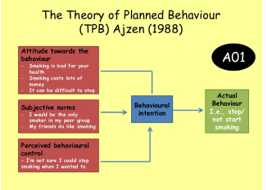
Theory of Planned Behaviour (Ajzen and Fishbein)
______________: Attitudes do not directly cause behaviour; they influence behavioural intention which then predicts behaviour
Intention can be predicted by:
Attitudes towards the behaviour: Do I think quitting smoking is good?
Subjective norms: Do friends or close others approve or disapprove?
Perceived behavioural control: Could I stop smoking?
If all three are strong → intention to quit increases → behaviour is more likely
Been used in safe sex practice research, or could you leave a partner
Attitudes So Resistant to Change (Hornsey and Fielding)
Attitude Roots
Jiu Jitsu Persuasion
Resistant Attitude Roots (Hornsey and Fielding)
Ideologies, Values and World Views
Conspiratorial Ideation
Vested Interests
Personal Identity Expression
Social Identity Needs
Fears and Phobias
Ideologies, Values and World Views
Resistant Attitude Roots
____________: Changing the attitudes threatens the persons entire belief system/worldview
Conspiratorial Ideation
Resistant Attitude Roots
____________: Evidence is dismissed as part of a larger conspiracy, think everything is out there to get them
Cancer Natural Cures—“They don’t want you to know about” believing they solved cancer but don’t want to tell you so they don’t go out of business
Vested Interests
Resistant Attitude Roots
____________:The person benefits from holding the belief. Changing it threatens self-image, power, or status
Ex. RateMyProfessor, colleagues who do not believe in student evaluation. Their _____________ is they’re the best prof ever
Personal Identity Expression
Resistant Attitude Roots
____________:Their attitude expresses who they are. Being contrarian or different is part of identity
Social Identity Needs
Resistant Attitude Roots
____________: Attitude is tied to group membership, changing it risks social rejection.
Fears and Phobias:
Resistant Attitude Roots
____________: Emotional roots override rational evidence
Ex. Fear of needles and vaccinations
Jiu Jitsu Persuasion (Hornsey and Fielding)
______________: Instead of directly attacking the belief identify the underlying root, address the deeper concern
There is often a surface/show argument (what they say) and an argument beneath the argument
You might suggest that if you don’t get vaccines, you’ll end up in a hospital full of needles