4/3: CLIMATE & BIOMES

0.0(0)
Studied by 0 people
call kaiCall Kai
learnLearn
examPractice Test
spaced repetitionSpaced Repetition
heart puzzleMatch
flashcardsFlashcards
GameKnowt Play
Card Sorting

1/12

encourage image

There's no tags or description

Looks like no tags are added yet.

Last updated 8:31 AM on 4/22/26
Name
Mastery
Learn
Test
Matching
Spaced
Call with Kai

No analytics yet

Send a link to your students to track their progress

13 Terms

1
New cards

Weather

- atmospheric conditions over a short period time

  • current conditions/individual events (today,tmrw,week)

  • what you get

2
New cards

Climate

- avg annual patterns of temp & precipitation over long periods of time

  • what you expect

3
New cards

Climatographs

- climate graph demonstrating avg temp & precipitation for a location over a course of a year

  • x-axis: months (jan-dec)

  • y-axis: bars; precipitation (rain/snow), line; temperature

  • helps determine biome, temp range, warmest/coldest months, wettest/driest months

  • large range = more seasonal climate, small range = stable climate

4
New cards

Davis Biome: Temperate Shrubland & Woodland

  • hot, dry summers

  • cool, moist winters

  • dense vegetation

  • vulnerable to summer fires

  • found globally: south africa, australia, asia
5
New cards
<p>Q: What determines Climate?</p>

Q: What determines Climate?

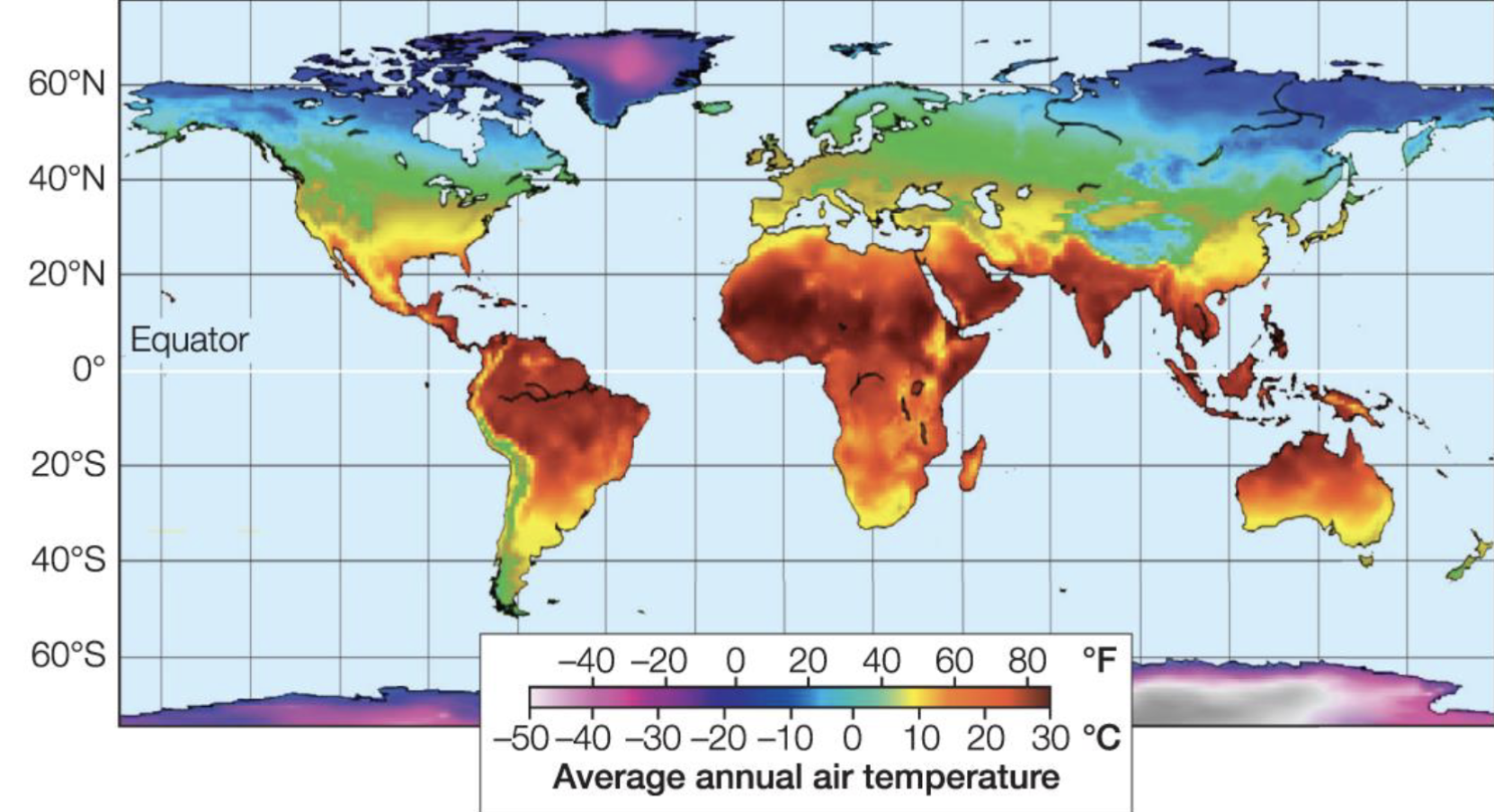
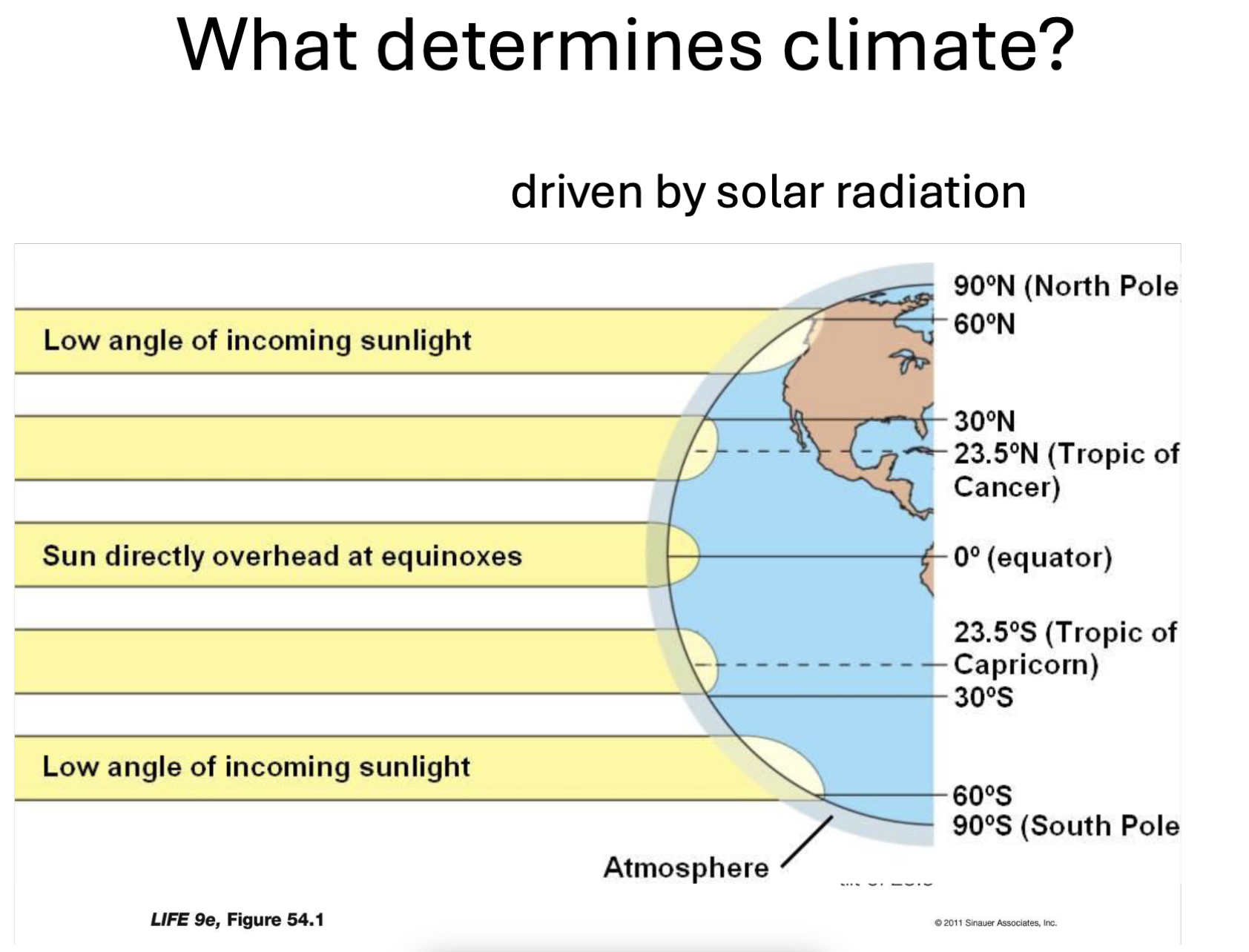
- incident solar radiation; amount of sunlight an area receives

  • near the equator/low lat (0˚-30˚): direct sunlight; hotter climates, tropical

  • temperate zones/mid lat (30˚-60˚): moderate climate, distinct seasons

  • pole regions/high lat (60˚-90˚): low angle of incoming sunlight; colder climates

  • Earth is tilted (~23.5˚); causing seasons
<p>- incident solar radiation; amount of sunlight an area receives</p><ul><li><p>near the equator/low lat (0˚-30˚): direct sunlight; hotter climates, tropical</p></li><li><p>temperate zones/mid lat (30˚-60˚): moderate climate, distinct seasons</p></li><li><p>pole regions/high lat (60˚-90˚): low angle of incoming sunlight; colder climates</p></li><li><p>Earth is tilted (~23.5˚); causing seasons</p></li></ul><p></p><p></p>
6
New cards

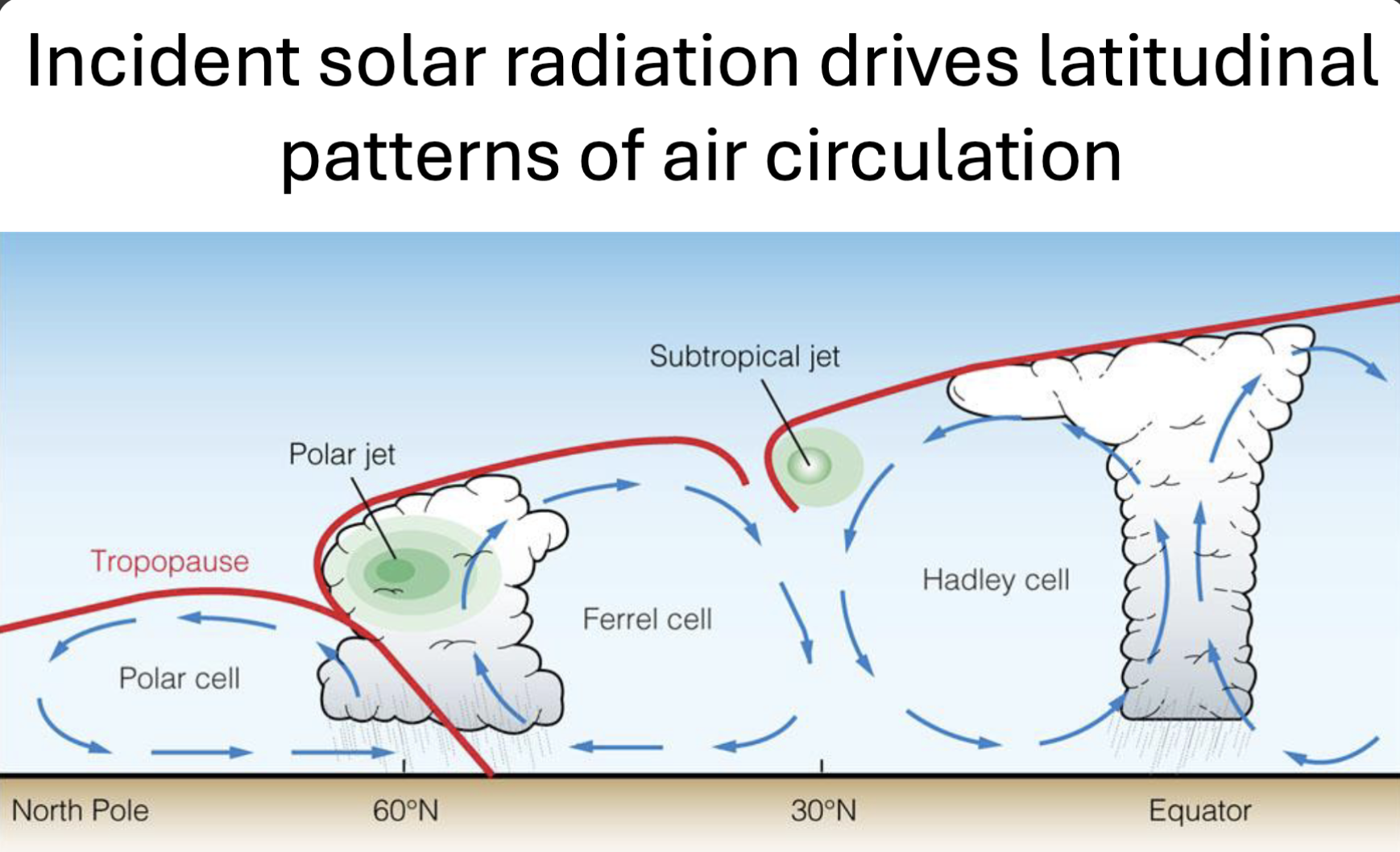
Q: What drives Latitudinal Patterns of Air Circulation?

- incident solar radiation (uneven heating from the Sun creates global wind patterns

  1. Hadley Cell (0˚-30˚) equator

  • air heats up & rises → cools & forms rain

  • creating wet tropical rainforests at 0˚ & dry desserts around 30˚ n & s equator

  1. Ferrel Cell (30˚-60˚) mid-latitudes

  • air flows from 30˚→ 60˚

  • middle circulation driven by other cells

  • creating variable weather; storms & changing conditions

  1. Polar Cell (60˚-90˚) high latitudes

  • cold air sinks at poles

  • creating cold, dry climates

Jet Streams (red lines) - fast moving winds found btwn cells
<p>- incident solar radiation (uneven heating from the Sun creates global wind patterns</p><ol><li><p>Hadley Cell (0˚-30˚) equator</p></li></ol><ul><li><p>air heats up &amp; rises → cools &amp; forms rain</p></li><li><p>creating wet tropical rainforests at 0˚ &amp; dry desserts around 30˚ n &amp; s equator</p></li></ul><p></p><ol start="2"><li><p>Ferrel Cell (30˚-60˚) mid-latitudes</p></li></ol><ul><li><p>air flows from 30˚→ 60˚</p></li><li><p>middle circulation driven by other cells</p></li><li><p>creating variable weather; storms &amp; changing conditions</p></li></ul><p></p><ol start="3"><li><p>Polar Cell (60˚-90˚) high latitudes</p></li></ol><ul><li><p>cold air sinks at poles</p></li><li><p>creating cold, dry climates</p></li></ul><p></p><p>Jet Streams (red lines) - fast moving winds found btwn cells</p><p></p>
7
New cards

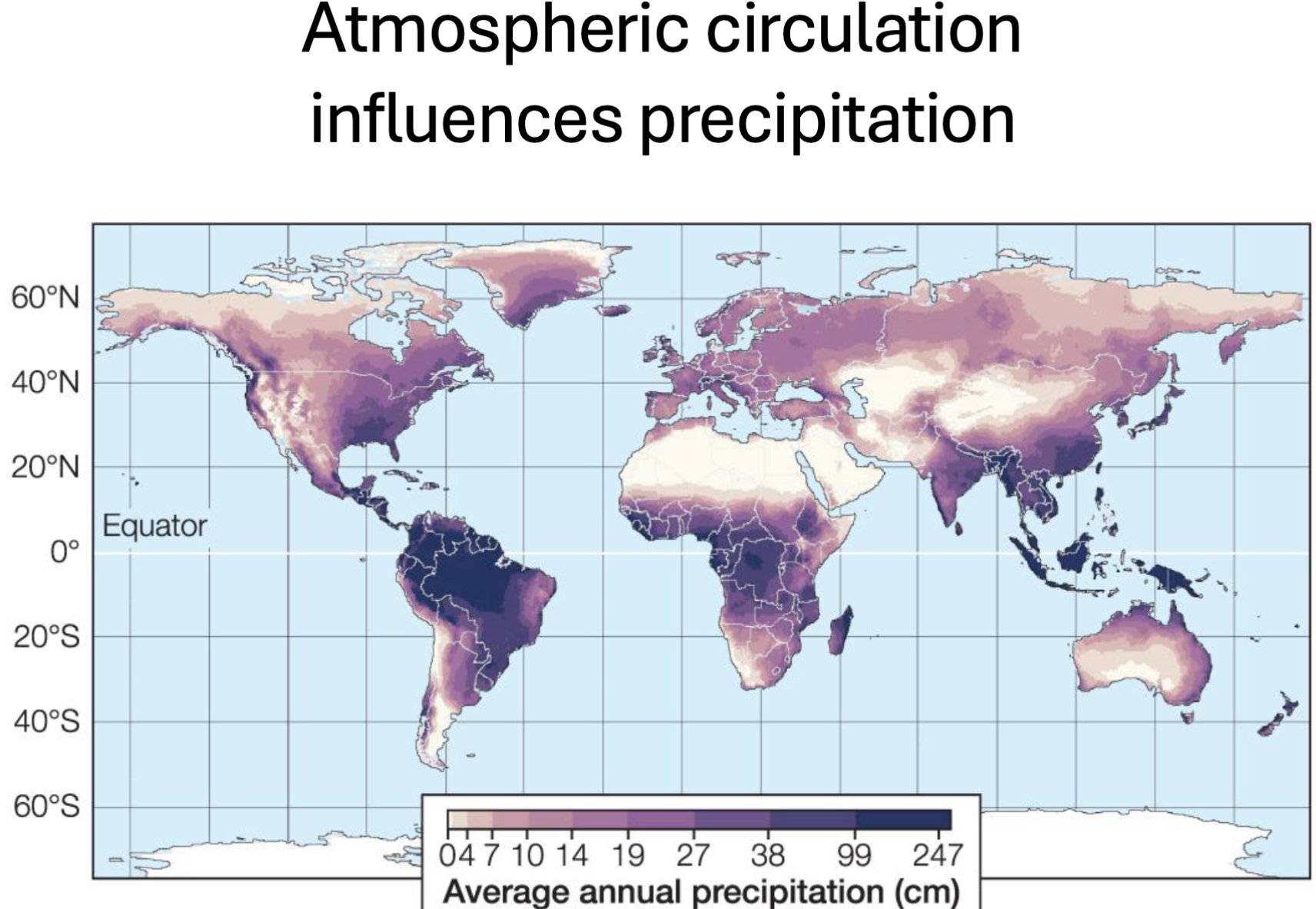
Q: What influences Precipitation?

- atmospheric circulation

- rising warm air → (evaporates & cools) forms clouds → heavy raina

  • high precipitation near equator (0˚) due to strong sunlight (rainforests; amazon, congo)

  • little to no precipitation around (30˚) due to sinking air warming (desserts; sahara, arabian, australian)

  • moderate/dynamic precipitation (30˚-60˚) due to interactions of warm & cold air masses along the polar front (U.S., europe)

  • low precipitation (60˚-90˚) due to cold air sinking & little moisture in air (north & south poles, alaska, antartica)
<p>- atmospheric circulation</p><p>- rising warm air → (evaporates &amp; cools) forms clouds → heavy raina</p><ul><li><p><strong>high precipitation</strong> <u>near equato</u>r (0˚) due to strong sunlight (rainforests; amazon, congo)</p></li><li><p><strong>little to no precipitation</strong> <u>around (30˚)</u> due to sinking air warming (desserts; sahara, arabian, australian)</p></li><li><p><strong>moderate/dynamic precipitation</strong> <u>(30˚-60˚)</u> due to interactions of warm &amp; cold air masses along the polar front (U.S., europe)</p></li><li><p><strong>low precipitation</strong> <u>(60˚-90˚)</u> due to cold air sinking &amp; little moisture in air (north &amp; south poles, alaska, antartica)</p></li></ul><p></p>
8
New cards

Q: What influences Vegetation?

- controls what plants can survive in a region through temp & precipitation

- influences type, density, & diversity of vegetation

  • warm & wet → dense vegetation

  • hot & dry → sparse vegetation

  • moderate temp & rain → grasslands

  • cold temp → limited vegetation

<p>- controls what plants can survive in a region through temp &amp; precipitation</p><p>- influences type, density, &amp; diversity of vegetation</p><ul><li><p>warm &amp; wet → dense vegetation</p></li><li><p>hot &amp; dry → sparse vegetation</p></li><li><p>moderate temp &amp; rain → grasslands</p></li><li><p>cold temp → limited vegetation</p></li></ul><p></p>
9
New cards

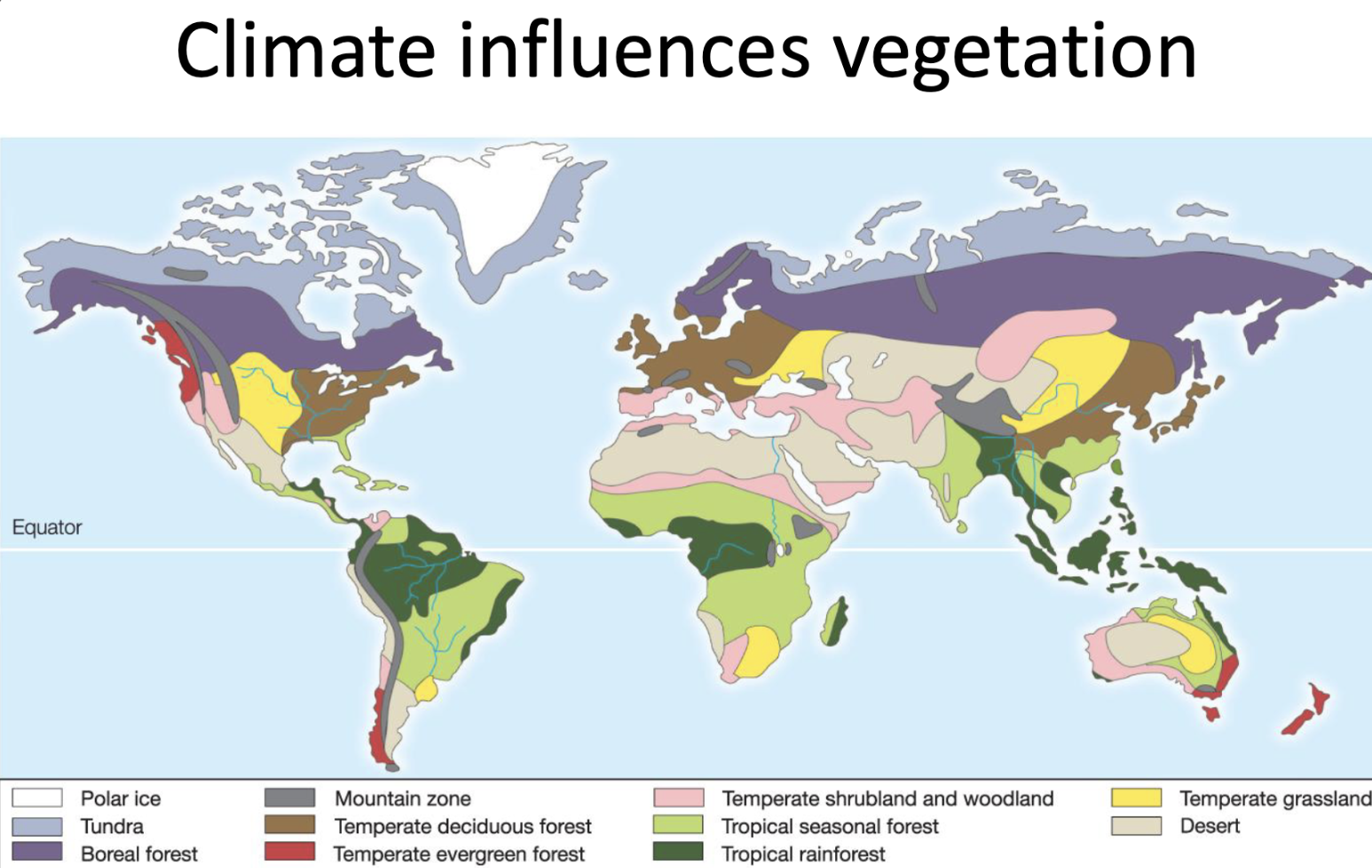
Biomes

- the world’s major communities, classified by predominant vegetation & characterized by adaptations of organisms to a particular climate.

  • tundra

  • boreal forest

  • mountains

  • temperate deciduous forest

  • temperate evergreen forest

  • temperate shrubland & woodland

  • tropical seasonal forest & savannahs

  • tropical rain forest

  • temperate grassland

  • dessert

10
New cards

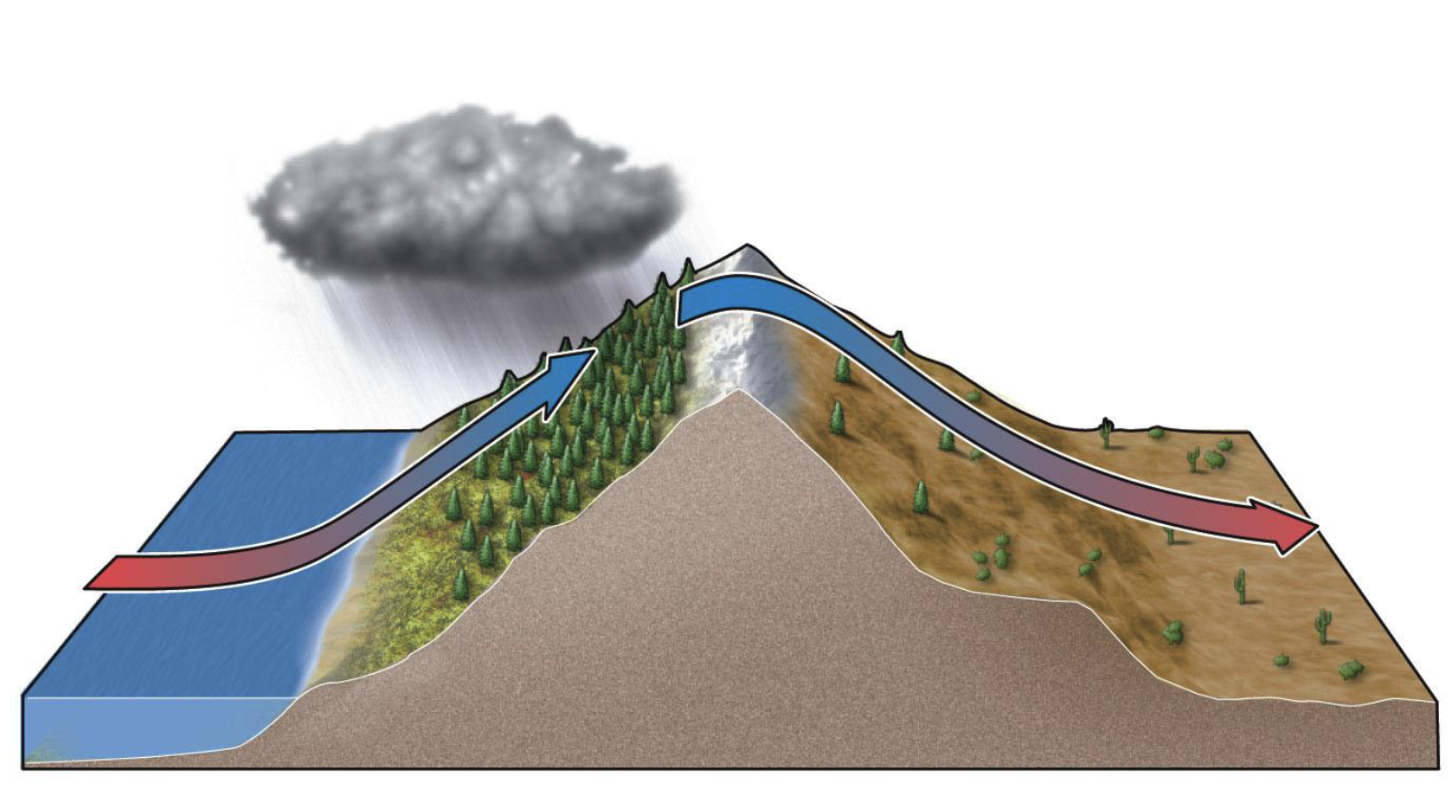
Rain Shadow Effect

- moist air rises over a mountain, cools & precipitates on the windward side → then descends as warm and dry air on the leeward side, creating dry conditions

  • double whammy - occurs when dry air picks up moisture once again & as it ascends it creates an opportunity for another rain shadow effect (wet, dry, wet, dry)
<p>- moist air rises over a mountain, cools &amp; precipitates on the windward side → then descends as warm and dry air on the leeward side, creating dry conditions</p><ul><li><p>double whammy - occurs when dry air picks up moisture once again &amp; as it ascends it creates an opportunity for another rain shadow effect (wet, dry, wet, dry)</p></li></ul><p></p>
11
New cards

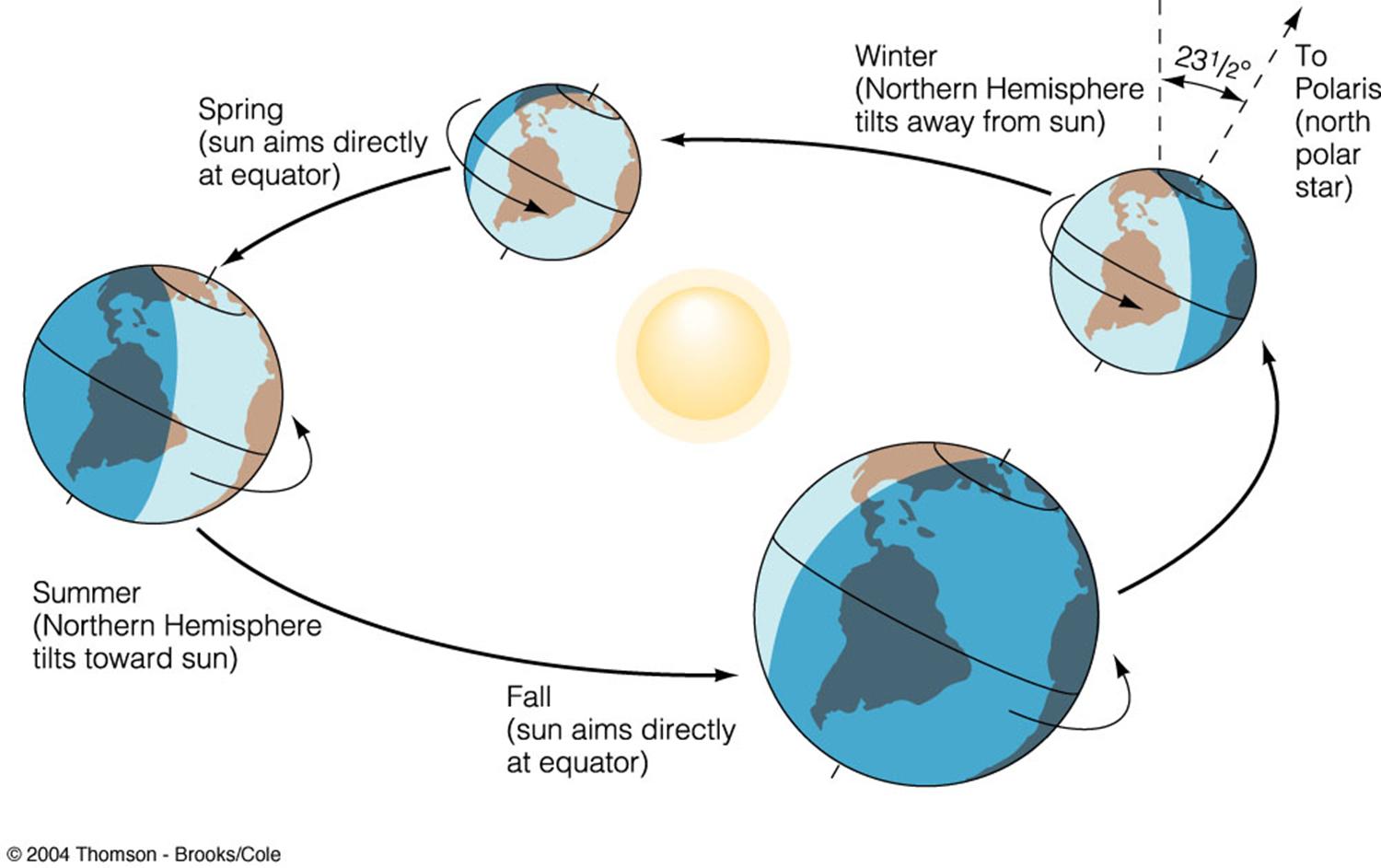
Seasonal Variation in Climate

- change in temp, sunlight, & precipitation over the year (seasons)

  • caused by Earth’s tilt (23.5˚) & as it orbits the sun

  • diff parts of Earth get diff angles of sunlight
<p>- change in temp, sunlight, &amp; precipitation over the year (seasons)</p><ul><li><p>caused by Earth’s tilt (23.5˚) &amp; as it orbits the sun</p></li><li><p>diff parts of Earth get diff angles of sunlight</p></li></ul><p></p>
12
New cards

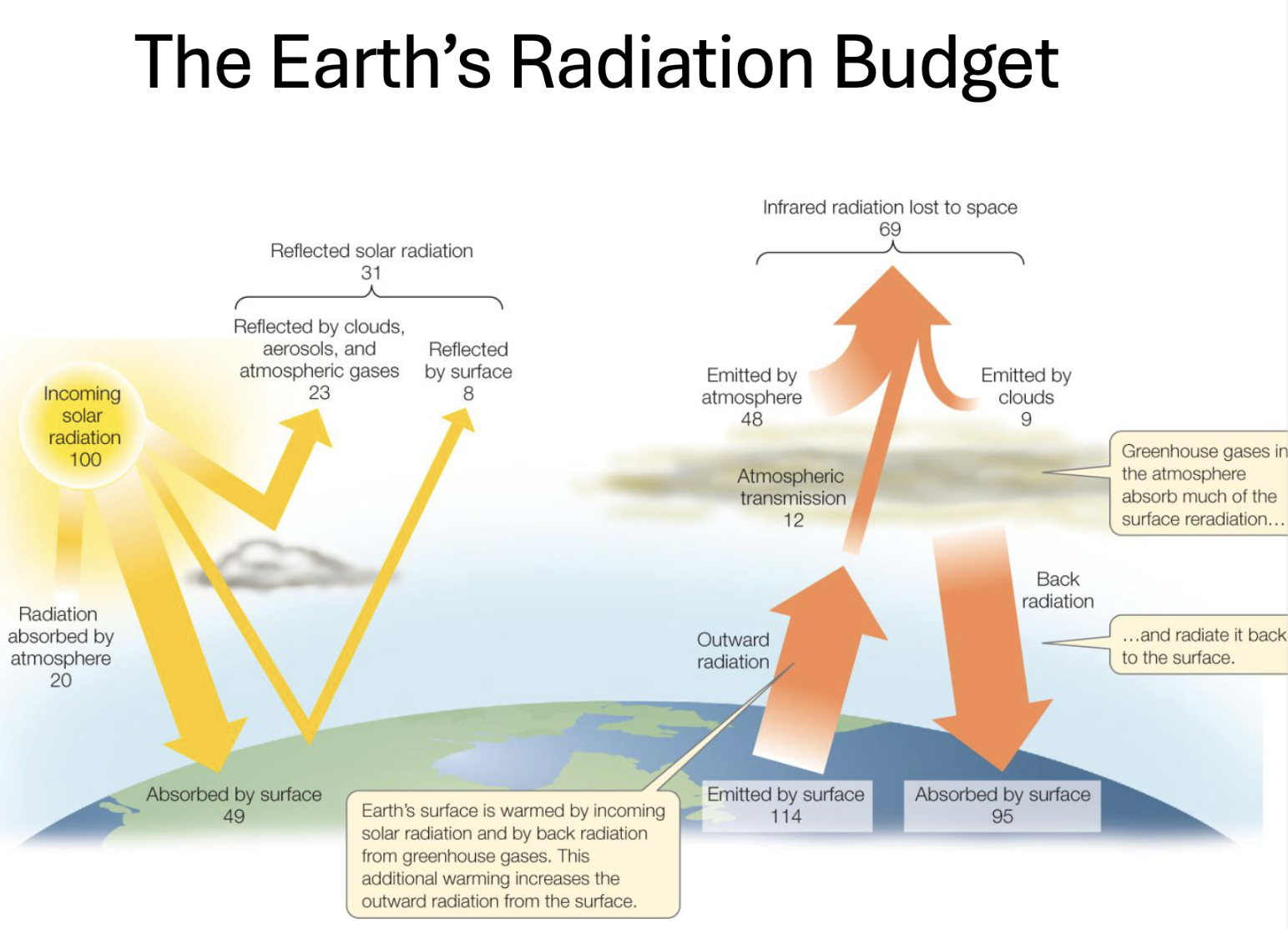
Earth’s Radiation Budget

- the process of incoming & outgoing energy from the sun emitted or reflected by Earth into space

  1. Incoming solar energy (100 units of sunlight)

- 31% reflected back to space

  • 23% by clouds/atmosphere

  • 8% by Earth’s surface

- 69% is absorbed

  • 20% by atmosphere

  • 49% by Earth’s surface

  • absorbed energy warms planet

  1. Re-emitted energy

  • absorbed energy gets released as infrared (heat)

  • surface emits 114 units of heat upward

  1. Greenhouse effect

  • greenhouse gases absorb & trap most of outgoing heat

  • and send back down to Earth (back radiation) & out to space

  1. Back radiation

  • surface absorbs 95 units

  • heating Earth by sunlight & heat trapped & re-radiated by atmosphere

  1. Energy leaving Earth

  • 69 units are lost to space

<p>- the process of incoming &amp; outgoing energy from the sun emitted or reflected by Earth into space</p><ol><li><p>Incoming solar energy (100 units of sunlight)</p></li></ol><p>- 31% <strong>reflected</strong> back to space</p><ul><li><p>23% by clouds/atmosphere</p></li><li><p>8% by Earth’s surface</p></li></ul><p>- 69% is <strong>absorbed </strong></p><ul><li><p>20% by atmosphere</p></li><li><p>49% by Earth’s surface</p></li><li><p>absorbed energy warms planet</p></li></ul><p></p><ol start="2"><li><p>Re-emitted energy</p></li></ol><ul><li><p>absorbed energy gets released as infrared (heat)</p></li><li><p>surface emits 114 units of heat upward</p></li></ul><p></p><ol start="3"><li><p>Greenhouse effect</p></li></ol><ul><li><p>greenhouse gases absorb &amp; trap most of outgoing heat</p></li><li><p>and send back down to Earth (back radiation) &amp; out to space</p></li></ul><p></p><ol start="4"><li><p>Back radiation</p></li></ol><ul><li><p>surface absorbs 95 units </p></li><li><p>heating Earth by sunlight &amp; heat trapped &amp; re-radiated by atmosphere</p></li></ul><p></p><ol start="5"><li><p>Energy leaving Earth</p></li></ol><ul><li><p>69 units are lost to space</p></li></ul><p></p>
13
New cards

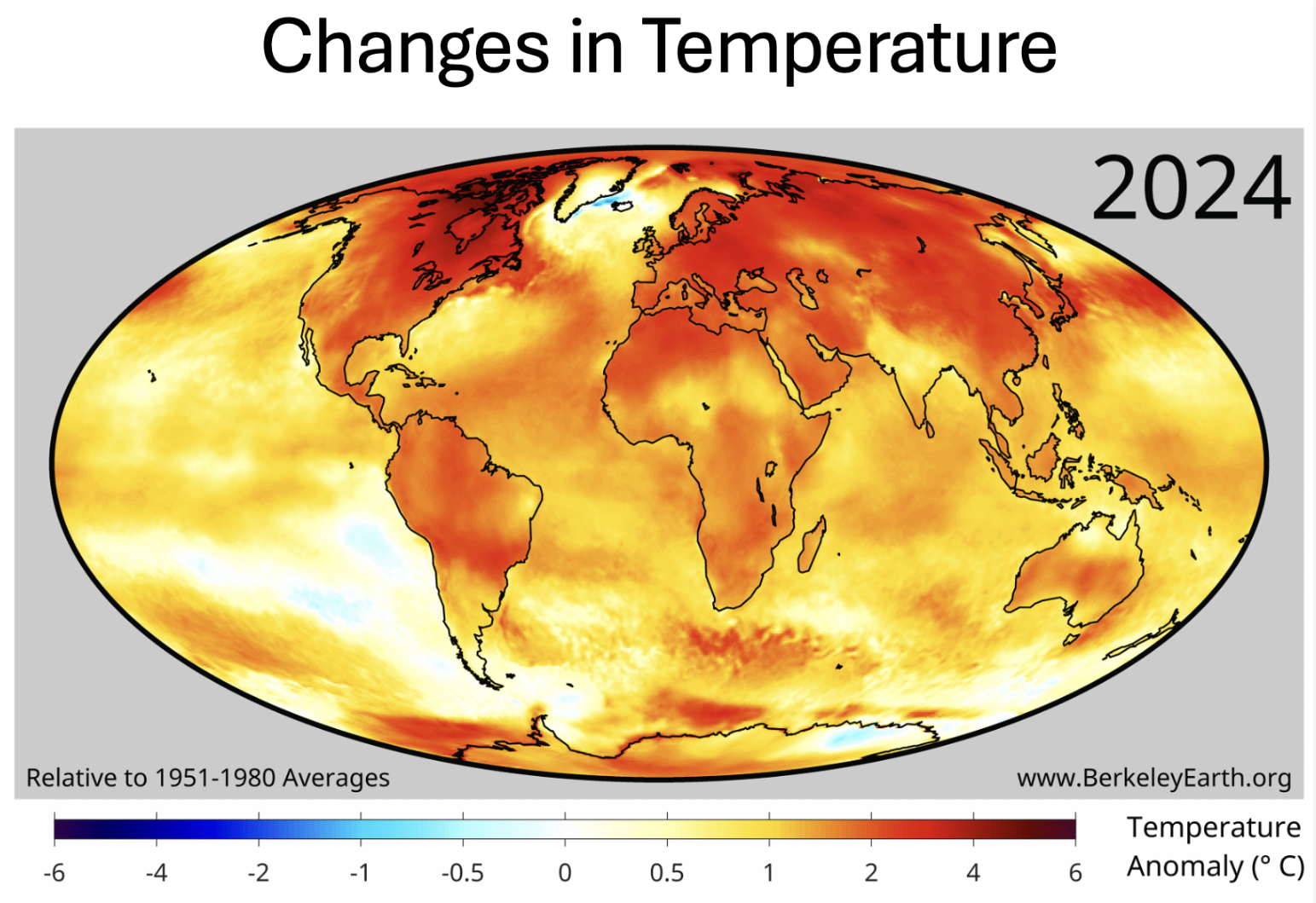
Polar Amplification

- Artic & Antarctic warm faster than global abg as planet heats up

  • solar radiation reflects off sea ice, but as it mets deep ocean absorbs heat & increases temp
<p>- Artic &amp; Antarctic warm faster than global abg as planet heats up</p><ul><li><p>solar radiation reflects off sea ice, but as it mets deep ocean absorbs heat &amp; increases temp</p></li></ul><p></p>