Order Characiformes: Systematics, Morphology, Biogeography, and Reproductive Strategies
 Call Kai
 Learn
Learn Practice Test
 Spaced Repetition
 Match
Match Flashcards
 Knowt Play
1/76

There's no tags or description
Looks like no tags are added yet.
Name | Mastery | Learn | Test | Matching | Spaced | Call with Kai |
|---|
No analytics yet
Send a link to your students to track their progress
77 Terms
What class do Characiformes belong to?
Actinopterygii - 'ray-finned fishes'
How many species are in the order Characiformes?
About 2,091 species
What is the largest family within Characiformes?
Characidae, with 1,000 known species
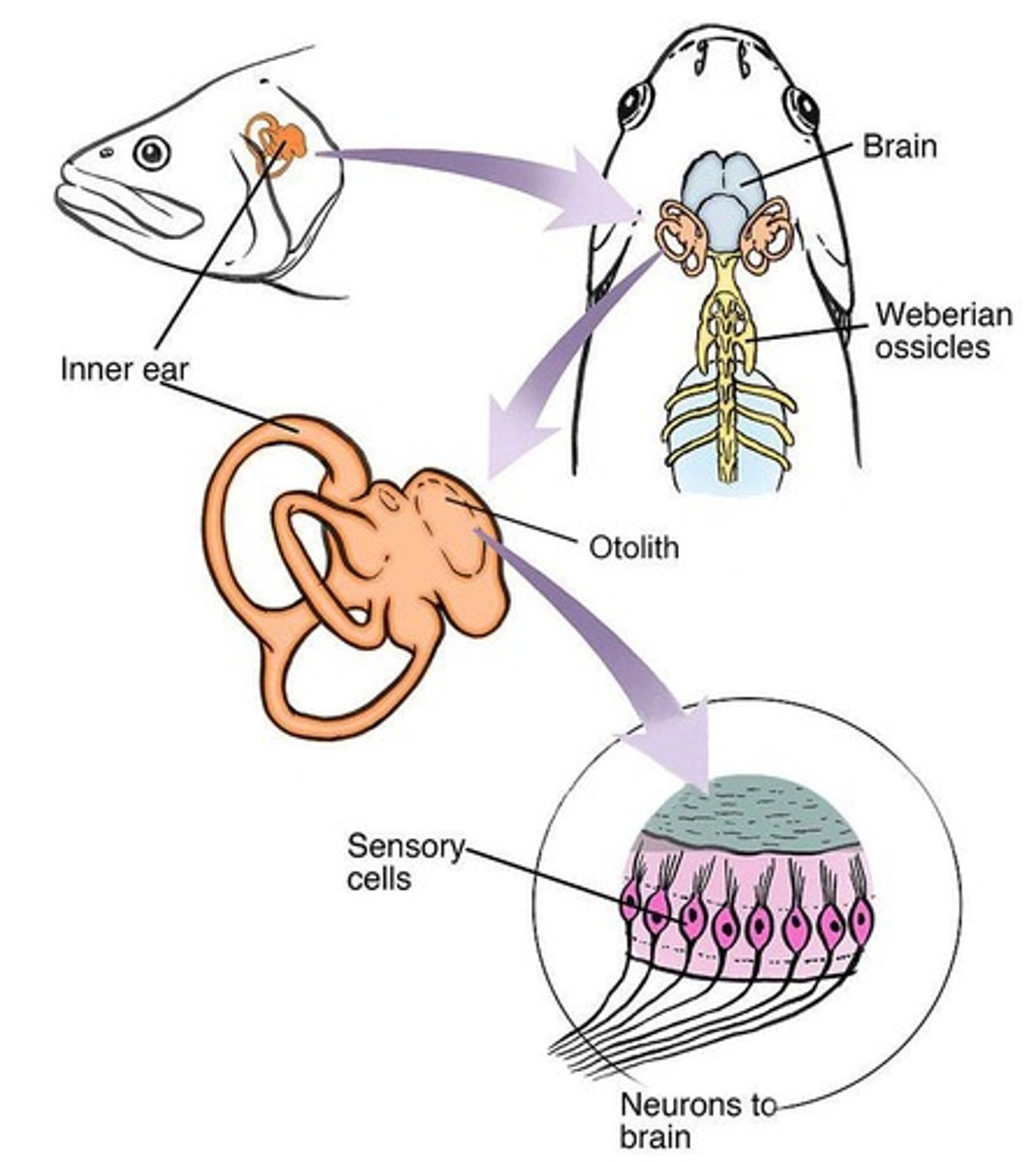
What is a key characteristic of Characiformes?
The Weberian apparatus
Name one family in the order Characiformes.
Acestrorhamphidae: American tetras
What is the habitat preference of most Characiformes?
Predominantly tropical environments
What temperature range do most Characiformes prefer?
72-82°F
What are the two types of water environments Characiformes can thrive in?
Lotic (flowing water) and lentic (still water)
What is the significance of the breakup of Africa and South America for Characiformes?
It was a primary driver that separated ancestral Characiformes.
What adaptations do neotropical characids have for low-oxygen environments?
Lip-like protrusions that aid surface respiration.
What is the size range of Characiformes?
From less than 2 cm to over 1 m
What is a unique trait of cave-dwelling Mexican tetras?
They have no eyes and are unpigmented.
What is the diet of Characiformes?
Extremely diverse, including detritivory, herbivory, planktivory, insectivory, and piscivory.
What is lepidophagy in Characiformes?
Feeding on scales of larger fish.
What distinguishes the Neon tetra from the Cardinal tetra?
The Neon tetra has a red stripe that only goes from the tail to the middle of the body.
What is the function of the Weberian apparatus?
It enhances hearing by connecting the swim bladder and inner ear.
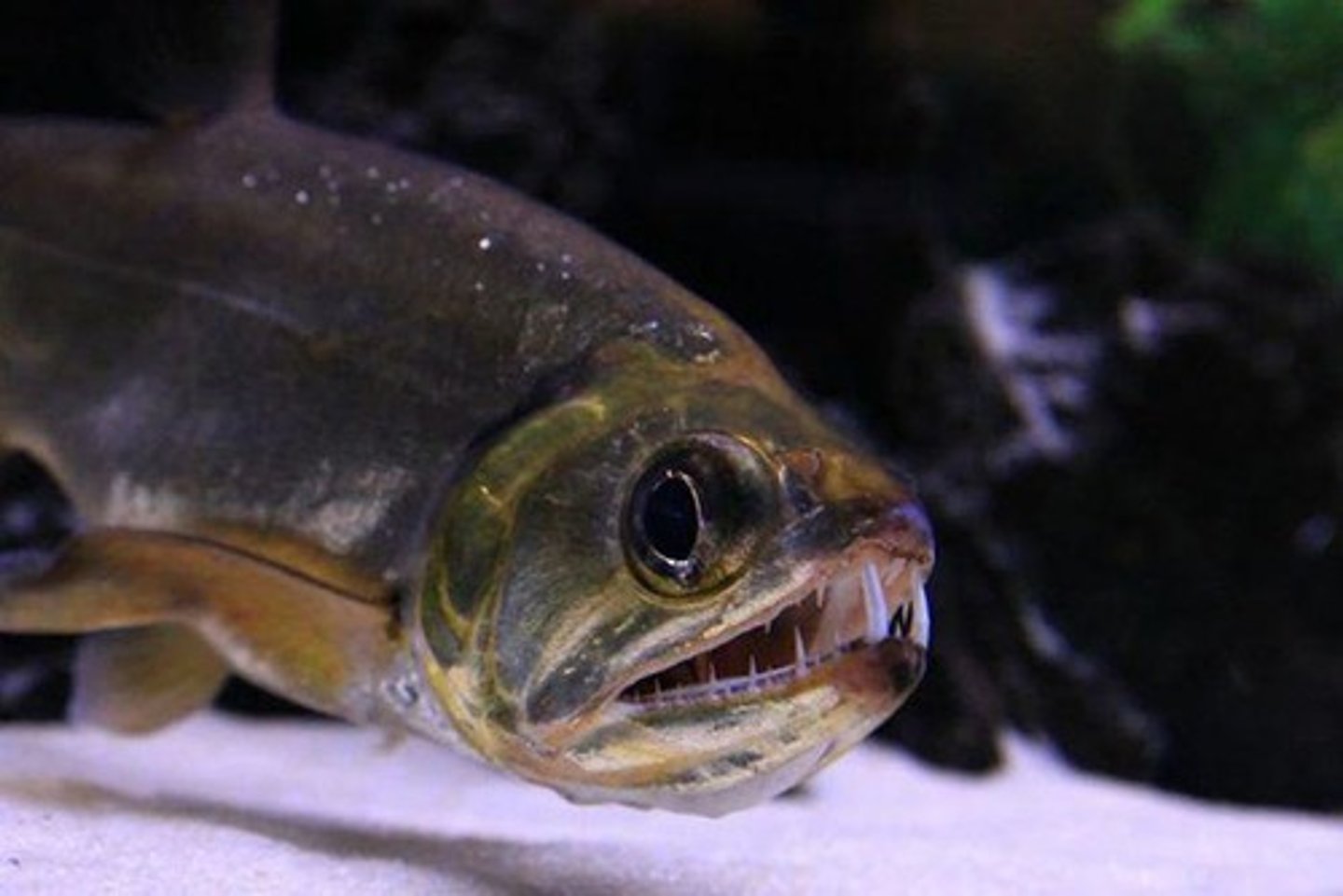
What type of teeth do Characiformes have?
Well-developed teeth, often specialized for carnivory, herbivory, or omnivory.
What are the two forms of the Mexican tetra?
Surface dwelling (with eyes) and cave dwelling (no eyes).
What is the significance of secondary sexual dimorphism in Characiformes?
It involves bony hooks on fins and modified fin shapes.
What is the primary diet strategy of Roeboides prognathus?
Lepidophagy, or feeding on scales.
What is the smallest member of Characiformes?
Bolivian pygmy blue characin at 1.4-1.7 cm.
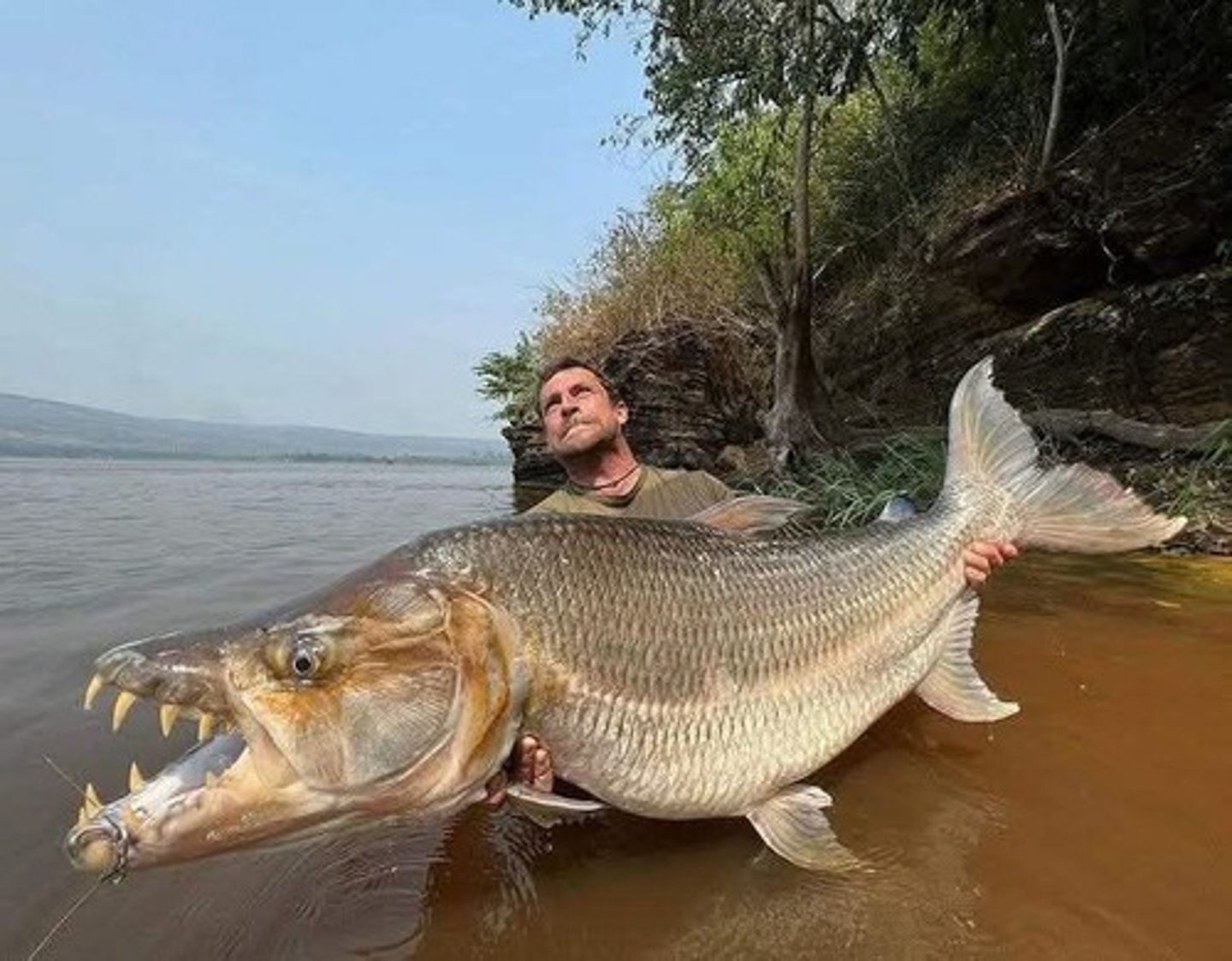
What is the largest member of Characiformes?
Goliath tigerfish at 1.3 meters.
What type of environments do Characiformes prefer?
Habitats with abundant vegetation and submerged roots.
What is the ecological significance of the Amazon and Orinoco Basins for Characiformes?
They contain the highest diversity of Characiformes.
What is the term for the adaptation of cave-dwelling fish to save energy?
Regressive trait.
What are the two feeding strategies mentioned for Characiformes?
Surface feeding and group predation.
What is the primary reproductive strategy of most Characiformes?
Oviparity (egg-laying)
What type of fertilization is commonly observed in Characiformes?
External fertilization
Which subfamily of Characiformes is an exception to external fertilization?
Subfamily Glandulocaudinae
What is spawning migration?
The movement of fish to specific locations for breeding.
What does high fecundity in Characiformes indicate?
A high number of eggs produced with no parental care.
What is associated with low fecundity in Characiformes?
Parental care
What is paedomorphosis in the context of Characiformes?
Retention of juvenile features in adult fish.
What is progenesis?
A form of paedomorphosis where sexual maturity is reached at an earlier developmental stage.
How long do small species of Characiformes typically take to mature?
6-12 months
What is the spawning season duration for larger species of Characiformes?
2-3 months
What unique reproductive behavior do splash tetras (Copella arnoldi) exhibit?
Terrestrial spawning during the rainy season.
What is the significance of floodplain nurseries for Characiformes?
They provide essential habitats for juvenile fish.
What are the two main types of fisheries associated with Characiformes?
Artisanal & commercial fisheries.
What is the IUCN Red List?
A list that categorizes species based on their conservation status.
How many Characiformes are classified as critically endangered according to the IUCN Red List?
7 species
What are some threats to Characiformes populations?
Habitat loss, damming, climate change, and pollution.
What is the impact of the Red Bellied Pacu (Piaractus brachypomus) as an invasive species?
It competes with native species and has no natural predators.
What is the typical diet of Characiformes?
Varies widely, including herbivory and detritivory.
What role does the adipose fin serve in Characiformes?
Believed to aid in swimming efficiency and stability.
What is the significance of dermal lip protrusions in some Characiformes?
They may assist in aquatic surface respiration.
What is the typical lifespan of larger Characiformes species before maturity?
Up to 7 years.
What are the two types of feeding strategies observed in Roeboides prognathus and Belonophago hutsebouti?
Unique diets and specialized feeding strategies.
What is the primary focus of aquaculture related to Characiformes?
Food production and aquarium trade.
What is the spawning season duration for small species of Characiformes?
3-6 months.
How many species of Characiformes are classified as vulnerable?
31 species.
What two fish species were studied in the comparative biomechanics research?
Piranha (Pygocentrus nattereri) and Pacu (Colossoma macropomum)
What is the primary focus of the study on piranha and pacu?
To examine how tooth design influences feeding performance.
What traditional assumption about feeding performance is challenged in the study?
That bite force is the main factor determining feeding performance.
What alternative idea is proposed regarding feeding performance?
Tooth structure and material properties may be more important than bite force.
What are the two layers of teeth mentioned in the study?
Enameloid (outer layer) and Dentin (inner layer).
How do piranha teeth differ from pacu teeth in structure?
Piranha teeth are tricuspid and conically-shaped for piercing, while pacu teeth have a broad occlusal surface for crushing.
What is the bite force range for piranhas?
Approximately 20-80 N.
What is the bite force range for pacus?
Approximately 6-72 N.
What is the significance of the DEJ (Dentin-Enamel Junction) structure in piranhas?
It is smooth and concentrates higher stress at the tip of the tooth.
How does the DEJ structure in pacus differ from that in piranhas?
Pacu has an interlocking DEJ that distributes stress and resists cracking.
What was the key finding regarding the teeth of piranha and pacu?
They have hierarchically structured teeth adapted for different diets.
What dietary specialization do piranhas exhibit?
Carnivorous, adapted for cutting flesh.
What dietary specialization do pacus exhibit?
Durophagous, adapted for crushing hard foods.
What methods were used to analyze the teeth of the two species?
Microscopy, spectroscopy, X-ray imaging, nanoindentation, and finite element modeling.
What does the study suggest about the relationship between tooth structure and diet?
There are trade-offs in tooth form, composition, and structure that suit each species' dietary strategy.
What is the role of iron in pacu teeth?
Higher iron content makes their teeth harder.
What is the research question posed in the study?
What determines feeding performance in biting animals?
What is the significance of the 'structure → properties → function' relationship in the study?
It explains how the arrangement of components dictates a material's behavior and effectiveness.
What evolutionary pressures might explain the difference in bite force to size ratio between piranhas and pacus?
Food availability and ecological niches.
What type of feeding performance is associated with piranha teeth?
Piercing and slicing due to their sharp design.
What type of feeding performance is associated with pacu teeth?
Compression and grinding due to their broad shape.
What was the purpose of using palm seeds in the experiments?
To test the crushing effectiveness of pacu teeth.
How does the study contribute to understanding fish biodiversity?
It highlights the adaptations of teeth in relation to dietary specialization in different species.
What is a notable characteristic of piranha muscle compared to pacu muscle?
Piranhas have a larger adductor mandibulae muscle, contributing to their greater bite force.
What is the main conclusion drawn from the study?
Piranha and pacu have evolved distinct tooth structures that are specialized for their respective diets.
What does the study imply about the evolution of tooth structure in relation to diet?
Tooth structure evolves in response to dietary needs and environmental factors.