Abdomen II: peritoneum, esophagus, stomach
 Call Kai
 Learn
Learn Practice Test
 Spaced Repetition
 Match
Match Flashcards
 Knowt Play
1/38

There's no tags or description
Looks like no tags are added yet.
Name | Mastery | Learn | Test | Matching | Spaced | Call with Kai |
|---|
No analytics yet
Send a link to your students to track their progress
39 Terms
what does the small intestine consist of?
duodenum, jejunum, and ileum
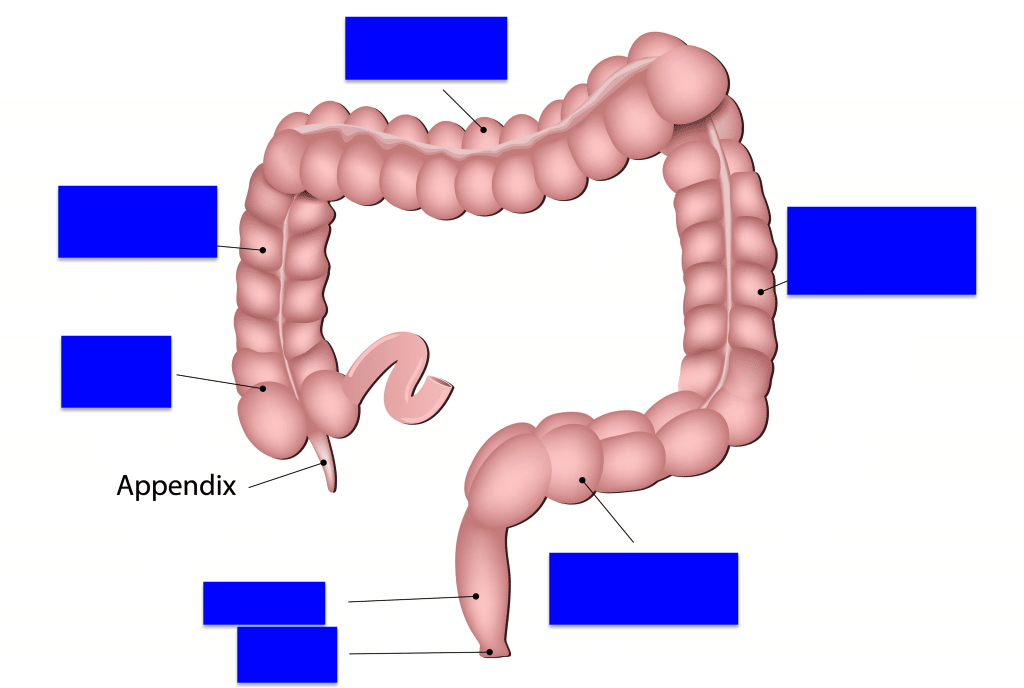
label the large intestine from left to right
cecum, ascending colon, transverse colon, descending colon, signoid colon, rectum, and anal canal
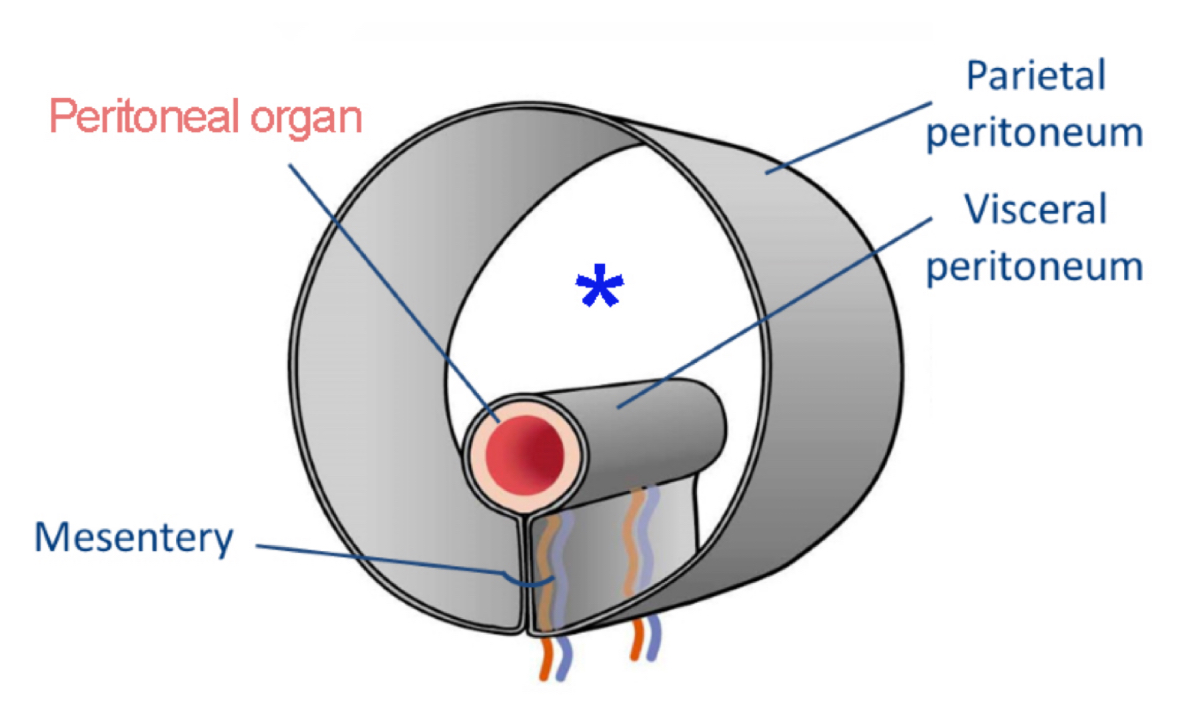
what lines the walls of the abdominal and pelvic cavities? what lines the organs directly?
the peritoneum: a thin, serous membrane— touches the visceral peritoneum.
the visceral peritoneum
what is the peritoneal cavity?
a potential space between the parietal and visceral layers
why is the peritoneal cavity not completely closed in female?
to allow for communication with the exterior of the body through the uterine tubes, uterus, and vagina
a patient has an abnormal accumulation of serous fluid in the peritoneal cavity. what do we diagnose them with?
ascites
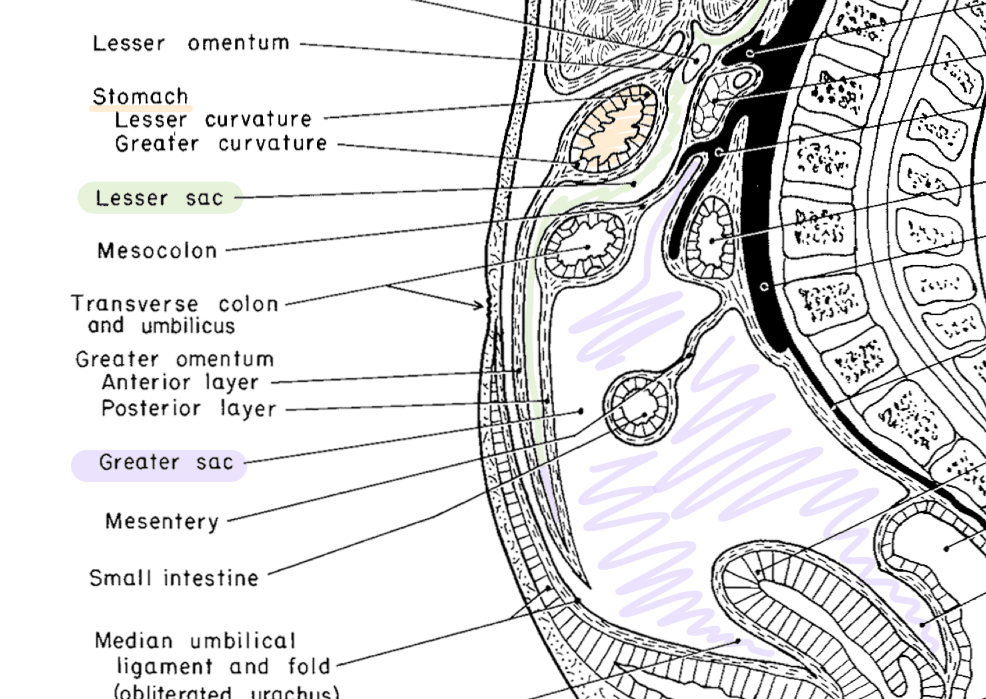
what are the 2 division of the peritoneal cavity?
the greater sac which extends from the diaphragm to the pelvis and the lesser sac which allows for free movement of the stomach.
what are retroperitoneal organs?
organs covered only in front by peritoneum and not suspended by a mesentery
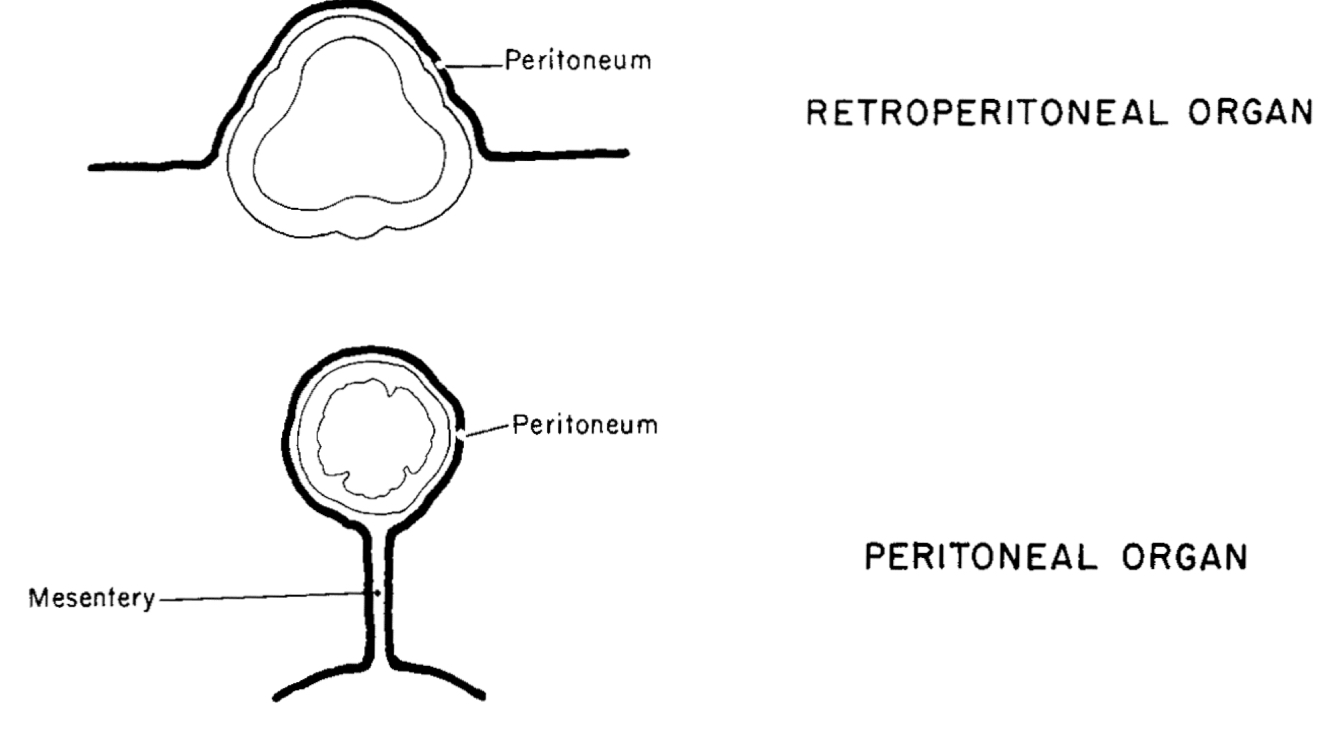
is peritoneal and intraperitoneal the same?
No. An intraperitoneal structure is within the peritoneal cavity.
what is an omentum
specialized area of the peritoneum: attaches the stomach to another viscus (transverse colon, liver)
what is a mesentery?
specialized area of the peritoneum: attaches part of the intestines to the posterior abdominal wall
what nerve is the diaphragmatic peritoneum innervated by?
phrenic nerve
what nerve is the peritoneum in the pelvis innervated by?
obturator nerve
parietal peritoneum is sensitive to what? while the visceral peritoneum is sensitive to what?
pain, pressure, touch, and temperature vs. stretch
what is nerve is the visceral peritoneum innervated by?
autonomic nerve fibers
what type of nerve is phrenic and obturator nerve?
somatic nerve
sensation of pain is poorly localized. what condition can we assume?
overdistension of viscera
intraperitoneal infectors remain localized or delocalized in the presence of infections?
localized
where are large amounts of fat stored?
in the peritoneal ligaments, mesenteries, and greater omentum.
the esophagus enters the abdomen through ___ and enters the stomach at ___.
esophageal hiatus at T10, cardiac orifice
what is the thoracic part of the esophagus called?
superior mediastinum
what are the 3 components of the gastroesophageal junction?
esophageal muscle, diaphragmatic sling, and angle of entrance of the esophagus into the stomach
what is the esophagus innervated by?
vagus nerve and thoracic sympathetic trunks via the greater splanchnic nerve
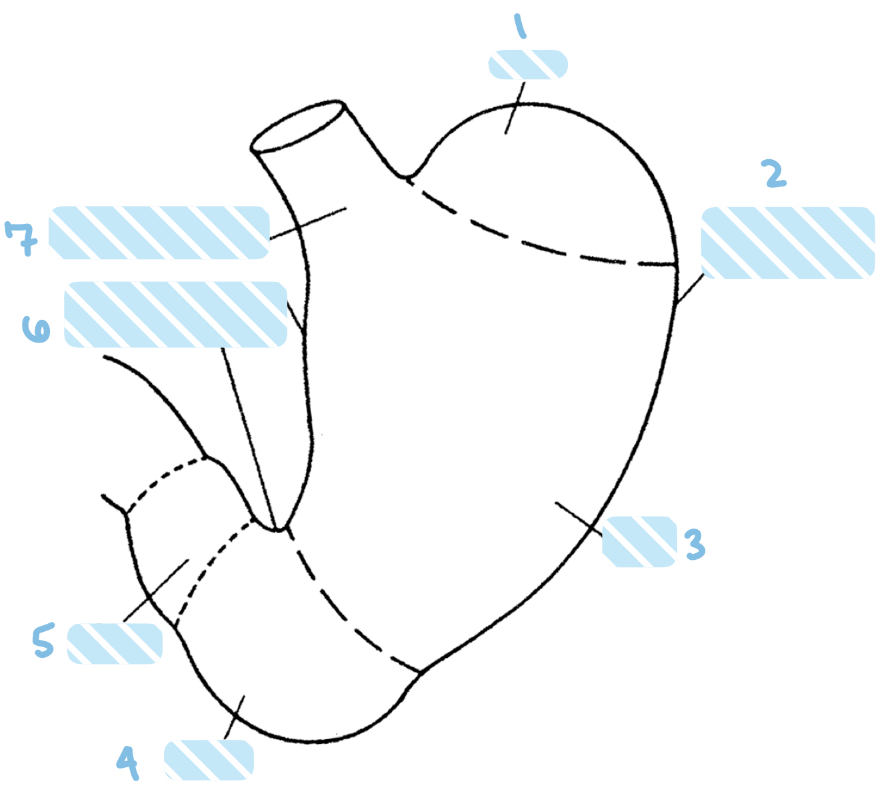
label in order
fundus, greater curvature, body, antrum, pylorus, incisura angularis, lesser curvature, cardiac orifice (most fixed)
what 6 components does the stomach synthesize?
HCl, pepsinogen, intrinsic factor, mucus, gastrin, blood supply
what aids in vitamin B12 absorption?
intrinsic factors
this increases acid secretion, pepsinogen secretion, and overall motility
gastrin
what is the mother artery of the stomach?
celiac trunk
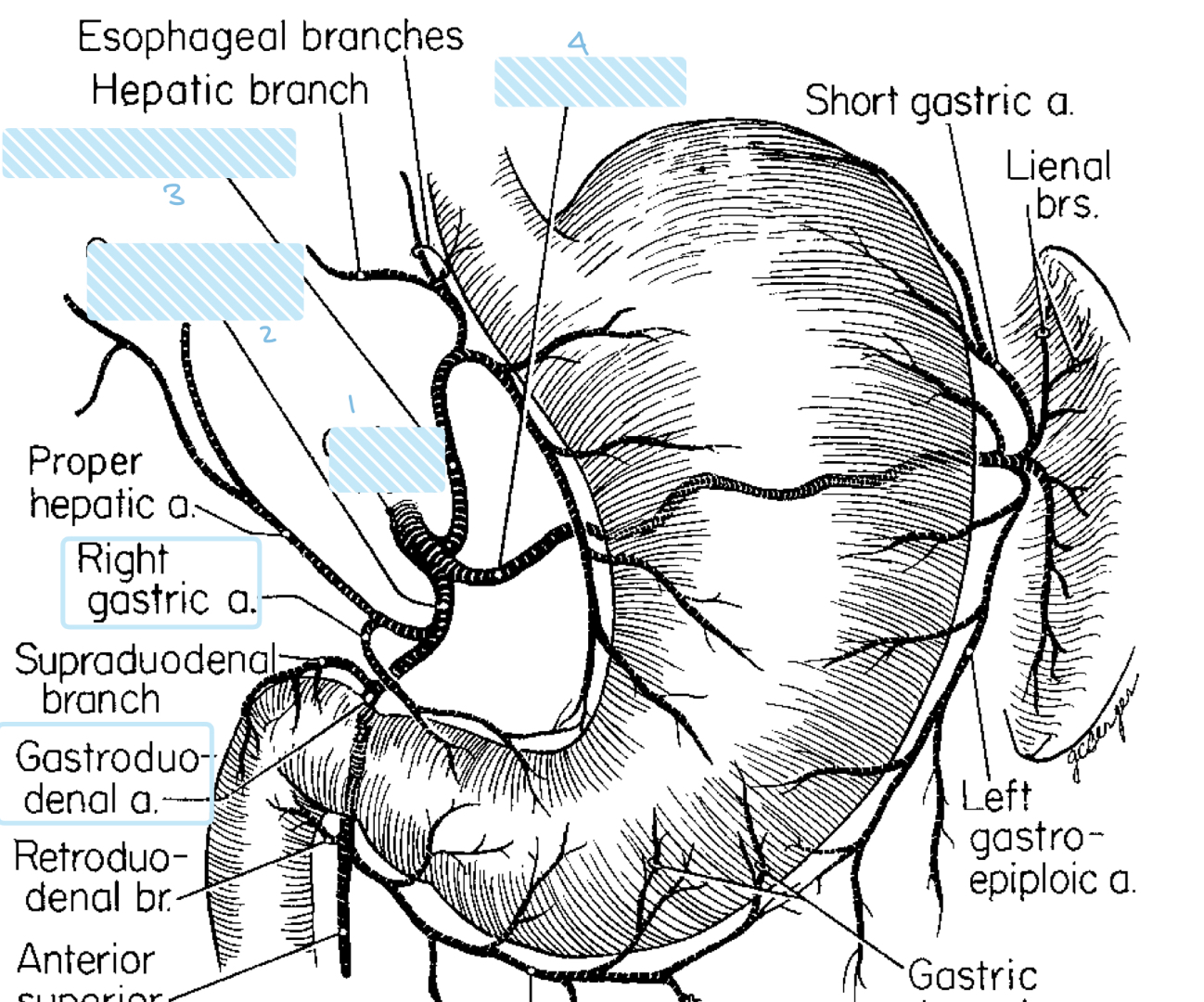
label the 4 main artery branches of the stomach
celiac trunk, common hepatic artery, left gastric artery, splenic artery
gastric artery significance
supplies esophagus and upper part of stomach
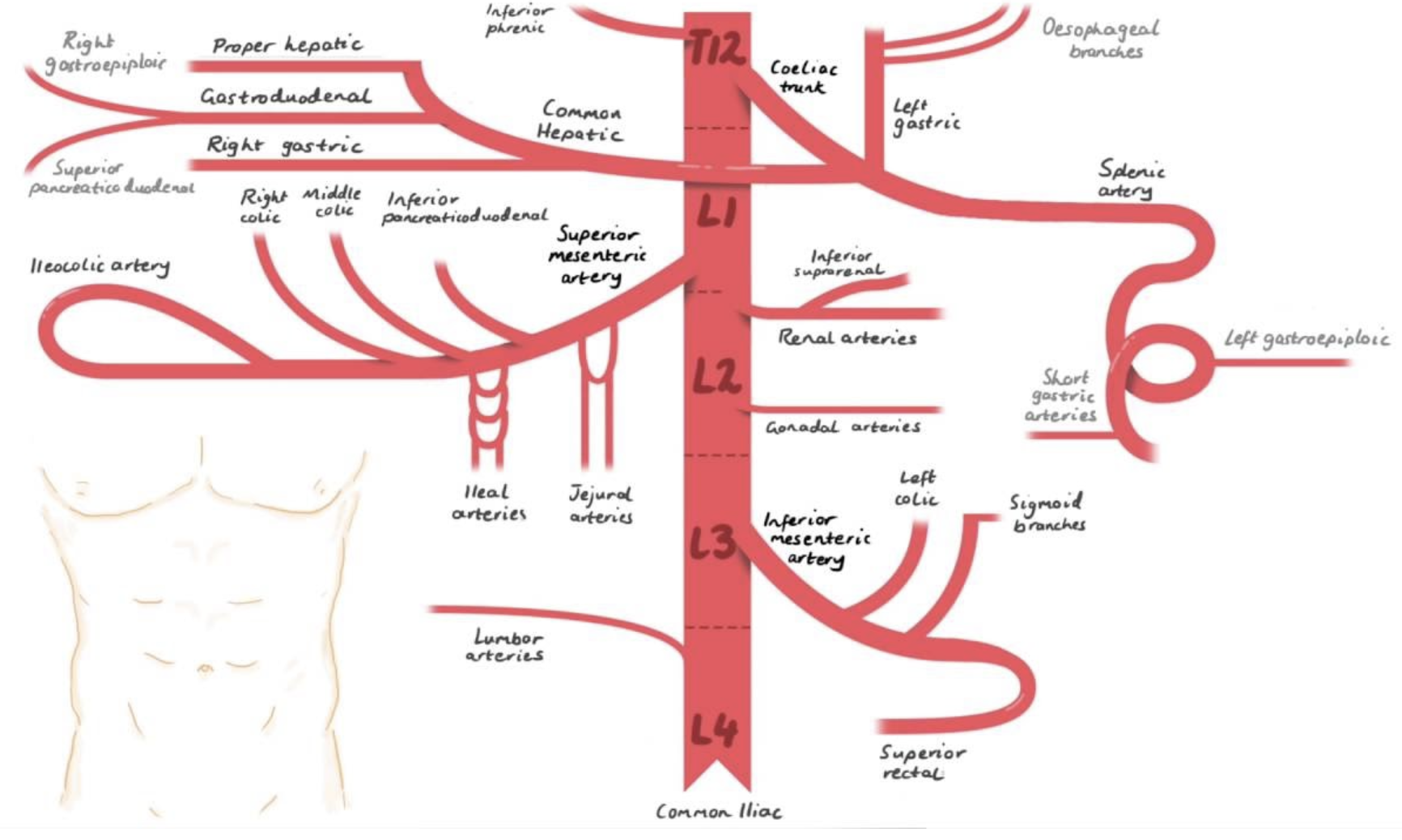
splenic artery significance
gives off pancreatic branches, left gastroepiploic, short gastric arteries
common hepatic artery significance
branches into proper hepatic artery and gastroduodenal artery
where does venous drainage go?
portal vein
what composes the portal vein?
right and left gastric (along lesser curvature); right and left gastroepiploic and short gastric (greater curvature)
where is innervation of the stomach derived from?
from the celiac sympathetic plexus— plexuses around the gastric and gastroepiploic arteries.
where is parasympathetic nerve supply derived from?
vagus nerve
Patient has an imbalance between acid secretion and mucosal defenses, infected by bacterium H. pylori, and is experiencing epigastric pain and GI bleeding. What is the consensus? What can this lead to if it perforates?
Gastric ulcer. can lead to peritonitis
Patient’s stomach has herniated through the esophageal hiatus into the thorax. The lower esophageal sphincter is compromised. Gastric contents and acid reflex into the esophagus, resulting in GERD. What is the consensus?
Hiatal hernia
Patient has an overdevelopment of the pyloric sphincter muscle which has led to a gastric outlet obstruction.
Pyloric stenosis