CH. 65 & 66: ART AT THE TURN OF THE 20TH CENTURY; FAUVISM, CUBISM & EXPRESSIONISM IN MODERN ART
 Call Kai
 Learn
Learn Practice Test
 Spaced Repetition
 Match
Match Flashcards
 Knowt Play
 Podcast
1/24

There's no tags or description
Looks like no tags are added yet.
Name | Mastery | Learn | Test | Matching | Spaced | Call with Kai |
|---|
No analytics yet
Send a link to your students to track their progress
25 Terms
[Introductions to chapters 65 and 66.] What new theories and discoveries of the mid to late nineteenth century undermined Enlightenment thinking in Europe and North America from 1880 to 1930? What changes occurred in the art world during these years?
CH. 65:
The theory of evolution
ideas surrounding the essential irrationality and instincts of human behavior.
Society became more secular.
Modern artist= a special individual who was “heroically committed to artistic freedom.”
There was a rise in stylistic originality, along with the idea that creativity was masculine.
CH. 66:
Advances in creativity and innovation.
Boom in science, technology, the arts, and popular culture.
Continual breakthroughs in science, undermining the Enlightenment idea that humans are creatures of reason within a logical universe.
Fascination with the subconscious, studying human desires. (Sigmund Freud and Albert Einstein.)
To keep up with the rapid demand for products, European powers continued to colonize new areas.
Read one of the main sections in Chapter 65 (on bohemian art, sculpture, women artists, art nouveau, skyscrapers, or photography and cinema) and briefly summarize the cultural and/technical developments described in it.
BOHEMIAN ART:
most romanticized modern European art form.
Rebellion against social constructs and conservative ideals, while "breaking the rules" for art.
It was an extreme escape from conventional society.
Artists were known for taking lengthy breaks to exotic places where they were surrounded by nature.
“Scant regard" for conventional morality, often involving the pursuit of sexual freedom.
Performers, actors, singers, etc.
Read Chapter 66 and summarize the aims and characteristics of each of the following 20th-century movements: Fauvism, Cubism, and Expressionism.
Fauvism:
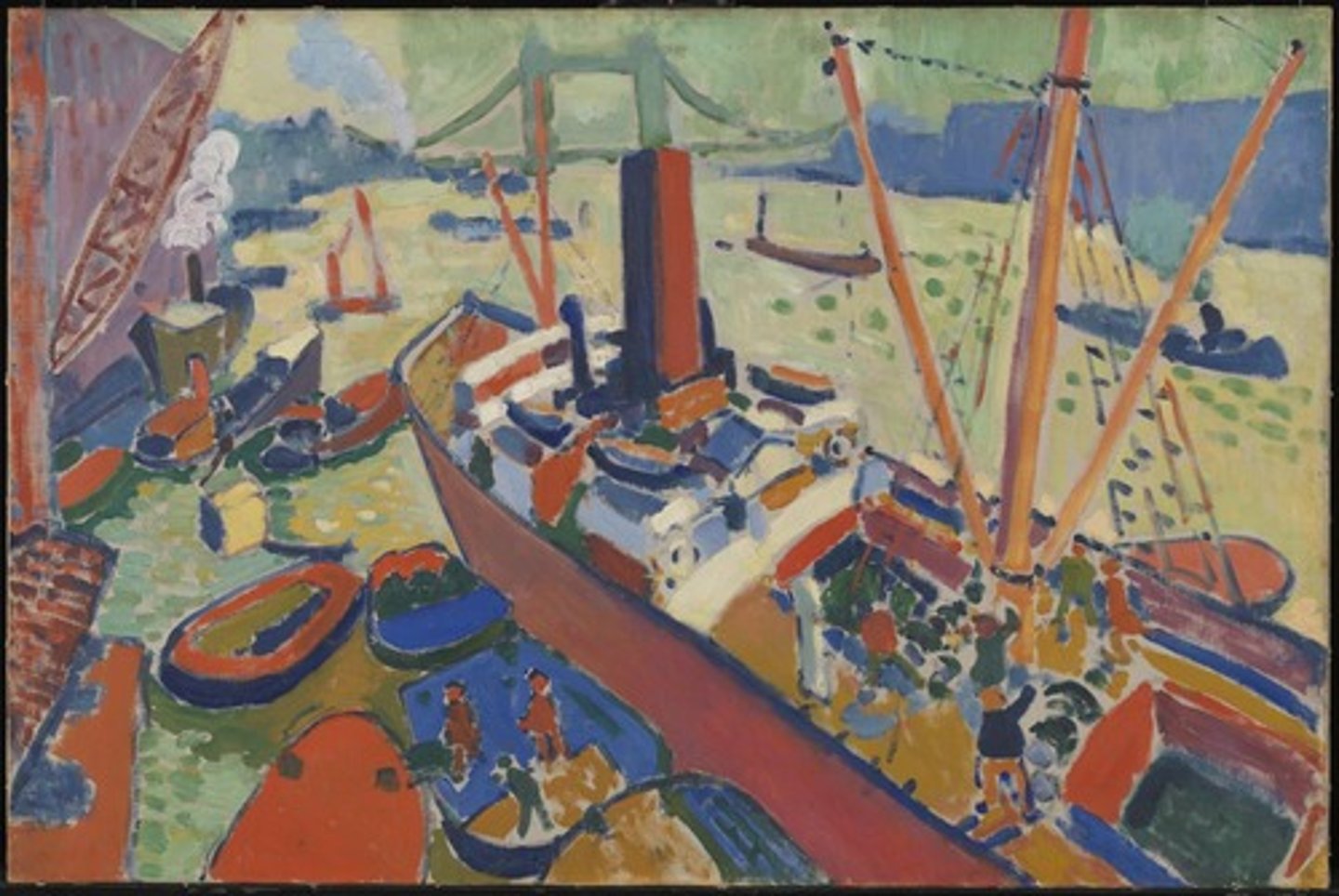
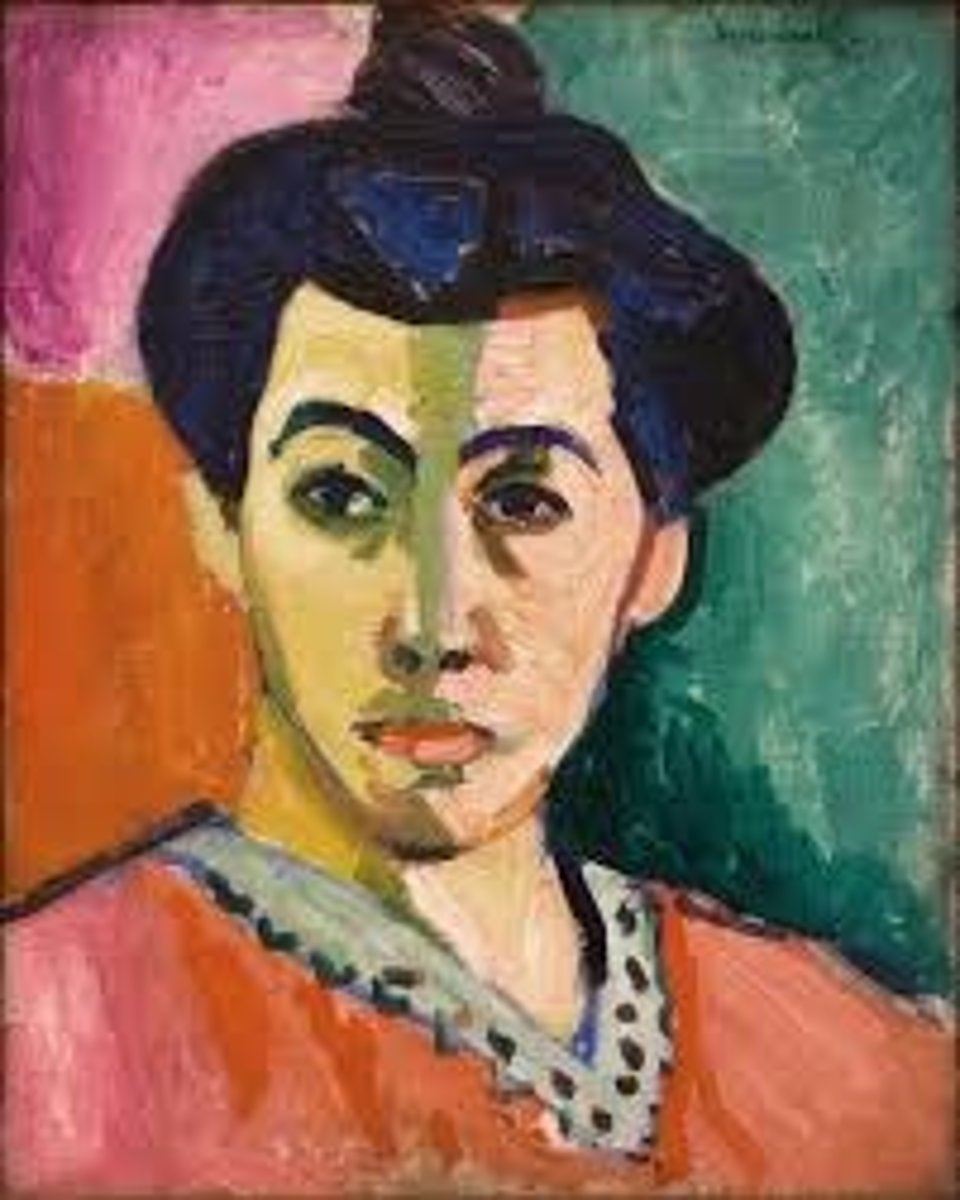
Landscapes, portraits, and genre scenes full of bright, unreal colors in a simplified style.
Vivid colors, divisionist ideas, and pointillism express themselves through color.
Cubism:
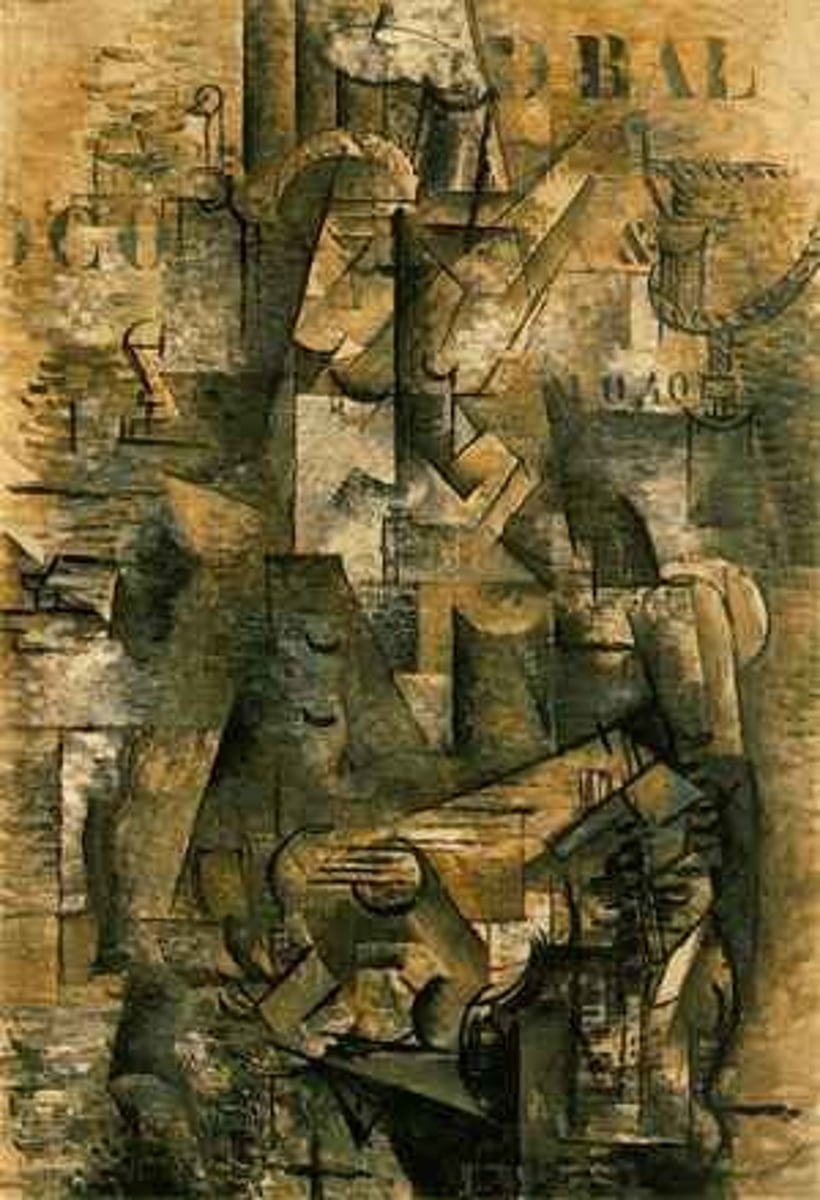
“Intellectual game” between Picasso and Georges Braque.
Searching for a new visual language- abandoned conventional methods and the imitation of reality.
Aimed to establish that the artist is the creator of the world they are allowing the viewer to step into.
Expressionism:
Strong nationalism and the rise of socialism. Prices were rising, along with extremist politics and instability.
African and Oceanic art was popular in Germany at the time, distorting nature as a way to express one's feelings and ideas.
Admired art that deviated from naturalism
Combined primitive distortions with the expression of intense emotion.
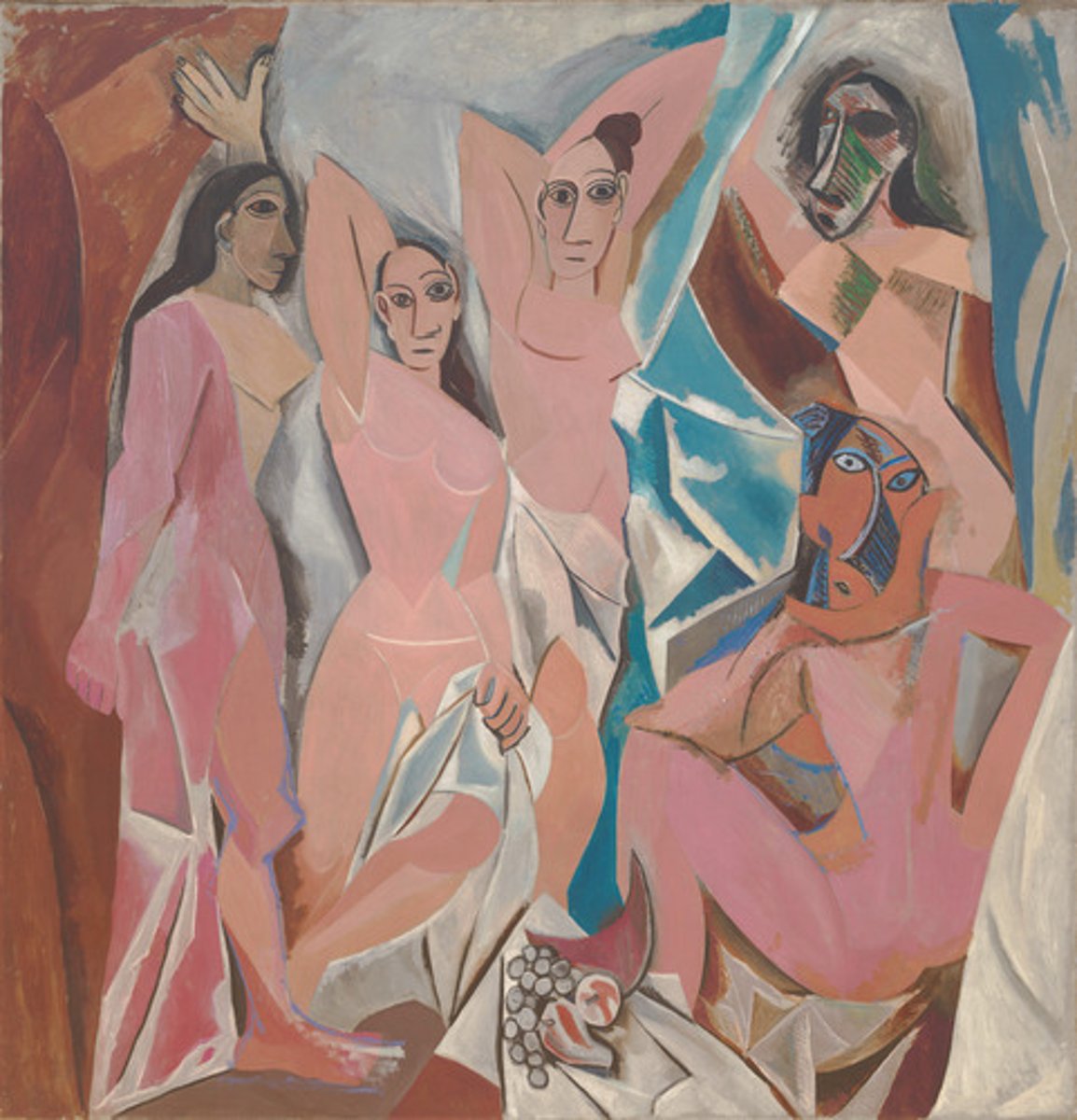
How did Pablo Picasso "exorcize" Western art traditions in favor of "primitive" abstractions in his painting Les Demoiselles d'Avignon? Why is the painting often considered a precursor to Cubism?
abandoned perspective, modeling, and idealized beauty,
replaced them with sharp, jagged geometric forms and African mask-like faces.
The painting shattered the conventional representation of the female form
Acting as a direct precursor to Cubism by fracturing space
Flattening the pictorial plane + presenting multiple viewpoints simultaneously.
Derain
The Pool of London
Favusim
French
Matisse
Portrait of Madame Matisse (The Green Line)
Fauvism
French
Picasso
Les Demoiselles d’Avignon
Primitivism
Spanish
Braque
The Portuguese
Cubism
French
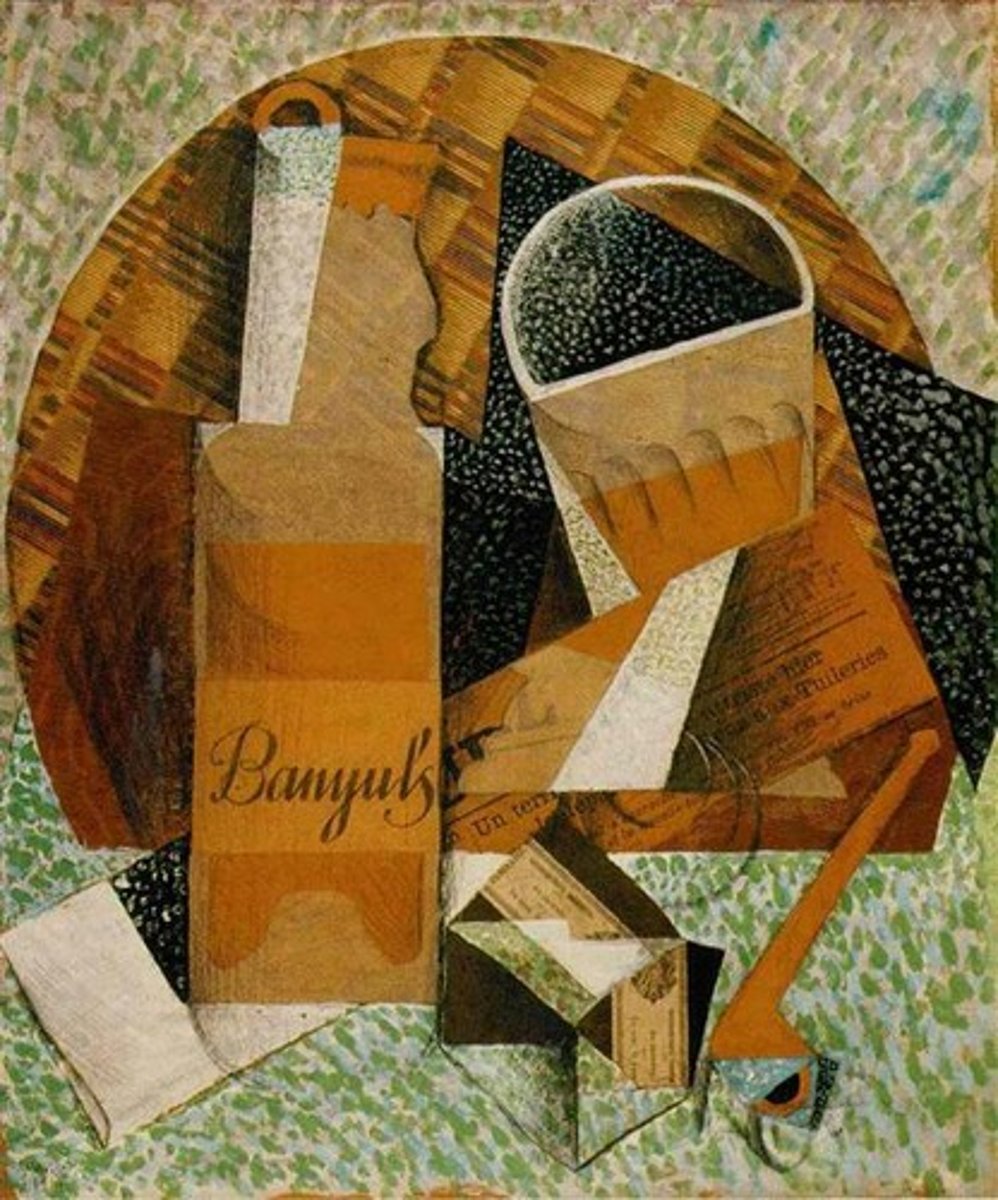
Gris
Bottle of Banyuls
Cubism
French
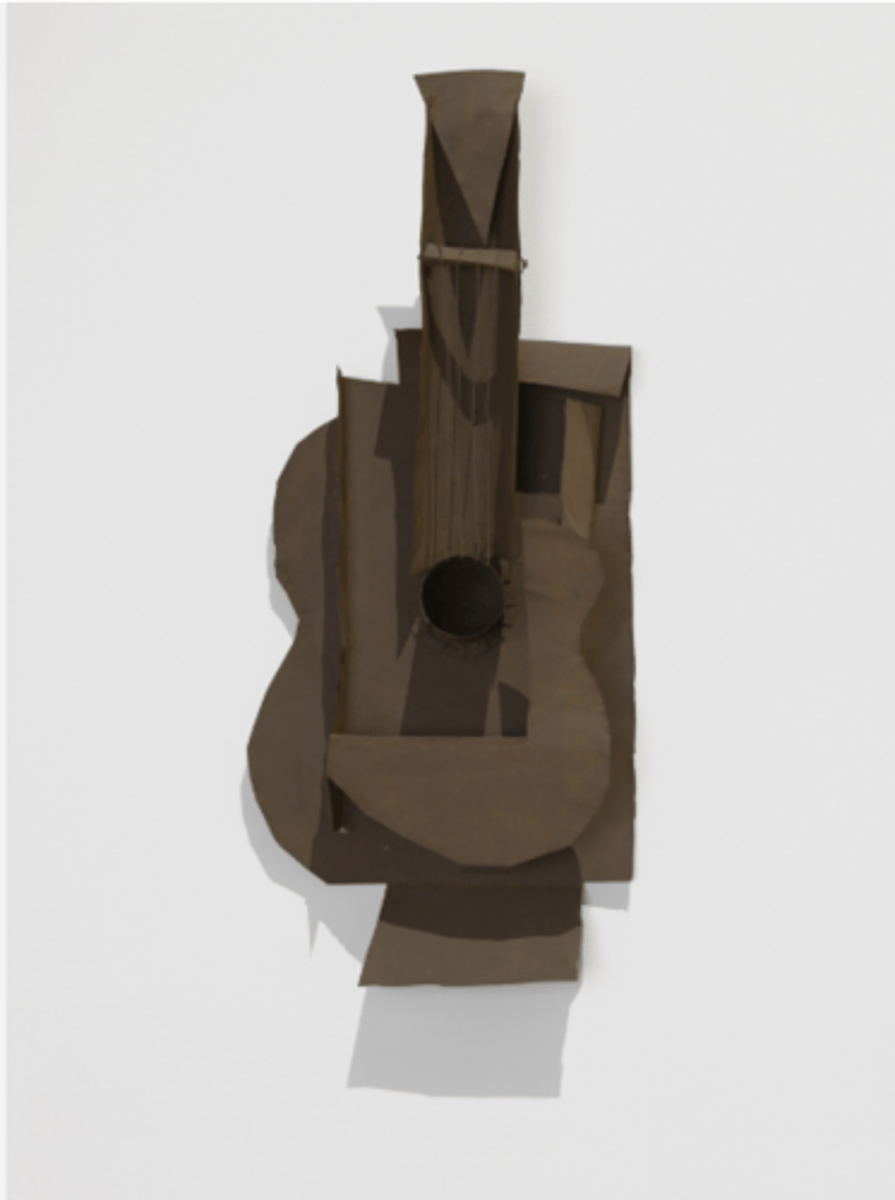
Picasso
Guitar
Cubism
Spanish
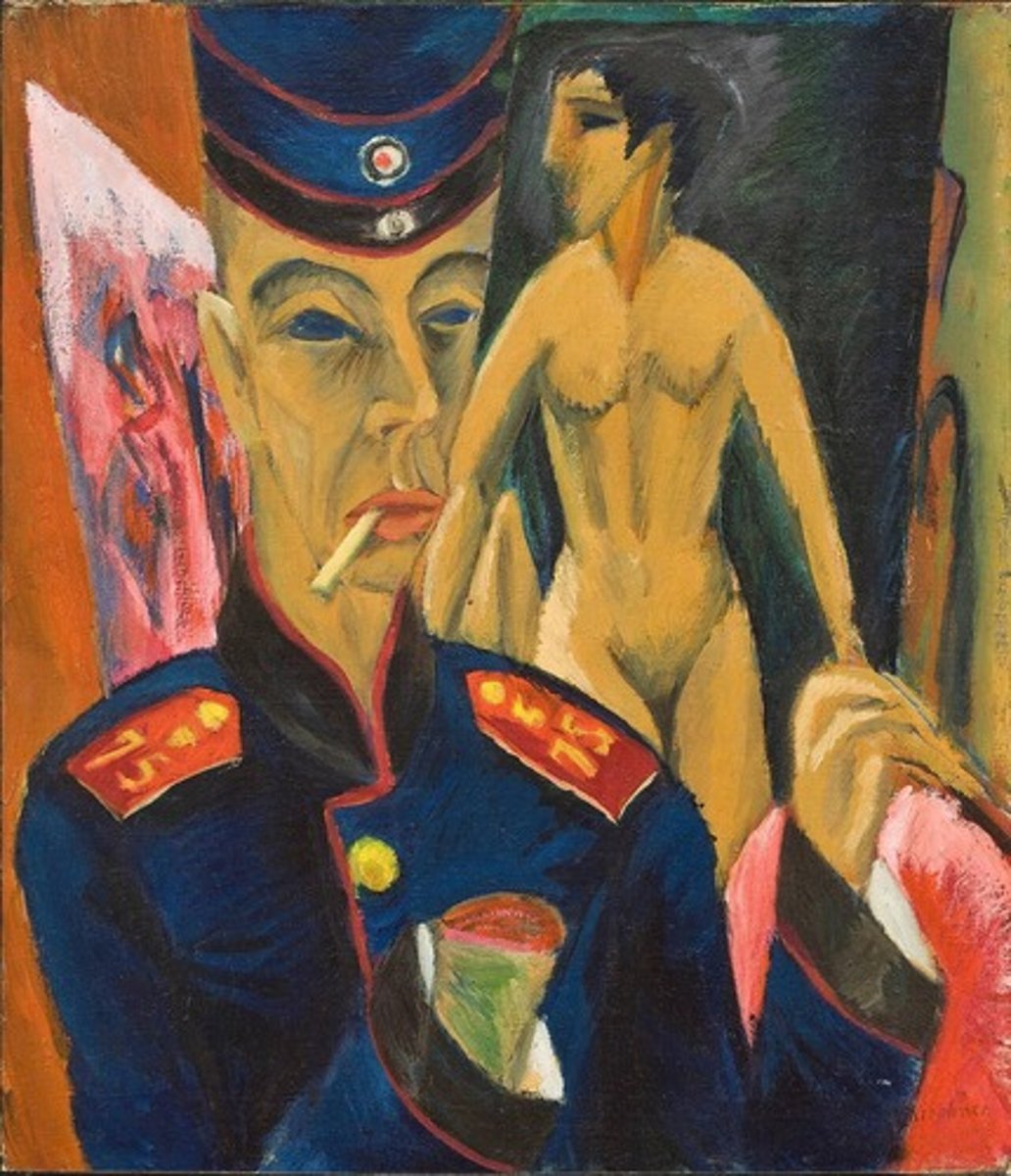
Kirchner
Self-Portrait as a Soldier
Expressionism
German
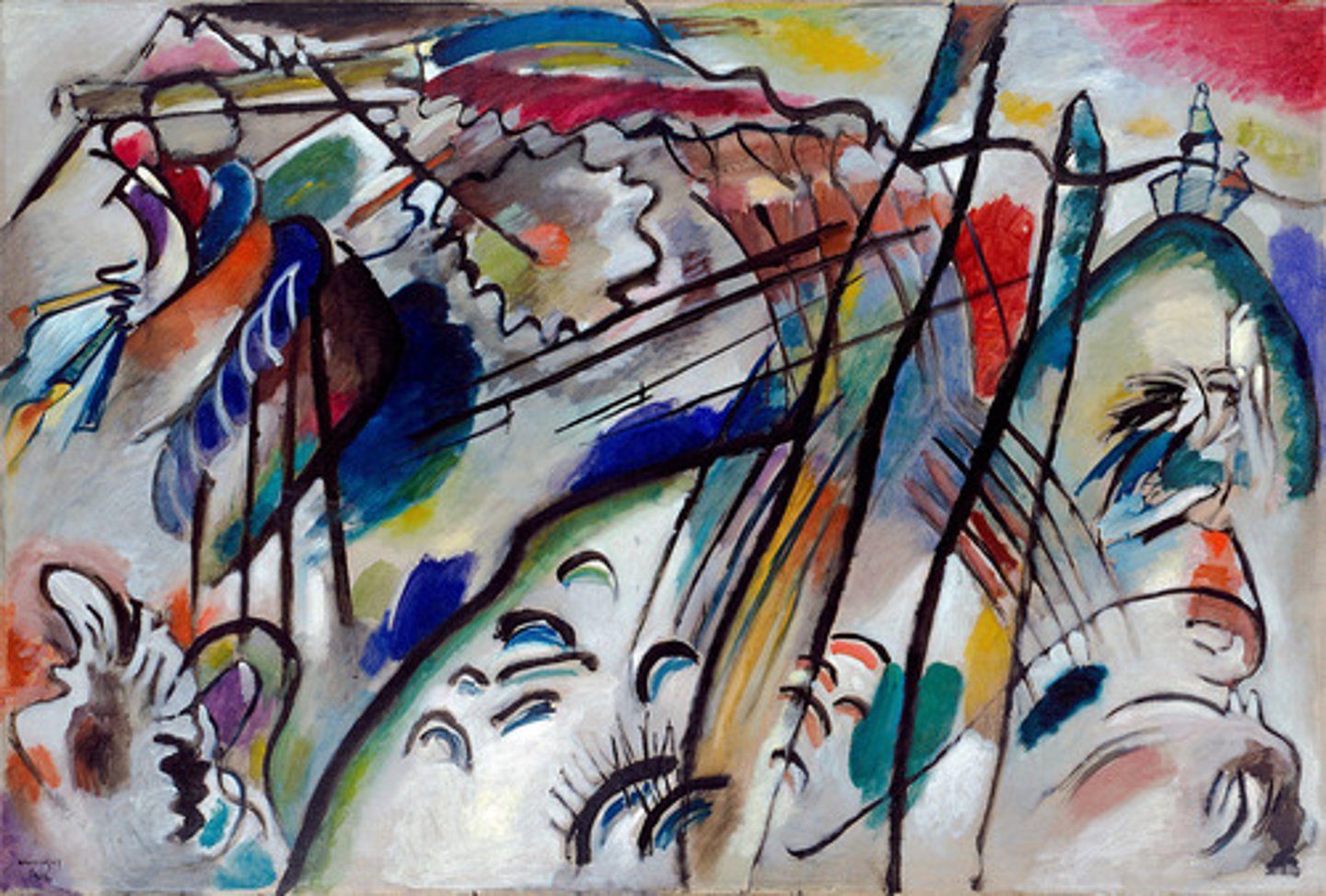
Kandinsky
Improvisation 28 (Second Version)
Expressionism
German
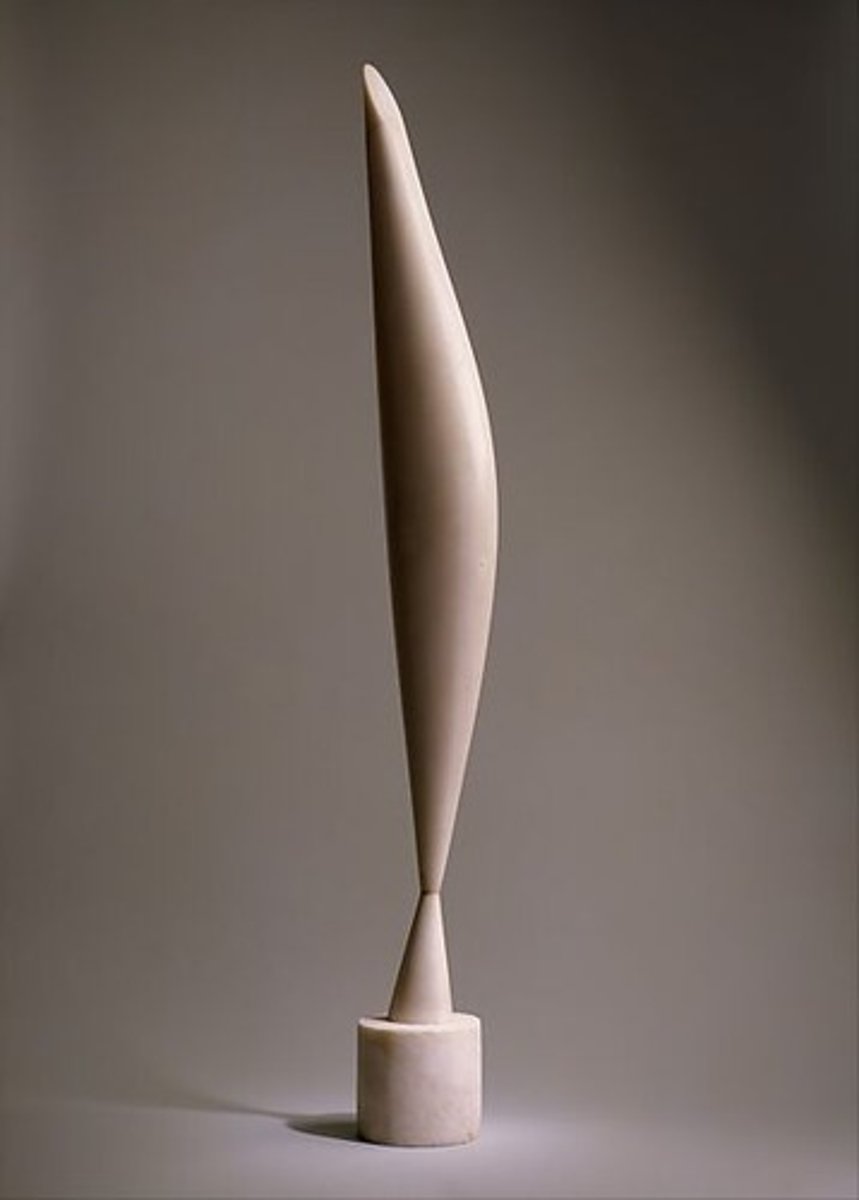
Brancusi
Bird in Space
Modern sculpture
Romanian
Autumn Salon
an annual art exhibition held in Paris every fall beginning in 1903, which began as a reaction to the conservative policies of the official Paris Salon, and which became a forum for experimental modern art.
Academic art
conventional painting or sculpture made under the influence of an art academy, a state-sponsored society for the formal training of artists and exhibition of their work
abstract
altered through simplification, exaggeration, or otherwise deviating from natural appearance.
Cubism
a style of art in which people, places, and things are simplified into flat, geometric shapes, often seen from multiple points of view.
Expressionism
art that is highly emotional in character, with colors, shapes, or space being distorted and non-naturalistic as a means to convey vivid extremes of subjective experience and feeling; modern Expressionism is associated with several movements, including German Expressionism in the early twentieth century and Abstract Expressionism in the mid-twentieth century.
geometric abstraction
art in which the subject is simplified into straight or curving lines or shapes used in geometry.
Analytical Cubism
the first phase of Cubism, using many small overlapping planes to show fragmentary images of subjects arranged in a shallow picture space simultaneously from many different angles, with a minimum of color.
nonobjective art
art that contains no visual representations of figures or objects; also called nonrepresentational art.
collage
a technique in which cut paper pieces and other flat materials of all types and sizes are combined and stuck to another surface to make a design; from the French coller, "to glue."
Synthetic Cubism
a later phase of Cubism, characterized by building up images from preexisting abstract shapes, an increased use of color, and little to no depth.
assemblage
a three-dimensional work of art constructed from pieces.
manifesto
in art, a public declaration of an artist's or artistic movement's intentions, motives, and aims.