1: Ametropia and refractive error.
 Call Kai
 Learn
Learn Practice Test
 Spaced Repetition
 Match
Match Flashcards
 Knowt Play
1/38

There's no tags or description
Looks like no tags are added yet.
Name | Mastery | Learn | Test | Matching | Spaced | Call with Kai |
|---|
No analytics yet
Send a link to your students to track their progress
39 Terms
introduction to the measurement of vision and visual acuity
distinction between vision and visual acuity
vision is uncorrected/unaided. Means naked eye
visual acuity (VA) means corrected, so like with existing specs or contact lenses
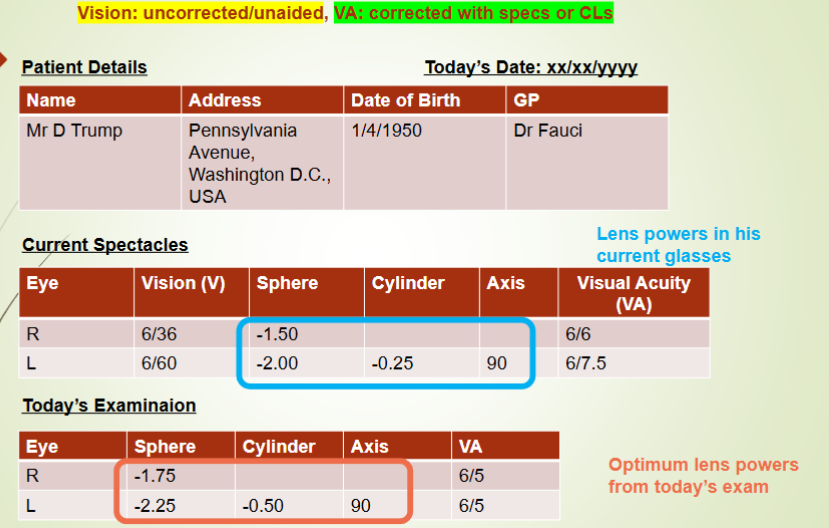
record chart
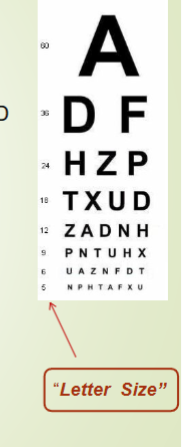
measuring VA using the Snellen system
20/20 vision is the same as 6/6
snellen fraction : viewing distance/minimum letter size read
eg. patient correctly reads ZADNH but next line down gets all the letters wrong. So 6 m is the test distance so its 6/xx
12 is the minimum letter size read correctly so snellen is 6/12.
e.g.2 with glasses, only using left eye. patient correctly reasy all letters except 1 on the PNTUHX line, and all wrong on next line down.
6m is test distance so its 6/xx
9 is the minimum letter distance except for one letter so snellen VA is 6/9 -1.
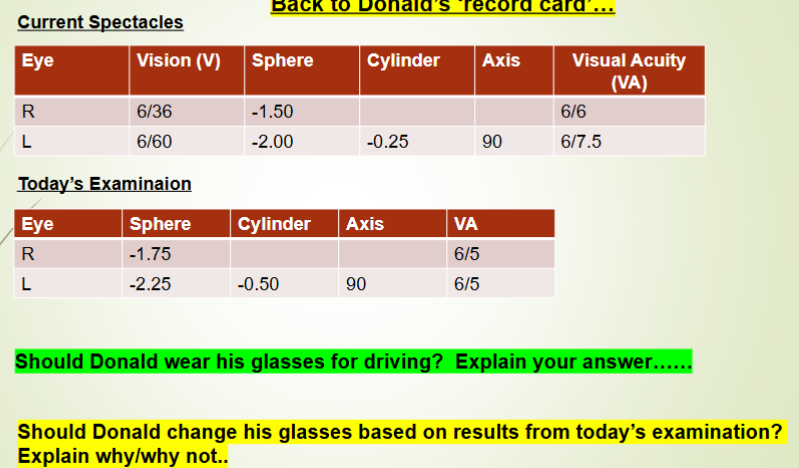
visual acuity has gone from 6/7.5 , which means the person sees at 6 metres what a normal person can see at 7.5. This i sslightly worse than normal
6/5 means the person sees at 6 metres what a normal peerson sees at 5 metres, better than usual.
so moving from 6/7.5 to 6/5 is an improvement as the denominator decreases so they can see smaller details than before
smaller bottom number= better vision
larger bottom number = worse vision
measuring VA and vision with letters
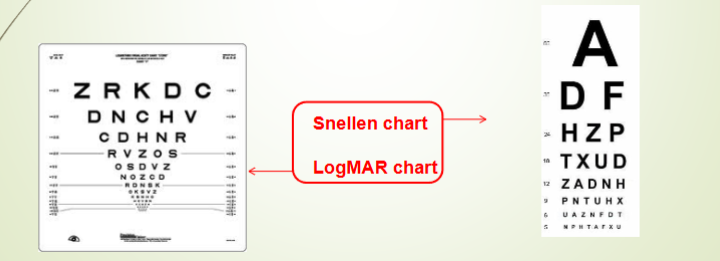
usage of LogMAR charts and snellen charts.
usually use logMARA charts and snellen scoring system
visual acuity VARA using logMAR charts
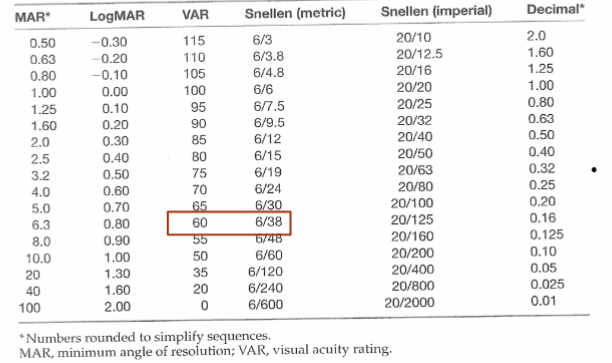
high numbers mean better VA. eg 6/6=100, 6/60=50, 6/3=115
use the furthest line down where all letters are correct as the baseline, then count extra ones correct until termination to find out VAR.
VAR and snellen recording
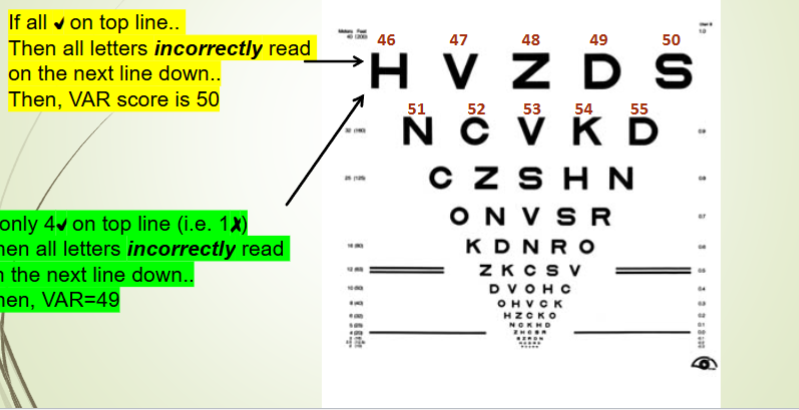
if the top like is 50 and all letters are correct, but the line below is all incorrect then VAR is 50.
if top line is 50 and only 4 correct on first line and next line all wrong then VAR is 49
more eg.s on VAR and snellen scoring
if top line 50 all 5 correct, second line only 2 correct and third line none correct, VAR would be 50+2= 52
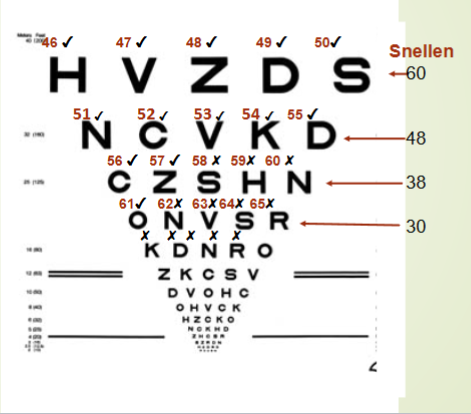
what is the VA in snellen and in VAR notations
VAR= 55+3 = 58
VAR 60 corresponds to snellen 6/38 so snellen would be 6/38-2
VAR:snellen
VAR and snellen scores when vision/VA is good
6/6
6/4.8
6/3.8
6/3
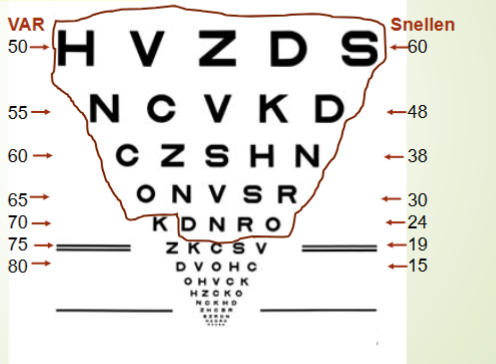
what is the patients VA im snellen and VAR. circled= correct
VAR: 69 snellen = 6/24 -1 _ using chart for snellen.
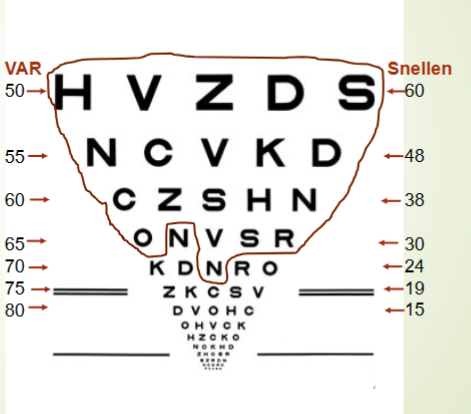
whats the patients VA in snellen and VAR
VAR: 60+ 5 = 65
snellen = 6/38
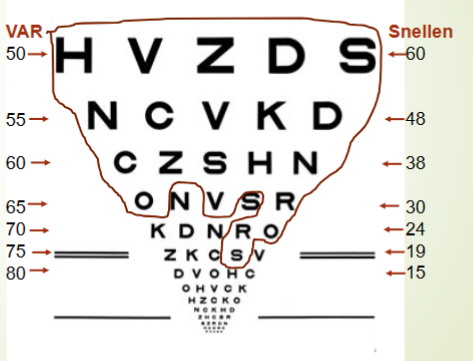
whats the patients VA in snellen and VAR
VAR: 60+6= 66
Snellen= 65= 6/30 so 66 = 6/30+1
intro into ametropia and refreactive error
refraction
the change in direction of path of light as it passes obliquely from one medium to another having a different index of refraction.
so refraction is the bending of light
rays of lightshow the direction of tracel of light
oblique- a line or ray or surface that meets at an angle that is not 90 degrees , so slanted
light rays that strike at right angles to a surface are not deviated ( striking normally)
all other rays are deviated
index of refraction (relates to speed of light in that medium)
index of refraction - refractive index
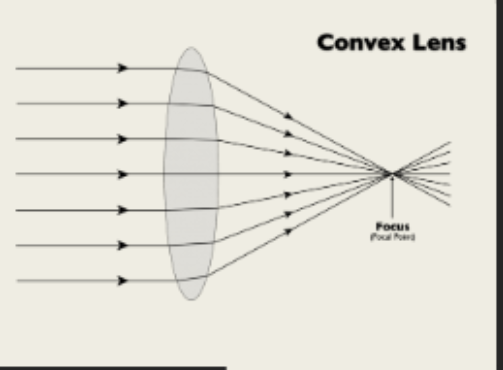
convex lens
all but one of the rays strike obliquely
another definition for refraction
the porcess of measuring and correcting the refractive error of the eyes
this is the [art of the eye exam during which lenses and trial frame are used to get clearest possible retnial image
what is ametropia
an anomoly of the refractive state of the eye in which, with relaxed accomodation, the image of objects at infinity is not formed on the retina
the eye doesnot focus light correctly on the retina when looking at distant object. the eyehas a refractive error
what is refractive error
the dioptric power K of the ametropia of the eye. happens when the eye cant bend light proerly so that it focuses directly on the retina, which is a light sensitive layer at the back of the eye, causing blurry vision.
if the shape of the eye, cornea or lens is abnormal, light focuses in front, behind or unevenly on the retina causing blurry vision
so, ametropia is the anomoly eg myopia, and refractive error is the amount (measurement ), eg -3.00 DS
refractive error is also the lens power that is used to correct ametropia. eg a -3.00 DS lens corrects an eye with refractive error of -3.00 DS
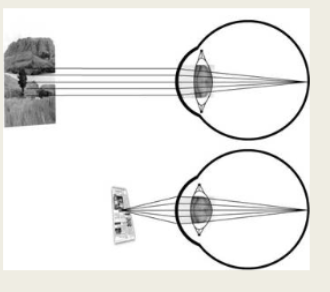
what is accomodation
adjustment of the dipotric power of the eye. Its generally incoluntary and made to see objects clearly at any distance
accomodation allows you to watch TV, and then look at your ipad then nails and all other objectts around the room
in the picture, shows that whether its distant or near objects, light from either is brought to a focus on the retina due to accomodation.
when accomodation is exerted the power of the eye increases and when relaxed the power falls to its minimum
what is relaxed accomodation
power of the eye at its minimum
accomodation should be relaxed when we look at distant objects 6, or further
then the incoming rays of light are parallel . infinity symbol means distance vision
so ametropia means refractive anomolies for distance vision
3 types of ametropia
myopia, hyperopia and astigmatism
myopia
the refractive condition of the eye in which images of distant objects are focused in front of the retina when the accomdation is relaxed sp distant vision is blurred
near sighted
a myopic eye is too powerful as light is over converged
accomodation adds converging power
s a myopic eye accomodates whilse viewing distant object, light focused even further in front of the retina so image gets mire blurred
ence myopes dont accomodate when viewing distant objects
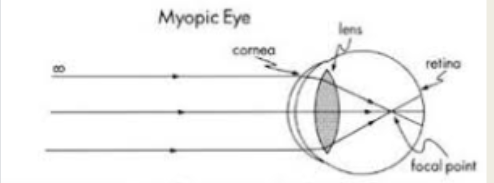
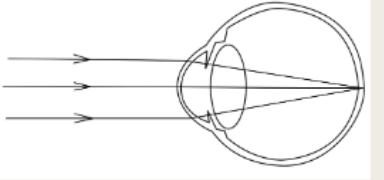
myopic eye
the power od the eyes optical system is greater than is required to focus the light onto the retina and so the focal point is in front of the retina
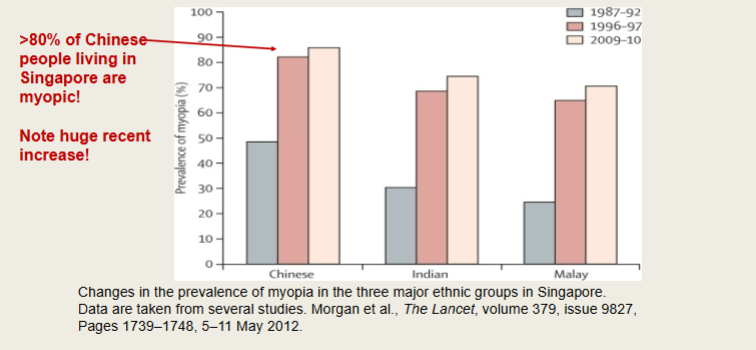
prevalence of myopia
hyperopia
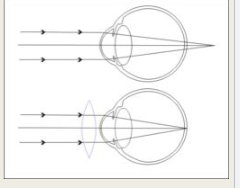
refractive condition of theeye in which the images of distant objects are focused behind the retina when the accomodation is relaxed.
far sighted
eye is a converging optical system
hyperopic eye is under powered as light is underconverged
when looking away accomodation should be relaxed
if accomodation is engaged whilst viewing in the distance what happens?
accomodation adds converging power
if a hyperopic eye accomodates while viewing a distant object , light is focused closer to the retina or on the retina so gets less blurred and more clearer
hence, hyperopes might accomodate when viewing a distant object so as to see clearly in the distance
what does this mean for hyperopes when looking at near objects
near objects require more focusing power (accomodation) so hyperopic eyes must work harder than normal to see up close
astigmatism
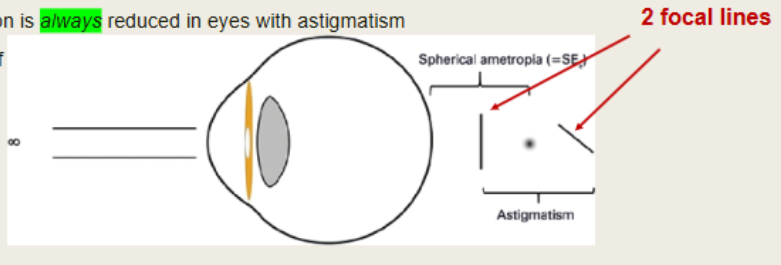
refractive condtion of the eye in which the image of a point is not a single point but 2 focal lines at different distances from the optical system
the 2 focal lines are perpendicular to each other
in the eye, its a refractive errorwhich is generallycaused by one or several toroidal shapes of the refractive surfaces
stigmatic imaging:
a point object is imaged as a point
astigmatic imaging
a point is not imaged as a point
astigmatism usually co exists with myopia or hyperopia
distant vision is always reduced in the eyes with astigmatism
impact of astigmatism on vision
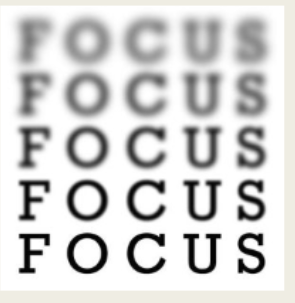
stigmatic (spherical) and astigmatic defocus
spherical defocus
all orientations similaryly affected. eg all lettered blurred by the same amount
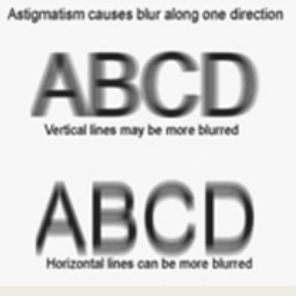
astigamtic defocus
some orientations affected more than others
absence of ametropia: emmetropia
if there is no ametropia then the eye is emmetropic
its the refractive state of the eye in which, with accomodation relaxed, the conjugate focus of the retina is at infinity
this is another way of saying that images of distance objects are formed on the retina in the unaccomodated eye
its emmetropia only if clear retinal image exists when ACCOMODATION IS RELAXED
distance and near refractive anomalies
ametropia means anomalies of refractive state of the eye for distance vsion
if an eye is emmetropic it sees distant objects clearly without extering accomodation
but this eye may not see the ipad helf at 40cm clearly
we have accomodation to helpus see clearly near objects
another refractive anomaly arises when we have insufficient accom
normally this is due to aging because accom falls with age
called prebyopsia
prebyopsia
a refractive condition in which the accomodative ability of the eye is insufficient for near vision work due to ageing
this is due to the hardening of the lens and a reduction of the elasticity of its capsule
the main symptom is blurred vision or difficulty in sustaining clear vision at working distance
generally occurs between age 43 and 48 in people living in european and north american countries
prebyopsia is not a form of ametroia so prebyopes can be emmetropic or ametropic