DT
 Call Kai
 Learn
Learn Practice Test
 Spaced Repetition
 Match
Match Flashcards
 Knowt Play
1/42

There's no tags or description
Looks like no tags are added yet.
Name | Mastery | Learn | Test | Matching | Spaced | Call with Kai |
|---|
No analytics yet
Send a link to your students to track their progress
43 Terms
Features of Hardwoods
Come from deciduous trees
Generally strong, durable, and long lasting
Uses: Furniture, flooring, + quality products.
Examples of Hardwoods
Ash
Beech
Oak
Mahogany
Balsa
Features of Softwoods
Come from coniferous (evergreen) trees
Faster growing, less expensive, easier to process
Uses: Construction, cheap furniture, everyday products.
Examples of Softwoods
Pine
Spruce
Larch
Features of Manufactured Boards
Made from bonded/compressed wood fibers
Made from waste wood, low cost
Very stable + consistent thickness
Uses: Low-cost furniture, interior panels, construction
Examples of Manufactured Boards
MDF
Plywood
Chipboard
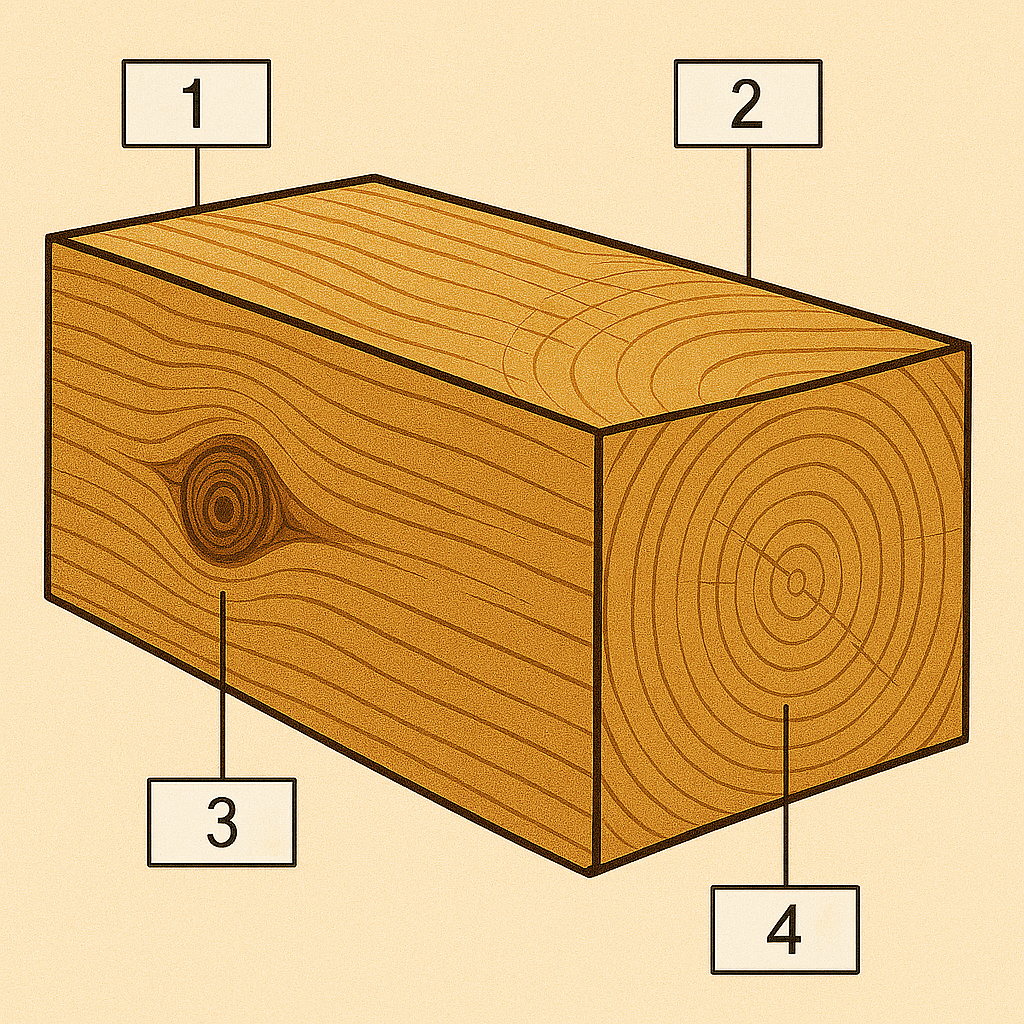
Wood Markings
Wood grain
Annual growth rings
Knot
End grain
Features of Thermoforming Polymers
Soften when heated, harden when cooled, can be reheated.
Suitable for recycling.
Uses: Mass-produced packaging + everyday applications.
Examples of Thermoforming Polymers
Acrylic
PVC
PET
Features of Thermoset Polymers
Set permanently once heated + can’t be reheated/reshaped
Harder + more rigid
Non-recyclable
Examples of Thermoset Polymers
Epoxy resin
Polyester resin
Composites Definition
A material comprising of 2+ different materials, resulting in a new material with improved properties or characteristics.
Examples of Composites
Carbon fibre
Fibre glass
Concrete with reinforced steel (rebar)
Stage 1 - Felling
Done using a machine called a feller buncher
Operator called feller decides what trees to be cut
Softwoods between 30-40 years are harvested, Hardwoods between 80-100 years.
Done in winter - Trees contain less moisture
Trees are delimbed + trunks are cut
Felled trees are replaced with saplings - Maintain a sustainable source for the future.
Stage 2 - Storing/Transporting
Logs stored in a clearing/forest until used at sawmill
This allows some water in the tree to evaporate, lowering weight + cost of transporting and handling.
Then cut into smaller lengths + picked up by a timber lorry
This transports timber to a processing site (sawmill, paper mill)
Stage 3 - Conversion at Sawmill
Logs are debarked + bucked or cut to specific lengths
They are then cut into boards using circular saws or bandsaws - ‘conversion’
1st stage - Breaking down - Rough sawing
2nd stage - Re-sawing - More accurate cutting + finishing, like planing
2 types of rough sawing - through sawn + quarter sawn
Ends of logs are trimmed + cur into boards
Stage 4 - Seasoning
The removal of excess water/moisture
When felled a tree has lots of water (up to 50%)
2 types of seasoning: Kiln + Air
Kiln seasoning - Timber dried in a heated chamber - Expensive
Air seasoning - Timber stacked in the open - Slower
Seasoning = Less warping + deforming
Unseasoned wood = ‘green wood’ - More likely to warp
Stage 5 - Preparing for Market
Value can increase by manufacturing sawn timber - secondary processing
When wood is made into more refined product - E.g. door or windows
Treatment can be added for construction - E.g. fire resistance
Primary Processing of Polymers
Ground is drilled + it extracts and pumps oil to the land
Oil is pumped to a factory where it is turned into fuels + chemicals
Oil is turned into polymer pellets, melted to thick plastics, ready for molding.
Instead of landfill, old plastic can be recycled + turned back to pellets.
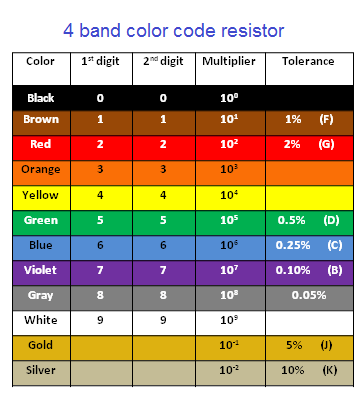
Resistor Colour Code
Band 1 - First Digit
Band 2 - Second Digit
Multiplier - How much to multiply by
(Tolerance - Tolerance of value)
Resistor Definition
Resists the current so that not too much voltage gets applied to a component, possibly damaging it.
Parts of a Speaker
Copper voice coil
Permanent Magnet
Paper diaphragm
Rubber surround
Dust cap
Frame
Power supply
Spider
How a Speaker Functions
The copper voice coil is placed inside a permanent magnet
When an alternating current flows through the copper coil, it creates an electromagnetic field around the coil
The magnetic field of the electromagnet interacts with the permanent magnet, causing the coil to be attracted + repelled repeatedly as the current changes direction.
This movement makes the voice coil vibrate back + forth very quickly
The coil is attached to the paper cone, so the cone also vibrates + pushes air to create sound waves.
The spider keeps the voice coil centered while allowing it to move back + forth
The rubber surround allows the cone to move smoothly while helping keep the speaker stable.
Low sounds are produced by slow vibrations (40Hz) while high sounds are produced by faster vibrations (thousands of Hz)
The power supply provides electricity for current to flow through the voice coil
The frame supports + holds all the components in place
Dust cap protects the inside of the speaker + voice coil from dust + damage.
What is a PCB?
PCB = Printed Circuit Board
2 PCB Sides
Component side - Side with markings of components
Track side - Side where you solder
Input, Output, Process
Input - Something that activates an output/starts the system
Output - The end result of a circuit
Process - How it turns an input to an output
What is a polarised component
Polarised - Has an anode (-) and cathode (+) and only conducts electricity in one way.
Method for Soldering
Plug in soldering iron + let it heat up, put it in the holder when not using it.
Wear goggles + ensure the are is well ventilated and use heatproof mat.
Clean tip of soldering iron on a damp sponge + place a bit of solder on the end for increased conductivity.
Insert component in component side of PCB, making sure legs are correct orientation.
Turn board to track side + bend legs to keep in place.
Place tip of iron on pad + component leg and heat for around 5 secs.
Touch solder to pad + leg.
Flux in solder helps clean + form volcano shape around pad.
Remove solder first then the iron + let pad cool.
Use wire cutters to trim the excess of the leg of the component.
Dry Joint Definition
When the solder between the pad + component can’t conduct if there is too little solder or they don’t reach. Or, if the pad or leg aren’t hot enough to melt to solder + create the joint.
Marking Out Tools
Pencil - Make marks
Steel Rule - Straight lines
Tri-square - Right angles
Removing/Cutting Tools
Woodworking vice - Clamp things in place
Tenon saw - Straight cuts at 90 degree angle
Bench hook - Keep things in place when sawing
Sandpaper + Cork block - Sanding for smooth finishes
Hand file - Sanding for smooth finished
Scroll saw - More complex, machined sawing.
Coping saw - More complex, hand held sawing
Chisel + mallet - Trimming large portions
Drilling Tools
Pillar Drill - Drilling parts straight down
Hole saw - Drilling holes of different sizes
G-Clamp - Clamp things in place when drilling
Machine vice - Clamp metal in place
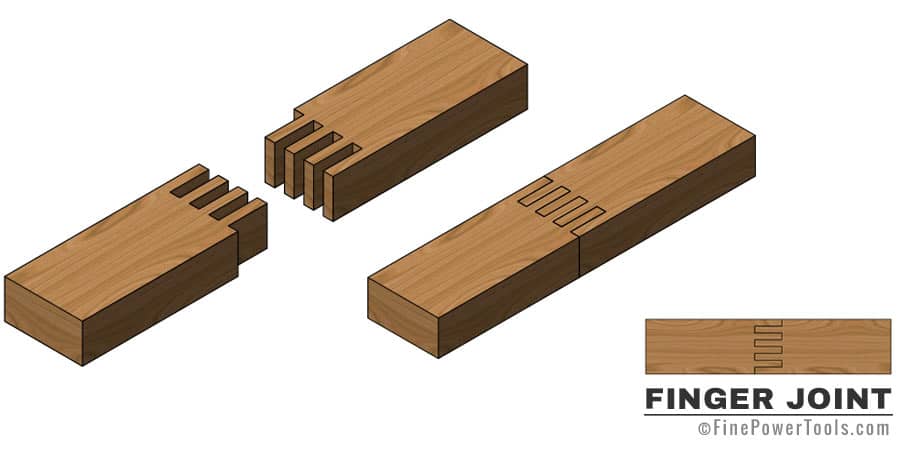
Shoulder Joint Method
Tenon Saw to cut straight down
Coping saw to cut diagonally cross
Chisel to trim remaining wood into square
Linear Design Process Explanation
Step-by-step method where each stage follows in order from context to evaluation. It starts with researching + initial ideas and moves to developing an idea + building a final design.
Linear Design Process Steps
Context
Research
Specifications
Initial Ideas
Development
Modelling/Prototyping
Final Design
Manufacture
Evaluation
Iterative Design Process Explanation
Cyclical process that involves repeating + refining stages to improve a design through feedback + testing.
Iterative Design Process Steps
Design
Prototype
Evaluate
CAD Definition
Computer Aided Design
CAD Advantages
Quick + easy to draw + edit images
Designs can be transmitted to clients via the internet
High quality, accurate drawings
3D programmes allow different viewing positions/lighting
Drawings can be stored on discs
CAD Disadvantages
Understanding the applications can be time consuming
CAD is unsuitable for initial designs
Set up costs can include a high spec computer, printer, software, + training.
CAM Definition
Computer Aided Manufacture
CAM Advantages
Machines don’t get tired = increased productivity
Machines can work in hazardous environments that humans can’t
Optimum feeds + speed = longer tool life
Machines don’t need heat, food, etc.
Operator error is eliminated
Can reduce labour costs
CAM Disadvantages
A CAM machine carries on making mistakes if programmed wrong
Replacing workers increases unemployment
Understanding applications fully can be time consuming
High setup cost