Cannabis, tabocco, alcohol - 18
 Call Kai
 Learn
Learn Practice Test
 Spaced Repetition
 Match
Match Flashcards
 Knowt Play
1/12

There's no tags or description
Looks like no tags are added yet.
Name | Mastery | Learn | Test | Matching | Spaced | Call with Kai |
|---|
No analytics yet
Send a link to your students to track their progress
13 Terms
what it is cannabis
a greenish or brownish material consisting of the dried flowering, fruiting tops and leaves of the cannabis plant, Cannabis sativa
• Cannabis can be consumed by smoking, vaporization (or “vaping”), ingestion (edible cannabis), oral application of tinctures, and by topical application of creams, oils and lotions
what did the legalization of cannabis look like in canada
– October 2018- cannabis, including dried cannabis and some oils
– October 2019- edible cannabis products, cannabis extracts and
cannabis topicals were permitted for legal sale and purchase.
what are the long term effects of cannabis on the brain
• Impacts on brain (brain does not stop developing until ~age 25):
• Increased risk of addiction
• Memory
• Concentration
• Intelligence (IQ)
• Ability to think and make decisions
what are the long term effects of cannabis similar to smoking tabacco
• Bronchitis
• Lung infections
• Chronic (long-term) cough
• Increased mucus buildup in chest
what is tabacco
• Tobacco products are products made entirely or partly of leaf
tobacco as raw material.
• Intended to be smoked, sucked, chewed or snuffed.
• All contain the highly addictive psychoactive ingredient,
nicotine.
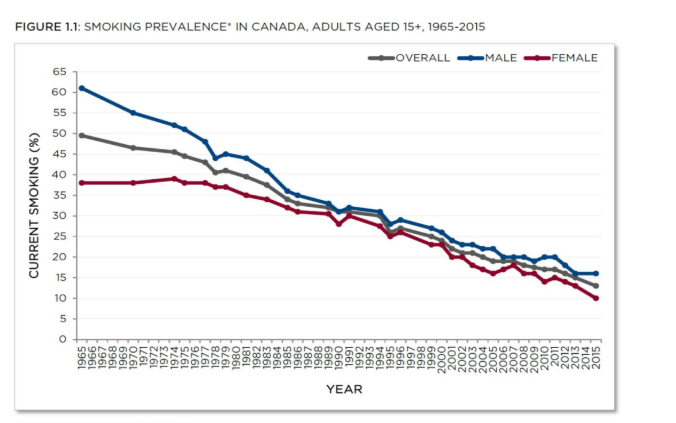
what are the statistics with tobacco
• Tobacco is the leading preventable cause of death in the world.
• Tobacco kills up to half it users.
• Tobacco kills nearly 7 million people a year
– More than 6 million due to direct tobacco use
– 890,000 second hand smoke
• 1.3 billion smokers worldwide
• Nearly 80% of the world’s smokers live in low- and middle- income countries
what is second hand smoke
• Consists of mainstream smoke (the smoke inhaled and exhaled
by the smoker) and side-stream smoke (smoke released
directly from the end of a burning cigarette).
• Second-hand smoke has at least twice the nicotine and tar as
the smoke inhaled by the smoker.
how long does the exposure have to be for second hand smoke
• Exposure for as little as 8 to 20 minutes causes physical
reactions linked to cardiovascular disease:
◦ The heart rate increases
◦ The heart's oxygen supply decreases
◦ Blood vessels constrict which increases blood pressure and makes the heart
work harder.
• Increased risk of developing lung cancer
what are the recent concerns with youth
• Flavoured Tobacco Use
– Flavoured tobacco products include menthol cigarettes, as well as
flavoured cigarillos, cigars, shisha (water-pipe tobacco), pipe tobacco,
blunt wraps, bidis, smokeless tobacco and rolling papers.
Electronic cigarettes (e-cigarettes) or electronic nicotine delivery systems or vaping
Devices that do not burn or use tobacco leaves but instead vaporise a solution the user then inhales.
Solution typically includes nicotine
• E-cigarette use/vaping in youth has been linked to smoking
initiation.
what is the harmful use of alcohol
• Under the Food and Drugs Act, alcohol is identified as a food.
– It can contribute to daily caloric intake.
• Alcohol is a psychoactive substance with dependence- producing properties
• Drinking can causes detrimental health and social consequences for the:
- drinker, people around the drinker, society at large.
what are the statistics with alcohol
• Drinking alcohol is a leading preventable cause of death and disability, injuries, accidents and social problems in Canada.
• Alcohol is the top risk factor for poor health in people ages 15 to 49 years.
• It is a causal factor in more than 200 diseases, conditions and types of injuries
• In 2017, alcohol contributed to 18,000 deaths in Canada.
• In 2017, the costs associated with alcohol use in Canada were $16.6 billion, with $5.4 billion of that sum spent on health care in Canada.
• Trends: Females are more often lifetime abstainers than males. In general, the greater the economic wealth of a country, the more alcohol is consumed and the smaller the number of abstainers.
what are the Previous Canada’s Low Risk Alcohol Drinking Guidelines
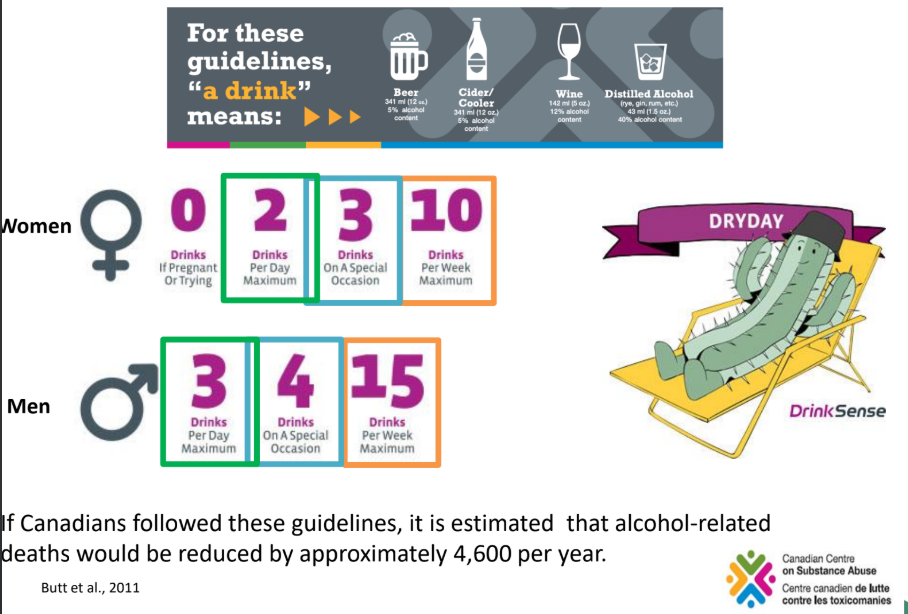
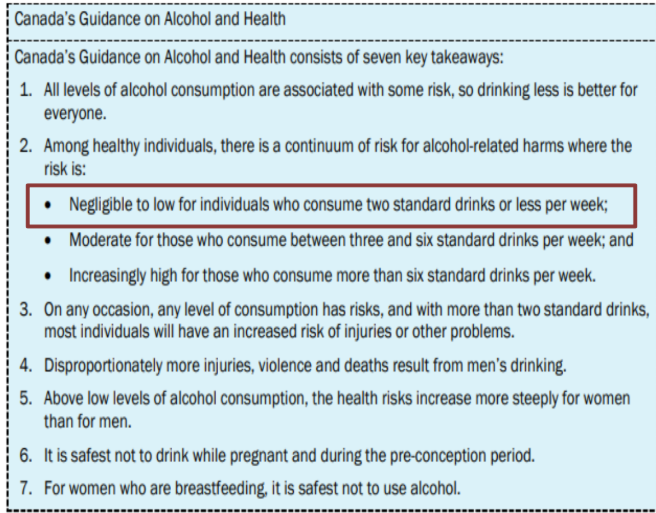
what are the Current Canada’s Low Risk Alcohol Drinking Guidelines