06 Lymphatic System Review
 Call Kai
 Learn
Learn Practice Test
 Spaced Repetition
 Match
Match Flashcards
 Knowt Play
1/48

There's no tags or description
Looks like no tags are added yet.
Name | Mastery | Learn | Test | Matching | Spaced | Call with Kai |
|---|
No analytics yet
Send a link to your students to track their progress
49 Terms
lymphatic system
Network of lymphatic vessels, lymph, and lymph nodes. Provides defense against infection, absorbs dietary fats, and absorbs excess interstitial fluid
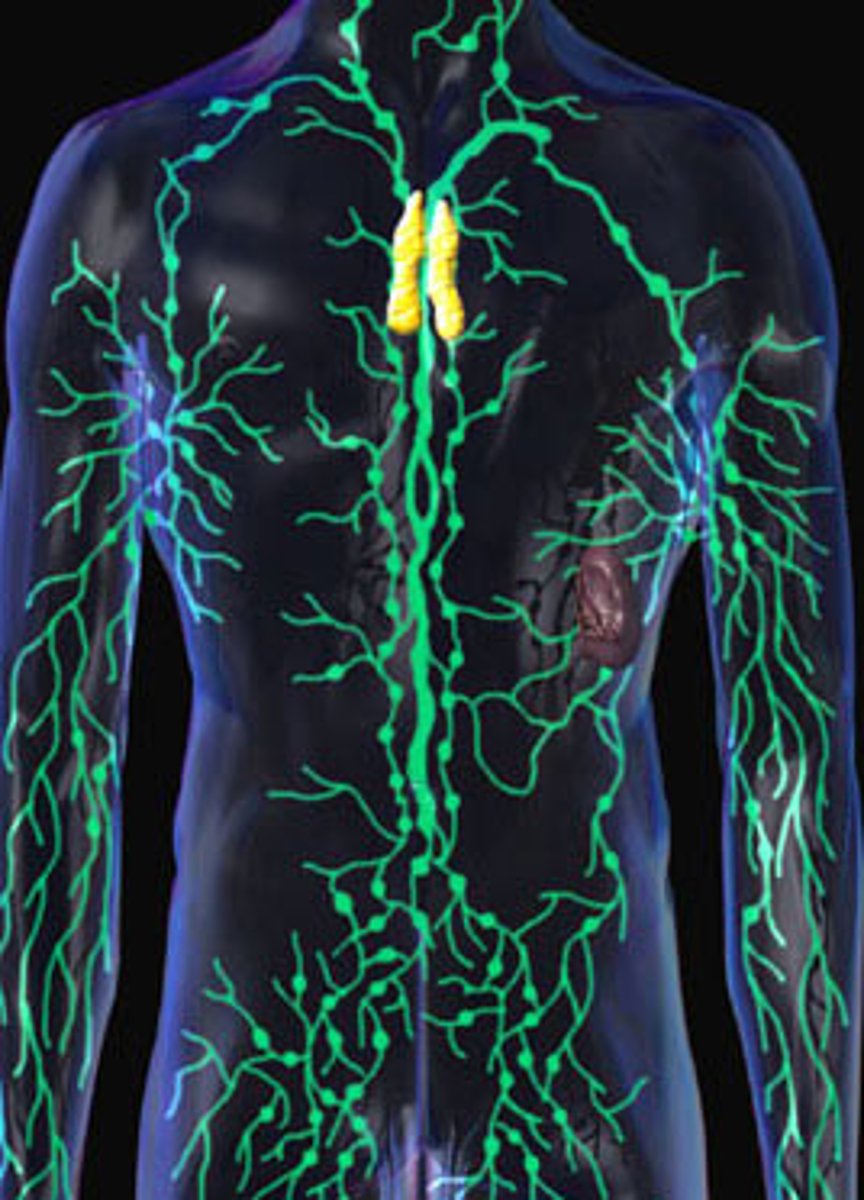
lymphatic capillaries
Small, open-ended lymph vessels that act like drain pipes which picks up lymph at tissues throughout the body and absorb proteins and dietary fats.
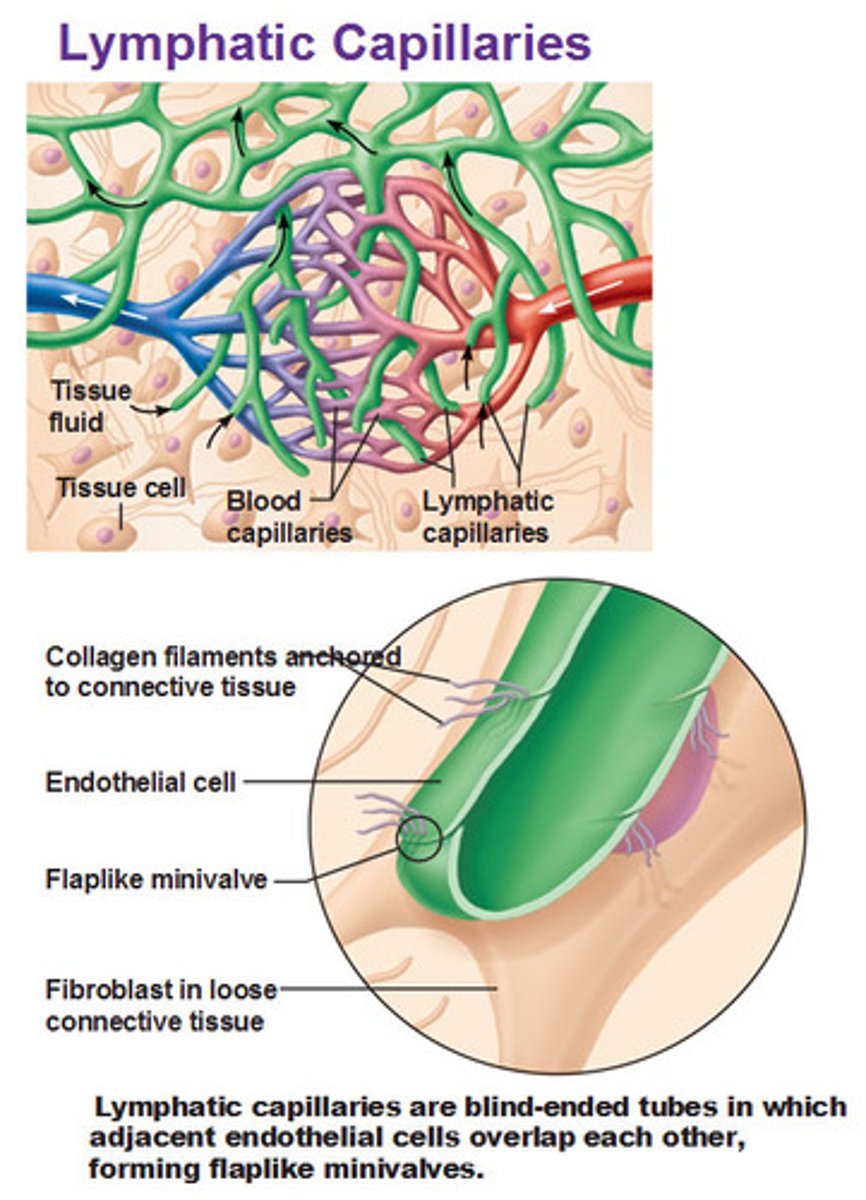
The flaplike minivalves of the lymph capillaries act like one-way swinging doors that allow lymph fluid to enter the lymph capillaries but not exit.
True
lymphatic vessels
large vessels with valves, which collect and carry lymph to lymph nodes
lymphatic trunks
jugular, subclavian, bronchomediastinal, intercostal, intestinal, lumbar
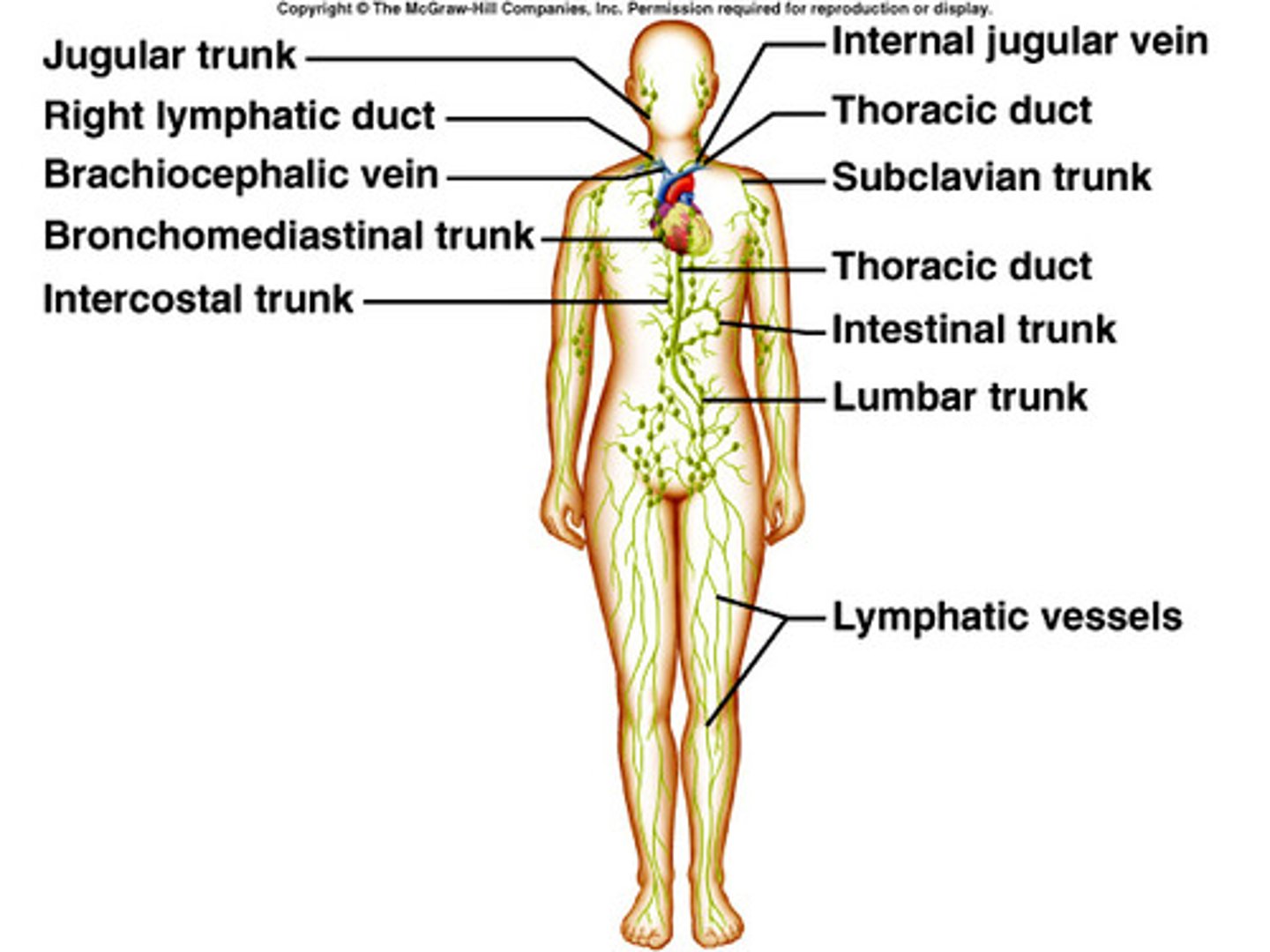
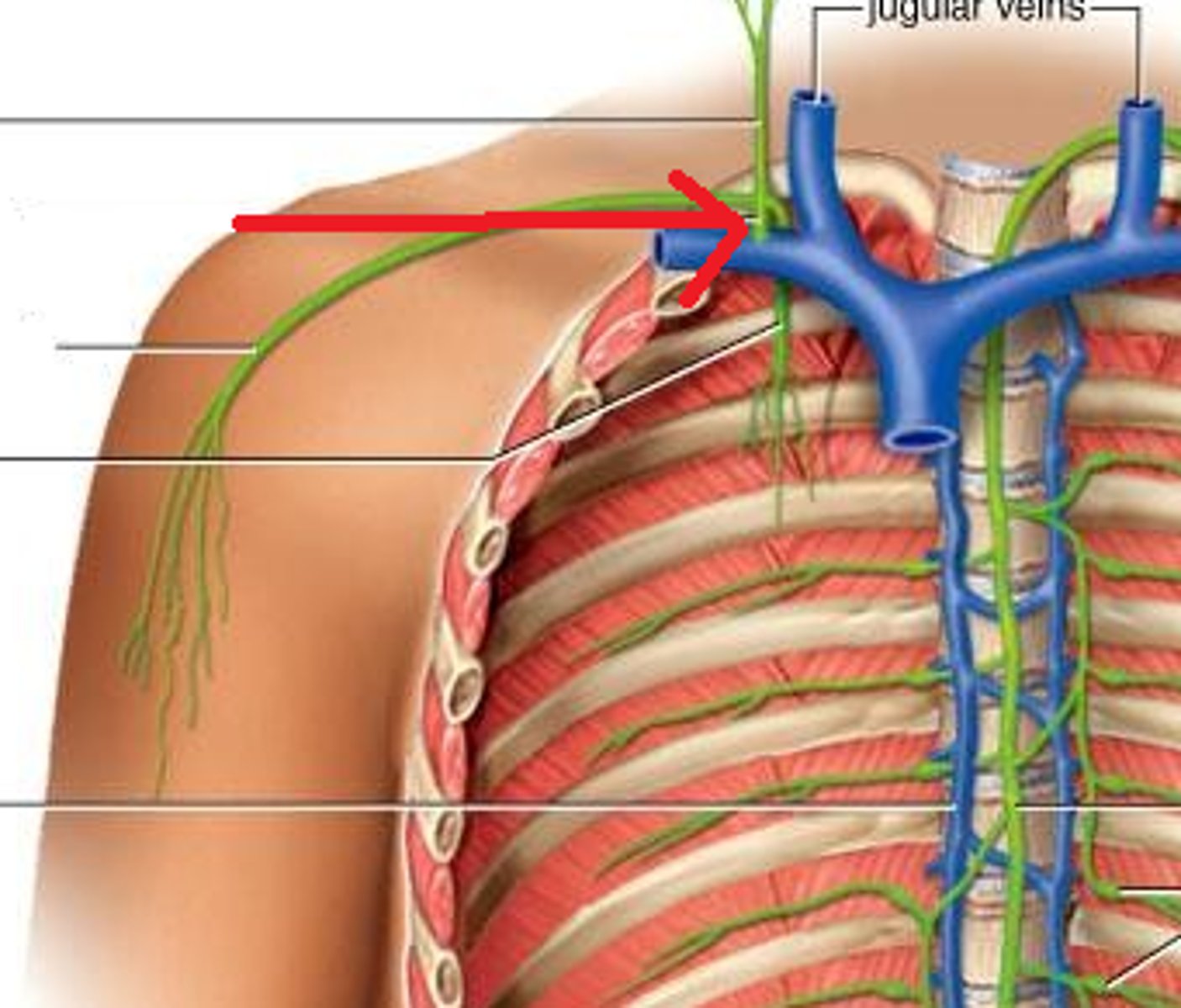
right lymphatic duct
drains right upper arm and right side of head and thorax
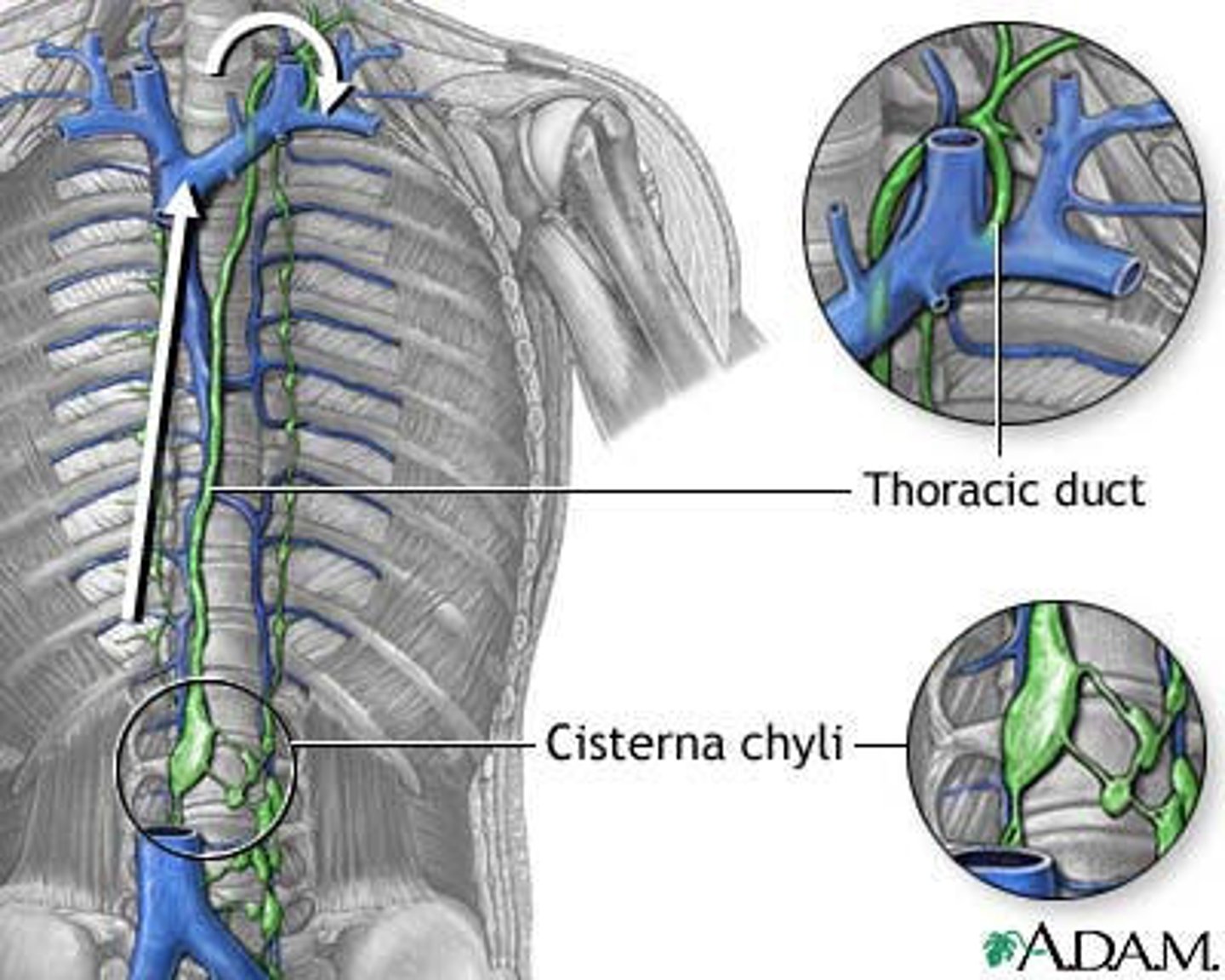
thoracic duct
receives lymph from the left side of the head, neck, chest, abdomen, left arm, and lower extremities
lymph nodes
Bean-shaped filters that cluster along the lymphatic vessels of the body. They function as a cleanser of lymph as wells as a site of T and B cell activation
capsule (lymph node)
dense fibrous that surround each lymph node
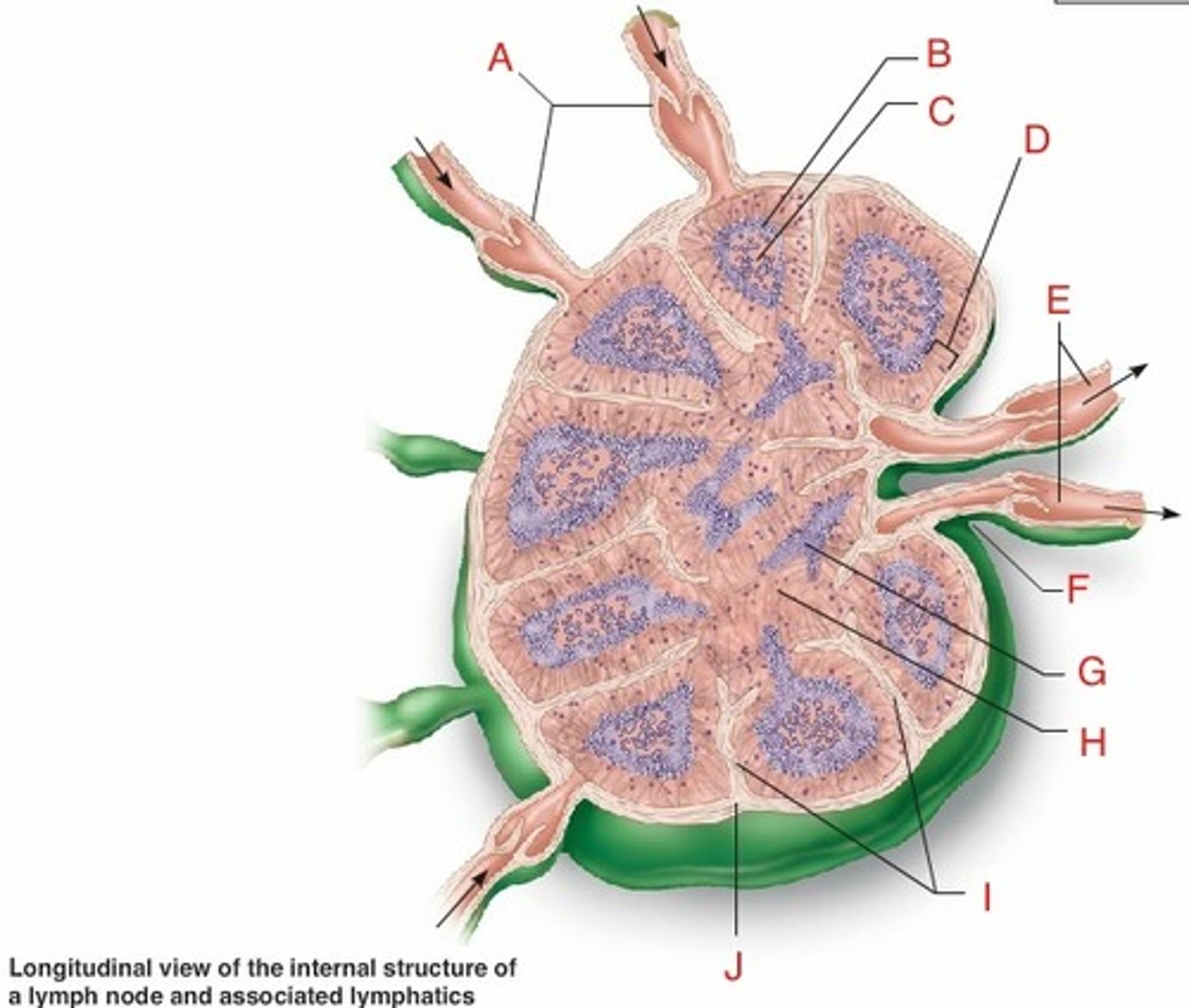
trabeculae (lymph node)
Extensions of the capsule creates division of the lymph node
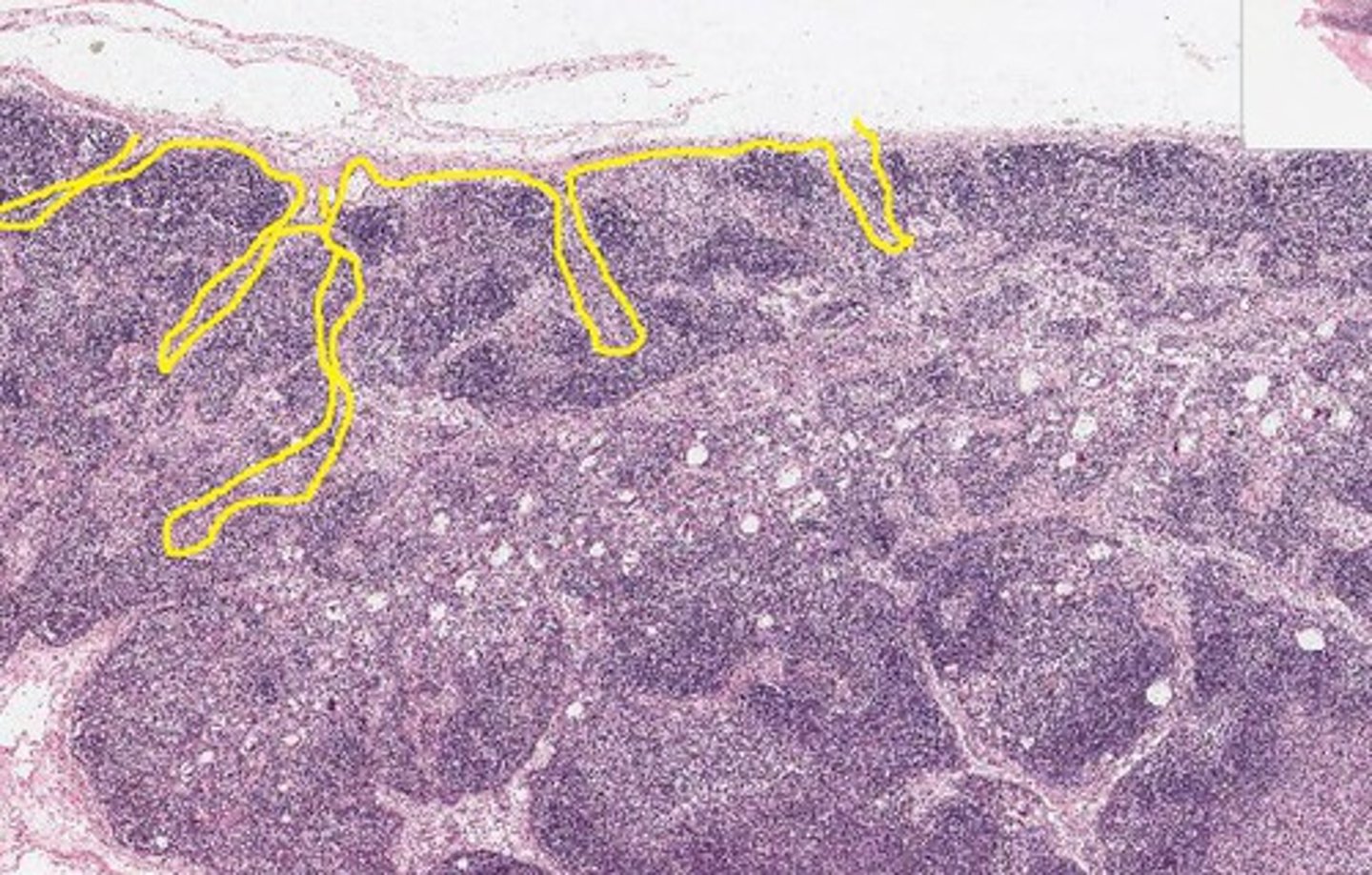
Subcapsular sinus of lymph node
Afferent lymphatics deliver fluid from the tissues to it. contains cells that have encountered pathogens
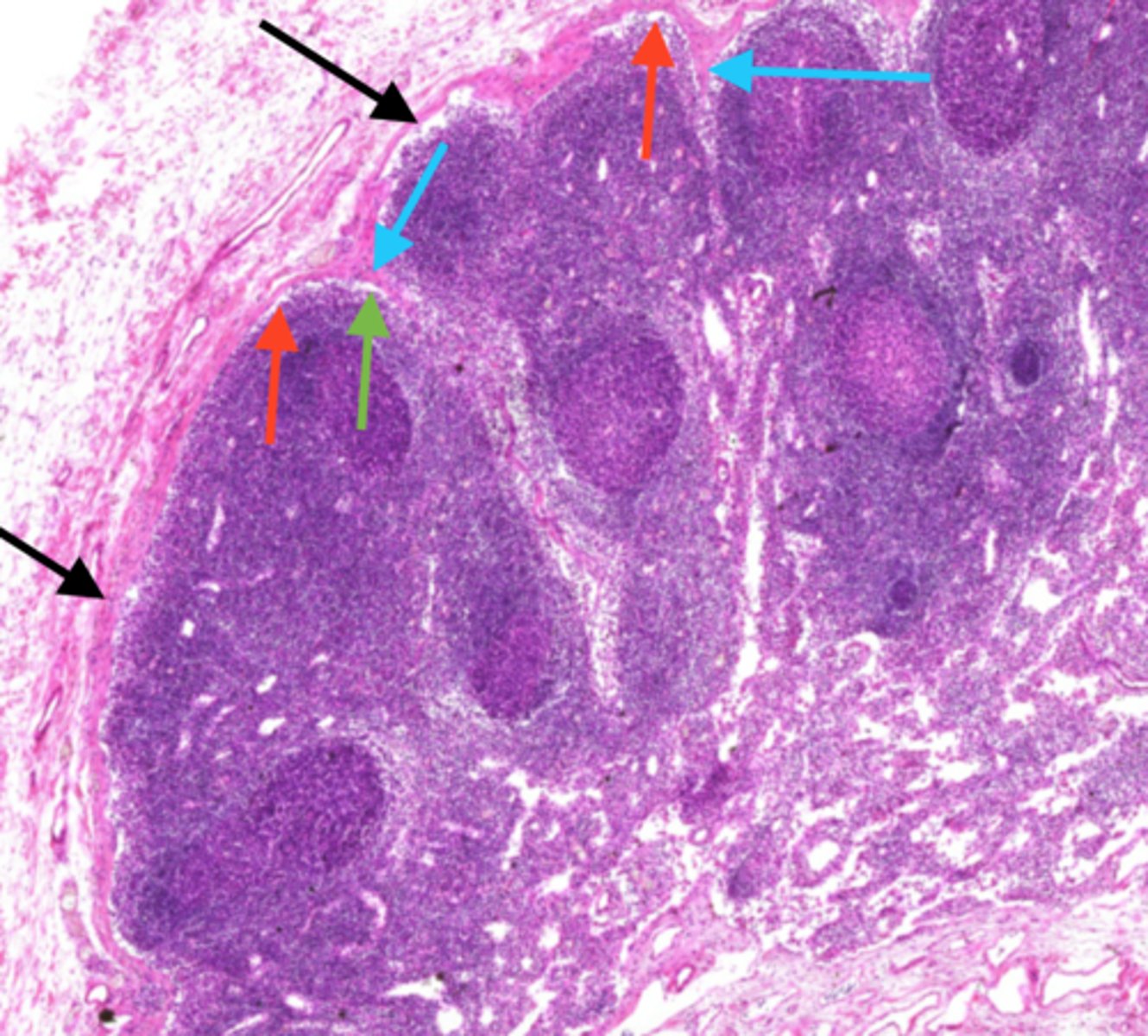
lymphoid follicles (nodules)
solid, spherical bodies consisting of tightly packed lymphoid cells and reticular fibers
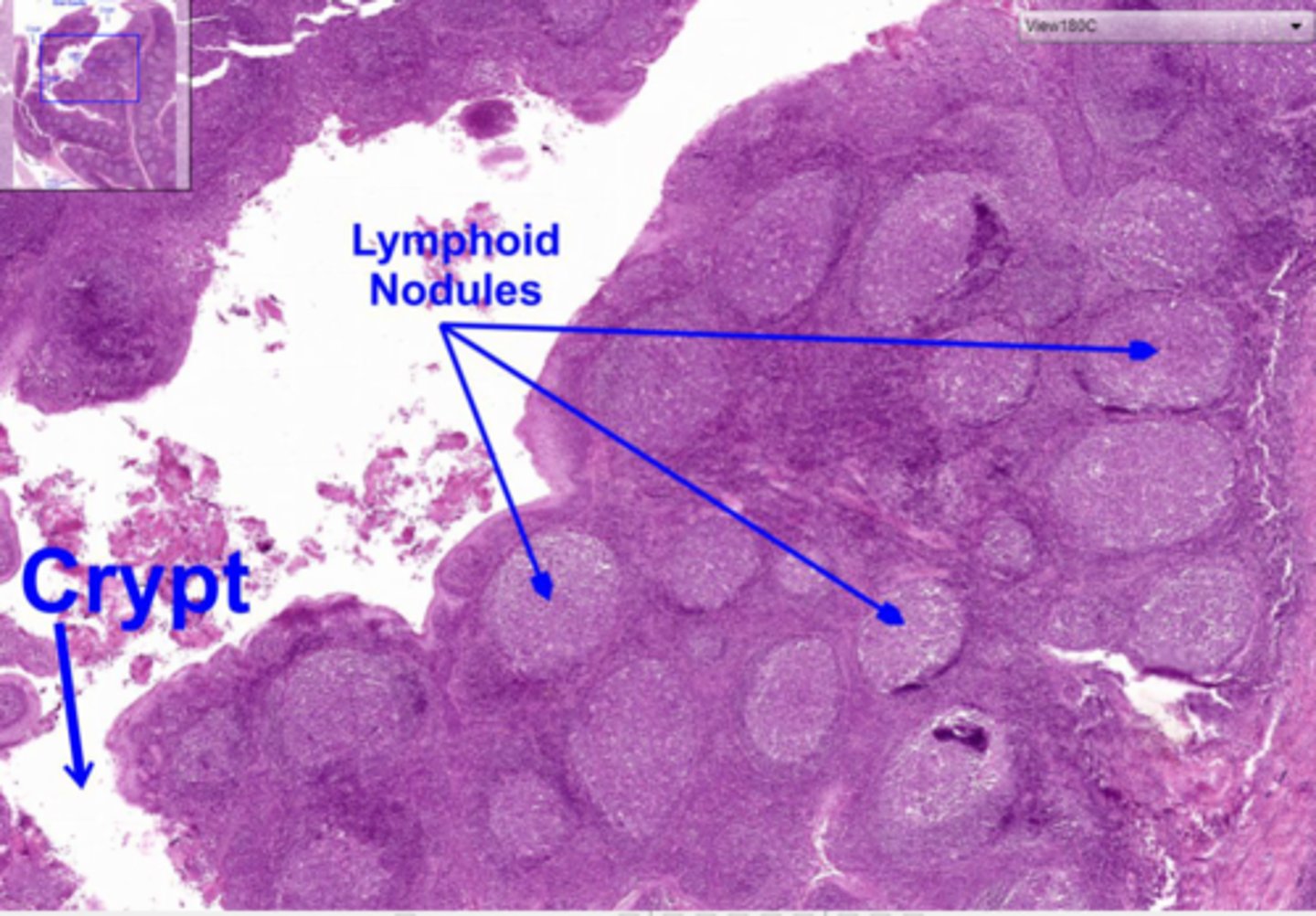
germinal centers
where B cells multiply and differentiate into plasma cells
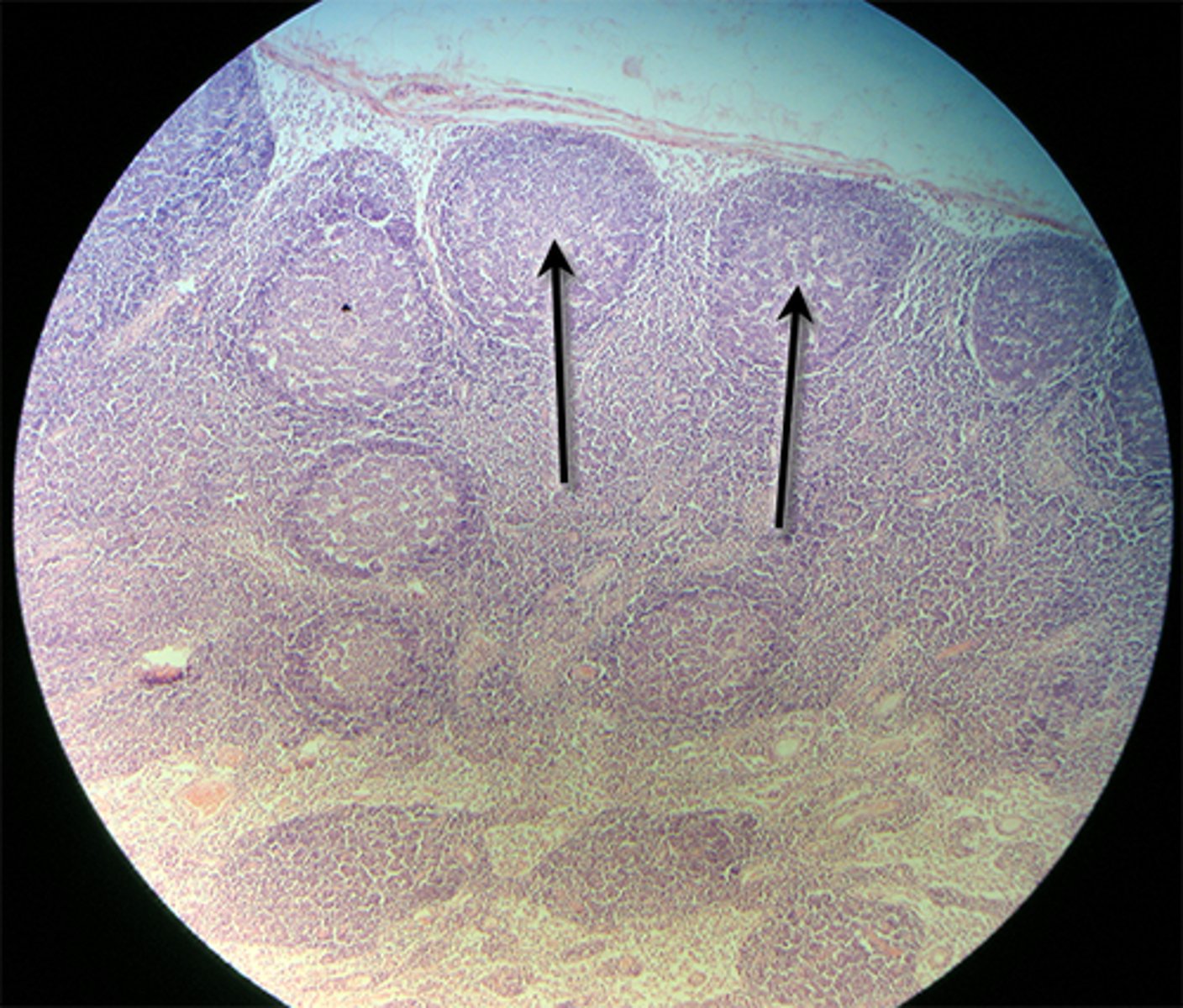
Trabecular sinus of lymph node
(Green arrow) Sinus of lymph node that run parallel to trabeculae and lead inwards to a labyrinth of medullary sinuses
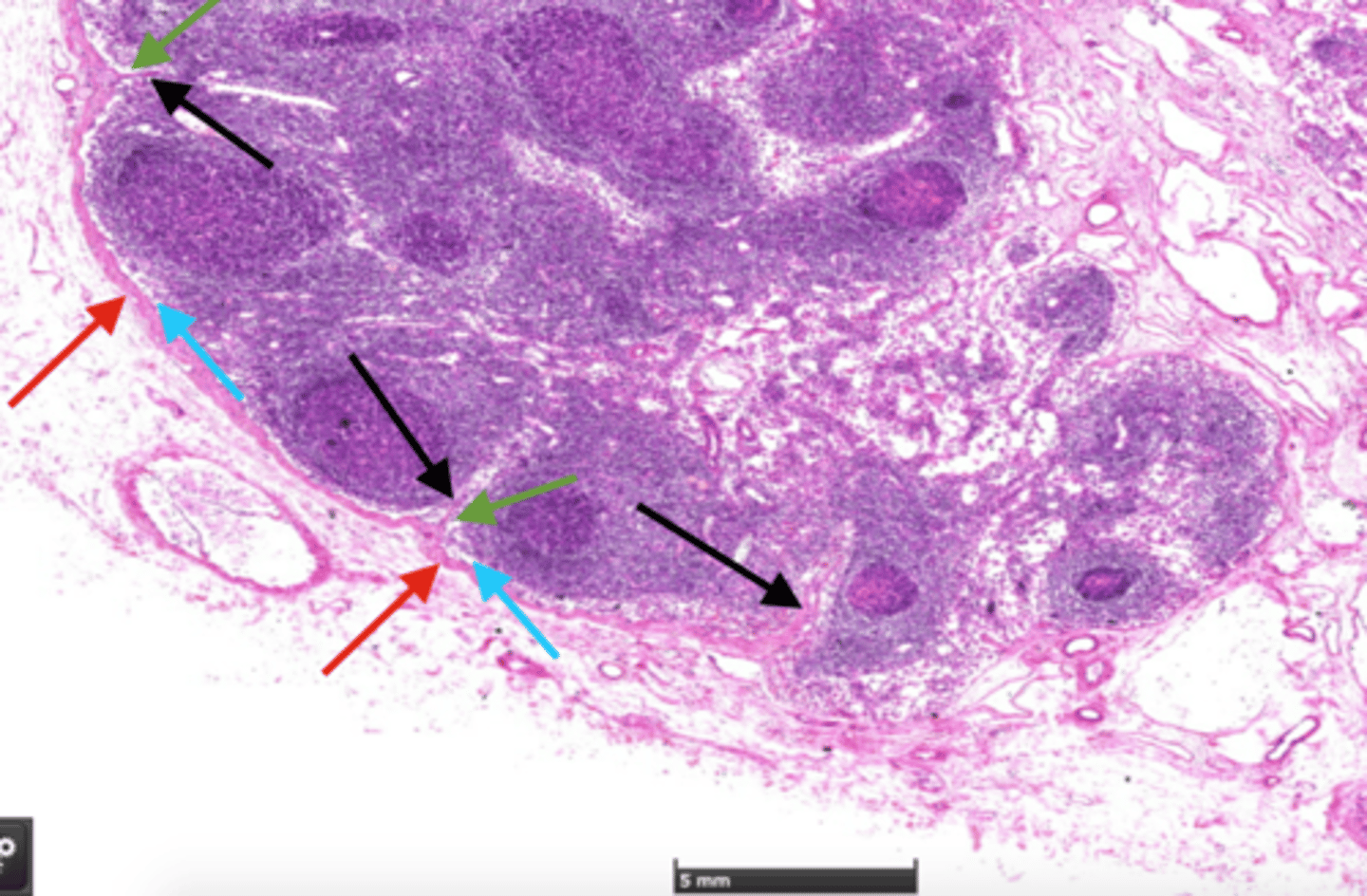
medullary sinus of lymph node
open spaces between medullary cords
(arrows pointing to lighter color)
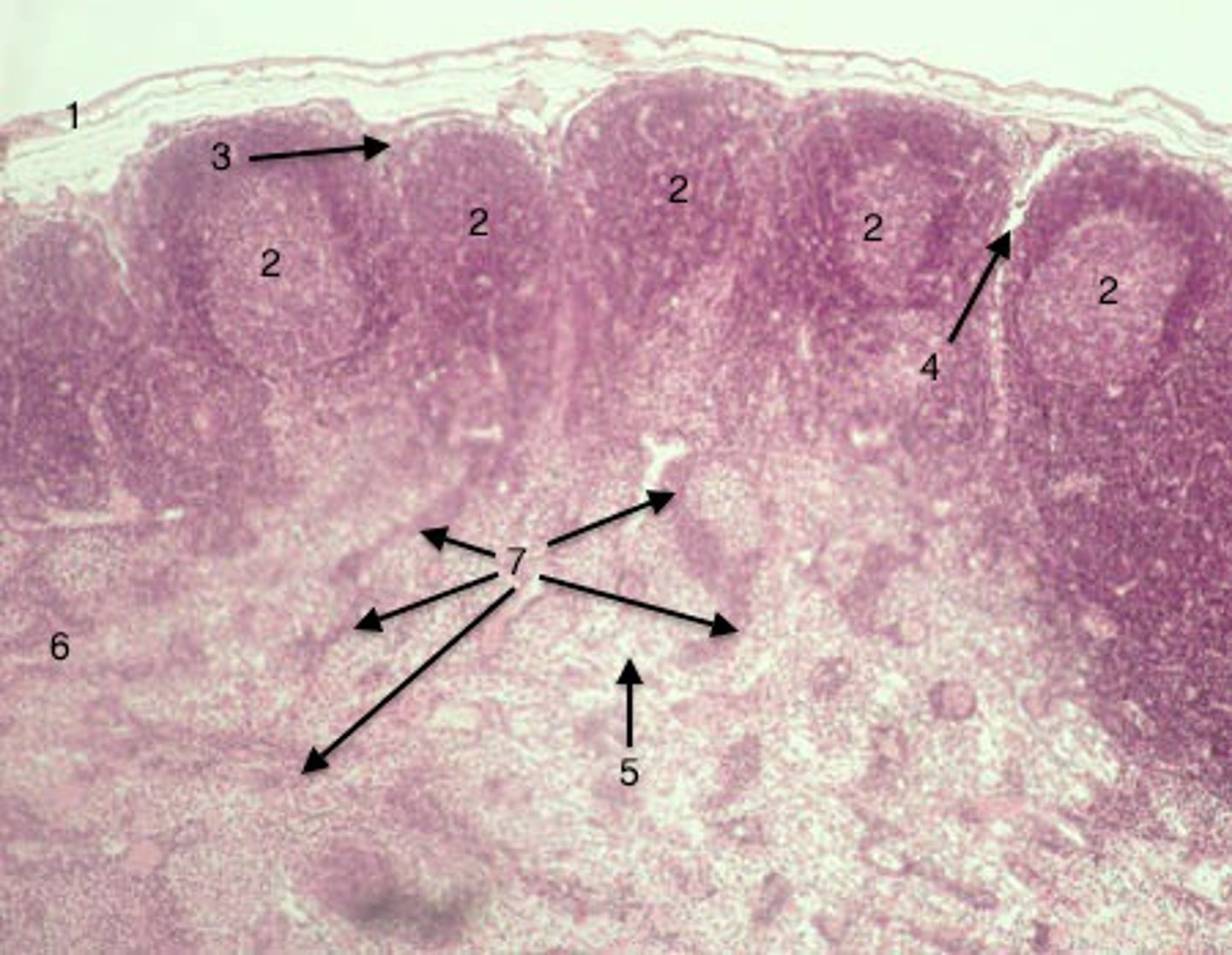
medullary cord
dark staining "island" of cells in medulla; actually small extension of cortex made up of lymphocytes and plasma cells
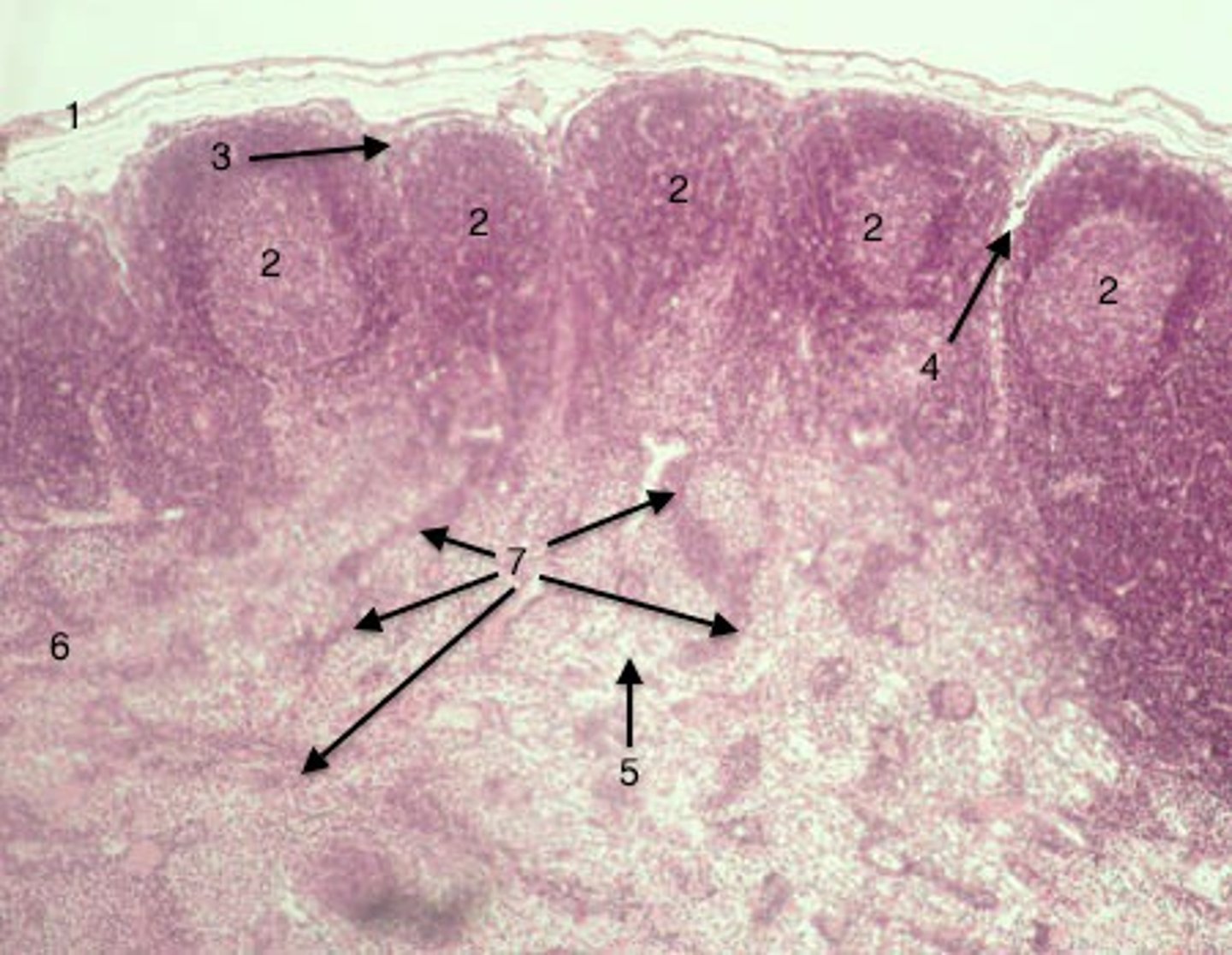
afferent lymphatic vessels
bring lymph to a lymph node
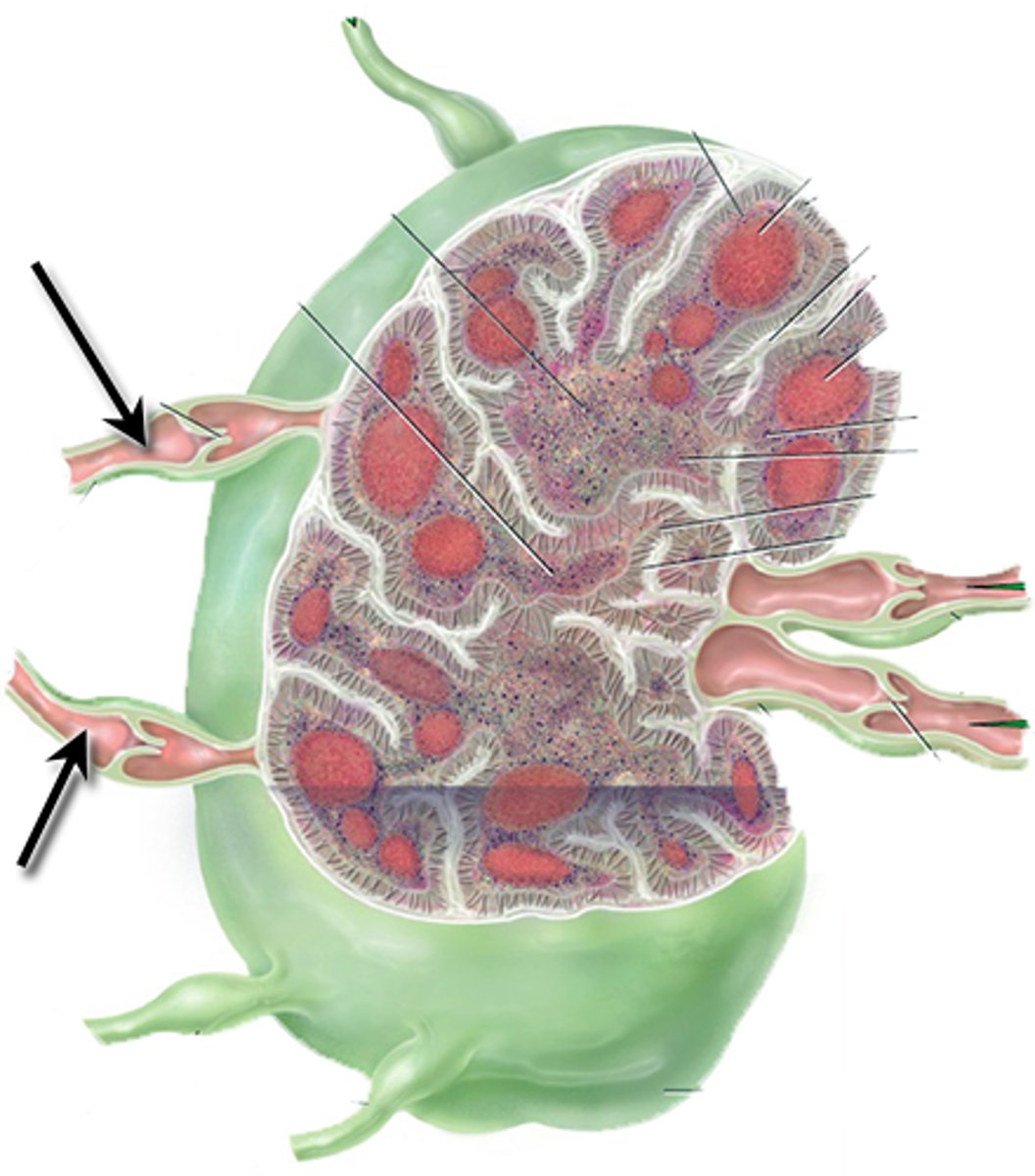
efferent lymphatic vessels
Vessels leaving the lymph node
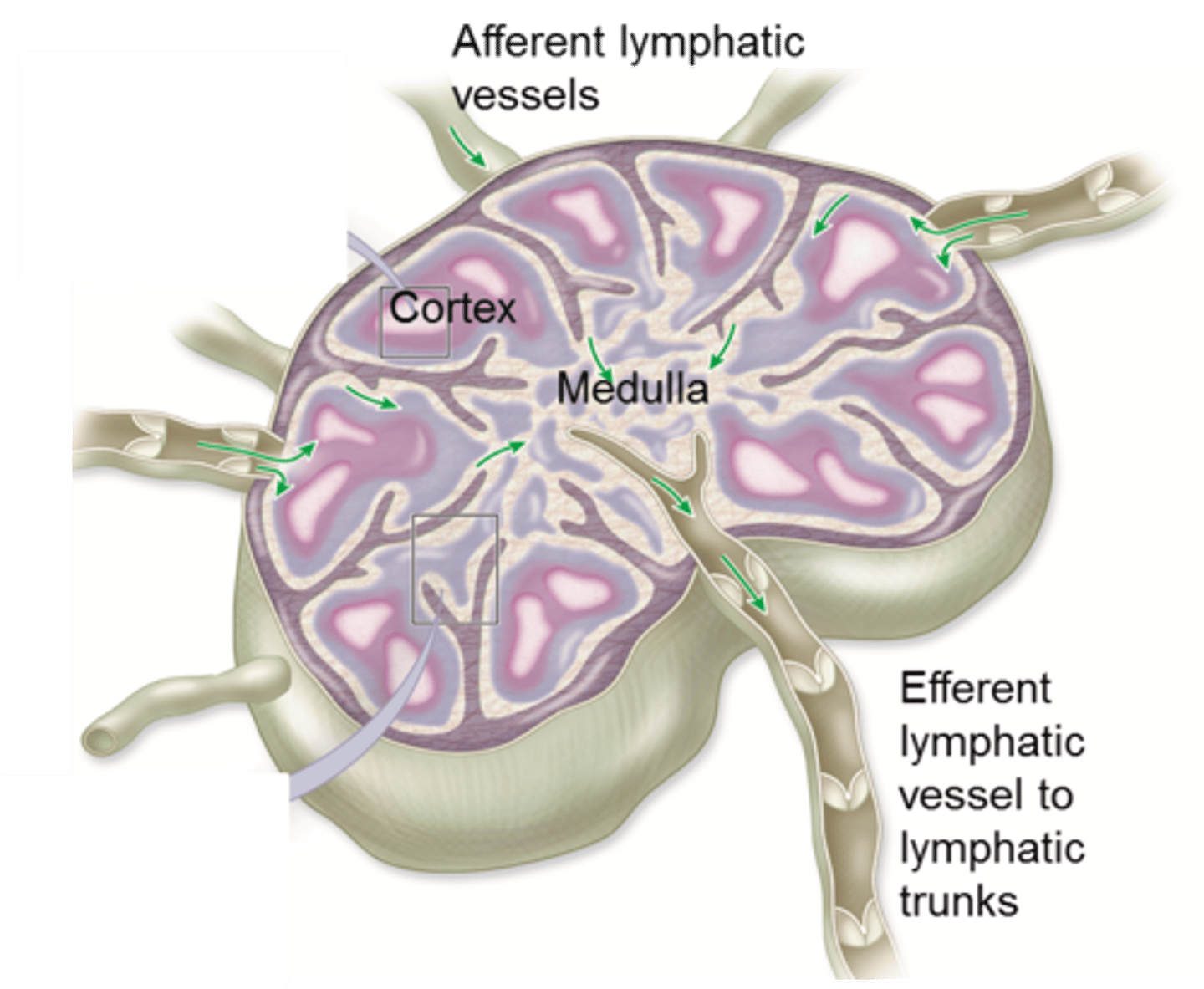
Spleen
Organ near the stomach that produces, stores, and eliminates blood cells. Not part of the lymphatic system but is a secondary organ.
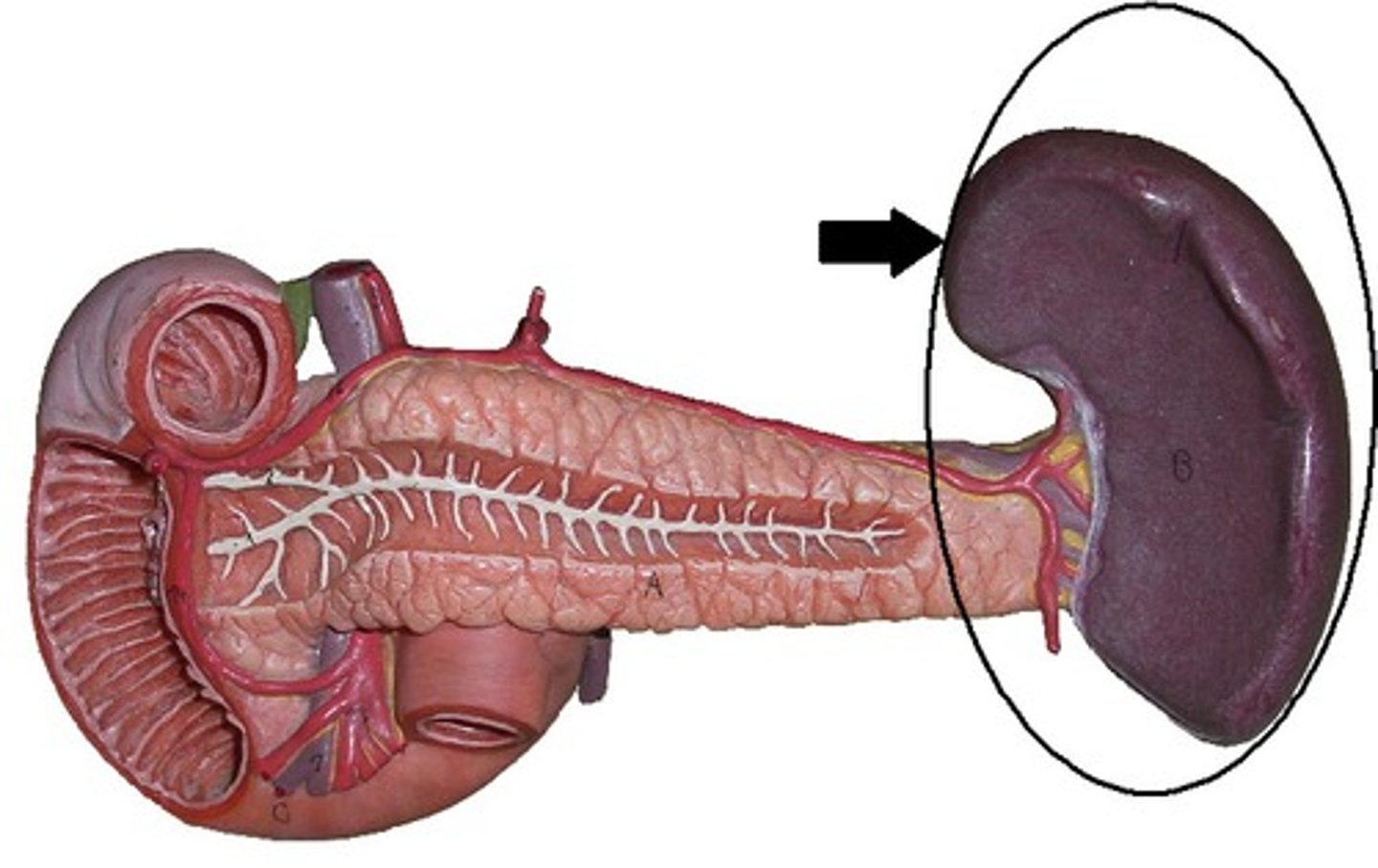
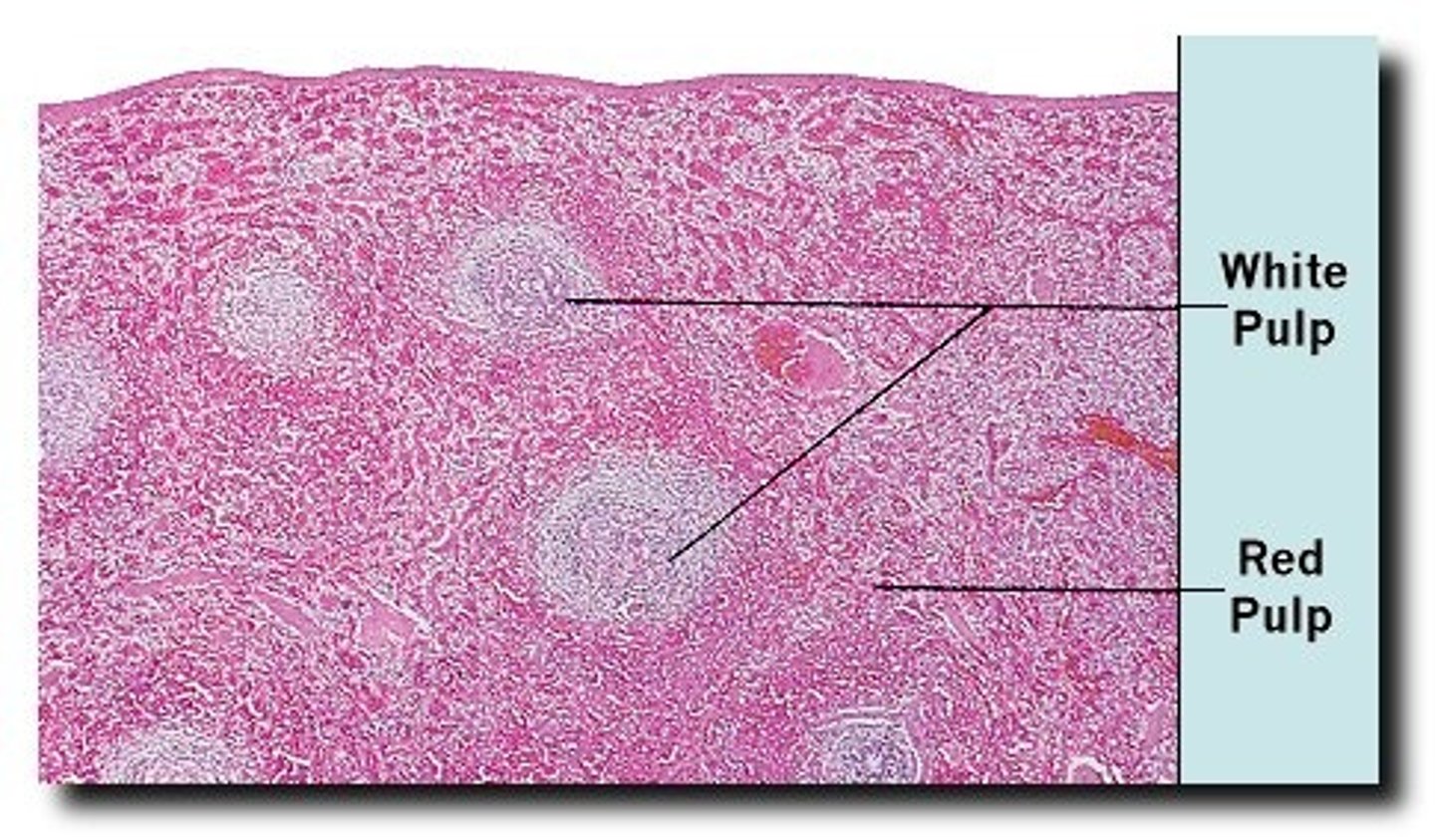
red pulp of spleen
sinuses filled with erythrocytes
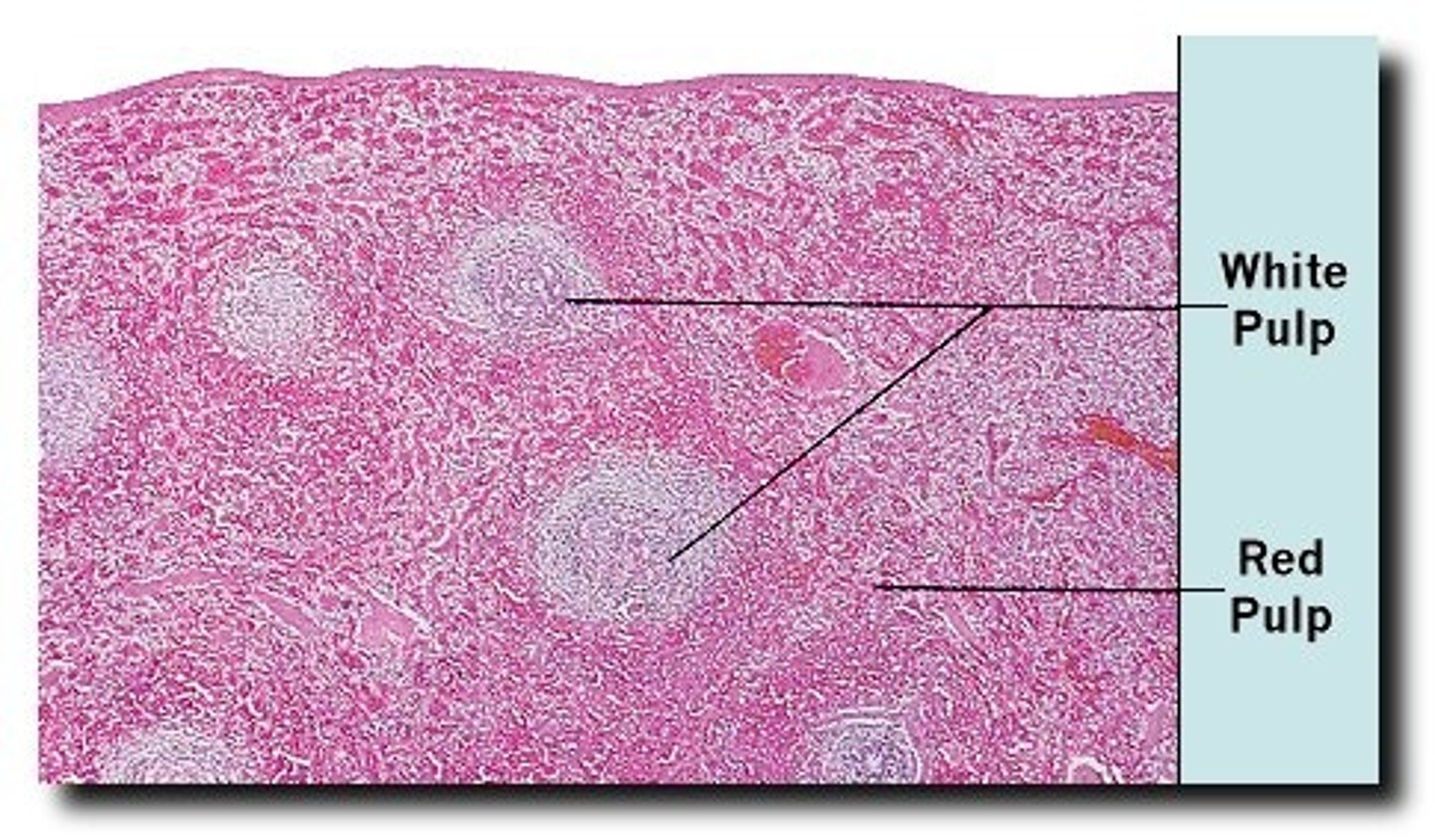
white pulp of spleen
lymphocytes, macrophages surrounding small branches of splenic artery
tonsils
masses of lymphatic tissue in the back of the oropharynx
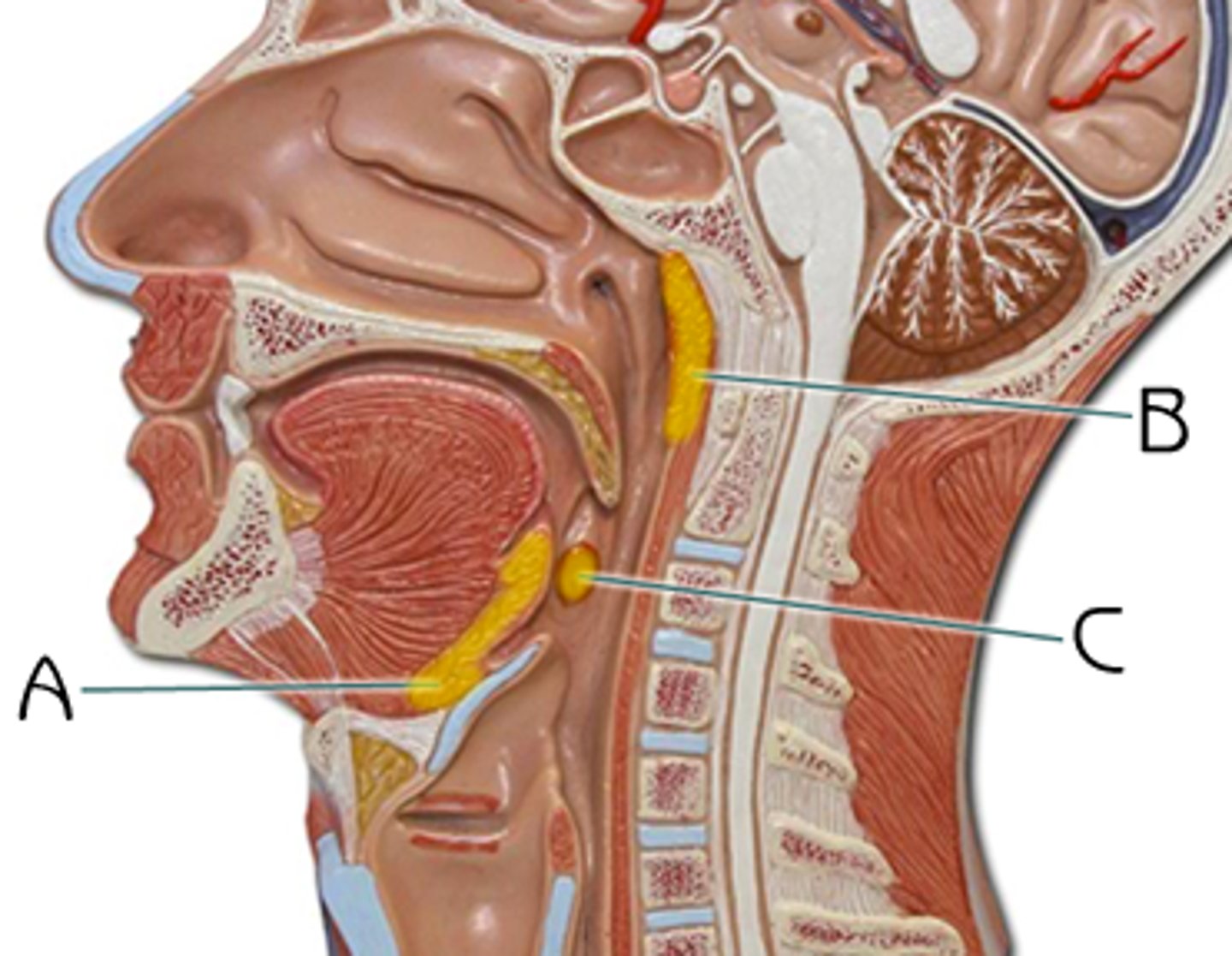
pharyngeal tonsil (adenoids)
single tonsil on wall of nasopharynx
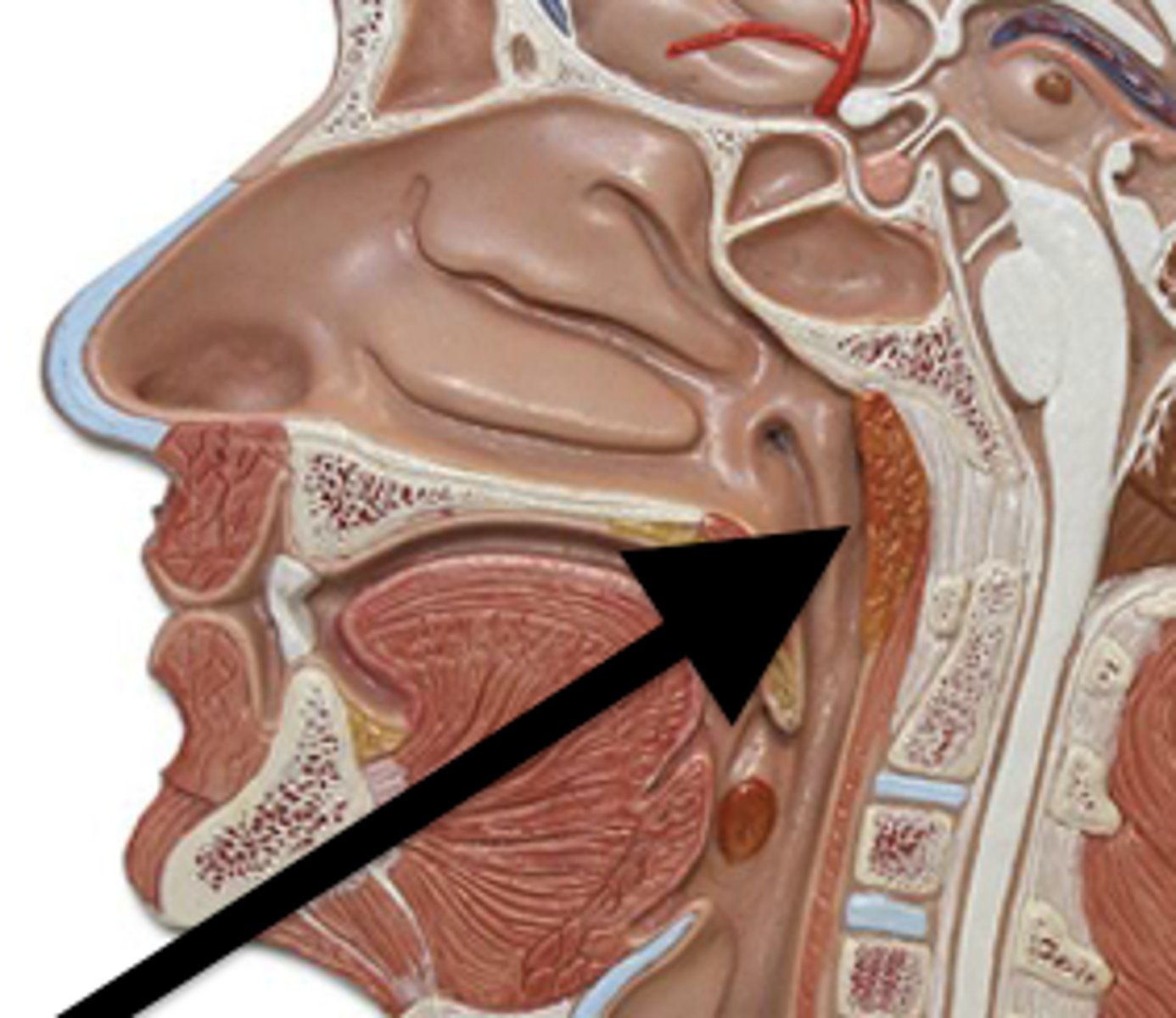
palatine tonsils
located on the left and right sides of the throat in the area that is visible through the mouth
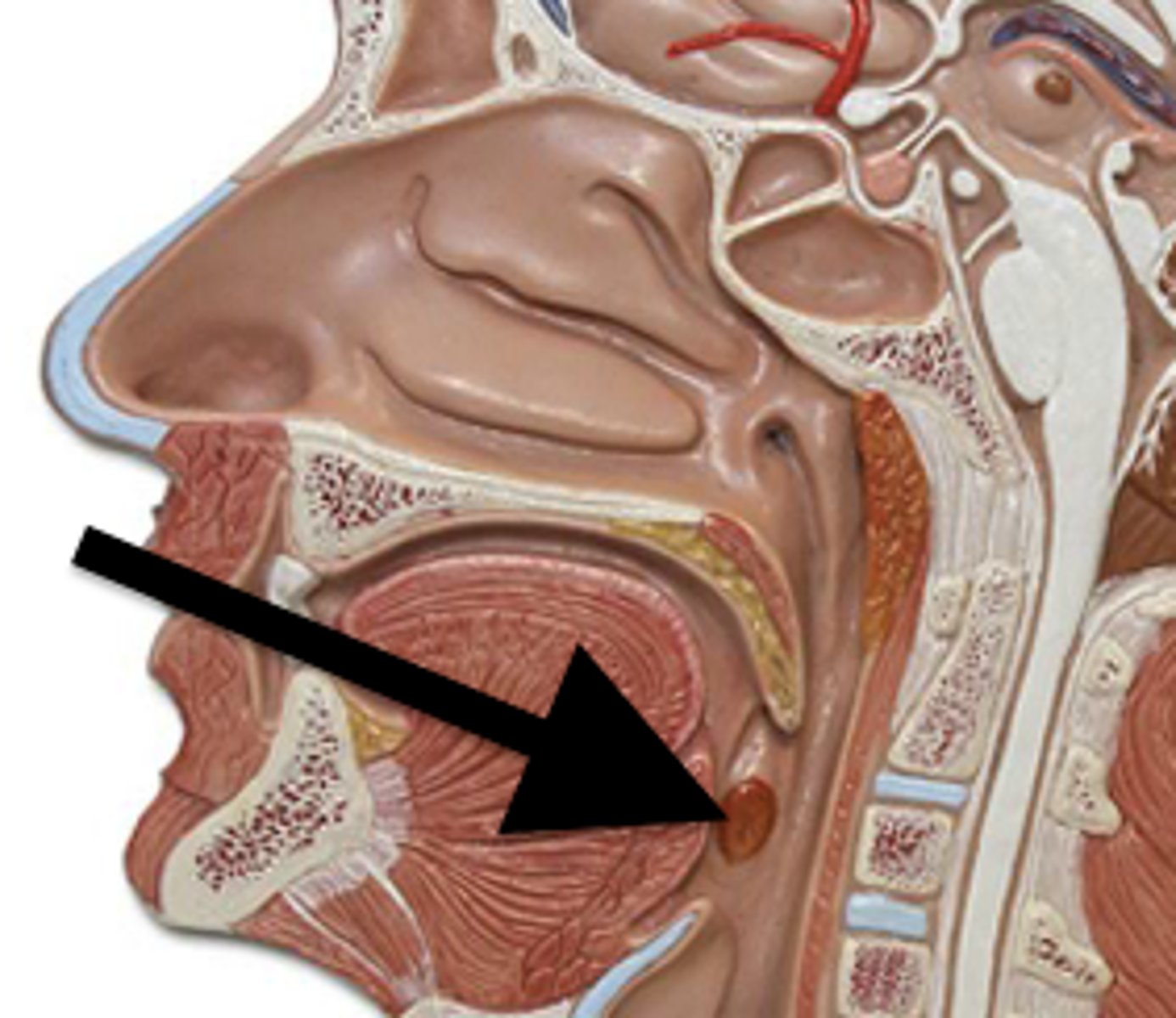
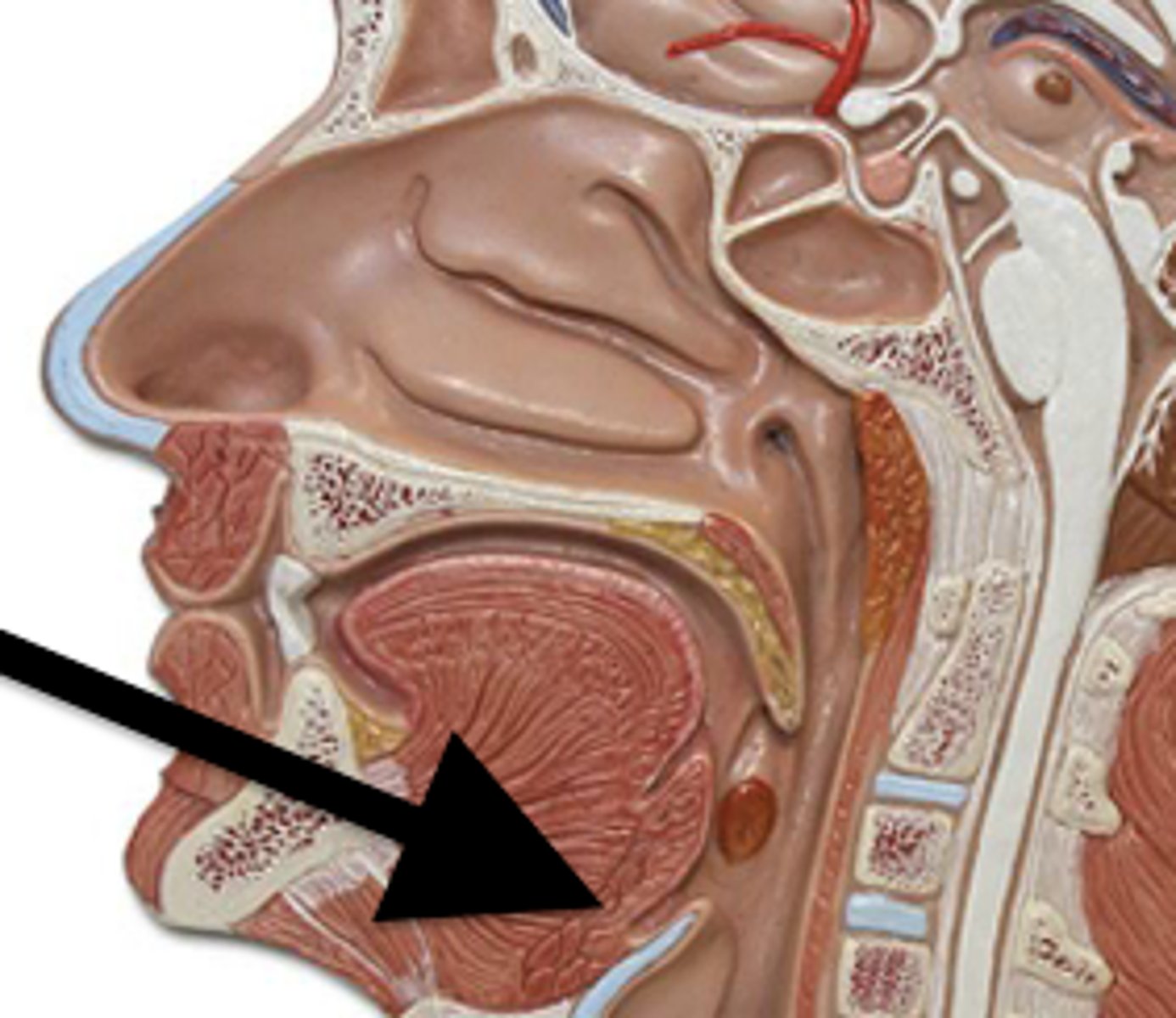
lingual tonsils
located at the base of the tongue
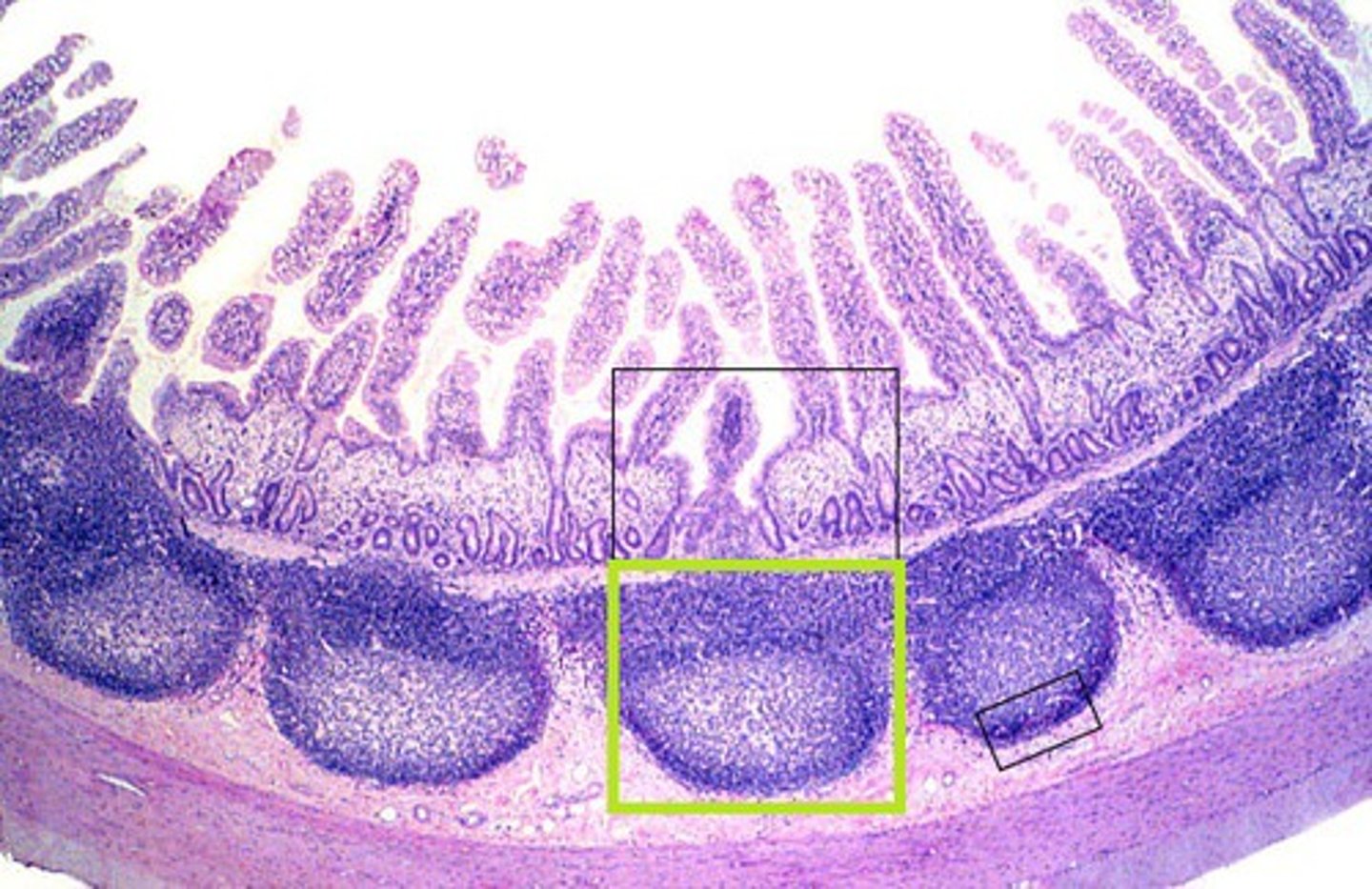
Peyer's patches
large collections of lymphoid tissue found in the submucosa of the small intestine
What is chyle?
white or pale yellow substance in lymph that contains fatty substances absorbed by the lacteals
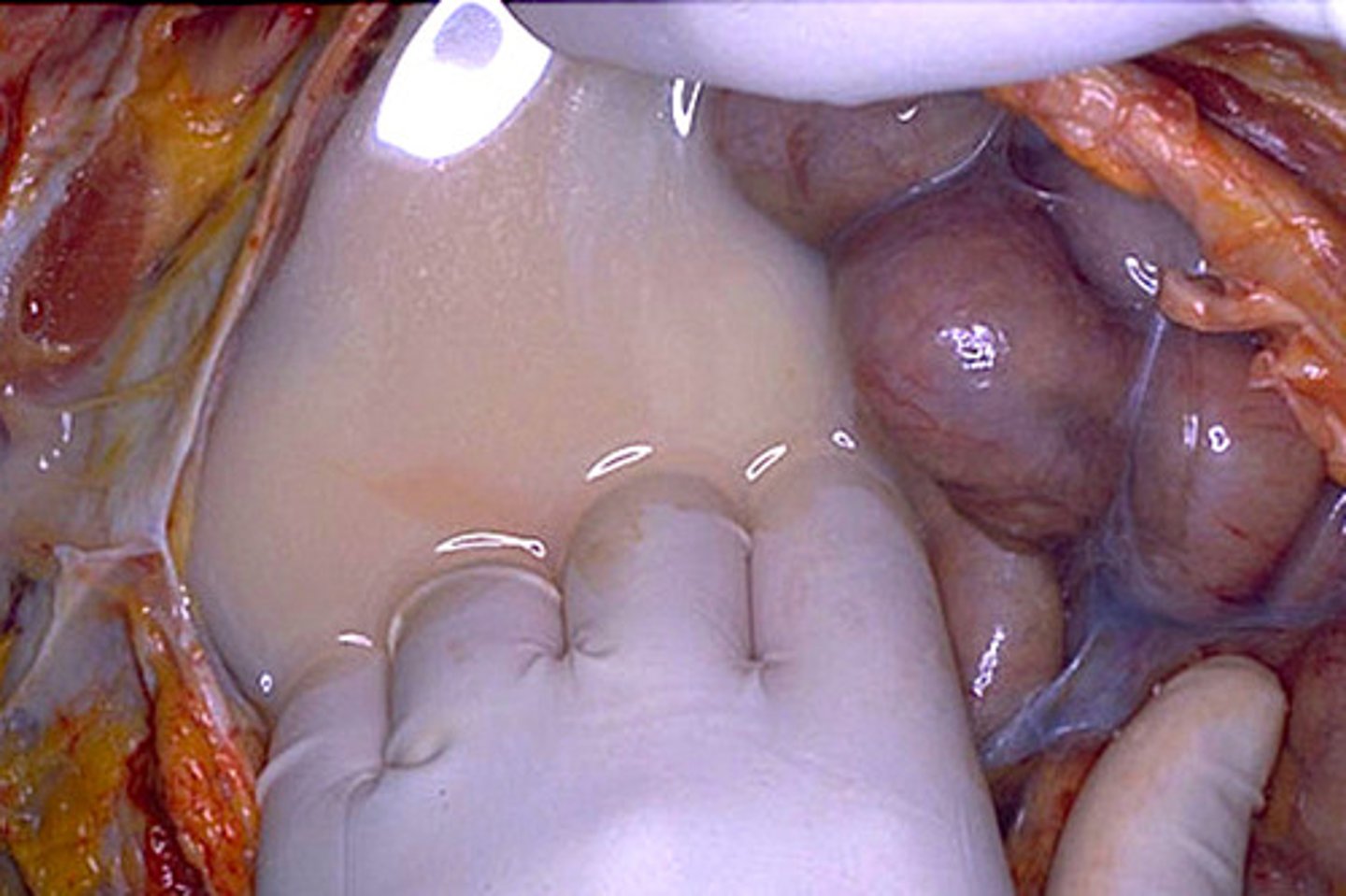
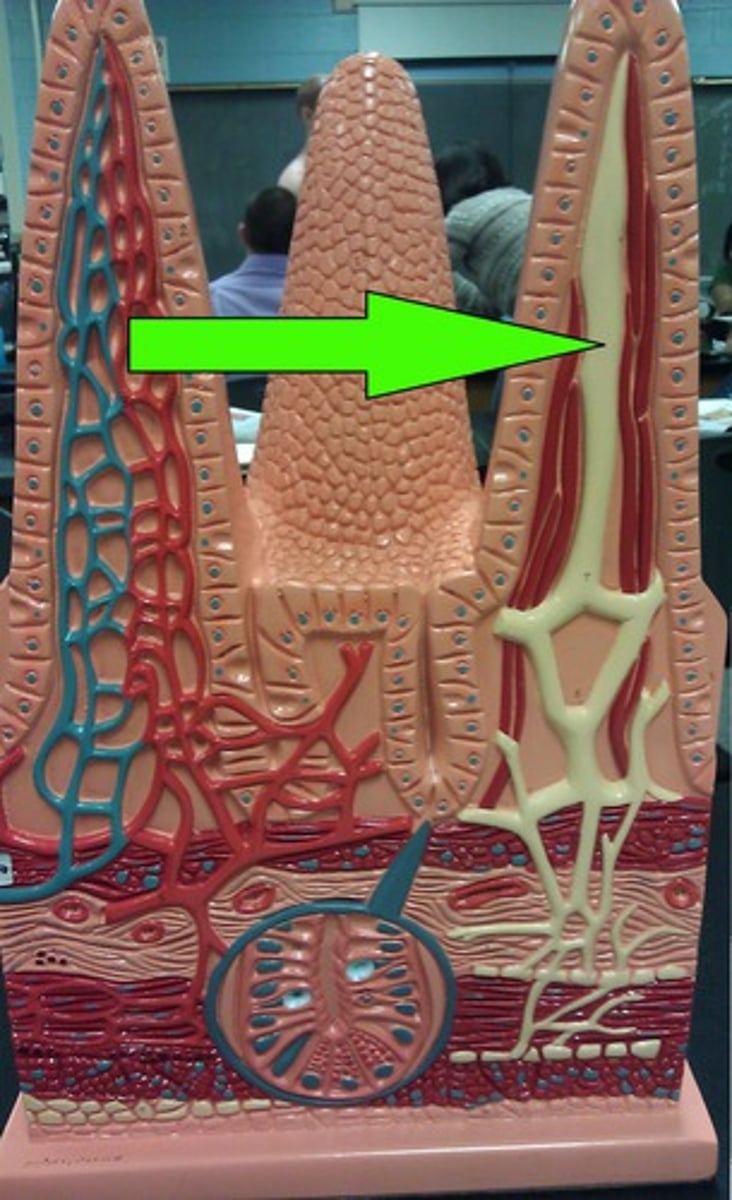
lacteals
specialized lymph vessels in the small intestine that absorb fat into the bloodstream
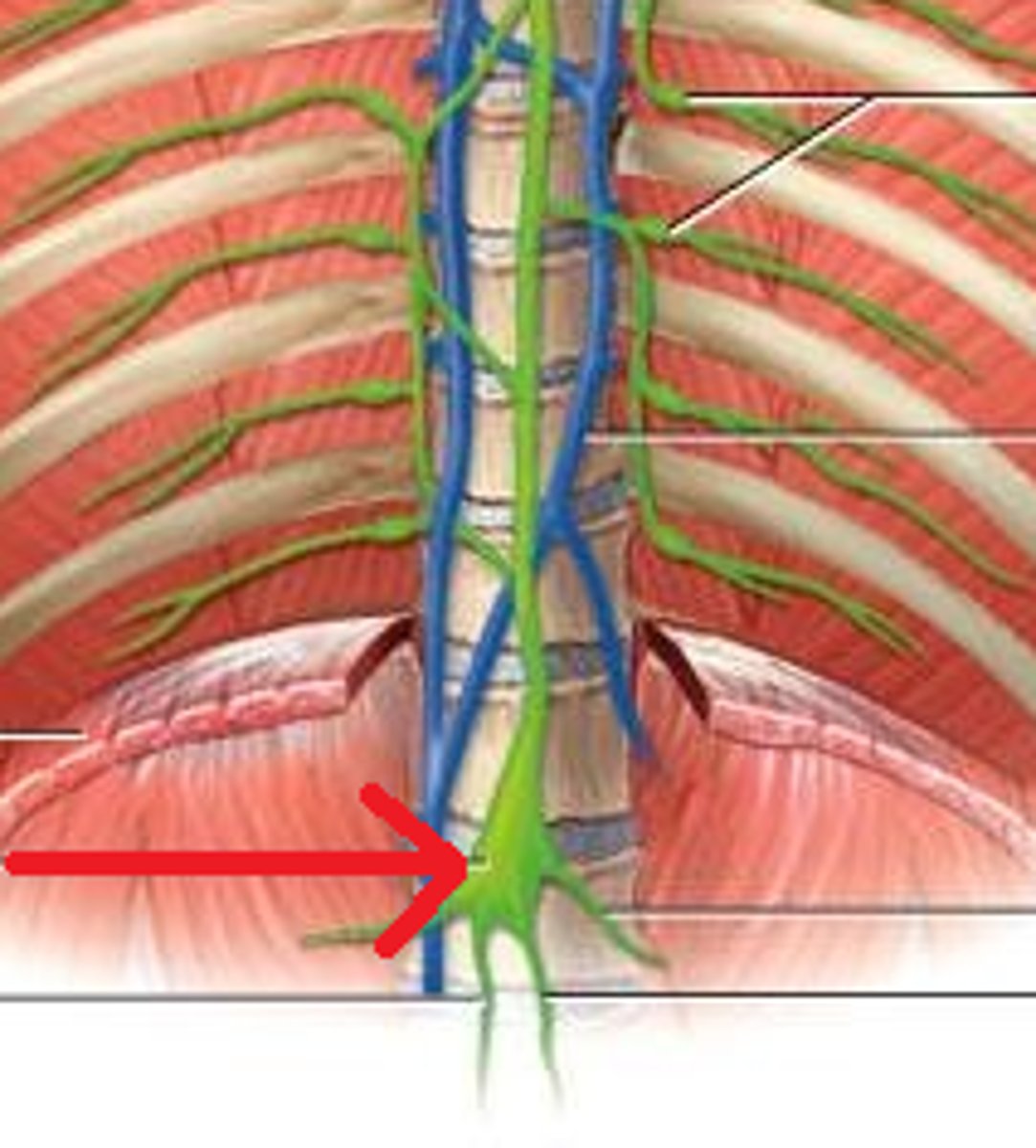
cisterna chyli
an enlarged pouch on the thoracic duct that serves as a storage area for lymph moving toward its point of entry into the venous system
T-cells
Found in the Thymus
B-cells
Found in the bone marrow
Humoral immunity
B cells produce antibodies after exposure to specific antigens
cell-mediated immunity
T cells that respond to antigens and destroy them directly
Thymus
degenerates (involutes) with age
Lymphadenitis
Found in common sites of metastatic cancer
Tonsilitis
Occurs in sites that often contains food debris, dead leukocytes, bacteria and antigenic chemicals
What is the first step in the route from tissue fluid to the bloodstream?
Lymphatic capillaries
What follows lymphatic capillaries in the route to the bloodstream?
Collecting vessels
How many lymphatic trunks are there in the route to the bloodstream?
6 lymphatic trunks
What comes after the lymphatic trunks in the route to the bloodstream?
2 collecting ducts
What is the next step after the collecting ducts in the route to the bloodstream?
Subclavian veins
What is the final destination in the route from tissue fluid to the bloodstream?
Right atrium
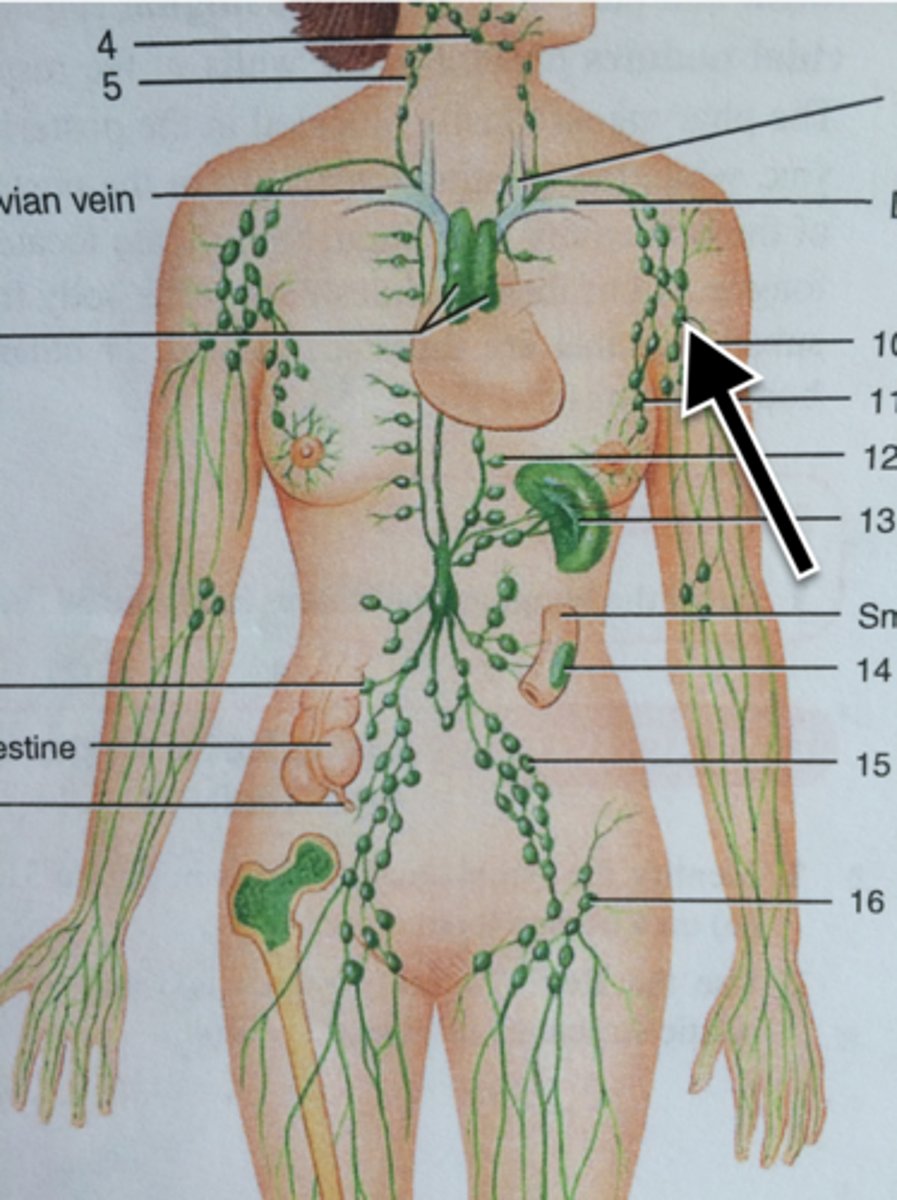
cervical lymph nodes
lymph from head and neck
axillary lymph nodes
upper limb and breast
thoracic lymph nodes
mediastinum, lungs, and airway
abdominal lymph nodes
urinary and reproductive systems
intestinal and mesenteric lymph nodes
digestive tract
inguinal lymph nodes
entire lower limb
popliteal lymph nodes
the leg proper