Reproduction
 Call Kai
 Learn
Learn Practice Test
 Spaced Repetition
 Match
Match Flashcards
 Knowt Play
1/37

Earn XP
Description and Tags
Name | Mastery | Learn | Test | Matching | Spaced | Call with Kai |
|---|
No analytics yet
Send a link to your students to track their progress
38 Terms
what is a gamete?
a sex cell eg sperm and ovum, pollen nucleus and ovum
how do gametes differ from normal cells?
contain half the number of chromosomes than in other body cells = haploid nucleus
only contain one copy of each chromosome
what happens when male and female gametes fuse?
they become a zygote with 46 chromosomes = diploid nucleus
advantages of sexual reproduction
increases genetic variation
species can adapt to new environments due to variation = survival advantage
disease less likely to affect population
disadvantages of sexual reproduction?
takes time and energy to find mates
difficult for isolated members of the species to reproduce
what is asexual reproduction?
does not involve gametes or fertilisation, only one parent required
offspring genetically identical to parent and each other
advantages of asexual reproduction
population can be increased rapidly when conditions are right
can exploit suitable environments quickly
more time and energy efficient
reproduction is completed much faster than sexual reproduction
disadvantages of asexual reproduction
limited genetic variation in population
population vulnerable to changes in conditions and may only be suited to one habitat
disease likely to affect the whole population
features of asexual reproduction
one parent organism
offspring produced by mitosis
offspring genetically identical to each other and the parent
genetic variation only from mutation
usually large numbers of offspring produced
offspring usually produced quickly
features of sexual reproduction
two parent organisms
offspring produced from the fusion of two haploid gametes, which are produced by meiosis
offspring genetially unique and genetically different from both parents
three sources of variation (50% of dna from each parent, production of gametes by meiosis, random distribution of chromosomes into gametes during meiosis)
usually limited numbers of offspring produced
offspring usually produced relatively slowly
what types of cells does meiosis produce?
haploid from diploid, produces gametes used in sexual reproduction
how many divisions of meiosis are there?
two → meiosis I and II
what mechanisms in meiosis lead to genetic variation?
crossing over → the process by which non-sister chromatids exhange alleles in meiosis I
independent assortment → production of different combinations of alleles in daughter cells due to the random alignment of homologous pairs of chromosomes during meiosis I
random fertilisation → there are millions of combinations of sperm and egg cells
where does meiosis occur?
in the testes of male animals and the ovaries of female animals
in the anthers and ovaries of flowering plants
features of sperm cells
very small
many structural adaptations
acrosome on head contains digestive enzymes to break down the zona pellucida
flagellum for movement
capable of locomotion
produced every day in huge numbers
features of egg cells
large
round cell with few structural adaptations
covered in a jelly coating
not capable of locomotion
thousands of immature eggs in each ovary but only one released each month
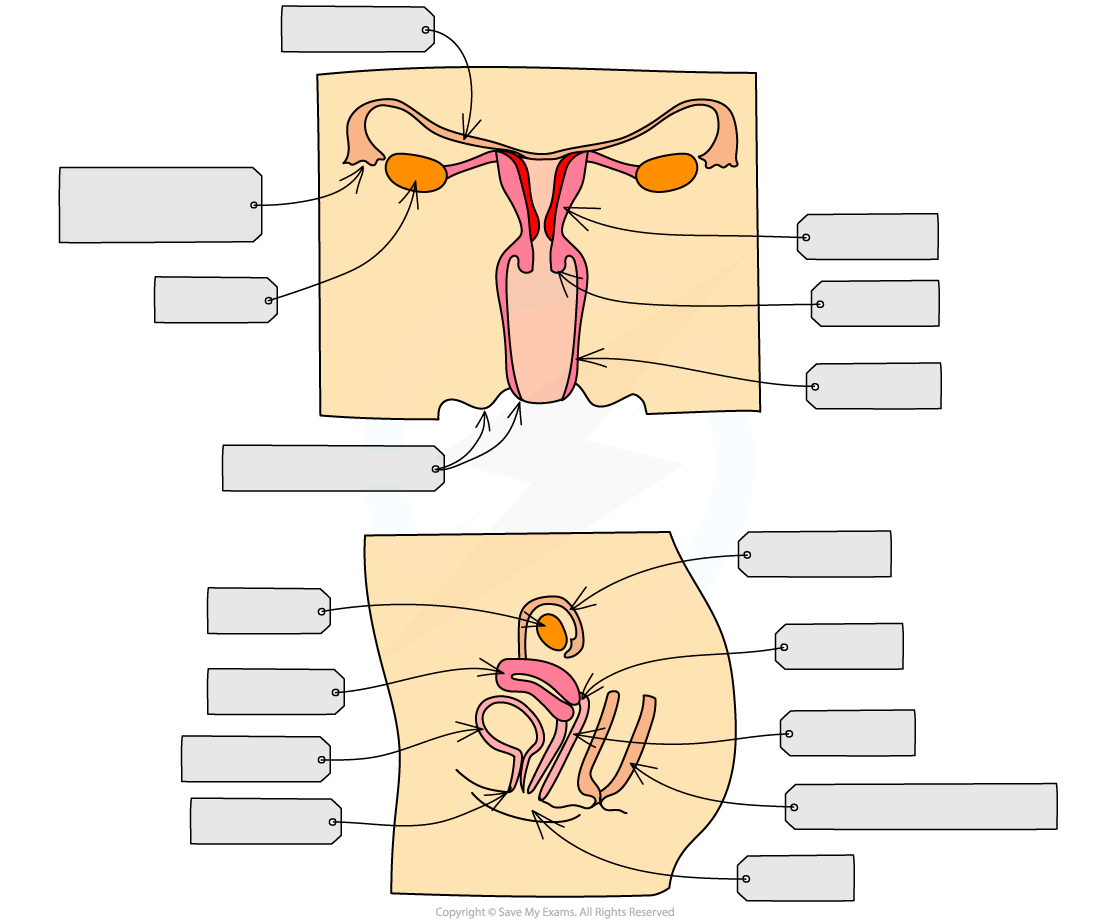
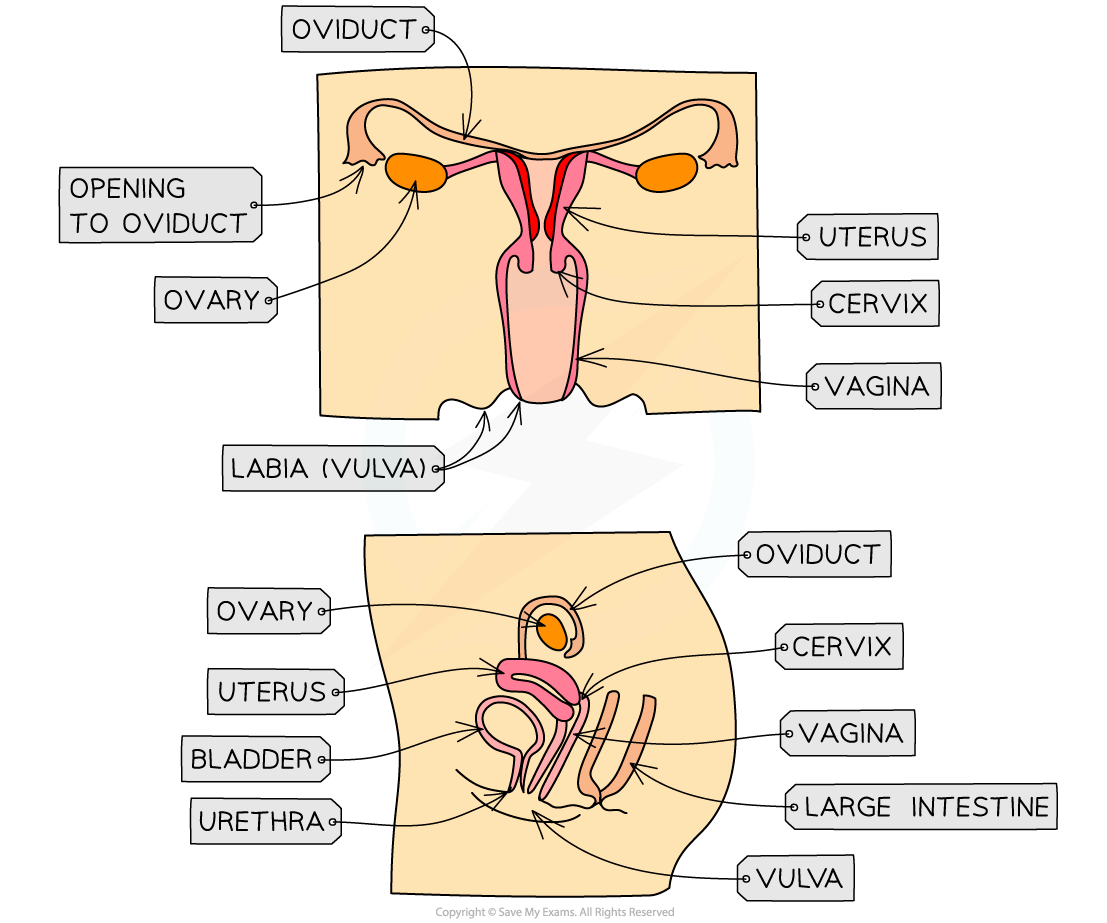
label the female reproductive system
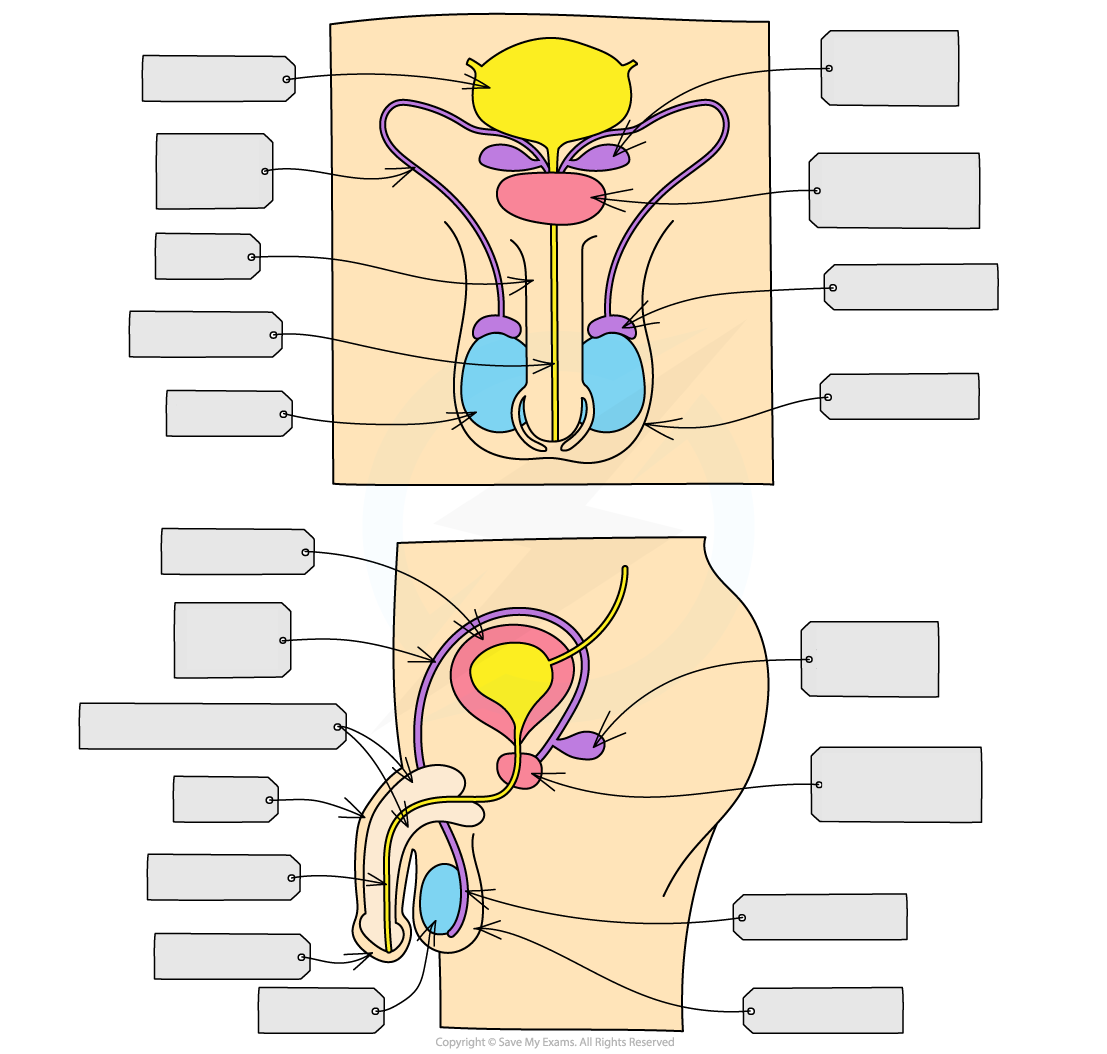
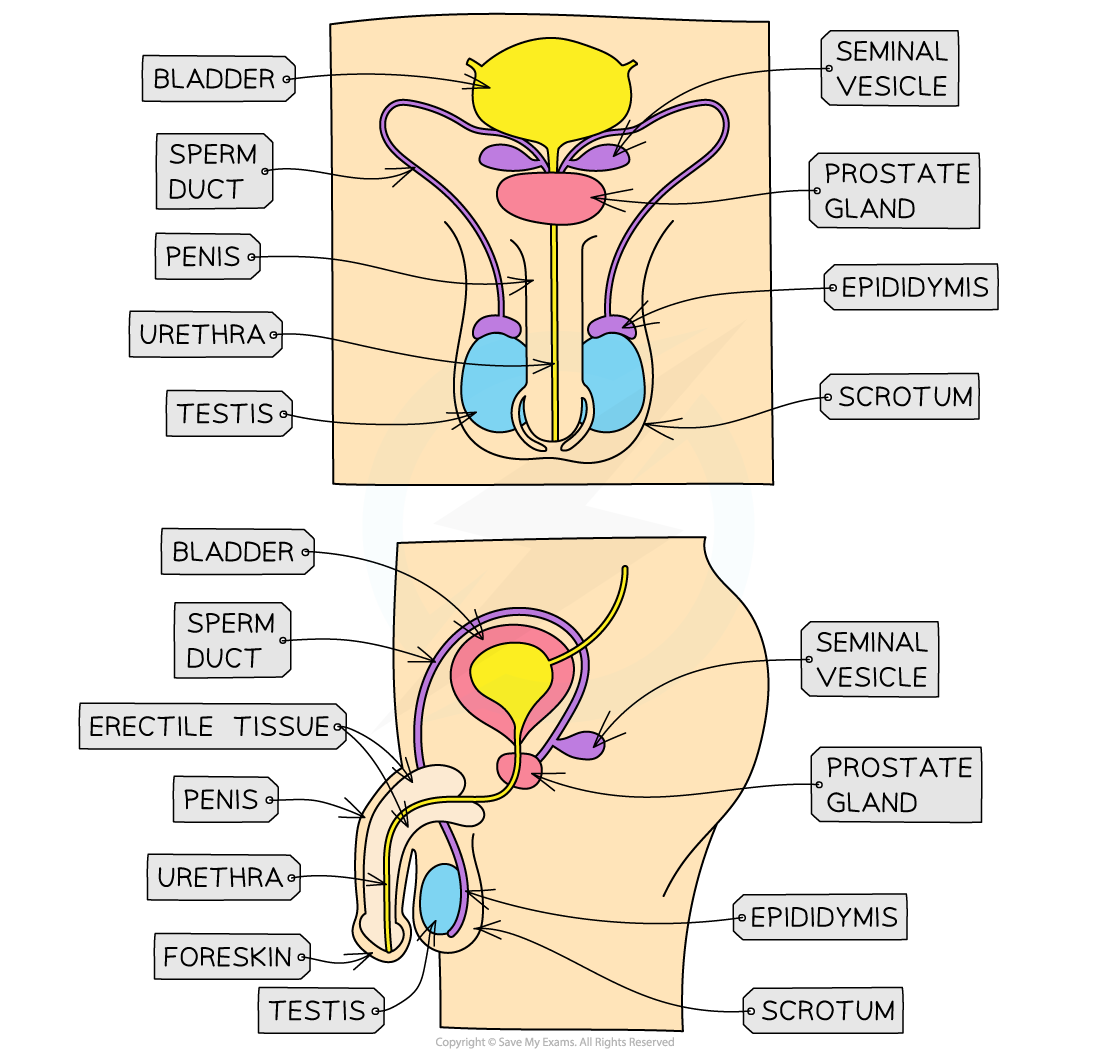
label the male reproductive system
what is the function of the oviduct?
connects the ovary to the uterus and is lined with ciliated cells to push the ovum down
fertilisation occurs here
what is the function of the ovary?
contains ova (female gametes) which will mature and develop when hormones are released
what is the function of the uterus?
muscular bag with a soft lining where the fertilised egg will be implanted to develop into a foetus
what is the function of the cervix?
ring of muscle at the lower end of the uterus to keep the developing foetus in place during pregnancy
what is the function of the vulva?
a collection of structures (including pubic mound, labia, clit & hymen), one function of which is to protect the more internal parts of the female reproductive system
what is the function of the prostate gland and seminal vesicle?
produces semen which gives nutrients to sperm cells
what is the function of the sperm duct?
sperm passes through it to be mixed with fluids produced in the glands before being passed into the urethra for ejaculation
what is the function of the urethra?
tube running down the centre of the penis that can carry urine or semen, a ring of muscle in the urethra prevents the urine and semen mixing
what is the function of the testis?
contained in the scrotum and produces sperm and testosterone
what is the function of the scrotum?
protects the testes outside the body to ensure sperm are kept at a temperature slightly lower than body temperature
what is the function of the epididymis?
coiled tubes that store sperm until ejaculation
what generally happens in the menstrual cycle?
days 1-7ish → menstruation (period)
days 7-28 → uterus lining thickens in preparation of receiving a fertilised egg
day 14 → ovulation (egg release), travels down the oviduct to the uterus
failure for the egg to be fertilised leads to menstruation, breakdown of endometrium
which hormones are involved in the menstrual cycle?
FSH & LH (pituitary gland)
oestrogen & progesterone (corpus luteum)
what is the role of FSH?
secreted by pituitary gland and stimulates development of immature egg cells in follicles in the ovary
also stimulates the secretion of oestrogen by follicle wall
what is the role of LH?
pituitary gland stimulated to release LH when oestrogen levels reach their peak
LH causes ovulation to occur, mature egg shedded from follicle and released into ovary
this leaves behind an empty egg follicle called the corpus luteum
LH also stimulates the production of progesterone from the corpus luteum
what is the role of oestrogen?
levels rise from day 1 to peak just before day 14
causes the endometrium to start thickening and the egg cell to mature
peak in oestrogen occurs just before the egg is released
what is the role of progesterone?
stays low from day 1-14 and starts to rise once ovulation has occured
produced by the corpus luteum
increasing levels of progesterone causes the endometrium to continue to thicken
a fall in progesterone levels as the corpus luteum deteriorates causes the endometrium to break down = period
what is the relationship between FSH and oestrogen?
FSH stimulates the production of oestrogen
FSH stimulates the development of a follicle, follicle wall produces oestrogen
oestrogen also causes an increase in FSH receptors, making follicles more receptive to FSH which in turn stimulates more oestrogen production
this is positive feedback
when oestrogen levels are high enough it inhibits the secretion of FSH → negative feedback
what is the relationship between LH and oestrogen?
when oestrogen rises to a high enough level it stimulates the release of LH from the pituitary gland causing ovulation around day 14
after ovulation, LH causes the wall of the follicle to develop into the corpus luteum, which secretes more oestrogen
positive feedback
what is the relationship between LH and progesterone?
LH stimulates the wall of the follice to develop into the corpus luteum, which secretes progesterone
progesterone thickens and maintains the endometrium but also inhibits the secretion of FSH and LH from the pituitary gland
negative feedback