BIO-210 Lecture Slides (In-Person)
 Call Kai
 Learn
Learn Practice Test
 Spaced Repetition
 Match
Match Flashcards
 Knowt Play
1/78

There's no tags or description
Looks like no tags are added yet.
Name | Mastery | Learn | Test | Matching | Spaced | Call with Kai |
|---|
No analytics yet
Send a link to your students to track their progress
79 Terms
Properties common to all Organisms
1) Organization
2) Metabolism
3) Growth & Development
4) Responsiveness
5) Regulation
6) Reproduction
Hint: OMG-RRR
1) Organization
All organisms exhibit complex organization & order
2) Metabolism
The sum of all chemical reactions that occur within the body
2 types of metabolism:
1) Anabolism
2) Catabolism
Anabolism
Small molecules joined to form larger ones
“build/grow”
Catabolism
Large molecules broken down into smaller ones
Example of anabolism and catabolism going hand-in-hand
Eating a burger:
Catabolism: breaking down a burger
Anabolism: amino acids used to make protein
3) Growth & Development
Assimilate materials from the environment
Often increase in size
Increase in specialization
Side note: as we grow, we become more complex
4) Responsiveness
The ability to sense and react to stimuli
ex: a hot stimulus to the hands causes a person to withdraw
5) Regulation
Adjust internal bodily function to environment changes
Directly tied to homeostasis
6) Reproduction
Produce new cells for growth, maintenance, & repair
W/sex cells (gametes), can develop into new organisms
Simplest to Most Complex
1) Chemical Level
2) Cellular Level
3) Tissue Level
4) Organ Level
5) Organ System Level
6) Organismal level
side note: these function together to form the next (physiology & anabolism)
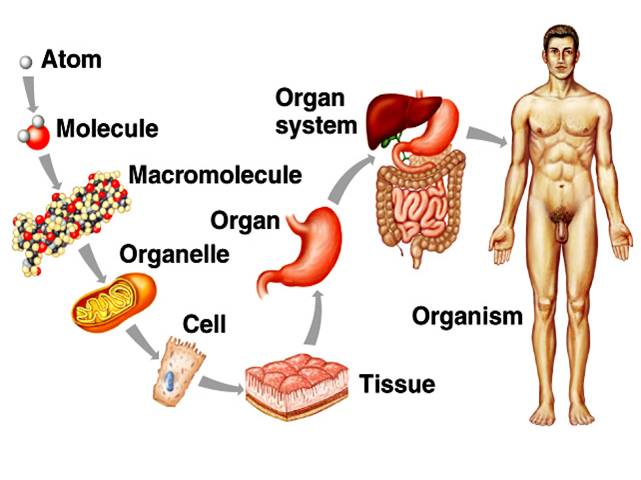
1) Chemical Level
Involves atoms and molecules
- atoms: smallest units of matter
- molecules: one or more combined atoms
Macromolecules
- more complex molecules
- e.g., proteins, DNA
Organelles
- microscopic subunits in cells composed of macromolecules
2) Cellular Level
Consists of cells (smallest living structures)
- basic units of structure + function in organisms
- vary widely in structure, reflecting specializations needed:
- e.g., skeletal muscle cell: long, red blood cells: small +flattened
Formed from atoms + molecules from the chemical level
3) Tissue Level
Consists of tissues (groups of similar cells performing common functions)
4 types of tissues:
- epithelial tissue
- connective tissue
- muscle tissue
- nervous tissue
Epithelial Tissue
Covers exposed surfaces
Lines body cavities
Note: “Boarders” (can’t come inside)(ex: mouth cavities, skin)
Connective Tissue
Protects, supports, & binds structures and organs
Note: “everything else tissue”
Muscle Tissue
Produces movement
Note: moves (muscles move us + moves things through us)
Nervous Tissue
Conducts nerve impulses
Note: electrical system of body (like computer, sending impulses through our system)
4) Organ Level
Consists of organs
Two or more tissue types performing specific functions
- 2 or more tissue types needed to form an organ
ex: small intestine composed of all 4 types of tissue, working to process + absorb digested nutrients
5) Organ System Level
Contains related organs that work together to achieve a common function
e.g., organs of the digestive system: work together to digest food, absorb nutrients, and expel waste products
The Body’s Levels of Organization:
Introduction to Organ Systems
All organisms must do what to carry on metabolism?
Exchange nutrients, wastes, & gases.
Why do multicellular organisms require organ systems?
To perform multiple activities
In humans: how many organ systems are there, what are they?
11 Organ Systems:
1) Integumentary System
2) Skeletal System
3) Muscular System
4) Nervous System
5)Endocrine System
6) Cardiovascular System
7) Lymphatic System
8) Respiratory system
9) Urinary System
10) Digestive System
11) Male & Female Reproductive System
1) Integumentary System ( 6 bullet points)
Provides protection
Regulates body temp
Houses cutaneous receptors (nerve endings)
Synthesizes vitamin D (only vitamin our skin can make)
Prevents water loss
Integumentary = fancy word for skin
2) Skeletal System (3 bullet points)
Provides support + protection
Site for blood cell production
Stores calcium & phosphorus
3) Muscular System (2 bullet points)
Produces body movement
Generates heat
4) Nervous System
Controls body movement
Responsible for:
- consciousness
- intelligence
- memory
- judgement
5) Endocrine System
Secretes hormones
- hormones: perform a variety of functions
6) Cardiovascular System
Moves blood through blood vessels to distribute: gases, hormones and pick up waste produce
7) Lymphatic System
Transports and filters lymph
Participates in immune response
drainage system/gutters
8) Respiratory System
Responsible for exchange of gases between: blood + air
9) Urinary System
Filters blood
Removes waste products
Expels urine
10) Digestive System
Digests food materials
Absorbs nutrients
Expels waste products
11) Male Reproductive System
Produces male sex cells + hormones
Transfers sperm to female
11) Female Reproductive System
Produces female sex cells + hormones
Site of fertilization & growth of embryo and fetus
Oxygenated V.S. Deoxygenated Blood
Oxygenated (red): blood carries high levels of oxygen from lungs to metabolizing tissues
Deoxygenated (blue): already delivered its oxygen and carries waste carbon dioxide back to the lungs
The Language of Anatomy & Physiology
Why do we not use everyday terms in A&P?
Technical terms may differ from those of everyday convo
Anatomists use what specific position of the body as a point of common reference?
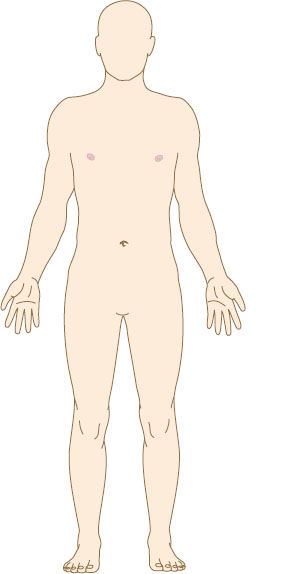
Anatomic Position
Anatomic Position
Upright Stance
Feet Parallel + Flat on the floor
Upper limbs at sides of body
Palms face anteriorly (toward the front)
Head is level
Eyes look forward
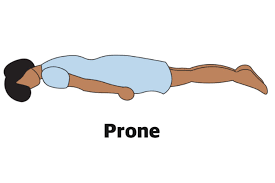
Prone Position
Face down
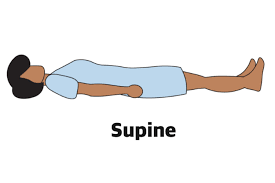
Supine Position
Face up
The Language of Anatomy & Physiology:
Section and Planes
What are section & planes used for?
To examine internal anatomy
Describe relative position of body parts
Section
Slice or cut:
- to expose internal anatomy
Plane
Imaginary flat surface:
- passing through body
3 Major Planes
1) Coronal
2) Transverse
3) Midsagittal
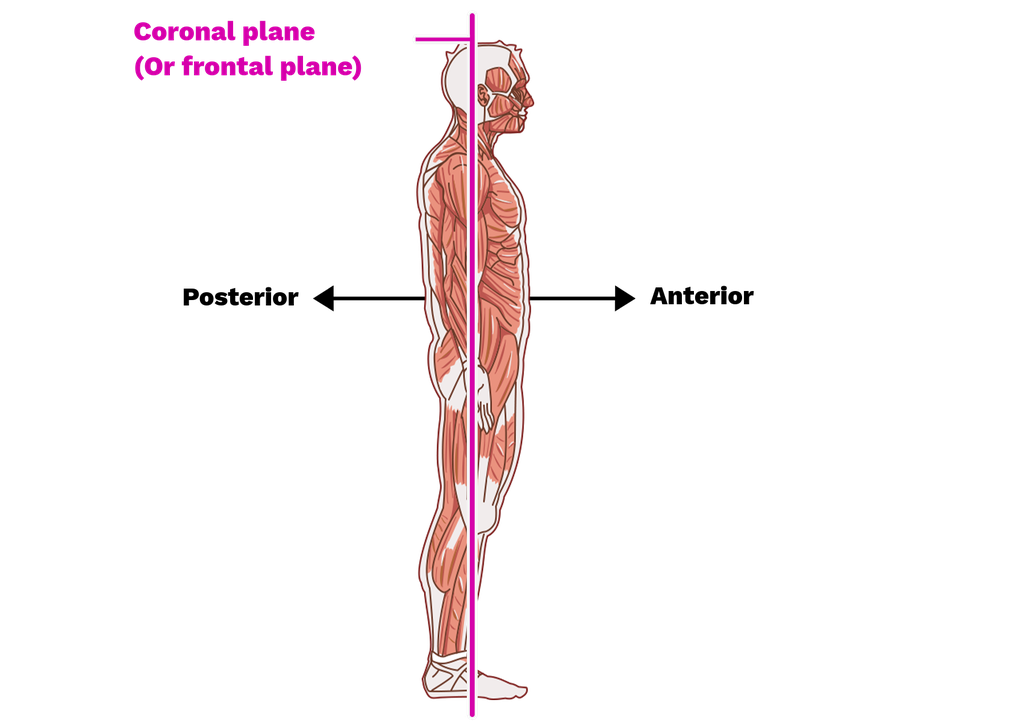
1) Coronal Plane
Vertical plane dividing body into anterior (front) & posterior (back)
Also called “frontal plane”
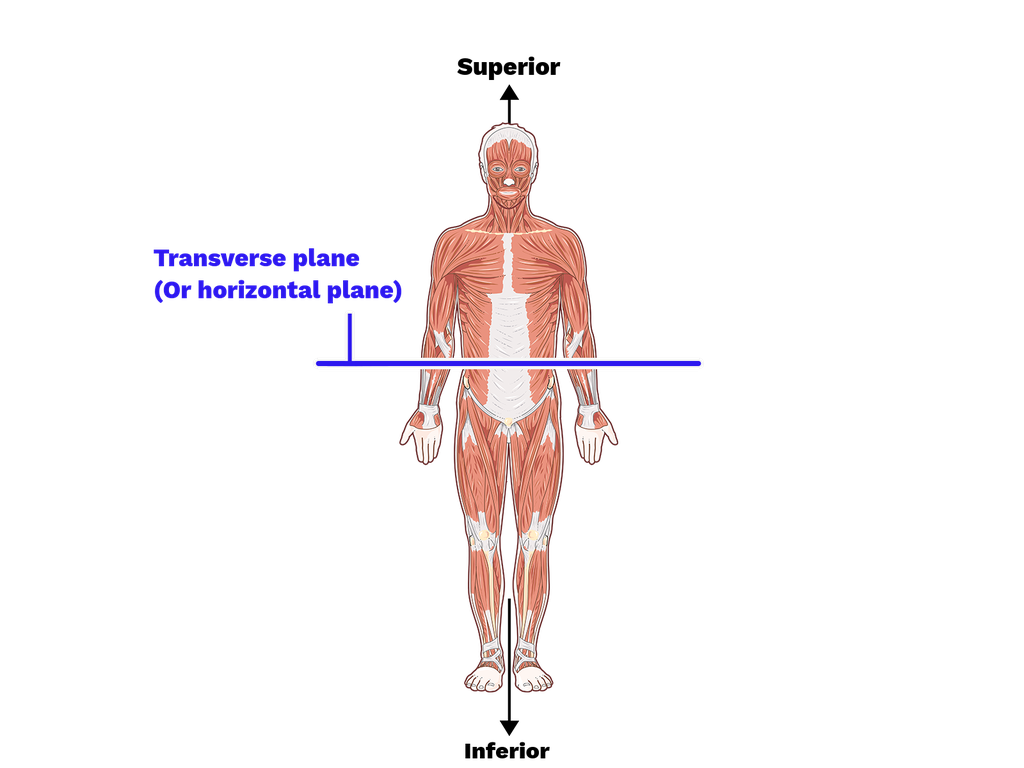
2) Transverse Plane
Horizontal plane dividing body into superior (top) & inferior (bottom)
Also called a “cross-sectional plane”
Note: can move
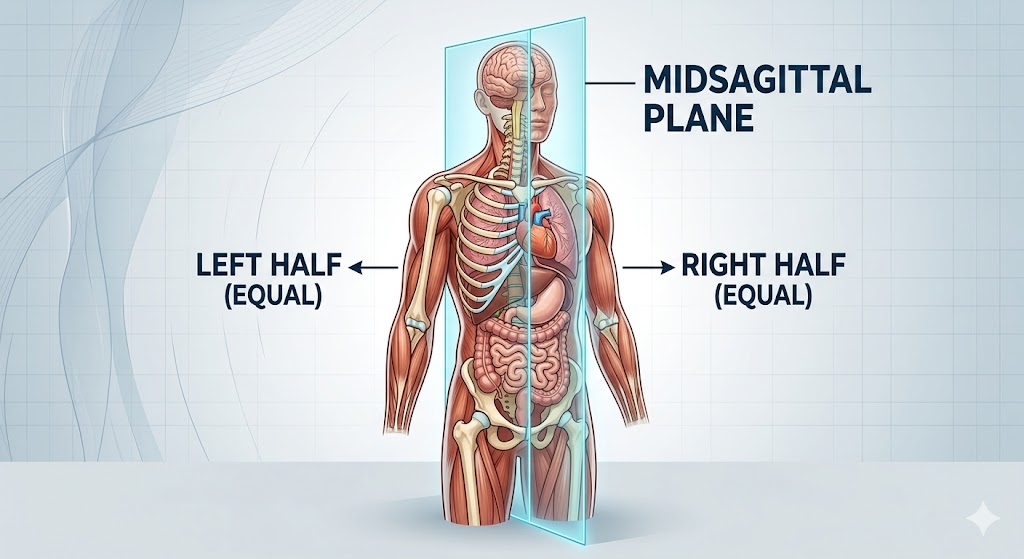
3) Midsagittal Plane
Vertical plane, dividing the body into equal L + R halves
Note: can’t move
Sagittal Plane
Divides a structure into L & R structures: at any number of sites (not equal halves unlike midsagittal)
Parallel to midsagittal
Oblique Planes
Pass through structures @ an angle
The Language of Anatomy & Physiology:
Anatomic Directions
Directional Terms - What’s their purpose?
Help precisely describe the relative positions of structures
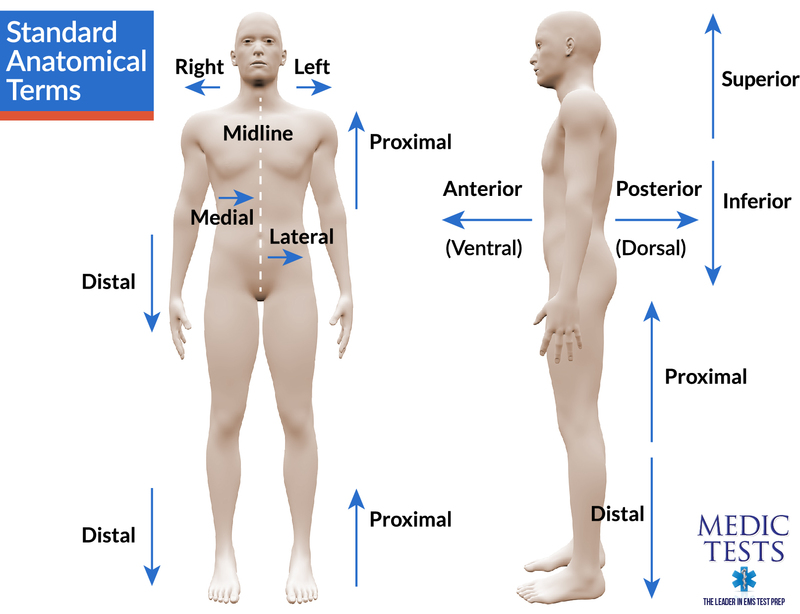
Directional Terms
1) Anterior/Posterior
2) Dorsal (toward the back)/Ventral (toward the belly)
3) Proximal (nearer to the trunk)/Distal (further from the trunk)
The Language of Anatomy & Physiology:
Regional Anatomy
The human body is partitioned into what 2 main regions?
1) Axial Region
Includes the head, neck, & trunk
Forms the main vertical axis of the body
2) Appendicular Region
Composed of the upper and lower limbs
Several regions located within these main regions
The Language of Anatomy & Physiology:
Body Cavities & Membranes
Internal organs houses within enclosed spaces
These body cavities named according to surrounding structure
Body cavities grouped into Posterior aspect & ventral cavity
Posterior Aspect
Contains cavities: completely encases in bone
Physically & developmentally distinct from the ventral cavity
Subdivided into the cranial(1) + vertebral cavity(2)
1) Cranial Cavity
Aka "endocranium”
Formed by bones of the cranium
houses the brain
2) Vertebral Canal
Formed by the bones of the vertebral column
Houses the spinal cord
2) Ventral Cavity
Larger, anteriorly places
Does not completely encase organs in bone
Partitioned: into superior thoracic cavity & an inferior abdominopelvic cavity
Lined w/serous membranes, continues layer of cells
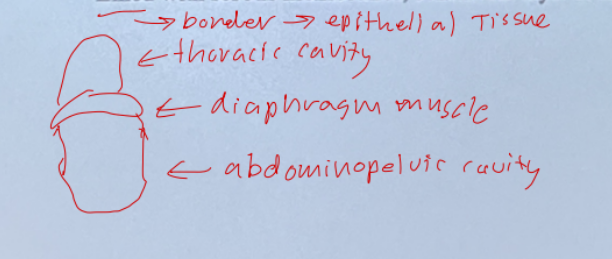
Serous membranes are composed of which two layers?
1) Parietal Layer
- lines internal surface of body wall
2) Visceral Layer
- covers the external surface of organs (the viscera) within that cavity
Between membranes is a potential space called?
The serous cavity
Membranes secrete serous fluid
Liquid that serves as a lubricant
Reduces friction caused by movement of organs against the body wall
Mediastinum
Median space in the thoracic cavity
Contains:
- heart
- thymus
- esophagus
- trachea
- Major blood vessels (that connect to heart)
Serous pericardium
Two-layered serous membrane
Sack that surrounds the heart
Structural components:
1) Parietal pericardium
2) Visceral pericardium
3) Pericardial cavity
1) Parietal pericardium
Outer later which forms the sac around heart
2) Visceral pericardium
Inner layer: forms the heart’s external surface
3) Pericardial cavity
Potential space between: parietal & visceral layers containing serous fluid
Peritoneum
Two-layered, serous membrane lining the abdominopelvic cavity
Components:
1) Parietal peritoneum
2) Visceral peritoneum
3) Peritoneal cavity
1) Parietal peritoneum
Outer layer
Lines the internal walls of abdominopelvic cavity
2) Visceral peritoneum
Inner layer
Covers the external surface of most abdominal + pelvic organs
3) Peritoneal cavity
Potential space between parietal & visceral layers containing serous fluid
Abdominopelvic cavity can be subdivided in two by?
Horizontal plane (at level of the superior aspect of the hip bones)
Subdivisions:
1) Abdominal cavity
2) Pelvic cavity
1) Abdominal Cavity
Area superior to plane
Contains most digestive system organs:
- kidneys
- most of the ureters
2) Pelvic Cavity
Area inferior + between the hip bones
Contains:
- distal large intestine
- remainder of ureters
- urinary bladder
- internal reproductive organs