Ornithology Exam 2, Exam 2 - Ornithology (all sets combined)
 Call Kai
 Learn
Learn Practice Test
 Spaced Repetition
 Match
Match Flashcards
 Knowt Play
1/463

There's no tags or description
Looks like no tags are added yet.
Name | Mastery | Learn | Test | Matching | Spaced | Call with Kai |
|---|
No analytics yet
Send a link to your students to track their progress
464 Terms
avian excretory system
- combines both liquid and solid waste into a single substance called urates.
- Requires less water than mammals
-Maintains salt and water balance
-removes waste, especially Nitrogen
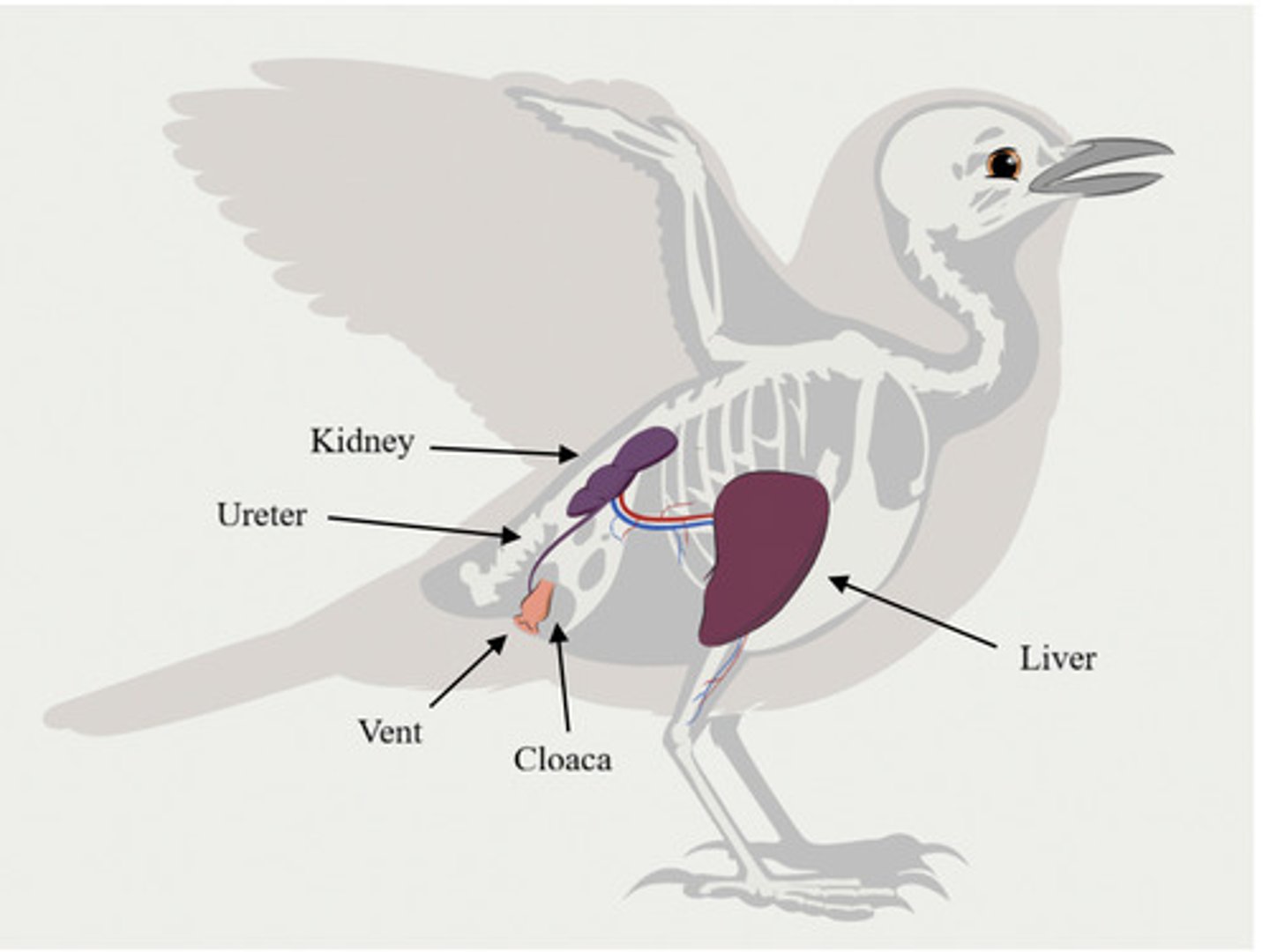
How do birds get water?
-drink water
- food (fishing and nectar)
-from cellular respiration- oxygedation "metabolic water" ->more adapted than humans by conserving water
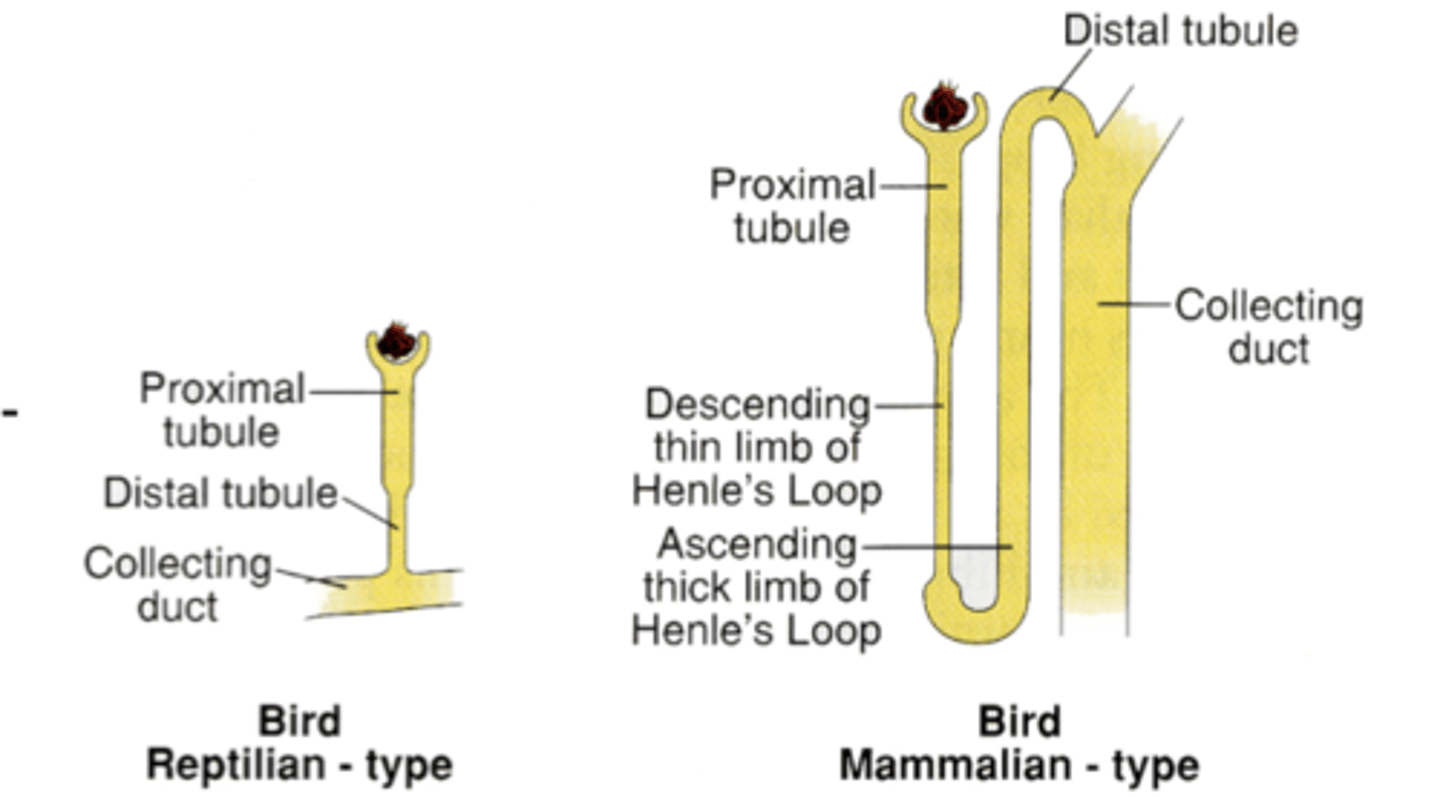
Avian nephrons
- 6 kidney lobes
- 2 types of nephrons (work the same as humans)
- some have the loop of henle (similar to mammal) some are loopless (like reptiles)
- 70-80% are reptile type- bad at water and salt balance in nephrons
- good at nitrogenous waste in kidneys
Uric acid
- each molecule has 2x the N as urea
- insoluble in water (so it does not poison the eggs and mix with the water in them)
- formed in liver
- energy intensive but less water
- concentrated in kidneys and actively secreted into tubules->coated and passed on
- further concentration is done in the intestines (retrograde peristalsis)- exchange K pumped in and H2O and NaCl leave so there is balance of salt and water in the large intestine
- Na+ actively transported, Cl- follows, H2O follows both ions
- May take in too much salt (non-passerines) will have salt glands to excrete (eye sockets and nose) and primarily in sea birds (albatross and petrels)
bird ovaries
- granules that develop embryo and yolk
- have 1 ovary on the left side (except kiwi)
- multiple eggs will grow at a time
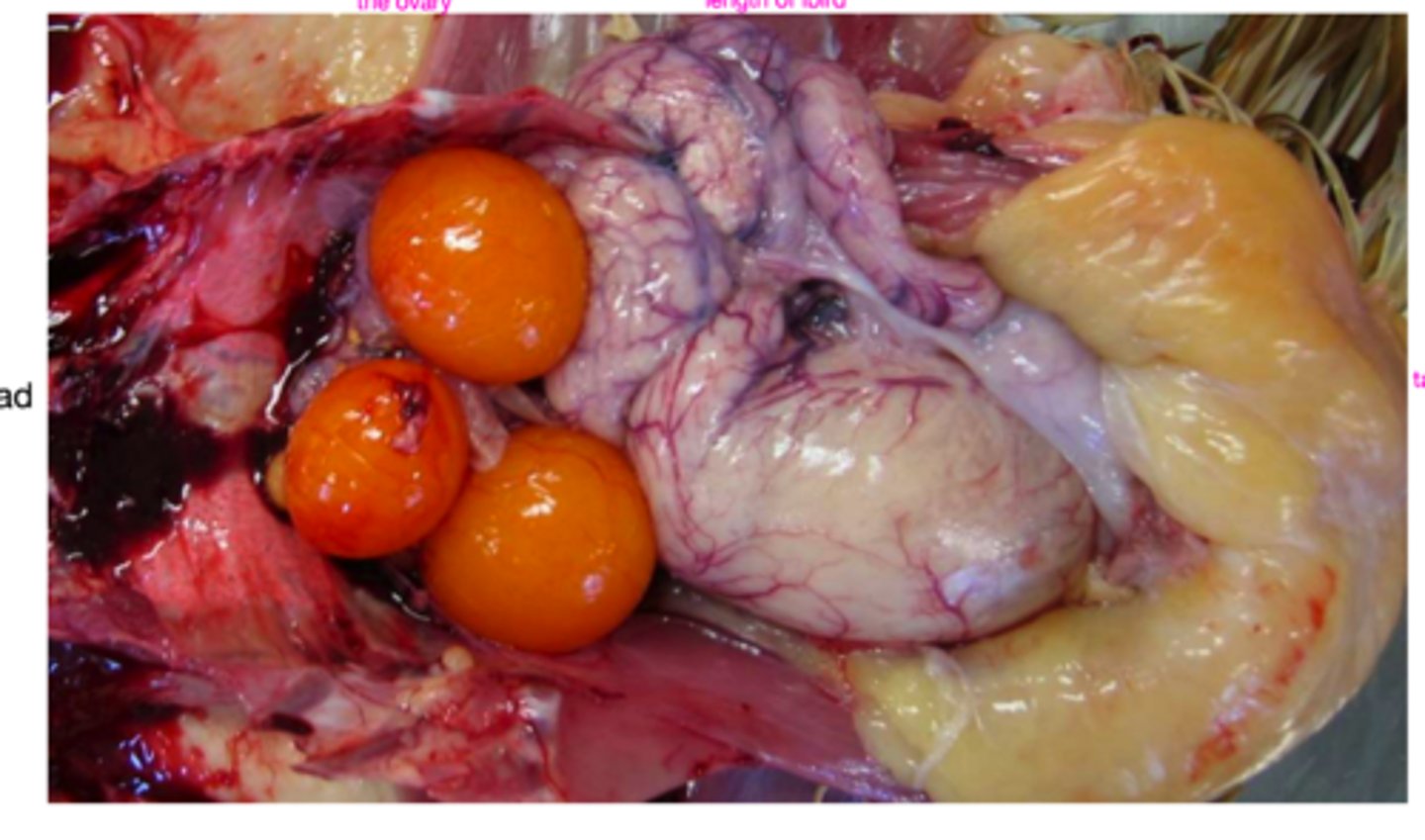
What is the process of developing an egg?
- ova deposited with yolk from liver -> then goes to uterus -> fertilized once infundibulum -> magnum where albumin and chalaze happen -> isthmus egg and shell membrane ->uterus shell gland (CaCO3, Ca3, (PO4)3) and color -> once finished will excrete egg
What do females need to eat while developing eggs?
- need more calcium for shell of eggs
- insects, shells of eggs, in extreme cases pull out of own bones
How often are eggs layed?
- usually once a day and with multiple eggs in transit
- bigger birds take longer like raptors, penguins, and ostriches (3-5 days)
- hornbills will take one week
- chickens were bred to lay eggs when they were not fertilized
Male reproductive system
- have testes and develops at night to keep cool
- testes near an airsac to keep cool
- near vas defrens during the day to stay cool
- most don't have a penis except for some waterfowl
- invert cloaca and do the cloaca kiss
Bird Digestive System
- No teeth (beak)
- food follows a pathway: esophagus, crop, proventriculus, gizzard, small intestine, large intestine, cloaca (rapid digestion)
bills differ in type of food eaten
- nectar feeders have long and unique
- slaty flower piercer goes to bottom of flower and lets nectar drip into beak
- probers = woodcock and sandpipers
- filter feed- flamingo (strong tongue to pump water)
- seed eaters - cardinals, crossbills, grouse
- meat eaters- hooked bills- eagles, osprey
hyoid apparatus
- supports the base of the tongue, the pharynx, and larynx
- small triangle used to manipulate food
- for tactile and not taste
- woodpeckers have a long tongue that shoots (with barbs) out to catch insects and sticky saliva
edible nest swiftlet
salivary glands get big in breeding season and make nests out of saliva
pelicans
esophagus expand when eating fish
pigeons
have pigeon milk (saliva mixture) to feed young
sunbittern
use esophagus for communication (low notes)
what is the crop used for?
- food storage
- can be lined with epithelium
Kakapoo
- eat tough mountain grass to help digesting bacteria material in crop
Hoatzin
have 2 chambered crop to help with fermenting bacteria
if energy requirements are low...
birds will feed less/less often -> so it can mate and ward off predators
consequences of using energy
tropical birds have elaborate and time expensive mating displays
why do temperate birds have to feed constantly?
they are restricted when there are high levels of resource availability during the breeding season
fat storage vs. food storage
- storage isn't common
- some passerines and tropic birds will build up 5% of fat overnight for warmth
- birds will get bigger and fatter in colder places (penguins) and will stay with eggs for long periods of time and lose 40% of body fat
- some will keep fat in wishbone
- do lots of food storage (seed caching)
acorn woodpeckers
Store acorns in granaries drilled into trees for food storage
loggerhead shrike
will store meat on trees to soften and eat later
why do birds have color?
- physiologically (cormorant)
- communication
- functionality (reflection reduction- kestrel)
- crypsis background matching
Crypsis (camouflage)
- blending with the environment to decrease detectability
- poorwills, woodcock, whip-poor-will, Am. Bittern, willow ptarmigan, warblers in trees, quetzel
disruptive coloration
- a color pattern that helps break the outline of an organism
- "I am not what you think I am"
- killdeer, sandpipers (like rocks)
crypsis reverse color shaping
- telling organisms "I am here"
- am golden plover
aposematic coloration
- Bright warning colors in animals with a chemical defense.
- saying "I am meaner than you think I am"
- sunbittern
conspicuous
- Easily seen or noticed
- "look at me"
- rose-breasted grosbeak, black-throated green warbler, hooded merganser, duck speculum, white crowned sparrow, yellow-billed cuckoo (spots)
territorial display
- a demonstration to an intruder that the resident is ready to defend an area
- "I am badder than you are"
- red-wing black bird with epaulets
mating display
-often ritualized everyday displays
-like feeding
-ptiloerection (raising feathers)
-preening
preening
-in birds, the act of grooming and maintaining their feathers
-royal terns rub bills on each other
-albatross preen each other
sexual selection
-A form of natural selection in which individuals with certain inherited characteristics are more likely than other individuals to obtain mates.
-promotes elaborate displays and gils selecting based on what she genetically chooses
-Vogelkopp bowerbirds
vogelkopp bowerbirds
-will make a hut, decorate it with beetle casings and pink flowers (can vary)
Bulwer's Pheasant and temminck's tragopan
both attract with wattles
buff breasted sandpiper
flash armpits to attract mates
Capercaillie
fight each other and intruders
widow bird
very long tail for display and could potentially be caught by predators
argus pheasant
very large wings and tails to attract
extrinsic display
-more displays on the outside of the body
intrinsic display
-more internal displays that apart of the body and sometimes deleterious to survival
arbitrary choice
-females are simply attracted to traits
-positive feedback and linkage disequilibrium between
ornament and preference
-could be imprinting from what their fathers had
Species Recognition
-species closely related have close up difference and if they are not clear distinctions hybridization can happen
-young whooping cranes will imprint very strongly so people dress up as them since they are endangered
age recognition
wood ducks are able to tell by color recognition and signals for reproduction mating
reverse sexual dimorphism
-females are larger and/or more colorful than the males
-wilson's phalarope
status recognition
-have a hierarchy of order in a group
-ruffs are either tan, black, or white- black are highest s and tan are outcasts
visual signals
-can help and avoid physical damage
threat displays
-bill is pointed up (geese) can also sleek itself back
-most of the time it is a lie and is not actually going to attack
-moorhens will fluff up tails and feathers with a submissive display
Vocal Display
-song directed to mate or competitor
-call is shorter and has smaller communication
Magellanic Woodpecker
knocking on tree trunks and use bill to communicate
palm cockatoo
use a stick and beat against wood to communicate
african broadbill
voice sounds like someone blow across a blade of grass
some improvise their songs and are complex
wood warbler, pied flycatcher, sedge warbler
Nighten gale
sing throughout the night for a potential mate
tawny owls
duet songs with each other
why sing?
-its cooler and sounds can travel farther in the mornings
-species recognition
-find unrecognizable birds or species and defend territory
-nest colonially and need to know what birds are what
caspian terns
have individualized calls between young and parents since they are in a colony
mimicry
-15-20% of passerines
-social status (northern mocking birds move up in rank with more songs they mimic)
-sneakiness- will get other birds to attack their predator
-family together- kagu will call then do visual cues
interspecific communication
-communication between members of different species
-woodpecker, BC chickadee, warbler will communicate if in a clock
extrinsic communication
-communication outside the body
-peacocks (any bird that does visual displays for mating)
Eastern Towhee
15 noises
song
-vocal display with specific repeated patterns of sound, usually only males
-passerines
-songs can be added to the end of songs
call
-short, simple, given by males and females
-can be for stress, sex, feeding, nesting, warnings...
sonograms
-A graph showing the volumes of sounds at different frequencies.
-visualize songs
-can have introductory notes
some birds that sing and have introductory notes
white-throated sparrow, Am. robin, chipping sparrow, song sparrow
is a low frequency call short or long wavelength?
long
is a high frequency call short or long wavelength?
short
Why does singing depend on the environment?
in an open area songs can be high frequency and more complex since there is not obstacles like vegetation. But low frequencies need to travel further with a lot of vegetation
booming bittern
-low frequency that can travel 2 miles
-use air sac to make sound
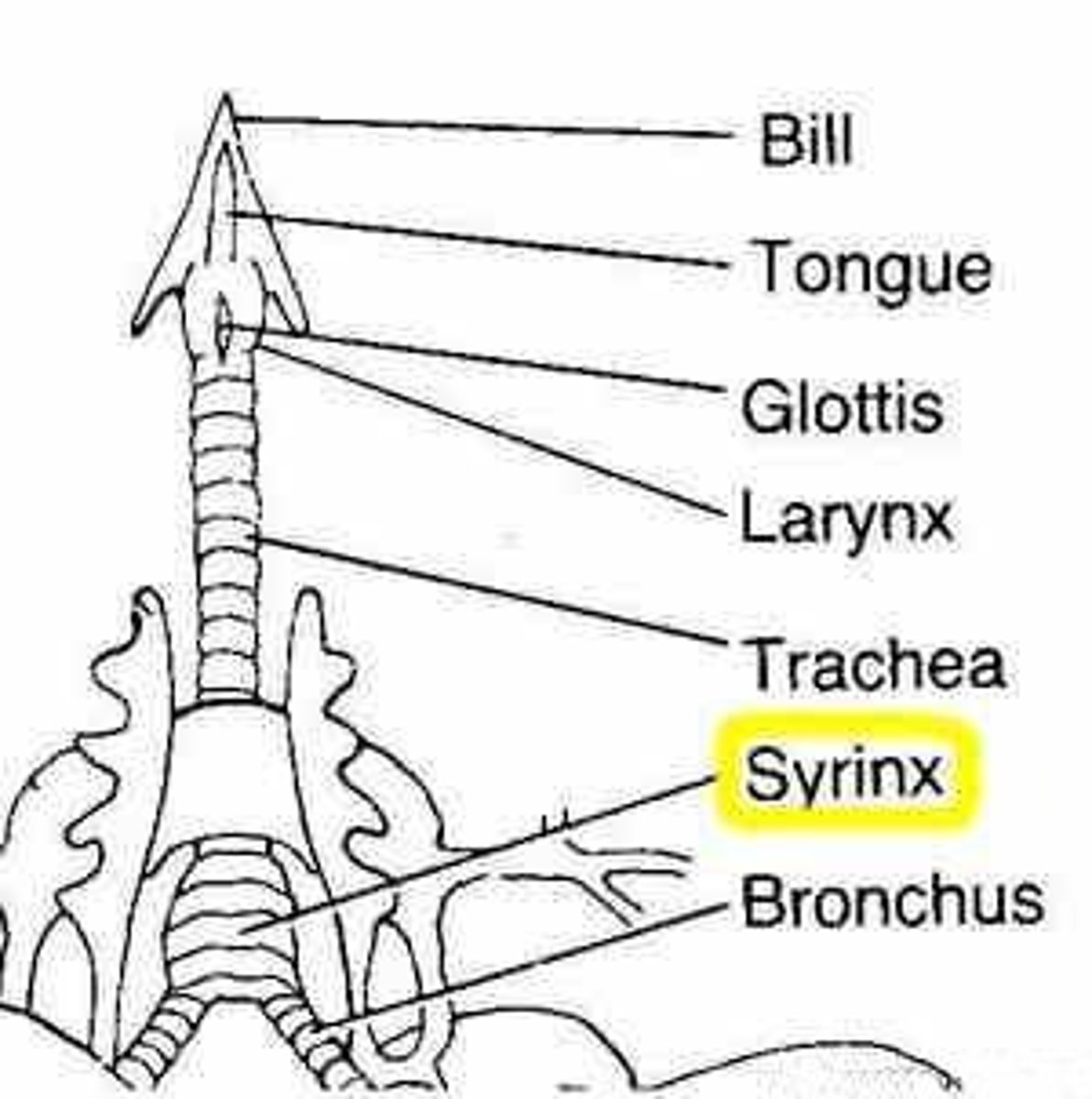
syrinx/syryngeal bird
-varies in the amount of membranes that can make sound more complex
-Medial labia makes the sound and needs pressure from interclavical air sac
-the labia membrane if it is thicker it can control more sound
storks, ratites, and new world vultures (syrinx)
-do not have syrengial muscles to make extra noises/can't change form of the muscles
non-passerines (syrinx)
-have 2 pairs of extrinsic muscles not in syrinx itself but outside
-herons, ducks
oscine (syrinx)
-lot more muscles
-6 pairs of internal
-many on labia
-expands range of frequency
-80% passerines are oscine
-complex songs
suboscine
Passeriforme subfamily Tyranni
-simple muscles & songs
-invariant
-only 1 pair of extrinsic
-syringeal muscles-air sacs
-lack labia on extrinsic and more simple
-middle bone is different
-complex songs
past syrinx (post-source modulation)
-swans, cranes, etc
-have tracheae that coil in sternum or body
-greater resonance and volume
-can vary with length of trachea with muscles or by opening and closing the beak
how do birds filter sound
-by opening and closing their beak
-beak size can vary too
-smaller beaks can open and close quickly
- larger beaks are slower and they will have slower harmonies
How do birds know songs?
- will either be genetically imprinted (inherited vocalization) and calls are innate
-meadowlark inherit songs and know calls
-brood parasites need to know songs by inheritance since they don't grow up with parents
learned songs
-learn throughout life
-open ended
-parrot
-mockingbirds
age and songs
-limited time to learn songs when younger
-learning period, silent (digesting songs), practice period (babbling) (1 month), song crystallization period (takes a couple weeks)
-can invent song during practice period
-testosterone turns of learning period
-chaffinch have 1 year to learn
regional dialects
-Variations in a single language based on geographical location of the populations
-white-throated sparrow have different dialects because there were different groups during the ice and glaciers
-BC chickadee only 1 dialect since their group was all together during ice age
-10,000 years ago
Territoriality
Defense of a space against encroachment by other individuals.
patterns of dispersal
Clumped - most common; near required resource
Uniform - usually antagonistic interactions
Random - unpredictable spacing, not common in nature
territory
-an area, region, or piece of land
-fixed or mobile area that is continuously defended for some period of time- either breeding or not
-defended by chasing or display and either by individual, mated pairs, families, or groups of unrelated birds
what affects territory size?
-body size, energy demand, food habits/diet
-hawks need more of this compared to a cardinal
-food abundance (pomarine jaeger) eat lots of lemmings
-density of competitors (tree sparrows) defend core and periphery if there are few competitors
feeding territories
-hummingbirds will defend flowers
-sandpipers defend territory only at low tide when there are more resources
nesting territory
-defend only their nest and the area immediately adjacent to it
-caspian terns - as far as they can reach with their beak
Display territory
-defend patches for mating display
-cocks of the rock males will defend a patch of ground during lek
all purpose territory
-most common
-feed, mate, babies, display
-meadow lark (except grows) very common in song birds
territory defense
-usually against conspecifics but can be against each other
-robins and kingfishers
mockingbird territory
defend against and species near their berry trees
acorn woodpecker
will defend acorns against anyone
costs of defense
-exposure to predators (cats and hawks)
-need to patrol(check borders, sing)
-chase off competitors
-reduced time doing other things
when territories do not make sense
-if resource varies in time (tree swallows), follow insects, resource is too scarce or abundant, when it is not your space (many are neophobic)
flocking
-anti-territorial behavior
-works well when resources are unstable or too widespread, indefensible areas (too large)
-yellow and black (western panama have flocking colors and any species)
disadvantages of flocking
visibility, competition (pigeons), disease, pecking order and might not get as much food (can release tension), aggressive actions
ant bird pecking order
-assort themselves by size acellated->bicolored-> spotted (know spot in pecking order)
advantages of flocking
-foraging, protection, mating, chick rearing, aerodynamics, warmth
-pecking order and breaks up tension(bohemian waxwing and house sparrows)
-cooperative feeding (am white pelican) surround fish
-beater effect to have someone go in the front "sacrifice"
-watch others feeding (young learn what to eat)
-group vigilance (snow geese)
-reducing predation a lot of numbers(safety in numbers)(snowgeese)
-mobbing (crows vs bald eagle, RWBB vs. red tailed hawk) multiple species against 1 predator
reproductive output
-The number of offspring an individual or population produces
-male is only constrained about # of mates he gets
-female constrained by energetic demand of making eggs and usually caring for young