Ventilation
 Call Kai
 Learn
Learn Practice Test
 Spaced Repetition
 Match
Match Flashcards
 Knowt Play
1/13

There's no tags or description
Looks like no tags are added yet.
Name | Mastery | Learn | Test | Matching | Spaced | Call with Kai |
|---|
No analytics yet
Send a link to your students to track their progress
14 Terms
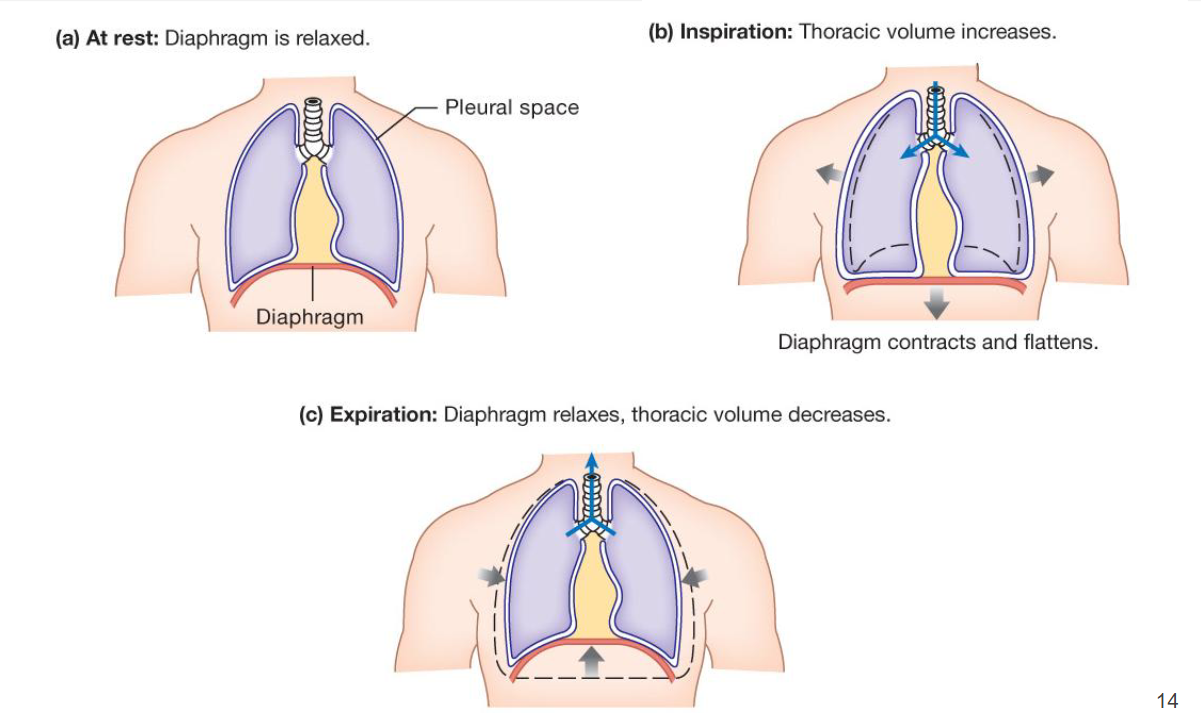
The mechanics of ventilation
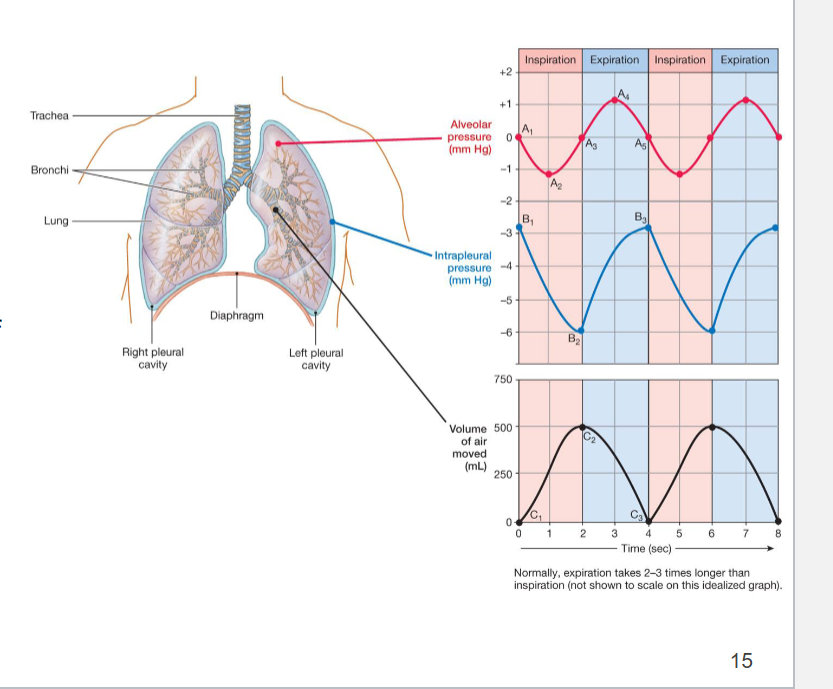
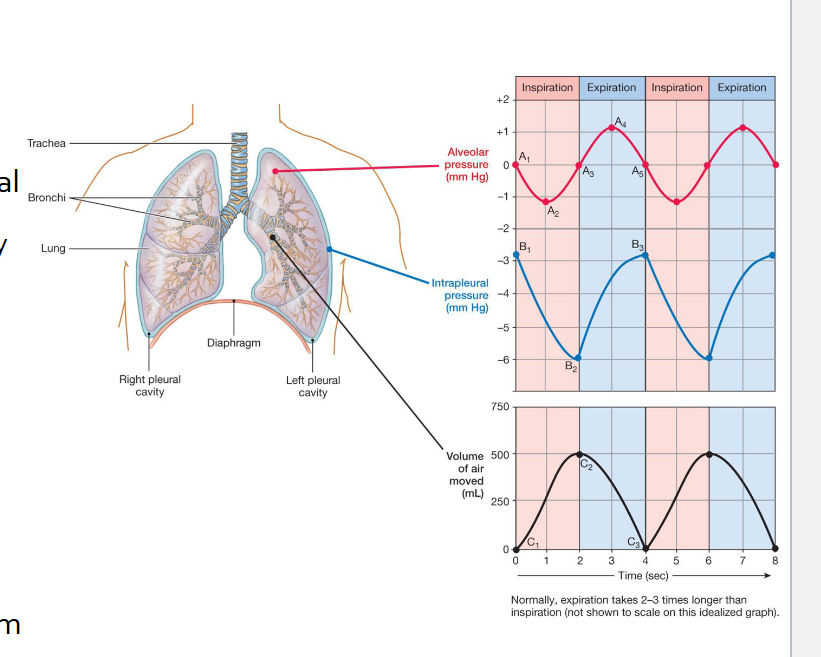
inspiration (Pressure changes during quiet breathing)
Diaphragm and intercostal muscle contraction
→ Diaphragm flattens and rib cage expands
→ increases volume in the thoracic cavity
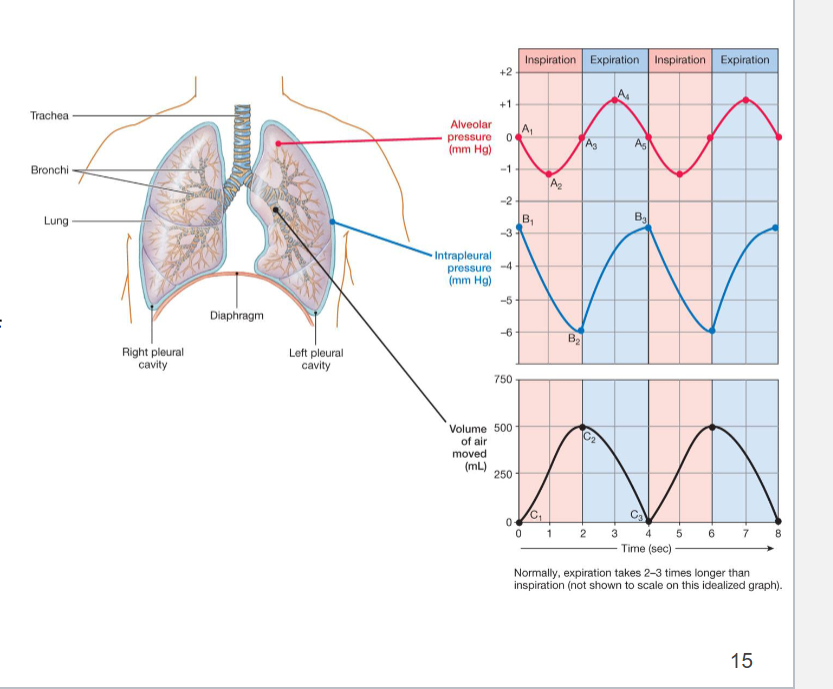
These events stretch the pleural membranes
That increase the volume of lungs (the alveoli)
decreases alveolar pressure
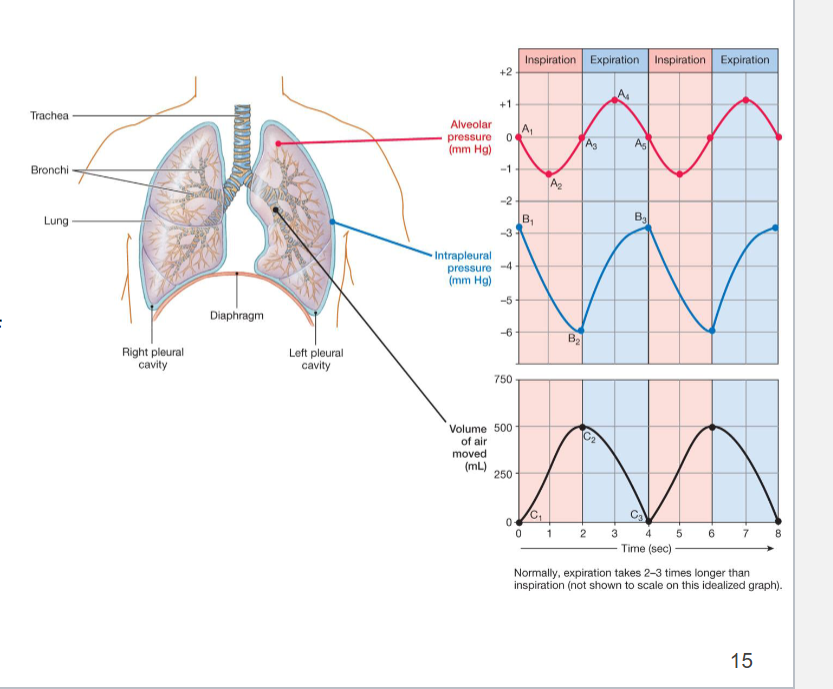
P alveolar < P atmospheric
Air flows into lungs from high to low pressure
This is called inspiration
Expiration (pressure changes during quiet breathing)
Diaphragm and intercostal muscle relaxation
→ Diaphragm becomes dome shaped again and rib cage returns to original position
→ decreases thoracic cavity volume
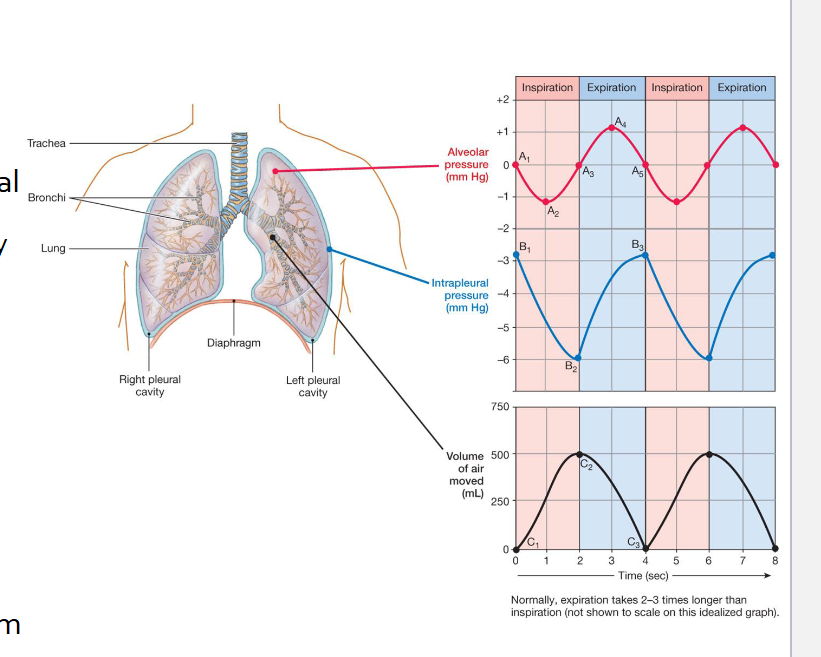
Elastic recoil of pleural membranes
decreases volume of the lungs (the alveoli)
Increases alveolar pressure
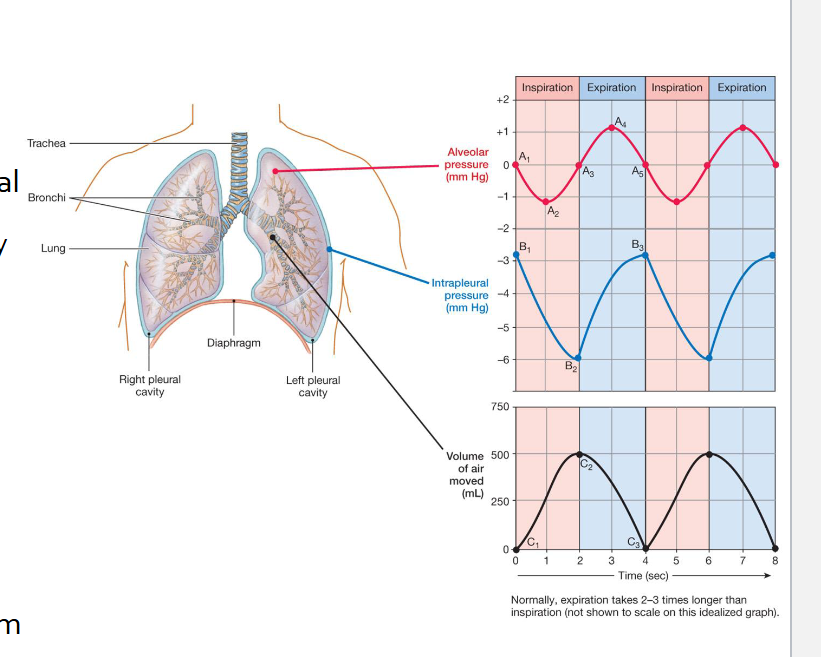
P alveolar > P atmospheric
Air flows out of lungs from high to low pressure
this is called expiration
this is passive
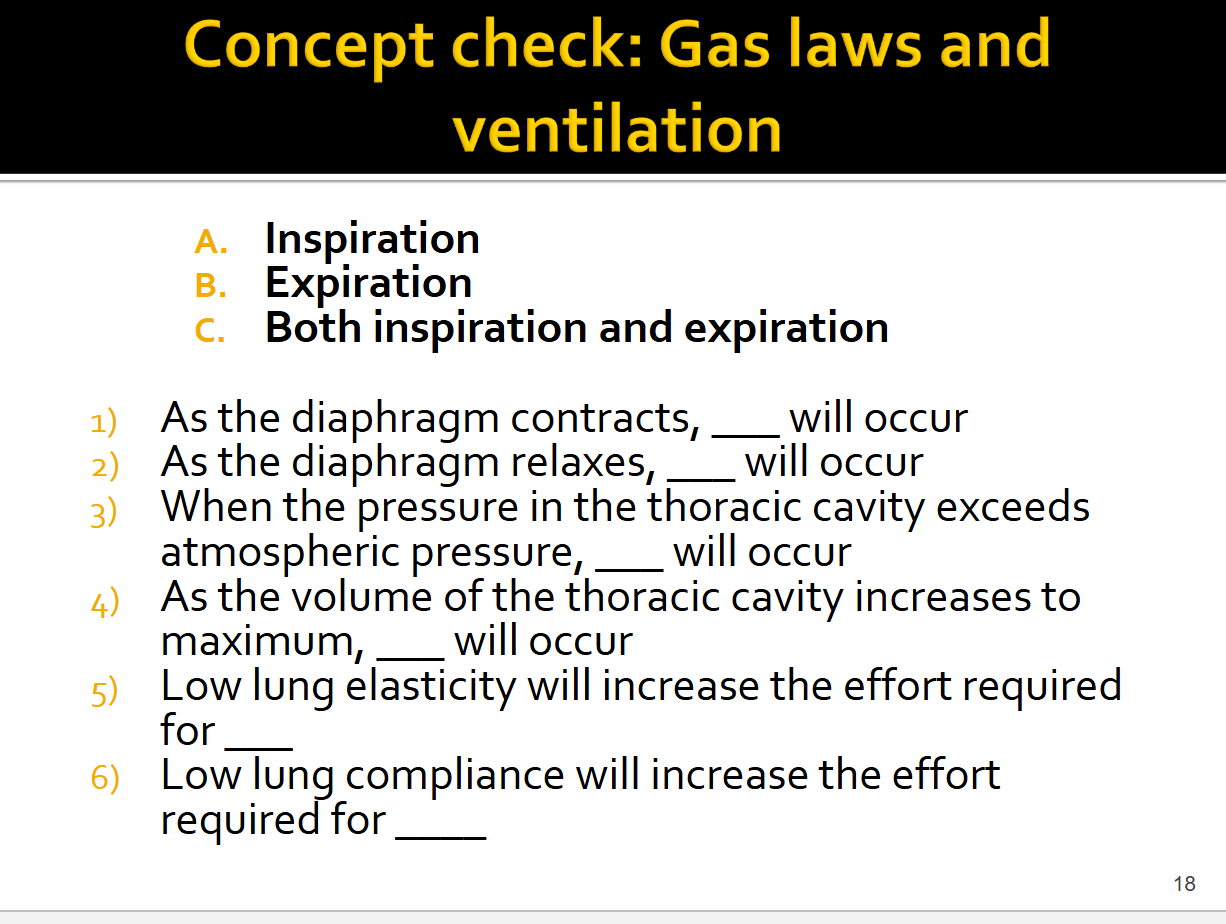
Compliance
The ability to stretch
High compliance
Stretches easily
A feature of healthy lungs
Low compliance
Requires more force to stretch
Caused by restrictive or fibrotic lung diseases that thicken/scar alveolar membranes and inadequate surfactant production (lubricate and minimize fluid surface tension in lungs)
→ inhalation becomes more effortful
Elasticity
The ability of lung tissue to return to its resting volume when stretching force is released
High elasticity
Returns to baseline volume easily
A feature of healthy lungs
Low elasticity
does not return to baseline volume
Emphysema: lungs have lost elasticity due to long term smoking
→ exhalation becomes extremely effortful
Inspiration
Expiration
Expiration
Inspiration
Expiration
Inspiration