3.3.2 Gas exchange
 Call Kai
 Learn
Learn Practice Test
 Spaced Repetition
 Match
Match Flashcards
 Knowt Play
1/19

There's no tags or description
Looks like no tags are added yet.
Name | Mastery | Learn | Test | Matching | Spaced | Call with Kai |
|---|
No analytics yet
Send a link to your students to track their progress
20 Terms
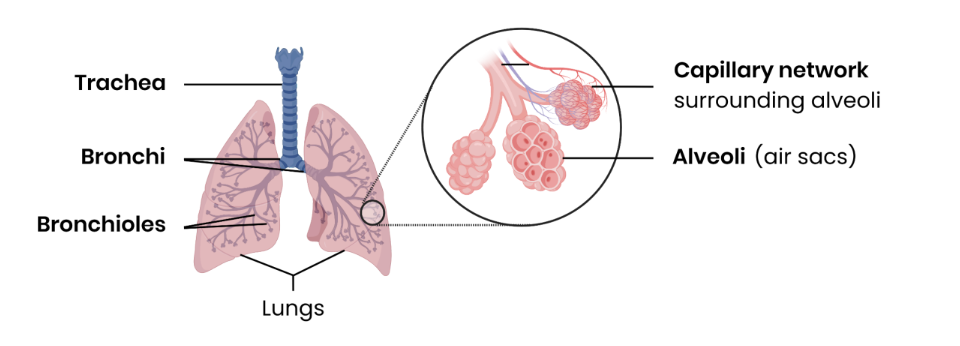
Name the features of gross structure of the human gas exchange system
trachea
bronchi
broncioles
alveoli
Describe the essential features of the alveolar epithelium as a surface for gas exchange
single layer of flattened cells so short diffusion distance
moist so gases can dissolve for diffusion
permeable which allows diffusion of oxygen and carbon dioxide
folded which increases surface area so faster rate of diffusion
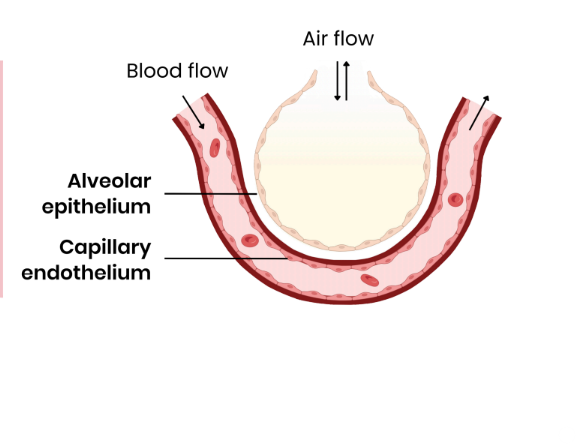
Describe how gas exchange occurs in the lungs (oxygen)
oxygen diffuses down its concentration gradient from the alveolar air space into the blood
across alveolar epithelium
across capillary endothelium
How is the concentration gradient for gas exchange maintained in humans?
ventilation in the lungs
continuous flow of blood from capillaries
Describe inspiration in humans
external intercostal muscles contract and ribcage pulled up
diaphragm contracts and pulled down
volume of thorax increases and pressure decreases (below atmospheric pressure)
air moves down pressure gradient into the lungs
Describe expiration in humans
internal intercostal muscles contract ribcage pulled down
diaphragm relaxes and moves up
volume of thorax decreases and pressure increases (above atmospheric pressure)
air moves out of lungs down pressure gradient
Name 3 features of the tracheal system of an insect
spiracles
tracheae
tracheoles
What is the role of spiracles in gas exchange?
allows diffusion of oxygen
What is the role of tracheae in gas exchange in insects?
.
What is the role of tracheoles?
(branch from tracheae) to directly deliver oxygen to cells and tissues
Explain 2 adaptations of tracheoles for efficient gas exchange in insects
tracheole wall is one cell thin so short diffusion distance
highly branched so short diffusion distance and large surface area for diffusion
Explain how abdominal pumping increases the efficiency of gas exchange in insects
changes pressure in body causing air to move
maintains concentration gradient of oxygen for diffusion
Describe gas exchange via diffusion in insects
oxygen moves down its concentration gradient from the atmosphere into tracheoles
carbon dioxide moves down its concentration gradient from tracheoles into atmosphere
Describe anaerobic respiration in insects
when insects are in flight, lactate produced
lowers water potential of fluid in tracheoles
water moves back into cells via osmosis
air fills tracheoles which increases rate of diffusion (faster diffusion through air)
Describe adaptations in insects to prevent water loss
exoskeleton is impermeable
spiracles can open for gas exchange and close to minimise water loss (via evaporation)
hairs around spiracles reduce water loss
Explain how gills in fish are adapted for gas exchange
made up of many filaments with many lamellae so large surface area for diffusion
thin lamellae so short diffusion distance
lamellae have large number of capillaries to maintain concentration gradient
Explain how the counter-current principle allows efficient oxygen uptake in thr fish gas exchange system
blood and water flow in opposite directions
oxygen concentration always higher in water (than blood)
concentration gradient of oxygen maintained
diffusion across length of lamella
What is the advantage of counter current flow?
ensures equilibrium is not reached
Describe and explain adaptations of leaves which maximise gas exchange
many stomata for diffusion of gases
spongy mesophyll contains air spaces
thin leaves so short diffusion distance
large leaf surface area:volume ratio to increase rate of diffusion
Explain features of xerophytic plants which allow efficient gas exchange while limiting water loss
thick waxy cuticle increases diffusion distance so less evaporation
sunken stomata, curled leaves, hairs to trap moisture