Mineral Nutrition
 Call Kai
 Learn
Learn Practice Test
 Spaced Repetition
 Match
Match Flashcards
 Knowt Play
1/54

Earn XP
Description and Tags
Name | Mastery | Learn | Test | Matching | Spaced | Call with Kai | Chat |
|---|
No analytics yet
Send a link to your students to track their progress
55 Terms
Mineral Nutrients are
elements acquired primarily in the form of inorganic ions from the soil.
Why is absorption by plants very efficient
the large surface area of the roots and their ability to absorb inorganic ions at low concentration from the soil solution
enter the biosphere predominantly through
the root systems of plants
The study of mineral nutrition
the study of how plants obtain and use mineral nutrients
high agriculture yields
depend strongly on fertilization with mineral nutrients.
The complex nature of plant-soil-atmosphere relationship
studies in the area of mineral nutrition involve atmospheric chemists, soil scientists, hydrologists, microbiologist, and ecologists.
Essential nutrients are defined as
one whose absence prevents a plant from completing its life cycle or one that has clear physiological role
example of essential nutrients obtain from their gasses state
Hydrogen, Carbon, Oxygen
example of essential nutrients that are obtain from soil (Macro)
Nitrogen, potassium, calcium, magnesium, phosphorus, sulfur, silicon
example of essential nutrients that are obtain from soil (Micro)
Chlorine, Iron, Boron, Manganese, Sodium, Zinc, Copper, Nickel, and Molybdenum
Classified according to their biochemical role and physiological function
Organic compounds
Energy storage
Ionic compound
Electron transfer reaction
How to demonstrate that an element is essential
it requires that plants be grow under experimental conditions in which only the element under investigation is absent
Hydroponics
the technique etablished in the 19th century, of growing plants with their roots immersed in nutrient solution without soil.
A successful hydroponic culture requires
a large volume of nutrient solution or frequent adjustment of the nutrient solution to prevent nutrient uptake by roots from producing radical changes in nutrient concentration and pH of the medium.
Diagnosis of soil-grown plants can be more complex, due to
both chronic and acute deficiencies of several elements may occur simultaneously
Deficiencies or excessive amounts of one element may induce deficiencies or excessive accumulation of another
some virus-induced plant disease may produce symptoms sil=milar to those of nutrient deficiencies
Soil analysis
the chemical determination of the nutrients content in a soil sample from the root zone
the result of soil analysis vary based on
sampling methods, storage conditions for the samples, and nutrients extraction techniques
Plant tissue analysis
the levels of nutrients potentially available to the plants root from the soil, but the soil does not tell us how much of a particular mineral nutrient the plant needs or is able to absorb
proper use of plant tissue requires
an understanding of the relationship between plant growth and the mineral concentration of plant tissue samples
Chemical Fertilizers
contain inorganic salts of the macronutrients nitrogen, phosphorus, and potassium
Straight fertilizers
contain only one of these three nutrients
example of straight fertilizer
superphosphate, ammonium nitrate, and muriate of potash
Compound fertilizer
two or more mineral nutrients are
Organic fertilizers
originate from the residue of plants or animal life or form natural rock deposits
example of organic fertilization
plant and animal residues
Mineralization
the organic compounds must be broken down, usually by the action of soil microorganisms
Mineralization depends on
temperature, water, and oxygen
Foliar application
some mineral nutrients can be applied to the leaves as sprays
Saline
Excess mineral are present in the soil
the most common salts in saline soil
Sodium Chloride and Sodium Sulfate
how to cure saline soil
Rain / Adding water
When do plants encounter salt stress
In saline soil
Plants with salt glands
take up the mineral but excret them
to prevent toxic build up of mineral ions in the cytosol
many plants may sequester them in the vacuole
accumulation of heavy metals in the soil cause
severe toxicity in plants
Group 1 (organic compounds)
plants assimilate these nutrients via biochemical reactions involving oxidation and reduction
Group 2 ( Energy storage)
elements group is bound to hydroxyl group of an organic molecule
Group 3
Free ions or ions bound to substances
Group 4
Important roles in reaction involving electron transfer
N
(Group 1) Consists of amino acids, amides, proteins, nucleic acid, coenzyme, hexoamines, etc.
P
(Group 2) component of sugar phosphate, nucleic acids, nucleotides, coenzyme, phospholipids, phytic acid, ATP, etc.
K
(Group 3) Required as a cofactor for more than 40 enzymes. Principal cation in establishing cell turgor and maintaining cell electroneutrality.
Fe
(Group 4) Constituent of cytochromes and nonheme iron proteins involved in photosynthesis, N, fixation, and respiration.
Nitrogen (N) deficiency inhibits
Plant growth and showers chlorosis, especially in the older leaves near the base of the plant

Which deficiency is shown in the picture
Nitrogen (N) deficiency
Phosphorus (P) deficiency causes
Stunted growth in young plants and dark green coloration of the leaves, which may be malformed and contain small spots of dead tissue (necrotic spots). In some cases the steams are slender and the older leaves are dead

Which deficiency is shown in the picture
Phosphorus (P) deficiency
Potassium (K) deficiency cause
Mottled or marginal chlorosis, which then develops into necrosis primarily at the leaf tips, at the margin, and between veins. Symptoms occur on more mature leaf’s first and may appear crinkled or curled. The stems may be slender and weak, with abnormally short intermodal regions
In Potassium-deficient corn
The roots may have an increased susceptibility to root- rotting fungi present in the soil resulting in an increased tendency for the plant to be easily bent to the ground
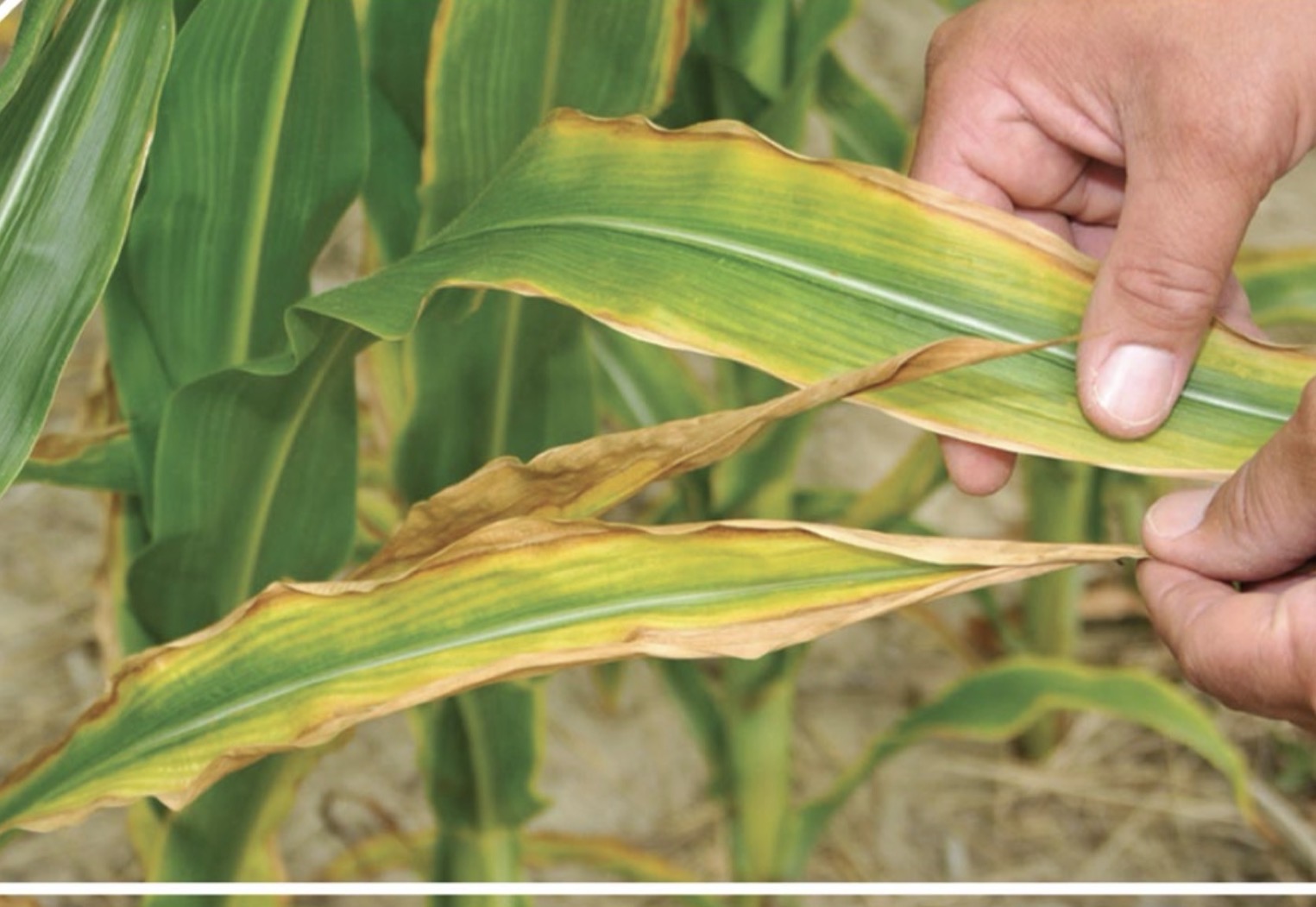
Which deficiency is shown in the picture
Potassium (K) deficiency
Iron (Fe) deficiency causes
Intravenous chlorosis in younger leaves. Extreme or prolonged deficiency causes the veins to become chlorotic turning the whole leaf white

Which deficiency is shown in the picture
Iron (Fe) deficiency

Hydroponic growth system

Relationship between yield (or growth) and the nutrient content of the plant tissue. The yield parameter may be expressed in terms of shoot dry weight or height.
Avg. soil pH
5.5 -6.5