DH228 - Oral path final review pictures
 Call Kai
 Learn
Learn Practice Test
 Spaced Repetition
 Match
Match Flashcards
 Knowt Play
1/36

There's no tags or description
Looks like no tags are added yet.
Name | Mastery | Learn | Test | Matching | Spaced | Call with Kai |
|---|
No analytics yet
Send a link to your students to track their progress
37 Terms
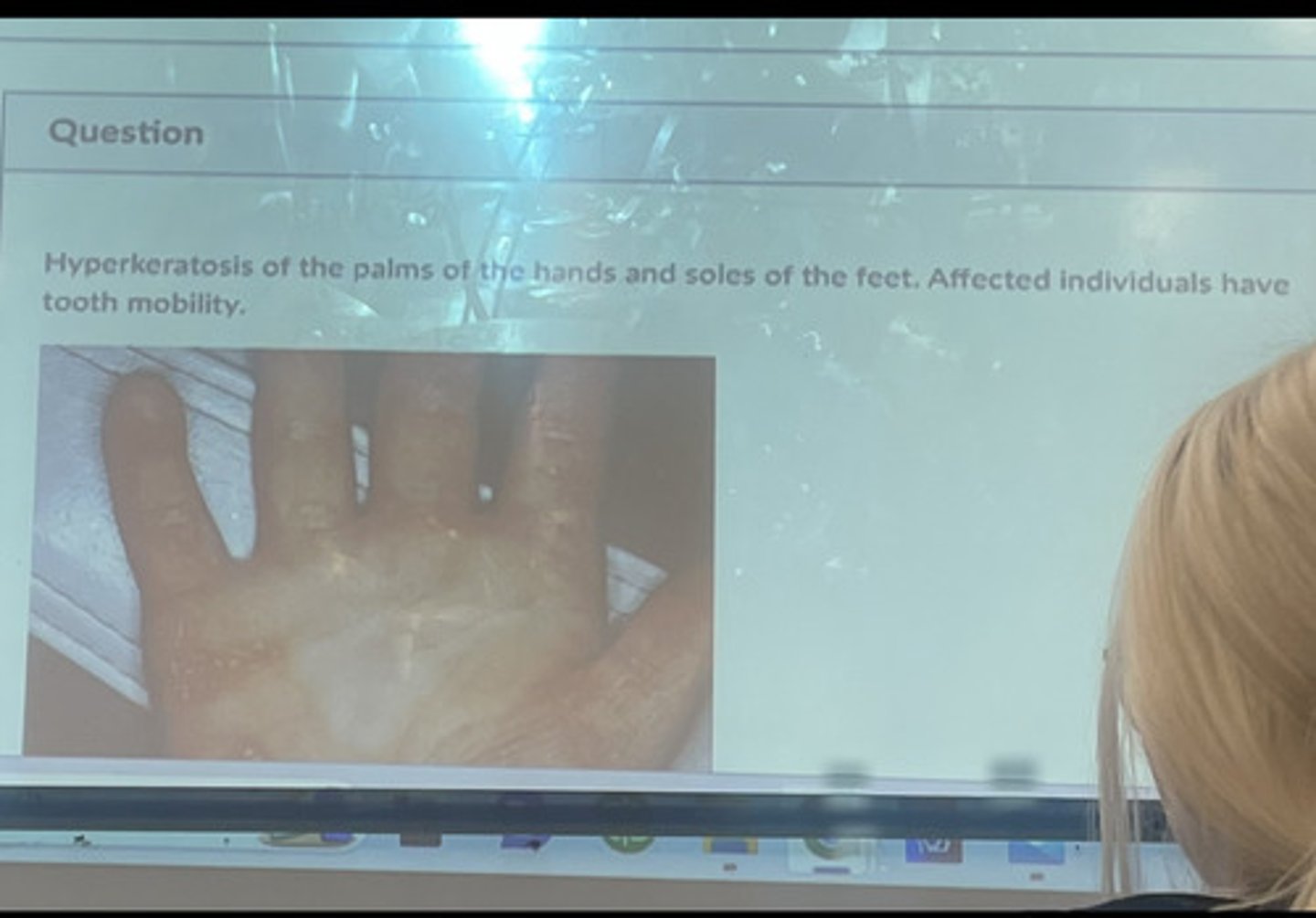
papillon-lefèvre syndrome
Hyperkatosis of the palms of the hands and soles of the feet. Affected individuals have tooth mobility.
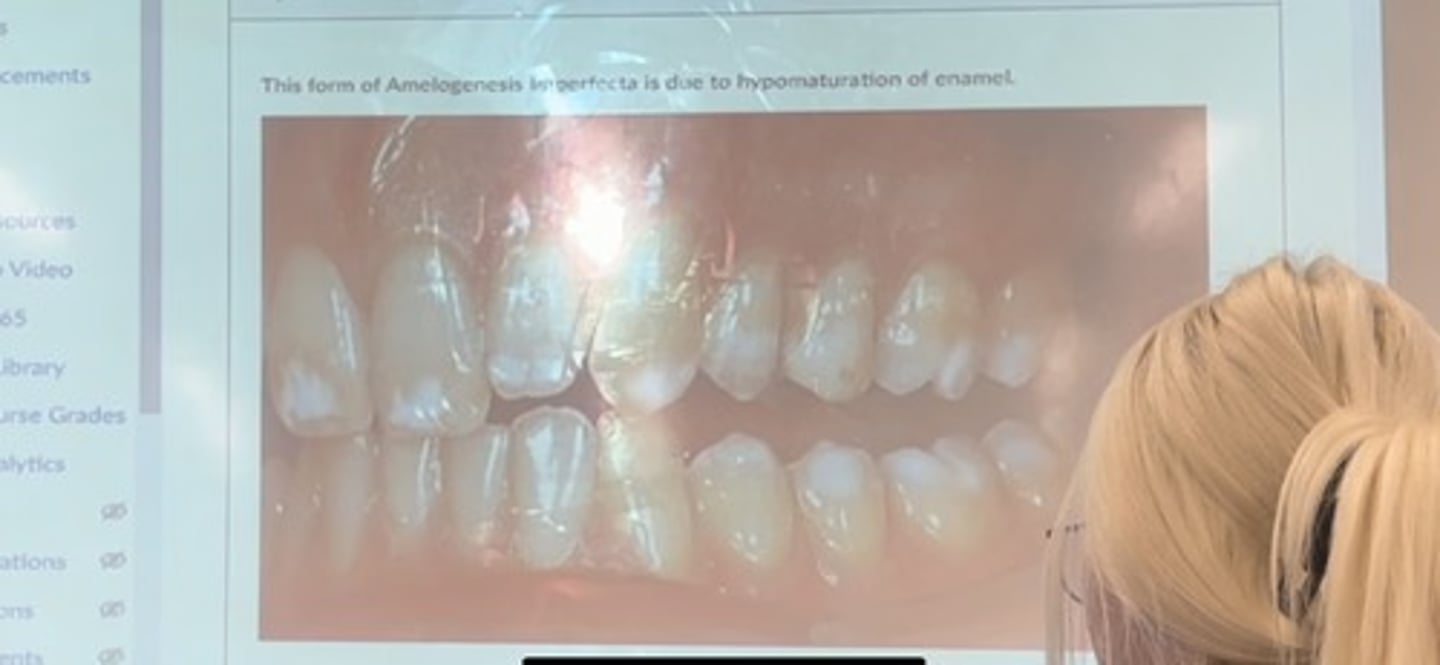
Type III (snowcapped)
This form of amelogenesis imperfecta is due to hypomaturation of enamel
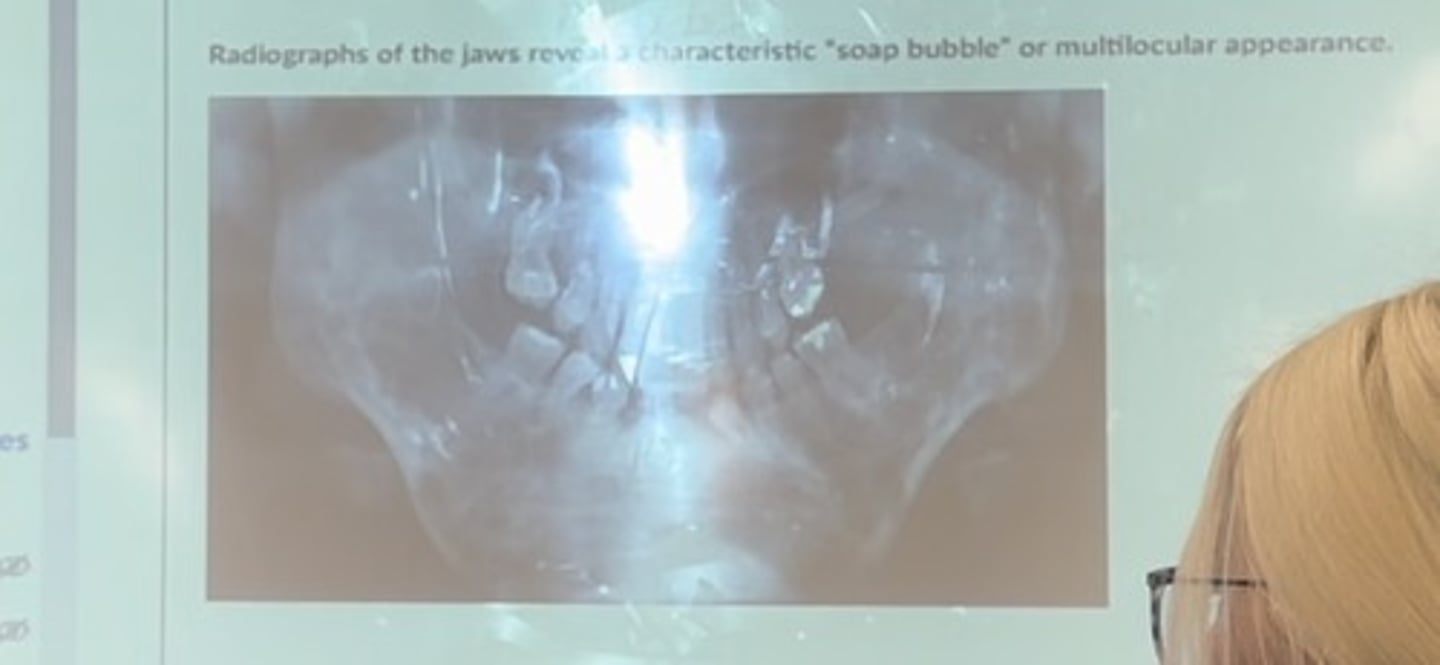
Cherubism
Radiographs of the jaws reveal a charcteristic "soap bubble" or multiocular appearance
Macule
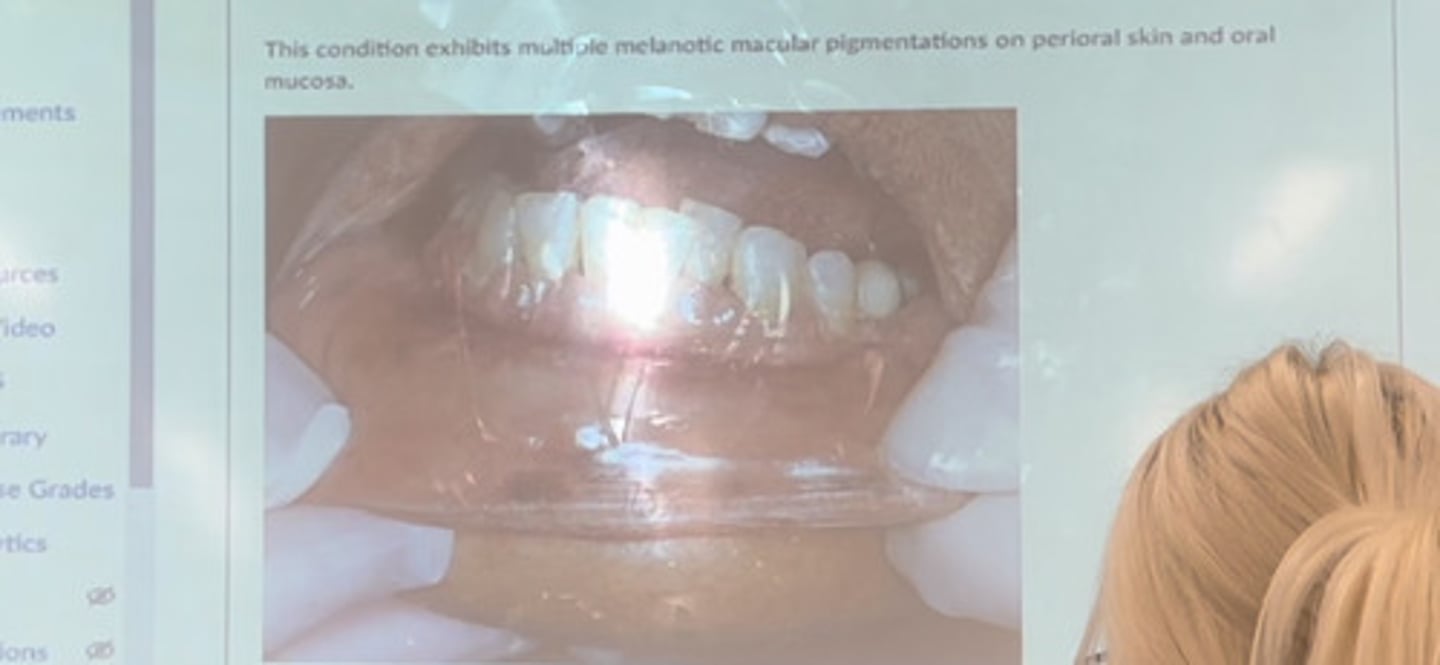
Peutz-Jeghers syndrome
The condition exhibits multiple melanotic macular pigmentations on perioral skin and oral mucosa
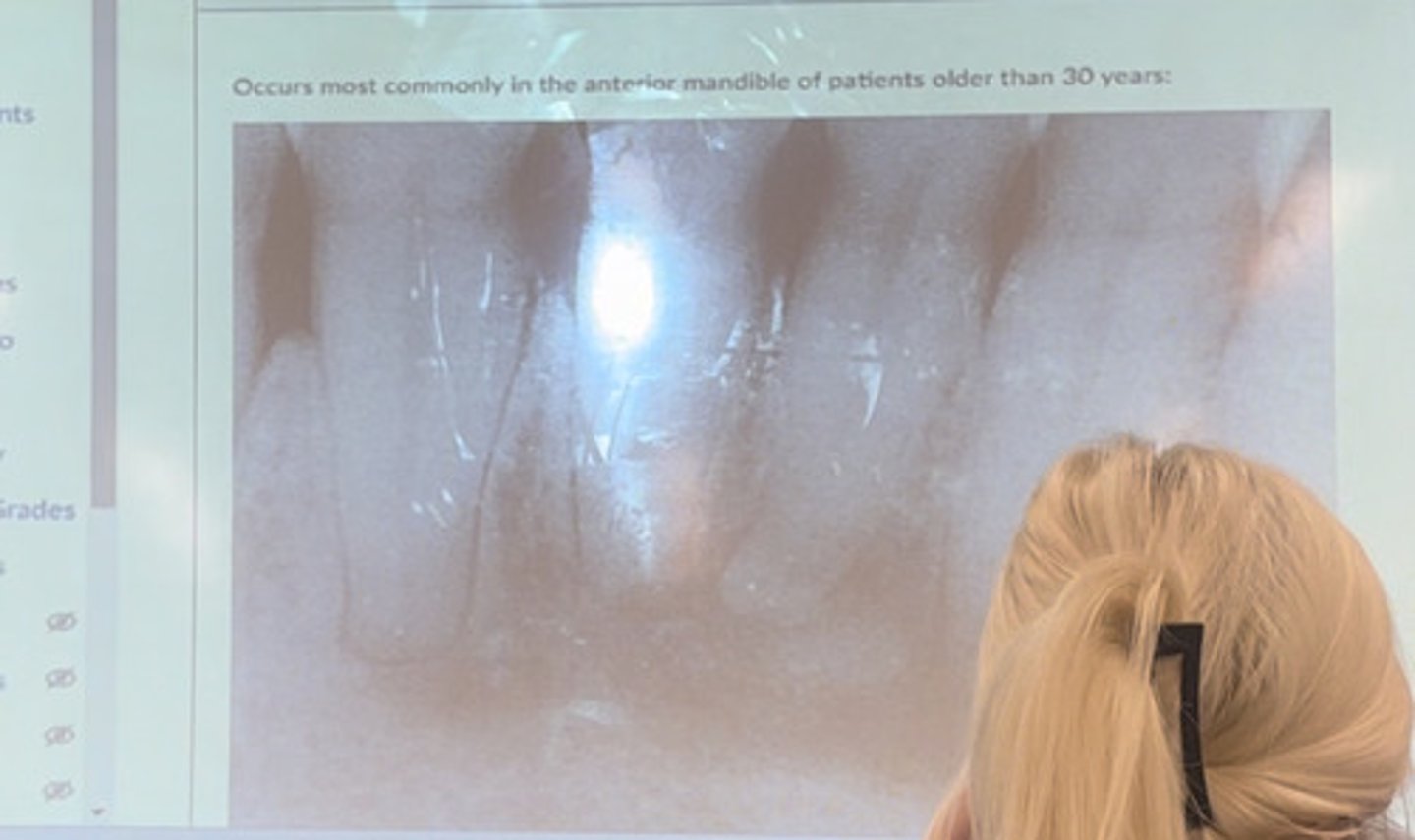
Periapical cemento-osseous dysplasia
Occurs most commonly in the anterior mandible of patients older than 30 years
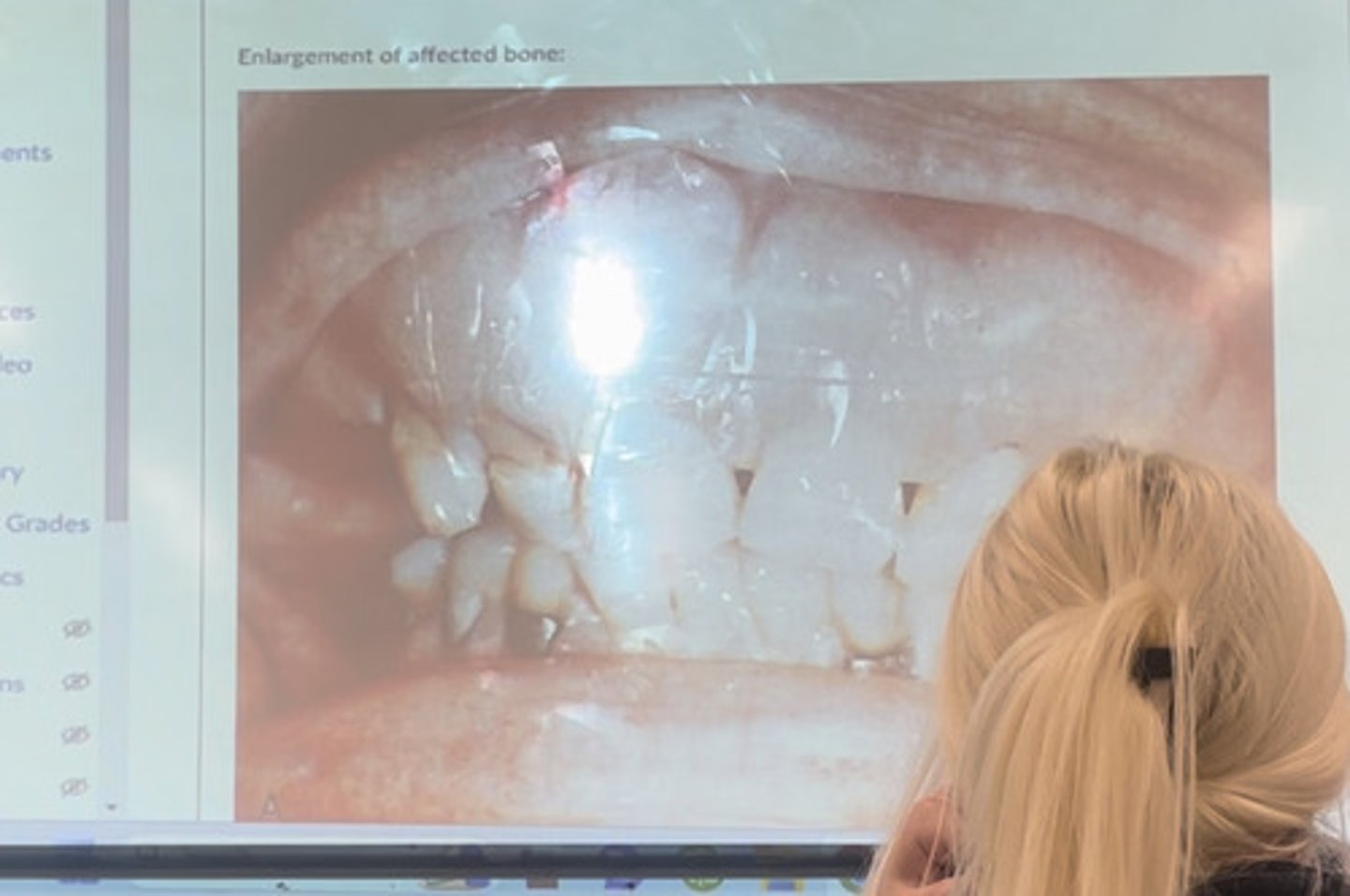
Paget disease
Enlargement of affected bone
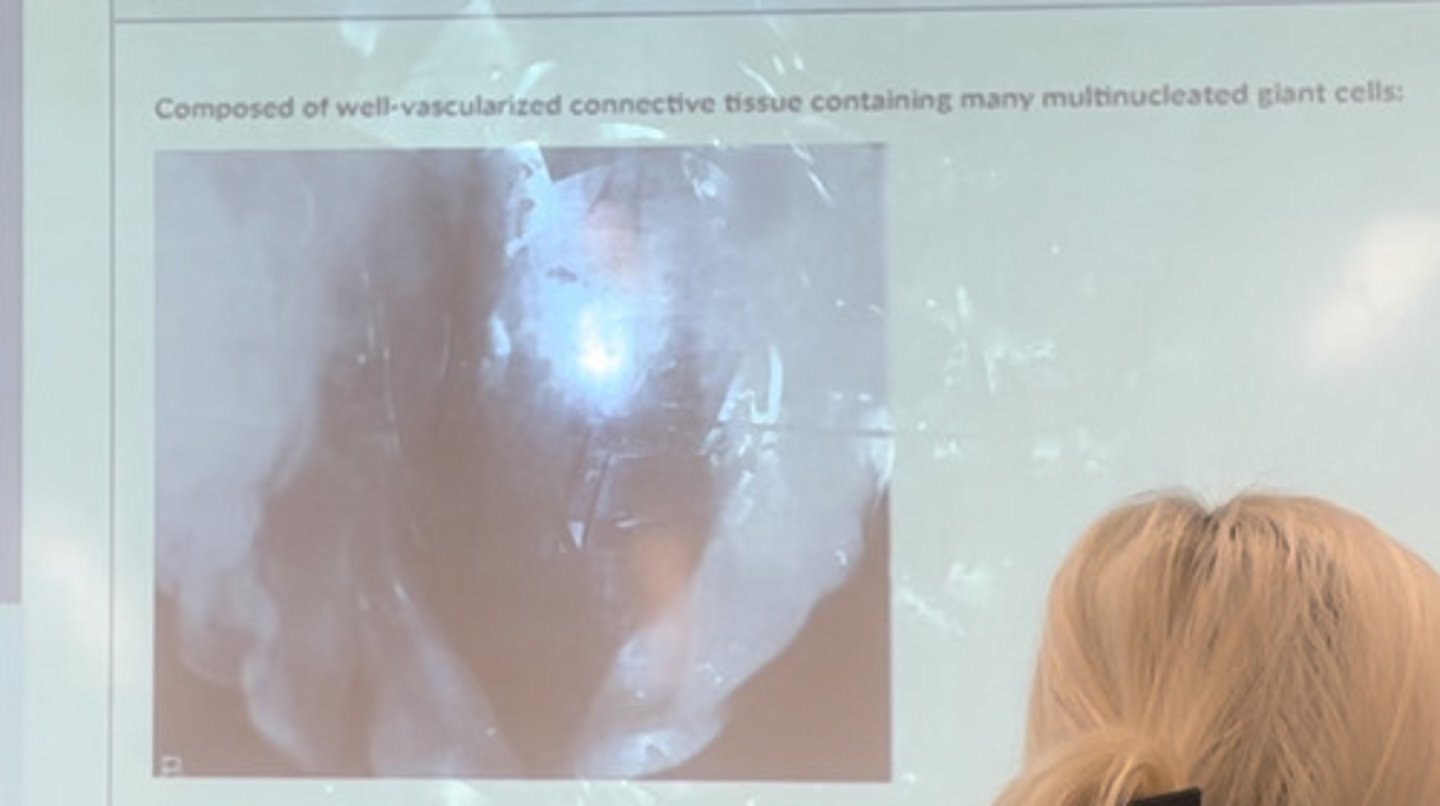
Central giant granuloma (central occurs in maxilla)
Composed of well vascularized connective tissue containing many multinucleated giant cella
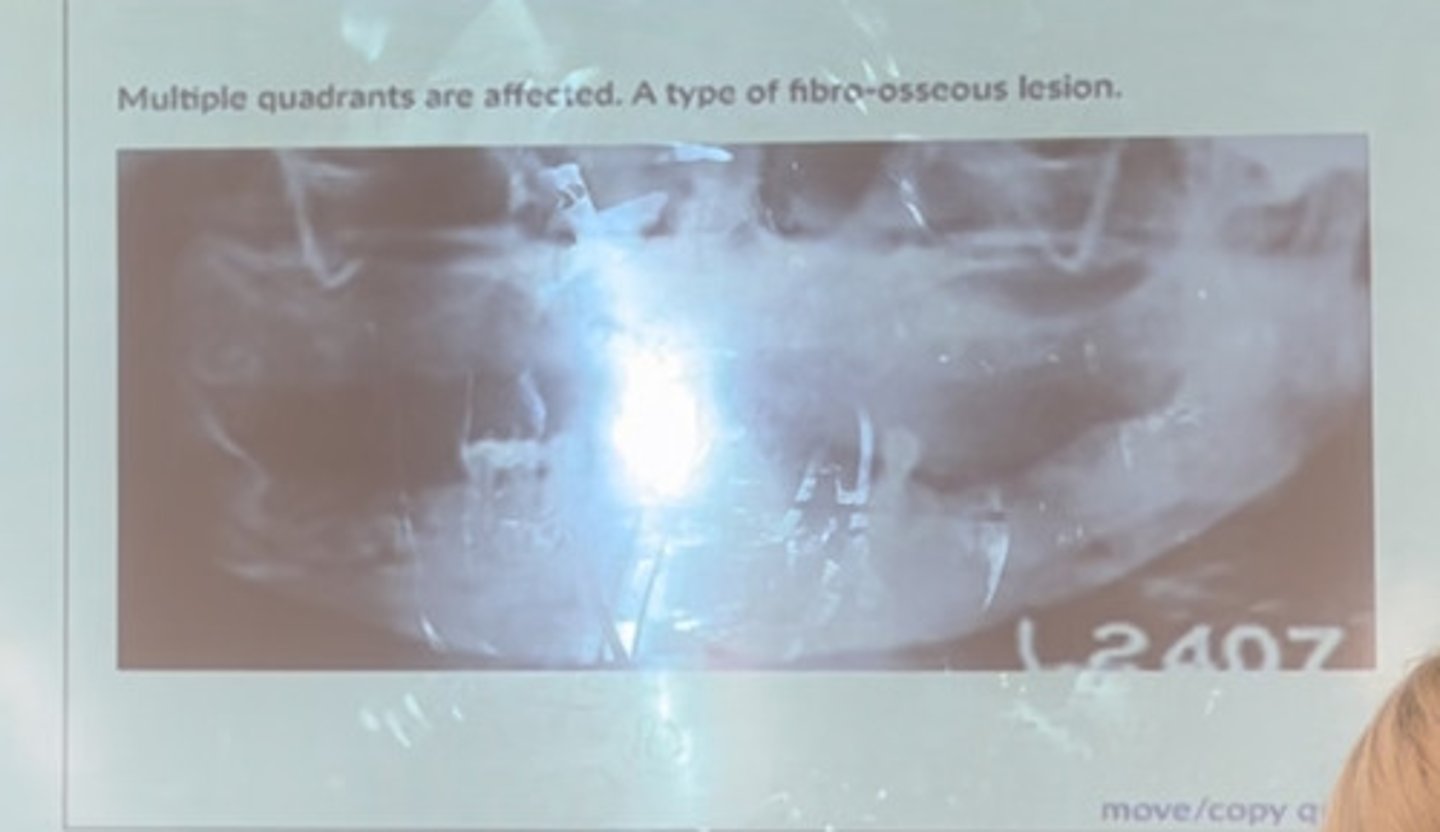
Florid Osseous Dysplasia
Multiple quadrants are affected. A type of fibrous osseous lesion
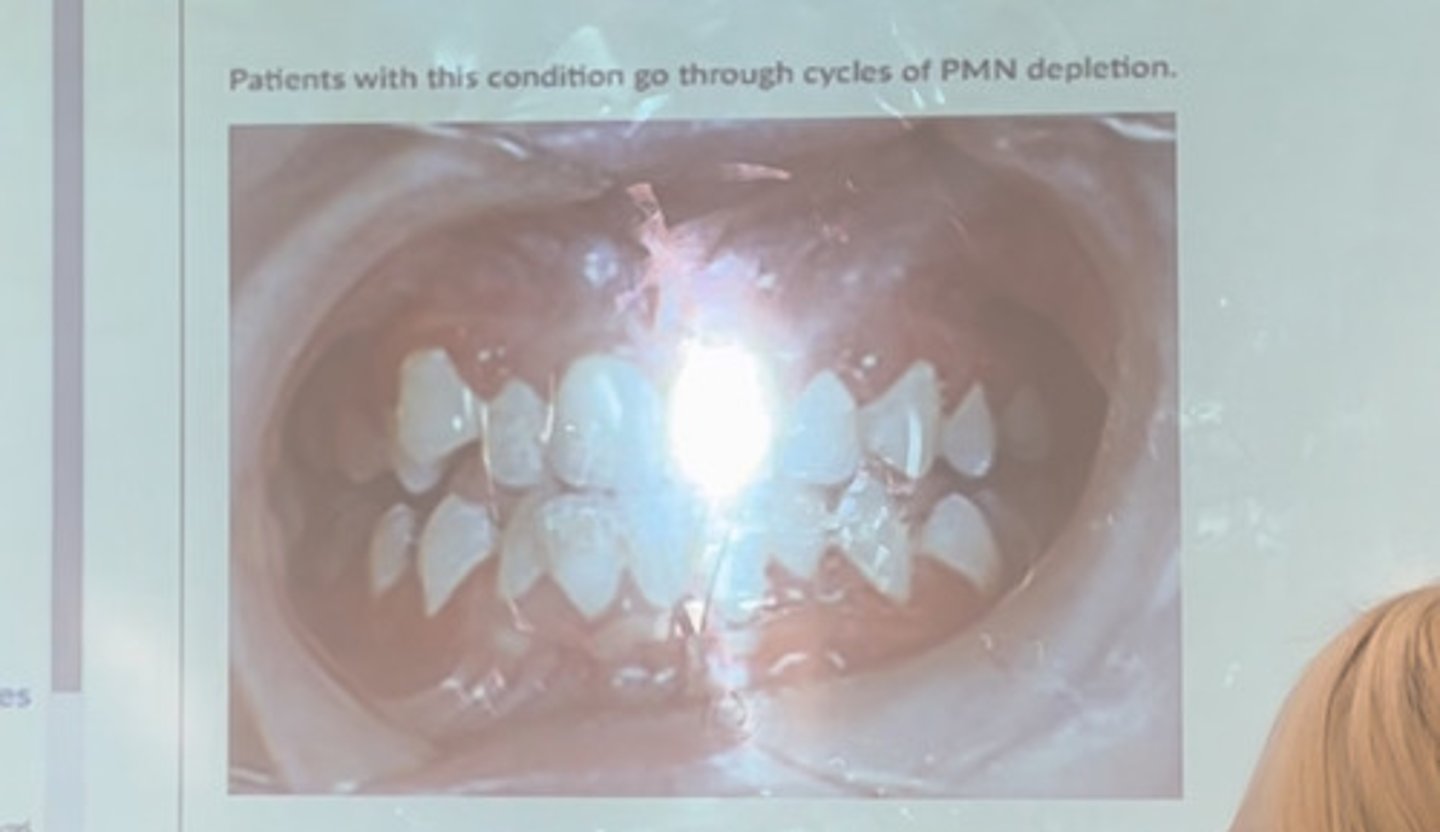
Cyclic neutropenia
Patients with this go through cycles of PMN depletion
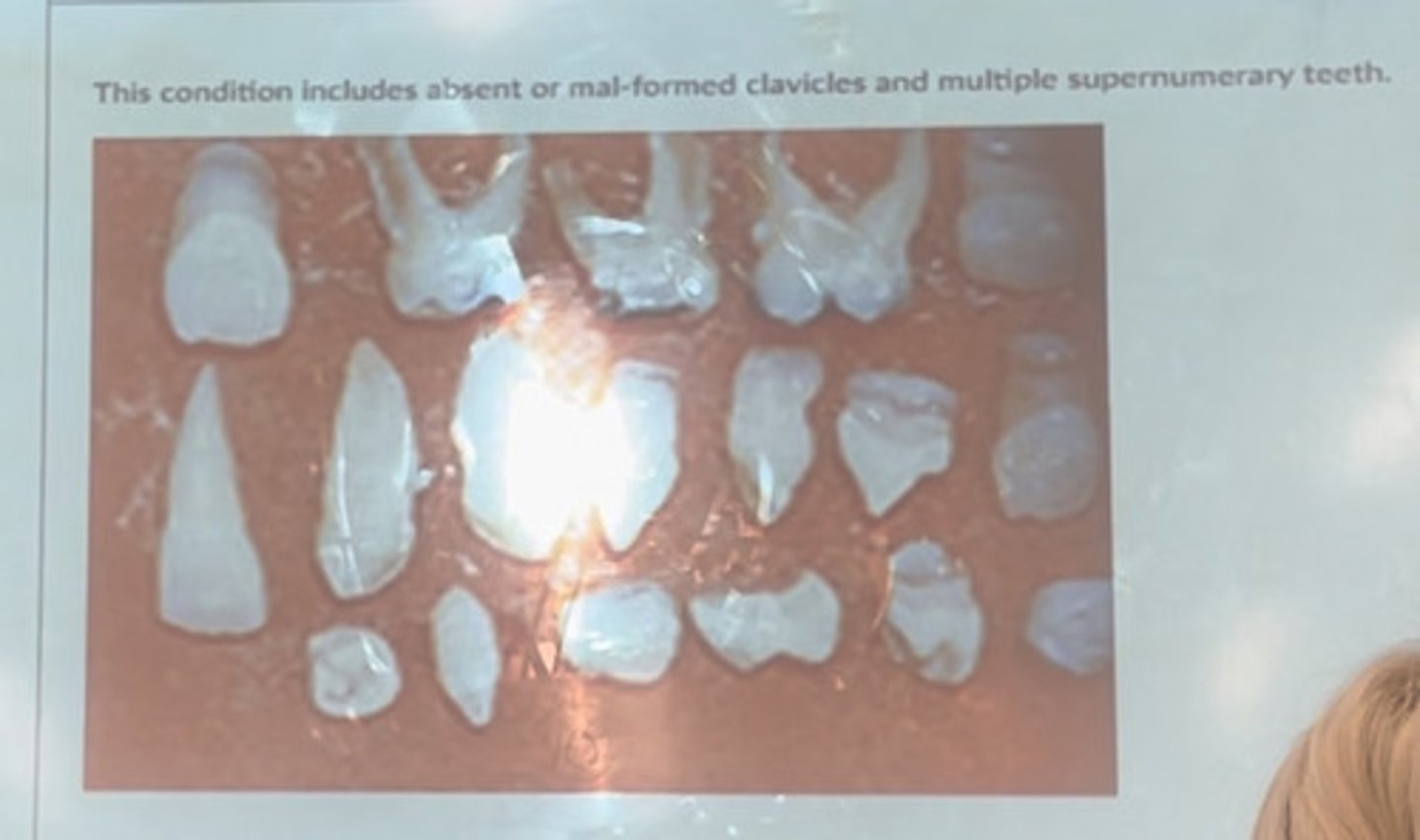
cleidocranial dysplasia
This conditions includes absent or malformed clavicles and multiple supernumerary teeth.
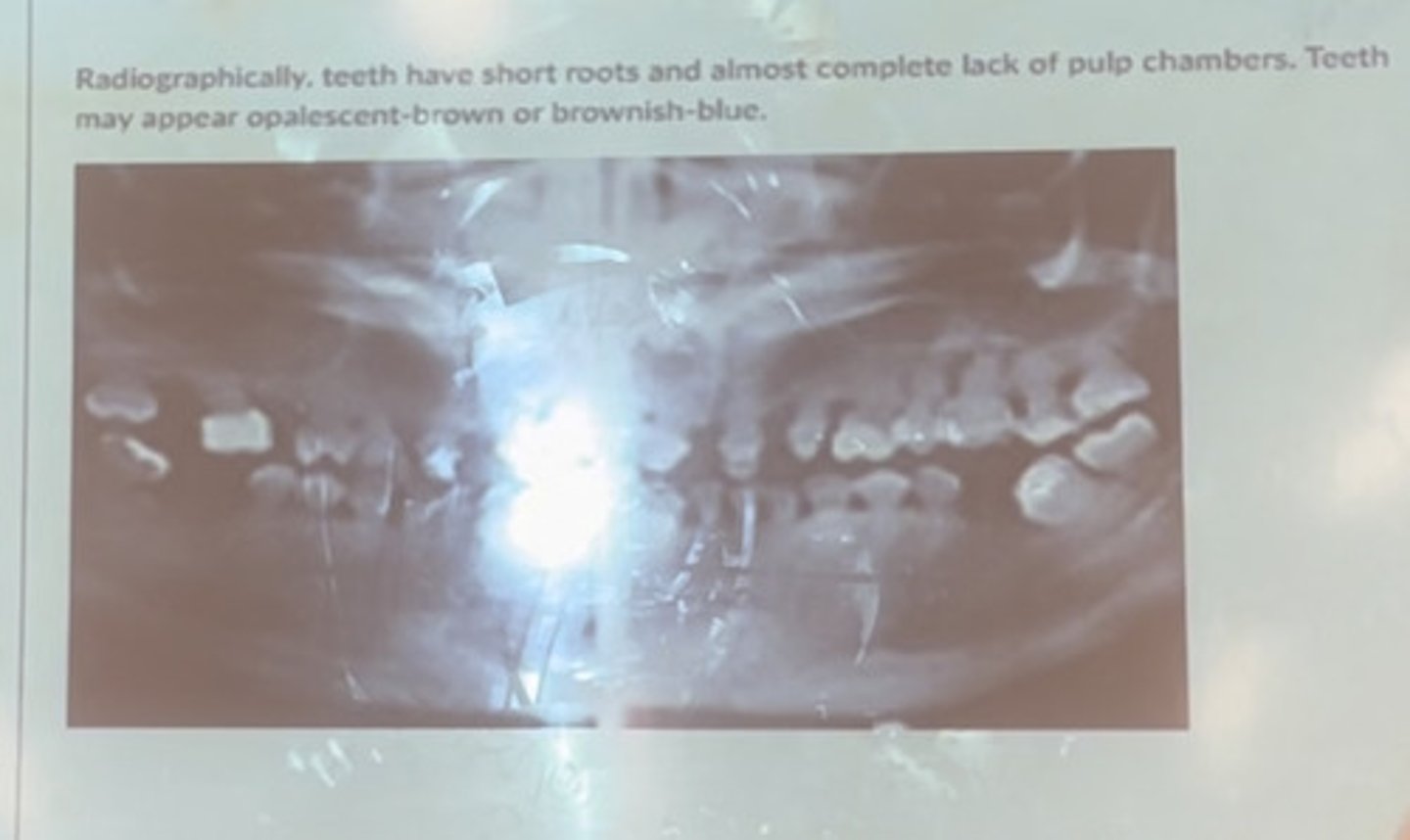
Dentinogenic imperfecta
Radiographically, teeth have short roots and almost complete lack of pulp chambers. Teeth may appear opalescent-brown or brownish-blue
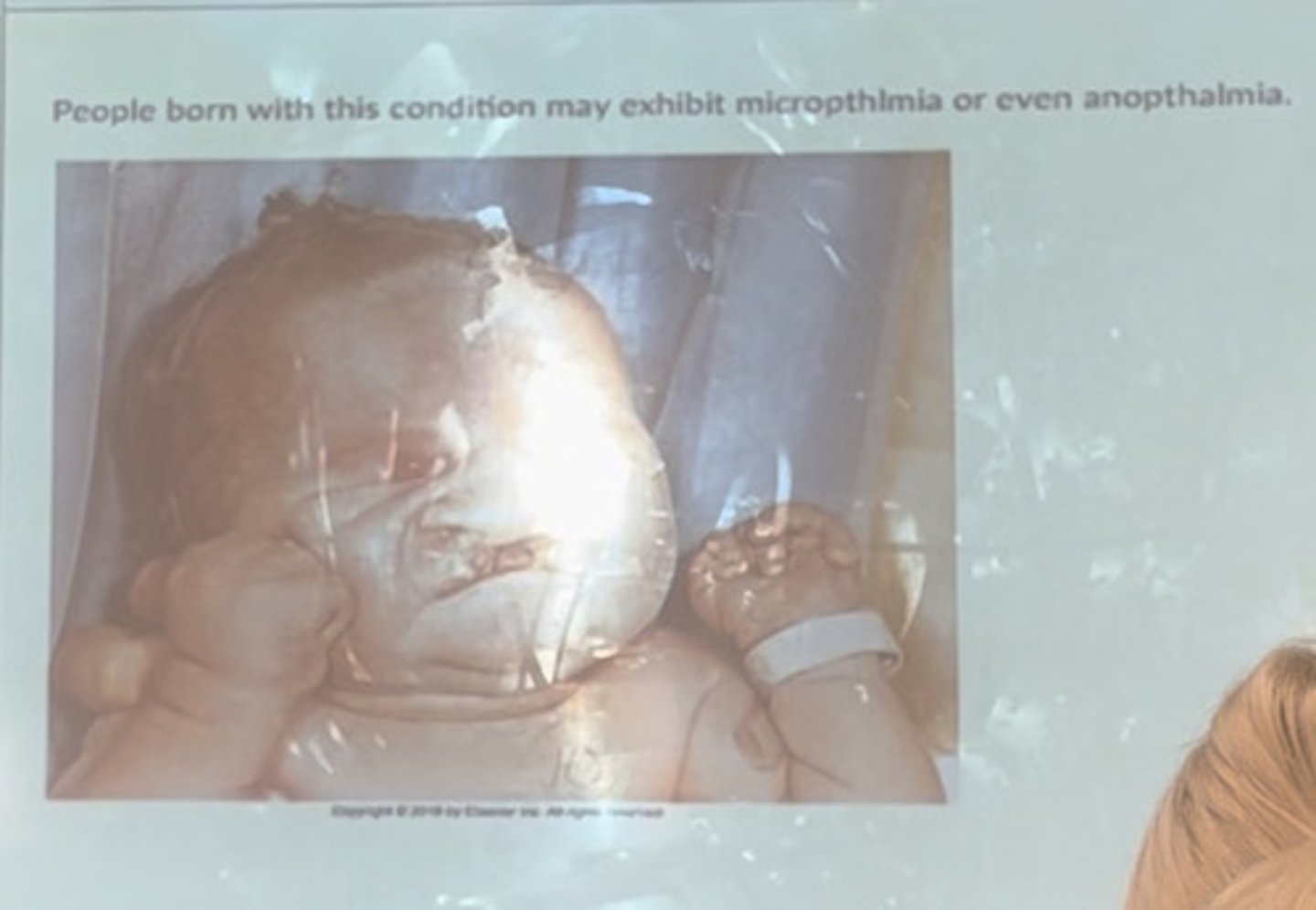
Trisomy 13
People born with this condition may exhibit micropthalmia (baby's eyes are small) or even anopthalmia (born w/out one or both eyes)
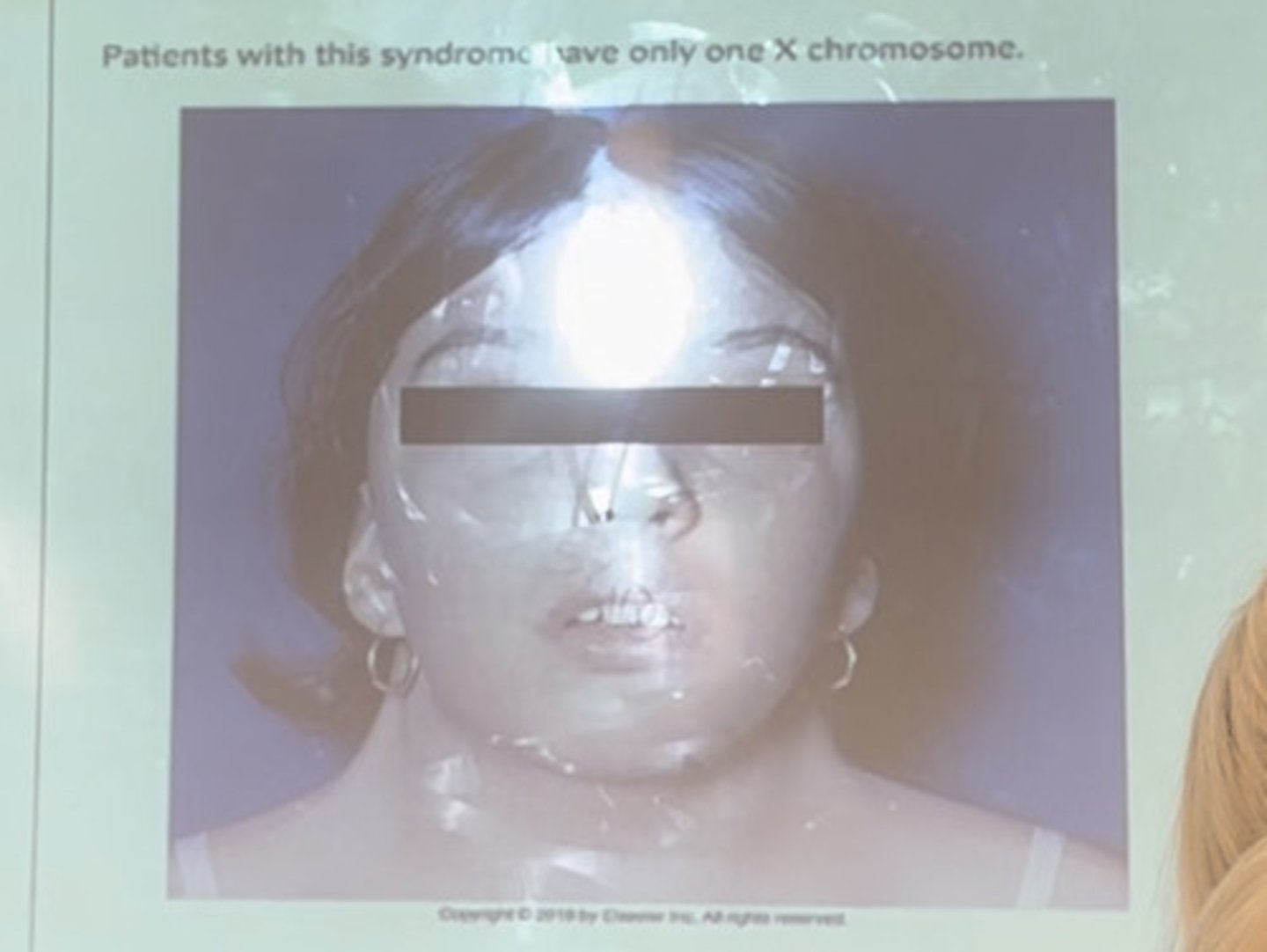
Turner syndrome
Patients with this syndrome have only one X chromosome.
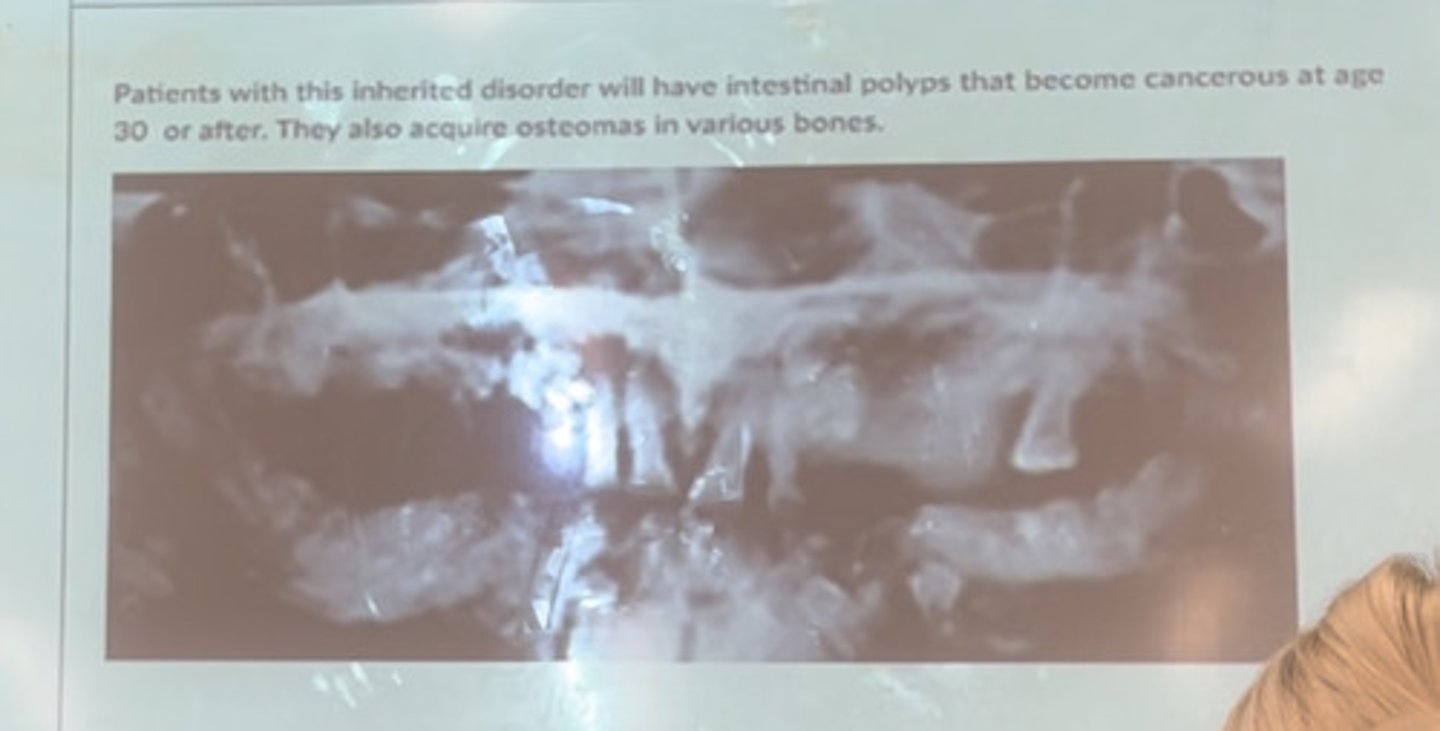
Garner syndrome
Patients with this inherited disorder will have intestinal polyps that become cancerous at age 30 or after. They also require osteomas in various bones
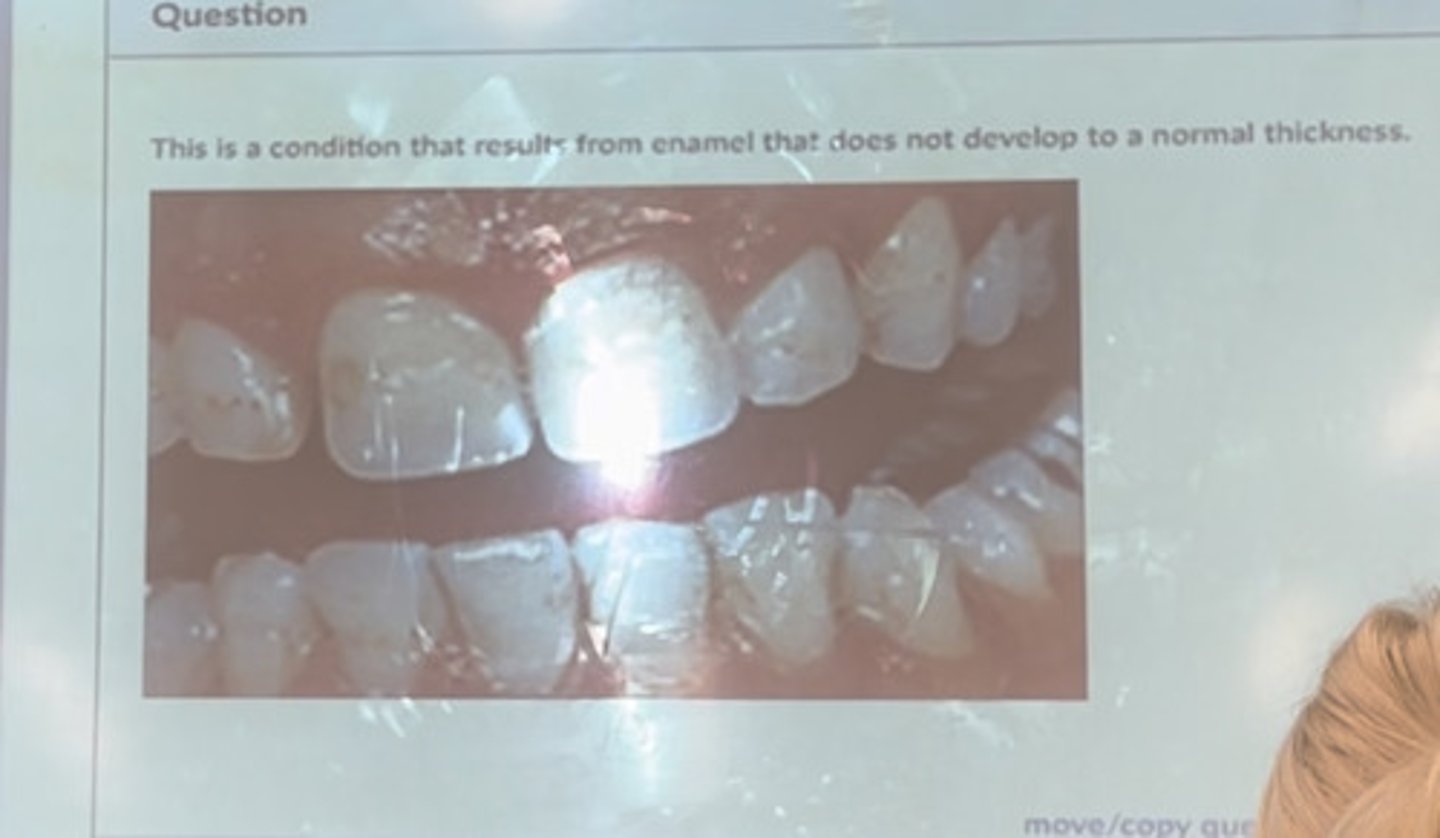
Type IV amelogenesis
This is a condition that results from enamel that does not develop to a normal thickness
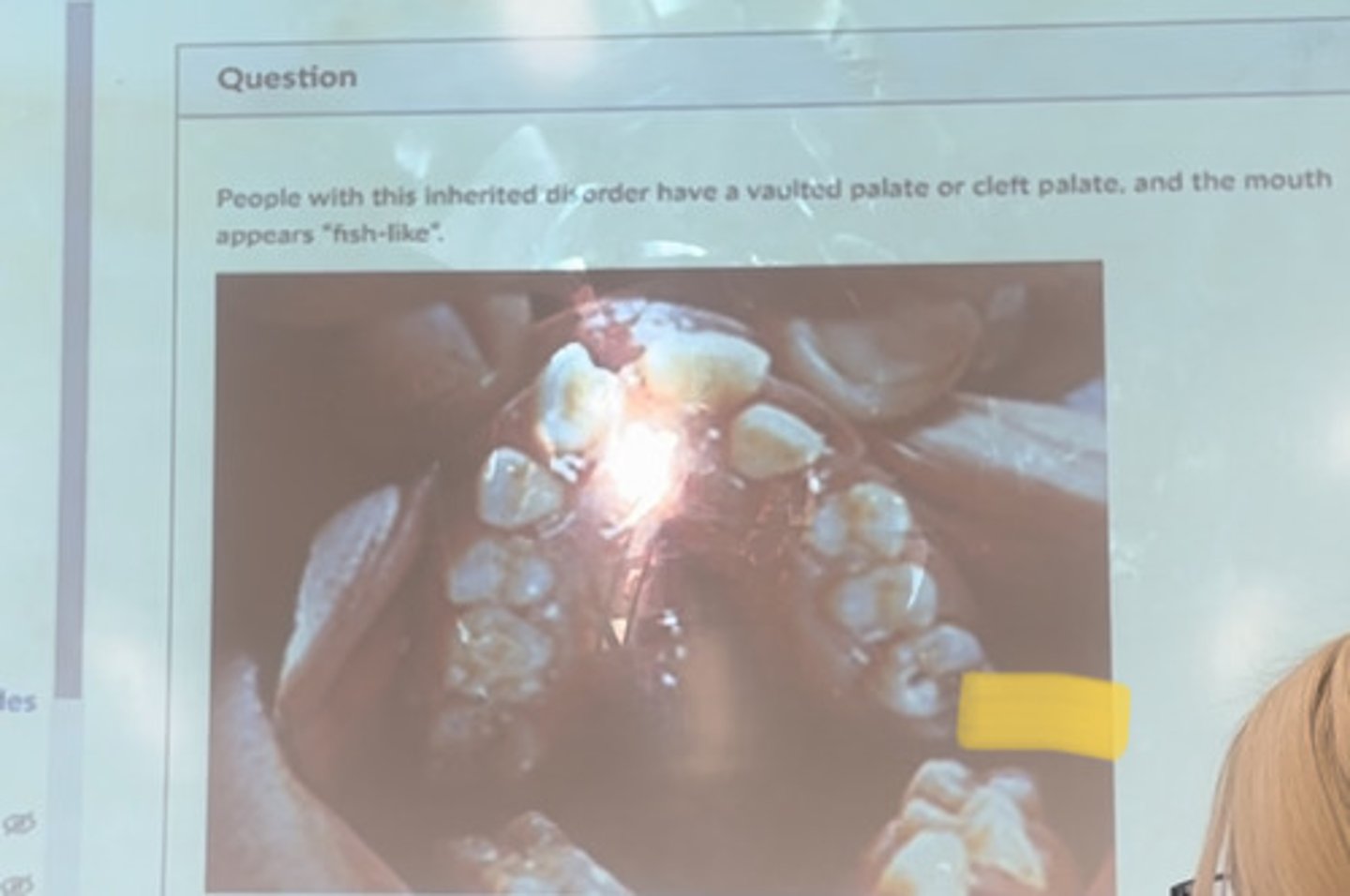
Mandibulofacial Dysostosis
People with this inherited disorder have a vaulted palate or cleft palate, and the mouth appears "fish-like"
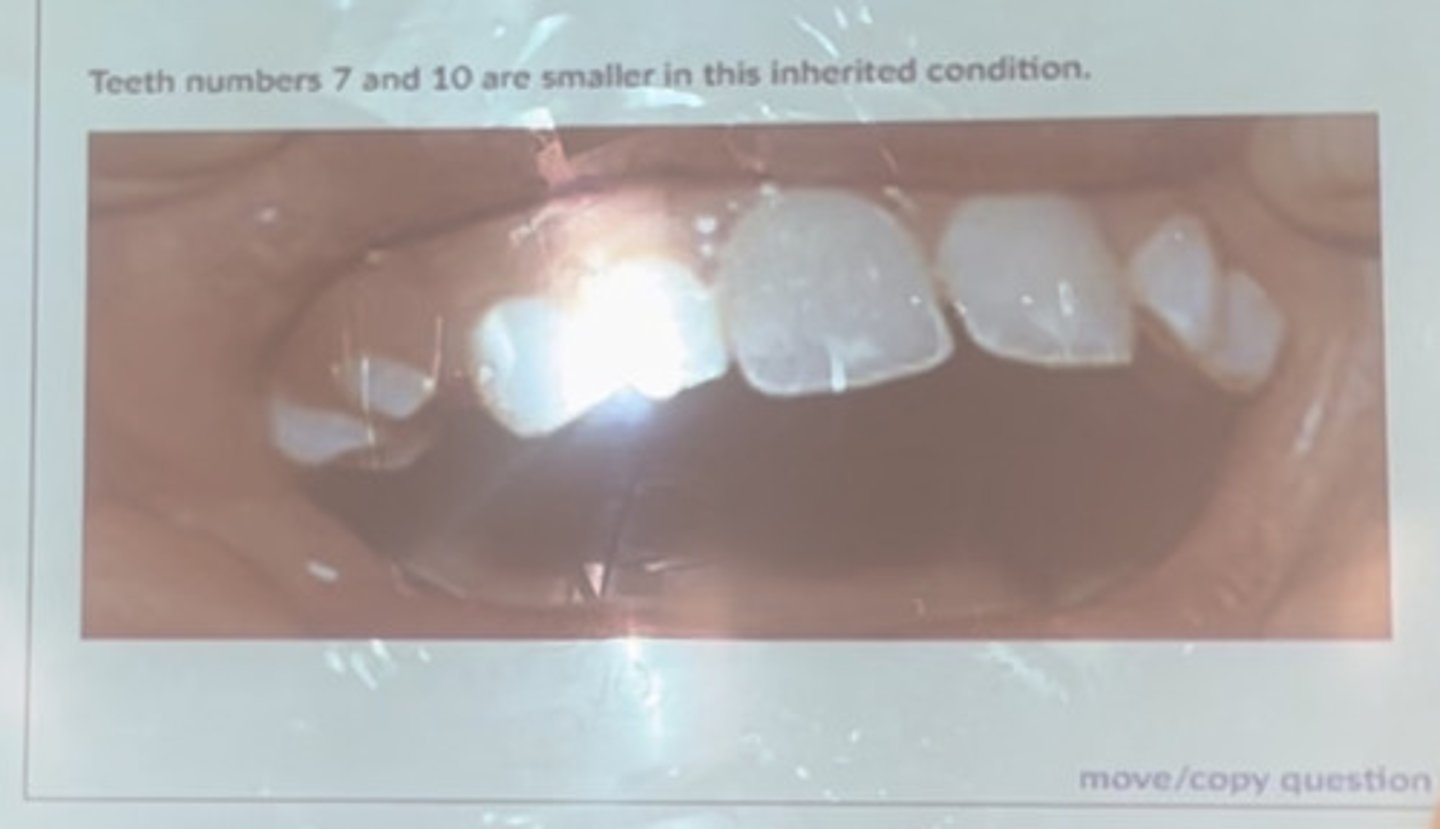
peg lateral
Teeth numbers 7 and 10 are smaller in this inherited condition.
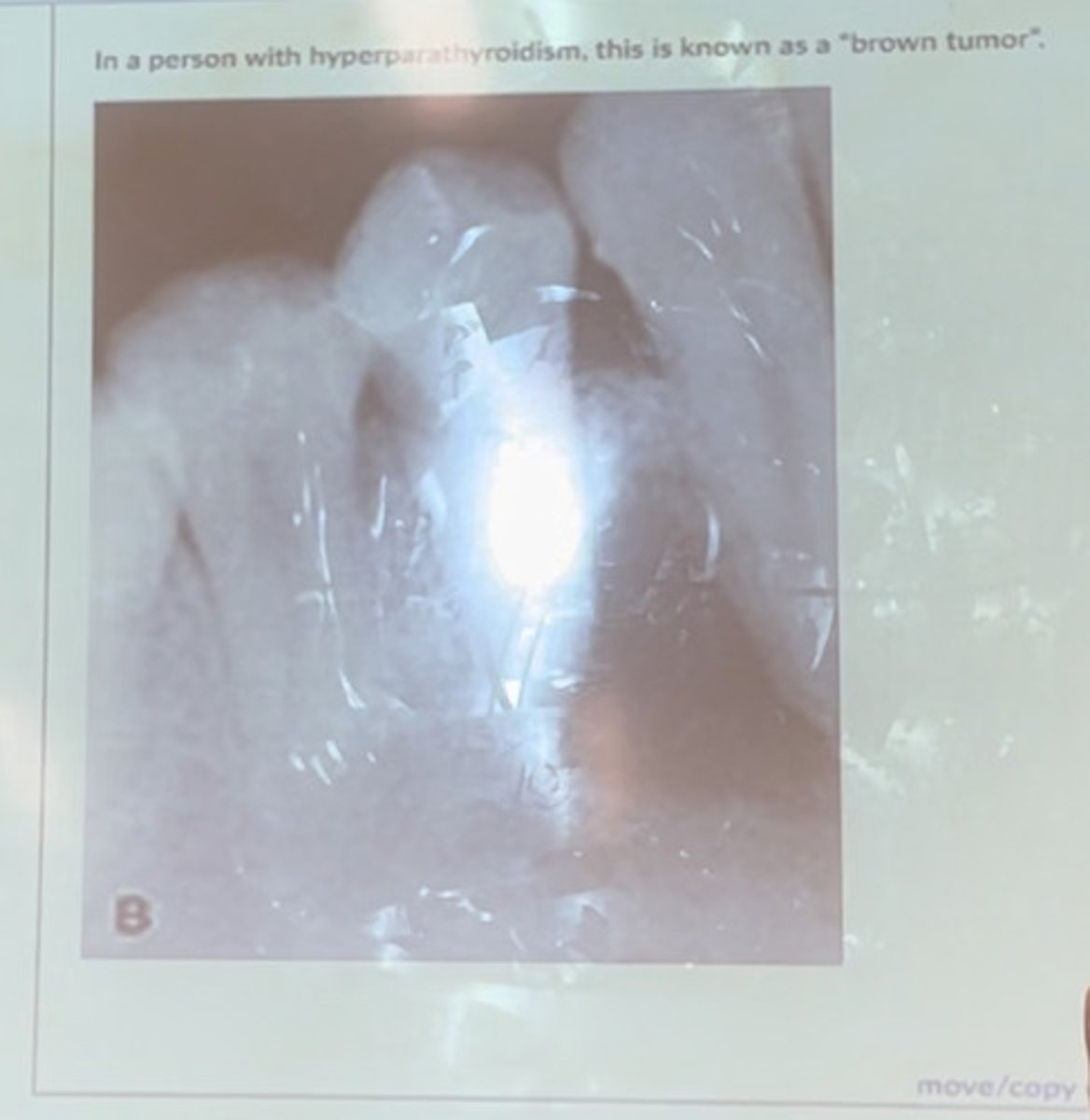
Central Giant Cell Granuloma
In a person with hyperparathyroidism, this is known as a "brown-tumor".
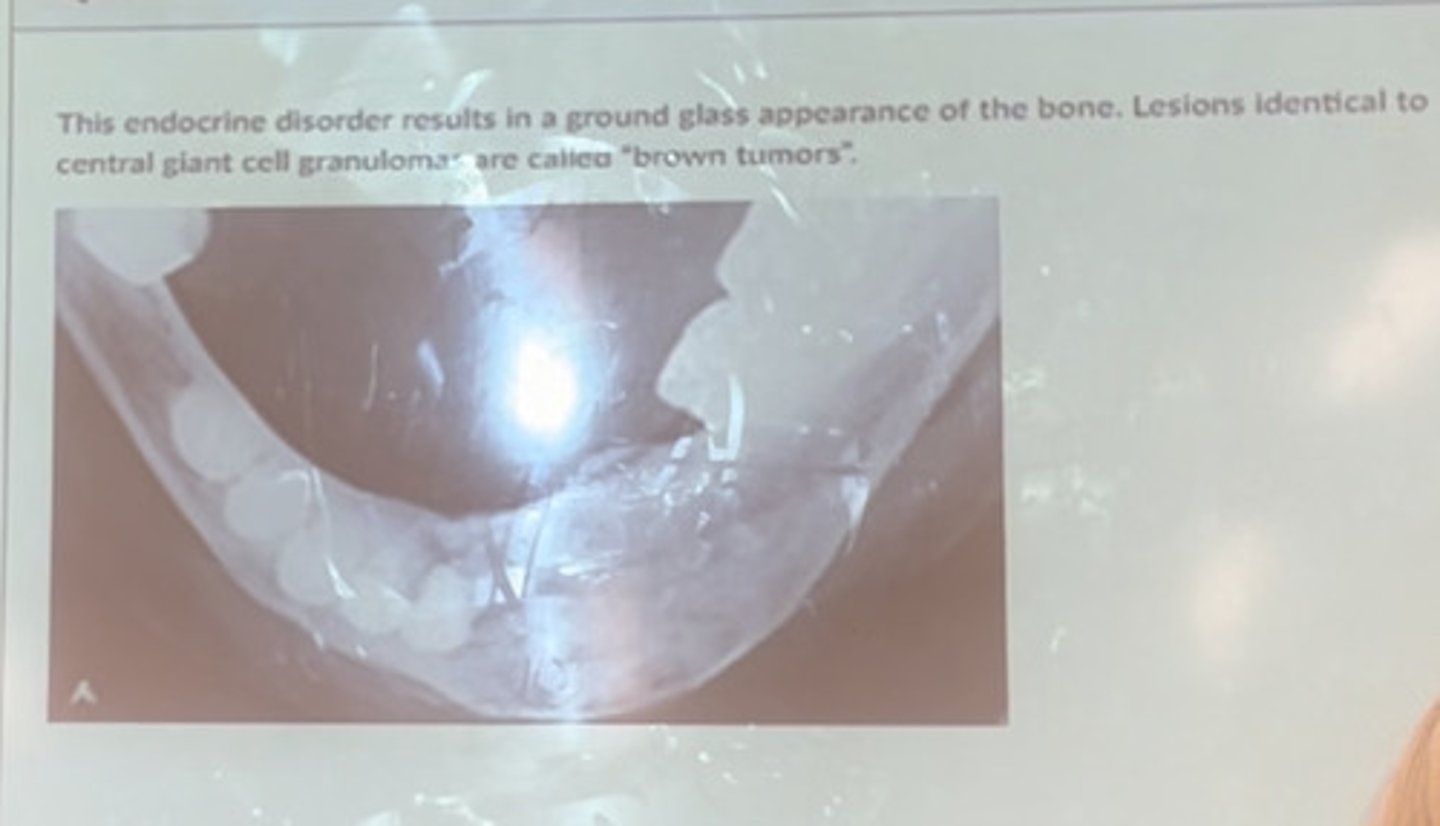
Hyperparathyroidism
The endocrine disorder results in a ground glass appearance of the bone. Lesions identical to central giant cell granuloma are called "brown tumors"
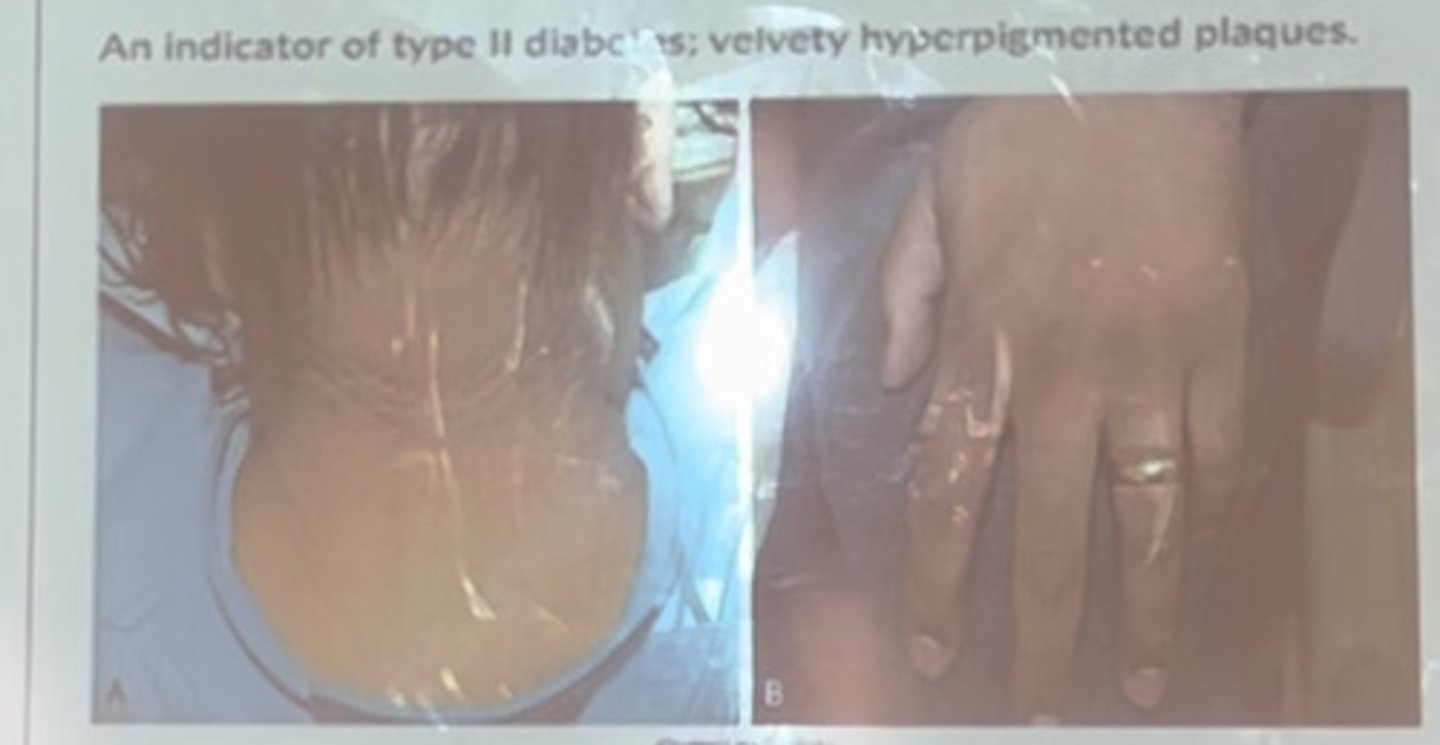
Acanthosis nigricans
An indicator of type II diabetes; variety hyperpigmented plaques
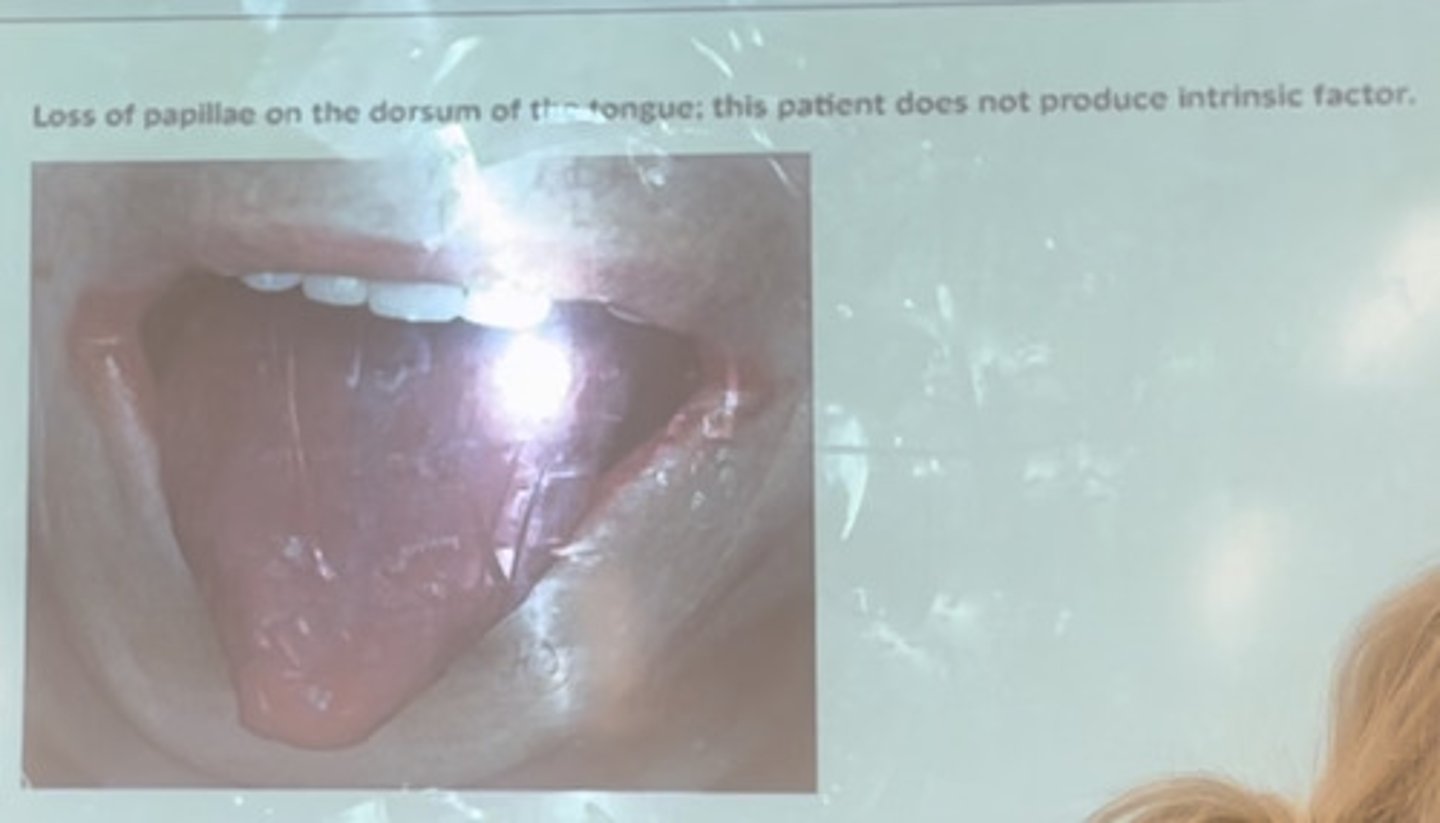
Pernicious anemia
Loss of papilla on the dorsum of the tongue; this patient does not produce intrinsic factor.
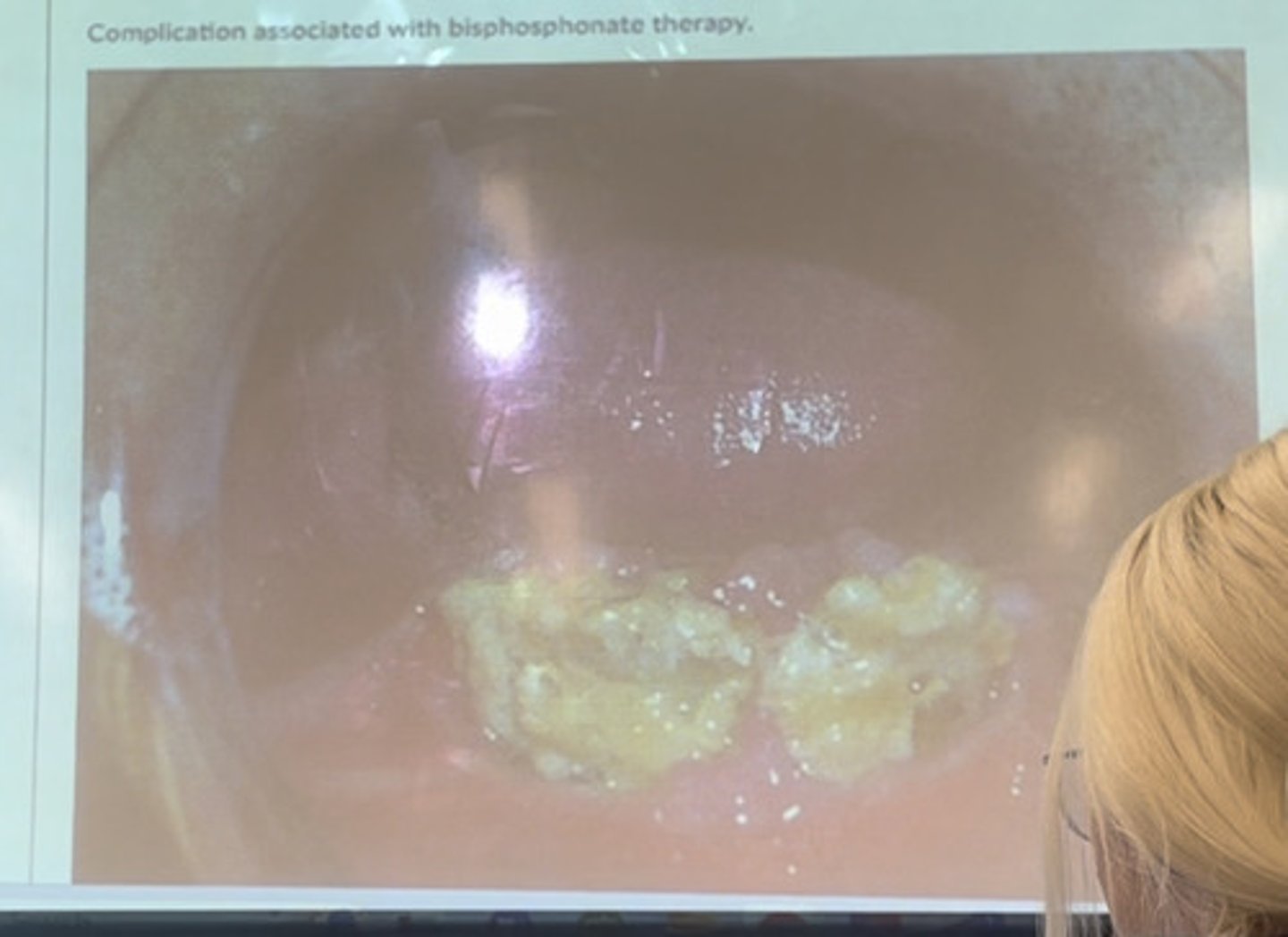
osteonecrosis of the jaw
Complication associated with bisphosphonate therapy
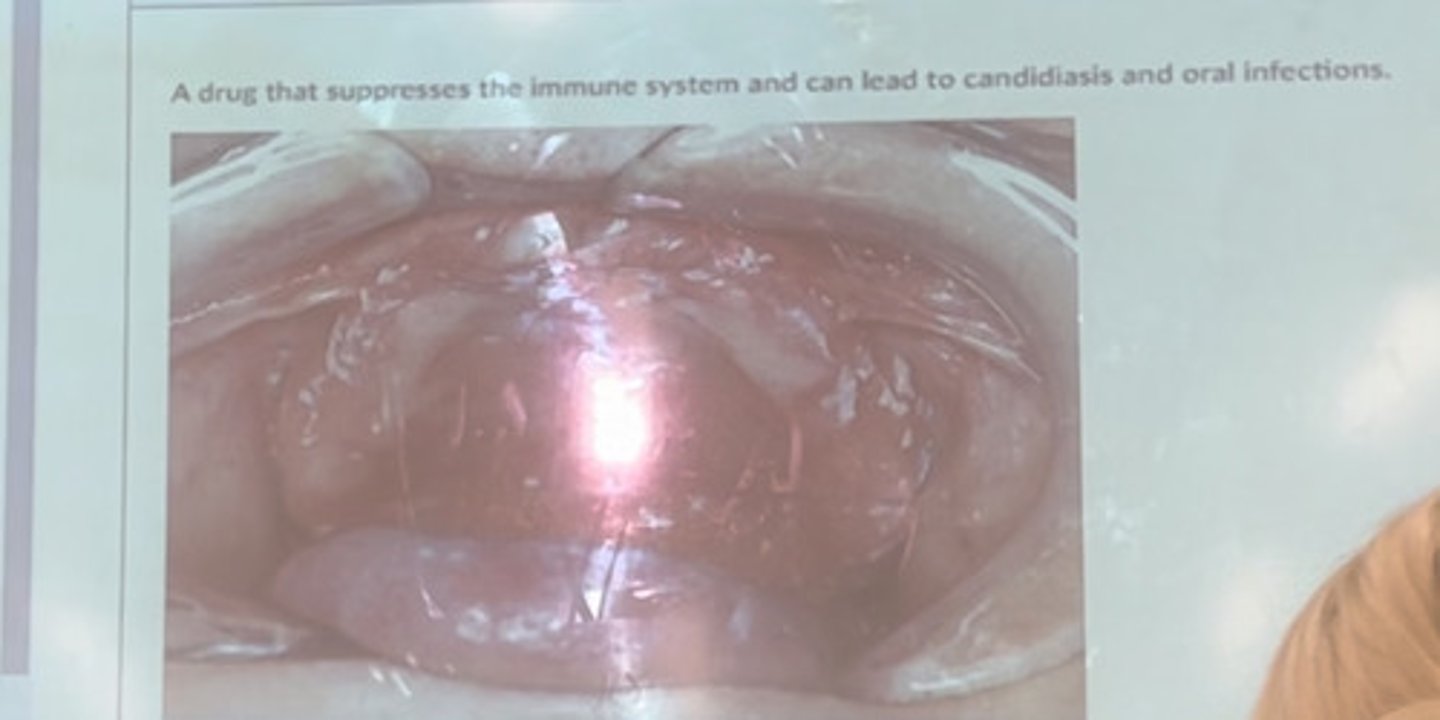
Cortiocosteroids (prednisone, hydrocortisone)
A drug that suppresses the immune system and can lead to candidiasis and oral infections
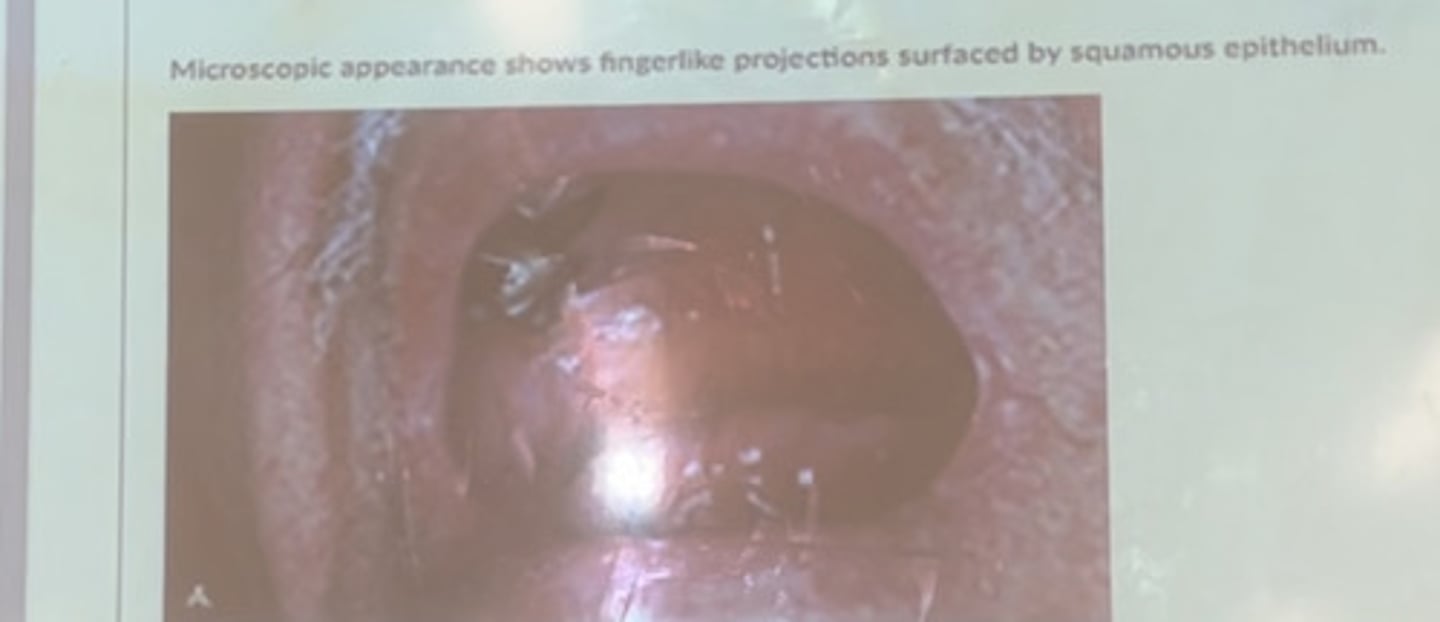
Papilloma
Microscopic appearance shows fingerlike projections surfaced by squamous epithelium
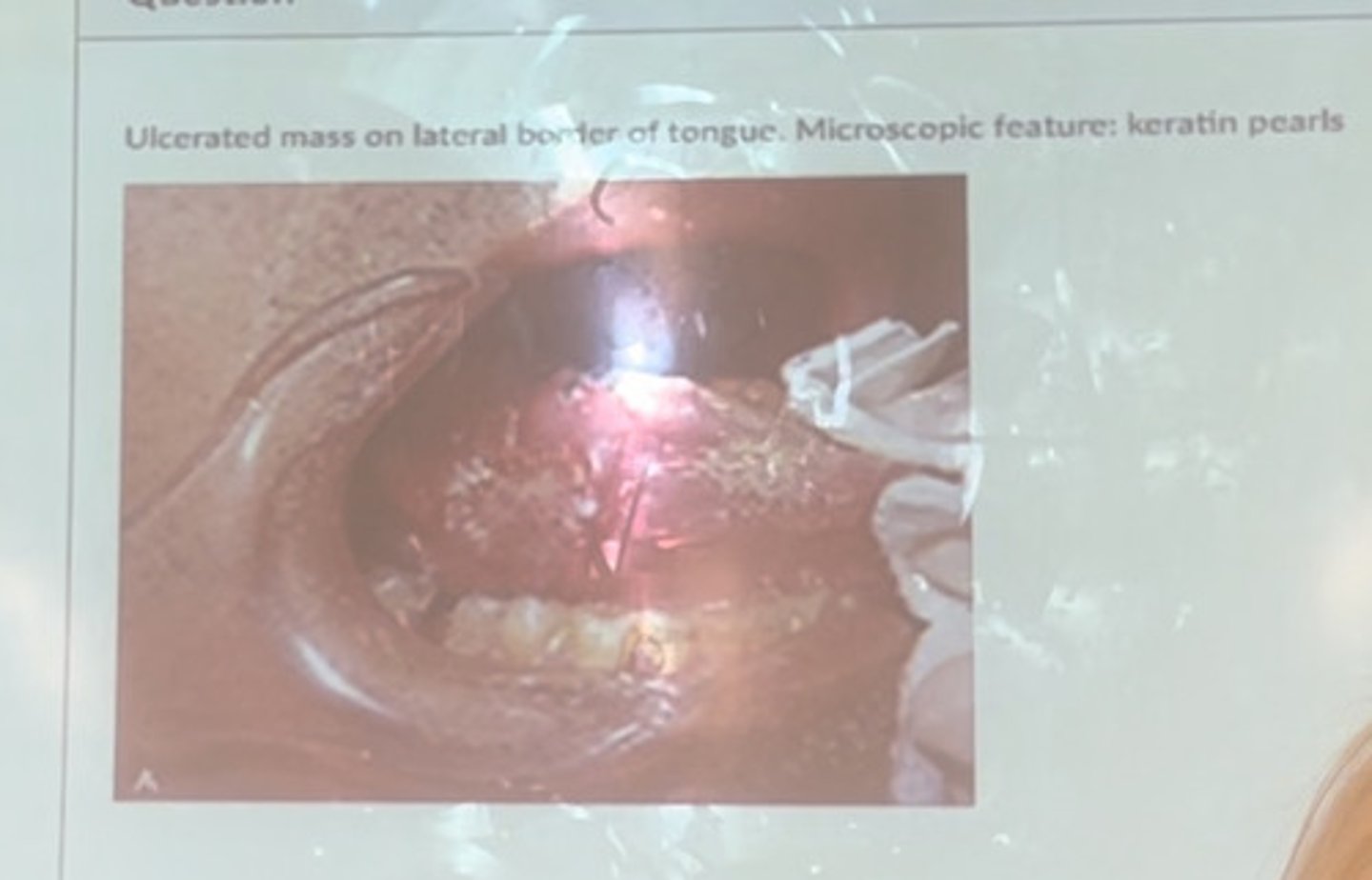
squamous cell carcinoma
Ulcerated mass on lateral border of tongue. Microscopic feature: keratin pearls.
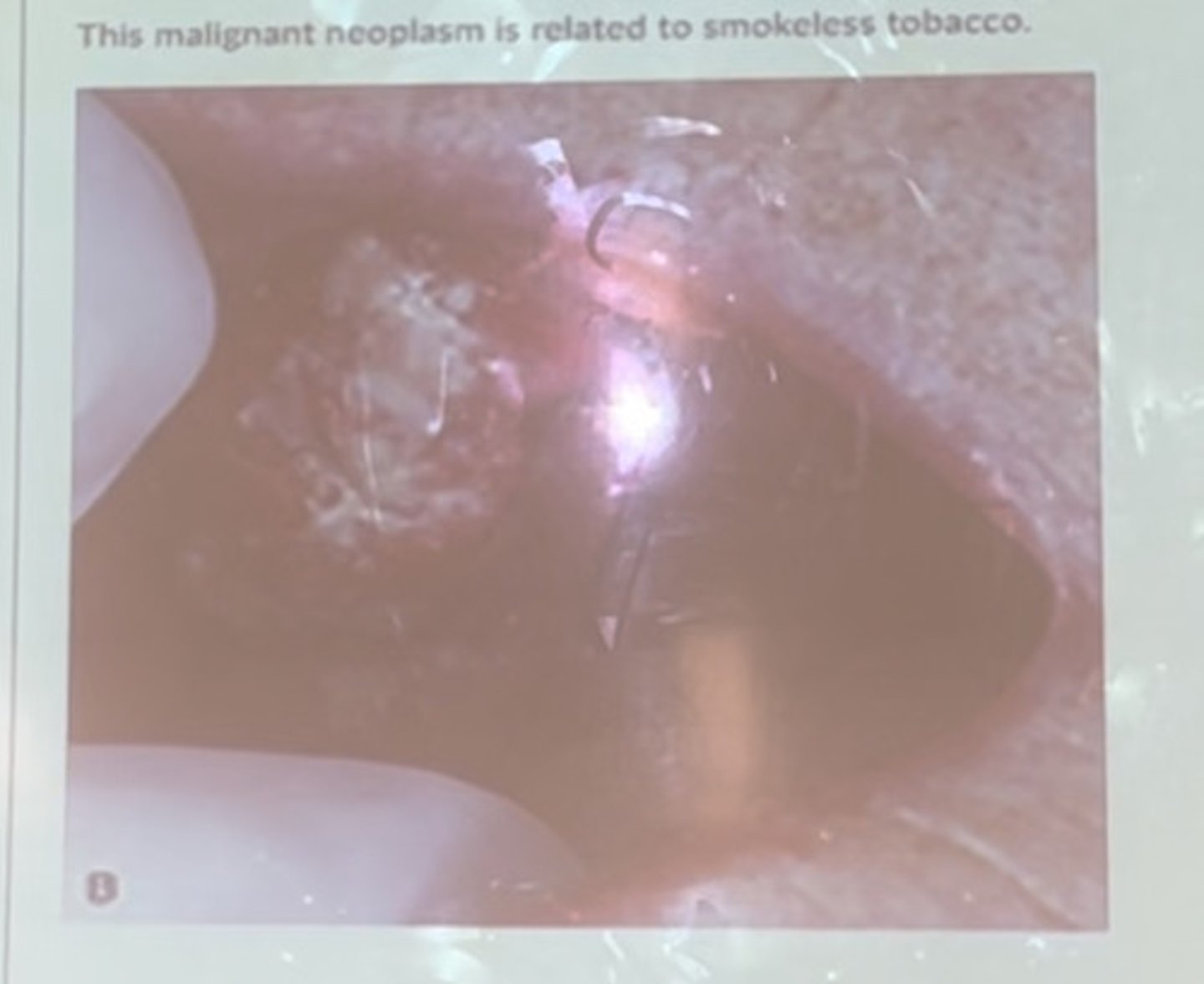
Verrucous carcinoma
This malignant neoplasm is related to smokeless tobacco
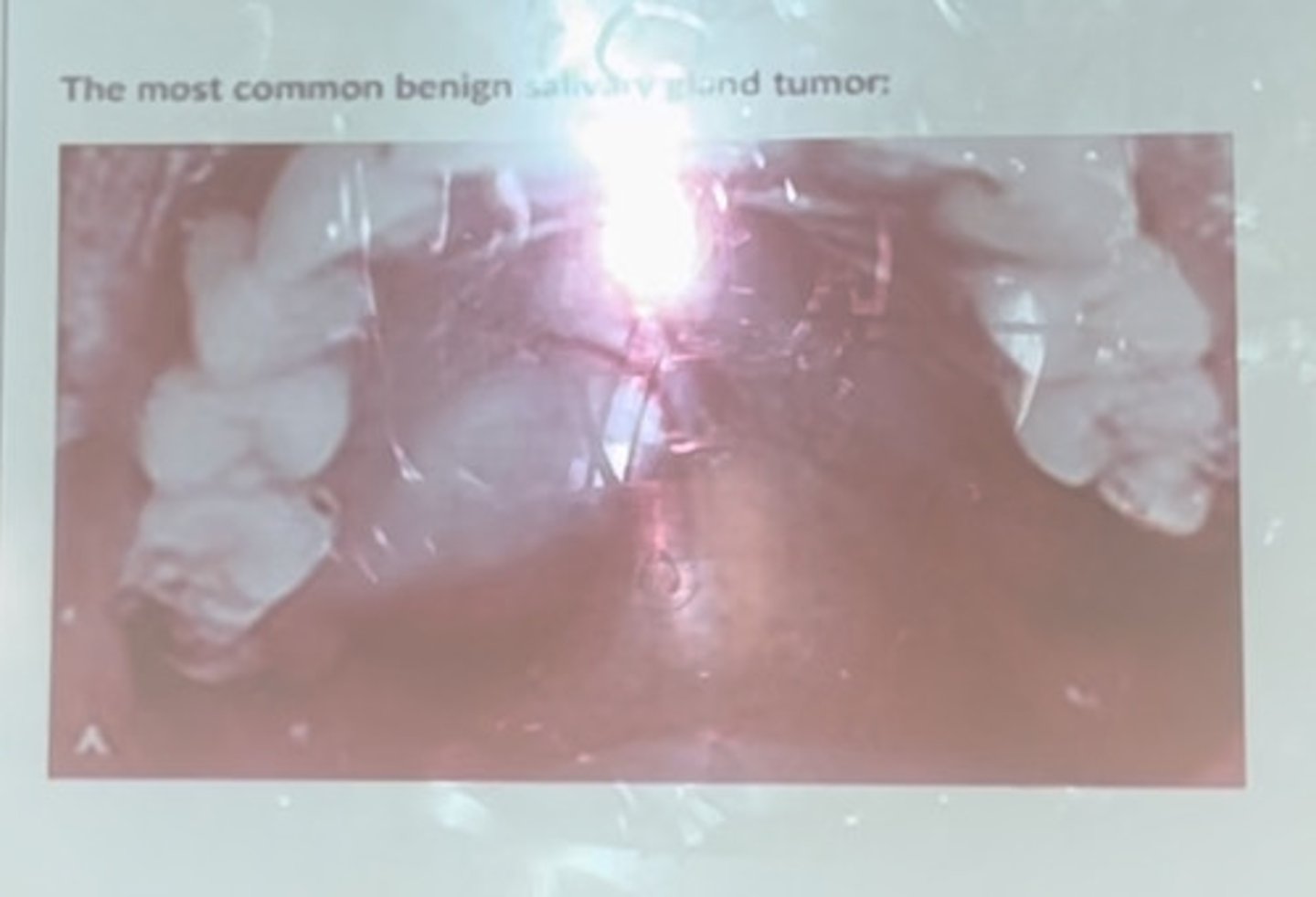
Pleomorphic adenoma
The most common benign salivary gland tumor
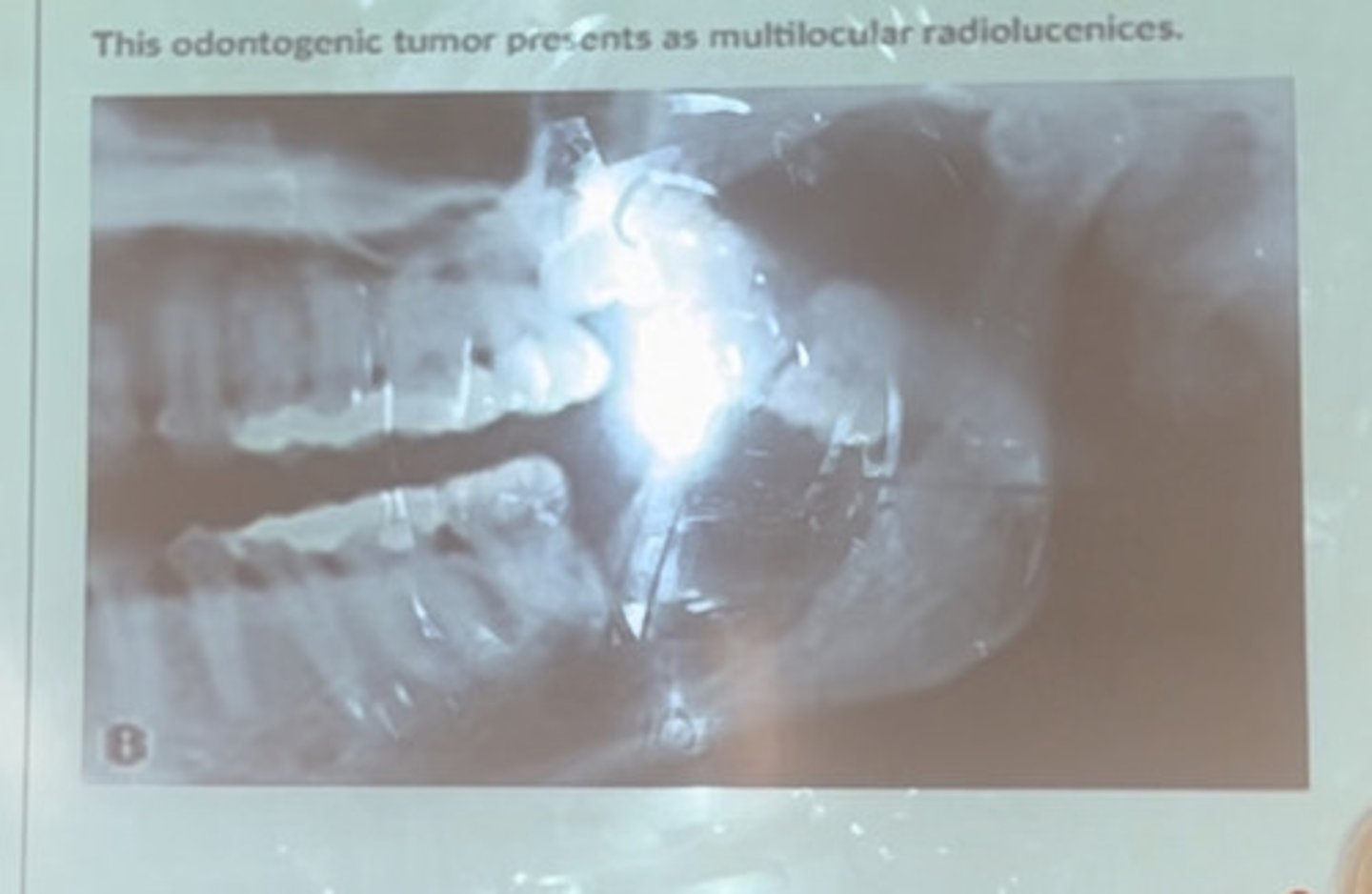
Ameloblasta
This odontogenic tumor presents as multioculated radiolucencies
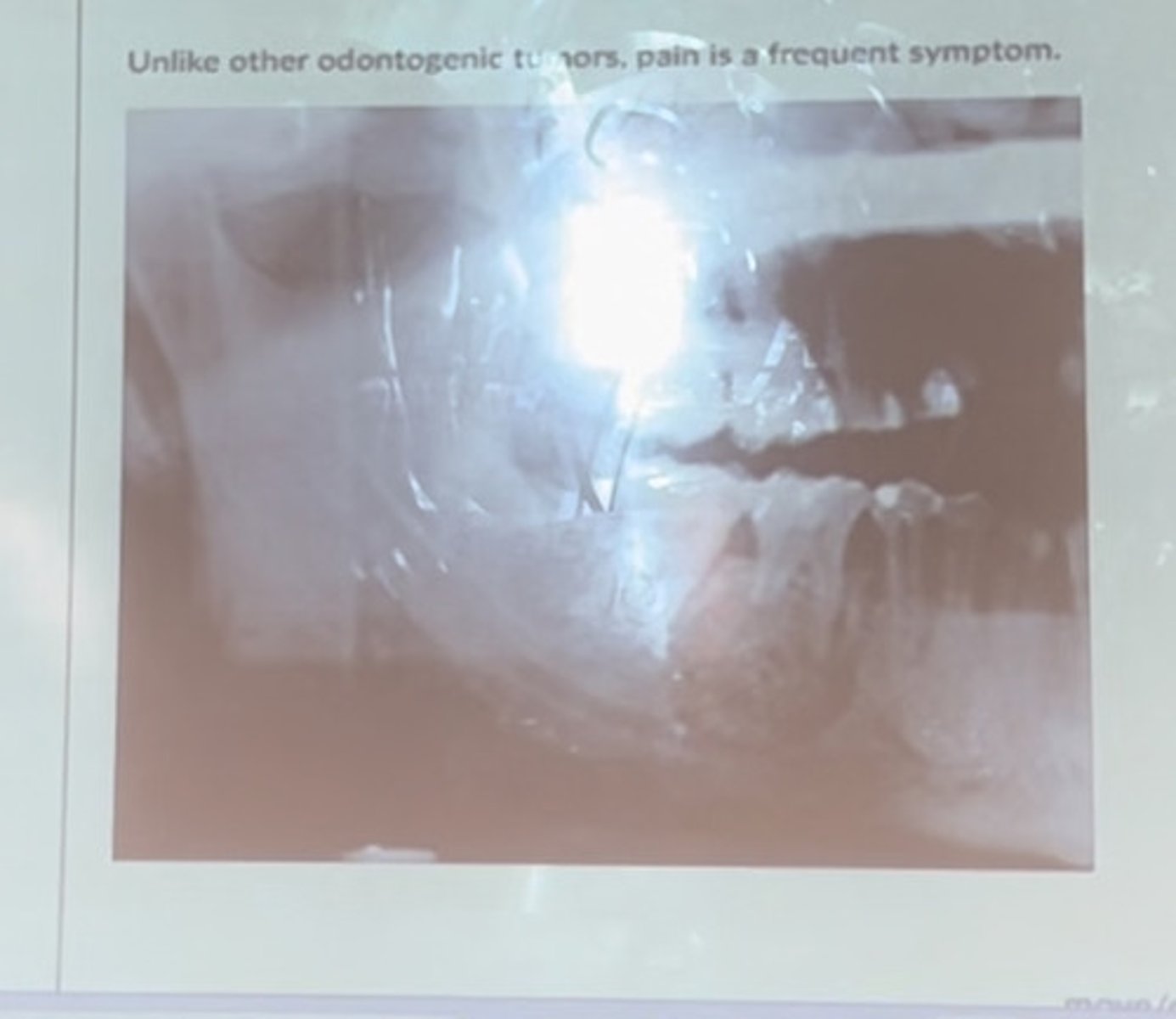
Cementoblastoma
Unlike other odontogenic tumors, pain is a frequent symptom
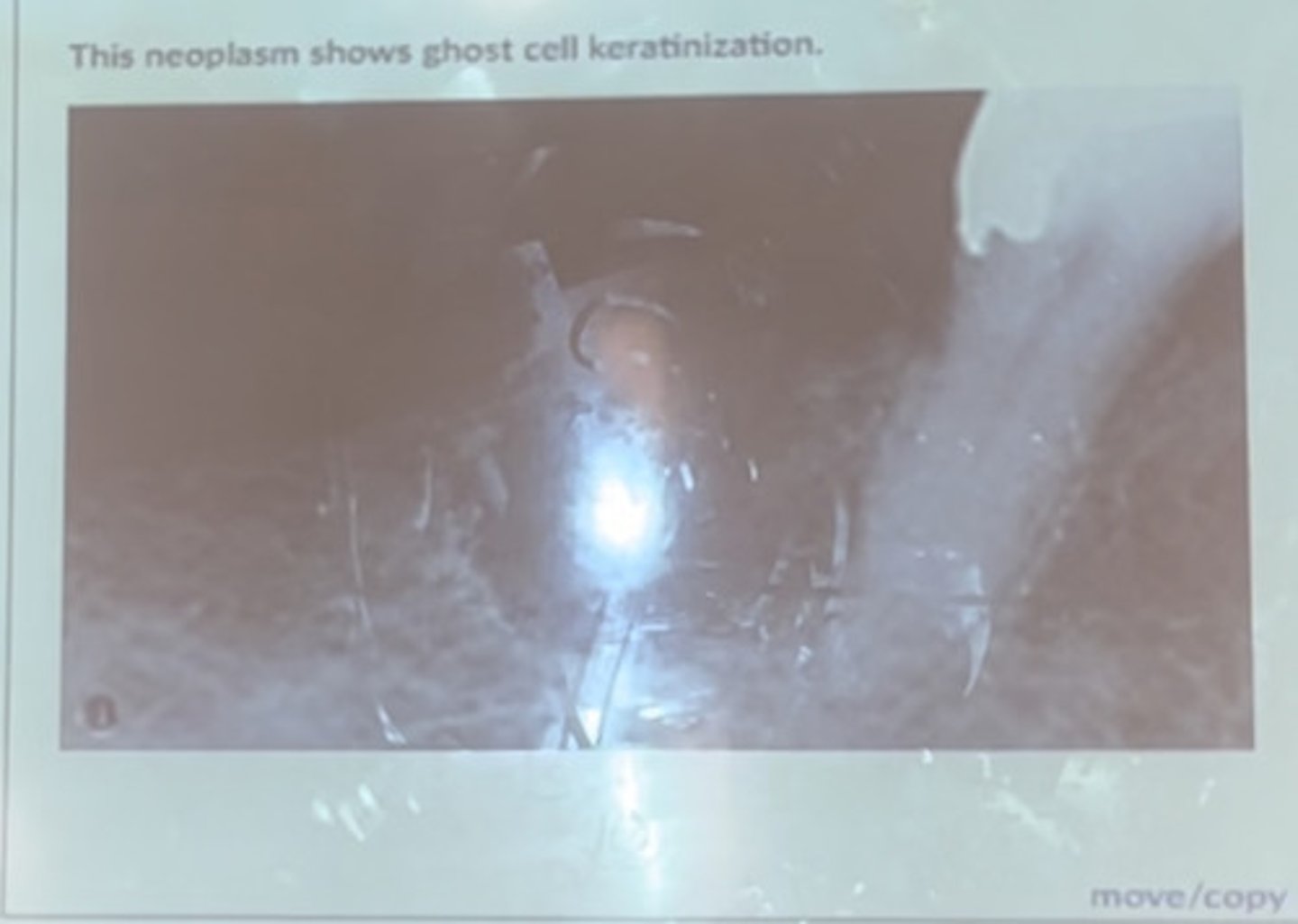
Calcifying Odontogenic Cyst
This neoplasm shows ghost cell keratinization
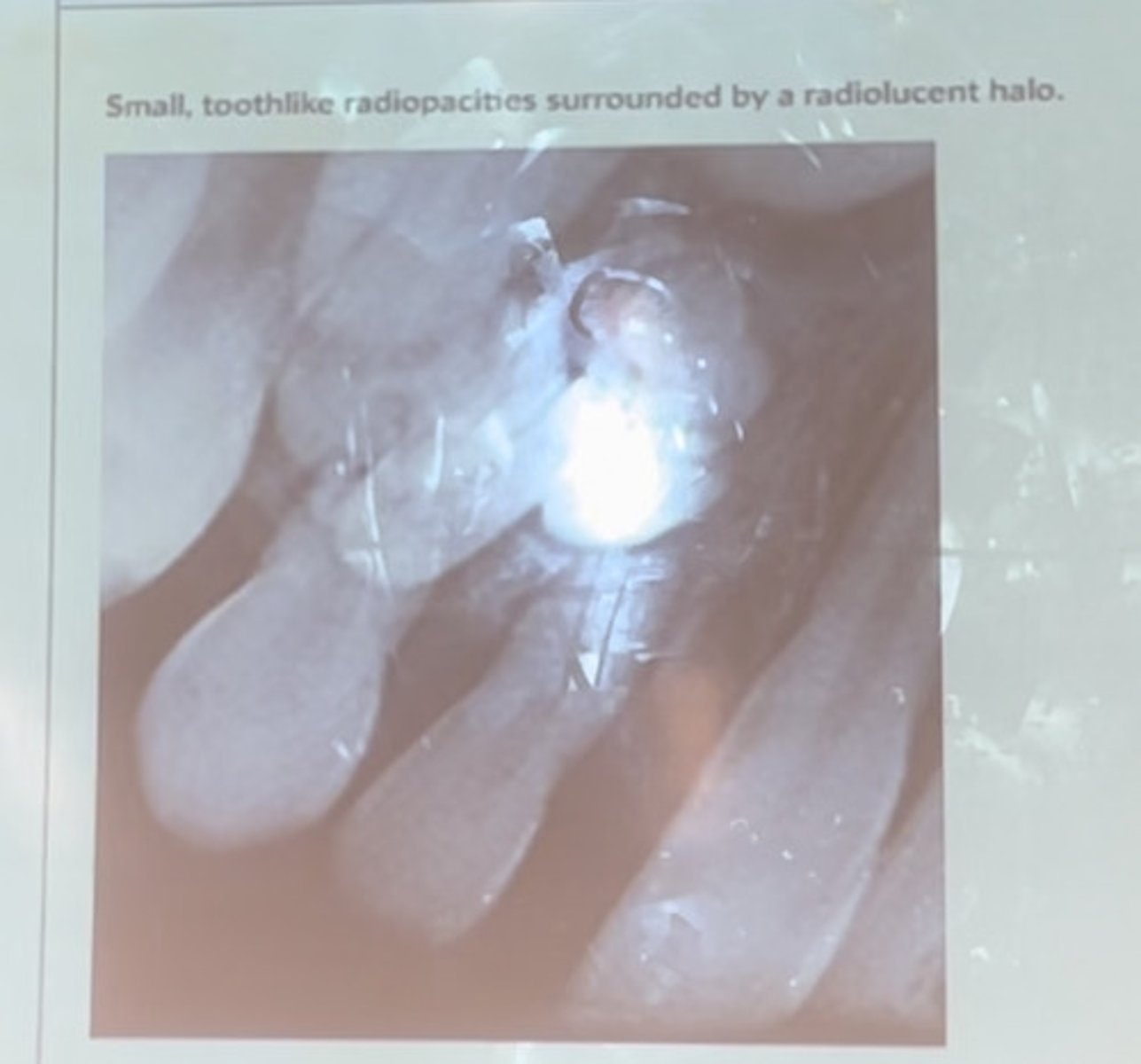
compound odontoma
Small, toothlike radiopacities surrounded by a radiolucent halo
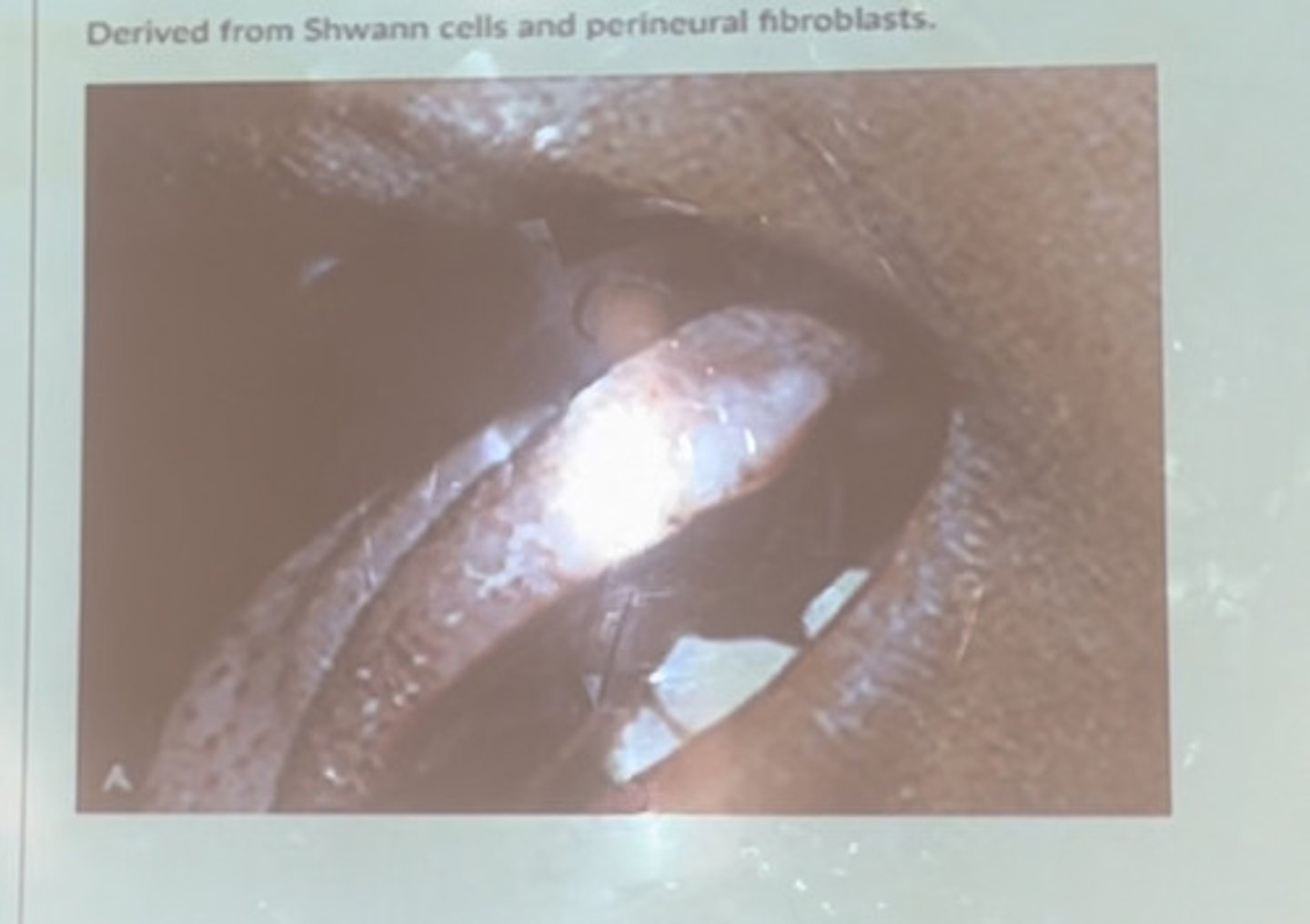
Neurofibroma
Derived from Shwann cells and perineural fibroblasts
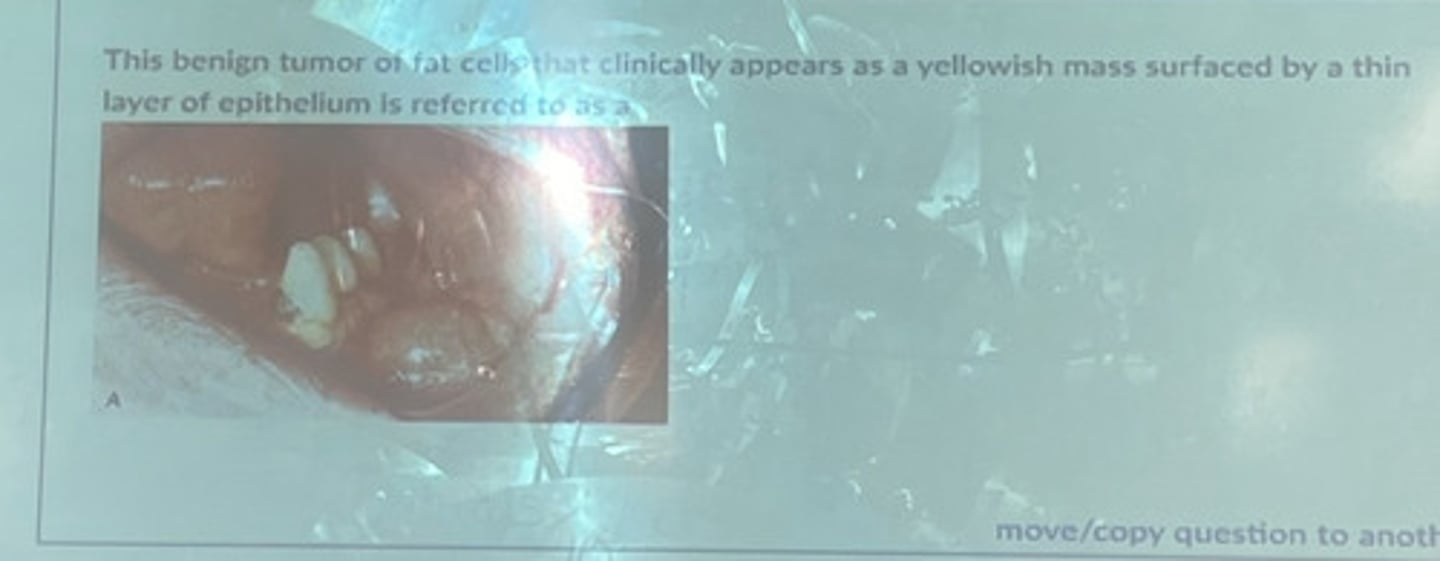
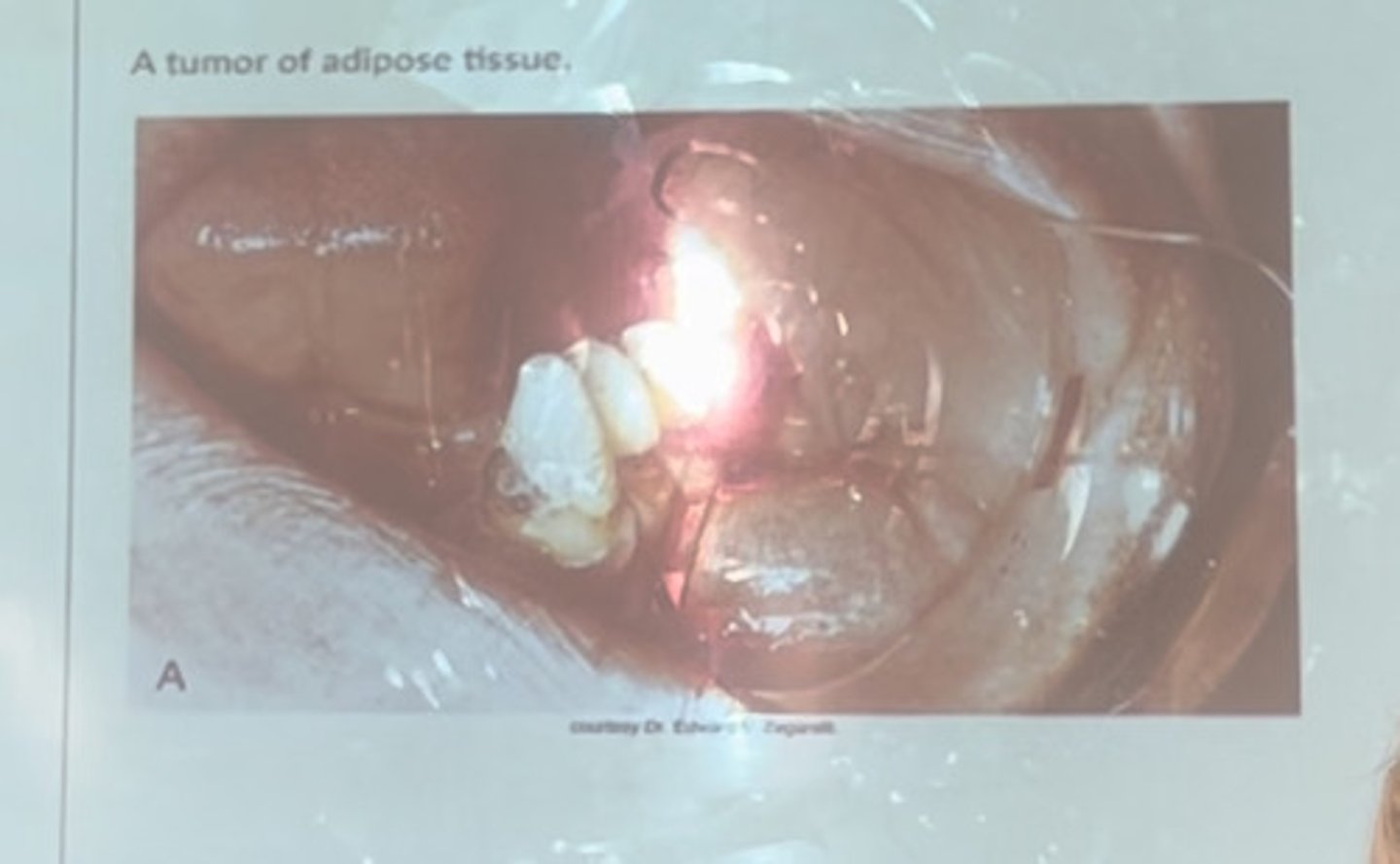
Lipoma
A tumor of adipose tissue
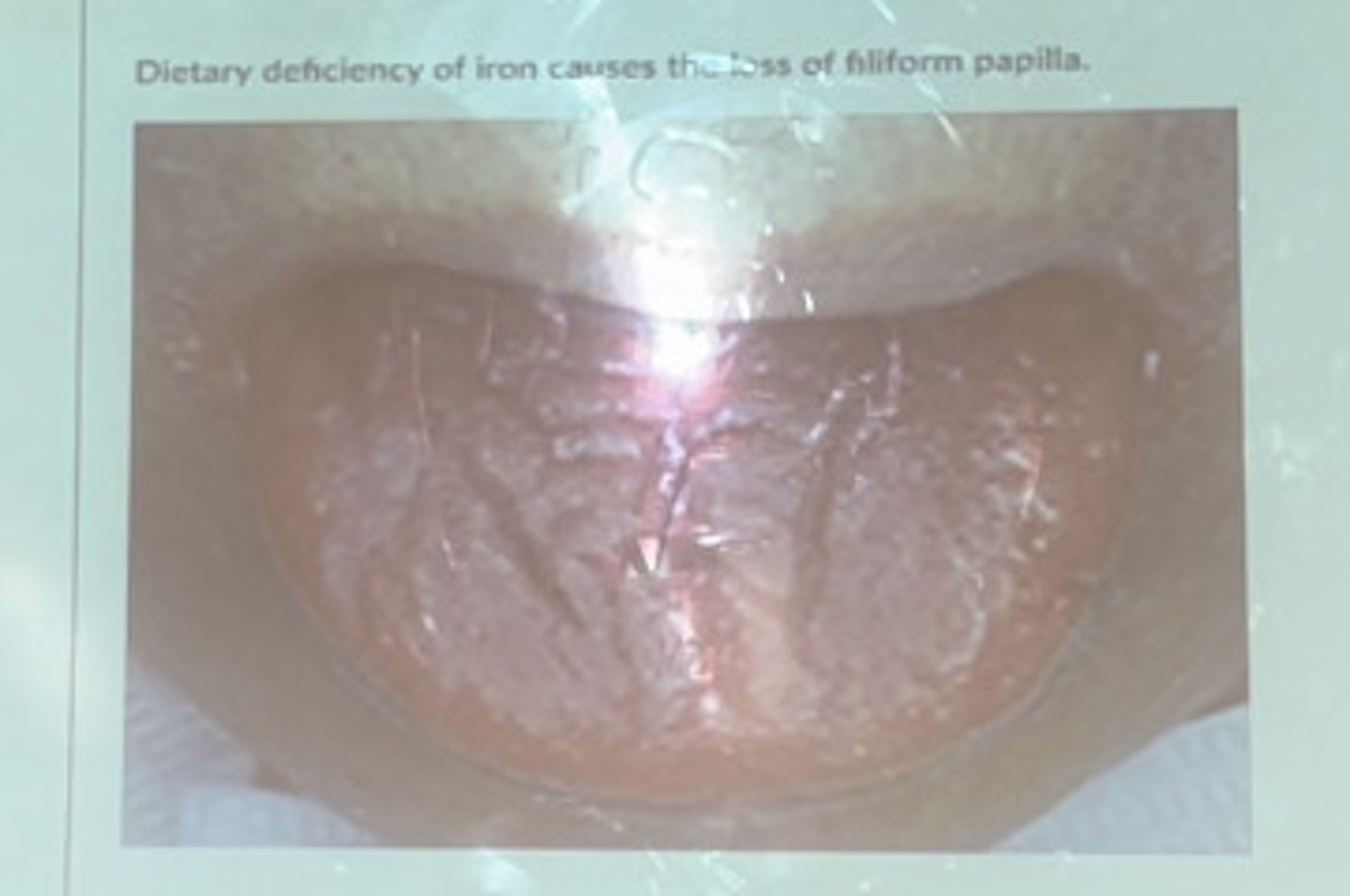
Anemia???
Dietary deficiency of iron causes loss of filliform papilla
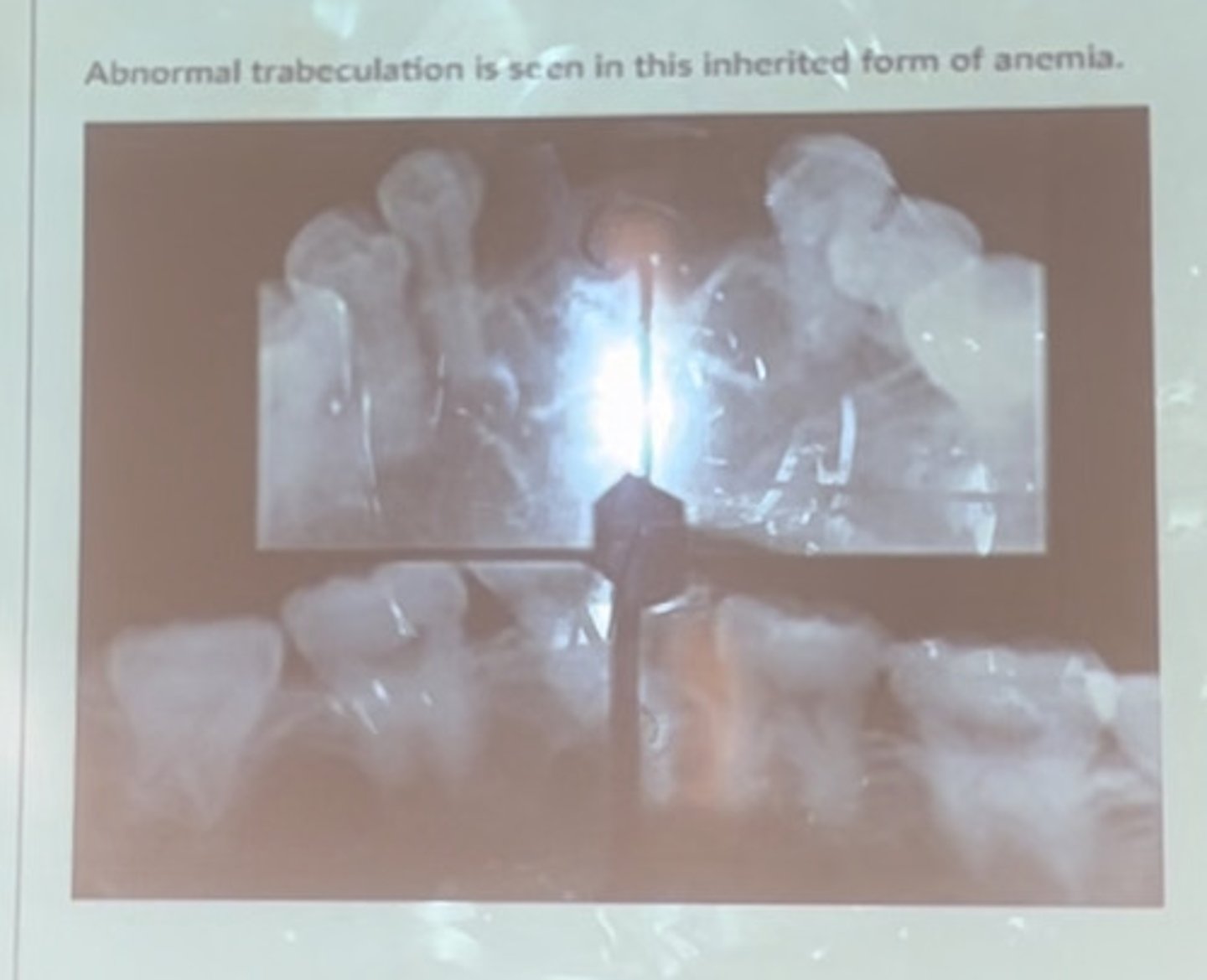
Sickle cell anemia
Abnormal trabeculation is seen in this inherited form of anemia
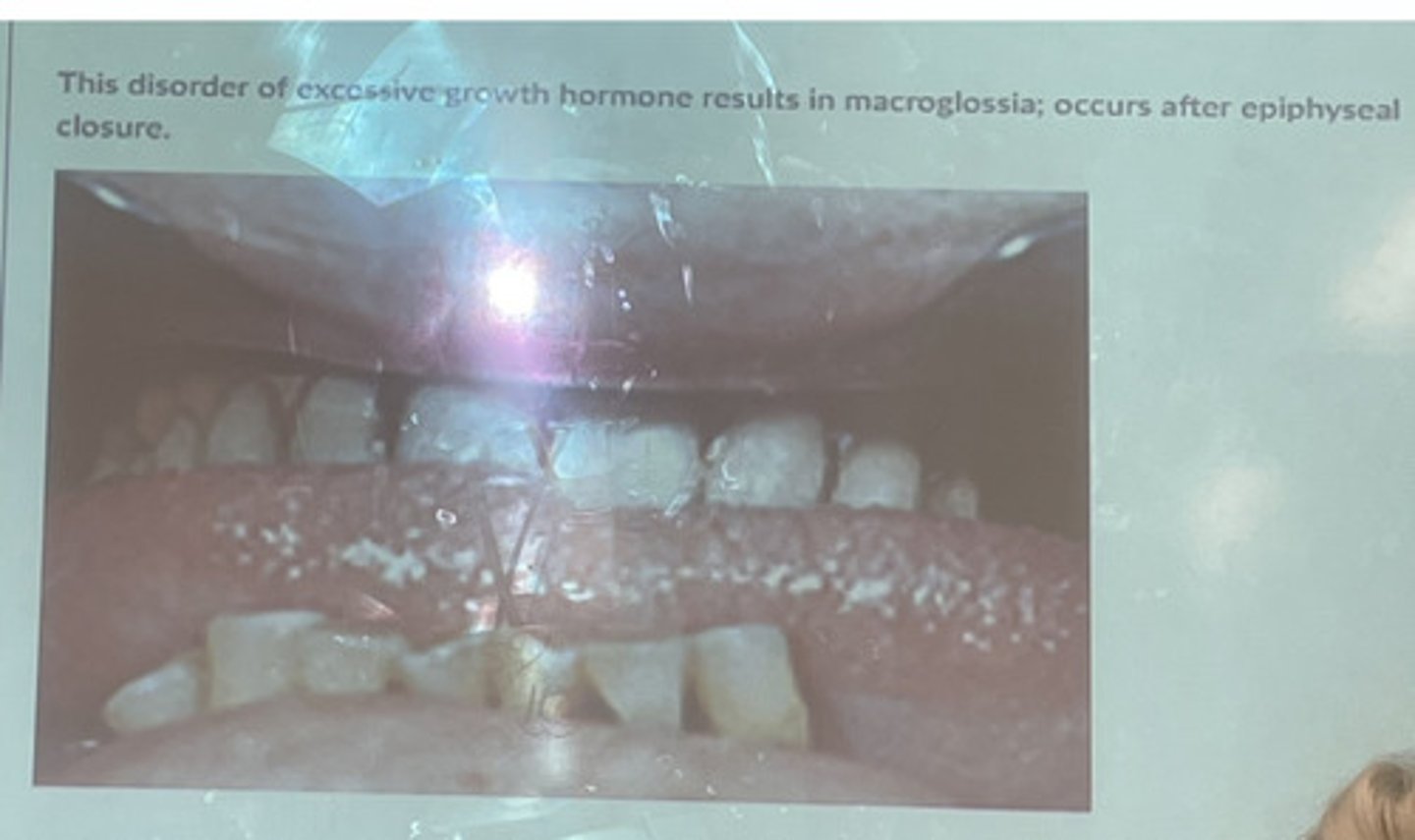
Acromegaly
This disorder of excessive growth hormone results in macroglossia; occurs after epiphyseal closure
Lipoma
This benign tumor of fat cells that clinically appears as a yellowish mass surfaced by a thin layer of epithelium is referred to as