Thyroid Disorders: Diagnosis, Treatment, and Autoimmune Thyroid Disease
 Call Kai
 Learn
Learn Practice Test
 Spaced Repetition
 Match
Match Flashcards
 Knowt Play
1/97

There's no tags or description
Looks like no tags are added yet.
Name | Mastery | Learn | Test | Matching | Spaced | Call with Kai |
|---|
No analytics yet
Send a link to your students to track their progress
98 Terms
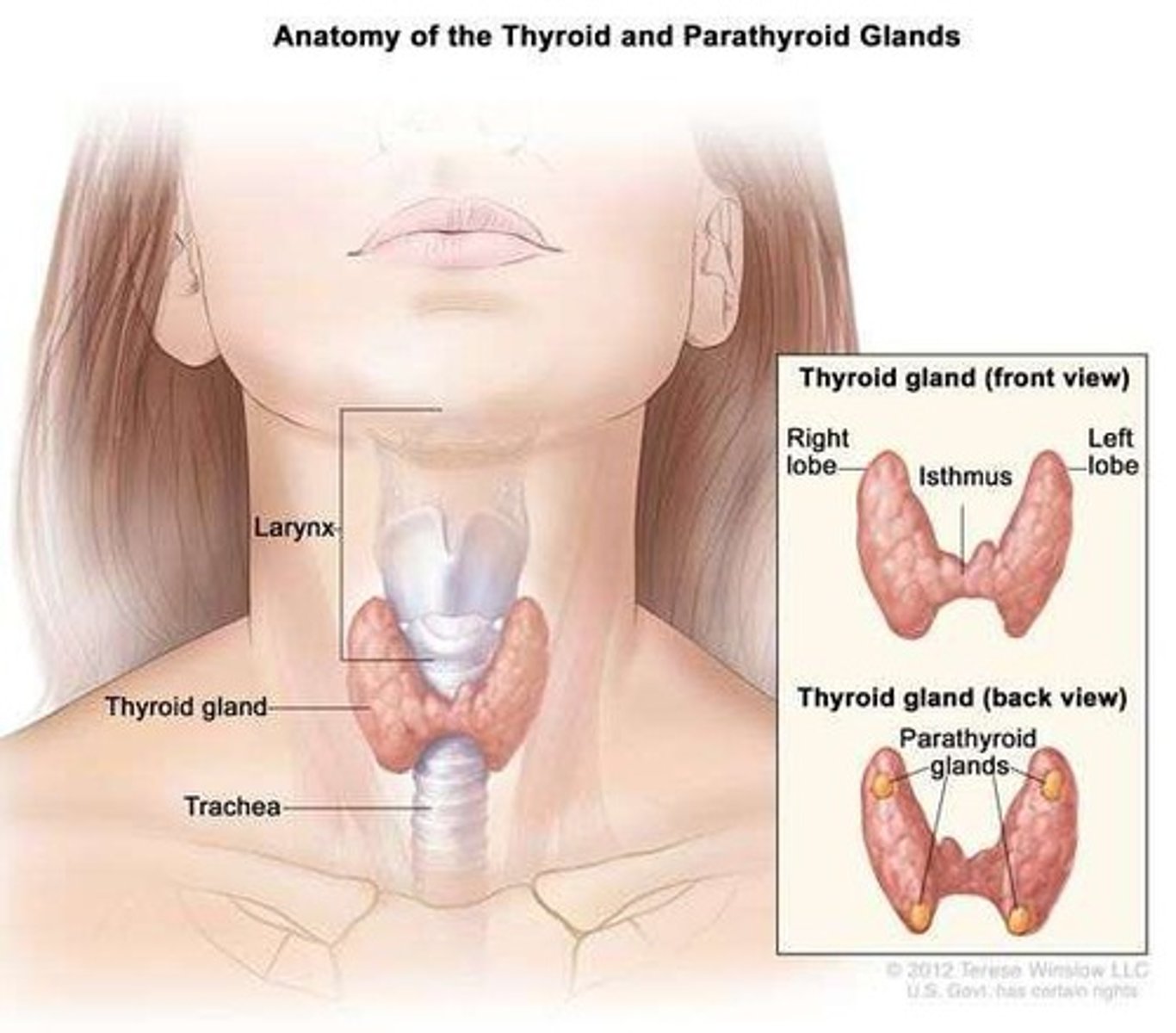
What are the primary hormones produced by the thyroid gland?
Thyroxine (T4) and Triiodothyronine (T3)
What is the role of Thyroid-Stimulating Hormone (TSH)?
TSH stimulates the release of T4 and T3 from the thyroid gland.
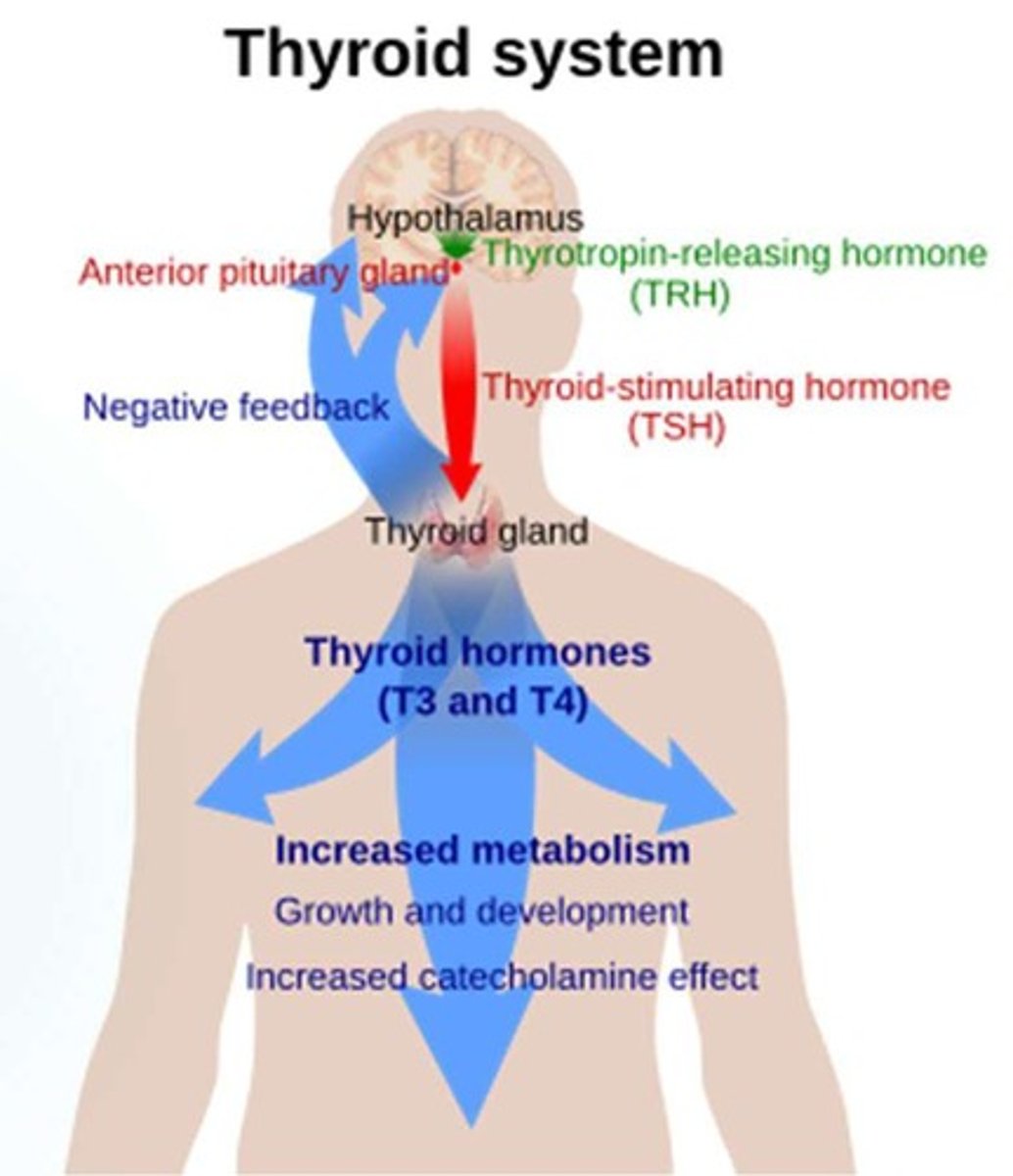
What is the physiological effect of thyroid hormones on metabolism?
They increase the basic metabolic rate and stimulate metabolic pathways for carbohydrates, proteins, and lipids.
What is a goiter?
An enlargement of the thyroid gland.
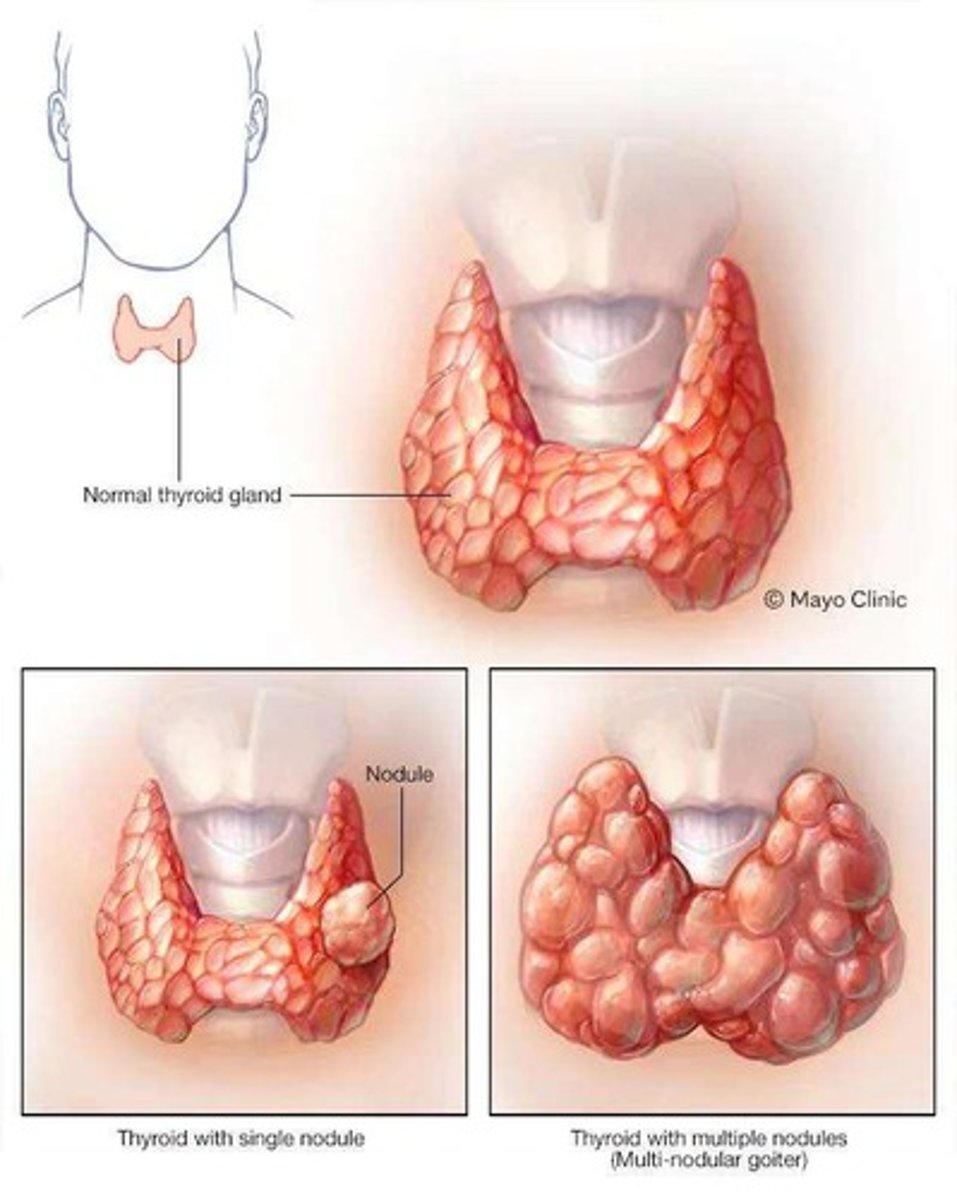
Name two conditions that can cause a goiter.
Iodine deficiency and Grave's disease.
What is myxedema coma?
A severe form of hypothyroidism characterized by extreme lethargy, hypothermia, and altered mental status.
What are common symptoms of hypothyroidism?
Fatigue, weight gain, cold intolerance, and depression.
What is the significance of thyroid nodules?
They can be benign or malignant; approximately 5% are malignant.
What imaging modality is used to assess thyroid nodules?
Thyroid ultrasound.
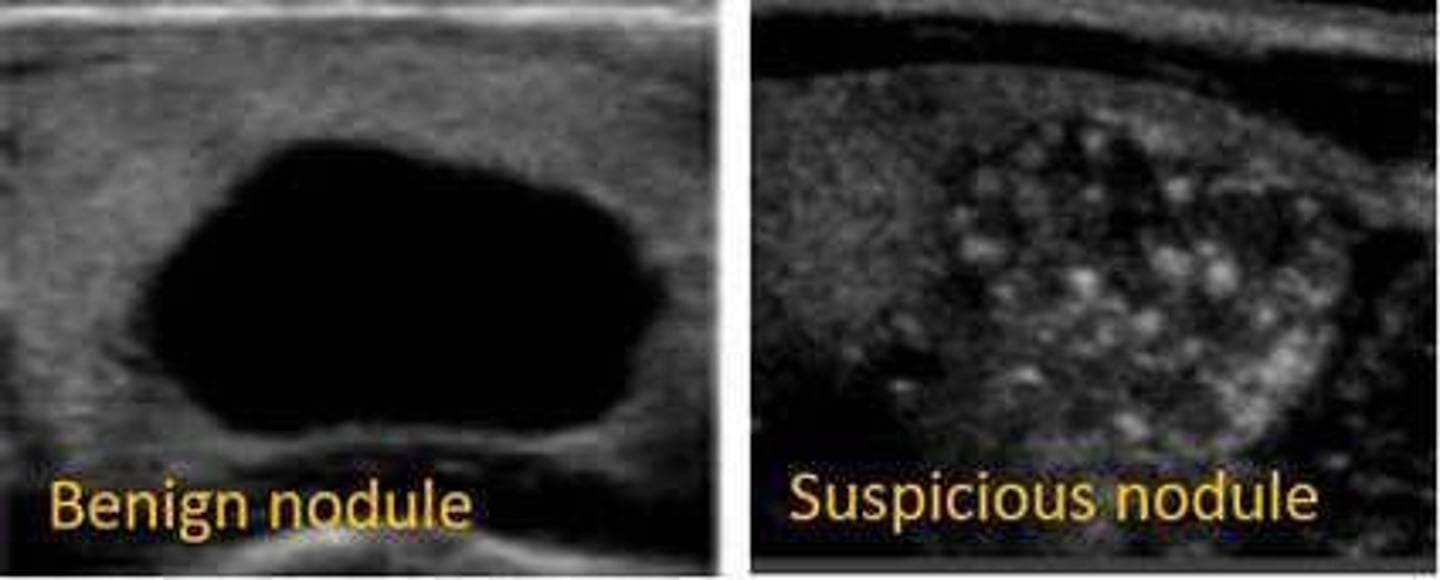
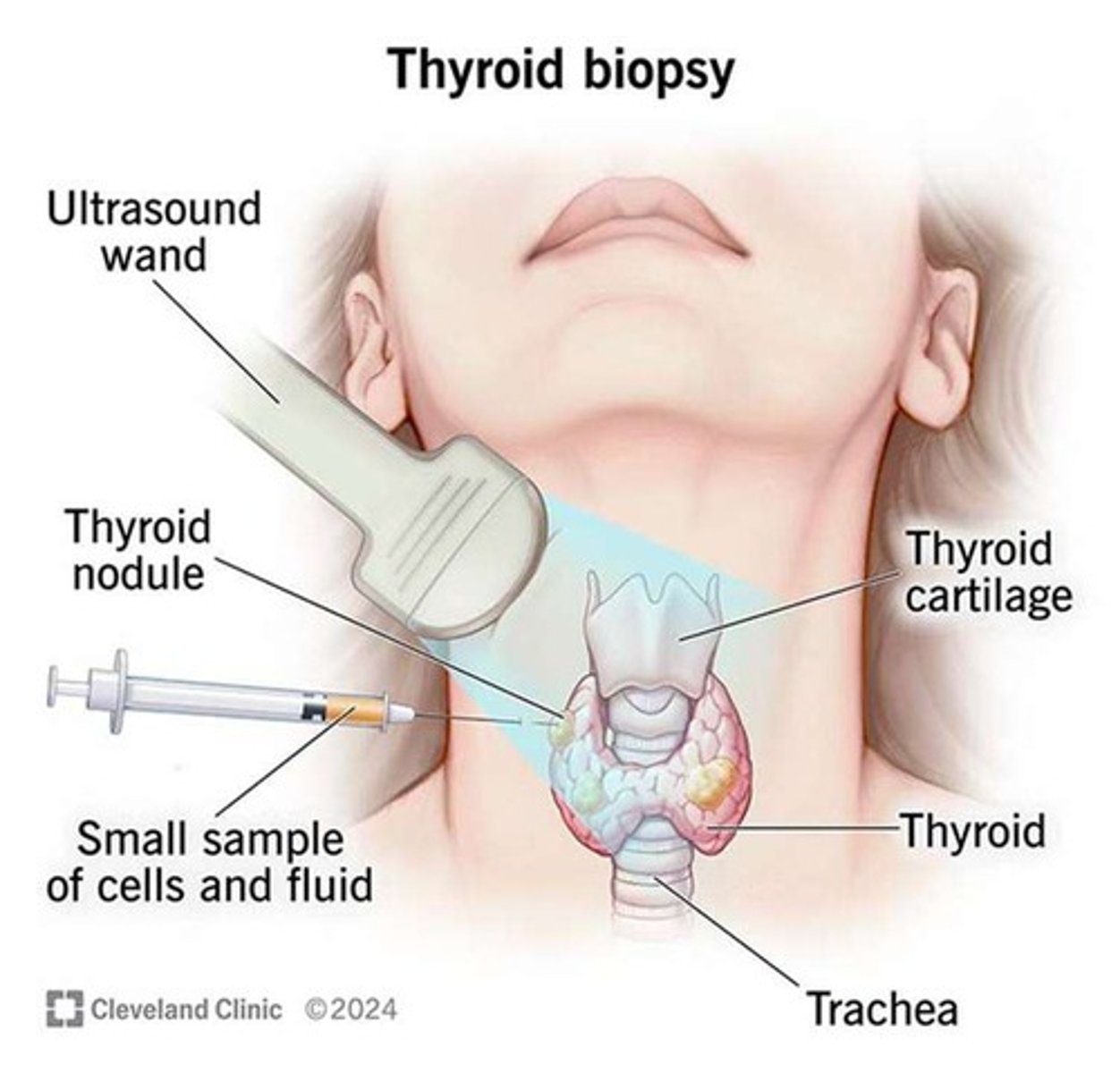
What is the role of fine needle aspiration (FNA) in thyroid disorders?
To extract cells from a nodule for microscopic evaluation.
What are the symptoms of hyperthyroidism?
Weight loss, increased appetite, heat intolerance, and anxiety.
What is thyrotoxicosis?
A clinical syndrome resulting from excess thyroid hormones.
What tests are used to assess thyroid function?
Serum TSH, Free T4, and T3 levels.
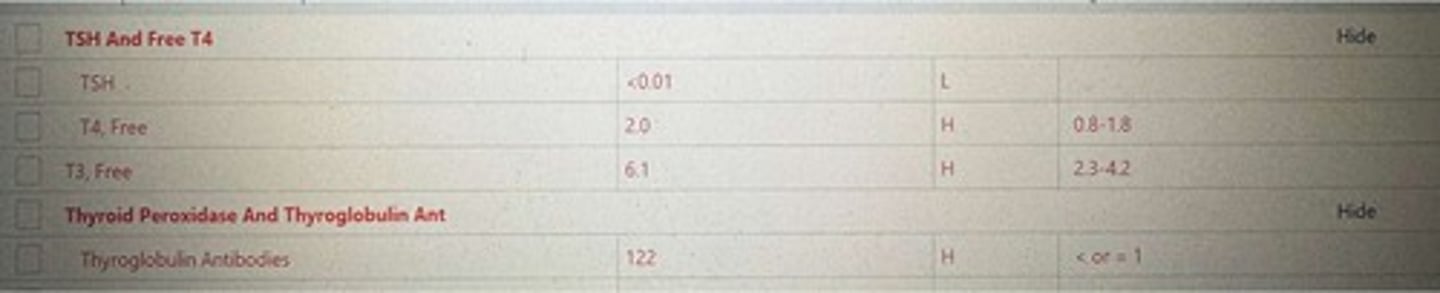
What is the best initial test for screening thyroid function?
Serum TSH.
What is the role of thyroid antibodies in thyroid disorders?
They are used to assess for autoimmune thyroiditis.
What are the treatment options for hypothyroidism?
Thyroid hormone replacement therapy, typically with levothyroxine.
What is the purpose of a nuclear iodine scan?
To evaluate thyroid function and characterize nodules as 'hot' or 'cold'.
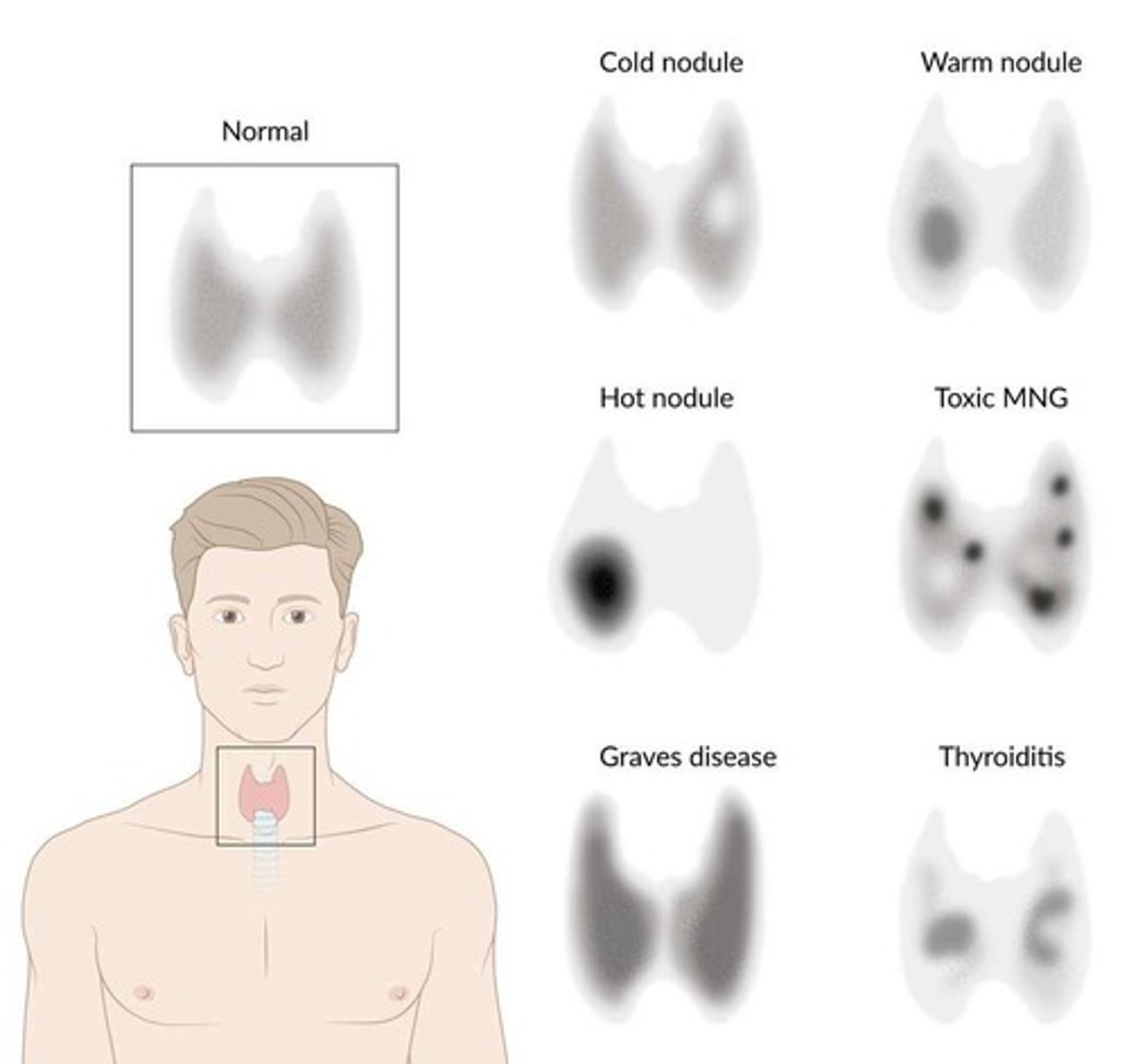
What does a 'cold' nodule indicate?
Less uptake of radiomarkers, more suggestive of thyroid malignancy.
What is the treatment for thyroid malignancy?
Surgery, radioactive iodine therapy, and monitoring.
What is the significance of T3 levels in thyroid testing?
Measured when suspecting T3 dominant hyperthyroidism or hypothyroidism.
What are the common physical exam findings in a patient with thyroid disease?
Goiter, proptosis, skin changes, and tremors.
What is the role of monitoring in thyroid hormone replacement therapy?
To ensure appropriate TSH levels and adjust medication as needed.
What are the major types of thyroid malignancy?
Papillary, follicular, medullary, and anaplastic thyroid cancer.
What is the typical prevalence of thyroid nodules in the population?
19-67% of patients; palpable nodules occur in 4-7%.
What are the symptoms of thyroid storm?
Severe hyperthyroidism symptoms including fever, tachycardia, and altered mental status.
What factors can lead to the release of thyroid hormones independent of TSH?
Physical stress, pregnancy, and certain medications.
What is the role of calcitonin?
It is important in calcium homeostasis and is produced by C-cells in the thyroid.
What percentage of thyroid cancer cases are accounted for by women?
74%
What is the leading cause of thyroid cancer?
Radiation exposure
What are common symptoms of thyroid cancer?
Progressive neck swelling/mass and voice changes/hoarseness
What is required to confirm a diagnosis of thyroid cancer?
Fine Needle Aspiration (FNA) biopsy
What are the target sites for metastasis in thyroid cancer?
Bone and lung
What type of thyroid cancer accounts for over 85% of cases?
Papillary thyroid cancer
How aggressive is follicular thyroid cancer compared to papillary?
Generally more aggressive
What is a characteristic of Hurthle cell carcinoma?
Higher risk of metastasis and recurrence
What percentage of thyroid cancers does medullary thyroid cancer represent?
2%
What is the most aggressive form of thyroid cancer?
Anaplastic thyroid cancer
What is the primary treatment for differentiated thyroid cancers larger than 1 cm?
Total thyroidectomy
What adjunct therapy is used for papillary or follicular thyroid cancer?
Radioiodine I-131
What is the purpose of thyroid hormone suppression in thyroid cancer treatment?
To suppress TSH below normal range for potential benefits in papillary carcinoma
What are common signs of hyperthyroidism?
Weight loss despite good appetite, heat intolerance, tachycardia, and goiter
What is a medical emergency associated with hyperthyroidism?
Thyroid storm
What are the causes of thyroid storm?
Longstanding untreated hyperthyroidism, surgery, trauma, infection, and acute iodine load
What is the first-line treatment for thyroid storm?
Beta-blockers (e.g., propranolol)
What autoimmune condition is most commonly associated with hyperthyroidism?
Grave's disease
What are the common treatment options for Grave's disease?
Thionamides (Methimazole, PTU), propranolol, and radioactive iodine
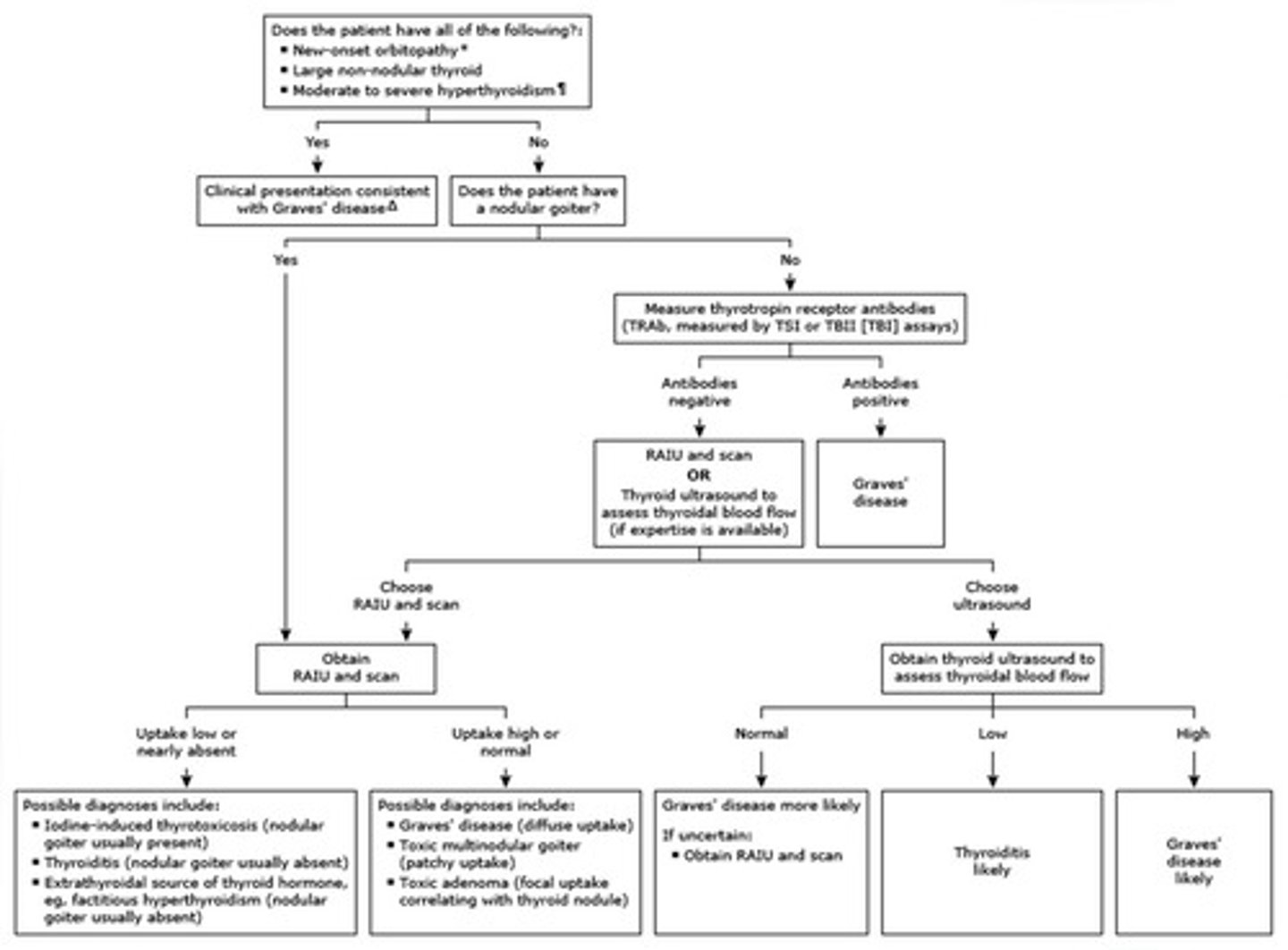
What is the role of radioactive iodine (RAI) in hyperthyroidism treatment?
Destroys overactive thyroid tissue
What is the recommended monitoring frequency for thyroid function after radioactive iodine treatment?
Approximately 8 weeks after treatment
What is a potential side effect of thionamides?
Agranulocytosis
What is the significance of monitoring TSH, FT4, and T3 in hyperthyroidism treatment?
To adjust medication dosage until a euthyroid state is achieved
What are some symptoms of hyperthyroidism?
Agitation, lid retraction, exophthalmos, and muscle weakness
What is the typical presentation of anaplastic thyroid cancer?
Quickly enlarging goiter/mass in older patients
What is the relationship between Hashimoto's disease and lymphoma?
Lymphoma can be associated with Hashimoto's disease
What is the recommended approach for patients with hyperthyroidism who are planning pregnancy?
Consider surgical treatment if intolerant to medical management or multiple recurrences
What is thyroiditis?
Inflammation of the thyroid gland that can involve hypo/hyperthyroid states.
What are the types of thyroiditis?
Painful thyroiditis, subacute granulomatous thyroiditis, infectious thyroiditis, radiation thyroiditis, traumatic thyroiditis, painless thyroiditis, postpartum thyroiditis, drug-induced thyroiditis, and fibrous (Reidel's) thyroiditis.
What characterizes DeQuervain's thyroiditis?
It is a painful, self-limiting inflammatory disease of the thyroid gland, often following a viral infection.
What are the symptoms of infectious thyroiditis?
Painful unilateral neck mass, fluctuant, may be hemorrhagic, and usually normal thyroid functions.
What is classic painless thyroiditis?
A transient condition with phases of hyperthyroidism, hypothyroidism, and normalization, often drug-induced.
What is postpartum thyroiditis?
Occurs within 1 year of delivery, affecting 8-10% of pregnancies, with a high rate of recurrence.
What is Reidel's thyroiditis?
A chronic inflammation that leads to scarring and fibrous thyroid tissue, treated with steroids.
What are the laboratory findings in hypothyroidism?
Elevated TSH with low FT4.
What are primary causes of hypothyroidism?
Iodine deficiency, autoimmune destruction (Hashimoto's thyroiditis), congenital issues, iatrogenic causes, and medication-induced (e.g., amiodarone, lithium).
What are secondary/tertiary causes of hypothyroidism?
Disorders affecting the hypothalamus-pituitary communication system, such as hypopituitarism or trauma.
What are common signs and symptoms of hypothyroidism?
Bradycardia, fatigue, weight gain, goiter, cold intolerance, dry skin, hair loss, and muscle pain.
What lab abnormalities may be associated with hypothyroidism?
Hyponatremia, normochromic/normocytic anemia, hyperlipidemia, and elevated liver function tests.
What is congenital hypothyroidism?
Formerly known as cretinism, it can lead to severely stunted physical and mental development if untreated.
How does pregnancy affect thyroid disease?
hCG stimulates TRH, increasing TSH and T4/T3; treatment is critical as thyroid hormone crosses the placenta.
What is sick euthyroid syndrome?
Low FT4 and/or low FT3 with normal TSH, seen in severe illness or caloric deprivation.
What is subclinical hyperthyroidism?
Low TSH with normal FT4/FT3, requiring close monitoring.
What is subclinical hypothyroidism?
Elevated TSH with normal FT4/FT3, treated only if symptoms develop or if TSH > 10.0.
When should thyroid labs be ordered?
For symptomatic patients, during pregnancy, with personal/family history of thyroid disorder, or use of certain medications.
What is the role of ultrasound in thyroid evaluation?
Used to identify thyroid nodules, not routine for abnormal thyroid labs unless there are anatomical abnormalities.
What tests would you order for a patient with fatigue and weight gain?
TSH and FT4 levels to assess for hypothyroidism.
What is the treatment for hypothyroidism?
Thyroid hormone replacement with levothyroxine, monitored by TSH and FT4 levels.
What is the goal TSH level for optimal long-term outcomes in hypothyroidism?
Keep TSH < 2.0.
What are potential complications of excess thyroid hormone replacement?
Weight gain, osteoporosis, and hyperlipidemia.
What should be done in follow-up after initiating hypothyroidism treatment?
Repeat TSH and Free T4 levels 6-8 weeks after treatment initiation or dose change.
What is the most appropriate test to evaluate a suspected thyroid nodule?
Thyroid ultrasound followed by a biopsy if suspicious.
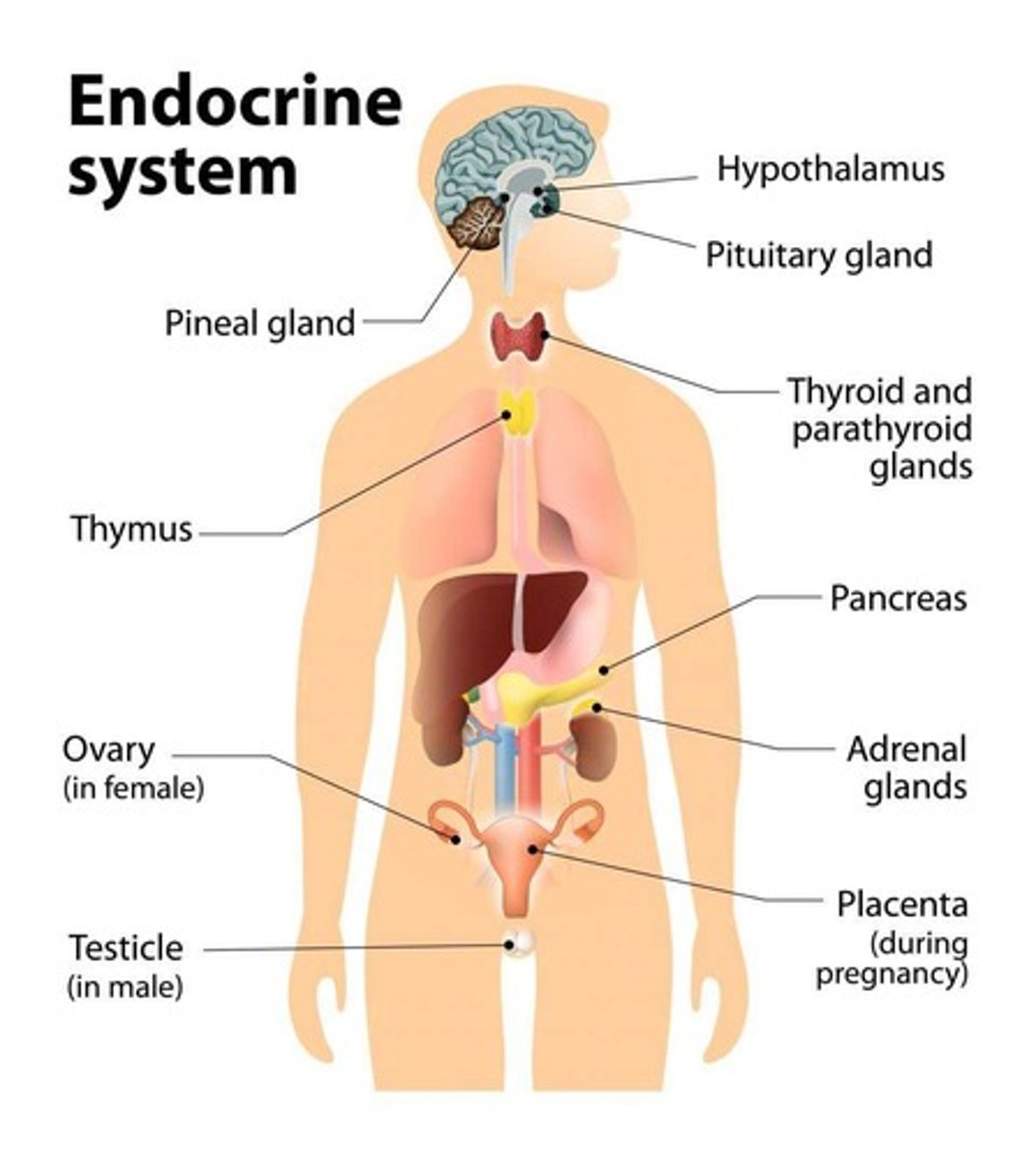
What is the primary function of the endocrine system?
To control and coordinate metabolism, energy, reproduction, growth and development, and response to injury/stress using hormones.
Which part of the brain links the endocrine and nervous systems?
Hypothalamus
Name a hormone released by the hypothalamus.
Corticotropin-releasing hormone (CRH)
What is the role of the pituitary gland?
It receives signals from the hypothalamus and secretes hormones.
What hormones are secreted by the posterior lobe of the pituitary gland?
Vasopressin and Oxytocin
What hormones does the anterior lobe of the pituitary gland produce?
ACTH, GH, Prolactin, TSH, FSH, LH
What is the function of the thyroid gland?
It is critical for growth and development and regulates metabolism.
What hormones are produced by the thyroid gland?
Thyroxine (T4), Triiodothyronine (T3), Calcitonin
What hormone does the parathyroid gland produce?
Parathyroid hormone (PTH)
What is the function of the adrenal glands?
They produce hormones in response to stress and regulate blood pressure, glucose metabolism, and salt/water balance.
Name two hormones produced by the adrenal glands.
Cortisol and Aldosterone
What role does the pancreas play in the endocrine system?
It controls carbohydrate metabolism and regulates blood glucose levels.
What hormones are produced by the pancreas?
Glucagon and Insulin
What are gonads, and what do they produce?
Gonads are testes in males and ovaries in females; they produce steroids that affect growth and development.
What are gonadal steroids?
Androgens, testosterone, estrogens, and progestins
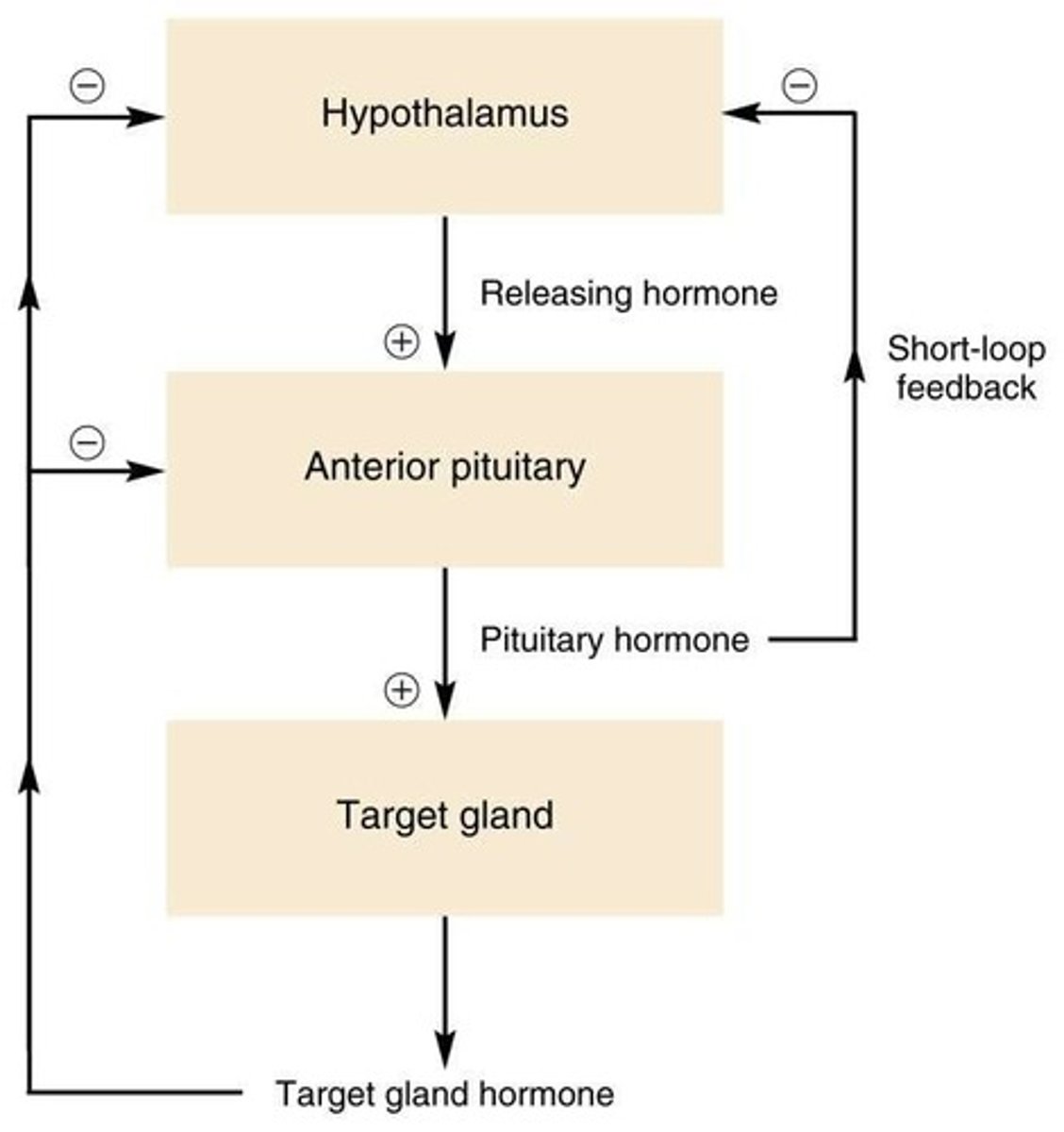
What is the negative feedback system in the endocrine context?
A regulatory mechanism that maintains hormone levels within a specific range.
What is hypothyroidism?
A condition where the thyroid gland does not produce enough thyroid hormones.
What is hyperthyroidism?
A condition where the thyroid gland produces too much thyroid hormone.
What are some disorders associated with the endocrine system?
Grave's disease, Hashimoto's, Hyperparathyroidism, Hypoparathyroidism, Diabetes, Cushing's syndrome, Addison's disease, Acromegaly, Gigantism, Hyperaldosteronism.