2.2 - Firearm and Tool Mark Examination
 Call Kai
 Learn
Learn Practice Test
 Spaced Repetition
 Match
Match Flashcards
 Knowt Play
1/28

There's no tags or description
Looks like no tags are added yet.
Name | Mastery | Learn | Test | Matching | Spaced | Call with Kai | Chat |
|---|
No analytics yet
Send a link to your students to track their progress
29 Terms
Automatic
Semiautomatic
Type of Modern Firearms:
Revolver
Semiautomatic Pistols
Handguns:
Revolvers
The cartridges are held in firing chambers in a rotating cylinder.
Semiautomatic Pistols
Also called as autoloaders or self-loaders.
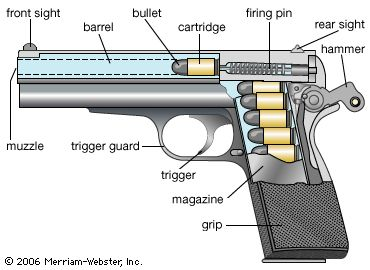
Gun Parts:
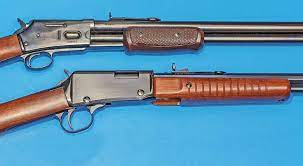
Lever and Slide Action Magazine Repeaters
Rifles:
Bolt-Action Magazine Repeaters
Rifles:
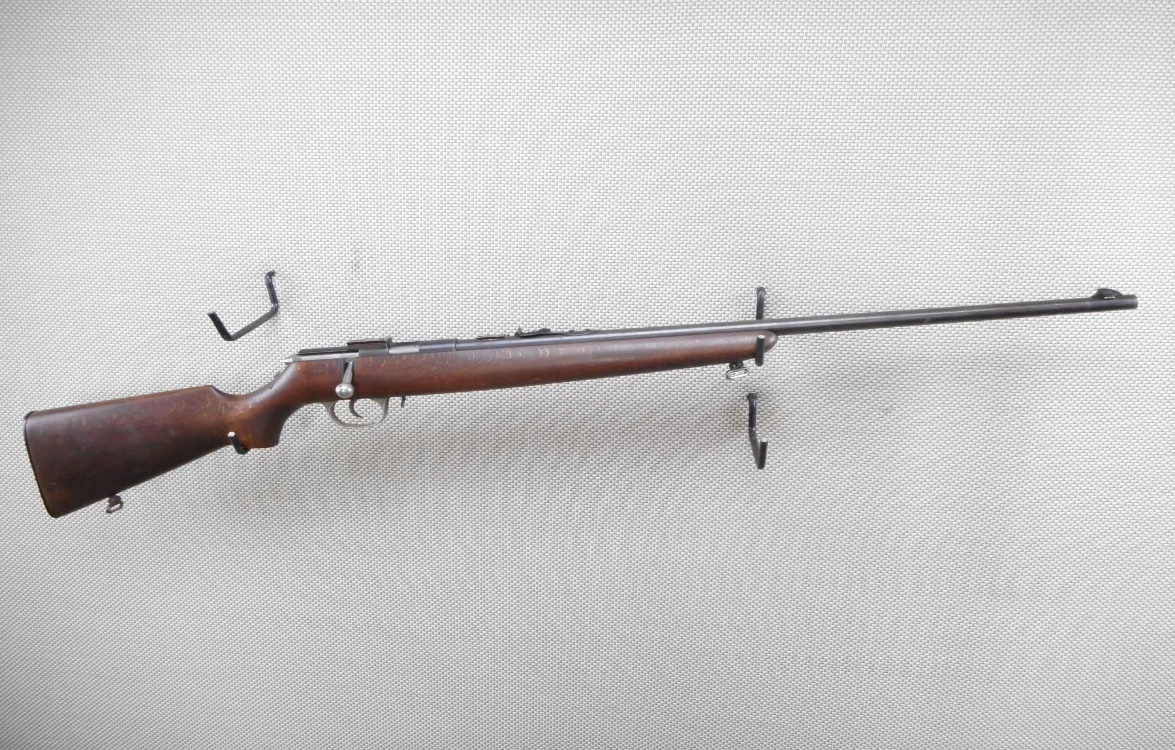
Single Shot Rifles
Loaded one at a time;
there’s no magazine.
Semiautomatic Rifles
Squeezing the trigger fires one round
Slide and Lever Action
Double – Barreled
Bolt-Action
Single Shot
Semiautomatic Shotguns
Shotguns:
Slide and Lever Action
Loaded and cocked by pumping a slide or lowering and raising a lever
The shot shells are loaded into tubular magazines under the barrel
Double – Barreled shotguns
Available in two configurations: over/under shotguns, in which the two barrels are aligned one above the other, and side-by-side shotguns.
Break open to eject fired shotshells and each barrel is loaded separately
Bolt action shotguns
use the turn-bolt action
Single shot shotguns
may use rolling block or break-open actions
Automatic Weapons
Weapons that will continue to fire as long as the trigger is depressed and ammunition is available.
Machine Guns
Automatic rifles
Submachine Guns
Assault Rifles
Automatic Weapons: (4)
Machine Guns
These are military weapons that fire from a mount or have a bipod attached to the barrel to support the weapon when it is fired.
Also mounted on vehicles or aircraft
Automatic rifles
Light machine guns
that feed ammunition from detachable box or drum magazine.
Submachine Guns
fire pistols ammunition
fed from detachable drum or box magazines.
Assault Rifles
fire a reduce charge rifle cartridge.
First developed by Germans during WWII
Firearm Ammunition
Bullets may be lead, lead-alloy, semi-jacketed. Or full-metal jacketed.
Lead bullets
Soft and readily deformable.
Because lead is a ductile and malleable metal, lead bullets are easily marked by the rifling
Lead-alloys bullets
Contain a small percentage of an alloying element,
such as antimony in commercially manufactured bullets or tin in home-made bullets.
Harder than lead bullets and are consequently used in weapons having higher muzzle velocity
Semi-jacketed bullets
Commonly consists of a lead core covered with a thin jacket of brass.
The brass typically covers the sides of a bullet, leaving the lead core exposed at the nose.
Full metal jacket bullets
Consist of a lead core covered with a brass jacket.
Compression tool marks
Sliding tool marks
Cutting tool marks
Types of Tool Marks: (3)
Compression tool marks
Results when a tool is pressed into a softer material.
Such marks often show the outline of the working surface of the tool
Sliding tool marks
created when a tool slides along a surface;
such marks usually consist of pattern or parallel striations.
Class characteristics are more difficult to determine from sliding tool marks.
Cutting tool marks
combination of compression and sliding tool marks
cutting tool indents the material being cut
and, as it does so, the working surfaces of the tool slide over the cut surface.