Hormonal Regulation and Endocrine System Coordination Study Guide
 View linked note
 Call Kai
 Learn
Learn Practice Test
 Spaced Repetition
 Match
Match Flashcards
 Knowt Play
1/17

There's no tags or description
Looks like no tags are added yet.
Name | Mastery | Learn | Test | Matching | Spaced | Call with Kai |
|---|
No analytics yet
Send a link to your students to track their progress
18 Terms
Hypothalamus
Location-At the base of the brain. Functions- Has roles in both nervous and endocrine systems. Regulates many basic functions of the body such as, body temperature, water balance and heart rate. Many functions of the hypothalamus are carried out through the pituitary. The hypothalamus releases regulating factors/hormones. Releasing factors will stimulate the release of hormones and Inhibiting factors will slow down the release of hormones
Pituitary gland (Hypophsis)
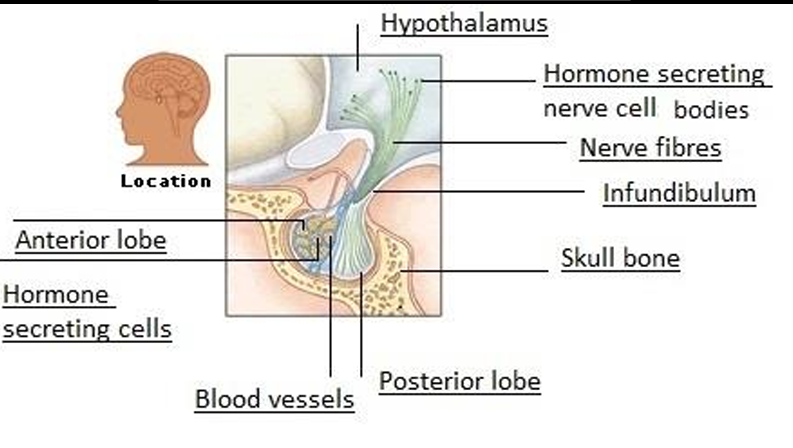
-located in a small depression in the skull bone, just beneath the hypothalamus
• Connected to the hypothalamus by a thin stalk called the infundibulum.
• About 13mm in diameter.
• Consists of an anterior lobeand a posterior lobe, each of which function separately.
Anterior lobe (in front)-connected to the hypothalamus by a complex network of blood vessels.
Posterior lobe (rear)-not a true gland because it does not secrete any hormones. It is joined to the hypothalamus by nerve fibresthat come from the nerve cell bodies in the hypothalamus and pass through the infundibulum.
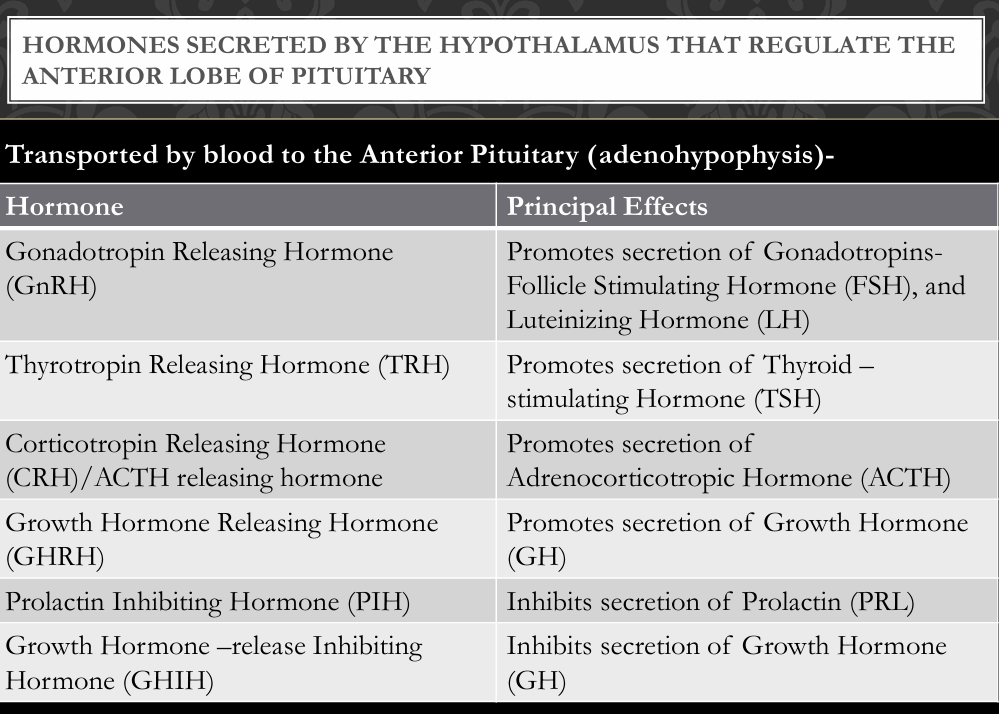
Hormones secreted by hypothalamus that regulate anterior lobe of pituitary
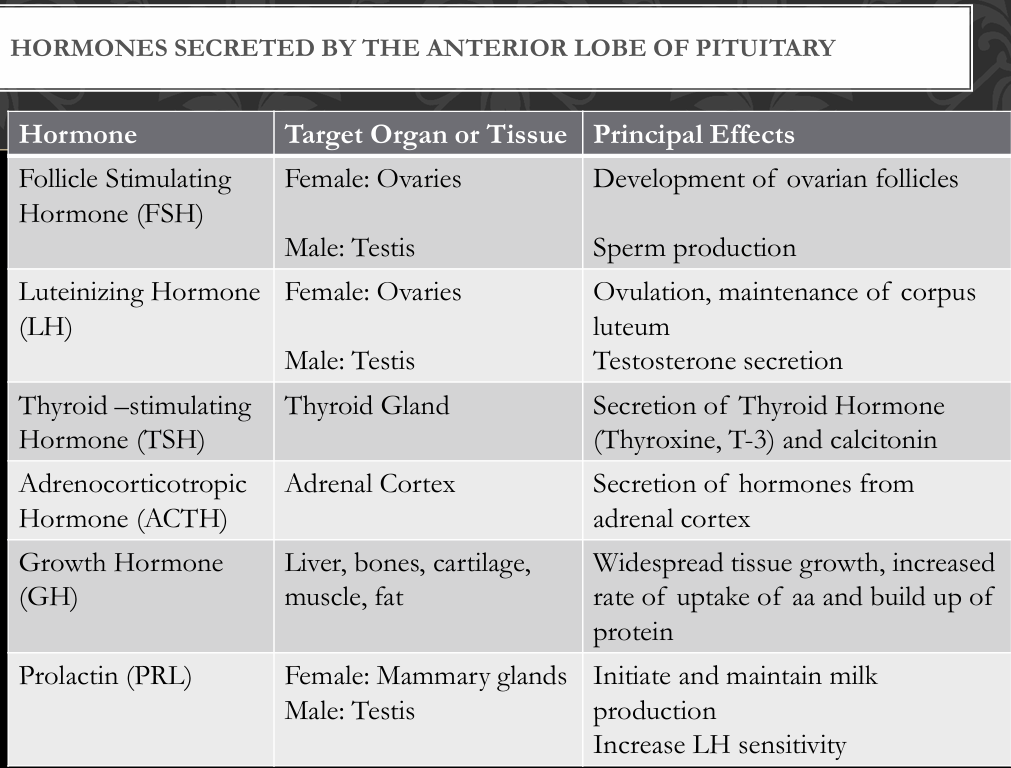
Hormones secreted by the anterior lobe of pituitary gland
HORMONES SECRETED BY THE HYPOTHALAMUS THAT ARE STORED AND RELEASED BY THE POSTERIOR LOBE OF PITUITARY (NEUROHYPOPHYSIS)
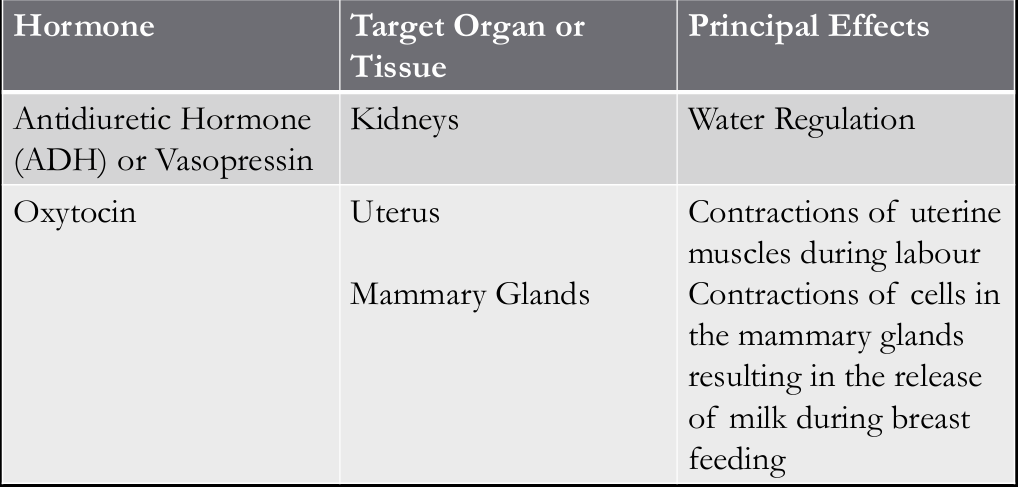
Secretions of Anterior lobe of pituitary
Secretions of the anterior lobe of the pituitary are controlled by releasing and inhibiting factors/hormones secreted by the hypothalamus.
The release of hormones by the posterior lobe of the pituitary is triggered by nerve impulses initiated in the hypothalamus and conducted along the cell extensions.
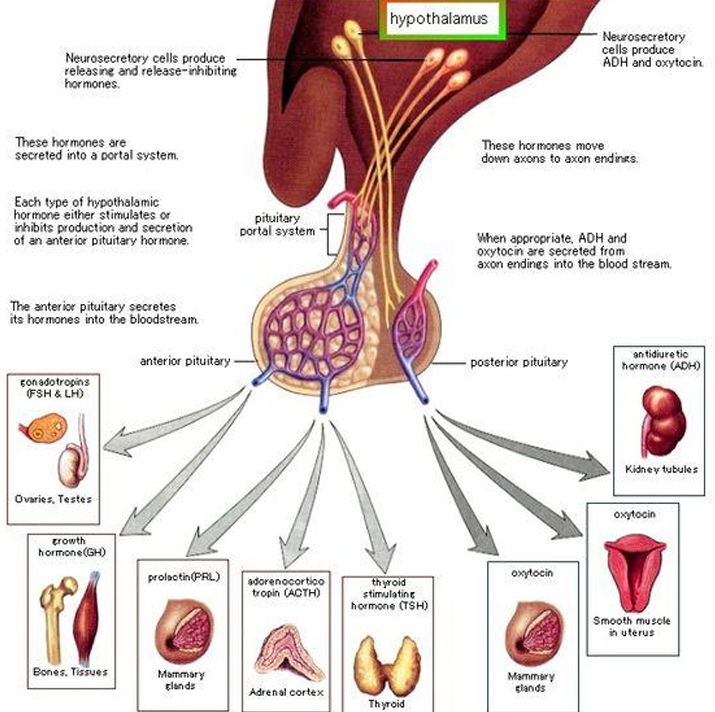
The Pineal Gland
• Locatedin deep inside the brain and is larger in children and undergoes involution (shrinkage).
• Secretes melatonin, which is produced from serotonin. Production of melatonin is stimulated by darkness and inhibited by light.
• Function of Melatonin are maintenance of circadian rhythm
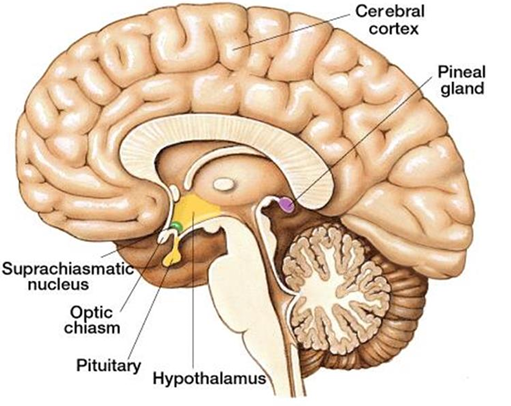
Thyroid Gland
Located in the neck just below the larynx.
Consists of two lobes that lie on either side of the trachea and are joined by a narrow piece of tissue that lies across the front of the trachea
Thyroid Gland function
• Follicular cells of the gland secrete thyroxine (T4 tetraiodothyronine) and (T3 triiodothyronine)made from iodine and amino acid, and is continuously manufactured
• Function of thyroid hormone –controls metabolism by regulating catabolic and anabolic reactions. Overall effect is to bring about release of energy which is released in the form of heat hence maintains body temperature.
• Thyrotropin Releasing Hormone (in Hypothalamus) Thyroid Stimulating Hormone/Thyrotropin (in Anterior Pituitary) Thyroid hormone (in Thyroid Gland)
• Also secretes Calcitonin which regulates calcium levels
Calcitonin: Secreted by C-cells Function of calcitonin: Regulation of calcium and phosphate levels in the blood
Concentration of calcium in the blood Thyroid gland secretes calcitonin which reduces the reabsorption of calcium by the kidneys and the breakdown of bone
Concentration of phosphate in the blood Thyroid gland secretes calcitonin which moves phosphate into bone and reduces the reabsorption by the kidney
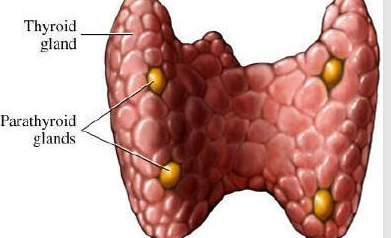
The parathyroid Gland
• Location-embedded on the rear surface of the thyroid gland. Usually four but some people may have more.
• Secretion-Parathyroid hormone
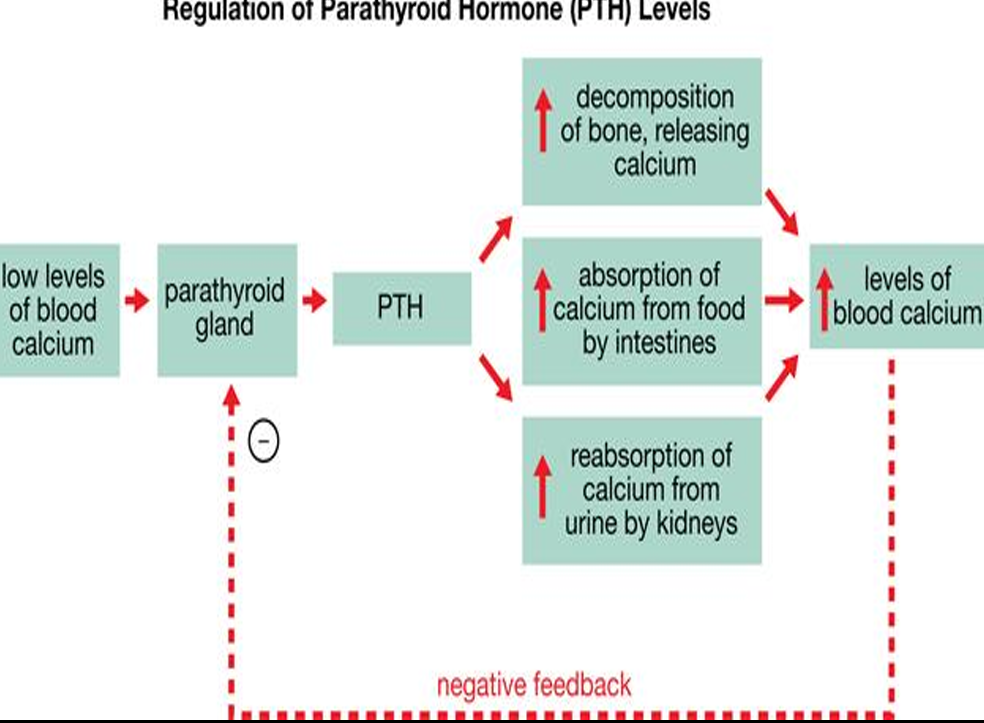
• Function of Parathyroid Hormone-Regulation of calcium and phosphate levels in the blood by increasing calcium levels in the blood and phosphate excretion in the urine
Regulation of Parathyroid Hormone (PTH) levels
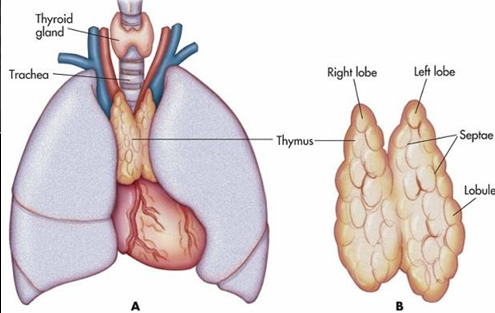
The thymus
• Located in the chest just above the heart and just behind the sternum.
• It is large in infants and children and begins to shrink after puberty
• Secretes a group of hormones called thymosins
• Function of Thymosins-Influence the maturation of disease fighting white blood cells called T lymphocytes
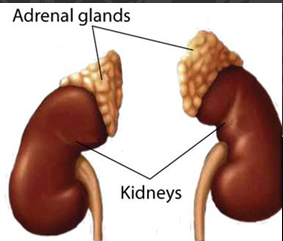
Adrenal Gland
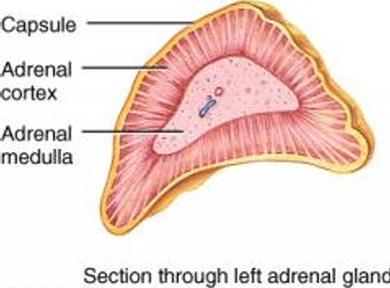
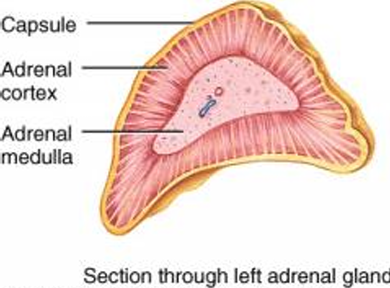
• Located above the kidney, so also called suprarenal gland
• Each is really two endocrine glands
-Adrenal cortex (outer)
-Adrenal medulla (inner) Secretes
Unrelated chemicals but all help with extreme situations
Adrenal Medulla
Adrenal medulla Secretes:
Adrenaline (epinephrine) –Prepares the body for reaction to a threatening situation: flight or fight responses
Noradrenaline (norepinephrine)–Similar effects to adrenaline in particular increases the rate and force of heart beat
Adrenal Cortex
Adrenal cortex Secretes lipid-based steroid hormones, called “corticosteroids” –“cortico” as in “cortex”
Two main ones are:
Aldosterone (salt retaining hormone) -Prompts the tubules in the kidney to reabsorb more sodium and increases the amount of potassium in the urine. Water is reabsorbed along with the sodium, which increases the blood volume
Cortisol -Promotes normal metabolism which helps the body deal with stressful situations and also helps with repair of damaged tissues
The Pancreas
Both exocrine–secretes digestive enzymes into the pancreatic duct and endocrine–consists of Islets of Langerhans which secrete two important hormones:
• Insulin-Reduces the amount of blood glucose by:
1. Increasing the uptake of glucose in skeletal muscles
2. Increasing the conversion of glucose to glycogen in liver and muscle cells
3. glucose to fat in fat storage tissue and in the liver
4. Promotes protein synthesis in muscle cells
• Glucagon–Increases the amount of blood glucose by mainly promoting the breakdown of: 1
. glycogen to glucose in the liver
2. fat in the liver and in fat storage tissues.
3. Breakdown of protein in muscle cells
The Gonades
Like pancreas, gonads are both exocrine and endocrine. Exocrine products are sperms and eggs.
Endocrine products are mainly sex steroids:
Androgensare usually thought of as male sex hormones. In males, are produced in the testis. Responsible for development and maintenance of male sex characteristics. Most commonly known androgen is testosterone.
Oestrogen and Progesterone produced in the ovaries. Responsible for development and maintenance of the female characteristics. Along with the gonadotropic hormones of the pituitary regulate the menstrual cycle and are involved in the changes during pregnancy.
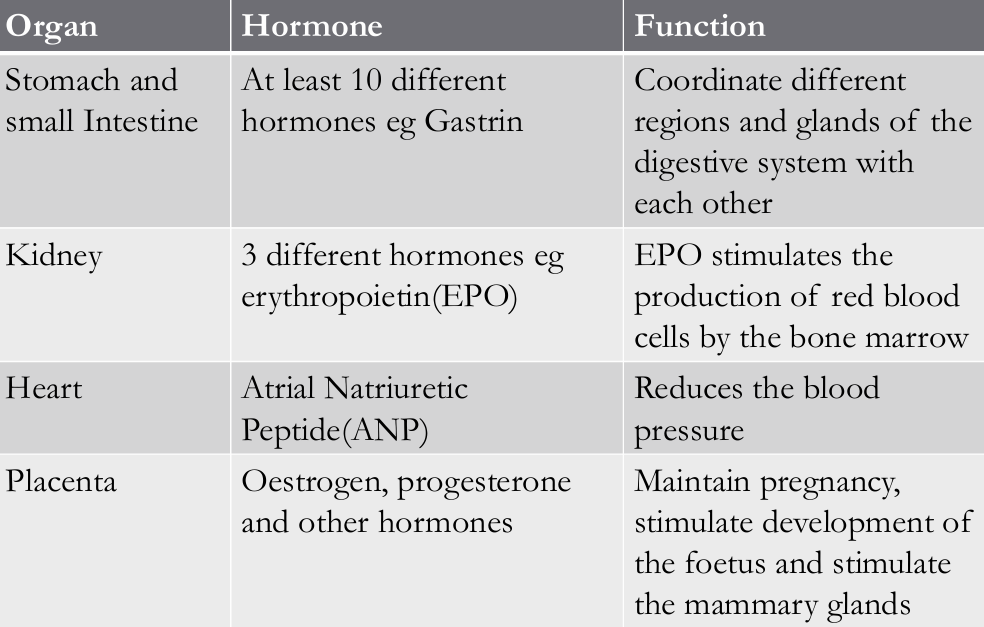
Other Endocrine Tissues