Hazardous Materials and Fire Prevention
 View linked note
 Call Kai
 Learn
Learn Practice Test
 Spaced Repetition
 Match
Match Flashcards
 Knowt Play
1/41

There's no tags or description
Looks like no tags are added yet.
Name | Mastery | Learn | Test | Matching | Spaced | Call with Kai |
|---|
No analytics yet
Send a link to your students to track their progress
42 Terms
WHMIS
Workplace Hazardous Materials Information System, became law in 1988.
GHS
Globally Harmonized System of Classification for hazardous products.
HPA
Hazardous Products Act, legislation governing hazardous materials.
HPR
Hazardous Products Regulations, regulations under the HPA.
HMIRA
Hazardous Materials Information Review Act, allows for the review of hazardous materials information.
HMIRR
Hazardous Materials Information Review Regulations.
Supplier Responsibilities
Ensure hazardous products are correctly classified, labeled, provide SDS and update if changes occur.
Employer Responsibilities
Educate and train workers, provide information, install labels, prepare SDS and labels, implement control measures.
Worker Responsibilities
Participate in WHMIS education, identify and control hazards, use personal protective equipment (PPE).
Physical hazard
Causes damage due to fire or explosion.
Health hazard
Causes health effects.
Hazard group
It’s possible for a hazardous product to belong to one or more hazard groups, each divided into hazard classes.
OH&S Act
Occupational Health and Safety Act that governs WHMIS in Alberta.
Three key elements of WHMIS
Worker education, product labeling, safety data sheet (SDS).
Supplier label requirements
Must be bilingual, contain product ID, pictograms, signal word, hazard statement, precaution statement, and initial supplier identifier.
Workplace labels
Created when products are transferred to new containers, if supplier label is missing, or when products are made and used on site.
Required info for workplace labels
Product name matching SDS, safe handling precautions, and reference to SDS.
SDS format
Follows GHS format with 16 sections that occur in the same order.
SDS update requirement
Supplier must update within 90 days of new information, and employer must ensure all SDS are current on site.
Handling hazardous materials code of practice
Companies must develop a code of practice for respiratory protection in the presence of hazards.
Storage requirements for flammables
Cannot be stored in glass or unapproved plastic, must be in approved flammable liquids storage cabinet.
Ventilated cabinets requirements
Must vent outdoors and be sealed with the same materials used for construction.
Gas cylinders storage requirements
Must be secured upright, valve cover installed when not in use.
Transporting gas cylinders safety
Transport in the cab or trunk of a vehicle.
Mechanical ventilation system usage
Needed when airborne contaminants exceed occupational exposure limits (OEL), vapors, fumes, dust are present, or in flammable/oxygen deficient atmospheres.
Types of ventilation
Mechanical general, localized, and portable ventilation systems.
Confined space prohibitions
Do not enter if flammable >20% LEL, no open flames unless ventilated, and do not store contaminated rags.
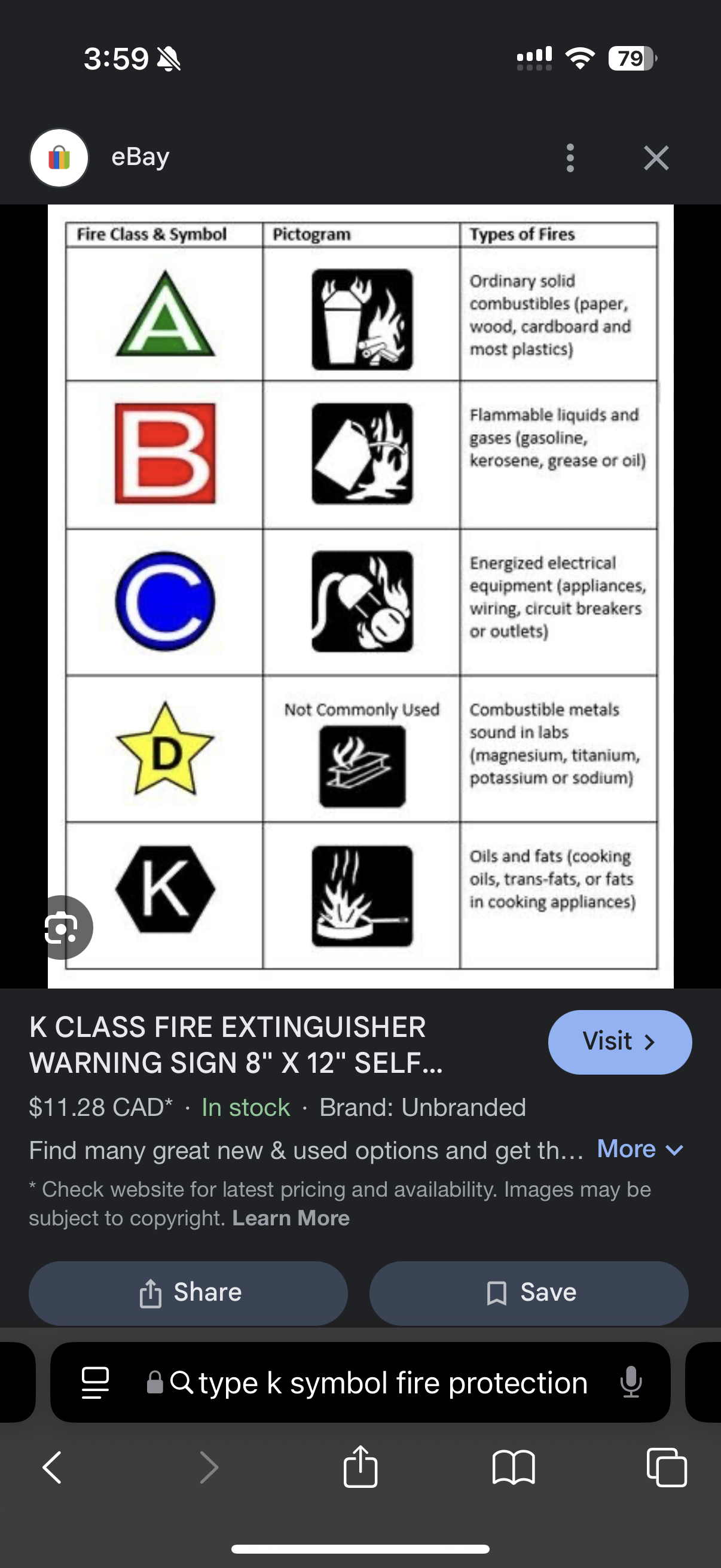
Fire class A
Class A fires involve wood and are extinguished via cooling with water.
Fire class B
Class B fires involve flammable gases and liquids; extinguished via smothering or displacement with CO2.
Fire class C
Class C fires involve electrical equipment; do not use water, extinguish with dry chemicals or CO2.
Fire class D
Class D fires involve metals; do not use water, extinguished by absorbing heat with dry powder.
Fire class K
Class K fires involve cooking oils and fats; do not use water, extinguished via wet chemical.
Multipurpose extinguishers
Class ABC extinguishers are multipurpose dry chemicals.
ULC
Underwriters Laboratories of Canada, responsible for extinguisher labels.
P.A.S.S.
An acronym for using a fire extinguisher: Pull, Aim, Squeeze, Sweep at base.
What color is a diesel approved fuel container? Who approves these?
Yellow, and is approved by ULC or CSA
Where must the supplier label be attached on a controlled product?
On the container which the product is stored in
Where are ventilation system requirements for the work site found?
Alberta OH&S Safety Code
Fire extinguisher color codes flashcard
After how many years does an SDS expire?
3 years
Where are ventilation system requirements for the work site found?
OH&S code
When should you not fight a fire for personal safety reasons?
if the fire can block your escape