Animal communication prelim3
 Call Kai
 Learn
Learn Practice Test
 Spaced Repetition
 Match
Match Flashcards
 Knowt Play
1/115

There's no tags or description
Looks like no tags are added yet.
Name | Mastery | Learn | Test | Matching | Spaced | Call with Kai |
|---|
No analytics yet
Send a link to your students to track their progress
116 Terms
Sexual selection
any selection that arises from fitness differences associated with non-random success in the competition for access to gametes for fertilization
Can be considered a part of or separate to natural selection
Mechanisms of Sexual Selection
Can occur before, during or after mating
Scramble competition
Endurance rivalry
contest competition
mate choice
gamete competition
cryptic mate choice
Scramble Competition
• Find mates before competition
• Arrive at breeding locality first
• Sensory and locomotory organs to quickly locate mates
ex spotted salamander: male gather in vernal pools and deposit numerous sperm packets (spermatophores) on the pond bottom, often obscuring others, as they race to fertilize females
Endurance rivalry
• Ability to endure prolonged reproductive activity
• Long breeding season
• Long-lived
ex. elephant seals guard a beach and fast losing 30% of their body weight while fighting for dominance over a harem (breeding group)
Contest competition
Direct combat
• Intrasexual
• Outcompete rivals
• Directly monopolise mates
ex. Ruff males congregate in leks and compete for females
Case study: Satellite male Ruff
Contest competition
• Non-territory holding
• Less frequent displays
• Supports dominant males
• Gains mates by association
Mate choice
• Intersexual
• Ornaments
• Courtship displays
ex. Himalayan Monal displays for females and is highly ornamented
Case study: Bowers
Mate Choice
• Resource-holding ability
• Costly, honest signal
• Females compare multiple bowers
• Enhance ornamentation
ex. MacGregor’s Bowerbird
Gamete competition
• Mate guarding
ex. Dusky dancers: following copulation, the pair often remains connected in a "tandem" position, where the male holds the female with his anal appendages. The male often stays attached to her while she oviposits
• Sperm number
ex. Agile Antechinus males invest heavily in sperm production at the expense of their own survival, die shortly after the breeding season, and females use specialized storage in their oviducts to store sperm.
• Mating plugs
ex. northern Saint Andrew’s Cross Spider during copulation, a male's pedipalp (sex organ) breaks off, clogging the female's genital opening to prevent competitors
Cryptic mate choice
• Post-mating female reproductive control
• Genetic compatibility
ex. Chinook salmon: females use their ovarian fluid to differentially enhance the swimming speed of certain males' sperm, allowing them to favor specific, often more compatible, males
Information in courtship signals: quality and compatibility
ex. hooded warbler: Males that sire EPY have higher song rate and output than cuckolded males
ex. sticklebacks use allele counting to select mates with large number of MHC alleles to avoid inbreeding and confer parasite resistance
optimize major histocompatability compex (MHC) diversity
inbreeding avoidance
parasite resistance
Information in courtship signals: resource holding
ex. satin bowerbird bower is a signal of ectoparasite load and body size
• Extended phenotype
• Honest signal of ability to acquire and retain resources
• Information on other attributes
multimodal signaling in courtship signals
• Ornamented plumage and song in birds
• Wing patterns and pheromones in butterflies
ex. silver-washed fritillary (butterfly) male utilizing a "looping" flight technique to simultaneously showcase his fitness and deliver specialized scents
Dishonest signaling in courtship signals
ex. faeder male Ruff employs a "sneaker" mating strategy by mimicking the appearance of a female
• Deception
• Mimics females to avoid male aggression
• Negative frequency dependent selection
environmental influence of courtship signals
• Firefly flash patterns at dusk for high contrast
• Higher pitched vocalisations of birds and insects to cut through background anthropogenic noise
Recognition systems in sender vs receiver
Sender: production
- Phenotypic variation
- Individual stability
Receiver: Processing and action
- Differentiation among individuals
- Classification of individuals
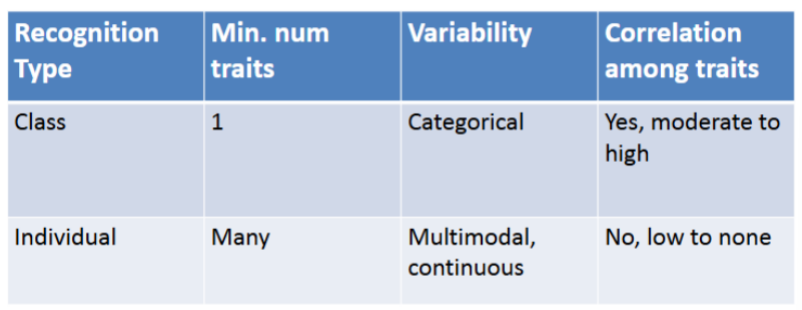
Recognizing: Class
Distinguishing among members of your species based on a shared attribute
traits will differ categorically between groups
Common classes that animals signal include:
-sex (male v. female)
-age (juvenile v. adult)
-breeding status (fertile v. not fertile; breeder v. not breeder)
leads to divergence in class-typical traits between groups but conformity within a group
ex. clear sexual dimorphism in ducks but not eagles; juvenile vs adult plumage strongly differs in both ducks and eagle
eagles need to differentiate juvenile because not sexually mature
ducklings use countershading to avoid being eaten by big fish
Recognizing: Individual
Requires distinctive (i.e., variable) traits among individuals within
a group/population
Those traits need to be stable within an individual over time
(not necessarily permanent, but stable-ish at least)
multiple traits need to vary
low to no correlation among traits
Identity Signaling in Humans
MORPHOLOGY
1.Facial features are more variable than other aspects of body morphology (relative nose width has more variability then relative finger length)
2.Facial features are less correlated than other aspects of body morphology (nose width is much less correlated with nose length than hand length is to hand width)
Signal Design and recognition: class vs individual
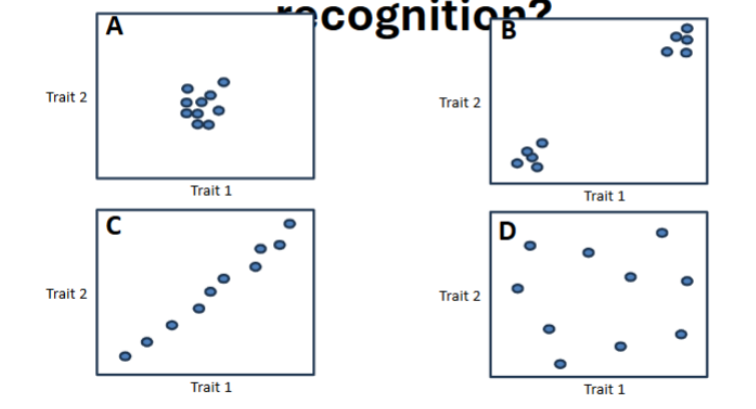
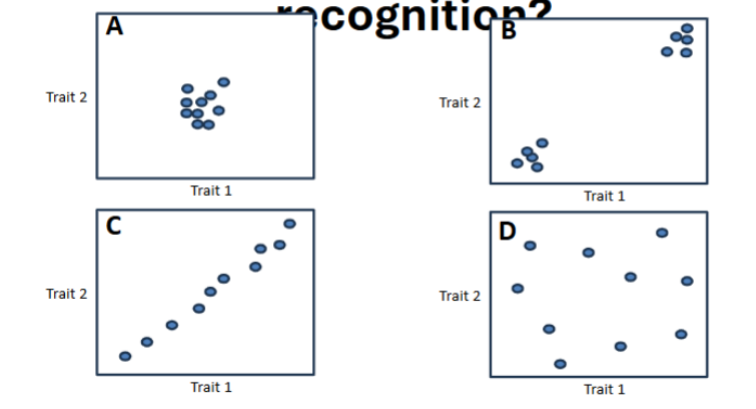
Which graph best illustrates traits that might mediate individual recognition?
D
Information and Signal Design
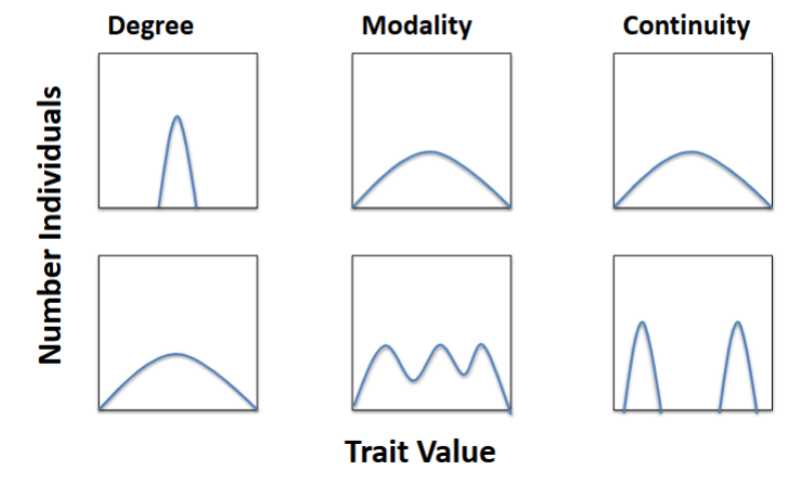
Signal efficacy depends on
detectability (how well does it transmit through environment/picked up by receiver)
discriminability (how easily are different possible values of the signal differentiated from one another)
memorability (how easily can the signal be remembered by receiver)
Recognition requires phenotypes that have…
variation (ie information)
stereotypy
we want to know whether we can reliably discriminate among individuals on the basis of their features (is an individual consistently like itself and different from others?)
information theory
Information or entropy is the unpredictability or uncertainty contained in a signaling system
More possibilities = more information
e.g. six-sided die has more information than a two-sided coin
How do we measure information content?
discrete signal (H’=-SUM(p*lnp)
continuous signal (H’=-int p(x)* log(p(x))dx)
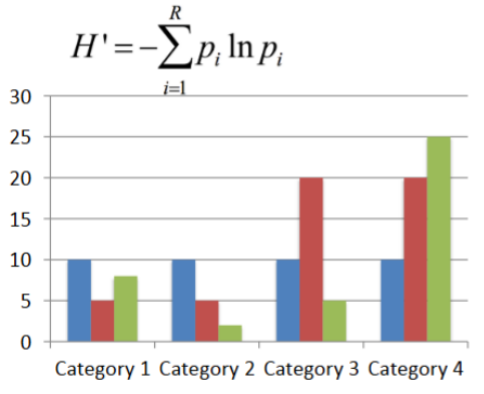
which trait has the highest degree of information content
Blue
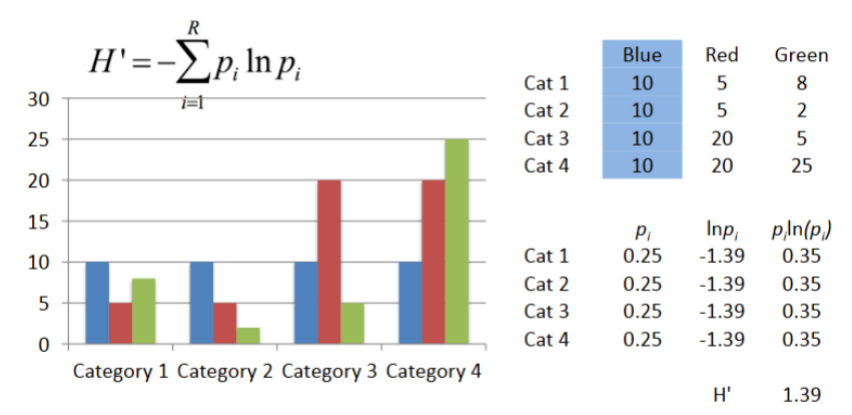
H’ can be readily compared across traits if:
There is an ideal receiver that can detect differences as finely as you have measured them
Completely sampled all relevant traits
The weighting of trait values is in accordance to their perceptual salience
Information content of wasp color patterns
Measured wasp color patterning in queens and daughters on wild nests: Scored facial patterns on a scale of 0-4, counted number of abdominal segments with yellow stripes or brown markings.
Largest nests have higher proportions of doppelgangers, likely because there is a limit to the number of combinations possible among closely related wasps
identity cue
Traits that allow for individual recognition but have not evolved for that purpose.
e.g. Fingerprints
Identity Signal
Traits that have been selected to facilitate efficient recognition
Why would signals of identity need to evolve? (costs of mistaken identity)
-Receive a punishment meant for another
-A benefit meant for you goes to someone else
Costs/benefits of individuality could arise for
many different reasons: social hierarchies,
mate choice, parent/offspring recognition,
Identity Signaling Hypothesis predictions
Predictions:
unique phenotypes provide benefits to individuals
species/traits with history of selection for recognition should have more variable phenotypes
Traits selected as identity signals will show evidence of increased genetic diversity.
Frequency-dependent benefits of rare phenotypes?
When being confused with others is costly, selection should favor rare phenotypes that signal identity.
Individuality is expected to be under negative frequency-dependent selection (rarer is more fitness benefit)
ex. In wasps, Individuals with rare phenotypes receive the less aggression on average than those with common phenotypes
benefits of individual recognition
wasp populations with individual recognition (north) had
1. Different social organizations
2. Improved cooperative nesting outcomes
Facial diversity increases with latitude and so does cooperation
Northern groups show more biased interactions with a subset of individuals.
Southern nest associations are less stable (All multi-foundress southern nests failed to rear offspring because oophagy: egg eating)
Marmots
Comparative evidence for ID signal evolution
species with higher social group sizes had higher individuality
Evolution of facial variation in humans WITHIN populations
Possible hypotheses:
1. Facial differences are the result of neutral processes and are cues of identity.
variation: same as rest of body
correlations: same as rest of body
genetic variation: same as background genetic diversity
2. Facial differences are the result of adaptive processes, with faces evolved to signal individual identity.
variation: higher than rest of body
correlations: lower than rest of body
genetic variation: higher than background genetic diversity
3. Facial differences are the result of adaptive processes, with faces under selection for attractiveness
variation: higher than rest of body
correlations: higher than rest of body
genetic variation: lower genetic diversity
Reality: probably 3 but social interactions maintain slightly elevated genetic diversity
variation: higher than rest of body
correlations: higher than rest of body
genetic variation: slightly higher
Sexual dimorphism
• Males ornamented, females are not
• Ornaments appear at sexual maturity
• Male ornaments during breeding season
Ornamentation in immatures
ex. victoria’s riflebird
• Acquires ornamentation through successive moults
• Five years to reach maturity
• Practices display as immature
Year-round ornamentation
ex. Northern Cardinal
• Ornamentation is an honest signal
• Associated with non-breeding season dominance but not causal
Why are females ornamented
1. Consequence of selection on male ornaments
2. Sex role reversal and sexual selection
3. Resource competition
4. Incitation of male competition
Consequence of selection on male ornaments
• Shared genetic architecture
• Additive genetic variation
ex. cyrtodioposis dalamanni: longer eye stalks selected for in males is also causing offspring (including females) to have longer eyes stalks
female eye stalk length is not advantageous but just a byproduct of SS on males
ex. Dark eyed junco: amount of white on tail feathers
but could be a result of selection for foraging behaviors
Sex role reversal
• Females compete for males
• Polyandrous
ex. red neck phalarope
Evolutionary steps to classic polyandry
mainly male parental care of eggs —> female ability to lay more eggs than a male can care for —> female competition to obtain several mates
Resource competition
• Natural selection
• Evolution of weaponry
ex. reindeer: both sexes have antlers, males compete for females and females also compete for resources and territories
white necked Jacobin
resource competition: females selected for male plumage reduces harassment at feeders and thus have better access to resources
ornamented immature plumage for both sexes when resources are more important than mating opportunities
20% females remain ornamented
ornamentation reduces male harassment
multimodal signaling to show sex despite plumage
Incitation of male competition
ex. Striped plateau lizard: orange throat patch is a direct signal of quality, more males want to compete for higher quality females
What is the function of coordinated signalling?
Synchronise breeding effort
2. Mate guarding
3. Pair bond maintenance
4. Collective territory defense
Synchronise breeding effort
• Breeding timing critical
• Signals physiological readiness to breed
• Seasonal triggers (ex signs of spring)
ex. great crested grebe: dance together, male gifts female seaweed to incorporate into the nest —> synchronized breeding/nest building
Mate guarding
ex. eastern whipbirds: duets allows females to defend their exclusive position in the relation
vocal duetting
simulated intrusion of other birds (experiment): females sings with males (duet) most frequently when the intruder is another female
defend their mate saying he’s taken
Pair bond maintenance
• Long-term monogamy
• Divorce rare
• Recognition following reunion
ex. waved albatross: live for decades and really low divorce rate
Collective territory defense
ex. purple crowned fairywren: when threat of intrusion males and females got together to address the threat despite being initially apart
playback experiments
males and females equally aggressive
spatial coordination
Mechanism for ornamentation in white shouldered fairywren
one population with sexually dimorphic brown female and one with black and white female
female plumage developed in response to testosterone
benefits: different selective pressures
if resource limited males need to know female is high quality
certain environments might favor crypsis
tradeoffs:
physiological costs (test reduces immune function)
less parental care (also associated with test)
conflicts with other hormonal pathways
higher predation
Flower mimicry: bee orchid
ex. bee orchid looks like female bee
cost of false acceptance: loss of sperm and energy
cost of false rejection: loss of potential mating opportunity
unlikely to discriminate because cost of acceptance is low
Sexual predation: firefly
ex. firefly deception: predator mimics flashes to draw sexual attention
cost of false acceptance: get eaten
cost of false rejection: lose potential mating opportunity
discrimination very high because cost of mistaking is very high
Batesian mimicry: coral snake
ex. coral snakes mimicked by king snake (non-venomous)
cost of false acceptance: loss of meal
cost of false rejection: dying by venom
high discrimination because cost of false reject is high (dont do it unless very sure)
Brood parasitism across classes
birds: cuckoos lay eggs in bird nest
fish: cuckoo catfish eat some eggs and replace
insects: cuckoo bees lay eggs in nests of solitary bees
rove beetle eggs laid with army ant
rare/absent in mammals becauseinternal fertilization and incubation; it is harder to parasitize internally
Why are host parents so bad at recognizing parasites?
1. Evolutionary lag
2. Costs of accepting parasite (non-kin) are low
3. Costs of rejecting own kin are high
brood parasitism evolutionary lag
(takes a while for the host to evolve to discriminate)
ex. cowbirds expanded range allows to parasitize new hosts who havent evolved recognition
Mechanisms of kin recognition
spatial location: simple but easy to cheat
familiarity (associative learning)
phenotype matching: hard but hard to cheat
kin recognition in beldings ground squirrel
mixed paternity broods
full sisters are less aggressive than half siblings
more aggressive to sisters if introduced after weeing
explanation: early in life learn who they grew up with as well as phenotype matching to decide like me or not (maybe pheromones)
Associative learning
associate stimuli or events: did we grow up together?
phenotype matching
compare traits of unknown individuals to traits of individuals of know relation
brood parasitsm: honey guides
parasitize burrow nesting birds
chicks are born with a big tooth/hook on bill to kill other kin and puncture eggs, tooth reabsorbed after first few days
high costs of parasitism —>expect higher level of discrimination and signals of identity
brood parasitism: great spotted cuckoos
parasitize larger birds like carrion crows
low costs of parasitism
cuckoo chick exude toxins that deter predators
since they dont kill other nestlings, it can be beneficial (mutualism) to have cuckoo chicks in high predators
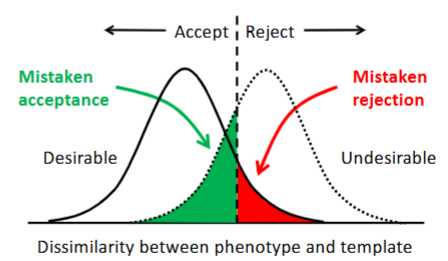
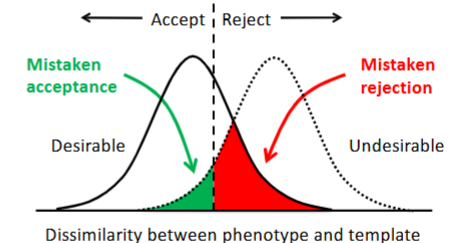
Evolution of acceptance thresholds
phenotypes of desirable and undesirable (ex own kin and parasites)
threshold of acceptance evolves based on costs of mistaken acceptance/rejection
acceptance threshold: low cost of mistaken acceptance
if low cots, accept things that dont looks right
occurs when parasitism is rare or costs of being parasitized are low
acceptance threshold: high cost of mistaken acceptance
high cost means reject more things that dont look right (event things that do look right)
occurs when parasitism is common and costs of being parasitized are high
When will there be selection to recognize young
few nests parasitized —> no need to recognize young
eggs recognized —> no need to recognize young
eggs NOT recognized —> selection to recognize young
Host parasite coevolution
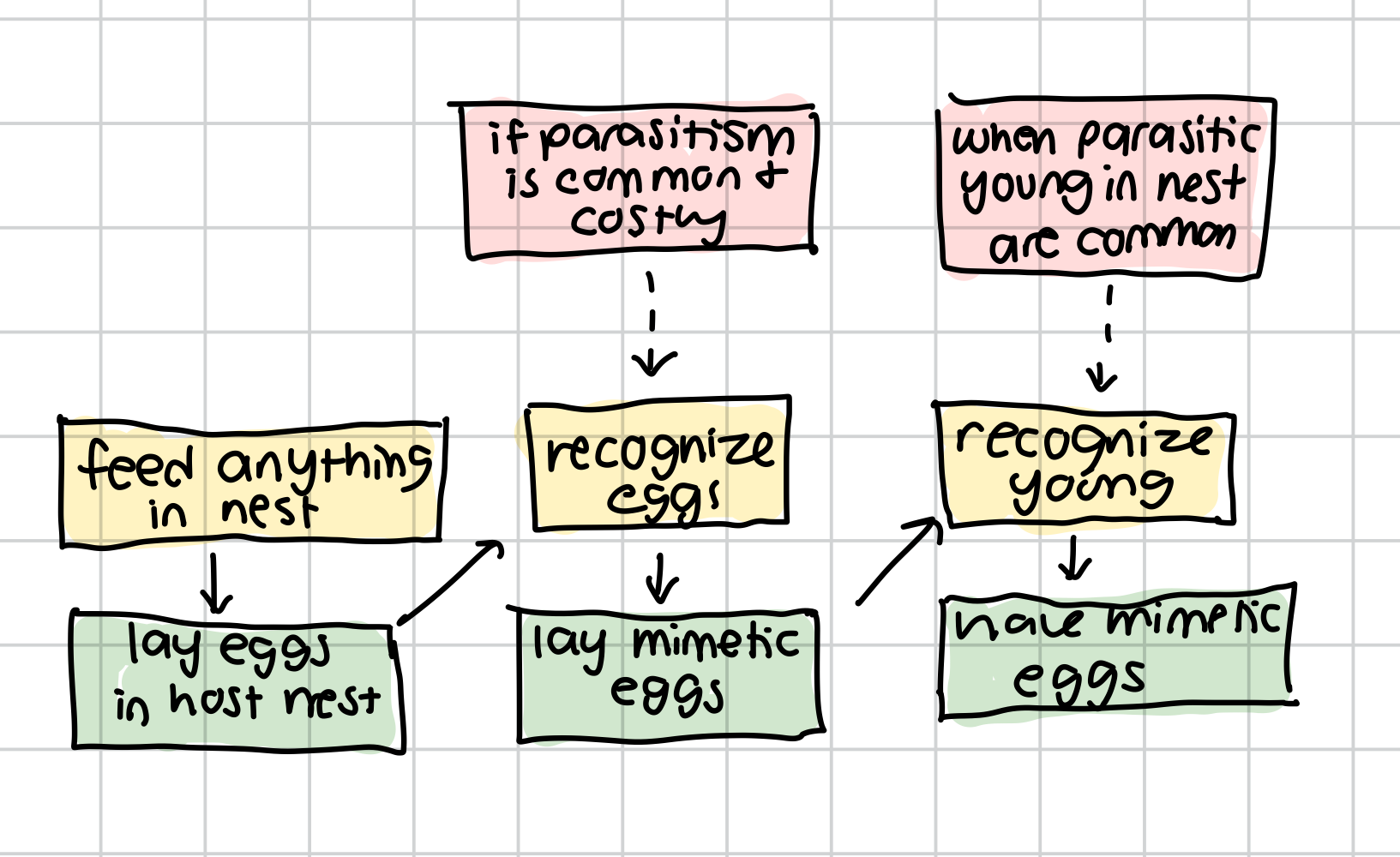
egg mimetics
eggs are very similar in hosts that have evolved to recognized eggs and different in hosts that have not yet evolved to recognize eggs
ex. dunnocks are a relatively new host for cuckoos
young mimetics
sometimes cuckoo chicks mimic the host chicks
Why to call others for food?
nepotism
reciprocity
overwhelm competitors
overwhelm defenses of prey
Nepotism
help out relatives
ex. honey bee waggle dance
reciprocity
help me out next time
ex. vampire bats feeding each other
overwhelming competitors
safety in numbers or defend against other scavengers
ex. ravens call others to the food when they find it
young birds without territory call in others to help overwhelm territory owners
not relayed to others called in
if territory owner find it, it wont call
overwhelm prey
need help tearing in or catching
ex. lions join together to catch prey
ex. bark beetles call in others using pheromones to overwhelm the trees defense
signals to help other find food
leading to food resource
broadcasting
leave a trail
give directions
leading to food resource
ex. ants
+ no attracting unwanted attention, get them right where the food is
- takes energy and time, only a few individuals at a time
broadcasting
ex. Ravens, bark beetles
+ more efficient
- easy to eavesdrop
leave a trail
flagging or pheromone trail
ex. ants tap butt on the ground
+ could be species specific, more efficient than leading, leads right to food
- costly of resources, eavesdroppers
give directions
map
ex. honey bee waggle dance
+ very efficient
- sophisticated/difficult, requires flexible communication, risk not finding food
Mutualism signals
pollination: one gets pollinated, one gets nectar
cleaners and clients: one gets cleaned and one gets food (signal ahead of time)
cooperative hunting: both get food
ex. grouper cant get little fish in cracks but eels can
grouper signals by shaking head
Honeyguides
honeyguides work with humans and honeybadgers to show them where a bee nest is so the other animal can open the nest
communicate using calls
The predation process
detection of the prey
evaluation of prey
approach and attack
dinner
Reducing probability of detection/evaluation of prey
crypsis
masquerading and mimicry
decoys
There are not signals because predators dont benefit
can only persist if rare
crypsis
blend in with background
aggressive crypsis: hide from prey
ex. crab spider sits on flower and catches pollinators
Masquerade
not matching background but looking like something you are not
ex. looking like a leaf
aggressive masquerading: hide from prey
ex. orchid mantis hides from prey by looking like a flower
decoys
startle predator or get to attack another spot
ex. lizard loses its tail which wiggles to distract the predator while lizard flees
reduce probability of being attacked/eaten
predator detecting signals
aposematic signals
prey condition signals
these are signals because predators benefit by not wasting time or eating something toxic
predator detection signals
ex. white tailed deer flashing tail
predator inspection: starting at predator (ex. herding animals)
prey condition signals
prey signals condition to make predators rethink
stotting: weird jumping thing deer do
costly display of condition
ex. spring buck to avoid cheetahs
costly because reduces speed getting away from predator
saying I can jump higher than other guy, go after him
aposematism
brightly colored as warning of toxicity
predators learn or innately know to avoid toxic prey
ex. monarch get toxins from eating milkweed
Batesian mimicry
model is unpalatable/toxic and mimic is palatable
only works if rare
ex. viceroy mimics monarch
ex. king snake mimics coral snake
king snake only looks like coral snake in regions where they coexist
Mullerian mimicry
both species are unpalatable/toxic
makes it easier for predators to learn to avoid
ex. heliconius butterflied mimic melinea in own regions
ex. poison dart frogs
Aggressive mimicry
mimics for predatory purposes
only works if rare
ex. firefly that mimics differen species to eat
ex. bolar spider waves around sticky blob smelling like moth pheromones and catches moths out of the air
ex. false cleanerfish mimic cleaner wrasse cleaning signals then attacks fish
ex. mirror orchids (bee orchids)
why give alarm calls?
warn others
call for help
startle predators
what kind of information might an alarm call contain
type of predator
how big the risk is
ex. Chickadee alarm call alerts to perched raptor versus seet call of aerial predator, number of dees indicates threat
Whining call
calls produced when dangerous (local) brood parasite is nearby to call
learned, not innate
increase speed of finding parasite
invokes con and heterospecific mobbing (fairywren and scrubwren)
similar across species and respond to calls from geographically isolated species (global convergence of alarm call all likely derived from a distress call)
high acoustic roughness (high freq spread with little modulation)
Mobbing calls by plants
Oviposition and herbivory cause plant to produce Herbivore-induced Plant Volatiles (HPIV’s)
attract natural enemies of the herbivore
can cause neighboring plants to increase induced defenses