Cell membrane transport, Cell Transport
 Call Kai
 Learn
Learn Practice Test
 Spaced Repetition
 Match
Match Flashcards
 Knowt Play
1/34

There's no tags or description
Looks like no tags are added yet.
Name | Mastery | Learn | Test | Matching | Spaced | Call with Kai |
|---|
No analytics yet
Send a link to your students to track their progress
35 Terms
cell membrane
thin, flexible barrier around a cell; regulates what enters and leaves the cell
phospholipid
A lipid made of a phosphate group and two fatty acids; consists of a hydrophilic polar head and two non-polar hydrophobic tails; forms cell membranes.
lipid bilayer
a thin membrane made of two layers of lipid molecules
hydrophobic
tails of the phospholipid that are repelled by water
hydrophilic
head of phospholipid that attracts water molecules
equillibrium
a condition in which molecules are spread evenly(equally)
Passive transport
the movement of substances across a cell membrane without the use of energy by the cell. Water and Oxygen get through easily. Does not need energy.
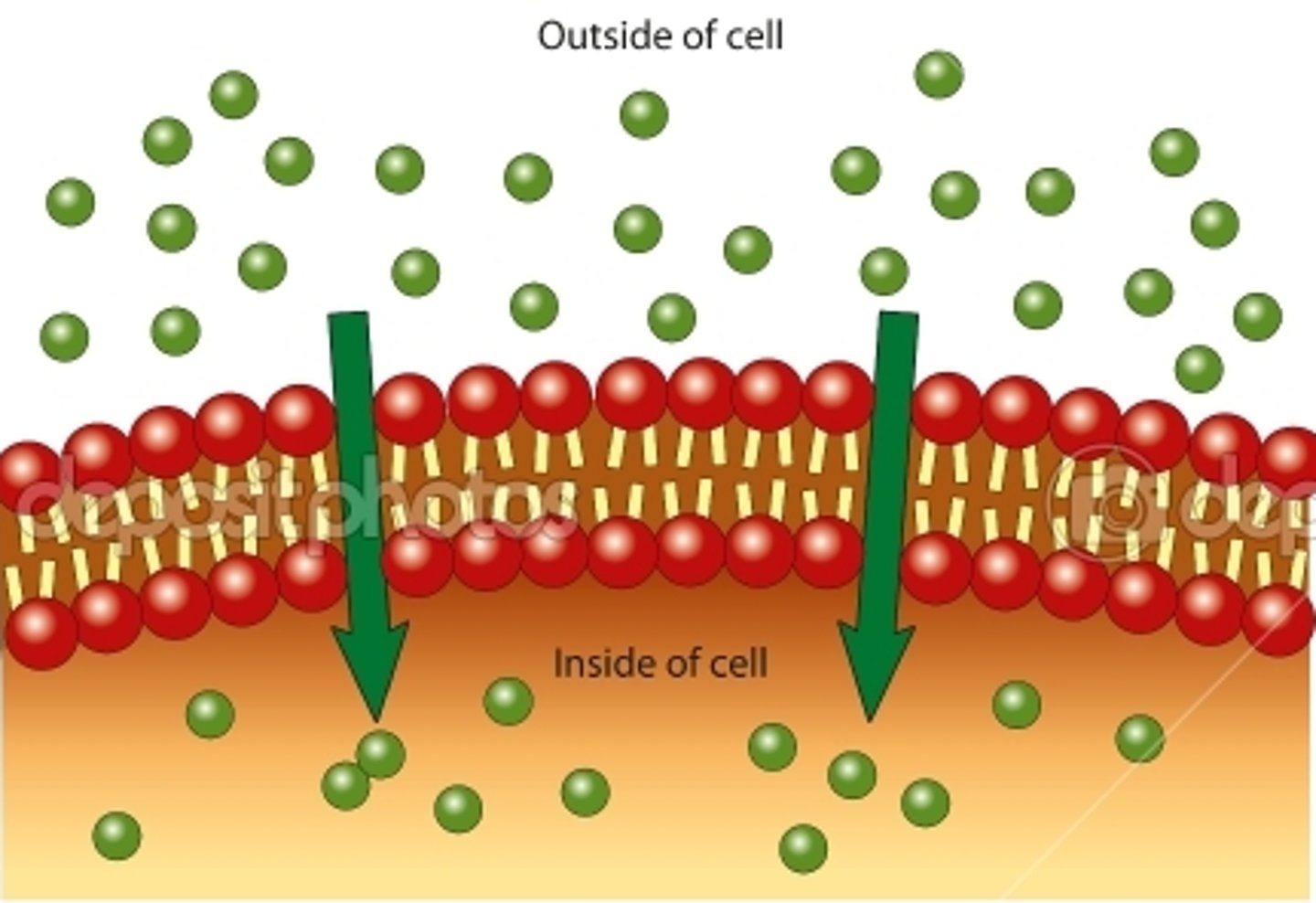
Diffusion
movement of molecules from an area of higher concentration to an area of lower concentration.
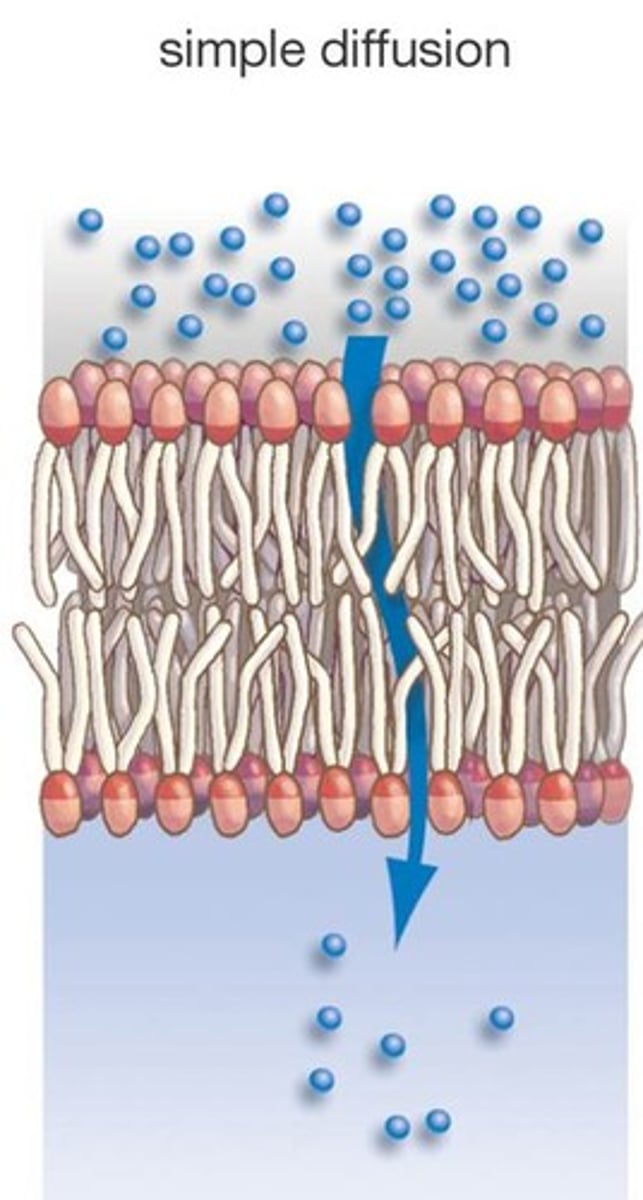
Osmosis
how cells regulate their water content
Concentration gradient
the difference in the concentration of molecules across a distance.
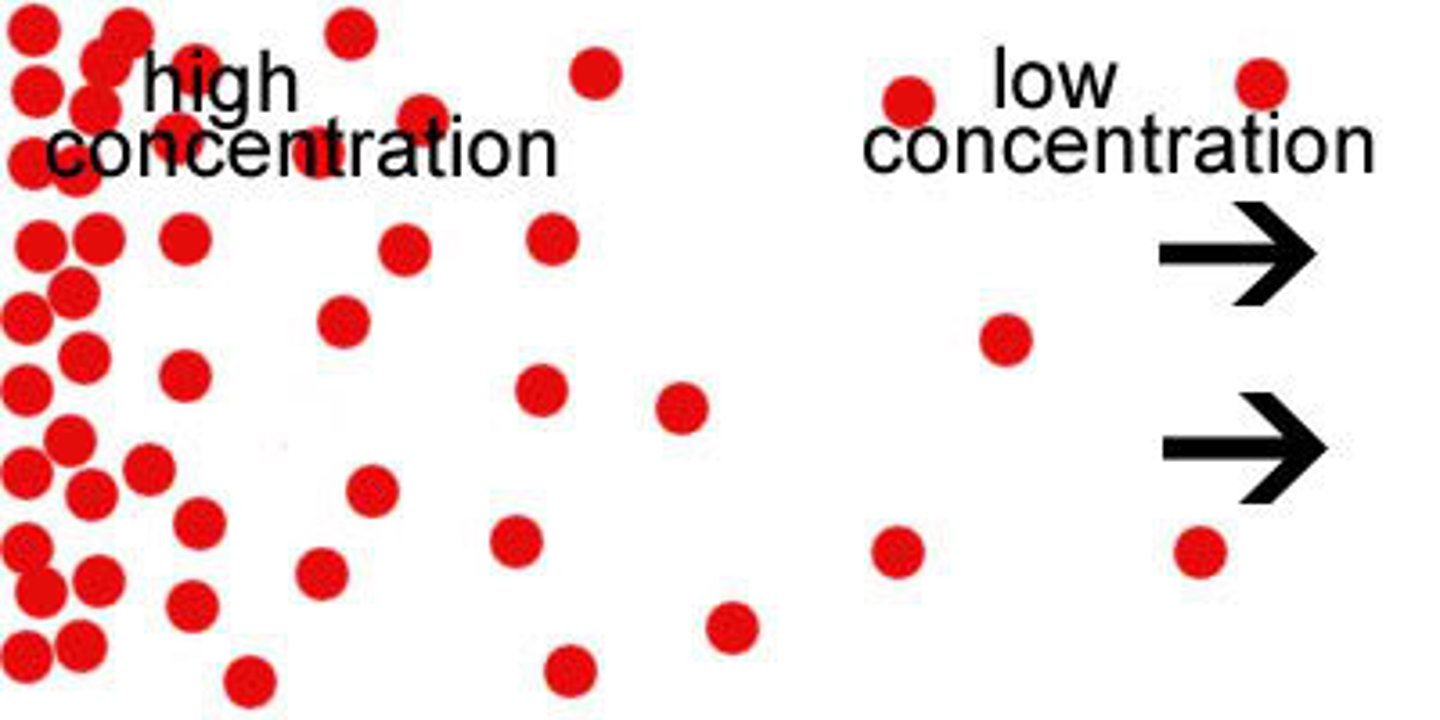
osmosis
the process by which water molecules diffuse across a cell membrane from an area of higher concentration to a area of lower concentration.
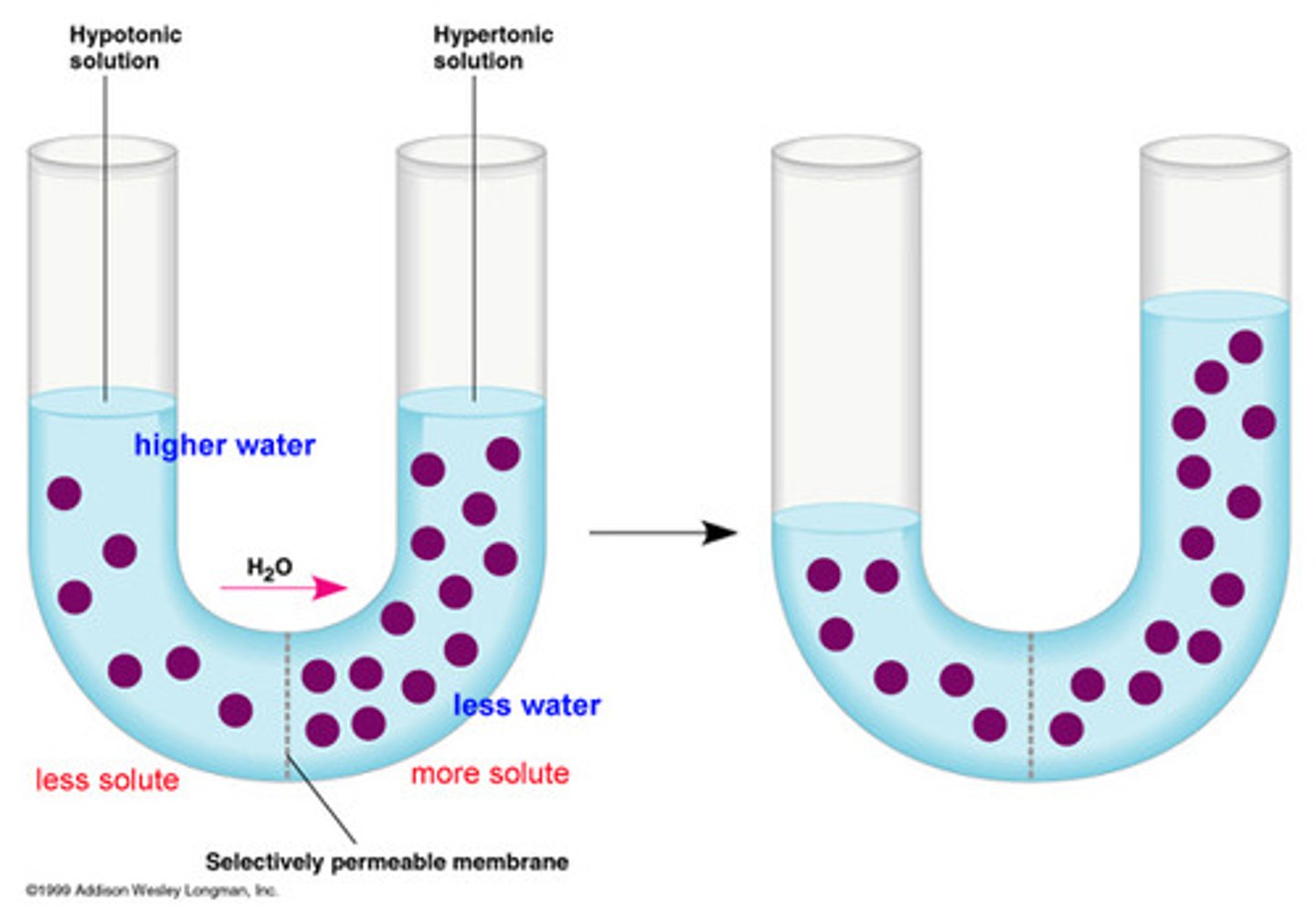
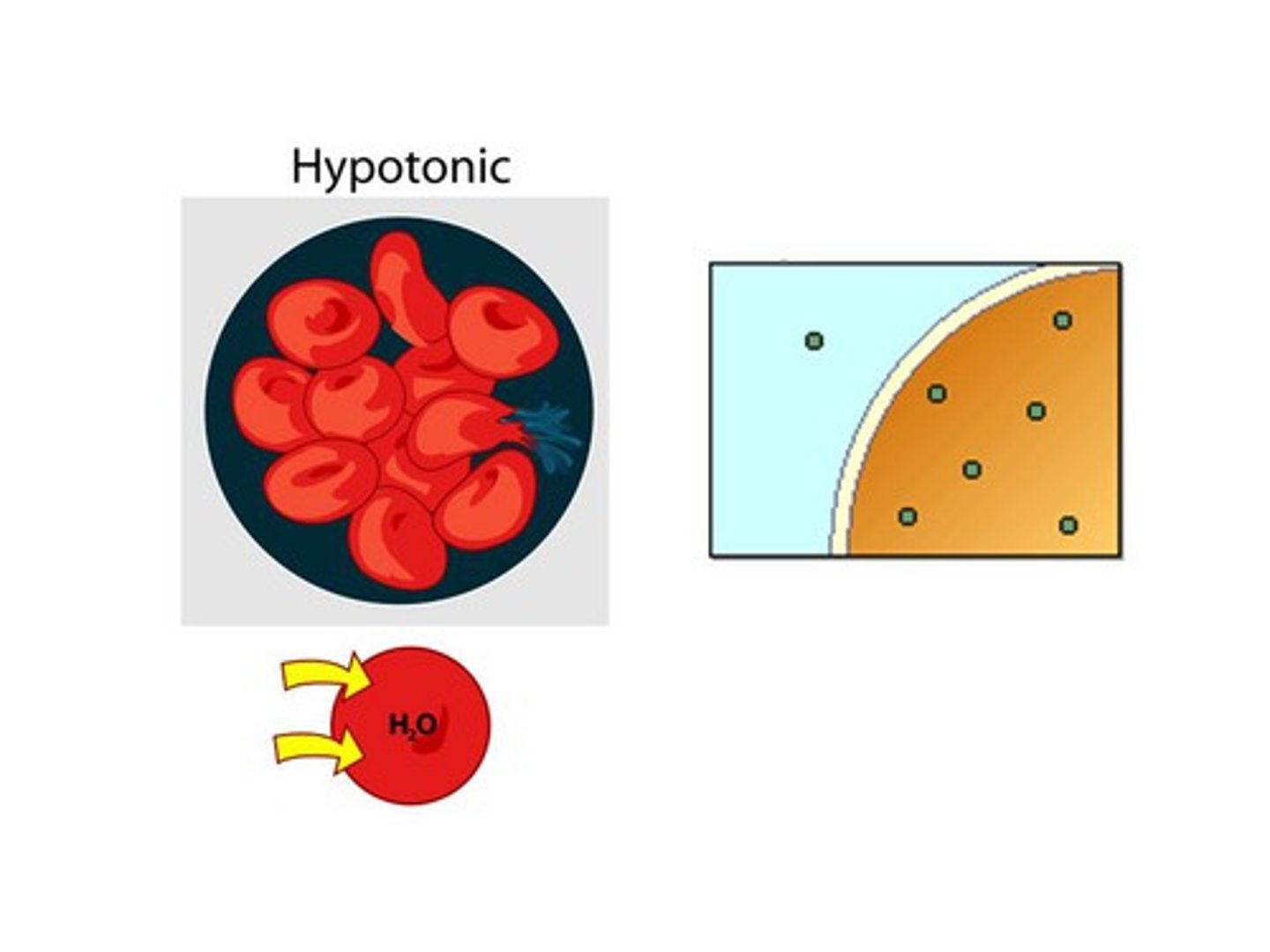
hypotonic
describes a solution whose solute concentration is lower and water is a higher concentration than inside the cell.
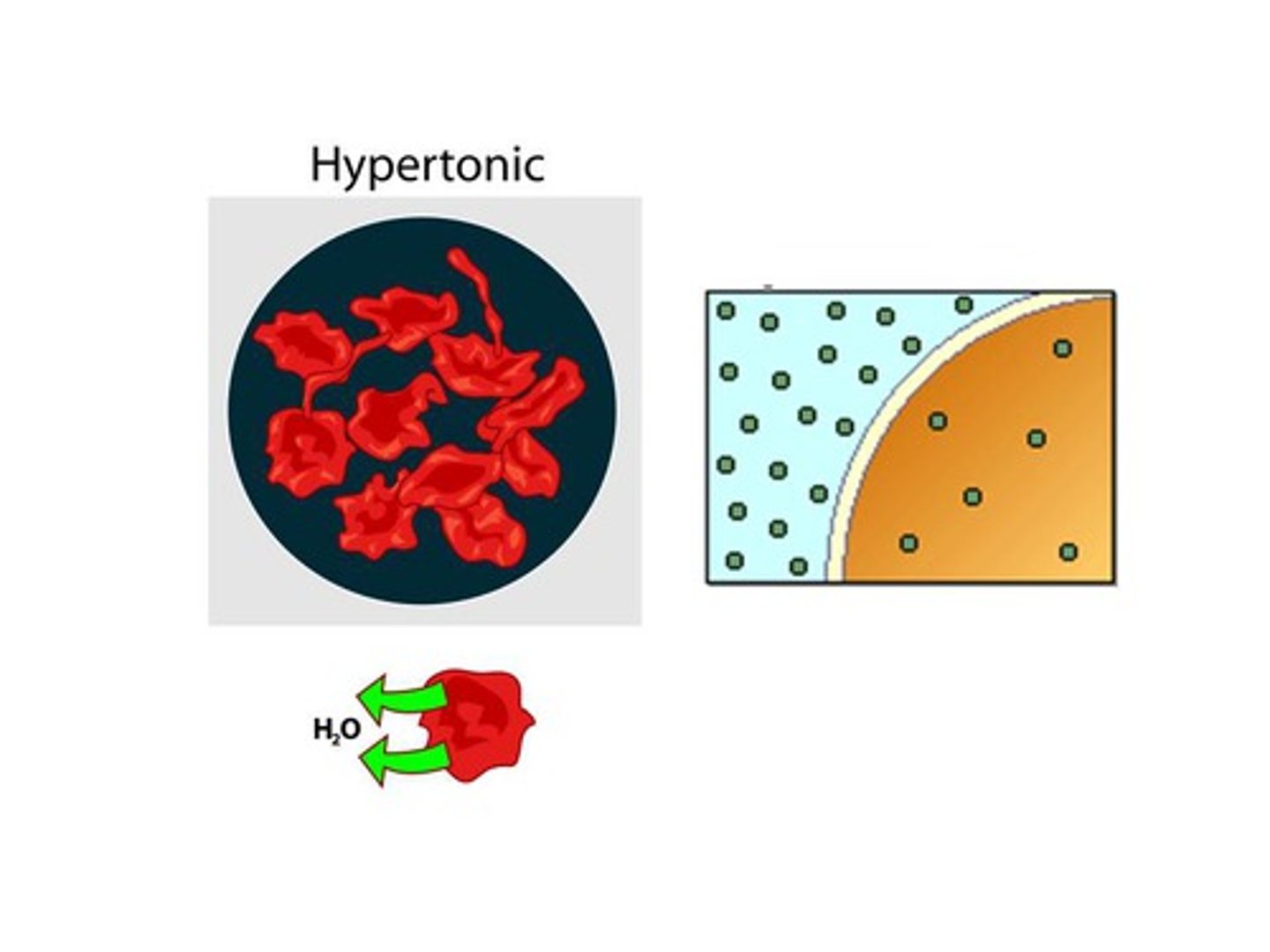
hypertonic
describes a solution whose solute concentration is higher and water concentration is lower than inside the cell.
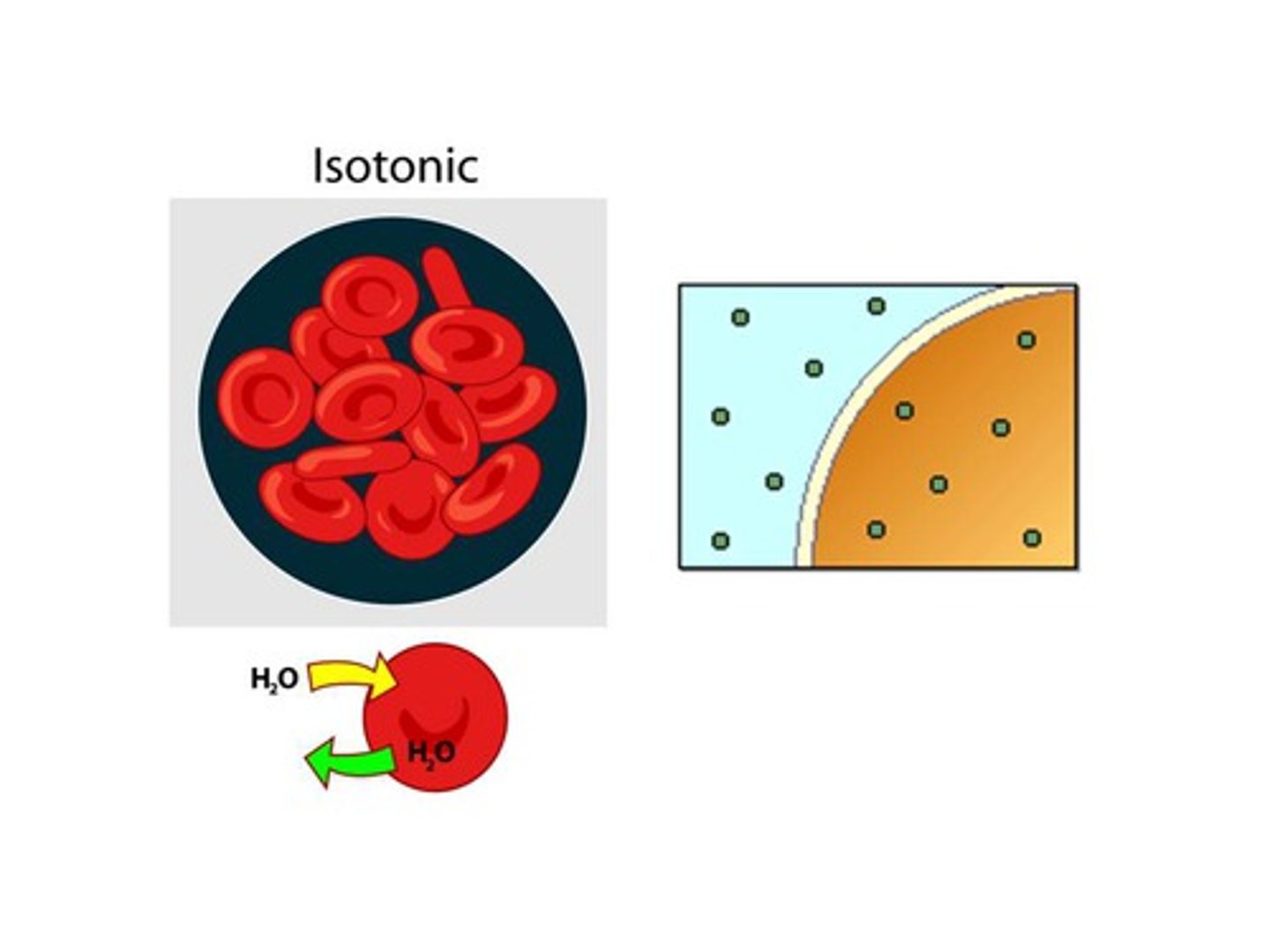
Isotonic
describes a solution whose solute concentration is equal to the solute concentration inside a cell.
Facilitated diffusion
The transport of substances through a cell membrane down a concentration gradient with the aid of carrier proteins.
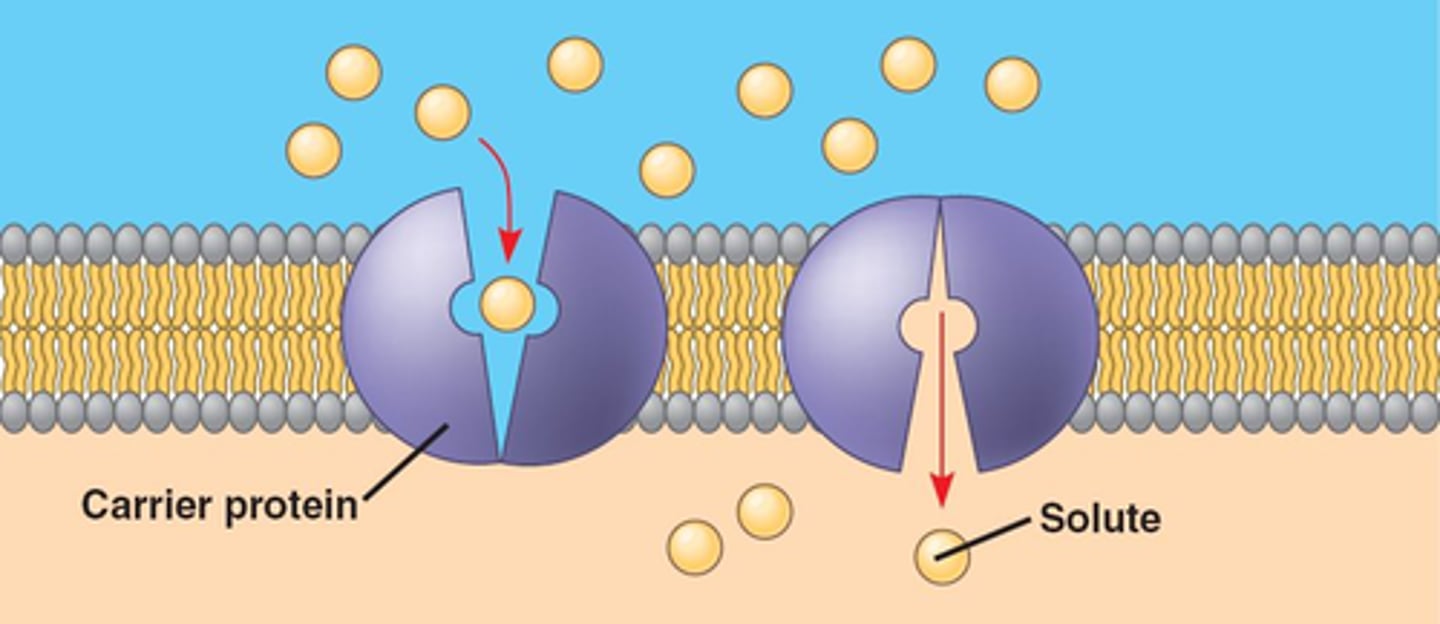
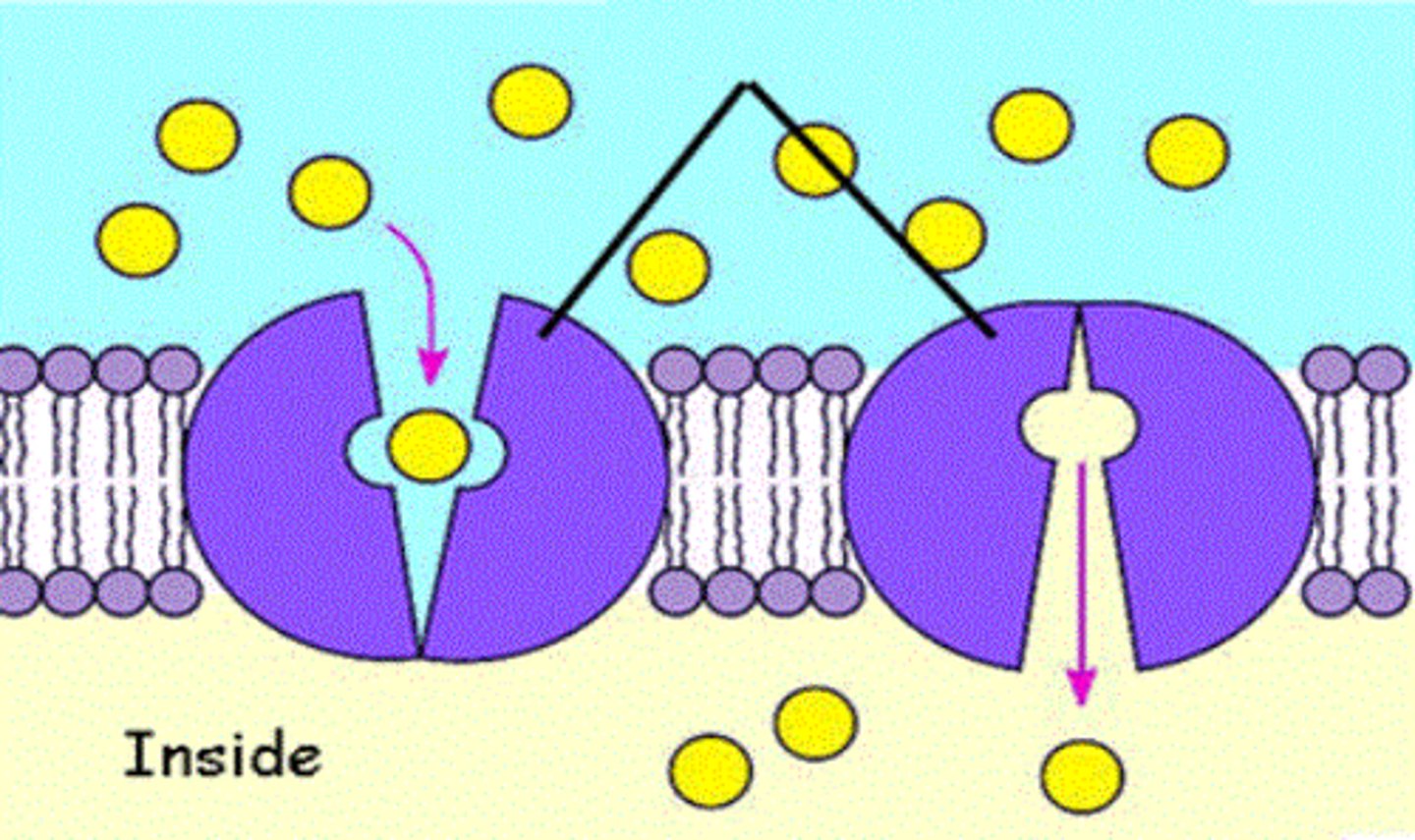
Carrier protein
a protein that transports substances across a cell membrane. Then protein is not open at both ends simultaneously.
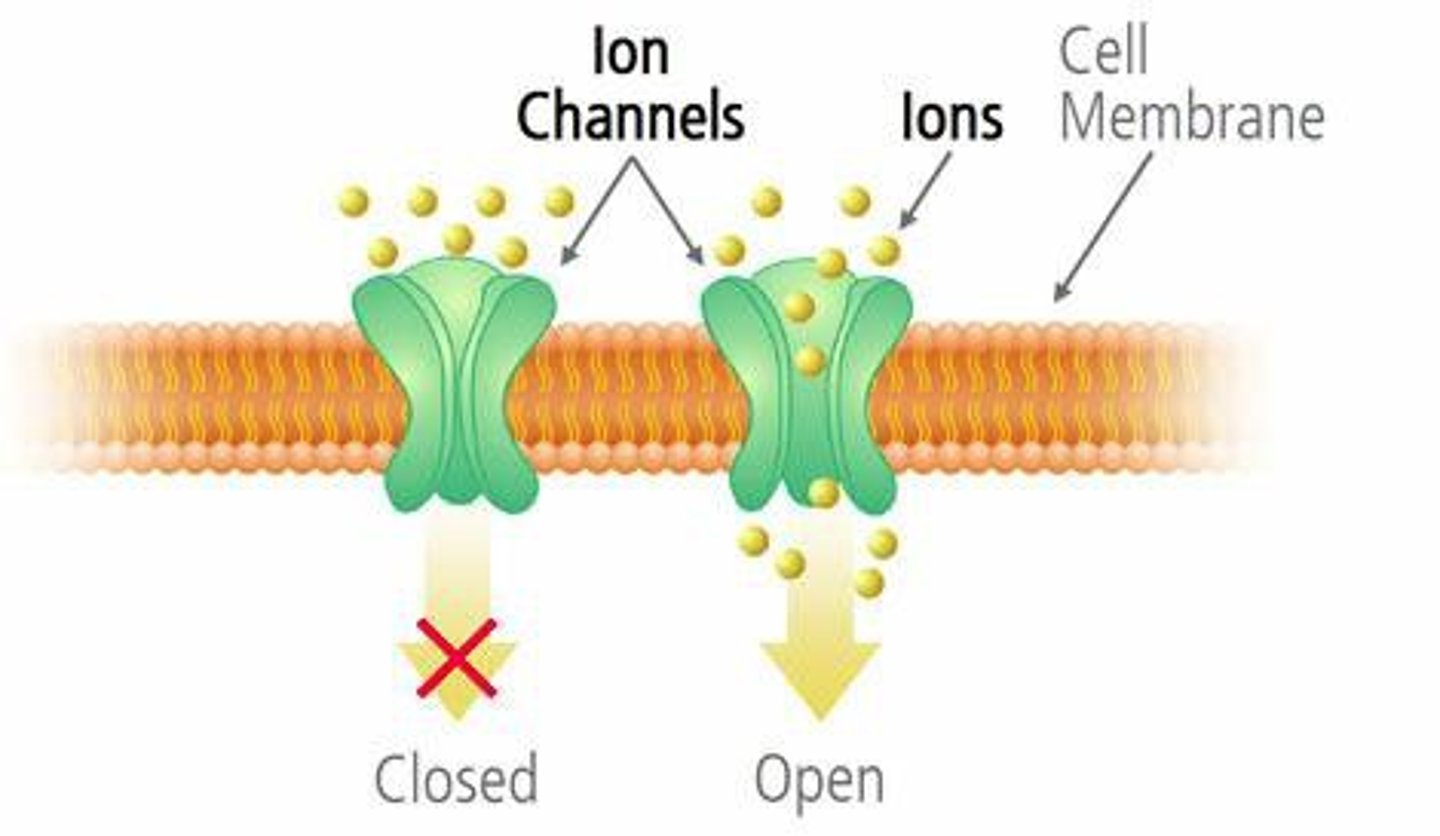
channel protein
a protein in a cell membrane that extends through the membrane and is open on both ends forming a pore or channel
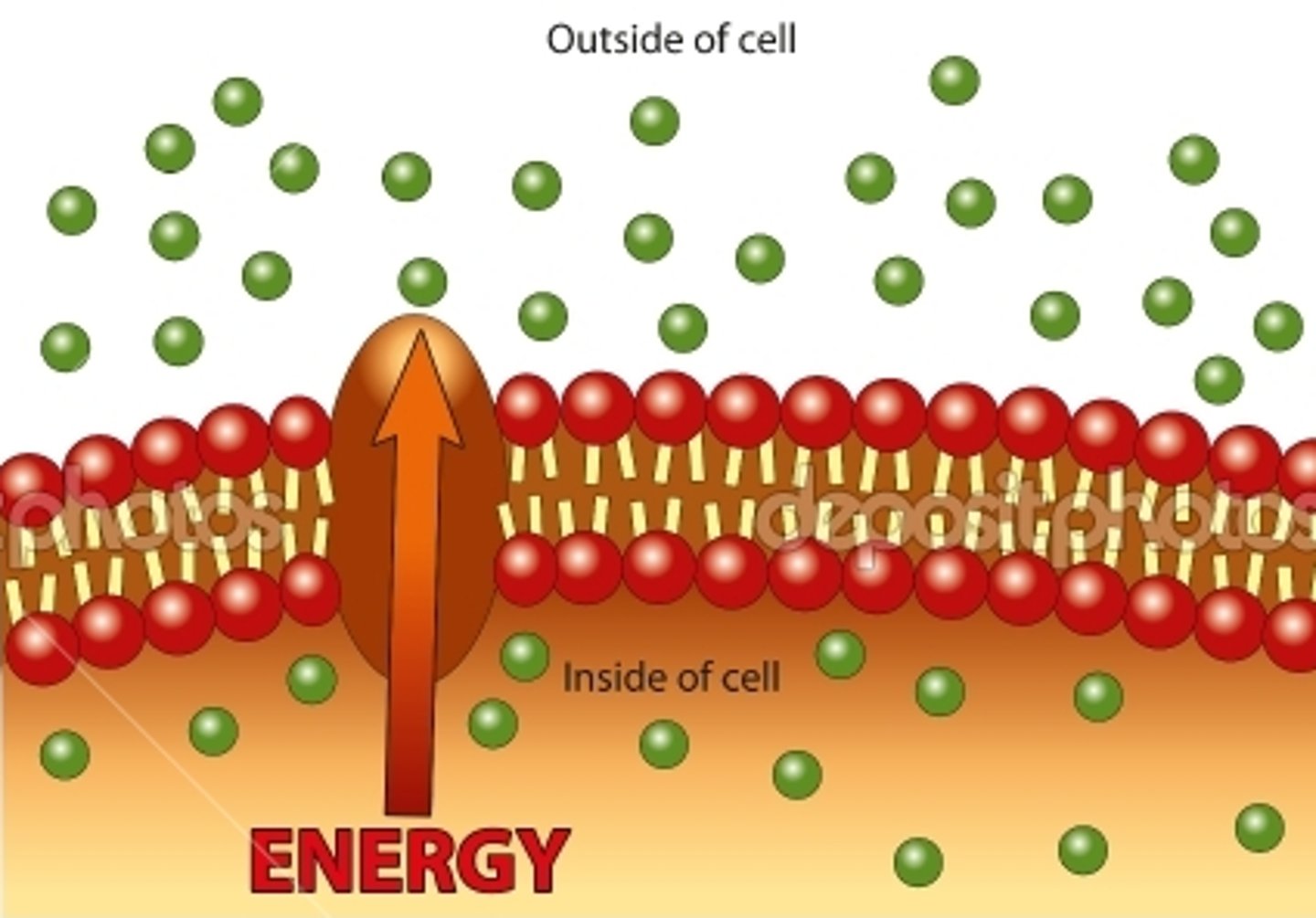
active transport
the movement of chemical substances, usually across the cell membrane, against a concentration gradient; requires cells to use energy.
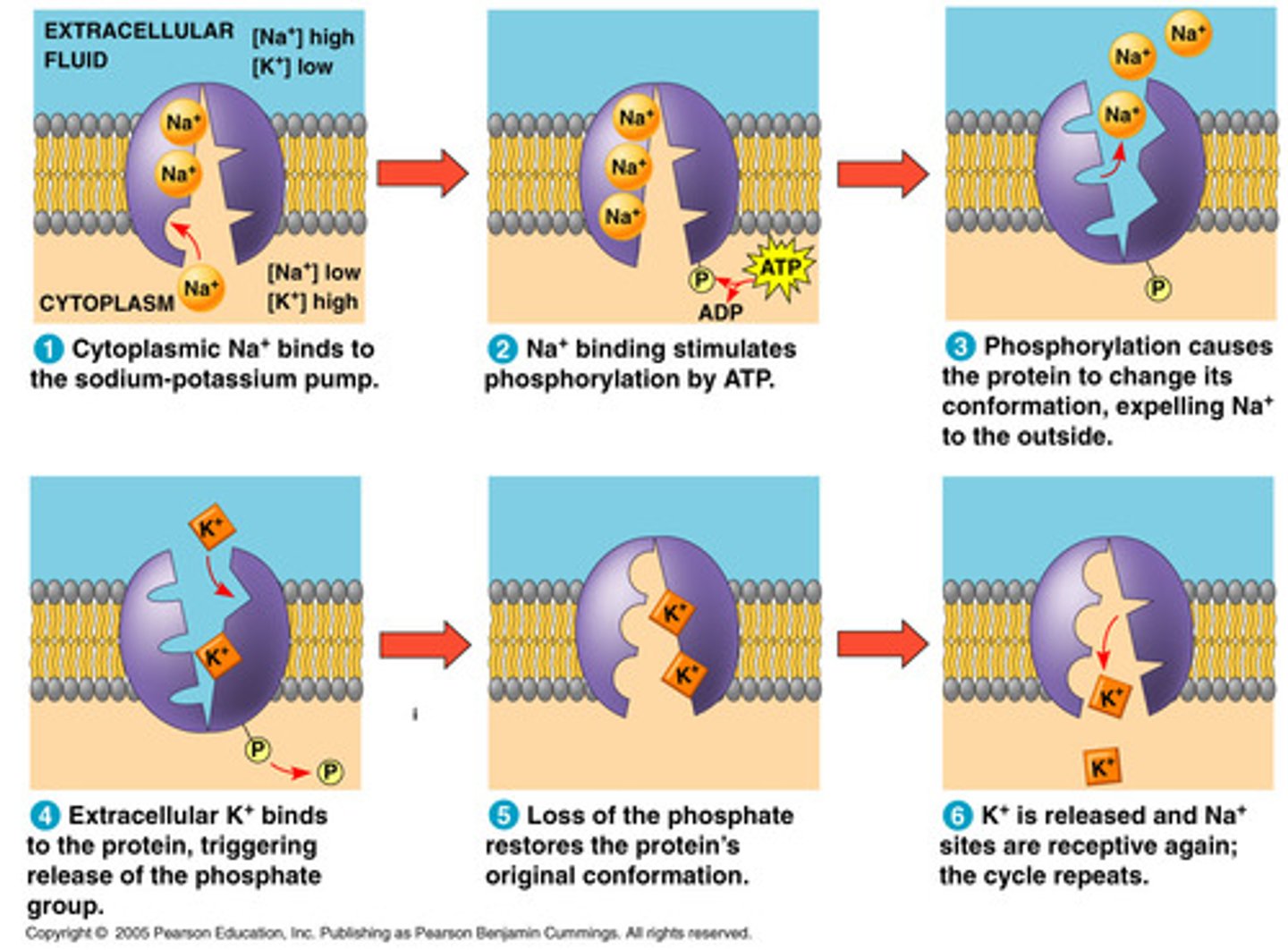
sodium-potassium pump
a carrier protein that uses ATP to actively transport sodium ions out of a cell and potassium ions into the cell.
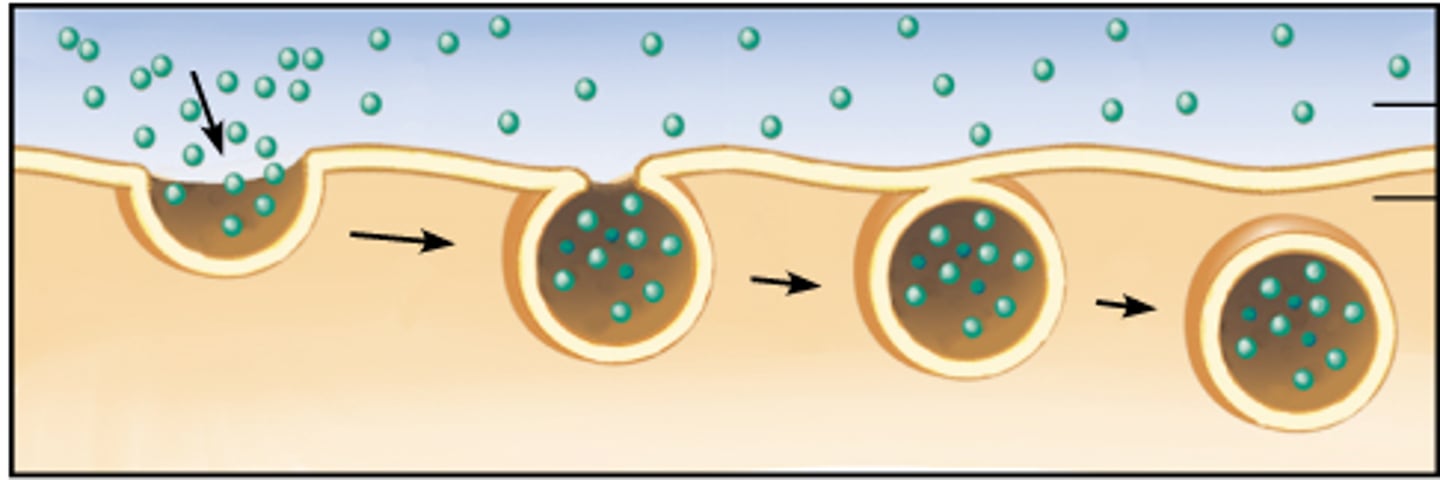
endocytosis
the process by which a cell membrane surrounds a particle and encloses the particle in a vesicle to bring the particle into the cell.
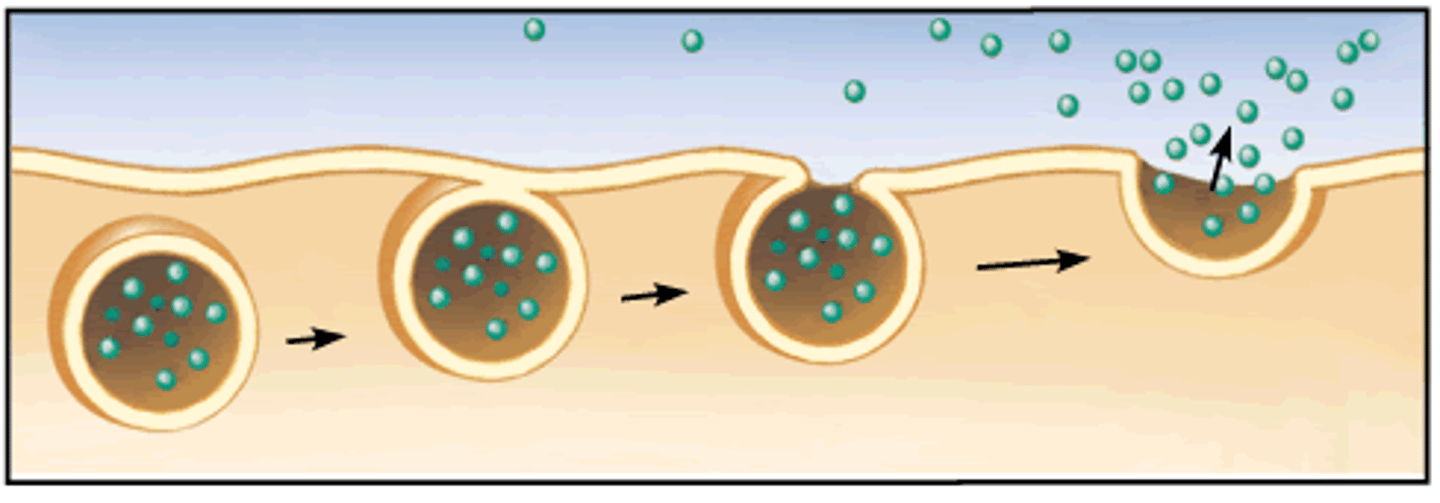
exocytosis
the process by which a substance is released from the cell through a vesicle that transports the substance to the cell surface and then fuses with the membrane to let the substance out.
cholesterol
molecule in the cell membrane that affects it's fluidity
Fluid Mosaic Membrane Model
Description of cell membrane structure in which phospholipids form a bilayer that has a fluid consistency and is embedded with protein molecules.
cell wall
different than a cell membrane; found in plants, bacteria, and fungi (never in animals)
Vesicle
A membrane bound "bubble" or sac that contains materials involved in transport of the cell.
protein channels
proteins in the membrane whose role it is to pass molecules that cannot go through the membrane
semipermeable membrane
A membrane that allows some molecules to pass through but does not allow other molecules to pass through.
ATP
energy
marker proteins
proteins in the cell membrane that identify the cell
with the concentration gradient
from high to low concentration (passive)
against the concentration gradient
from low to high concentration (active)
osmotic pressure
Water pressure
Semipermeable
some substances can pass directly through the cell membrane by passive or active transport
impermeable
not permitting passage
channel proteins
provide corridors that allow a specific molecule or ion to cross the membrane