Psych (10003)
 Call Kai
 Learn
Learn Practice Test
 Spaced Repetition
 Match
Match Flashcards
 Knowt Play
1/354

There's no tags or description
Looks like no tags are added yet.
Name | Mastery | Learn | Test | Matching | Spaced | Call with Kai |
|---|
No analytics yet
Send a link to your students to track their progress
355 Terms
What is cognition
Cognition encompasses the activities of “the mind”
It Involves the acquisition and use of knowledge (informed by sensing and ‘feeling”).
Includes mental processes such as: perception, attention, memory, decision-making, reasoning, problem-solving, imagining, planning and executing actions.
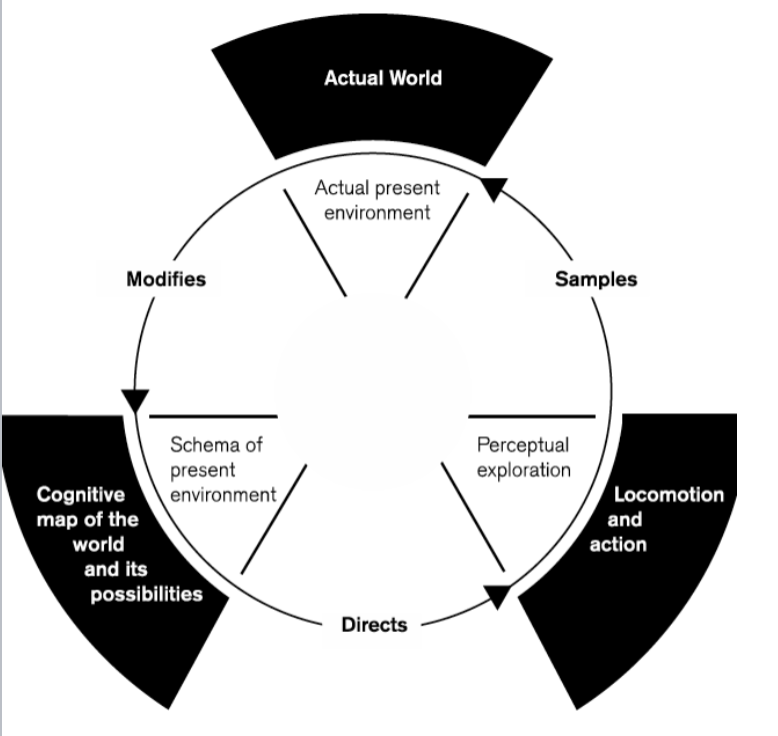
The perceptual cognitive cycle
In any given moment, our current experience is a product of integrating the perceptual present and the cognitive past
An active, embodied, emotional agent embedded in the physical and socio-cultural world
The sequential-cyclical process simplifies a deeper embedding and inter-dependence of brain, body, world and mind
Cognitive agents
A sentient being who acquires knowledge of the world
Mentally represent their word, eg. a cognitive agent can represent to itself a goal like obtaining an object from a location that is not in its immediate environment (a dog might salivate to the sound of his treats being opened).
How can we measure internal mental states
Take objective measures of behavioural responses to controlled stimuli and then make inferences about the underlying cognitive (mental) processes
Use subjective questionnaires to ask people about their experience
Correlate subjective ratings with objective behavioural responses
Define learning
The set of biological, cognitive and social processes through which organisms make meaning from their experiences, producing long- lasting changes in their behaviour, abilities, and knowledge.
Helps us to recognise important things from past experiences and predict the future.
Define sensitisation
A temporary state of heightened attention and responsively that accompanies sudden and surprising events. The learner remains alert to potentially threatening stimuli and has an increased response to subsequent stimuli.
Two fundamental forms of non-associative learning
Sensitisation
Habituation
Define habituation
The gradual diminishing of attention and responsivity that occurs when a stimulus persists without being associated with threatening or rewarding consequences (i.e., it is safe to ignore and to fade into the background noise).
Biologically significant stimuli
Relate to survival
Stimuli that naturally cause either defensive (fight, flight, freeze) or appetitive (approach) reflex responses.
Stimuli that are inherently punishing (aversive) or rewarding (appetitive)
The effects of such stimuli on our physiology is not learned
It is important to learn associations between stimuli that reliably predict biologically significant events, and to learn to respond adaptively.
In classical conditioning these stimuli are called ‘unconditioned stimuli’
Conditioning (associative learning)
Learning associations (relationships) between stimuli, and/or between stimuli and behavioural responses.
Classical conditioning
Learning a predictive relationship between an originally neutral event (neutral stimulus) and a biologically significant event (unconditioned stimulus) that itself naturally causes an autonomic reflex response (unconditioned response) so that the previously neutral event becomes a meaningful stimulus (conditioned stimulus) that can then produce the autonomic reflex response (conditioned response) on its own
Thee-phases of classical conditioning
The conditions that exist before conditioning (before learning)
The neutrality of stimuli that have not yet been associated with appetitive or aversive stimuli.
The innate reflex responses of the learner that occur to stimuli that are naturally rewarding (appetitive) or punishing (aversive or threatening)
During conditioning (learning associations)
Experiencing a predictive relationship (association) between a neutral stimulus and a biologically relevant stimulus.
After conditioning
The previously neutral stimulus can now produce a learned reflex response in preparation for (or expectancy of) a biologically relevant stimulus.
Stimulus generalisation
The behavioural tendency to respond in the same way to different but similar stimuli, extending a learned response beyond the original conditioned stimulus
Biological evidence could be that a predators stimuli may differ slightly, but be vaguely similar, meaning that it would be essential to generalise the conditioned behaviour to similar stimuli for survival
Stimulus descrimination
The learned ability to distinguish between a conditioned stimulus and other similar stimuli, responding only to the specific cue associated with reinforcement
For example, only provide food after a specific bells, ring other bells, however never provide food after them (extinguishing the generalised response across similar stimuli)
Extinction
To remove the association between the stimulus and the biological reflex
Spontaneous recovery
A classically conditioned response returning after extinction
For example if you rest one of Pavlov’s dogs after a series of extinction trials and then present the bell again, the conditioned response will return.
Extinction spaced over multiple sessions will gradually prevent spontaneous recovery (at least in contexts that resemble the extinction context).
Rapid reacquisition
To classically condition a response again after sustained extinction faster than the original conditioning.
Conditioned emotional responses: Little Albert study
Watson and Rayner (1920) first demonstrated that Albert was not afraid of a range of stimuli
But, that Albert showed a natural startle response and distress to the sudden loud sound of a metal bar being struck
The sudden loud sound gave Watson the UCS-UCR he needed to show that Albert could be conditioned to fear a tame white rat that had not previously produced a fearful response.
This is the first human fear-conditioning study.
Albert was exposed to two instances of the rat followed by the loud sound in an initial session, and another five instances a week later.
This was sufficient to produce an extreme conditioned fear response to the white rat alone
Generalisation also occurred to other furry animals and Santa’s white beard.
They did not get a chance to extinguish the response.
Opereant conditioning
Behaviour is shaped by the learner’s history of experiencing rewards and punishments for their actions.
Operant conditioning: the skinner box
Skinner developed the Skinner Box as a ‘microworld’ in which he could could control the animal’s experience of reinforcement and punishment.
Pressing the lever was the target behavior, which could be strengthened through reinforcement and weakened through punishment.
Reinforcement
A behaviour is reinforced (strengthened) whenever a desirable outcome is the consequence.
Behaviours that are reinforced are more likely to be repeated.
A reinforcer is any consequence of a behaviour that makes that behaviour more likely to recur in future.
Reinforcers can be either positive (+) or negative (-).
Positive reinforcement
An animal will learn to reproduce a behaviour if the consequence is receiving something pleasant.
Positive reinforcer → something pleasant that is added to increase behavior
Negative reinforcement
An animal will learn to reproduce a behaviour if the consequence is that something unpleasant will stop.
Negative reinforcer → something unpleasant that is removed to increase behaviour
Continuous versus partial reinforcement
Continuous reinforcement rarely occurs in natural environments
Behaviour is usually reinforced on a partial “schedule”.
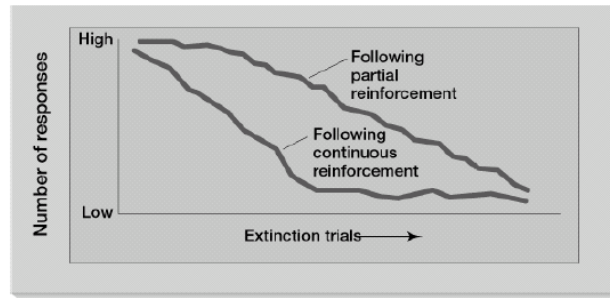
Partial reinforcement leads to more persistent learning because the learner becomes accustomed to reinforcement occurring on some occasions and not others.
Continuous reinforcement leads to rapid extinction once the reinforcer is withheld.
Extinction of a reinforced behaviour
Extinction of an operantly conditioned behaviour occurs when reinforcement is withheld.
Not immediate - sometimes there is a brief increase in responding referred to as an extinction burst followed by decrease in trained behaviour.
The figure shows that responses that have been reinforced on a partial schedule will be slower to extinguish than those reinforced continuously
Shaping behaviour
Shaping reinforces successive approximations to the desired behaviour (reinforcing small steps)
Teaching unnatural behaviour, hence involves many steps, by starting with something that the animal does naturally (high frequency component), and gradually build up
Shaping behaviour: steps
Start by reinforcing a high frequency component of the desired response.
Then drop this reinforcement – behaviour becomes more variable again.
Await a response that is still closer to the desired response – then reintroduce the reinforcer.
Keep cycling through as closer and closer approximations to the desired behaviour are achieved.
Enables the molding of a response that is not normally part of an animal’s repertoire.
Punishment
A behavior is punished (weakened) whenever the learner experiences an undesirable consequence for that behaviour.
Behaviours that are followed by punishment are less likely to be repeated.
A punisher is any consequence of a behavior that makes that behaviour less likely to recur in future
Punishers can also be either positive (+) or negative (-).
Positive punishment
An animal will stop producing a behaviour if the consequence is the presentation of an unpleasant stimulus.
Positive punisher → An unpleasant stimulus that weakens behaviour when added as consequence of the behaviour
Negative punishment (response cost)
An animal will stop producing a behavior if the consequence is that something desirable is taken away.
Negative punisher → A pleasant stimulus that weakens behaviour when removed as a consequence of the behaviour
When is punishment effective
Contingency → the relationship between the behavior and the punisher must be clear
Contiguity → the punisher must follow the behavior swiftly
Consistency → the punisher needs to occur for every occurrence of the behaviour
Drawbacks of punishment
Positive punishment rarely works for long-term behaviour change.
It tends to only suppress behaviour.
Does not effectively teach the desirable behaviour, as it emphasises the undesirable behaviour.
Produces negative feelings in the learner, which do not promote new learning.
Harsh punishment may teach the learner to use such behaviour towards others (social learning).
If there is a desirable outcome for the behaviour, there may be partial reinforcement if it is not punished at every instance.
Alternatives to punishment
Stop reinforcing the problem behaviour (extinction).
Reinforce an alternative behaviour that is both constructive and incompatible with the undesirable behaviour.
Reinforce the non-occurrence of the undesirable behaviour.
Antecedents: define
Cues in the environment that signal to reward or punishment
Discriminant stimulus
An antecedent becomes a discriminative stimulus when it signals which of two or more behaviours is appropriate in a particular context.
For example, in a Skinner Box, a green light may signal food availability, whereas a red light may signal foot-shock.,
Receiving the food or avoiding the foot-shock is contingent on producing the appropriate response – e.g., either pressing a lever for food or moving to the opposite side of the cage to avoid shock.
Controlling and predicting ‘voluntary’ behaviour
Learners pay attention to the stimuli that predict when rewards and punishments will occur.
They learn to recognise the ‘antecedents’ (pre-cursors, or ‘cues’) to reward or punishment.
They learn that the rewarding or punishing outcome is contingent on (depends on) producing a particular behaviour.
This can be leveraged to control when a learner will produce a behaviour.
For example, if a green light reliably signals the availability of reward, there is no point pressing the lever if the green light has not been illuminated.
The relationship between the green light and it’s associated reward is classically conditioned.
The relationship between pressing the lever and receiving the food is operantly conditioned.
Antecedent Behaviour Consequence (ABC) model of operant conditioning
Antecedent → Behaviour → Consequence
The antecedent is a formerly neutral stimulus that becomes a conditioned stimulus through its association with the rewarding consequences
The behaviour is operantly conditioned through the consequence.
For example, the sight of my mobile phone is associated with the rewarding consequences of scrolling through social media. The phone becomes a cue (antecedent) for the voluntary behaviour of scrolling social media and its attendant rewards.
Cognitive map
A cognitive map is a mental representation of the spatial characteristics of a familiar environment.
Tolman set out to test the idea that rats develop ‘spatial maps’ of their environment, rather than a series of chained responses to external cues.
Studied using maze-running experiments.
Latent learning
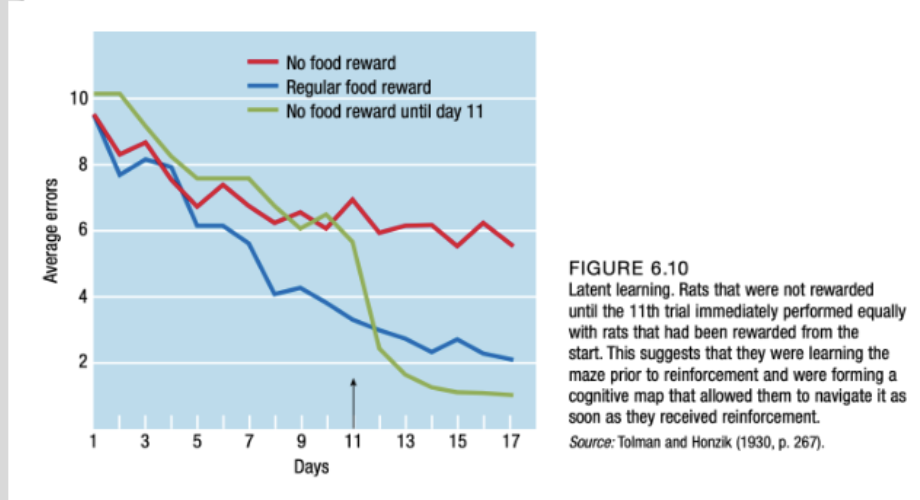
Tolman challenged the traditional behaviourist account with another classic experiment in which he demonstrated that learning could occur in the absence of rewards and punishments
Latent learning means “hidden” learning
The Group C (green line) rats’ learning was not observable (latent) until the goal was provided.
Rewards affect whether the learned behaviour will be demonstrated, not whether learning has occurred
Learning can occur in the absence of directly experienced rewards and punishments.
Social cognitive learning theory
Observational learning is another example of how learning can occur without direct experience of reinforcement or punishment.
Learning takes place “socially” and “ vicariously” through observing others (“models”).
Albert Bandura is the psychologist most associated with the study of observational learning.
Observational learning takes place through active judgement and constructive processes – that is, it involves cognitive processes of mental representation.
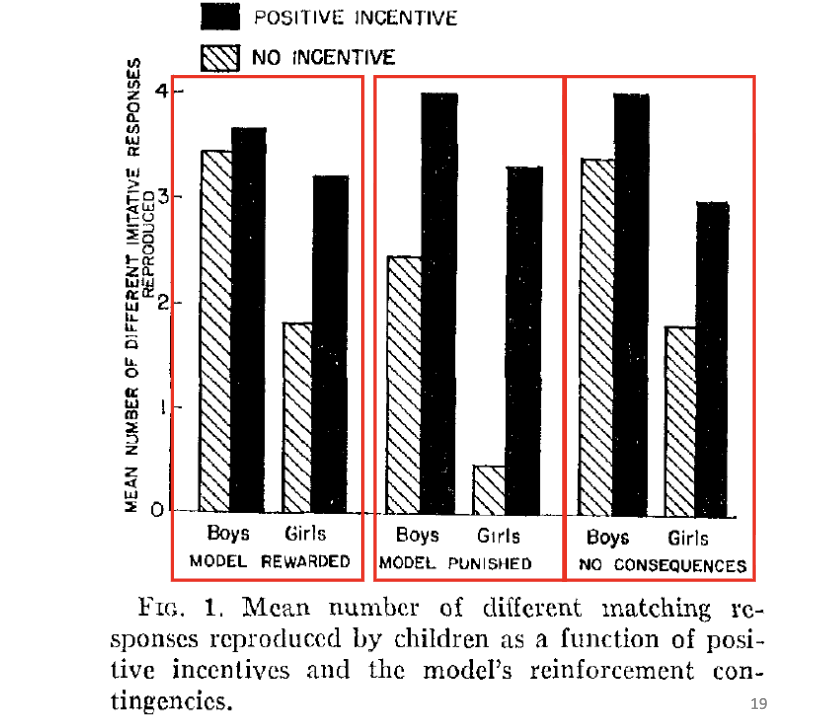
Bandura: study design
Three groups of 4-year-old children watch the same film of an adult behaving aggressively towards a ‘bobo doll’.
Groups differ only in the final scene of the film:
1. Observe adult positively reinforced
2. Observe adult punished
3. Observe no consequences
Children then play in a room of toys, including a Bobo-doll.
Observed through a one-way mirror
Record how many of the aggressive behaviours are reproduced by each child.
Then given a reward to show the experimenter the behaviours they had seen in the film.
Bandura: film of adult modelling aggression
The model walked up to an adult-size Bobo doll and ordered him to “clear the way”.
After glaring at the doll, the model exhibited four novel aggressive responses, each accompanied by a distinctive verbalisation:
The model laid the Bobo doll on its side, sat on it, and punched it in the nose while remarking, "Pow, right in the nose, boom, boom."
The model then raised the doll and pommelled it on the head with a mallet. Each response was accompanied by the verbalisation, "Sockeroo ...stay down."
The model then kicked the doll about the room, and these responses were interspersed with the comment, "Fly away.”
The model threw rubber balls at the Bobo doll, each strike punctuated with "Bang."
Bandura: group 1 positive reinforcement
In the model-rewarded condition, a second adult appeared with a supply of candies and soft drinks and informed the model that he was a "strong champion" and that his superb, aggressive performance clearly deserved a generous treat.
He then poured him a large glass of 7-Up and readily supplied additional energy- building nourishment, including chocolate bars, Cracker Jack popcorn, and an assortment of candies.
While the model was rapidly consuming the treats, his admirer symbolically reinstated the modelled aggressive responses and engaged in considerable positive social reinforcement.
Bandura: group 2 positive punishment
In the model-punished condition, the reinforcing agent appeared on the scene shaking his finger menacingly and commenting reprovingly, "Hey there, you big bully. You quit picking on that clown. I won't tolerate it."
As the model drew back, he tripped and fell, the other adult sat on the model and spanked him with a rolled-up magazine while reminding him of his aggressive behaviour.
As the model ran off cowering, the agent forewarned him, "If I catch you doing that again, you big bully, I'll give you a hard spanking. You quit acting that way.”
Bandura: group 3 no consequences
Children in the no-consequences condition viewed the same film as shown to the other two groups except that no reinforcement ending was included.
Bandura: results
Bandura’s study demonstrated vicarious reinforcement and vicarious punishment
That learning can occur socially through observation, in the absence of directly experienced consequences.
Performance of aggressive acts is influenced by mental representations of observed consequences.
Knowledge remained latent in the model-punished group until a reward was introduced.
What is memory
A set of storage systems and processes for encoding, storing, and retrieving information acquired through our senses and for relating this information to previously acquired knowledge and experience.
The mental representation of knowledge within memory systems stored within neural networks of the brain.
Memory processes: encoding
The processes involved in attending to and acquiring information from experiences and mental processes
Attention to elements of an experience
Interpretation and integration of experience with prior knowledge
Memory processes: storage
Memory traces are stored in networks of neurons throughout the brain.
For example:
neurons in the visual cortex store information about the sights that were part of an experience;
neurons in the amygdala store information about the emotions that were experienced
Different kinds of memories are stored in different networks.
Storage capacity and duration differ between the different memory systems.
Memory processes: retrieval
Remembering”, “knowing” and ”doing”:
Personal reminiscence of past experiences
Remembering facts
Executing practiced motor skills
Conditioned responses
Explicit and implicit retrieval processes
Retrieval is a reconstructive and (sometimes) error-prone process.
Memory updates after retrieval through ‘reconsolidation’
Sensory registers/memory
A temporary, sensory-based representation of input received through sensory channels.
Only some of the information stored in sensory memory will be retained.
Iconic (visual) and Echoic (auditory) memory.
Brief duration (decays quickly)
Large capacity (relative to STM).
Capacity of duration of iconic (visual) sensory memory
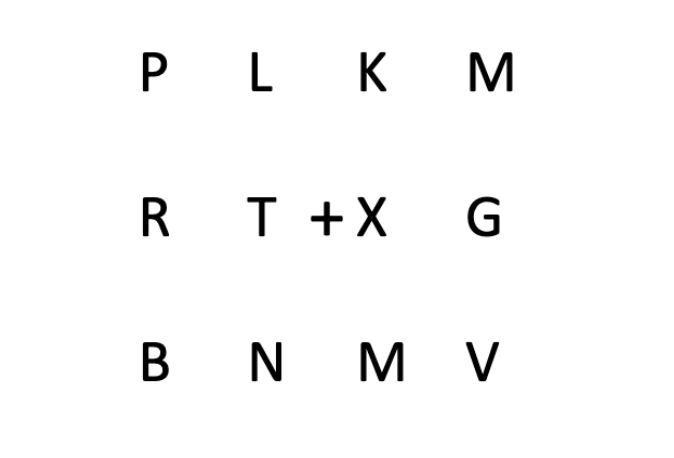
George Sperling (1960) used a series of experiments to determine the capacity and duration of iconic memory
Sperling found that participants could name only 4 of the letters on average.
However, they reported feeling like they briefly had access to a visual image of the entire display, but that it faded more quickly than they had time to read the letters.
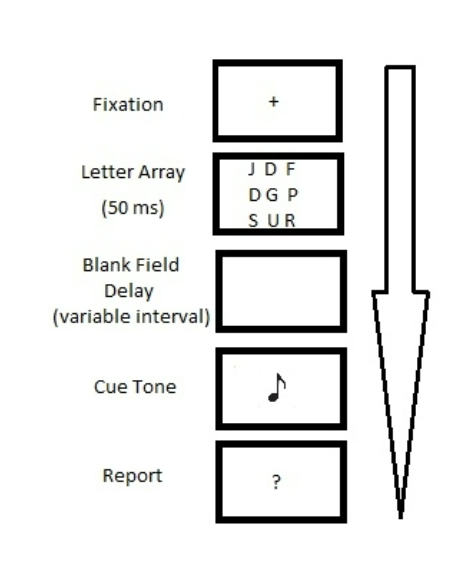
Partial report: iconic memory capacity
The results of the partial report method provided a much larger estimate of iconic memory capacity.
Because participants could recall all of the letters from any cued row this demonstrated that all 12 items were available.
The full report method underestimated the capacity of the iconic trace by confounding the reporting method with the duration of the iconic trace.
Iconic memory: duration (improved methodology)
A simple modification of the partial report method allowed Sperling to estimate the duration of the iconic trace.
He systematically varied the retention interval between turning off the stimulus array and presenting the cue for which line to report.
He found that memory performance reduced to one item after approximately 500 milliseconds (half-a- second).
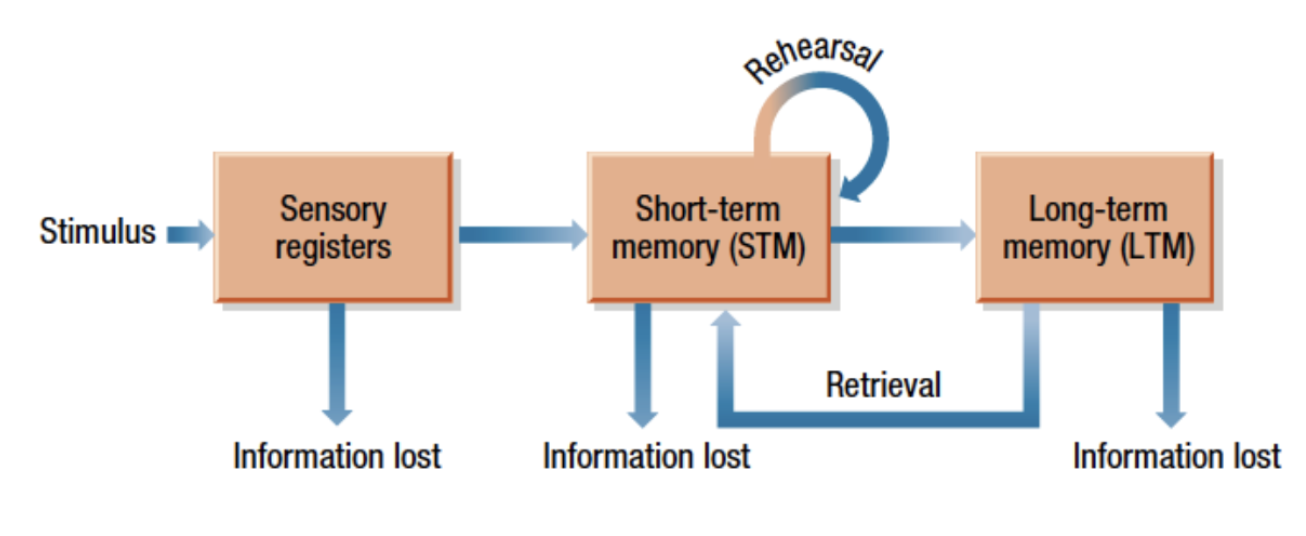
Short term memory (working memory model)
Our conscious representation of ‘the present moment’.
A temporary store in which we integrate current sensory experience with long-term memory to achieve current goals
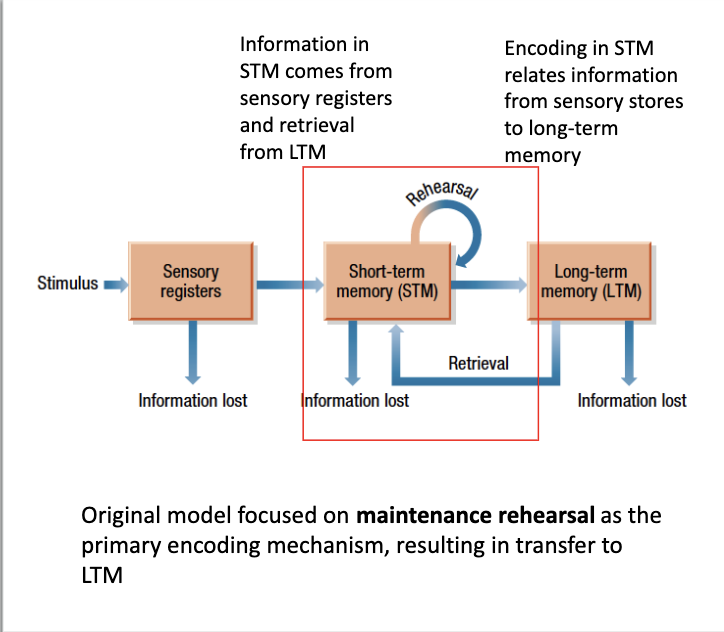
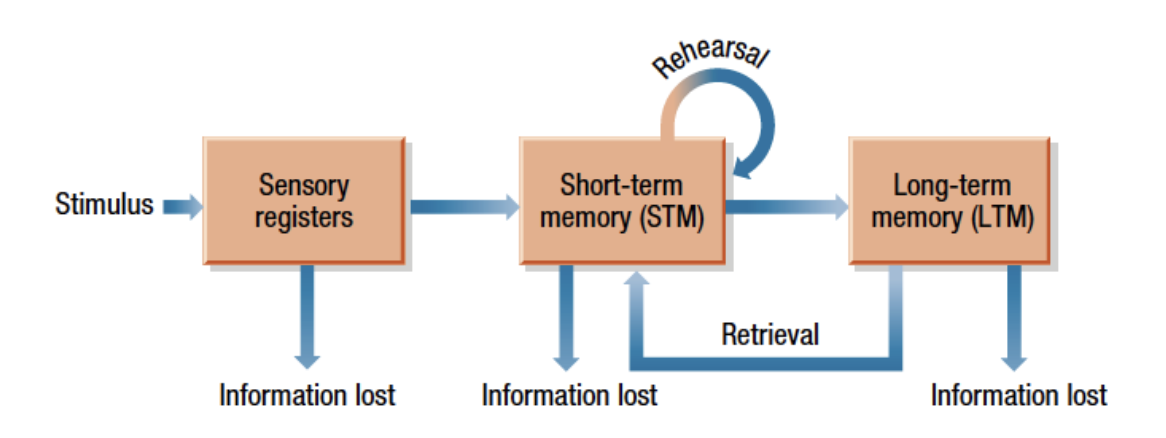
Information comes from the sensory registers and retrieval from long term memory
Encoding in the short term memory related information from sensory stores to long-term memory.
Capacity → Limited
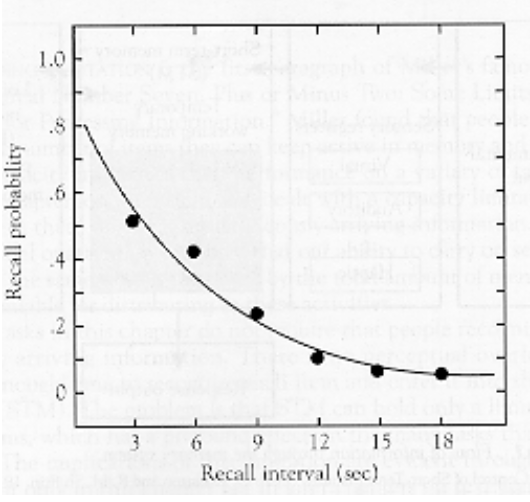
Duration → 15-30 seconds
Measuring verbal STM capacity
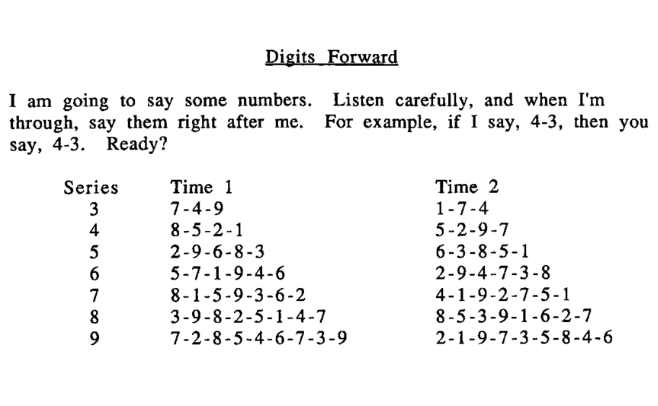
Assessed using a digit-span task
Immediate serial recall of verbally presented digits (i.e., number names) in the order they were presented
The length of the sequence is increased by one item after each successful attempt to determine the upper limit or “span”
A participant’s span is reached when they fail on two trials at a given series length
So, if you were unable to recall both trials for a series of 8 items, then your digit span would be 7 items.
Average adult span is 7 (+/- 2) items
Measuring the duration of STM
The Brown-Peterson task
Recall the names of 3 consonants
(e.g., “D-P-R”) • Memory probed (tested) at 3-second retention intervals
To prevent rehearsal, participants were required to count backwards from a given number in 3’s until told to stop • i.e., a “filled retention interval”.
For example: Participants hear “D-P-R – 306”
Count backwards (aloud) from 306 until asked to recall the sequence of letter names.
Maintenance rehearsal and transfer to LTM
Verbal rehearsal keeps information active in STM and strengthens the trace to increase the chance it will be stored in LTM
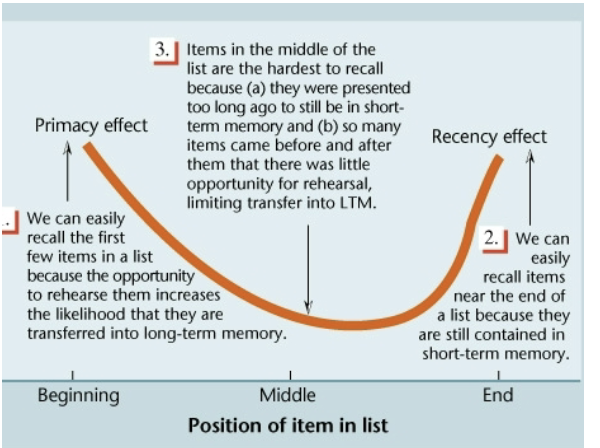
Serial position effects and transfer to LTM
Immediate free recall of lists of numbers or words is affected by the position of items in the studied list
Primacy effect provides evidence for transfer to long-term memory for items that receive more rehearsal
Recency effect reflects availability of information still in short-term memory
Evidence:
Recency effect is reduced by introducing a filled retention interval before recall
Primacy effects are eliminated if rehearsal is prevented by introducing a concurrent task (repetition of a word)
From STM to the working memory model
The purpose of a STM is to encode information meaningfully.
Meaningful processing of information during encoding will produce long-term memory traces • ‘Shallow’ processing is less effective for long-term retention.
Craik & Tulving (1975) test this hypothesis with their study of Levels of Processing where they are investigating the idea that LTM for words is influenced by the ‘depth’ (level) of the encoding process used in STM. Studies like Craik and Tulving’s suggested the need for a more detailed account of STM as a multi-component system that supports meaningful encoding and active reasoning and problem-solving.
Rather than focusing on maintaining information for immediate recall, the focus shifts to thinking about STM as providing a mental work-space that helps us to achieve our current goals and update our understanding of the world.
Alan Baddeley introduces his model of Working Memory
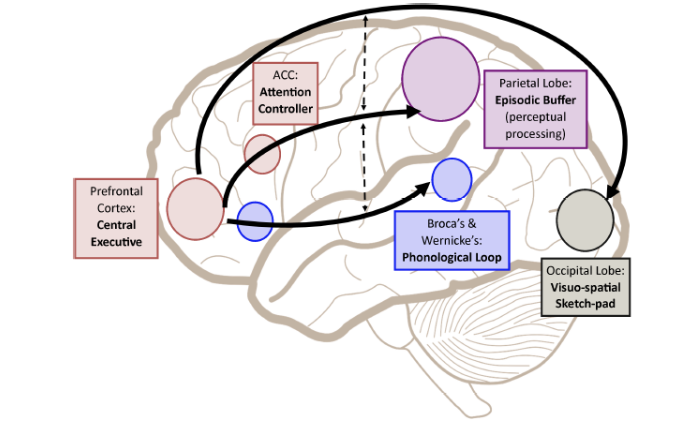
The working memory model
Central executive directs attention to and retrieves information from PL and VSS for integration in the episodic buffer.
Multi-modal memory traces formed in the episodic buffer and stored in episodic long- term memory
The PL and VSS are independent but interacting sub-systems, one for visual- spatial information and one for auditory-verbal information PL and VSS access and update language-based and visual representations in long-term memory
Working memory model: overview
Arised from the need for an explanation of STM that supports meaningful encoding and active reasoning and problem-solving.
New emphases of visual and spatial memory (visuospatial sketchpad)
Sub-systems of STM interact with the long term memory.
Episodic buffer integrates information from the visuo-spatial sketch pad and phonological loop. This results in an episodic long-term memory.
Multi-store model: overview
Present moment is based off of 'memories' from the sensory registers.
Items in the middle of the list are the hardest to recall as they were presented too long ago to still be in STM, and so many items came before and after them that there was little opportunity for rehearsal, limiting transfer to into the LTM.
If rehearsal is prevented, and a time interval beyond the duration of STM is uptake the recency effect is eliminated
Primacy effects are eliminated when rehearsal is prevented throughout the task.
A challenge to this model Is that it does not take into account the levels of processing impact memory, ie if more meaningful processing occurs, items are retained at a higher level
The phonolgical loop
A mental workspace for manipulating auditory and verbal information.
Digit-span backwards is considered a test of phonological/verbal working memory because you must actively manipulate the information in memory, rather than just maintain the sequence.
Important in language development and verbal reasoning tasks.
The visuo-spacial sketchpad
A temporary store for representations of visual and spatial information such as faces, objects written words and cognitive maps
Enables the mental manipulation of visually and spatially represented information:
Mental rotation of objects
Visual and spatial mnemonics
Mental arithmetic
“Cognitive maps” for navigation
The central executive
Executive processes are used in planning and coordinating complex behavior:
Goal orientation
Focus attention
Control of social behaviour
Switching between tasks, updating memory, inhibition of distracting information
Planning and problem solving
Executive processes are controlled by areas in the pre-frontal cortex, especially dorsa-lateral prefrontal cortex and the anterior cingulate cortex (ACC)
Neural basis of working memory
Executive processes are based within networks in the pre-frontal cortex
The phonological loop (PL) is a left- hemisphere fronto-temporal lobe network.
The visuo-spatial sketchpad (VSS) is a right occipital-parietal network.
The episodic buffer integrates multi-modal information in an integrated ‘episodic trace’ within the parietal cortex (association cortex)
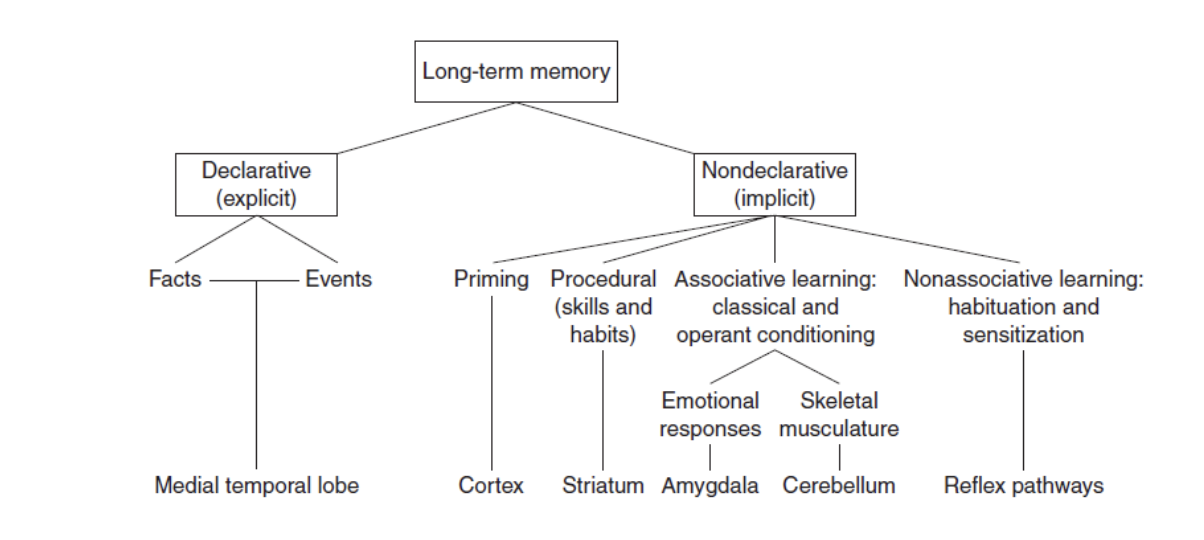
Divisions of long term memory: declarative memory (explicit)
Knowing what, why, where, and when”
Facts, events, locations, autobiographical knowledge
Reminiscence of personally experienced events
Hippocampal-dependent
Examples of non-declarative memory
Motor skills (e.g., riding a bike)
Habits (proceduralised memories - driving the route to work without thinking)
Cognitive skills (e.g., reading)
Sub-divisions of declarative memory
Endel Tulving proposed that declarative memory can be sub-divided into the episodic and semantic memory systems.
Sub-divisions of declarative memory: episodic memory
Vivid first-person recall of personally experienced events
When/where memories
Contextualised memory
‘Mental time travel’
Sub-divisions of declarative memory: semantic memory
General knowledge of facts about the world and yourself
What/Why memories.
Abstract knowledge (includes abstract self-knowledge)
Divisions of long term memory: non-declarative memory (implicit)
Non-declarative memory is revealed when previous experience facilitates (improves) performance on a task
The improvement in performance does not require conscious recollection of the prior learning experiences.
We get better at things with experience and practice.
We learn associations between recurring stimuli in the environmentNon-hippocampal dependent
Sub-divisions of non-declarative memory
Procedural memory:
Learning and performance of motor and cognitive skills
Priming:
demonstrated by a change in the ability to identify a stimulus as the result of prior exposure to that stimulus, or a related stimulus.
E.g., Associative/semantic priming
Reading the word “nurse” facilitates subsequent reading of the word “doctor”
More frequently encountered words are easier to perceive and comprehend
Classical conditioning (associative learning):
Learning to attend to a formerly neutral stimulus because it has become associated with a meaningful stimulus.
Operant conditioning (associative learning)
Learning to produce/avoid a behaviour because it has become associated with rewarding/punishing consequences •
Non-associative learning:
Habituation: learning to ignore a stimulus because it is trivial (e.g., screening out background noise).
Sensitization: Learning to attend to a potentially threatening stimulus.
The architecture of long term memory
Amnesias
Loss of memory caused by brain damage, disease, drug abuse, or psychological trauma.
Anterograde and retrograde forms of amnesia.
Retrograde amnesia
Inability to remember events or knowledge from before the brain injury
Usually temporally graded.
Anterograde amnesia
Inability to consolidate declarative memory from events or knowledge experienced after the time of the brain injury.
Memory and amnesia
The different patterns of memory loss seen in case studies of amnesia patients support the proposed distinction between the declarative and non-declarative memory systems.
Amnesias affect declarative memory but not non-declarative memory.
Declarative memory depends on the hippocampus and other medial-temporal lobe (MTL) structures.
Amnesia case study: HM
Henry Gustav Molaison (1926 - 2008)
Removal of the medial portion of both temporal lobes, including the hippocampi, to treat epilepsy.
After the surgery, the epileptic seizures were controlled.
Had temporally-graded retrograde amnesia
Memory is worse for personally experienced events from years just before the operation
Severe anterograde amnesia
Unable to consolidate or retrieve new episodic memories
Unable to learn new semantic facts.
For example, H.M. did not acquire new vocabulary introduced since 1953 despite frequent exposure to radio and TV.
Normal sensory and working memory (STM). For example, normal digit span ability
The role of the hippocampus in the consolidation of declarative memories
The severe anterograde amnesia that results from removal of hippocampus bilaterally indicates that these structures must be crucial for the consolidation of new declarative information.
Craik (2020) conceded that cases like H.M. forced him to adjust his account of elaborative encoding to include not just the process of interacting meaningfully with information in working memory, but also an additional process of consolidation, mediated by the hippocampus.
Learning in amnesia: dissociation of declarative and non-declarative memory
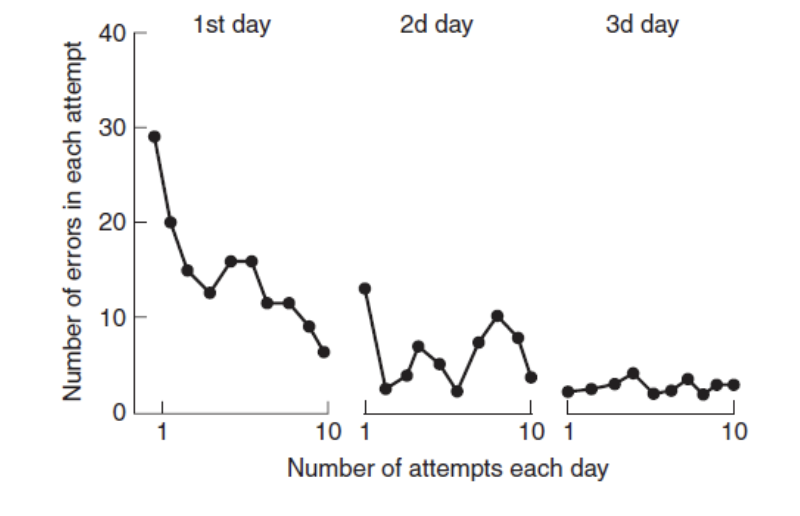
People with anterograde amnesia show normal procedural learning (learning a new motor skill).
For example, the mirror-tracing task.
Despite stating they have never performed the task, they show normal improvement with practice.
Demonstrates that procedural learning is independent of the hippocampal system required for consolidation of declarative memories.
Preserved non-declarative memory in anterograde amnesia
Further studies show that patients with anterograde amnesia show other types of preserved non-declarative memories
Intact classical and operant conditioning
Intact priming effects.
Normal habituation and sensitisation
Others with severe anterograde amnesia include patients with Korsakoff’s syndrome, people with depression undergoing bilateral ECT, patients with anoxic encephalopathy, Alzheimer’s disease.
Define neuroscience
Study of the function and structures of the nervous system (e.g. brain, neurons, synapses etc)
Define behaviour
Relates to the observable actions of humans, animals (or artificial systems). In psychology there is a history of using behaviour as an indicator of internal mental processes, thoughts, emotions desires (“behaviourism”).
What is behavioural neuroscience
It is now clear that behaviour is really only half the story and a complete understanding of the internal workings of the human mind (i.e. perceptions, thoughts and emotions) cannot be achieved by observing behaviour alone.
Behavioural Neuroscience is the most common term used to describe research in this field involving animals, but all are interested in how the activity of the brain impacts both mental processes and behaviour
History of behavioural neuroscience: linking the mind to the brain
Many ancient cultures (Egyptian, Indian, Chinese) believed heart to be seat of the mind
A papyrus scroll from Egypt dating back to ~1600BCE, represents first link between brain damage & mental symptoms (described the symtpoms and diagnosis of two individuals with brain injuries.
History of behavioural neuroscience: Hippocrates Ancient Greece
Considered the father of modern medicine
First to propose that the brain controls the body (our brain is the command centre of the body, not the heart)
Notes the behavioural effects of brain damage
Dissection was not allowed in Greece, so he observed anatomy through open wounds after the traumatic head injury of soldiers/gladiators.
History of behavioural neuroscience: Rene Descartes France
A French philosopher formulated the mind-body problem: that even if you understand how the brain works, i.e. neurons, etc., the reason why that creates a conscious experience remains unclear (evidence is correlational in nature)
Was the first to discuss interactions between the mental and physical (“I think therefore I am”).
Considered humans and animals alike machined
Interested in involuntary reflexes and believed behaviour was driven by a system of fluid and pistons.
History of behavioural neuroscience: Luigi Galvani Italy
First to suggest nerve signals are electrical (not fluid)
Rejected the idea of animal spirits flowing through hollow nerves
Made a chance discovery that an electrical charge applied to a frog’s leg made the muscle contract
Suggested that nerves must be coated in fat to prevent electricity from leaking out
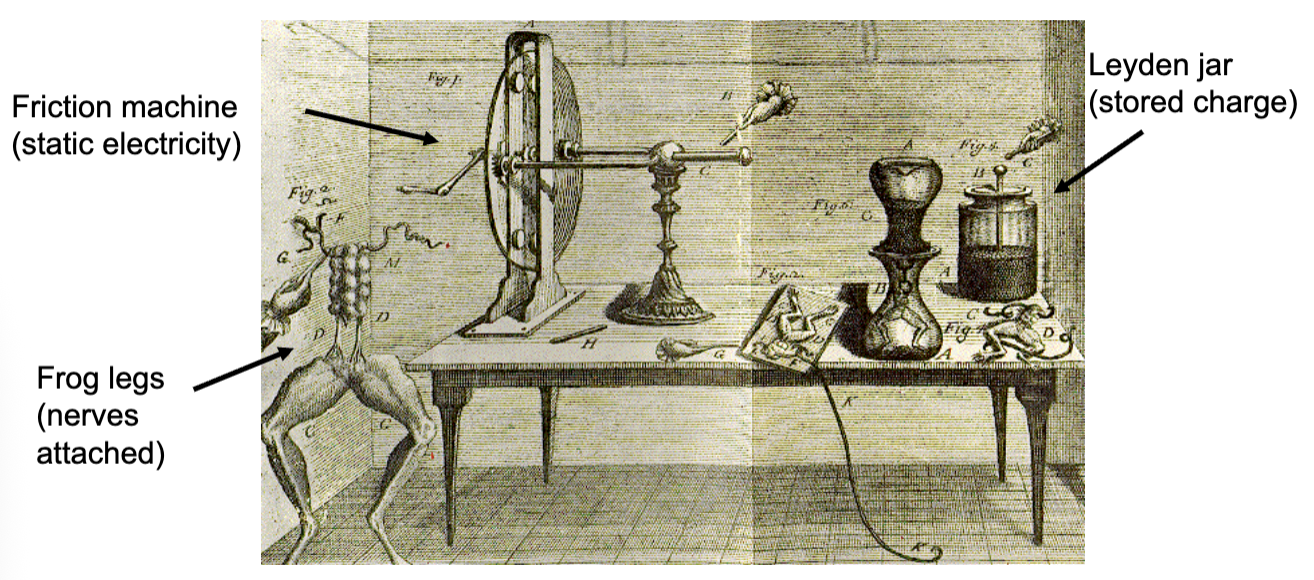
History of behavioural neuroscience: Franz Joseph Gall, Germany
Moving beyond “Mind” and “Brain,” Gall was first to propose idea of a modular brain
Was interested in relationship between brain and personality
Influenced by physiognomy (the art of ascribing personality characteristics to facial features)
Proposed that the brain is composed of several distinct ‘organs of thought’ or faculties reflected by characteristic patterns of bumps on the skull, where skull maps could be used to “read” a person’s character
He compared animal and human skulls as well as people from “extremes” of society such as criminals or famous artists 15 Franz Joseph Gall, Germany
Gall’s method was termed phrenology. It is flawed, but Gall introduced the important notion of “cortical localisation of function” - Modular organisation
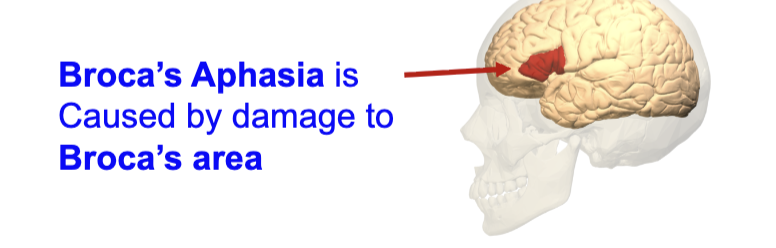
History of behavioural neuroscience: Paul Broca, France
Provides first solid evidence of brain modularity
First described in a patient named Lebrorgne
Leborgne was unable to speak after damage to his left frontal lobe, but had normal chewing and language comprehension
Similar patients were subsequently seen with damage in the same area
Before brain scans, unusual deficits described patients required subsequent investigation through autopsy – supported views of “localisationists.”
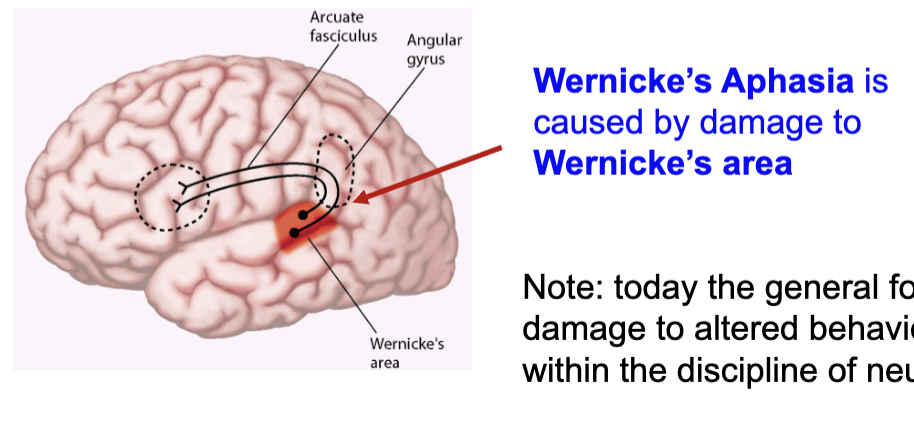
History of behavioural neuroscience: Carl Wernickle, Germany
Soon after Boca’s discovery, Wernicke described patient with
Inability to comprehend speech
Normal hearing & language production
Similar patients subsequently seen with damage to posterior part of the superior gyrus
Comparative neuroanatomy
Comparing brain structures across species
Many of the advances in behavioural neuroscience come from animal research
Even the basic Fruit Fly (Drosophila) shows similar patterns of activity in sleep anaesthesia and are used to “model” human disease. C
Comparative neuroanatomy: key findings
Size doesn’t matter:
An animal’s intelligence is not proportional to the size of the brain. Brain size typically scales with the size of the animal’s body.
Even if the brain is large compared to the animal's body size, this still has no impact.
A blue whale has a larger brain, for example, not because it has more neurons, but because it has larger neurons.
Numbers count:
The more neurons within the brain, and the greater the number of synaptic connections between neurons, the greater the complexity of function that the brain can support.
Brain supports functional separation:
Animals that have particular types of skills or requirements have relatively larger brain areas dedicated to that particular function.
Comparative psychology
Comparing the psychological process and behaviour across species
Charles Darwin made a number of claims that the root of virtually all human behaviour derives from natural processes operating on ancestral species, rather than gods or angels.
These claims lead to many moral and ethical debates
Debates continue today regarding the similarity of psychological processes in humans and animals
Comparing conscious / subjective experience is much harder
Evidence of visual illusions also exists across species
Simulating the brain and mind
With the rapid growth of computer technology, the use of computers has now move beyond complex analysis of traditional neuroscience data, to simulation and modelling the human brain.
The power and potential of computational approaches can be seen in the following massive multi-year, multi-million dollar, international brain projects (Allen brain insitute/the human brain project)
The Allen Brain Institute
$100million donation from Microsoft founder Paul Allen.
Creating very detailed maps/atlas with data from mouse & human brain from brain areas > neurons> genes
The Human Brain Project
EU 10-year initiative worth over $1Billion.
Emphasis on simulating neurons for “brain inspired computing” “neuromorphic computing” (sometimes described as “brain on a chip”) - In silico neuroscience
HBP seeks to bring the bring vital software tools to neuroscience to:
reduce the need for animal experiments
study diseases in unprecedented in silico experiments
improve the validation of data and experiments with computational validation.
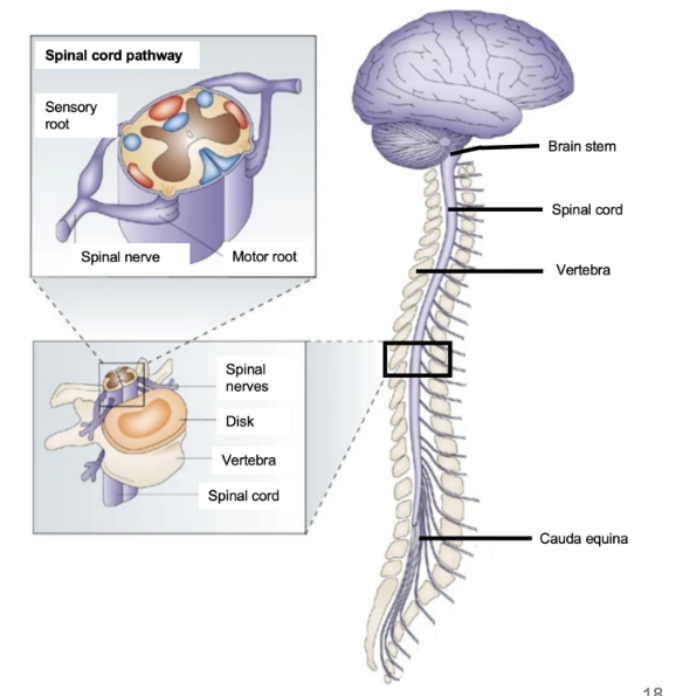
Central Nervous System (CNS)
Contains the brain (including the retinal cells within the eyeball) and the spinal cord.
The brain is encased by the skull, while the spinal cord sits within the vertebrae, which allows both protection and flexibility in a moving body