Evidence-Based Substance Misuse Interventions and Relapse Prevention Strategies
 Call Kai
 Learn
Learn Practice Test
 Spaced Repetition
 Match
Match Flashcards
 Knowt Play
1/169

There's no tags or description
Looks like no tags are added yet.
Name | Mastery | Learn | Test | Matching | Spaced | Call with Kai |
|---|
No analytics yet
Send a link to your students to track their progress
170 Terms
What is the goal of evidence-based approaches to substance misuse?
To ensure consistency in care across communities and provide the best possible outcomes for individuals.
What does tertiary prevention in substance misuse aim to achieve?
It aims to limit and reduce complications and dysfunction related to addiction through effective care, treatment, and rehabilitation programs.
What are examples of tertiary prevention programs?
Detox programs, recovery programs, and concurrent disorder programs.
What is the first step of treatment in medically assisted detox?
Medically assisted detox is only the first step of treatment.
What is the purpose of medications in drug addiction treatment?
Medications are used to suppress withdrawal symptoms, assist in detoxification, and manage substance misuse.
What is Acamprosate used for in alcohol withdrawal treatment?
It reduces alcohol intake by suppressing excitatory neurotransmission and enhancing inhibitory transmission.
What is the role of Naltrexone in treating alcohol dependency?
It reverses the effects of opioid addiction and reduces or eliminates alcohol cravings.
How does Topiramate help in alcohol addiction treatment?
It decreases alcohol cravings by inhibiting the release of mesocorticolimbic dopamine.
What is Opioid Agonist Treatment (OATS)?
A treatment approach that uses medications to manage opioid addiction.
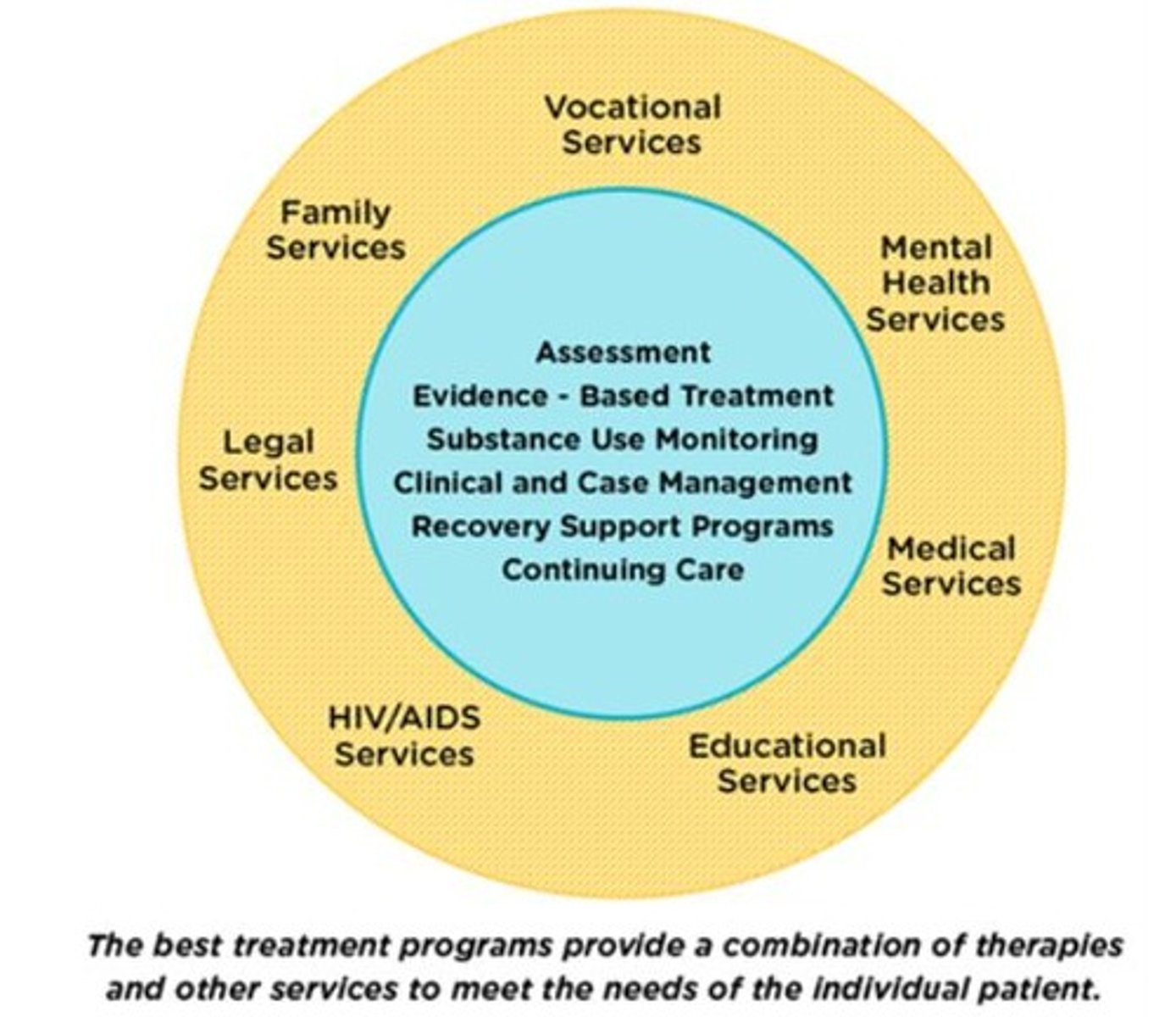
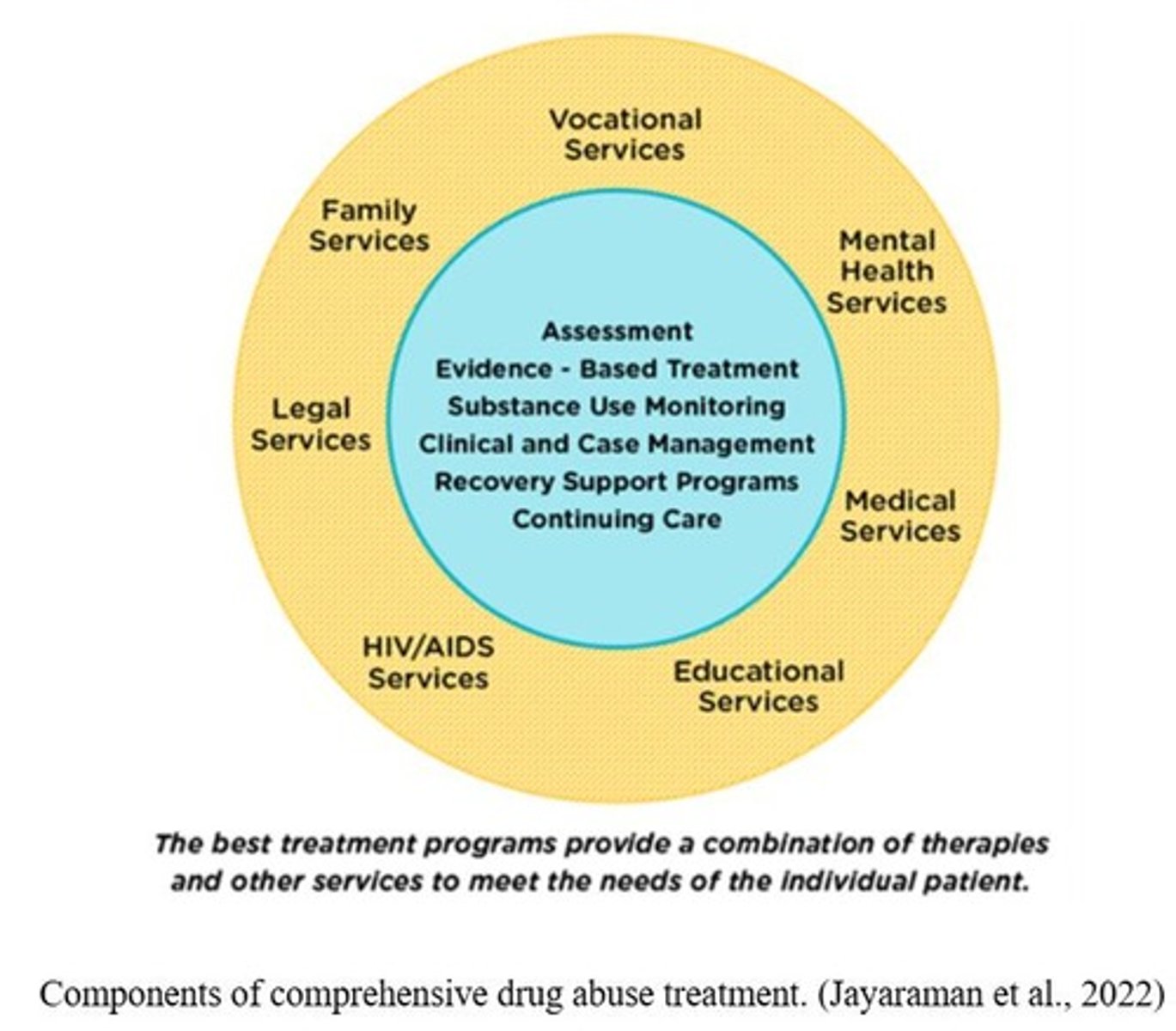
What are the key components of effective treatment for drug addiction?
Treatment plans must be tailored to the patient's changing needs and address any co-occurring mental disorders.
What is the purpose of behavioral therapies in drug addiction treatment?
To modify attitudes and behaviors related to drug use and increase healthy life skills.
What are some types of behavioral therapies used in treating drug addiction?
Cognitive Behavioral Therapy, Multidimensional Family Therapy, Motivational Interviewing, and Motivational Incentives.
What is emotional relapse?
A stage where individuals are not actively thinking about using drugs but are not engaging in self-care or coping behaviors.
What characterizes mental relapse?
The individual contemplates using drugs while struggling with negative thoughts that overshadow protective factors.
What is physical relapse?
The final stage of relapse that begins with a slip or use of drugs, often leading to compulsive use and negative consequences.
What are warning signs of relapse?
Romanticizing past drug use, thinking one slip is acceptable, lying, isolating from others, and skipping therapy or support meetings.
What strategies can help prevent relapse?
Practicing healthy coping behaviors, building support systems, maintaining stable employment, and attending support group meetings.
What should a relapse prevention plan include?
A list of contacts, safe places, reasons to stay sober, stress-relief strategies, and local support group meeting schedules.
What steps should be taken after a relapse occurs?
Supervised detox is often necessary, followed by treatment to learn prevention strategies for future relapses.
What is the importance of trauma-informed care in substance abuse treatment?
It acknowledges the prevalence of trauma among individuals with substance abuse disorders and tailors care accordingly.
What are some key principles of trauma-informed approaches?
Understanding the impact of trauma, ensuring safety, and promoting empowerment and choice for individuals in treatment.
What is the significance of long-term follow-up in addiction treatment?
It is crucial for relapse prevention and ongoing support for individuals recovering from addiction.
What should individuals in recovery practice to maintain sobriety?
Coping skills, stress relief techniques, and healthy habits while surrounding themselves with positive influences.
What is the role of nursing in substance abuse treatment?
Nursing involves therapeutic processes, assessments, and interventions tailored to individuals with substance abuse issues.
What is the first step in the treatment process for substance misuse?
Withdrawal management or detoxification services.
What does tertiary prevention focus on in substance misuse treatment?
Limiting and reducing complications and dysfunction related to addiction.
What is the purpose of assessment and referral agencies in substance misuse treatment?
To determine the major issues and strengths of individuals with substance use issues and develop individualized plans for assistance.
What is the typical duration of a detox program?
3 to 7 days, depending on the province and the drug.
What is the main focus of community-based (outpatient) treatment?
Providing treatment on a non-residential basis, usually in sessions of 1 to 2 hours per week.
What type of patients is day treatment appropriate for?
Individuals who can maintain social competence despite their dependency.
What do concurrent disorder programs address?
They provide counseling for patients with both addiction and mental health issues.
What is the Reis Typology used for?
To determine the best service for a patient with a concurrent disorder.
What are the typical services offered in short-term residential treatment programs?
Medical evaluation, detoxification, individual and group counseling, drug education, and family involvement.
What is a key indicator of favorable treatment outcomes in substance misuse interventions?
Increased use of harm reduction strategies and fewer lapses and relapses.
What is the role of detoxification in the treatment process?
To achieve total abstinence from the drug of misuse and allow the body to eliminate psychoactive substances.
What is the recommended assessment duration for substance use issues?
2 to 3 hours.
What factors are assessed during the evaluation of a patient with substance use issues?
History of substance use, physical health, environmental supports, and any history of trauma.
What is the primary goal of withdrawal management services?
To ensure patient safety during the detoxification process.
What is the difference between daytox and detox programs?
Daytox provides support during the day, while detox includes a residential component.
What is the significance of having a support system in outpatient treatment?
It helps patients who are self-motivated and free of significant medical problems to recover effectively.
What is the typical frequency of sessions in community-based treatment?
1 to 2 hours per week, sometimes two times per week.
What is the focus of day treatment programs?
Structured non-residential treatment involving group activities and education.
What is the importance of integrating various treatment modalities in addiction recovery?
An integrated approach is more successful than relying on any one treatment alone.
What is a common requirement for attendance in residential treatment programs?
Commitment to attend 12-step groups or similar programs.
How do concurrent disorder programs differ from traditional treatment approaches?
They address both addiction and mental health issues simultaneously.
What is a common characteristic of patients suitable for day treatment?
They must have a stable home environment with support from family and friends.
What is the typical length of short-term residential treatment programs?
18 to 28 days.
What are the expected outcomes of effective substance misuse treatment?
Improved family relationships, occupational functioning, and the ability to sustain healthy behaviors.
What is the primary focus of evidence-based approaches to substance misuse treatment?
To ensure consistency in care and the best possible outcomes for individuals.
What is the role of mutual aid groups in withdrawal management?
To provide social and environmental support during the detoxification process.
What must treatment for substance use be tailored to?
The specific needs of each individual.
What is a critical factor for a patient entering treatment?
The patient must have motivation to change their behavior.
What should the nurse ensure regarding the treatment technique?
The technique must be credible to both the nurse and the patient.
What is essential for creating a successful treatment outcome?
Creating optimism for a successful outcome.
What role does the nurse's discretion play in treatment?
It allows for flexibility and emotional support tailored to the patient.
What is the importance of the nurse-patient relationship?
A strong relationship improves treatment outcomes.
What is the continuum of substance use and dependence?
Addiction develops over time and is distinct from compulsive behaviors.
What factors contribute to substance use disorders?
A combination of biological, psychological, and social/environmental factors.
Why is comprehensive assessment important for patients with substance use disorders?
To identify medical and psychiatric comorbidities and consider the patient's social context.
What does assessment of readiness for change support?
It supports appropriate treatment strategies.
What are lapse and relapse in the context of addiction treatment?
They are expected stages of change that require focus on relapse prevention.
What is motivational interviewing?
An intervention that can lead to improved treatment strategies and outcomes.
What should treatment programs test patients for?
HIV/AIDS, hepatitis B and C, tuberculosis, and other infectious diseases.
What is the first stage of addiction treatment?
Medically assisted detoxification.
What is necessary for effective treatment of drug addiction?
Treatment must address all of the patient's needs, not just drug use.
What are the principles of effective treatment based on scientific research?
Addiction is treatable, no single treatment fits all, quick access to treatment is essential, and treatment must be comprehensive.
What role do medications play in addiction treatment?
They help manage withdrawal symptoms, prevent relapse, and treat co-occurring conditions.
What is the purpose of behavioral counseling in addiction treatment?
To provide support and strategies for recovery.
What is the NSS-2 Bridge device used for?
To help reduce opioid withdrawal symptoms.
What medications are used to treat opioid addiction?
Methadone, buprenorphine, and naltrexone.
What is the relationship between positive thoughts and motivation to change?
Positive thoughts motivate change, while focusing on problems can lead to feeling stuck.
What is the impact of a nurse's personal feelings about substance use?
They can affect the nurse's ability to provide empathy and motivate change.
What should nurses be vigilant for in their colleagues?
Signs of impairment and addiction to ensure patient safety.
What is the role of community-based recovery support systems?
To provide ongoing support after treatment.
How do methadone and buprenorphine help opioid addicts?
They suppress withdrawal symptoms and relieve cravings.
What is the role of naltrexone in opioid addiction treatment?
Naltrexone blocks the effects of opioids at their receptor sites.
What is required before using naltrexone for opioid addiction treatment?
Patients must be detoxified.
What are the three FDA-approved medications for treating alcohol addiction?
Naltrexone, acamprosate, and disulfiram.
What is the function of naltrexone in alcohol addiction treatment?
It blocks opioid receptors involved in the rewarding effects of drinking.
How does acamprosate help alcohol addicts?
It may reduce symptoms of long-lasting withdrawal.
What is the mechanism of action of disulfiram in alcohol addiction treatment?
It interferes with the breakdown of alcohol, causing unpleasant reactions.
What are behavioral therapies used for in drug addiction treatment?
They help modify attitudes and behaviors related to drug use.
What is cognitive-behavioral therapy?
A therapy that helps patients recognize, avoid, and cope with drug use situations.
What is multidimensional family therapy designed for?
It addresses influences on drug abuse patterns in adolescents and their families.
What is contingency management in drug treatment?
It uses positive reinforcement to encourage abstinence from drugs.
What is the purpose of recovery housing?
To provide supervised, short-term housing for patients transitioning to independent life.
What are therapeutic communities?
Structured programs where patients live together to influence each other's recovery.
What is the significance of detoxification in substance use treatment?
It is often the first step before other forms of treatment can begin.
What percentage of people needing treatment for drug addiction received it in 2014?
Only 18.5 percent of those who needed treatment.
What are co-occurring conditions in addiction treatment?
Mental health conditions like depression or anxiety that may contribute to addiction.
What is the common belief about the effectiveness of substance abuse treatment?
That treatments are ineffective, although evidence shows otherwise.
What are the key steps in successful treatment for addiction?
Detoxification, behavioral counseling, medication, and long-term follow-up.
What is the role of mobile applications in substance use treatment?
They can assist in treating substance use disorders alongside traditional therapies.
What challenges do individuals face after re-entering society post-treatment?
They must learn to recognize and cope with triggers that can lead to relapse.
What is the relationship between substance-related disorders and chronic illnesses?
They share characteristics, requiring ongoing care and management.
How do treatment outcomes compare for those who seek help versus those who do not?
People who go into treatment generally fare better than those who do not.
What is the role of compliance in disulfiram treatment?
Compliance can be a problem, but it may help motivated patients quit drinking.
What is the primary goal of behavioral therapies in addiction treatment?
To help patients persist with other forms of treatment, such as medication.
What is the average financial return on investment for substance abuse treatment?
Seven dollars saved for every dollar invested.
By what percentage did alcohol and drug use reduce after treatment?
About two-fifths.