ap huge review flashcards
 AP Practice
 Call Kai
1/252

Earn XP
Description and Tags
Name | Mastery | Learn | Test | Matching | Spaced | Call with Kai | Chat |
|---|
No analytics yet
Send a link to your students to track their progress
253 Terms
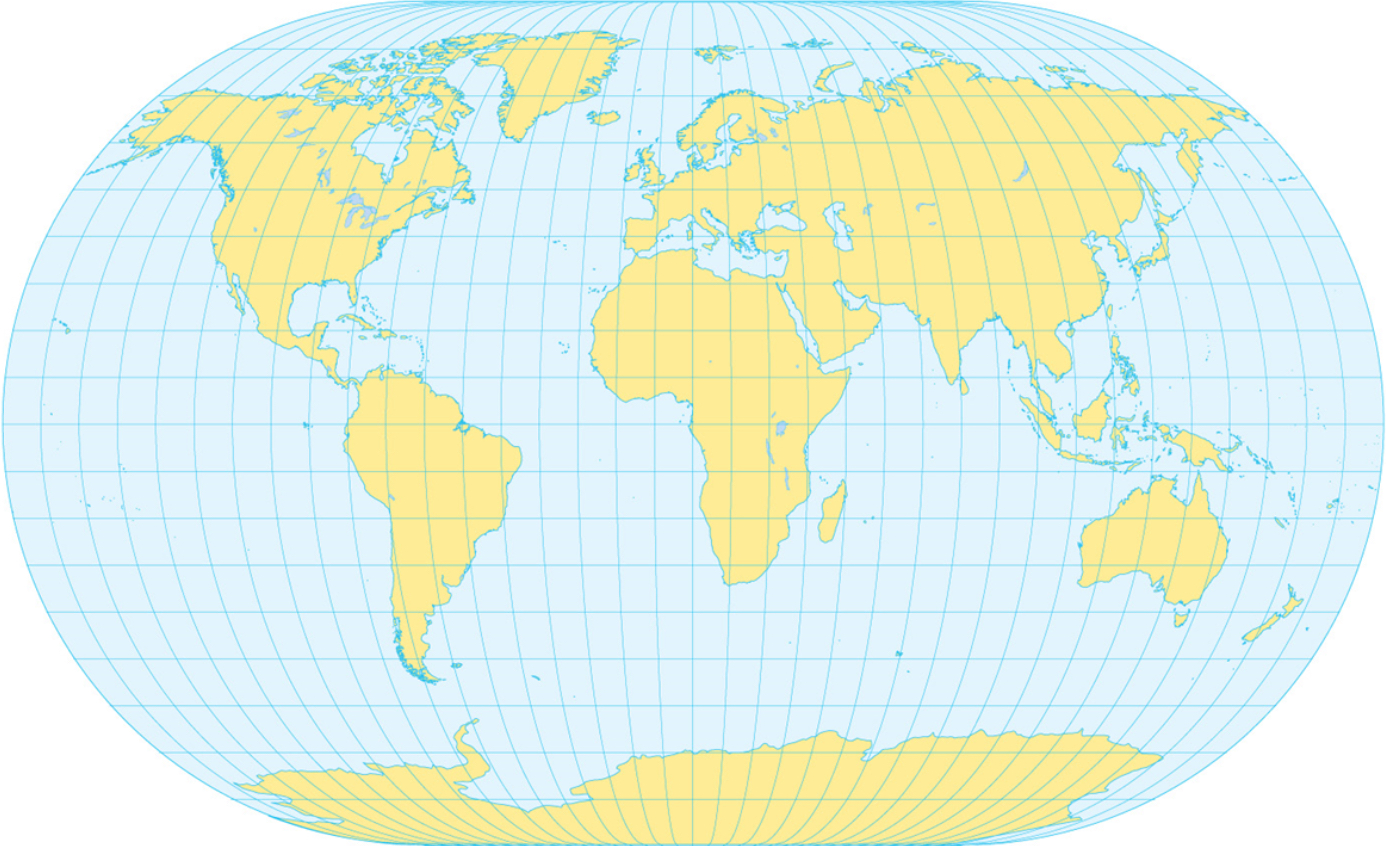
Reference Map
Provides an idea of specific places
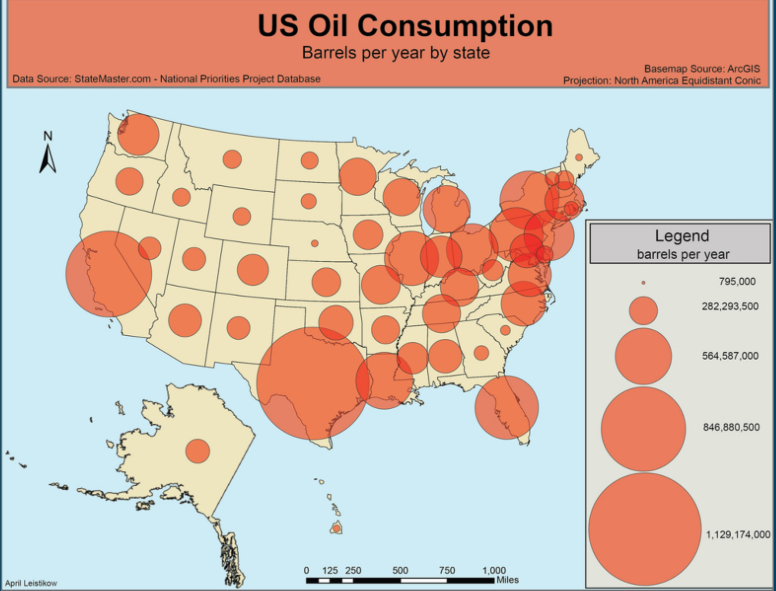
Thematic Map
Map that shows data in a geographical view
Clustering
Pattern that shows data clumped together in groups
Dispersal
A pattern within the data that shows significant space in between
Map projection
Placing the spherical map onto a flat surface
Geographic Information Systems (GIS)
Technology used to capture, store, and analyze spatial and geographical data
Global Positioning System (GPS)
With the use of multiple satellites or devices, it can determine precise location and distances
Remote sensing
The use of planes or satellites to collect data from a distance to understand geographical features and data
Landscape Analysis
Study of physical and cultural regions to understand human and environmental interactions, development, and patterns
Census Data
Official data on population and housing used to understand patterns and plan for the government
Absolute location
Precise location of earth, identified by address or longitude and latitude
Relative location
The general area or vicinity of a place related to other places or features
Space
Any physical area defined by a location and distance between objects
Place
A specific location on earth with unique features and characteristics
Distance decay
As the distance between two locations increases, the interactions decrease
Time-space compression
New technology and innovations make it easier to communicate and transport between places which makes the world more connected
Environmental determinism
A theory the states that physical environment directly effects
Possibilism
The theory that physical environment presents humans with a variety of possibilities and limitations, but, innovations and actions determine how things are overcome
Formal Region
An area defined by a shared detail like language, political system, or environment
Functional Region
An area that revolves around a central focal point or node that distributes outward
Vernacular Region
An area that is perceived subjectively rather that described geographically or scientifically
Arithmetic density
Concentration of people in one land are
People/land=A
Physiological Density
The amount of people within arable land
People/arable land=P
Agricultural density
The amount of farmers within arable land
Farmers/arable land=A
Carrying capacity
The total amount of people that a community can safely maintain and sustain
Population Pyramid
A pyramid (or other shape) that shows the distribution of the population based on age and gender
Demographic
Data that shows population depending on gender, race, ethnicity, etc.
Migration
To move to a new location
Natural Increase Rate (NIR OR RNI)
Difference between birth and death rates the shows how quickly a country is increasing naturally, excluding immigrants
Population doubling time
The amount of years it will take to completely double the existing population
Demographic Transition Model (DTM)
Model that shows different stages that depend on birth and death rates, that consequently effect the total population
Epidemiological transition
A model that shows the shift in the patterns of illness in the sense of chronic and communicable
Malthusian Theory
Population is growing at a exponential rate while food is growing at a linear rate
Pronatalist theories
Policies that attempt to raise population and birth rates
Antinatalist policies
Policies that attempt to reduce birth rates and consequently reduce the population
Ravenstein’s Laws of Migration
The stereotype for long term migration is that males and individuals are most prominent
Crude Birth Rate (CBR)
Total births per 1000 people
Crude Death Rate (CDR)
Total deaths per 1000 people
Life expectancy
The assumed amount of years a population can live for
Dependency Ratio
The amount of non-working age population compared to the amount of working age population
Push factors
Factors that cause someone to move away
Pull factors
Factors that attract immigrants
Intervening Opportunities
Attractive factors that cause an immigrant to stop along the way of their voyage
Intervening obstacles
Unattractive factors that cause someone to be forced to stop their migration
Forced Migration
Involuntary movement caused by factors outside one’s control
Refugees
People seeking shelter after forced migration
Internally Displaced Persons (IDP)
People who are forced to flee their homes but still remain in their country. Often caused by violence, disaster, or natural disaster
Asylum Seekers
Refugees that are trying to find shelter but have not been approved into an asylum
Voluntary Migration
People who chose to migrate without a threat and disaster
Transnational Migration
People who move across borders but still have strong connections to their home country
Transhumance
The movement of livestock, but sometimes humans, to areas with better conditions and resources
Inter regional Migration
Migrating from one region to another
Intra regional Migration
Migrating within one region
Chain Migration
Migration type where people follow a leader to the desired destination
Step migration
A type of migration that takes stops along the way to the final point of interest
Guest Worker
People who migrate for a limited time to usually get a job
Rural to urban migration
Moving from the countryside to more dense urban areas
Total Fertility Rate
The average amount of children a woman will have during her child bearing years.
Cultural Relativism
The belief that one’s views and opinions should be judged based of the ideas of their own cultures, rather than the criteria of a different culture
Ethnocentrism
The judging of one’s culture based on the criteria of your own culture, meant to make one’s culture look more superior
Cultural Landscape
Visible imprint of human activity of the natural environment
Sequent Occupancy
Concept that society leaves cultural imprints on a place. There are also layers that are formed over time depending on the cultural changes.
Ethnic Neighborhood
An area in a city where an ethnic group it located and share the same practices and languages
Indigenous community
A group that has historical ties from before influence form other cultures
Sense of Place
Emotional attachment or perfection for a location that has a distinct cultural attachment; making a house feel like a home
Placemaking
Giving public places a sense of culture
Relocation diffusion
Spread of beliefs or language from people migrating from one location to another
Expansion Diffusion
Culture and language travels outwards but the central heart still remains strong
Contagious
The spread of culture from person to another, almost like a disease
Hierarchical diffusion
The spread of culture from one powerful source down to those with less power
Stimulus
When a culture is spread but adapted to also coincide with local cultures
Creolization
When multiple cultures blend to create a new hybrid culture
Lingua Franca
6 non-native languages that are used for universal communication
Colonialism
A country’s control over a different location that is marked by settlement or cultural imposition
Imperialism
Extending a country’s power and influence to other locations through colonization or cultural dominance
Globalization
The increase of connection around the world, caused by increase in global connection and advanced technology
Time-space convergence
The distance between locations is “shrinking” because of improvements in traveling technology, communication, and increase in interactions
Cultural convergence
Different cultures become more alike because of an increase of interactions
Cultural divergence
When two cultures become less similar because of social isolation or geographical isolation
Language family
A group of languages that come from a common ancestral language
Language Dialect
Regional or social variation of a language that sets it apart using its own unique vocabulary, grammar, and pronunciation
Cultural heart
Area where cultural ideas originate; they may disperse to other other areas
Indo-European language family
Largest language family, most consists of languages form Europe, the Americas, and some of Asia
Universalizing Religion
A system of beliefs that can be found all over the world
Christianity
A monotheistic religion that is based on the god Jesus Christ
Islam
Religion based on the belief of the god Allah and the submission to his will
Buddhism
Religion that originated in India and follows the beliefs of peace and the Buddha
Sikhism
Monotheistic religion that cares about equality, selflessness, truth, discipline
Ethnic Religion
A religion that is specific to a certain area and is not followed all over the world
Hinduism
Native to India, believes in reincarnation and karma and is a polytheistic religion
Judaism
Monotheistic religion that follows the culture of Jewish people; passed on through ancestry and not seeking converts
Acculturation
When a bigger culture adopts traits of another culture while still maintaining some of the original culture
Assimilation
Process where a minority group completely adopts the traits of dominant culture, often following the loss of their own culture
Syncretism
Two or more cultures blending together to create a new culture with distinct traits
Multiculturalism
A society that houses multiple different cultures and all are accepted into the broader society
State
Politically organized territory with an established governement, borders, relations, and population
Nation
A group of people that share similar characteristics such as race and ethnicity but do not always form a state
Sovereignty
Power and authority a state posses to govern and make decisions for itself
Self-determination
Citizens of a state have the power over their own state and their decisions
Devolution
Spread of power to smaller territories, granting them more governing power and voice in the government, usually to prevent conflict