science exam
 Call Kai
 Learn
Learn Practice Test
 Spaced Repetition
 Match
Match Flashcards
 Knowt Play
1/128

There's no tags or description
Looks like no tags are added yet.
Name | Mastery | Learn | Test | Matching | Spaced | Call with Kai |
|---|
No analytics yet
Send a link to your students to track their progress
129 Terms
What do astronomers use to measure distances and how many kilometres make up to one?
Astronomers use astronomical units AU to measure distances within the solar systems and 150,000,000 km make up one AU
What do astronomers use for measuring longer distance such as distance between stars and how many kilometers?
They use light years, which is equal to 10,000,000,000,000 km
What is what type of galaxy is the Milky Way?
Spiral galaxy
Galileo Galilee invented what thing
He invented the telescope. He observed the mountains craters on the moon, the moons of Jupiter, the faces of Venus for the first time.
What makes the solar system?
The sun, the eight plants and their moons billions of other smaller objects all of these celestial objects that orbit the sun
To become a planet, a celestial object
Be an orbit around a star have enough mass to be pulled into a stable spear by gravity and dominate its orbit
Dwarf planets
The orbit the sun and have a spiracle shape, but they don’t dominate their orbits
Asteroid belts
Asteroids are small celestial objects made of rock and metal too small to be considered a planet. They lie in an area between the orbits of Mars and Jupiter, Called asteroid belt.
Meteoroid
Piece of metal or rock in the solar system that’s smaller than an asteroid and in outer space
What’s a meteor?
When a meteor ride enters earths atmosphere, causing friction to burn up and creating a streak across the sky is a meteor
Meteorite
When a meteor crashes into the ground because it doesn’t burn up completely
Comet
chunks of ice duster rock that Orbit t the sun cheap from the sun makes it turn into a gas called a coma Solar wind pushes it creating a tail
Stars
Hot gas body that produces its own light and energy
They seem to move from east to west in the northern hemisphere and rotate around one point: Northstar or Polaris
All stars form from a massive cloud of interstellar, gas and dust called a nebula made of mainly hydrogen and helium
How do stars form?
Stars form in a nebula Cloud of helium , and hydrogen gas and dust
Gravity forces the nebula to collapse and create a protostar
when the core reaches 15,000,000°C nuclear fusion begins hydrogens into helium
The star that produces a light and energy from fusion
stars mass will determine its lifespan massive stars burn faster, and have shorter lives
Sun
Is an average size star only see big because of how close it is to earth it provides energy needed for life made up of layers of gas, mostly hydrogen and helium
Planets, composure, size, density rotation, and distance

Colour and meaning
Red stars are the coolest orange and yellow stars are cool to medium blue stars are hottest
Solar prominences and solar flares
Arches of glowing gas anchor to the sun
Stay connected to the sun
Solar flares are burst of energy that travels through space
Earth, rotation, and AXIS
Rotation is an object that spins on its own AXIS one rotation for earth is 24 hours earth AXIS is tilted the portion of the Earth that faced the sun, experienced daylight and the other side experience night
Revolution
Earth revolution around the sun is 365.25 days
Force of gravity
The greater the mass, the stronger it’s gravitational pole the gravitational force of our son is strong enough to keep earth in its orbit
The geocentric model is a theory that
The planets revolved around an earth in a earth centred solar system
Heliocentric model/theory is
The sun is the centre of the solar system a sun centred solar system
Reasons for seasons
Since the Earth’s AXIS is tilted the Earth is closest to the sun. The northern hemisphere is tilted away from the sun, and we experience winter, and as the Earth revolves around the sun, the northern and southern hemisphere experience the seasons when the Earth is farthest from the sun, the northern hemisphere is pointed towards the sun and we experience summer.
What is a star map? Do stars move and change constellations positions overtime
Map of the night sky that shows relative positions of constellations and stars are always moving to the Earth and their shapes will change over time
Celestial Spear
Celestial spear extends around the Earth divided into the northern and southern hemisphere by the celestial equator, which is an extension of the earths equator

Views of the night sky
Night sky changes with the seasons as the earths revolution around the sun Different constellations are visible at different times of the year, which is why we see a different Night in summer then in winter
Year-round constellations
Circumpolar stars Never set and always visible closest celestial POLE like the Northstar, which is near the north celestial pole
Particletheory of matter
All matter is made up of different kinds of particles
Different substances are made up of differnt kinds of particles
Particles are always in random constant motion
Particles moves faster as temp icreases
Particles attract eachother
Pure substance
Made up of 1 type of particle
Mixture
Made up of more than 1 type of particle
Mechanical mixture
Heterogeneous a mixture partciles are distinguishableor non-uniform
Solution
Homogenous particles are not easily distinguishable or uniform
Alloy
A solid solution of two or more metals physically bonded
Physical property
Property that can be observed or measured without changing the substance
State colour viscosity mallealibility lustre texture clarity hardness ductility conductivity density
Qualitative property
Something that is described
Quantitative property
Something that is measured
Characteristic physical property
Properties that are unique to a substance like melting point density Boiling point solubility electric conductivity
Density
Amount of matter per unit value
Chemical property
How a substance reacts and changes into a new substance
Reactivity with water
Reactivity with oxygen
Physical change
No new substance is produced easy to reverse
change in size change in shape changing in state making a solution
Chemical change
New substance is produced hard or impossible to reverse
Changing colour changing an odour
Precipitate
A solid that forms from two liquids chemically
Element
Pure substance made up of only one type of atom like H O
Compound
Made of idenitcsl molecules 2 or more differnt elements bonded
Molecules are 2 or more atoms bonded tgh h2o
Metal
A metal that is usually shiny good conductor of heat and electricity
Nonmetal
Dull, not strong Poor conductor of heat in electricity
Metalloid
Element that has properties of both nonmetal and metal also known as semiconductor
Chemical family/group
Vertical column on the periodic table
Alkali metals
Group one most reactive because of one valence electron
Alkaline earth metals
Group 2
Halogen
Group 17
Noble gases
Not reactive because of full valence shield group 18
Period
Horizontal row of the periodic table
Atom
Small particle of an element like one hydrogen atom
Isotope
Lighter or heavier version of the element
Ion
Atom w electric charge bc it gain or lost electrons
Diff between anion and cation
Anion gains electrons negative charge
Cation loses electrons positive charge
Valence electrons
Electrons in the outermost shell
Molecule
Two or more atoms joined together
Chemical formula
Shows which elements and how many elements are in a formula such as H2O
Molecular element
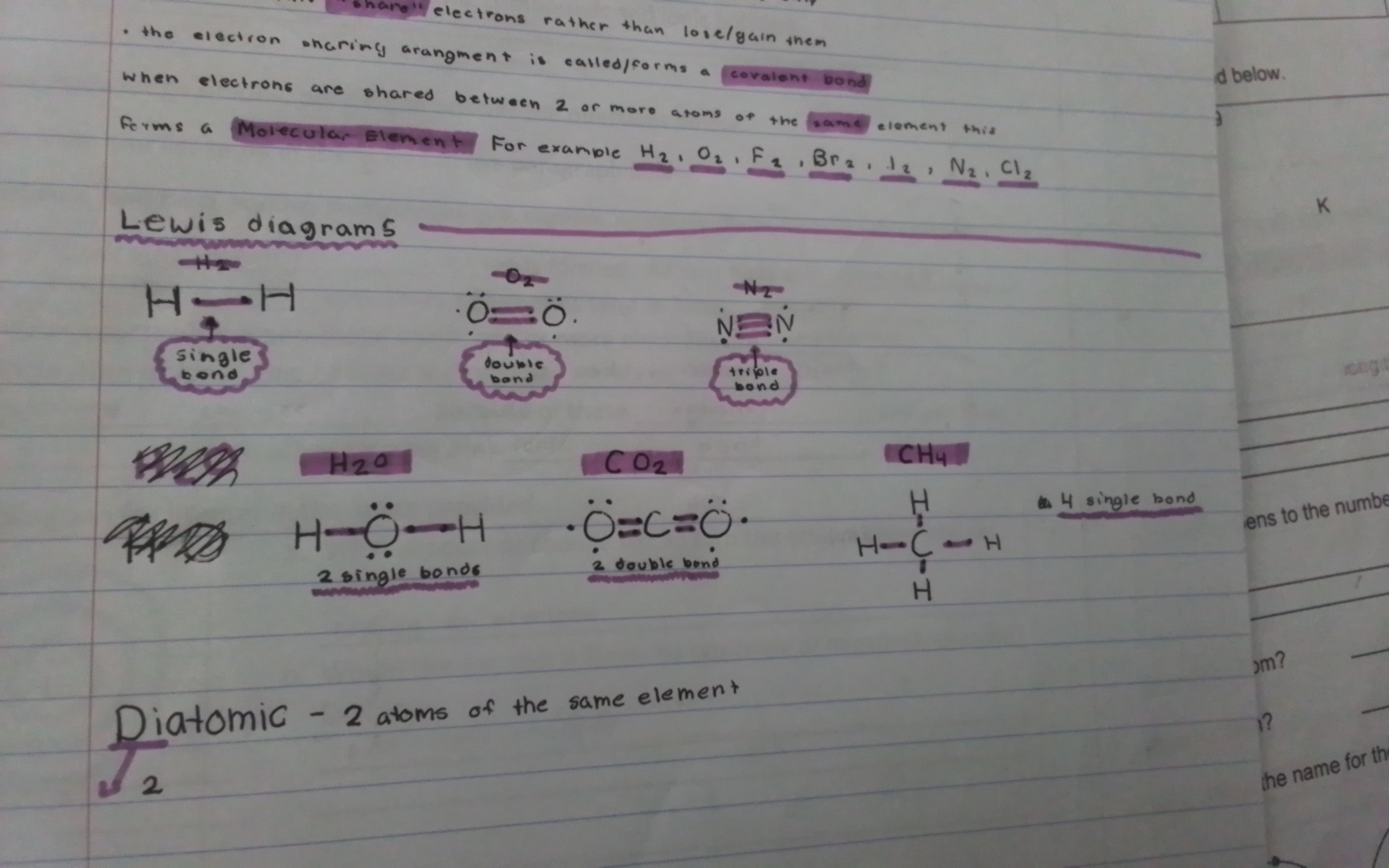
electrons are shared between two or more of the same element like H2 O2
Molecular compound
Nonmetals bonded together sharing electrons like H2O
Lewis diagram
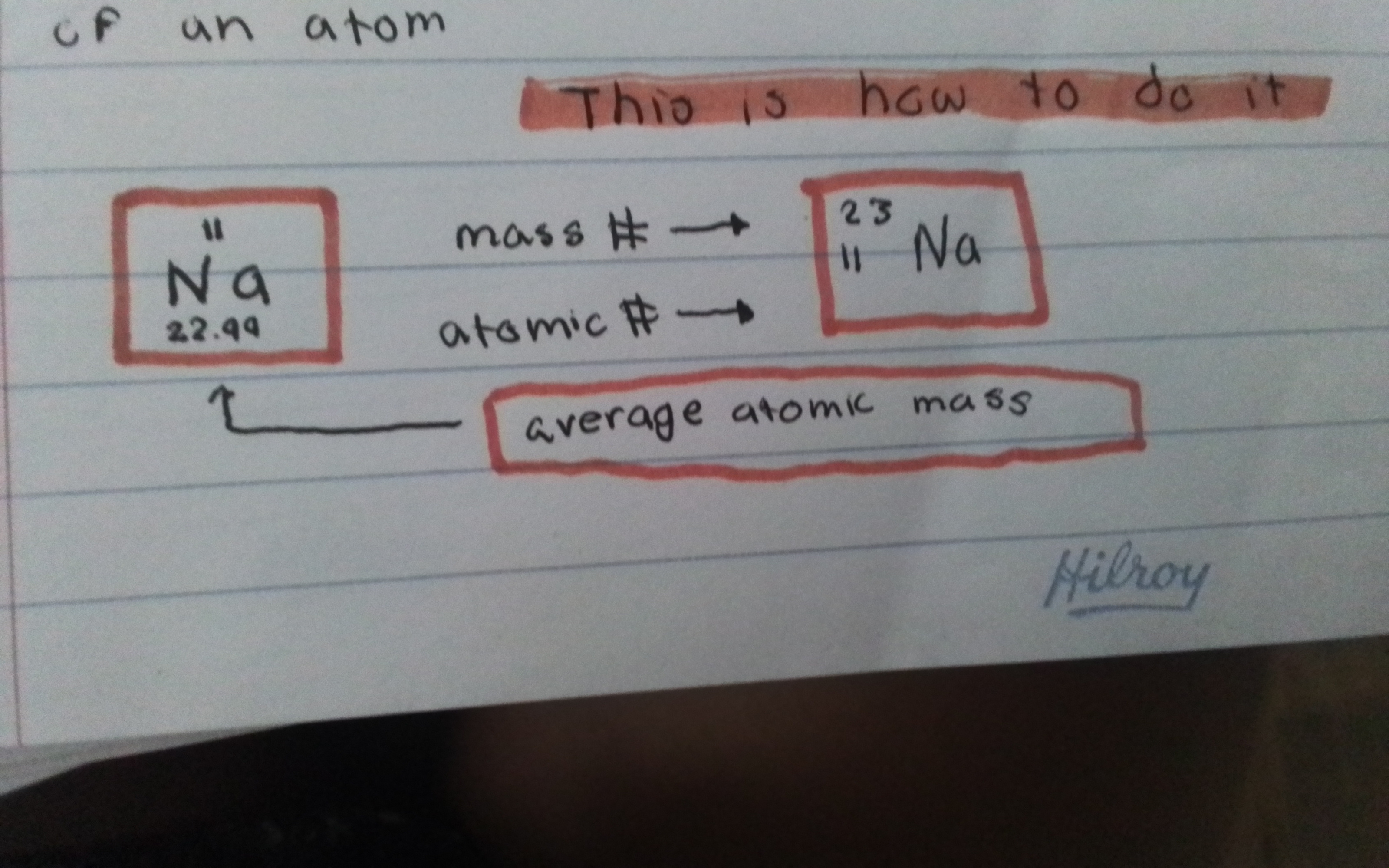
Standard atomic notation
Ionic compound
Metal and nonmetal gain/lose electrons
Ionic bond
When a metal and a nonmetal gives up an electron/gains
Covalent bond
When nonmetals share electrons making a molecular element like h2 o2
Pattern in the periodic table
Atomic number increases left to right and atomic mass
Same family has same valence electrons similar chemical physical properties and reacts similarly
Reactivity
Metals Reactivity decreases as we move left to right and increases as we move up to down
Non metals Reactivity increase as we move left to right and decrease as we move up to down
What is current electricity?
Controlled flow of electrons through a conductor
We are able to control
What is an electric circuit?
Continuous path in which electrons can flow
What do electric circuits have?
Energy source conductor load switch
What is energy source?
Where electrons come from like battery
Conductor
Where electrons flow through like wires
Load
Changes electric energy to something useful
Switch
Controls the flow of electrons
What is electrical energy?
Energy that is made by the flow of electrons and electric circuit measured in joules
What is the current?
Rate of whihc electrons flow past a specific point
Measure and current
An anmetre is a device used to measure electric current unit ampere
Direct current
Dc flows in one direction and come from a cell (battery)
Alternate current
Ac alternates in in direction and comee from electrical outlets
Voltage or potential difference
The difference in electrical energy between 2 points in a electrical circuit also called voltage
Where must a volt metre be connected?
Voltmeter must always be parallel to a load or energy source
Resistance
Ability of a material to slow the flow of electrical current (ohms)
Four key factors that affect resistance
Some substance resists the flow of electron than others
The longer a wire the more resistant
The thinner a wire the more resistant
The warmer the wire more resistant
What is a resistor?
Device that slows/reduces the flow of electric current
What is a series circuits
Only has 2 path for electrons to follow all loads must be on and working at the same time
What haooend when more loads are added to a circuit series
They Will receive less current and bulbs will get dimmer
What happens if you add more loads to a parallel circuit?
The current will be increased in the lightbulb will not get dimmer but stay the same
Parallel circuit
Circuit that has more than 1 pathway for electron so if one stops working or one is added the current will increase bc each loads recieve electrical current on separate pathways
Law electric charges
Opposite charges attract like charges repel
All objects and materials usually have what type of charge
Neutral
What is friction?
when two objects are rubbed together and electrons are transferred
electrostatic series
The higher on the list will always lose electrons and become positively charged. The object lower on the list will gain those electrons and become negatively charged.
Charging by a conduction
charging by conduction is when a charged object touches a neutral object, and the neutral object takes on the same charge as the charged object
What is grounding?
Grounding is when excess charge is removed by connecting an object to the Earth. The Earth balances the charge by adding or removing electrons.
What are insulators and examples?
Materials that prevent the movement of electrons non-metals water
What are conductors and examples?
Material that allows the movement of electrons examples of good conductors are metals like silver, copper, gold, magnesium, and fair conductors are saltwater human skin water vapour
If you use an insulator to touch a conductor that is carrying electric electricity, will you receive a shock
No electricity should not cannot pass through the insulator from the connecter keeping you safe from receiving a shock