Final Lecture 7 Metabotropic receptor signaling
 Call Kai
 Learn
Learn Practice Test
 Spaced Repetition
 Match
Match Flashcards
 Knowt Play
1/30

There's no tags or description
Looks like no tags are added yet.
Name | Mastery | Learn | Test | Matching | Spaced | Call with Kai |
|---|
No analytics yet
Send a link to your students to track their progress
31 Terms
LTD slide 48 and on is on the final
If a neuron is weakly stimulated then you will have LTD and you get fewer AMPA receptors on them
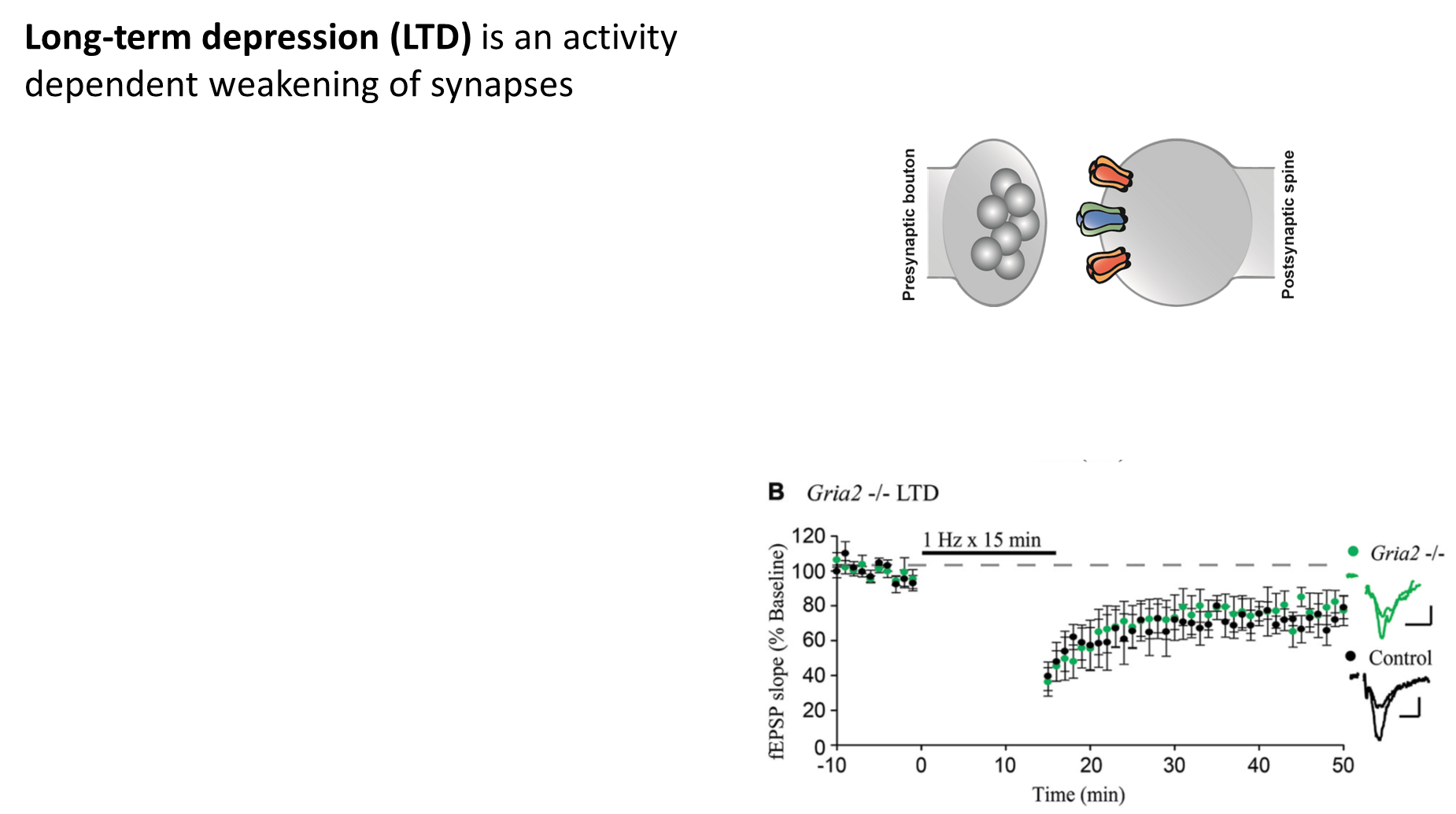
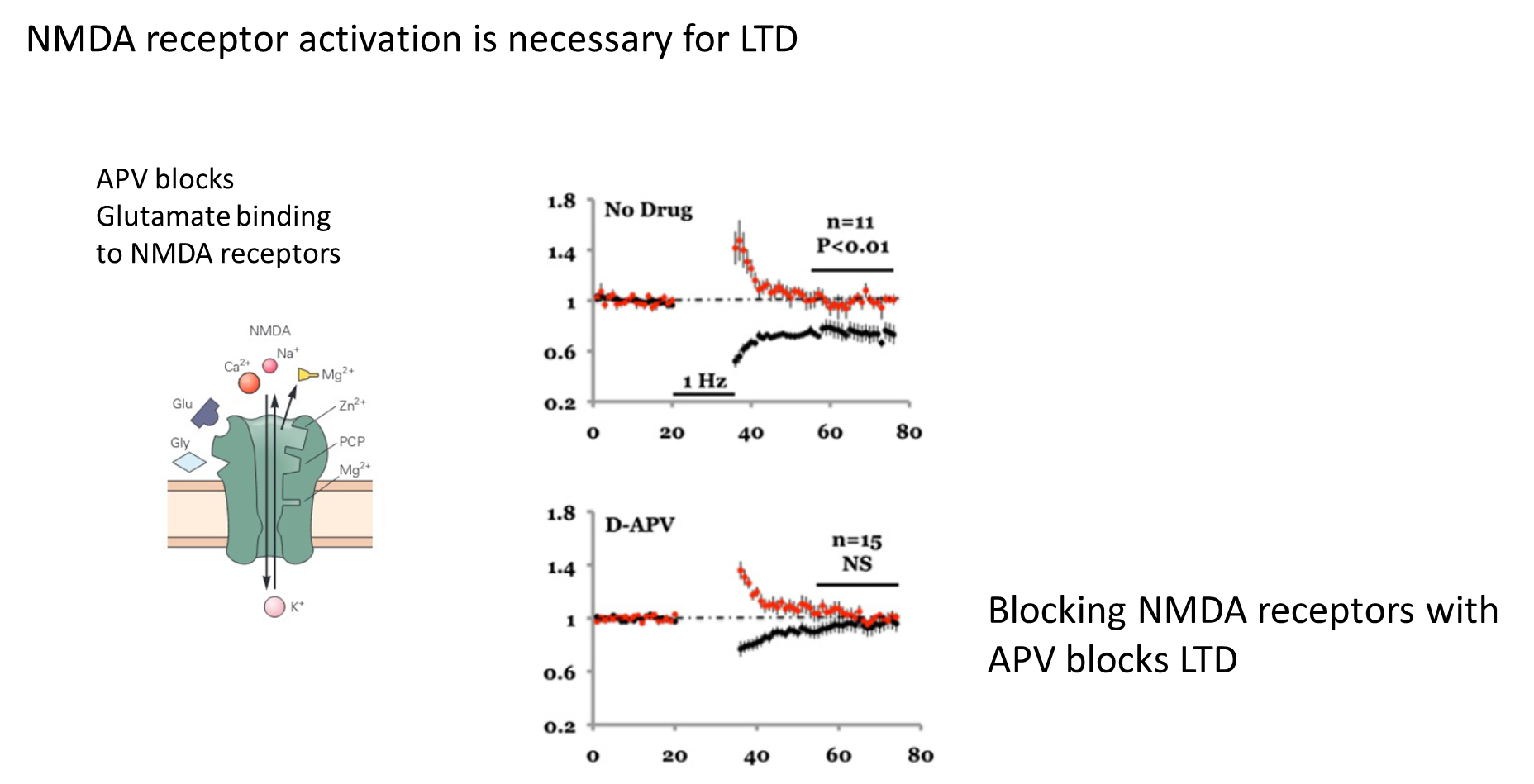
What is necessary for LTD? What can you block LTD receptors with?
Its been proposed LTD is dependent on calcium
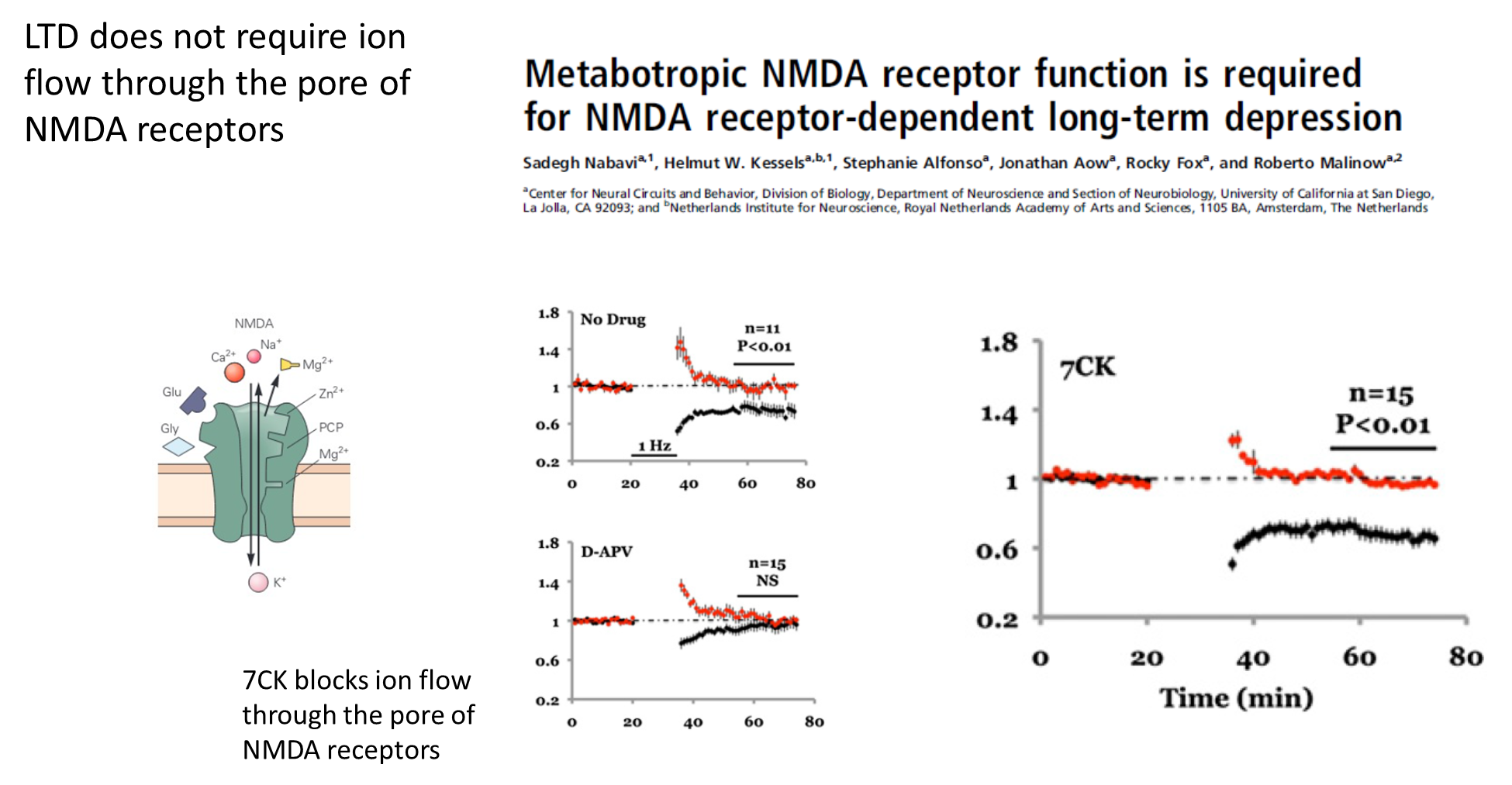
What question was raised about the mechanism of LTD? What does it suggest?
LTD does not require ion flowS
NMDA receptors may act as metabotropic receptors
OVERVIEW
G protein coupled receptors
Mechanisms for metabotropic modulation of neuronal function
Receptor tyrosine kinases
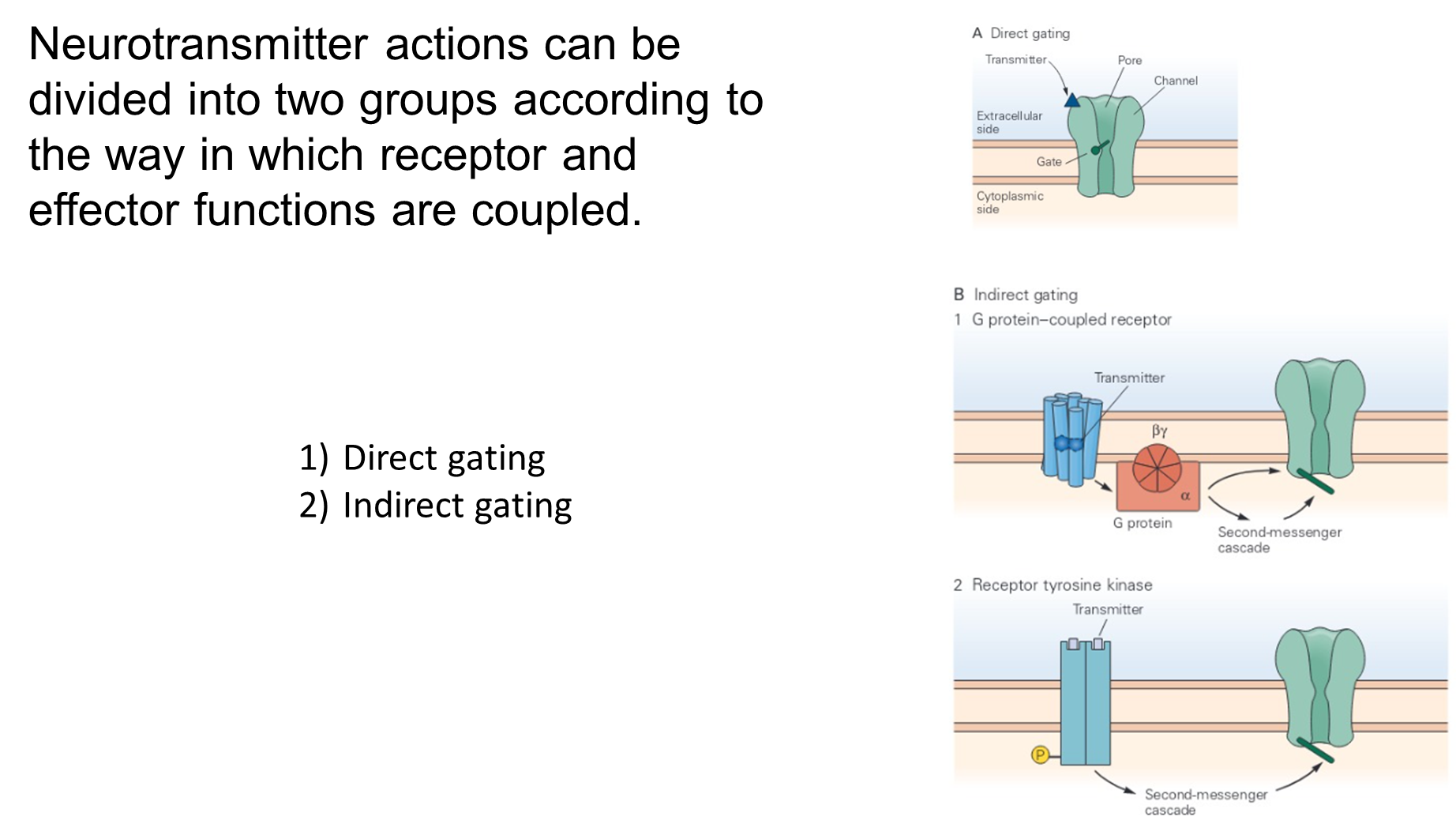
What is direct gating and indirect gating?
Direct gating is when you have molecule bind to the receptor which causes them to open
Indirect gating is what you see with metabotropic receptors which ultimately controls whether a different ion channel will open.
Describe group 1 mGluRs vs group 2/3
What are muscarinic receptors bound by?
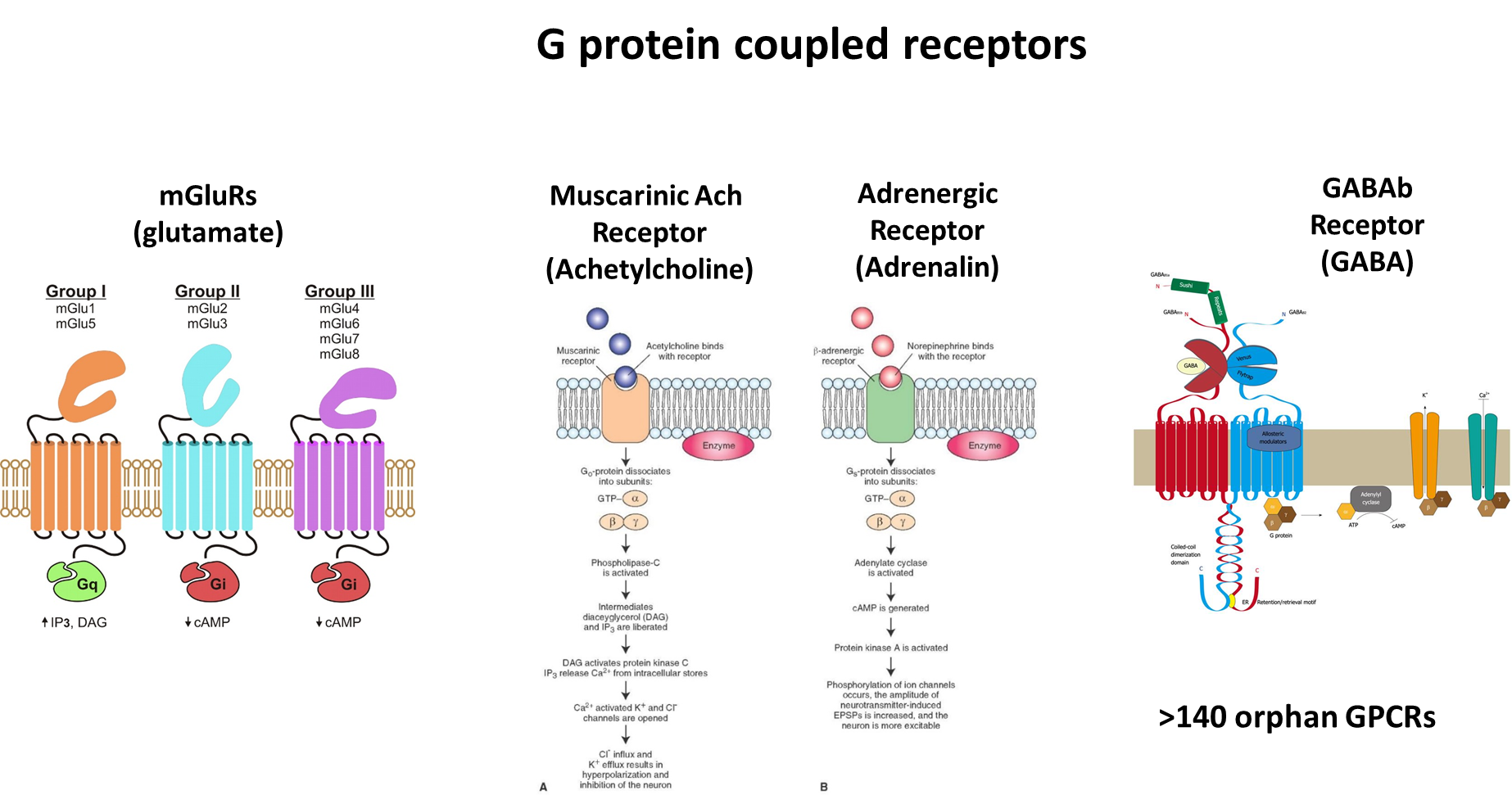
Group 1 are associated with the G alphaQ
Group 2/3 are associated with G alpha I
Muscarinic receptors are bound by acetylcholine
GABAB receptors are the metabotropic version of the gaba A receptors we talked about
OKAY??????
What is the general sequence for G protein coupling
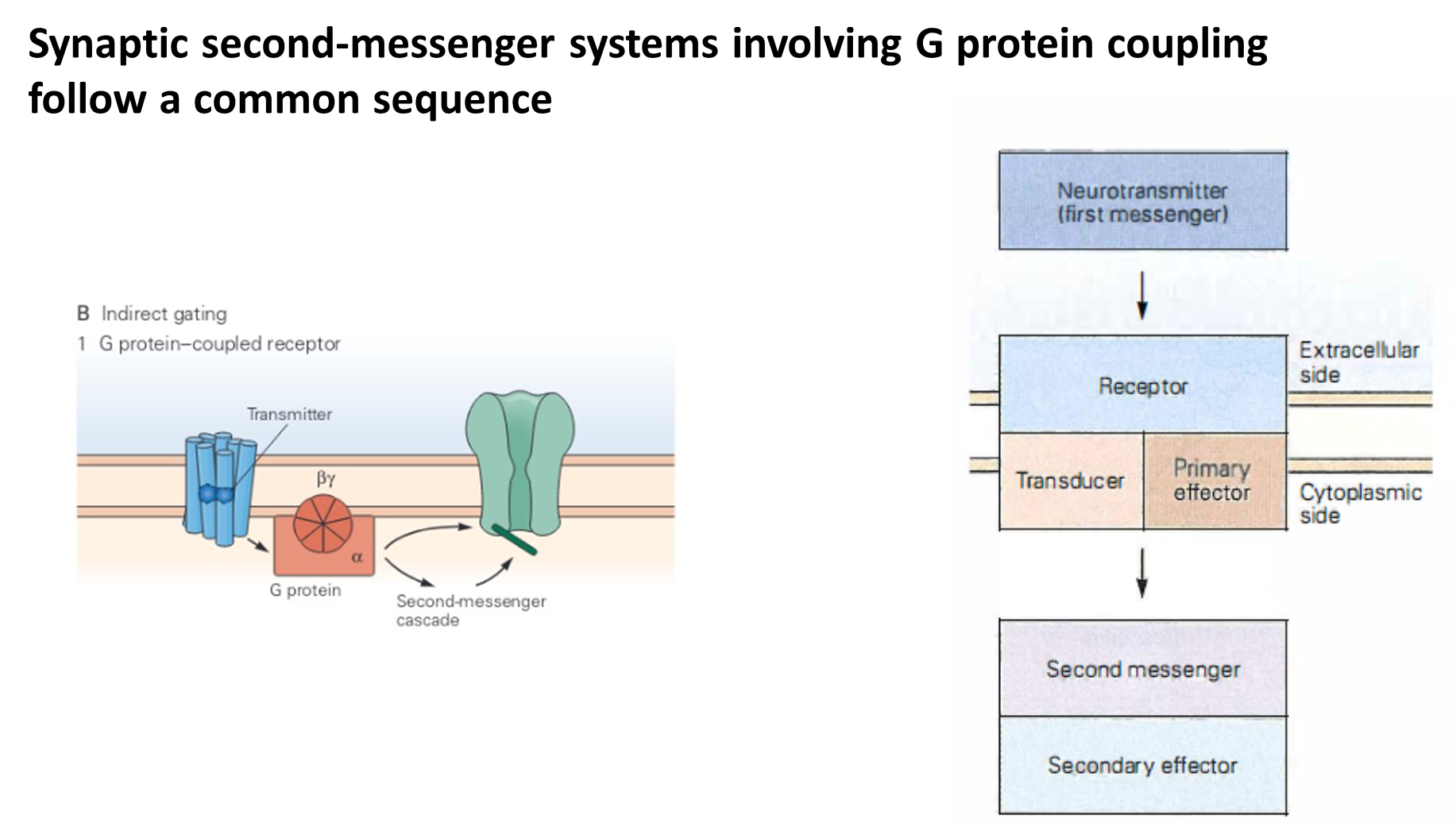
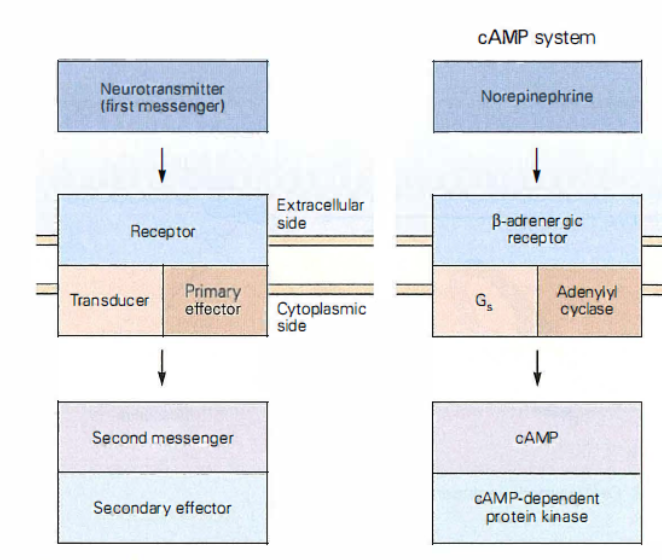
Neurotransmitter is the first messenger,
Describe G alpha S, G alpha I, G alpha q, G alpha 12/13
G alpha S
-activates Adenylyl cyclase
-increases cAMP
-activates PKA
Galpha I
Basically opposite of G alpha S
-inhibits Adenylyl cyclase
-decreases cAMP activation
G alpha q
-activates PLC (which promotes release of calcium)
-produces release of Ca from
Intracellular stores
G alpha 12/13
-influences actin regulatory proteins
Descrribe G alpha S more in depth; what effects do they have on muscles and what is the clinical significance of mutations in beta adrenergic rceptors?
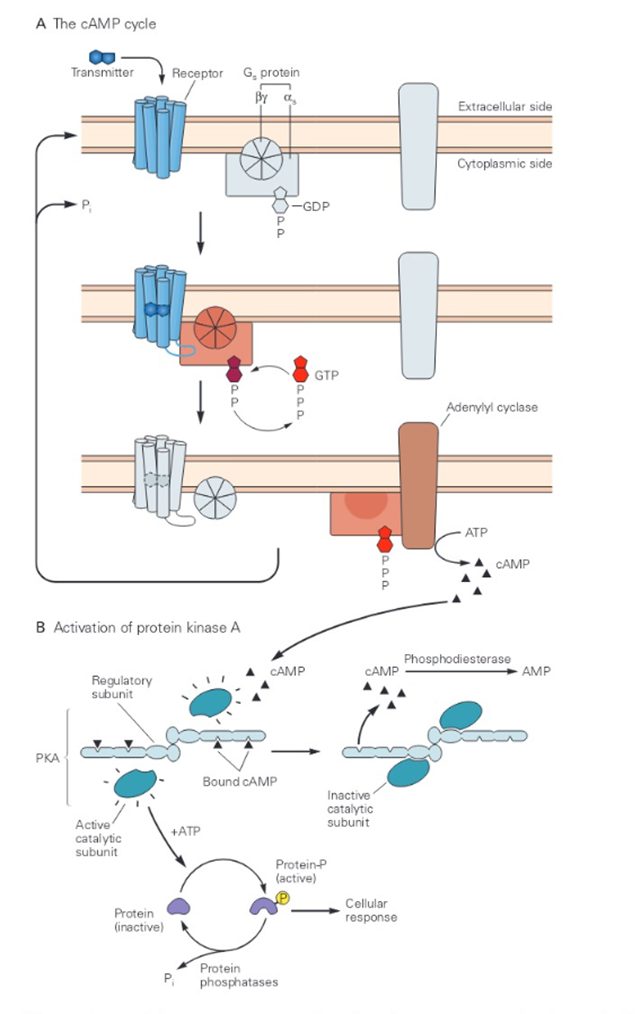
Tell every step of the camp cycle
Involved in:
•Smooth muscle relaxation
•Brochodilation
•Vasodilation (more blood to muscles)
Mutations in
b-adrenergic receptors believed to cause asthma
Once the transmitter binds, there is binding to the complex, when neurotransmitter binds to it it causes a conformational chancge which causes an intracellular loop
Originally bound to GDP
Then the G alpha S is free to bind to Adenyl Cyclase
CAMP is produced by Adenyl Cyclase and can encounter protein kinase A
Protein Kinsase A has 1subunits regulatory units and one 1 catalytic subunit
Once it encounters cAMP then the catalytic subunit pops off and phosphorylates proteins
Describe G proteins
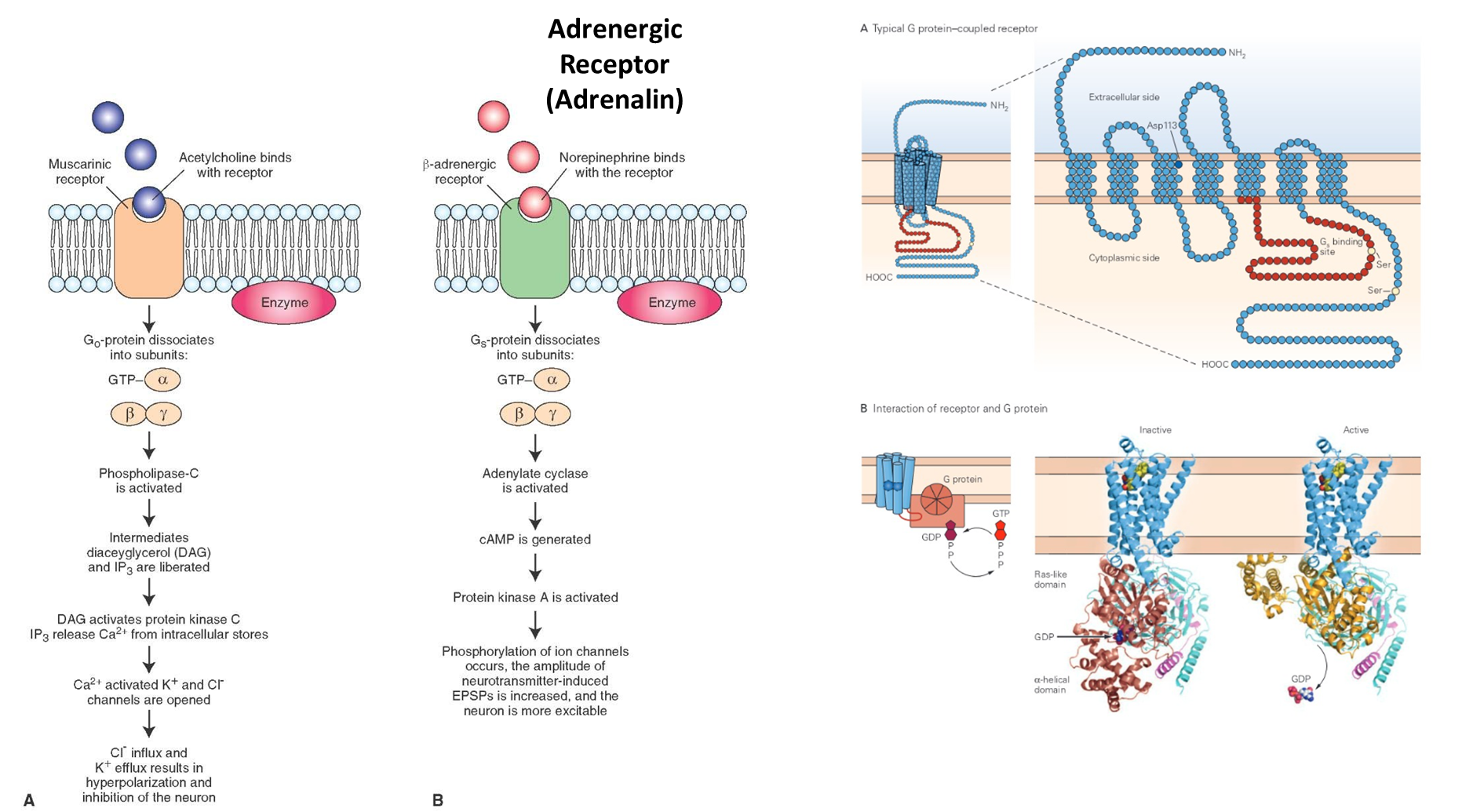
One protein 7 transmembrane domains
Intracellular loop gets kicked out when neurotransmitter binds out
G alpha I does the same thing as G alpha S except it prevents anything from binding to adenyl cyclase
Describe the differences between g alpha a and g alpha q in terms of transduction
What replaces Adenlyl cyclase, camp etc
In G alpha q there is the phospho-inositol system
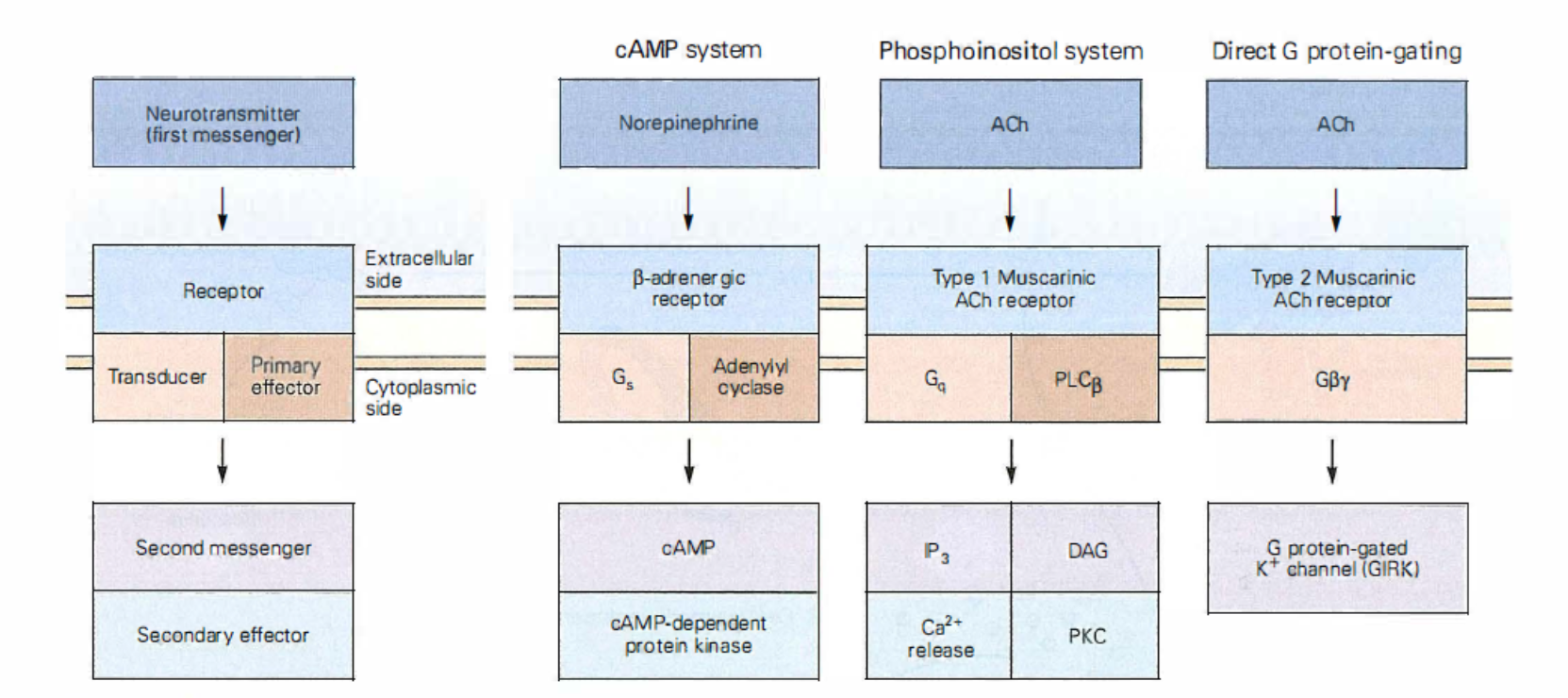
The transducer in this system is G alph Q, primary effector is Phopholipasea C, PLC
IP3 and DAG is the secondary messenger
Secondary effector is Calcium and PKC (Protein kinase something0
What does G alpha Q do when it activates PLC?
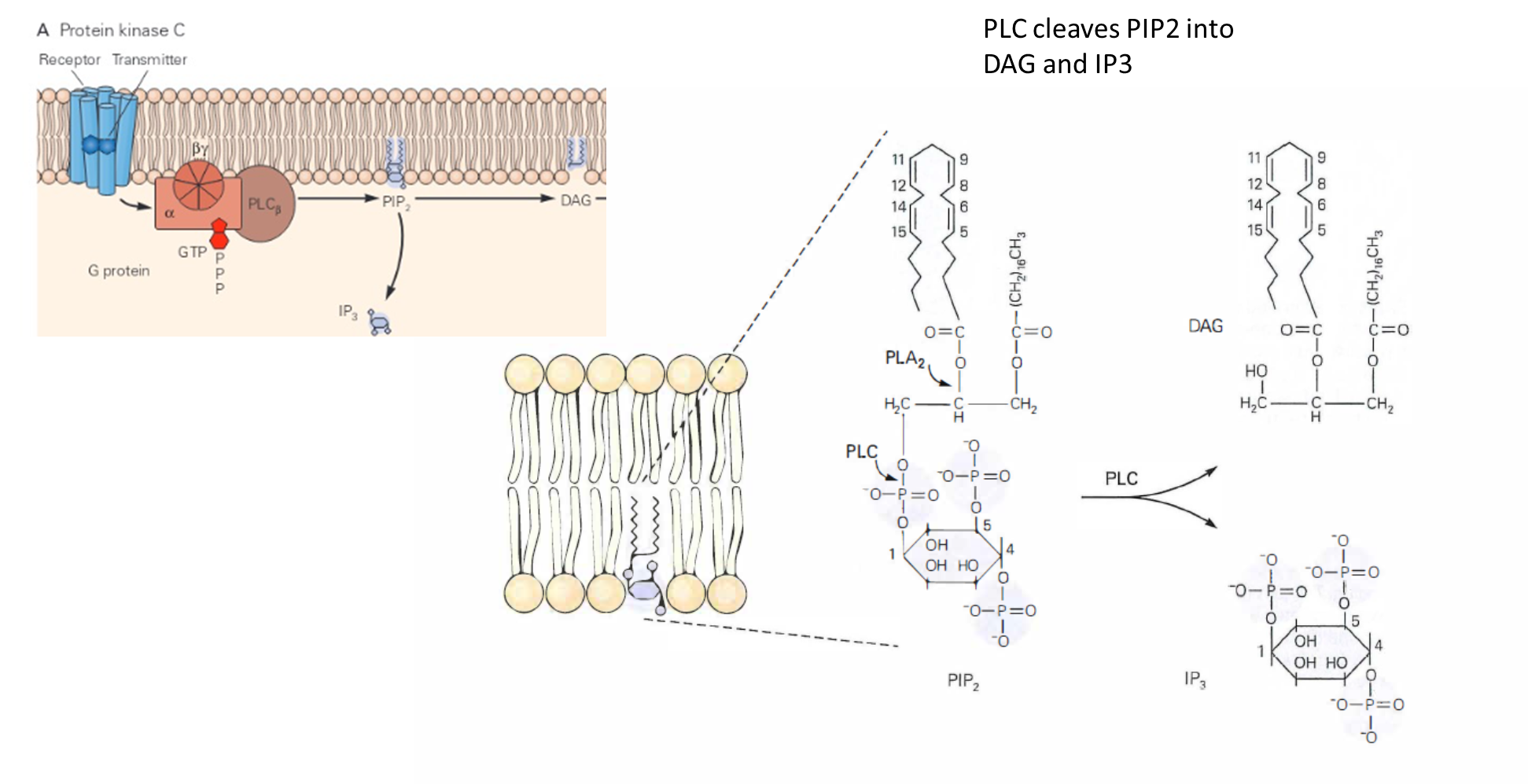
Type 1 Muscarinic ACh receptors hydrolyze phospholipids through PLC
G alpha q activates PLC
Phospholipase C targets PIP2 (inside the plasma membrane) when its active chopping it to form IP3 (soluble) and DAG(in membrane_
What does IP3 do i.e. what cascades does it cause and how?
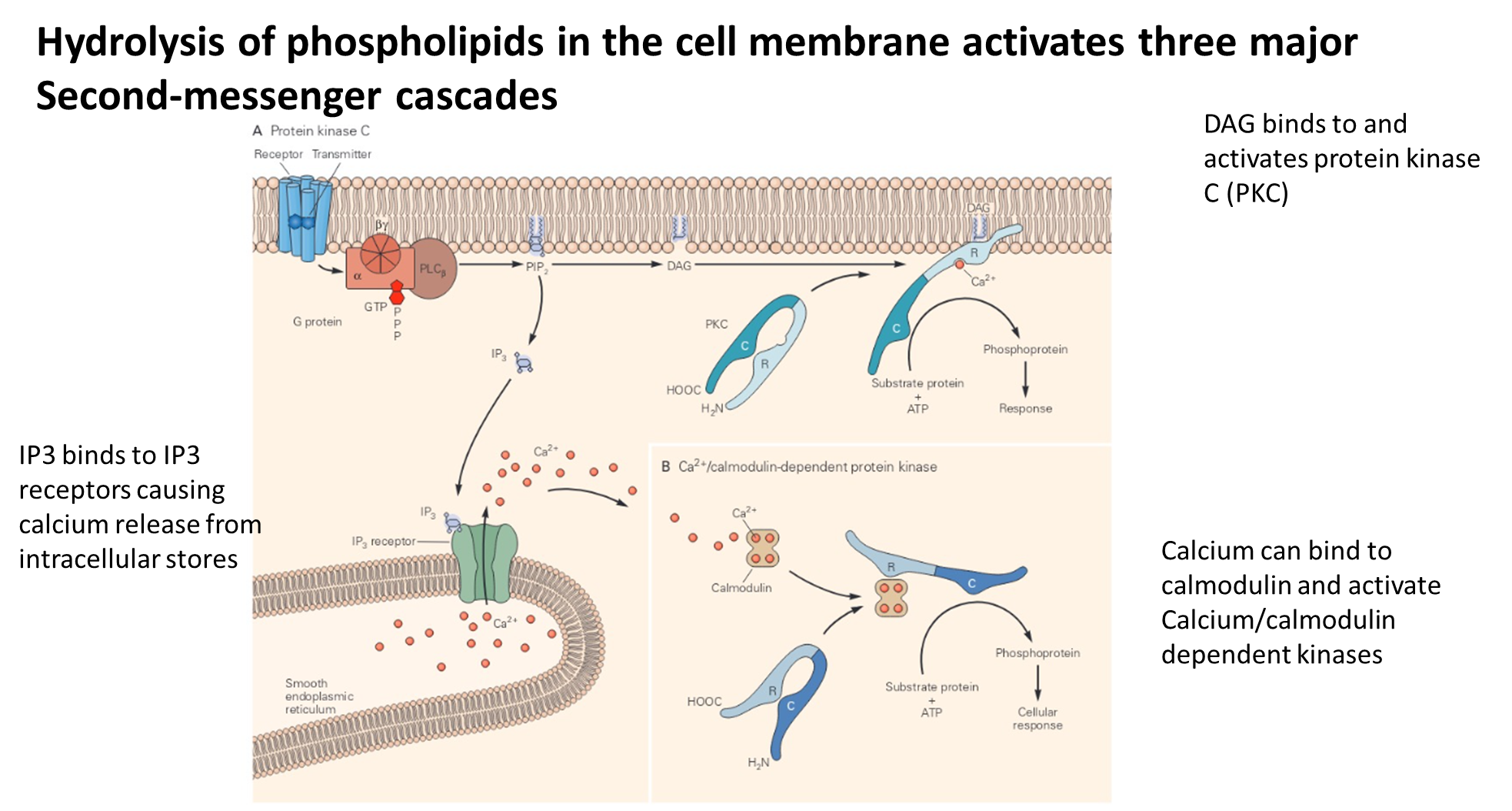
3 major secondary messages cascades
Inside cells there endoplasmic reticulum which acts as a calcium store
When DAG binds to PKC it binds to the regulatory subunit and pulls the kinase open allowing it to phosphorylate
NEXT MAJOR TOPIC MECHANISMS FOR METABOTROPIC MODULATION OF NEURONAL FUNCTION
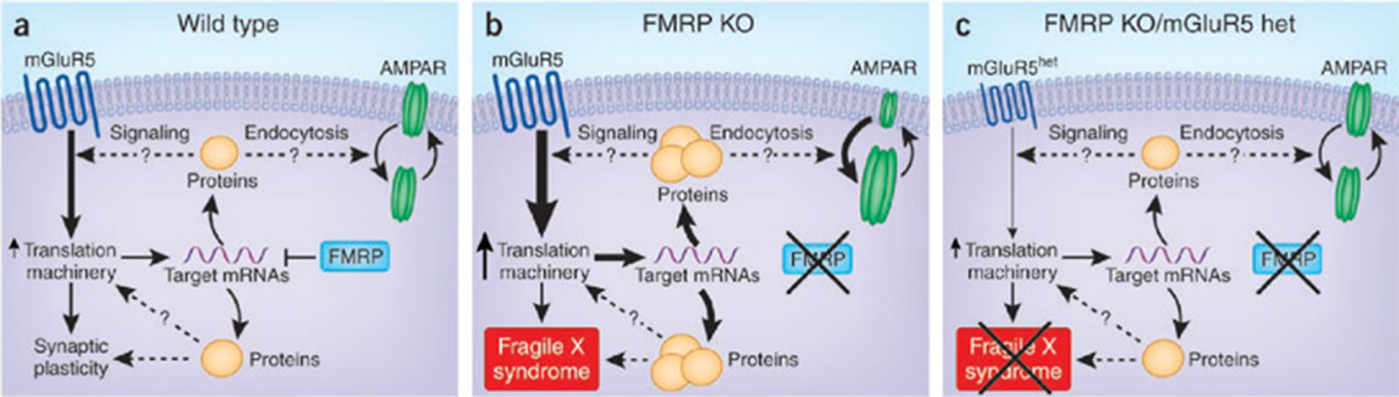
What is the significance of mGluR5 receptor clinically? How does it do this? What is FMRPs role?
Is significant to development of autism namely in fragile X
Fragile X syndrome is caused by the dysfunction of the FMRP gene
FMRP acts as as regulator that acts as a break on translation and is inhibitory on translation
FMRP can cap mGluR5 upregulation of proteins that promote AMPA endocytosis
When mGluR5 is activated by glutamate it signals that too much glutamate is being released and we need to reduce activation to glutamate
Causes increase in protein translation of some protein that endocytose AMPA receptors.
What does decrease in PIP2 levels do? What is the effect of depolarization from metabotropic mechanisms
What is the effeect of muscarine on M type potassium current
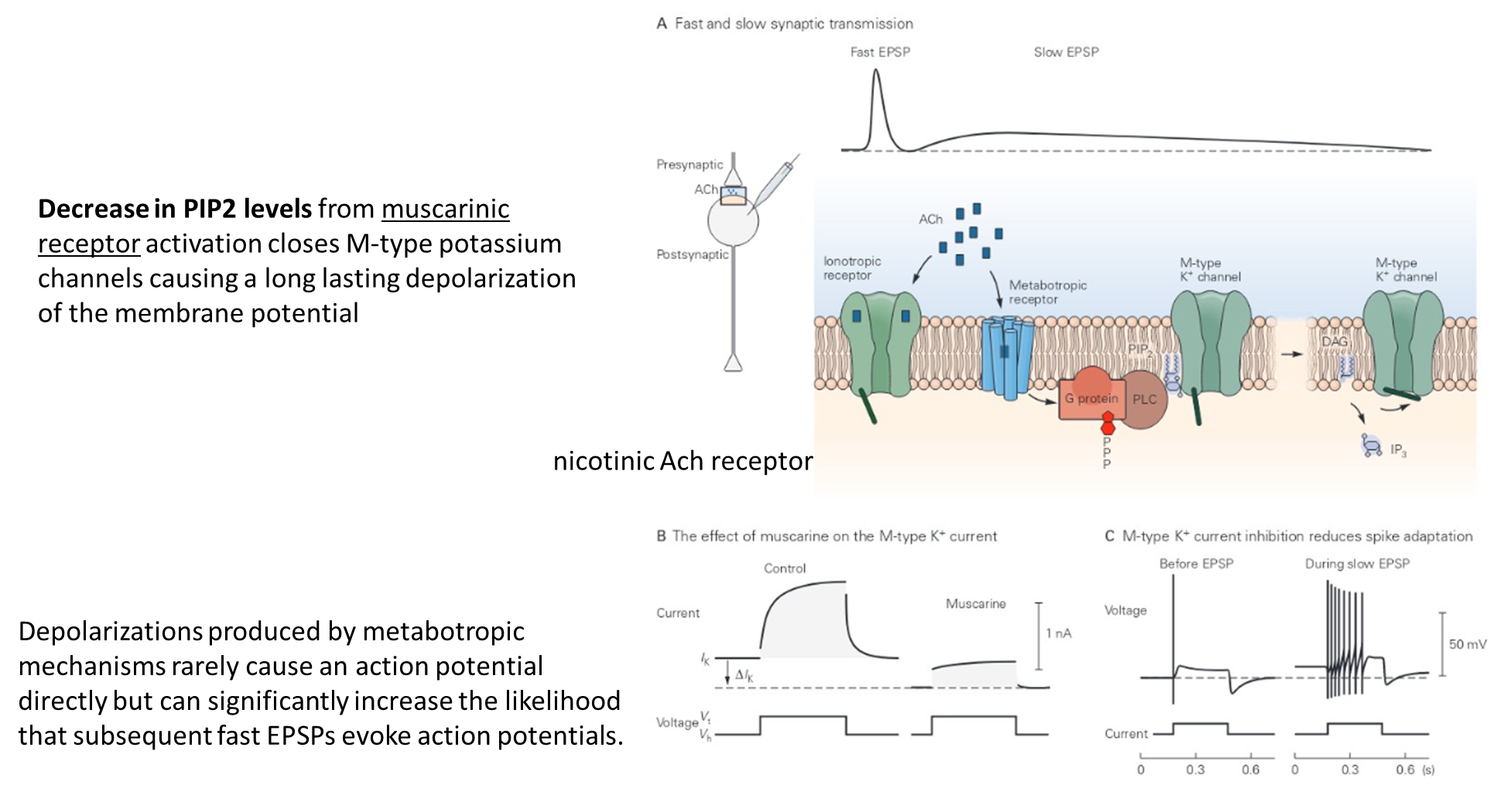
Fast ionotropic and slow metabotropic synaptic actions in the autonomic ganglia
When acetylcholine are activated it produces a late,prolonged, slow EPSP
The M type potassium channels can associate with PIP 2 and they tend to stay open, but when type 1 muscarinic receptor is activated by acetylcholine itll begin chopping of PIP2 and it closes.
By limiting the permeability of the plasma membrane to potassium you are getting rid of some of these resting open potassium channels which causes the slow EPSP
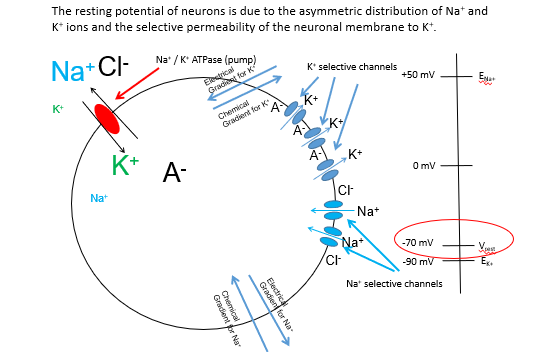
If all you have is potassium inside of the cell
Potassium is going to leave until those are positively charged ions start leaving the cell
As potassium’s keave thats going to increase the electrical gradient its going to get more and more negative as more and more potassium ions leave until it gets so negative in here that the potassium is positively charge, its not going tp want to leave anymore because its so negative
If you have potassium channels open all the time its going to be at -90 mv
If you have sodium channels open all the time its going to be +50 mV
Since neurons have both, you have -70mV because you have so many more potassium channels
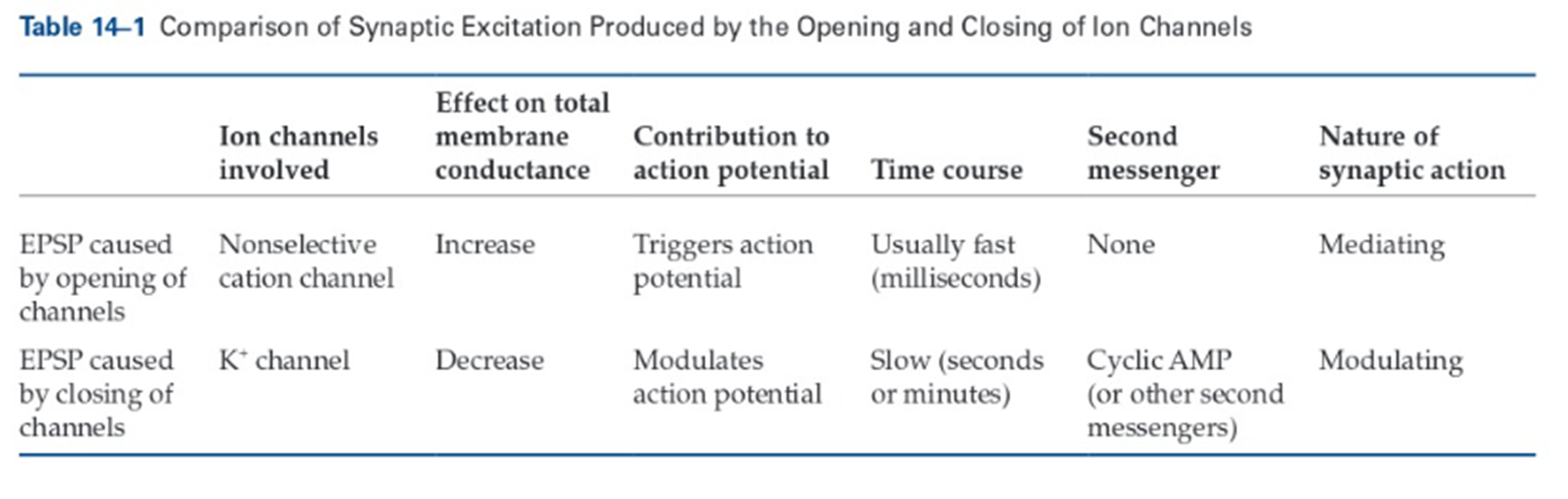
Describe how EPSP is different based on opening and closing of channels based on the following factors
Ion channels involved,
Effect on total membrane conductance
Contribution to action potential
Time course
Secondary messenger
Nature of synaptic action
MIGHT BE WORTH IT TO REVIEW THE ZOOM at the end
Describe type 2 muscarinic acetylcholine receptors. What is unique about them?What are GIRK channels? What haappens if you have ACh in a bath vs if you have ACh in a patch pipette?
Some G protein open ion channels directly without employing second messengers
The alpha subunit uncouples from beta-gamma subunit and binds to GIRK channels causing them to open (GIRK is a potassium channel)
Muscarinic ACh receptors have to be VERY close to GIRK channels
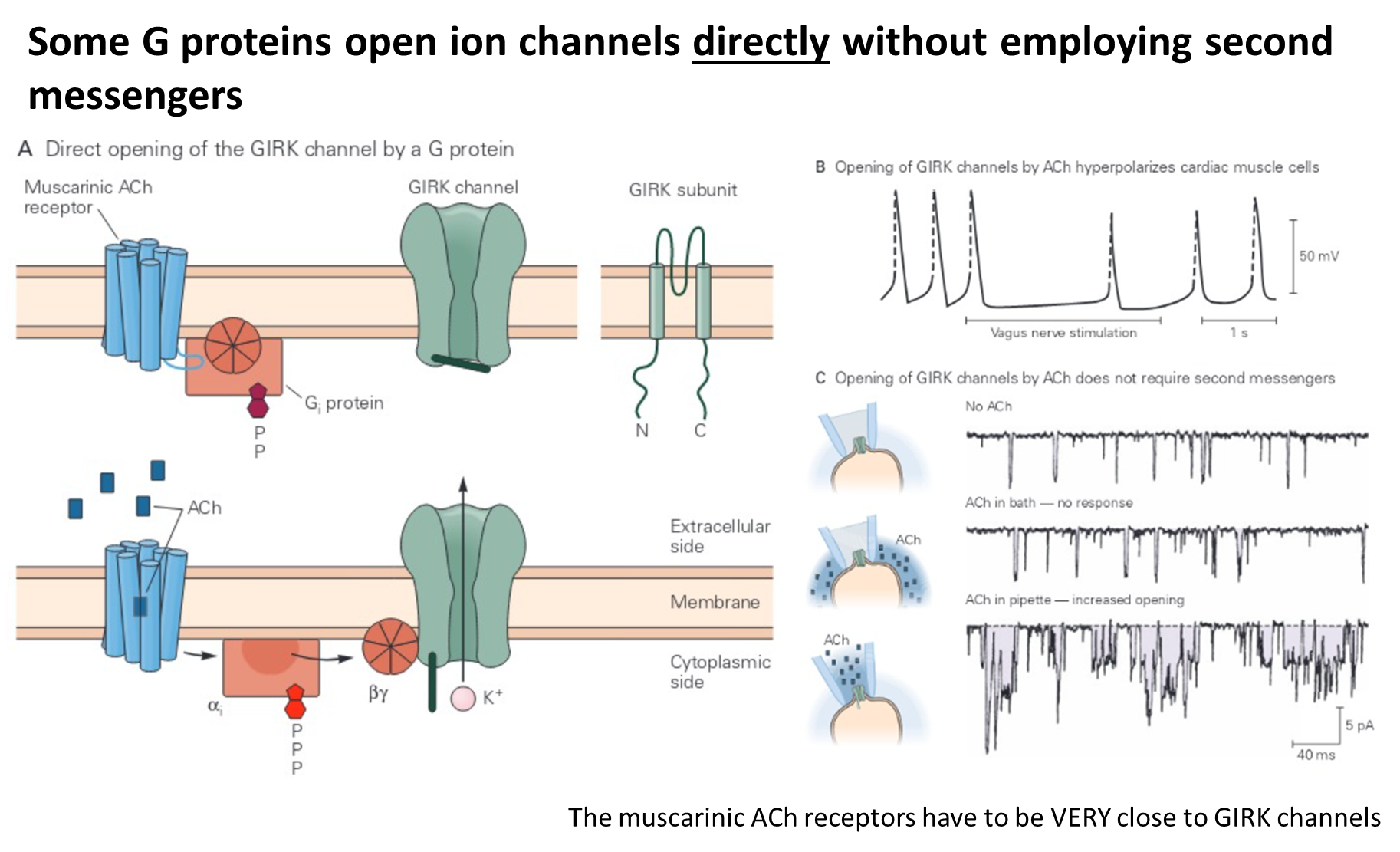
Every time the GIRK channel is open there is a response
What does serotonin do to which channel and how?
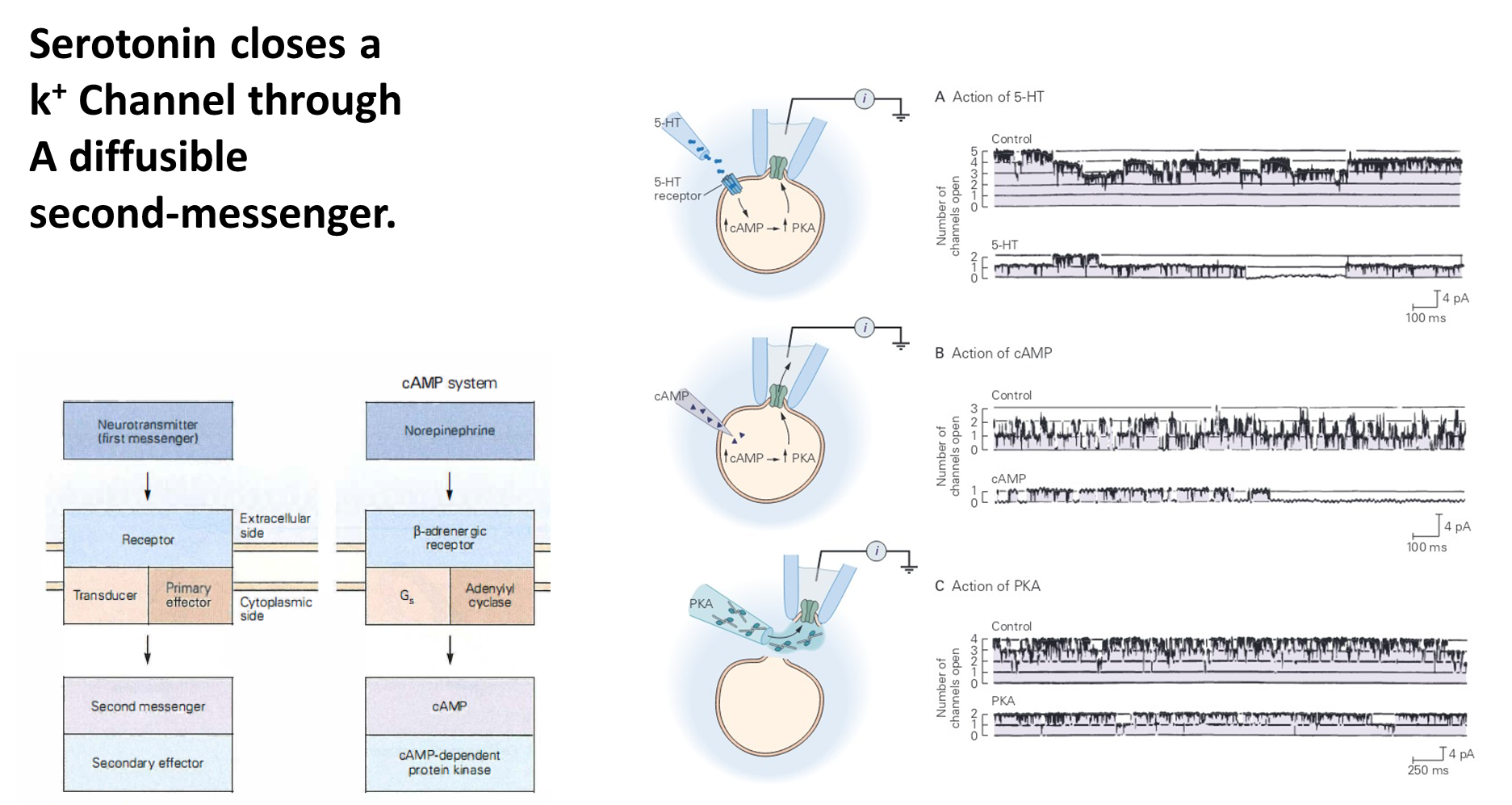
Serotonin closes a potassium channel through a diffusible second-messenger causing them to increase the membrane potential making it more easy for them to fire an action potential
Describe transcellular signaling from the postsynaptic neuron ot the presynaptic neuron and between postsynaptic cells
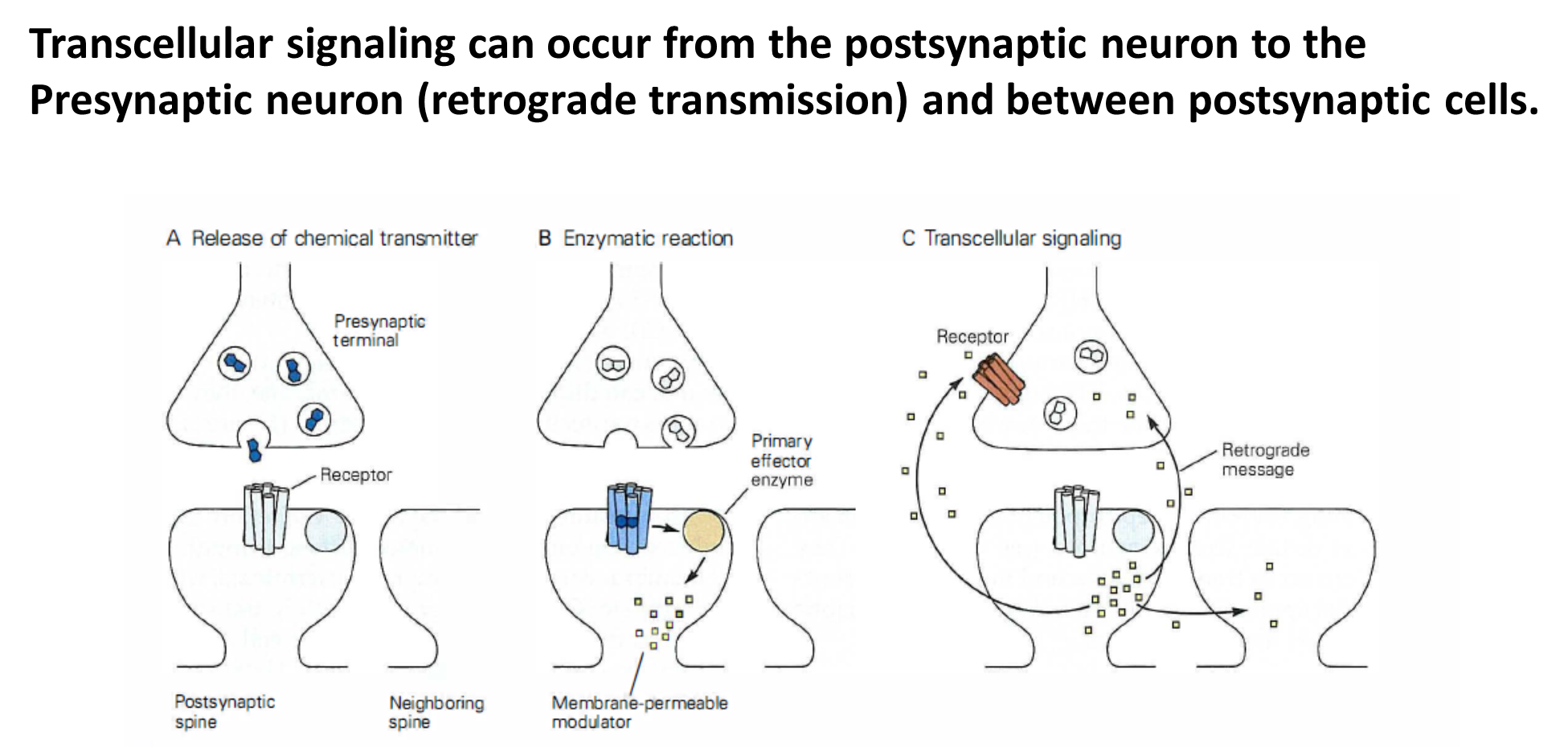
This is often done by metabotropic receptor
You can get glutamate being released to the metabotropic receptor which activates a primary affector enzyme which then induces release of membrane permeable modulator and migrate to neighboring spines and retrogradely.
What happens when G alpha Q has DAGL in addition to PLC? What if there is PLD instead of PLC?
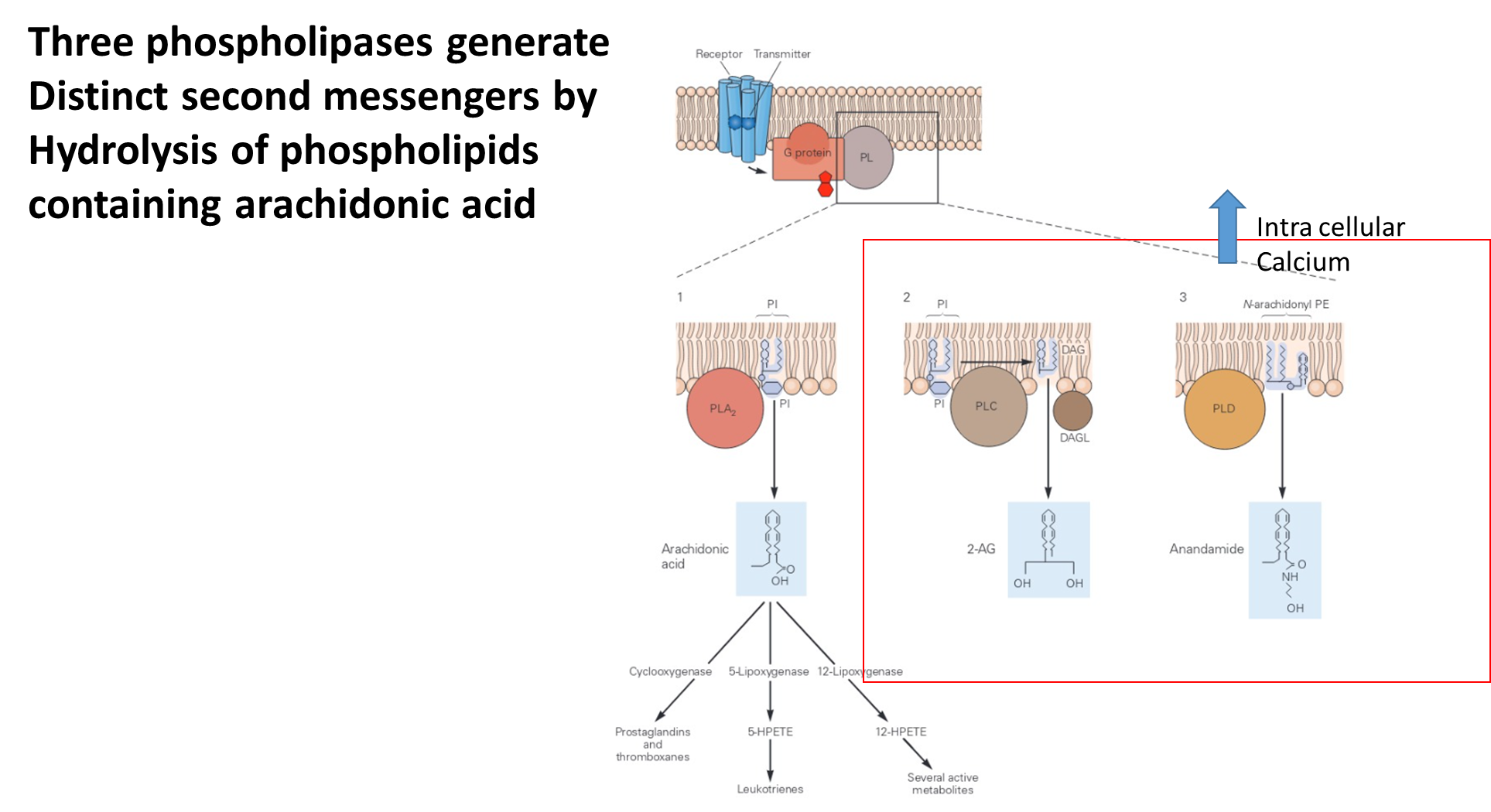
Three phospholipases generate distinct secondary messengers by hydrolysis of phospholipids containing arachidonic acid
With G alpha Q it will lead to activation of phosphilipase 3 which cleaves PIP2 to IP3 and DAG but if there is another enzyme in adition to PLC3 called DAGL then PLC can cleave PIP2 into an intermediate and then DAG-L will processs it even further to produce 2 AG.
In another situation you can have PLD instead of PLC and in the presence of elevated intracellular calcium this will result in the production of anadamide.
What is the significance of 2AG and arachnoic acid
2AG and arachnoic acid are endocanabinoids
\Endocanabinoids are released postsynaptically and bind to presynaptic
Cannabinoid Receptors that regulate neurotransmitter release
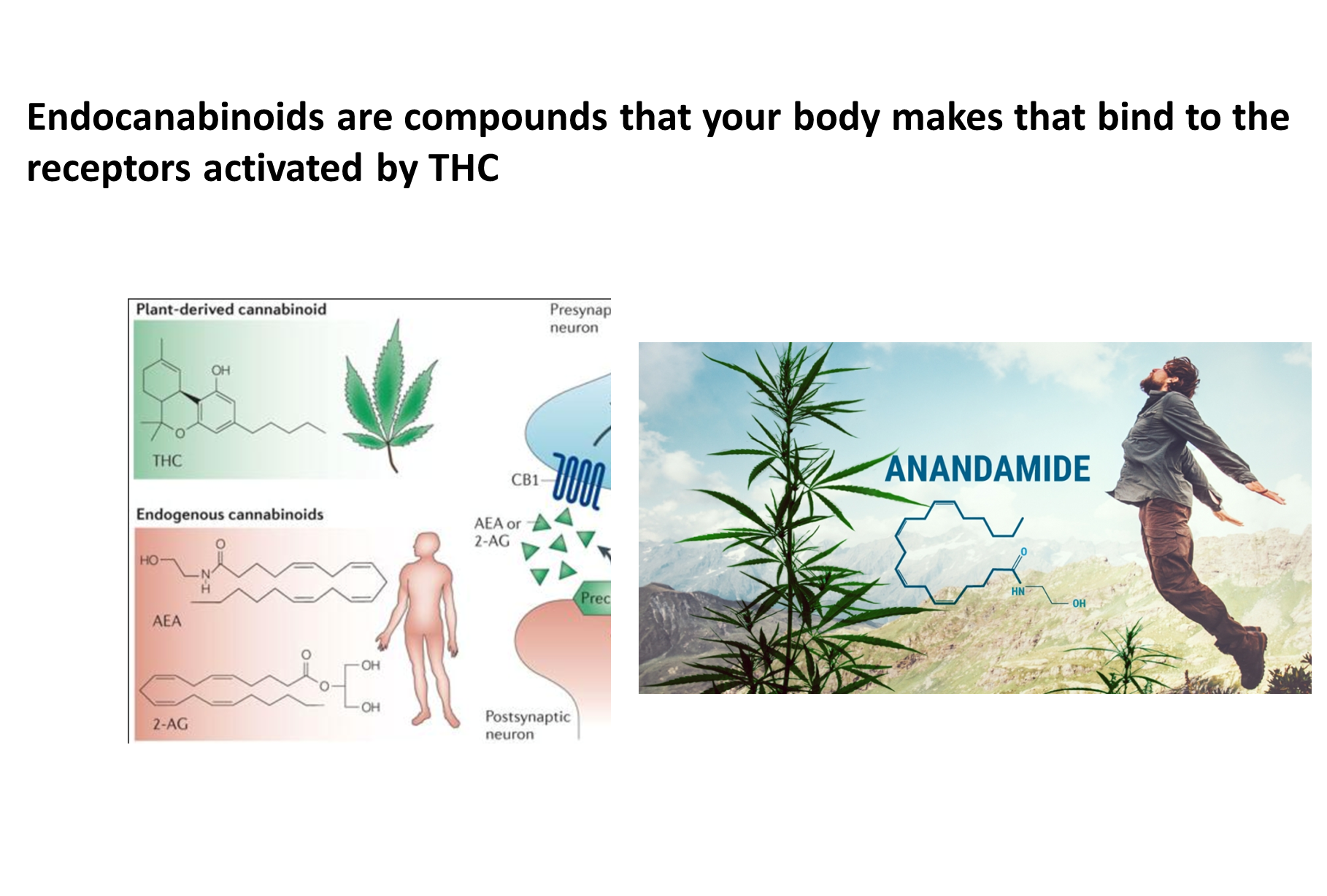
Lets say you activate mGlur5 what is its relevance to Canabinnoids?
If you activate mgluR5 metabotropic glutamate receptors you activate G alpha Q which activates phospholipase C which cleaves PIP2 into DAG and with DAG=L you proiduce 2AG
2AG then flows out of the plasma membrane of the dendritic spine and bind to presynaptic CB1 receptors
CB1 is also a metabotropic receptor coupled to G alpha I.
What does CB1 do?
Activation of CB1 does it to produce G alpha I which prevents the pKa dependent phosphorylation of synaptic voltage gated calcium channels reducing amount of calcium that comes in reducing synaptic strength.
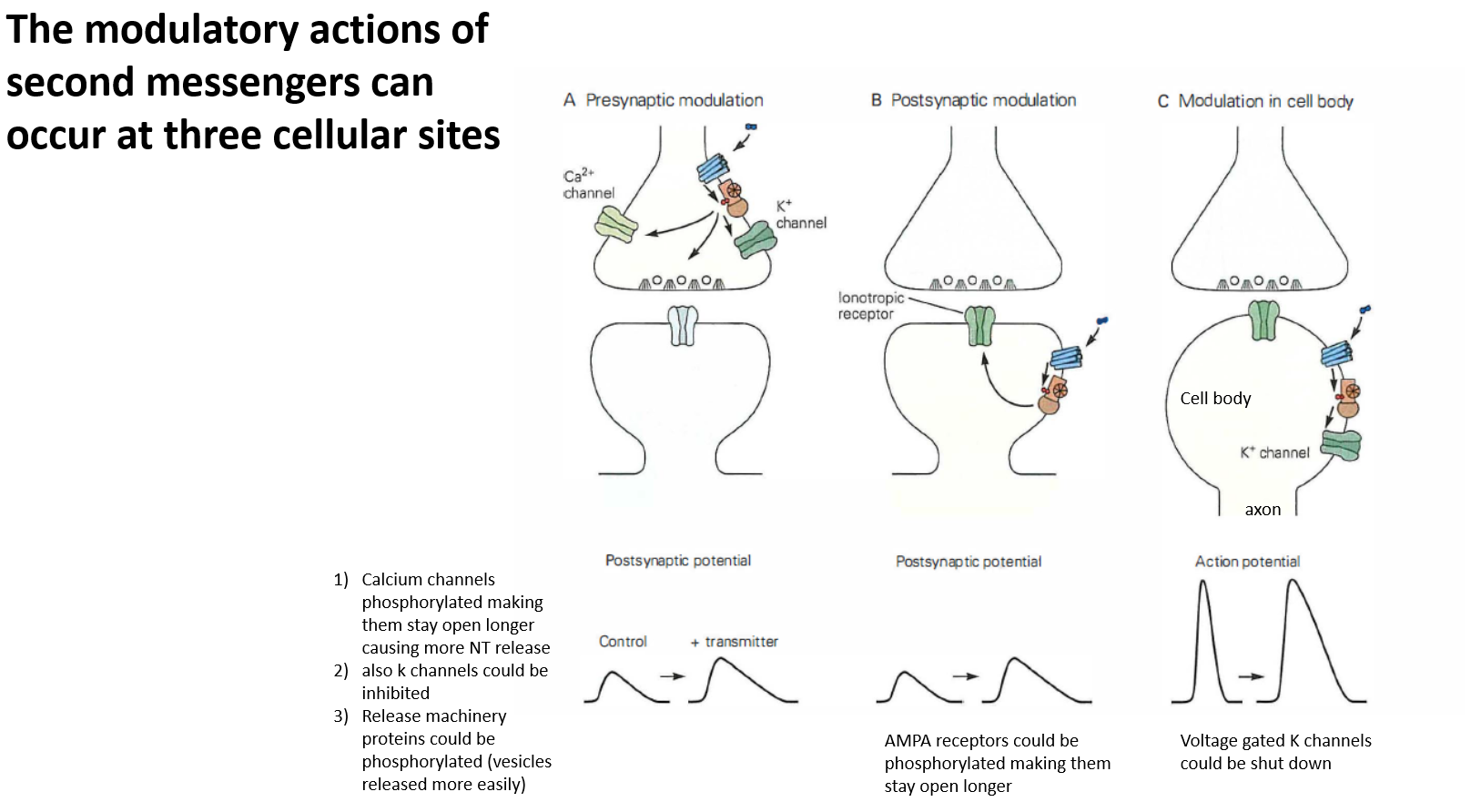
What are the three locations modulatory actions can occur? What do they do?
One is presynaptic modulation, another is postsynaptic modulation, and third is modulation in the cell body
In presynaptic modulation you have activation of a presynaptic metabotropic receptor that can influence neurotransmitter release and activation of voltage gated calcium channels which leads to more neurotransmitter being released, increasing synaptic strength
Postsynaptic modulataion you can influence how loong AMPA receptors stay open
You can have metaabotropic signaling that occurs in the cell body of a neuron thata will cause the closing of potassium channels which iwll lead to a widening of the action potential
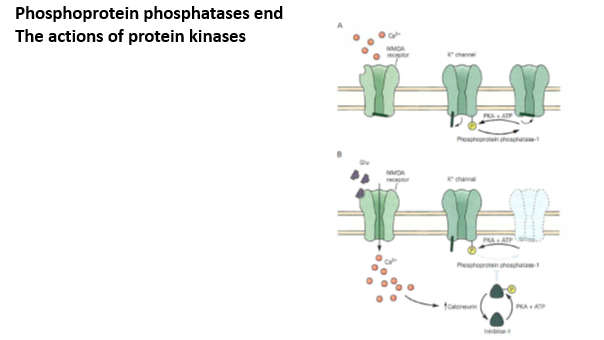
What do phosphoprotein phosphatases do?
Phosphoprotein phosphatases undo phosphorylation
When the protein calcineurin is phosphorylated you get activation of some calcium permeable receptor, that calcium can them come and bind to to and activate calcineurine which will promote dephosphorylation of this inhibitor leading to the closed state of the potassium channel
How can a single neurotransmitter have both short term and long term effects on an ion channel?
Activation of metabotropic receptors can have short lived effects if they phosphorylate ion channels, but you can also have activating enzymes such as PKA that can bind to enhancers upstream of certain genes that promote the trranscription of a particular gene creating more mRNA.
Receptor tyrosine kinsases is another type of receptor
VEGF is important for development of vasculator
Fibroglast growth factors
Trk he didnt say anything
Met Receptor autism receptor
Eph receptors