2.1 MNGT Module 2
 Call Kai
 Learn
Learn Practice Test
 Spaced Repetition
 Match
Match Flashcards
 Knowt Play
1/25

Earn XP
Description and Tags
Name | Mastery | Learn | Test | Matching | Spaced | Call with Kai |
|---|
No analytics yet
Send a link to your students to track their progress
26 Terms
competitiveness
it relates to the effectiveness of an organization meets the wants and needs of customers relative to others that offer similar goods or services
True
True or False: Marketing influences competitiveness in several ways, including identifying consumer wants and needs, pricing, and advertising and promotion.
Identifying consumer wants and/or needs
is a basic input in an organization’s decision making process, and central to competitiveness. The ideal is to achieve a perfect match between those wants and needs and the organization’s goods and/or services.
Advertising and promotion
are ways organizations can inform potential customers about features of their products or services, and attract buyers
Price and quality
are key factors in consumer buying decisions. It is important to understand the trade-off decision consumers make between price and quality
True
True or False: One of the major influence on competitiveness is product and service design should reflect joint efforts of many areas of the firm to achieve a match between financial resources, operations capabilities, supply chain capabilities, and consumer wants and needs
False
True or False: Cost of an organization’s output can be a competitive advantage by effectively matching supplies of goods with demand.
True
True or False: Location can be important in terms of cost and convenience for customers.
True
True or False: Quality refers to materials, workmanship, design, and service. Consumers judge quality in terms of how well they think a product or service will satisfy its intended purpose.
True
True or False: Quick response can be a competitive advantage. One way is quickly bringing new or improved products or services to the market. Another is being able to quickly deliver existing products and services to a customer after they are ordered, and still another is quickly handling customer complaints.
True
True or False: Flexibility is the ability to respond to changes. Changes might relate to alterations in design features of a product or service, or to the volume demanded by customers, or the mix of products or services offered by an organization.
True
True or False: Inventory management can be a competitive advantage by effectively matching supplies of goods with demand.
False
True or False: Supply chain management involves coordinating external operations only to achieve timely and cost-effective delivery of goods throughout the system.
True
True or False: Service might involve after-sale activities customers perceive as value-added, such as delivery, setup, warranty work, and technical support. Or it might involve extra attention while work is in progress, such as courtesy, keeping the customer informed, and attention to details.
True
True or False: Managers and workers are the people at the heart and soul of an organization, and if they are competent and motivated, they can provide a distinct competitive edge by their skills and the ideas they create.
Strategy
is a set of goal-directed actions a firm takes to gain and sustain superior performance relative to competitors.
mission and goals
The _____ and _____ often relate to how an organization wants to be perceived by the general public, and by its employees, suppliers, and customers.
Goals
serve as a foundation for the development of organizational strategies.
Mission
is the reason for its existence, which provide more detail and describe the scope of the mission.
Differentiation
Distinguishing the offerings of an organization in a way that the customer perceives as adding value.
Low-cost leadership
A kind of leadership achieving maximum value, as perceived by the customer.
Response
A set of values related to rapid, flexible, and reliable performance.
Productivity
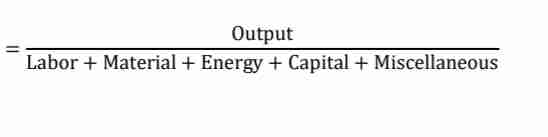
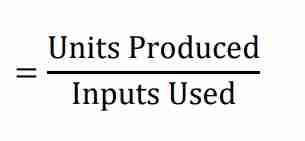
is the measure of the effective use of resources, expressed as the ratio of output to input.
True
True or False: Productivity is the ratio of outputs divided by the inputs.
Single-factor Productivity
a kind of productivity which indicates the ratio of goods and services produced to one resource.
Multifactor Productivity
A kind of productivity which indicates the ratio of goods and services produced to many or all resources