A+P Week 5 - Neural System
0.0(0)
Studied by 0 people Call Kai
 Learn
Learn Practice Test
 Spaced Repetition
 Match
Match Flashcards
 Knowt Play
Card Sorting
1/75

There's no tags or description
Looks like no tags are added yet.
Last updated 4:56 AM on 5/28/26
Name | Mastery | Learn | Test | Matching | Spaced | Call with Kai |
|---|
No analytics yet
Send a link to your students to track their progress
76 Terms
1
New cards
What is the anatomical organisation of the nervous system?
Division into the central nervous system (CNS) and peripheral nervous system (PNS).
2
New cards
What structures make up the CNS?
Brain and spinal cord.
3
New cards
What structures make up the PNS?
Cranial nerves, spinal nerves, and ganglia.
4
New cards
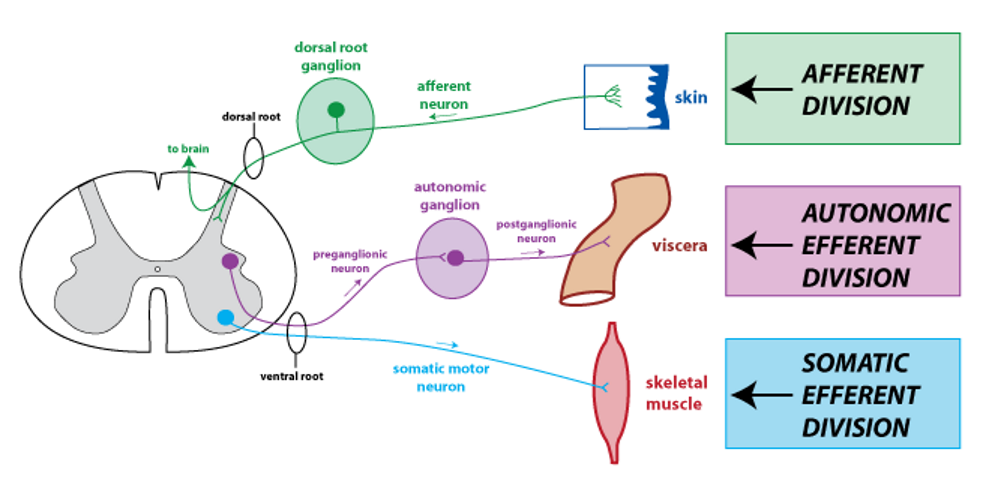
What is the functional organisation of the nervous system?
Division into sensory (afferent) and motor (efferent) systems.
5
New cards
What is the role of the sensory nervous system?
Carries information from receptors to the CNS.
6
New cards
What is the role of the motor nervous system?
Carries commands from the CNS to effectors.
7
New cards
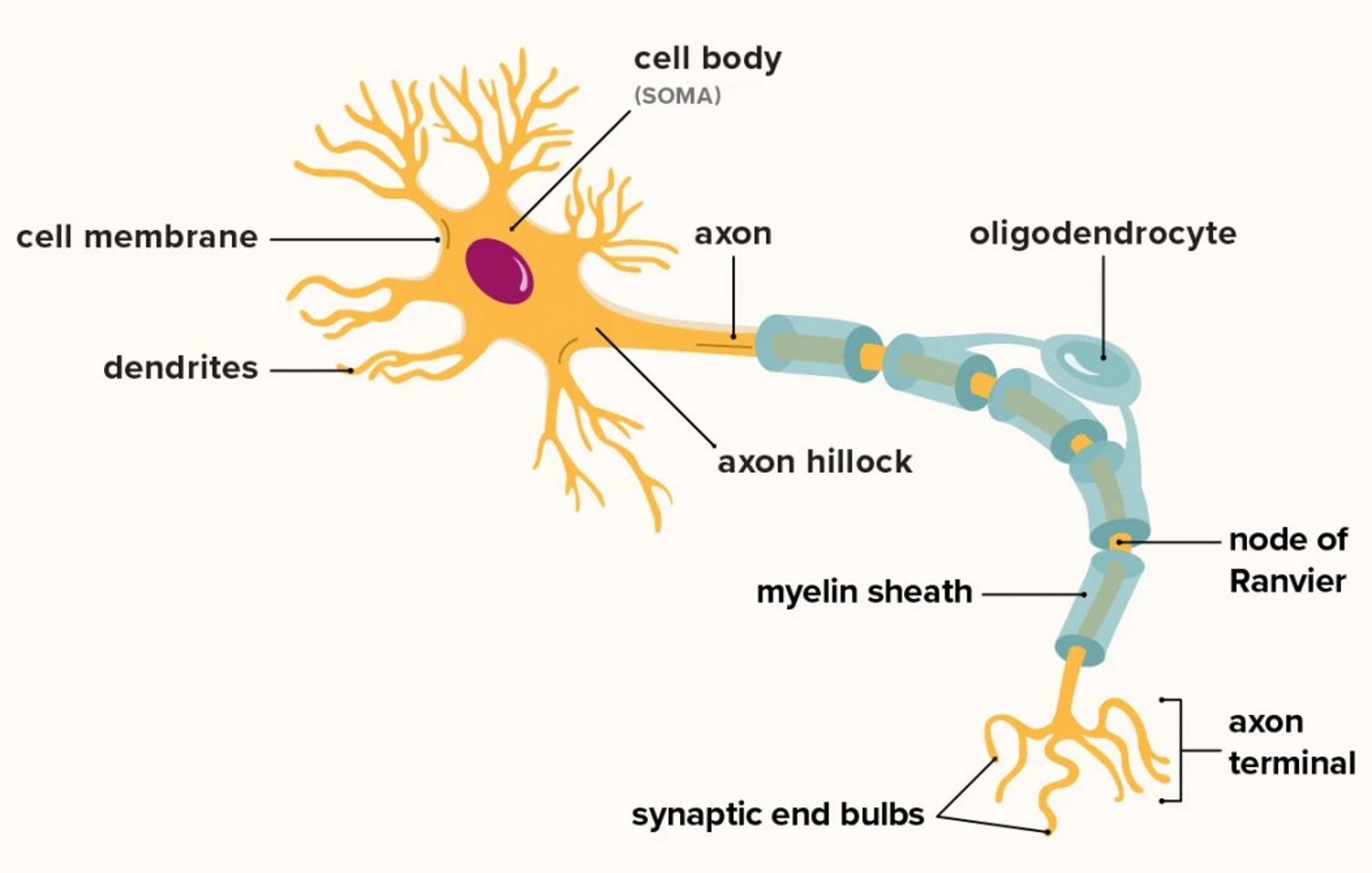
What are the parts of a typical neuron?
Dendrites, cell body, axon, myelin sheath, nodes of Ranvier, and axon terminals.
8
New cards
What is the function of dendrites?
Receive incoming signals.
9
New cards
What is the function of the axon?
Conduct action potentials away from the cell body.
10
New cards
What is the myelin sheath?
A lipid-rich insulating layer around axons.
11
New cards
What is the function of the myelin sheath?
Increases speed of nerve impulse conduction.
12
New cards
What are nodes of Ranvier?
Gaps in the myelin sheath where ion exchange occurs.
13
New cards
How is resting membrane potential created?
Unequal distribution of ions across the membrane.
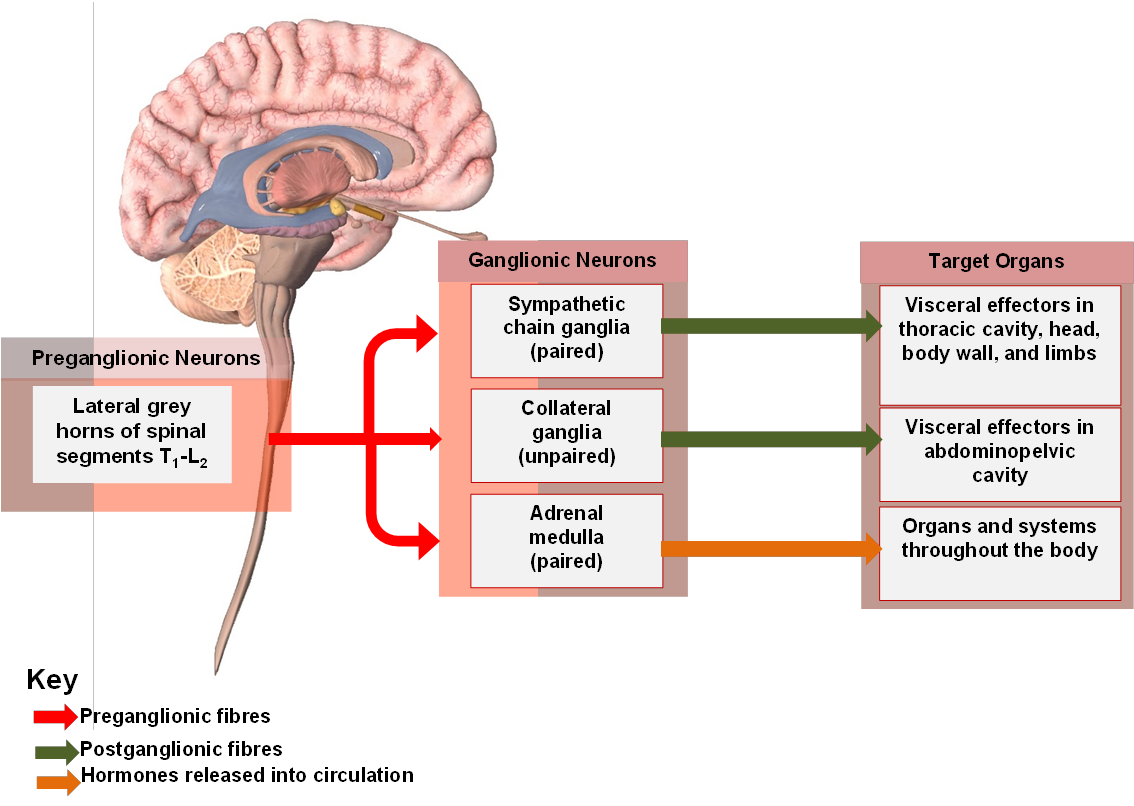
14
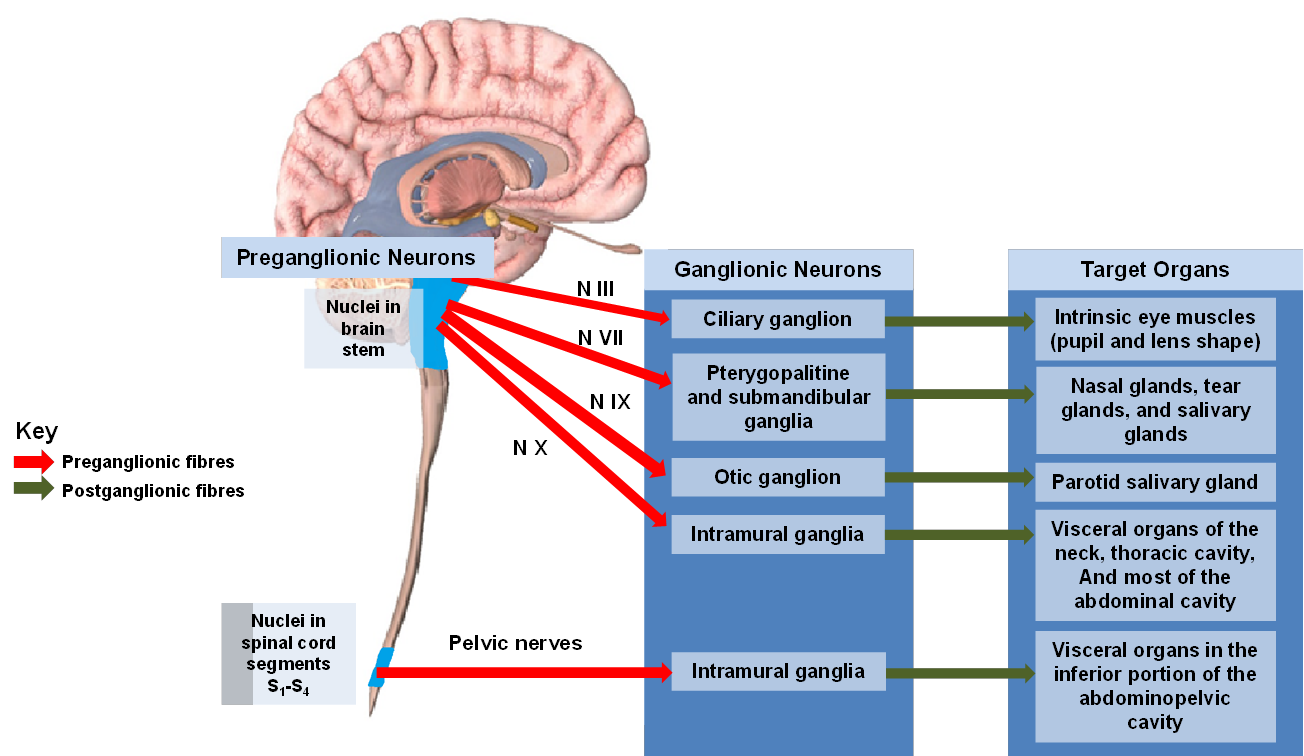
New cards
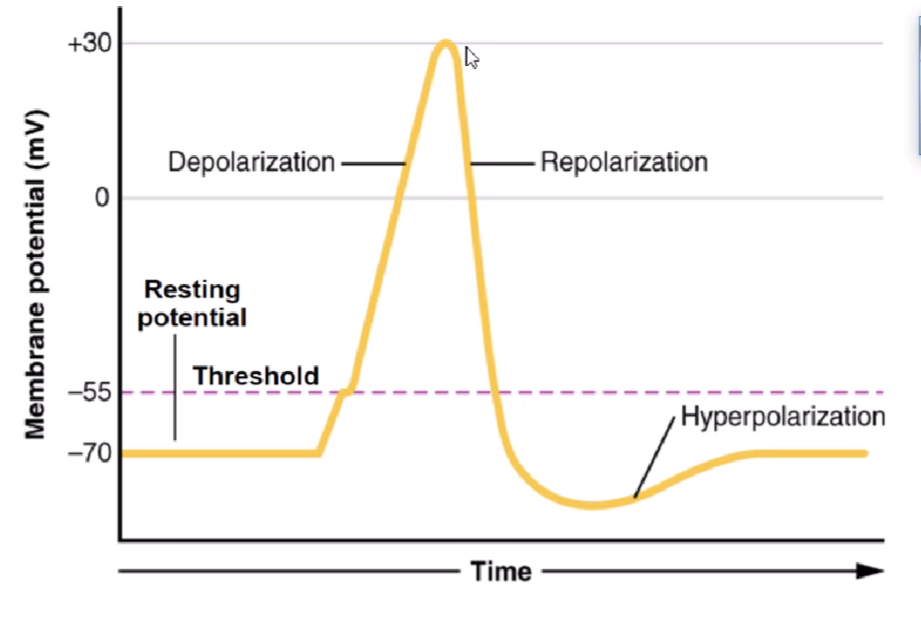
What is the typical resting membrane potential of a neuron?
Approximately -70 mV.
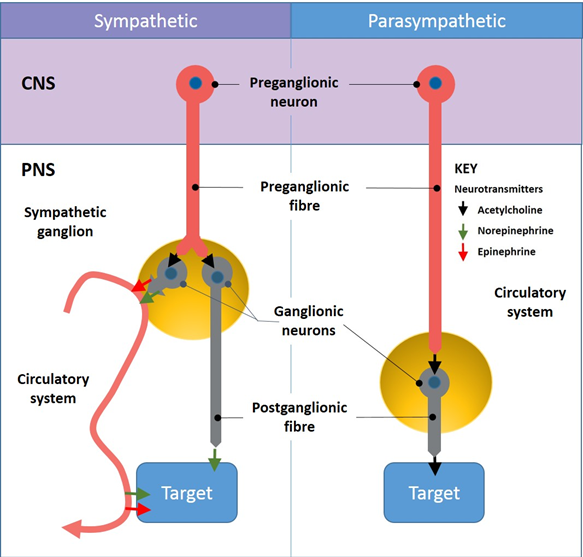
15
New cards
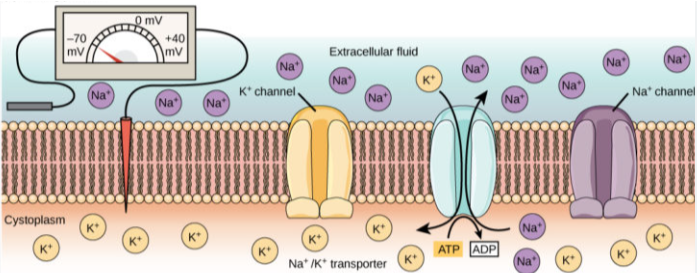
What maintains resting membrane potential?
Sodium-potassium pumps and selective membrane permeability.
16
New cards
What is the function of the sodium-potassium pump?
Moves 3 Na+ out and 2 K+ into the cell using ATP.
17
New cards
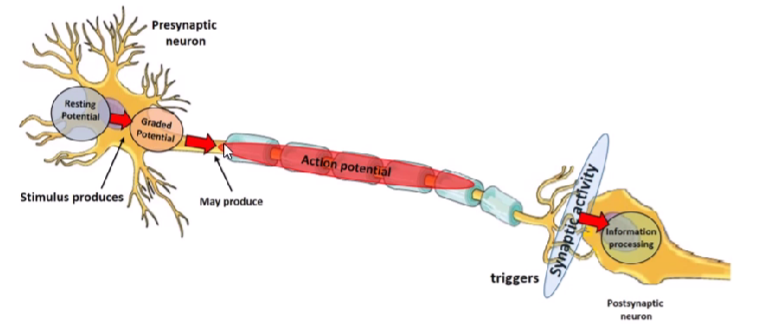
What is an action potential?
A rapid reversal of membrane potential that travels along the axon.
18
New cards
What triggers an action potential?
Depolarisation reaching threshold.
19
New cards
What happens during depolarisation?
Sodium channels open and Na+ enters the neuron.
20
New cards
What happens during repolarisation?
Potassium channels open and K+ leaves the neuron.
21
New cards
What happens during hyperpolarisation?
Membrane potential briefly becomes more negative than resting potential.
22
New cards
How does an action potential propagate?
Depolarisation in one segment triggers depolarisation in the next.
23
New cards
What is saltatory conduction?
Action potentials jumping between nodes of Ranvier in myelinated axons.
24
New cards
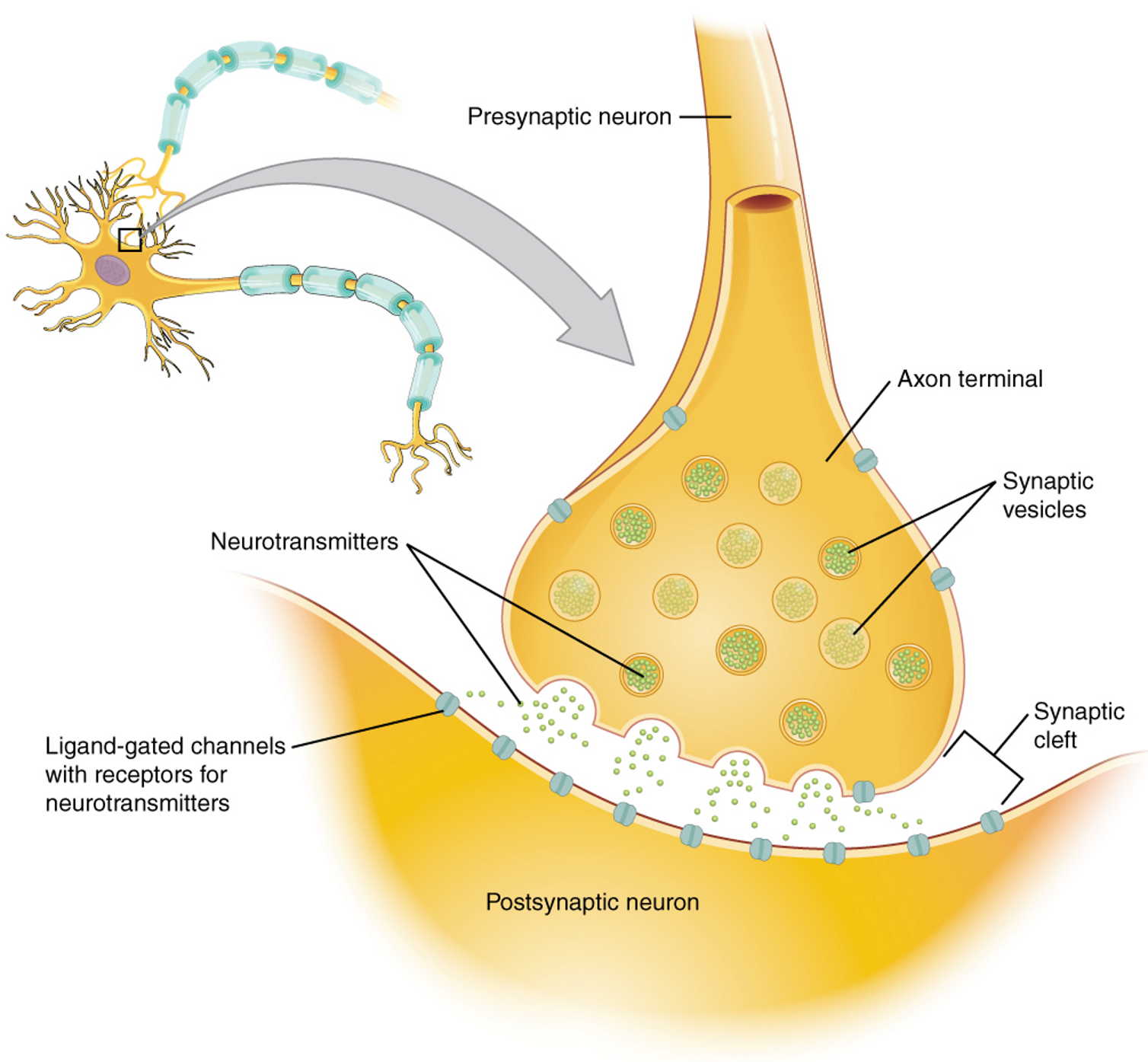
What is a synapse?
A junction between neurons or between a neuron and an effector.
25
New cards
What are the main parts of a synapse?
Presynaptic terminal, synaptic cleft, and postsynaptic membrane.
26
New cards
What is a chemical synapse?
A synapse using neurotransmitters for communication.
27
New cards
What is an electrical synapse?
A synapse where ions pass directly through gap junctions.
28
New cards
What is the main difference between chemical and electrical synapses?
Chemical synapses use neurotransmitters; electrical synapses allow direct ion flow.
29
New cards
What is grey matter?
Nervous tissue containing neuron cell bodies and dendrites.
30
New cards
What is the function of grey matter?
Information processing and integration.
31
New cards
What is white matter?
Nervous tissue containing myelinated axons.
32
New cards
What is the function of white matter?
Transmission of nerve impulses.
33
New cards
What are the six major regions of the brain?
Cerebrum, diencephalon, midbrain, pons, medulla oblongata, and cerebellum.
34
New cards
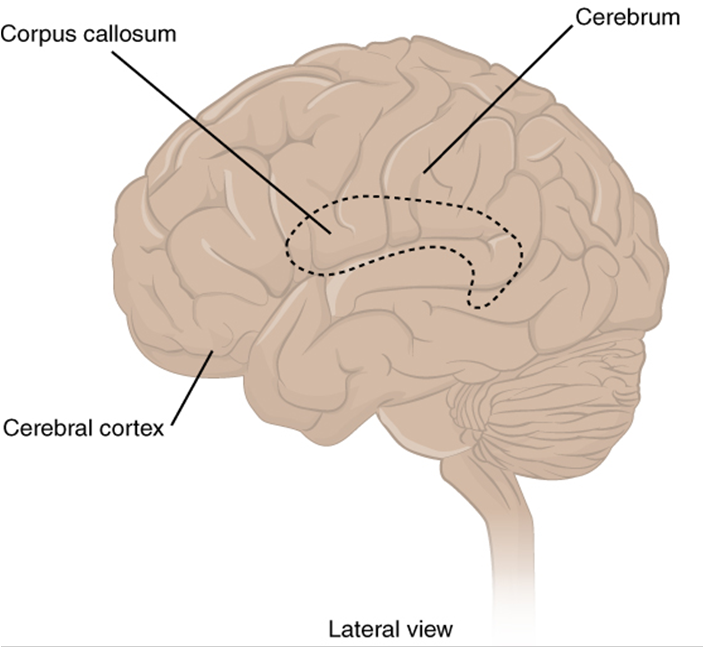
What is the function of the cerebrum?
Conscious thought, sensation, memory, and voluntary movement.
35
New cards
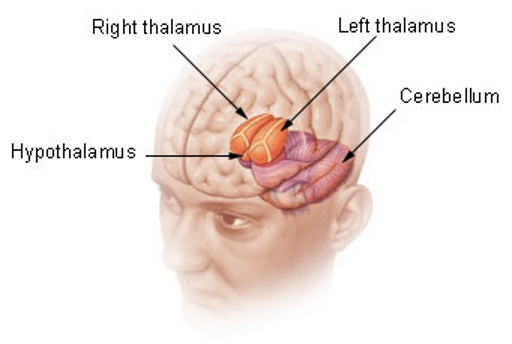
What is the function of the diencephalon?
Sensory relay and homeostasis regulation.
36
New cards
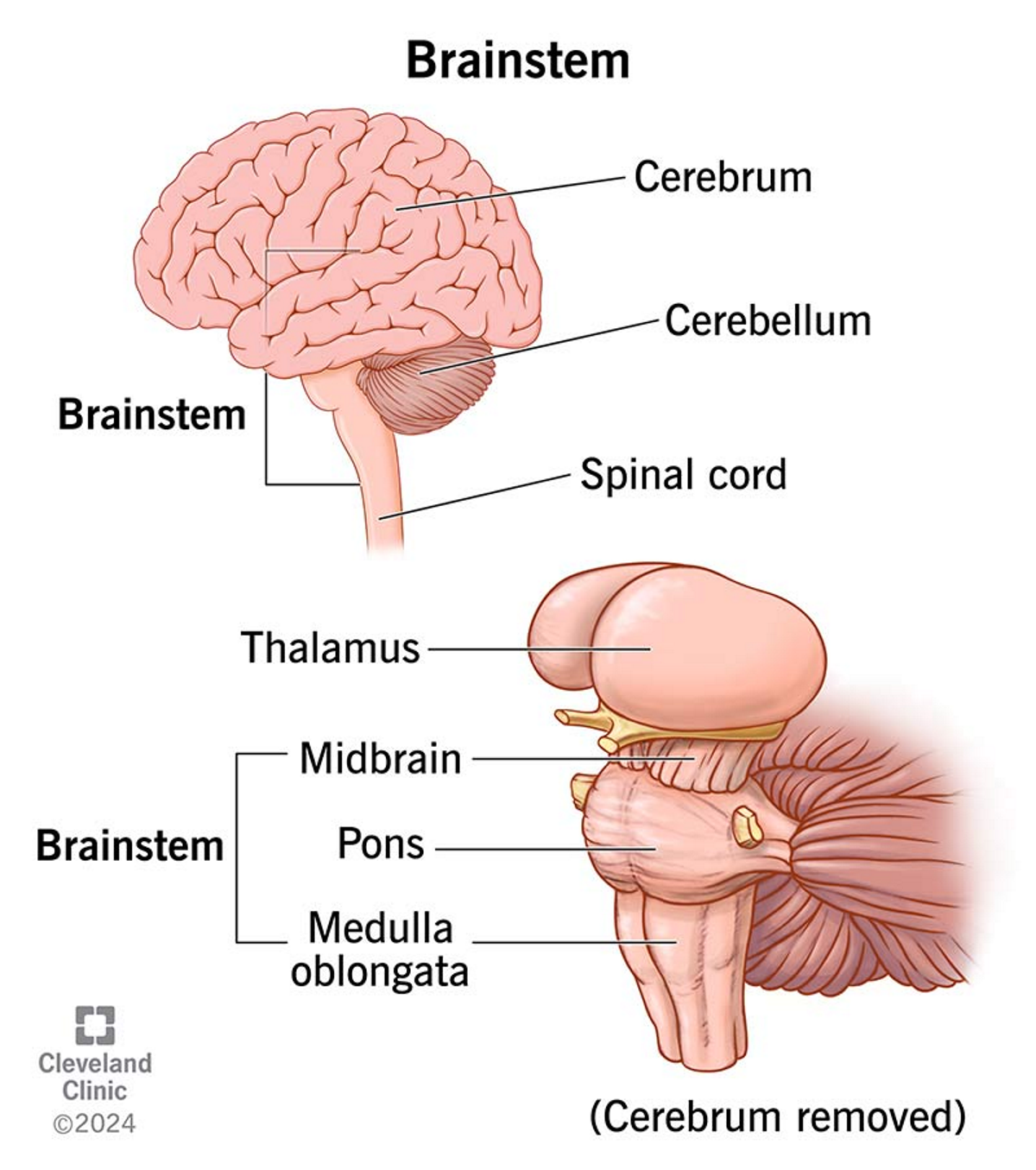
What is the function of the midbrain?
Visual and auditory reflexes.
37
New cards
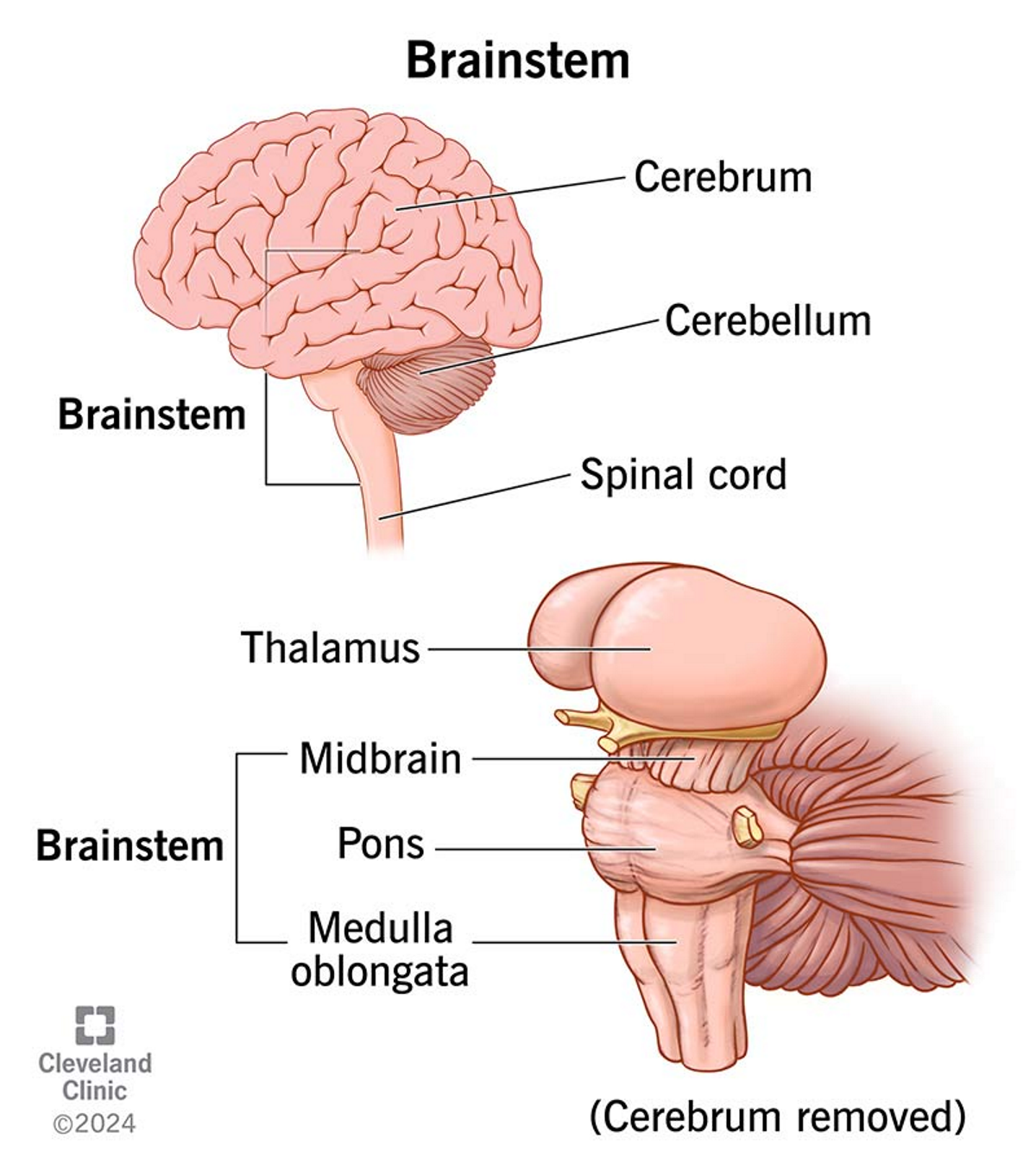
What is the function of the pons?
Relay between brain regions and breathing regulation.
38
New cards
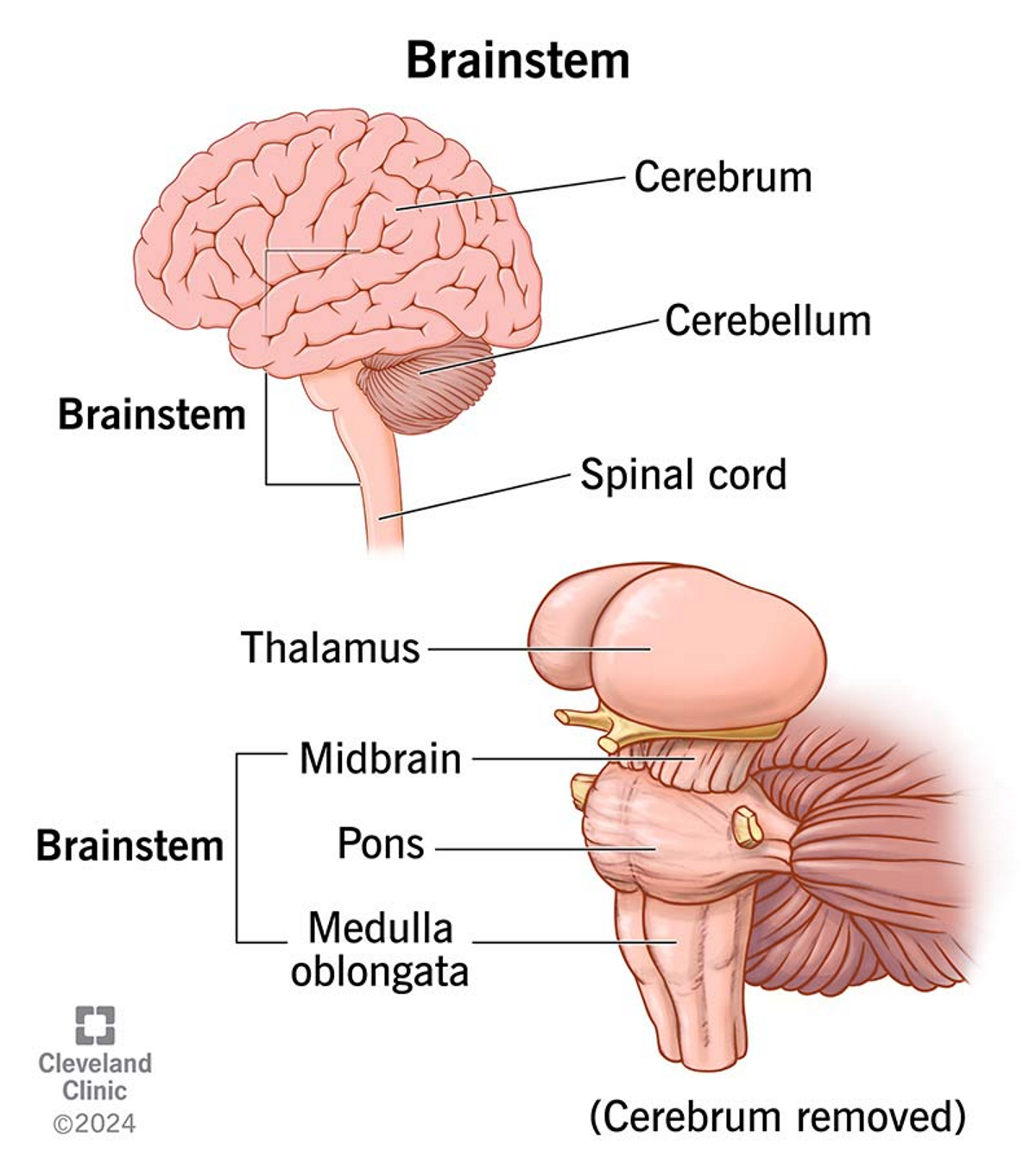
What is the function of the medulla oblongata?
Controls vital autonomic functions like heart rate and breathing.
39
New cards
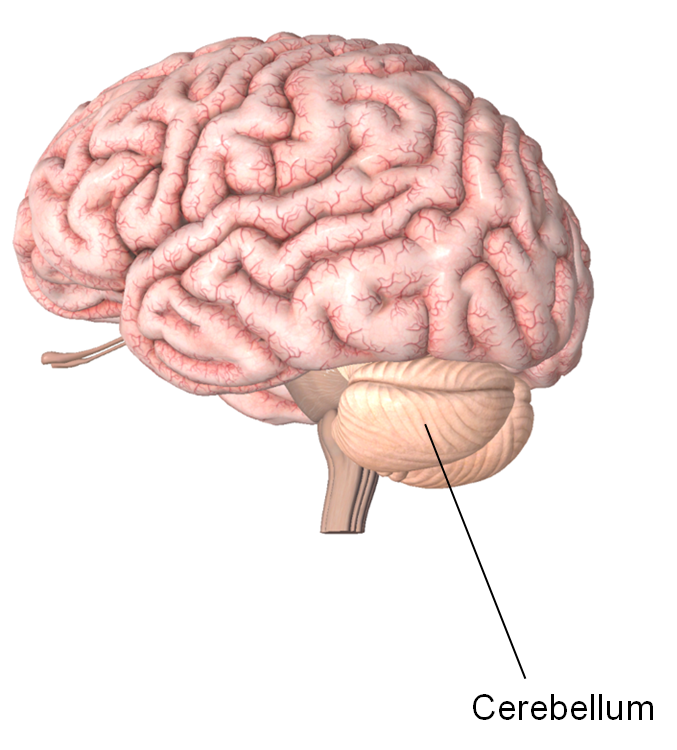
What is the function of the cerebellum?
Coordination, balance, and motor control.
40
New cards
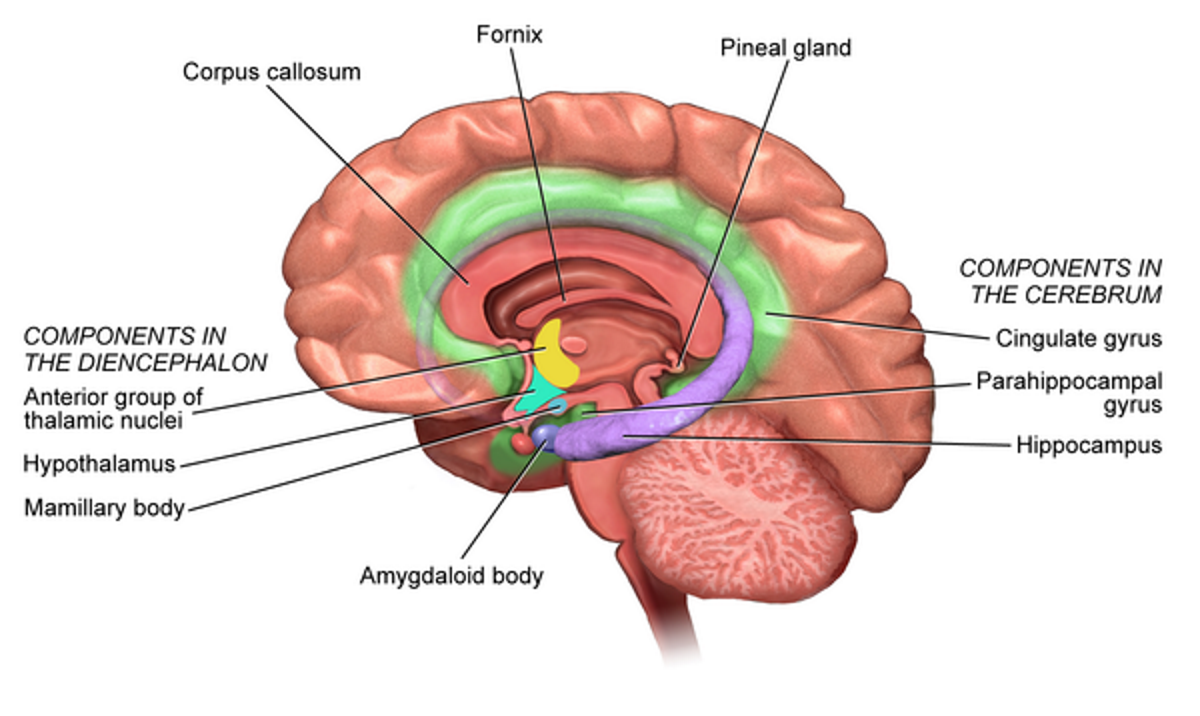
What structures make up the limbic system?
Hippocampus, amygdala, hypothalamus, and cingulate gyrus.
41
New cards
What is the function of the hippocampus?
Memory formation.
42
New cards
What is the function of the amygdala?
Emotional processing.
43
New cards
What is the function of the hypothalamus?
Homeostasis and autonomic/endocrine regulation.
44
New cards
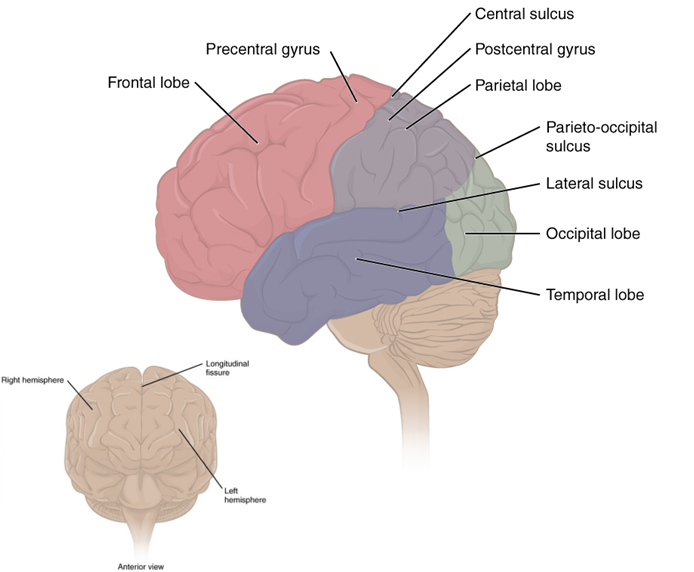
What are the main regions of the cerebrum?
Frontal, parietal, temporal, and occipital lobes.
45
New cards
What is the function of the frontal lobe?
Motor control, planning, reasoning, and speech.
46
New cards
What is the function of the parietal lobe?
Somatic sensory processing.
47
New cards
What is the function of the temporal lobe?
Hearing, memory, and language.
48
New cards
What is the function of the occipital lobe?
Vision processing.
49
New cards
What is the primary motor cortex?
Region controlling voluntary skeletal muscle movement.
50
New cards
What is the primary somatosensory cortex?
Region receiving sensory input from the body.
51
New cards
What is the visual cortex?
Region processing visual information.
52
New cards
What is the auditory cortex?
Region processing sound.
53
New cards
What are association areas?
Brain regions integrating and interpreting information.
54
New cards
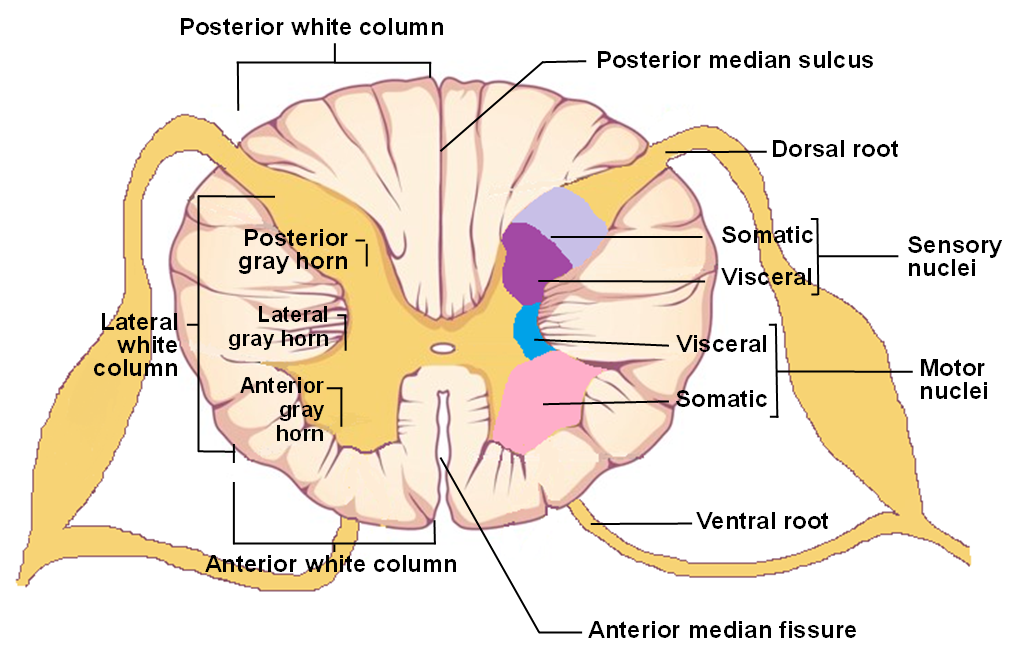
What are the components of the spinal cord?
Grey matter, white matter, central canal, dorsal roots, and ventral roots.
55
New cards
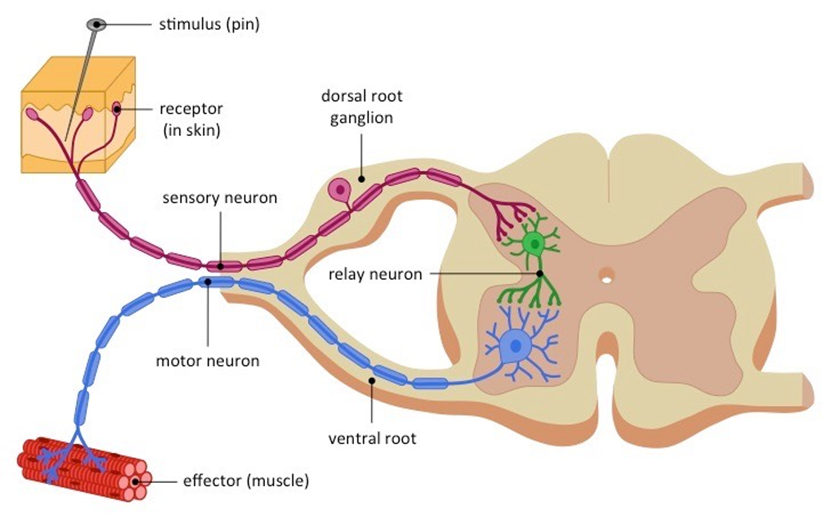
What is a reflex arc?
A rapid automatic response pathway.
56
New cards
What are the components of a reflex arc?
Receptor, sensory neuron, integration centre, motor neuron, and effector.
57
New cards
What is an example of a reflex response?
Withdrawal reflex or knee-jerk reflex.
58
New cards
What are sensory receptors?
Structures that detect changes in the environment.
59
New cards
How do sensory receptors respond to specific stimuli?
Each receptor is specialised for a particular type of stimulus.
60
New cards
How does receptor organisation affect sensitivity?
Receptors with smaller receptive fields provide greater sensitivity and precision.
61
New cards
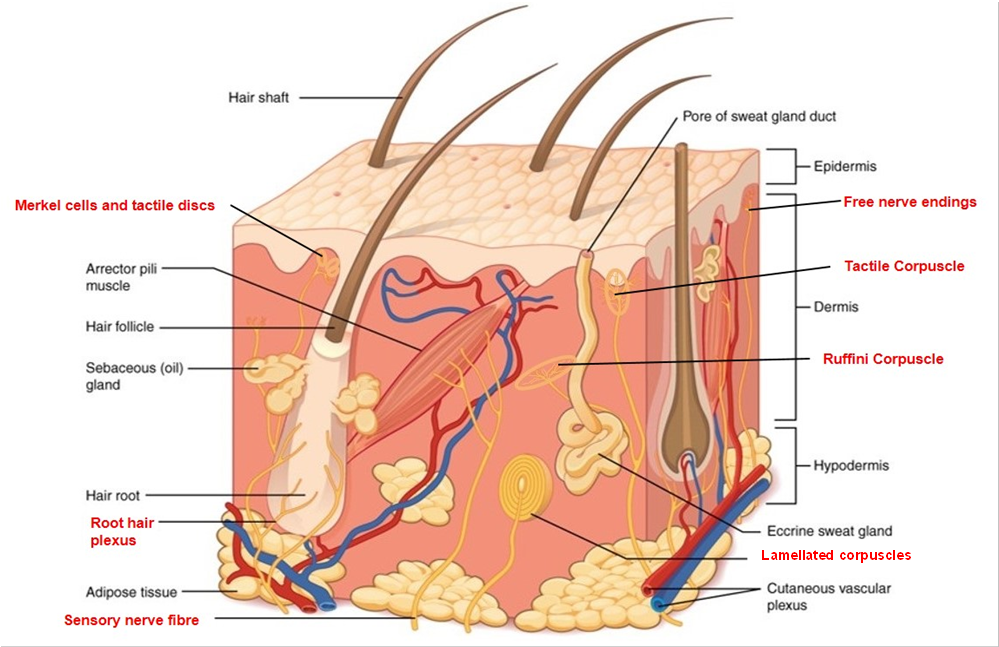
What are general senses?
Sensations distributed throughout the body such as touch, pain, temperature, and proprioception.
62
New cards
What receptors detect touch and pressure?
Mechanoreceptors.
63
New cards
What receptors detect temperature?
Thermoreceptors.
64
New cards
What receptors detect pain?
Nociceptors.
65
New cards
What receptors detect body position?
Proprioceptors.
66
New cards
What is the somatic nervous system?
Division controlling voluntary skeletal muscle movement and conscious sensation.
67
New cards
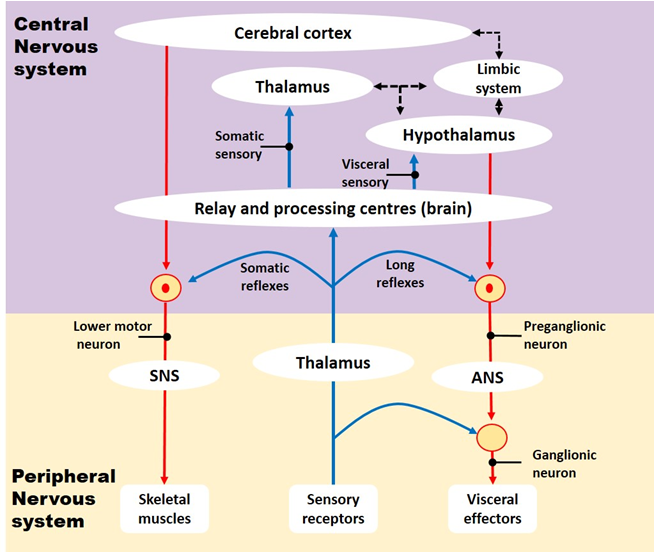
What levels of information processing are involved in motor control?
Conscious, subconscious, and reflexive levels.
68
New cards
What is the autonomic nervous system (ANS)?
Division controlling involuntary functions of smooth muscle, cardiac muscle, and glands.
69
New cards
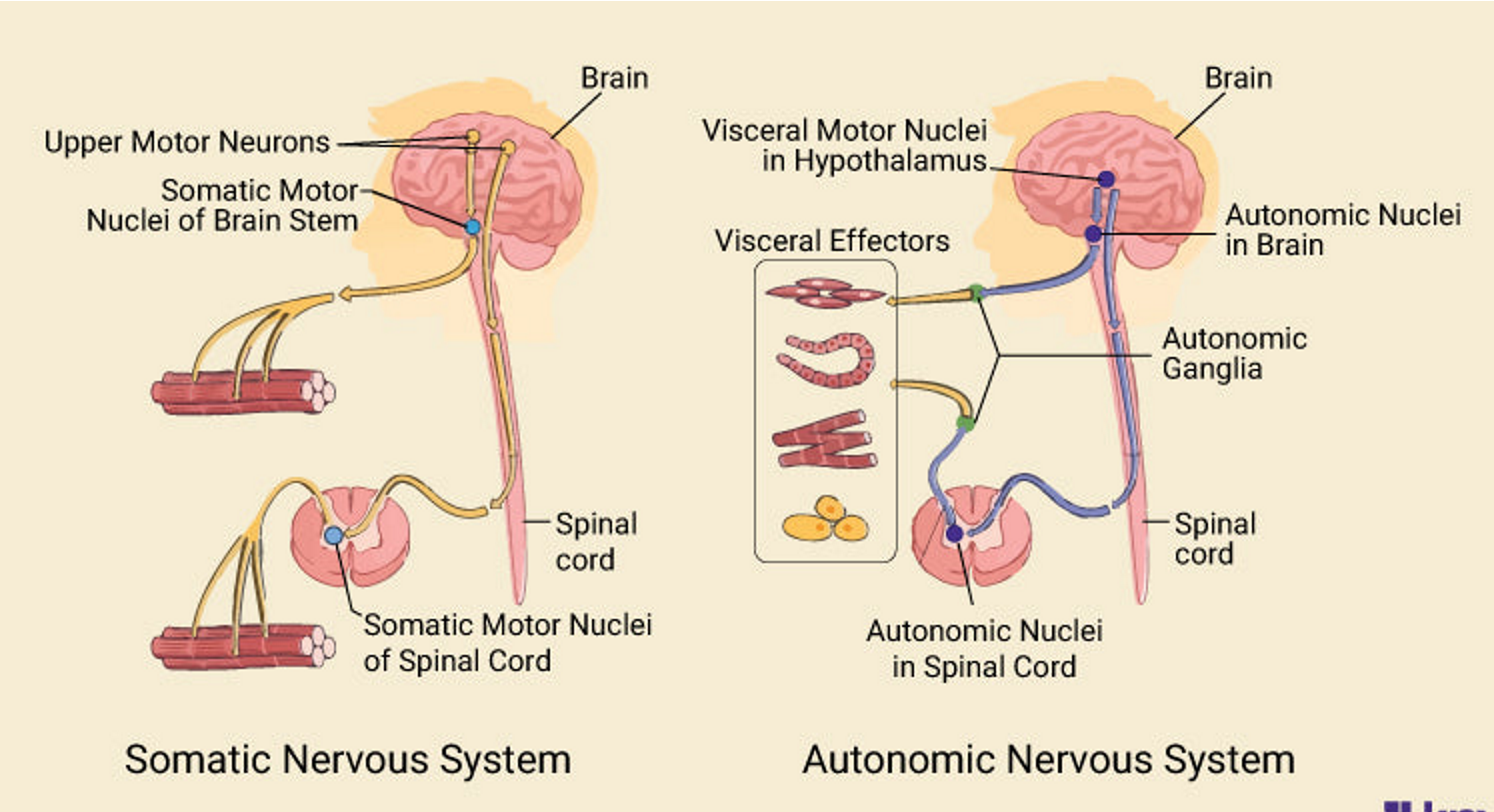
What is the difference between the somatic and autonomic nervous systems?
Somatic controls voluntary skeletal muscle; autonomic controls involuntary visceral functions.
70
New cards
What are the divisions of the autonomic nervous system?
Sympathetic and parasympathetic divisions.
71
New cards
What is the function of the sympathetic division?
Prepares the body for stress (“fight or flight”).
72
New cards
What is the function of the parasympathetic division?
Promotes rest, digestion, and energy conservation (“rest and digest”).
73
New cards
What are the effects of sympathetic stimulation?
Increased heart rate, dilated pupils, and reduced digestion.
74
New cards
What are the effects of parasympathetic stimulation?
Decreased heart rate and increased digestion.
75
New cards
What is dual innervation?
Most organs receive both sympathetic and parasympathetic nerve supply.
76
New cards
Why is dual innervation important?
Allows balanced regulation of organ activity.