MCAT Psychology, MCAT Psych/Sociology from 132 Scorer
 Call Kai
 Learn
Learn Practice Test
 Spaced Repetition
 Match
Match Flashcards
 Knowt Play
1/1385

There's no tags or description
Looks like no tags are added yet.
Name | Mastery | Learn | Test | Matching | Spaced | Call with Kai |
|---|
No analytics yet
Send a link to your students to track their progress
1386 Terms
Stretch Reflex
One muscle contracts while being stretched while the antagonist muscle relaxes. Regulates muscle length
Signs of lower motor neuron disease
decrease in muscle tome and decreased reflexes
Signs of upper motor neuron disease
Increased muscle tone and increased reflexes
Clonus
Muscle spasms involving repeated contractions. Example: the ankle contracts and flexes quickly back and forth.
Hypertonia
A state of increased muscle tension or tonicity
Babinski Reflex (Extensor Plantar Response)
A reflex characterized by upward movement of the great toe and an outward movement of the rest of the toes when the sole of the foot is stroked. Normal in infants.
Lateral Hypothalamus
Involved in regulation of eating. Lesions result in fasting and weight loss whereas stimulation increases food intake.
Ventromedial Hypothalamus
Involved in feelings of satiety. Lesions result in overeating.
Leptin
Regulates body fat and food intake. Maintains normal body weight by providing sensation of satiety. Found in hypothalamus. Secreted by fat cells.
Sexual Response Cycle (durations)
Arousal: Several minutes to hours
Plateau: A few minutes
Orgasmic: A few seconds
Resolution: A few hours
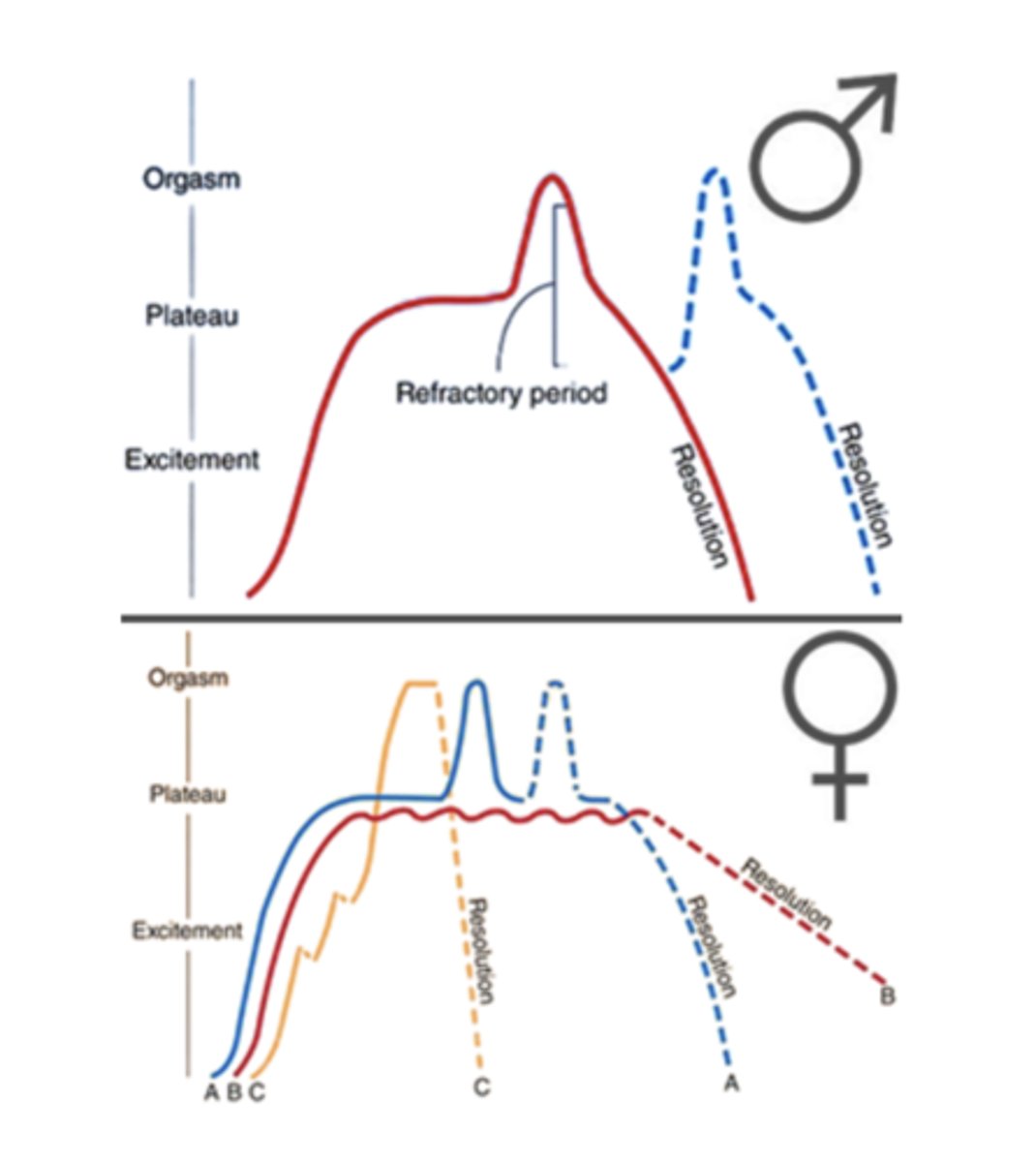
Prolactin
A hormone which modulates sexual arousal and refractory phase
Endorphins
Hormones having an analgesic effect. Released after having sex
Oxytocin
Promotes bonding between partners during/after sex
Theories on Motivation and Cognition (description and example)
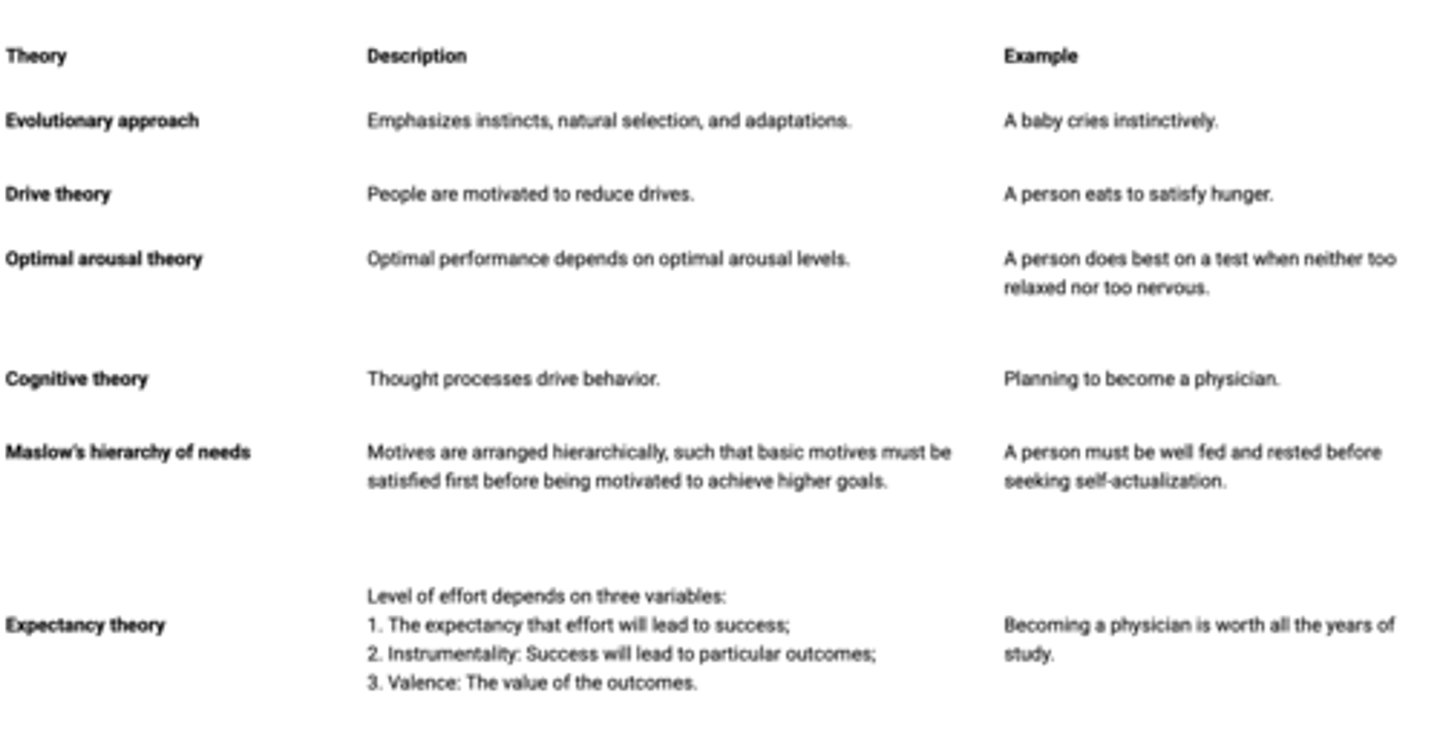
Extrinsic Motivation
An external incentive i.e getting paid to do something
Intrinsic Motivation
The pleasure of participating in an activity i.e studying a subject that is interesting
Drive Theory
A disruption in homeostasis leads to a feeling of tension which in turn creates a drive. Drive serves as a motivation to reduce the tension
Amotivation
lack of motivation
Manslow's Hierarchy of Needs (list from lowest priority to highest)
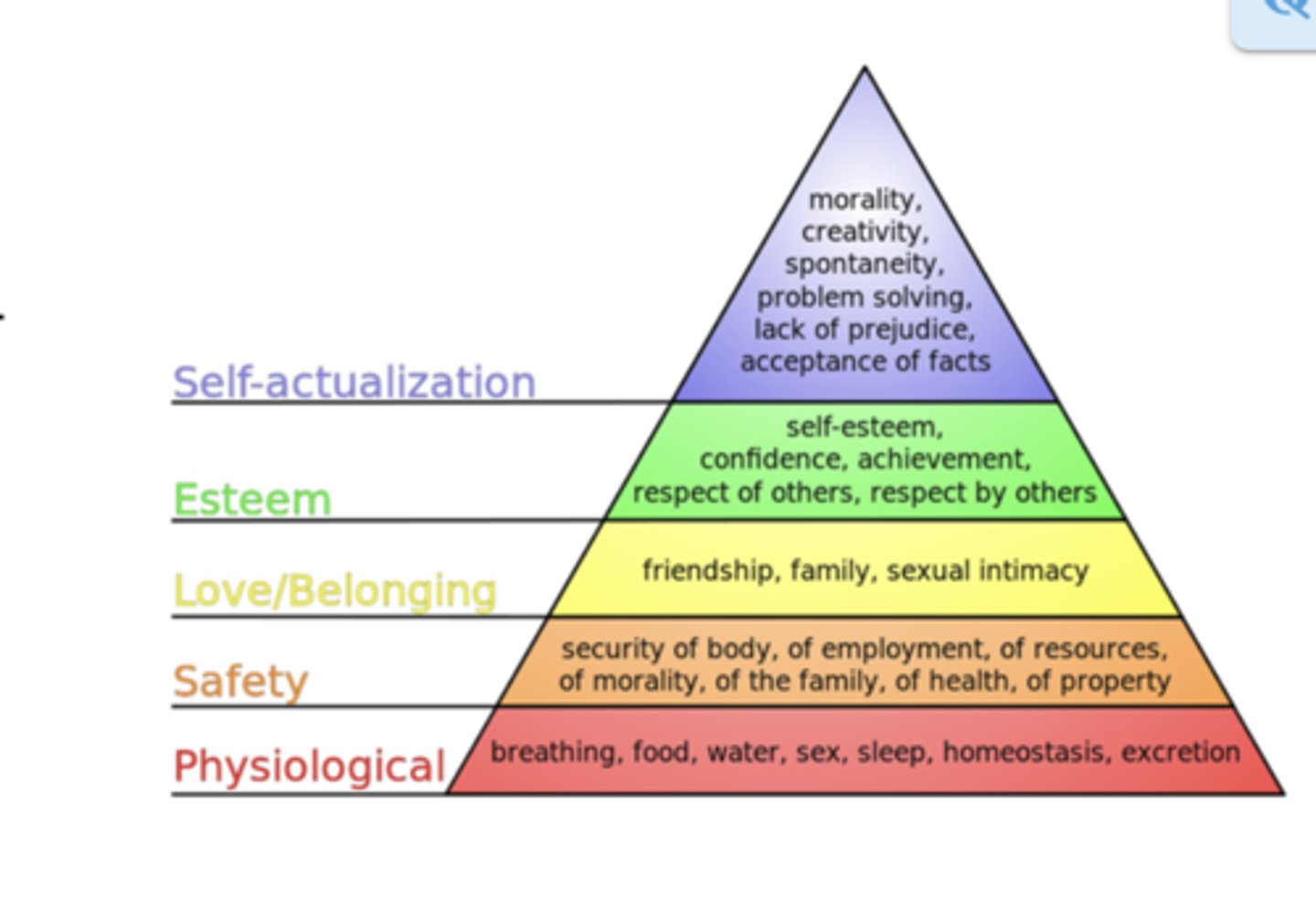
Incentive Theory
Emphasizes interaction between environmental incentives and an organism's drive state
Positive Reinforcement
Desirable event or stimulus that increases the probability of an organism emitting a particular behavior
Negative Reinforcement
Undesirable event or stimulus that decreases the probability of an organism emitting a particular behavior
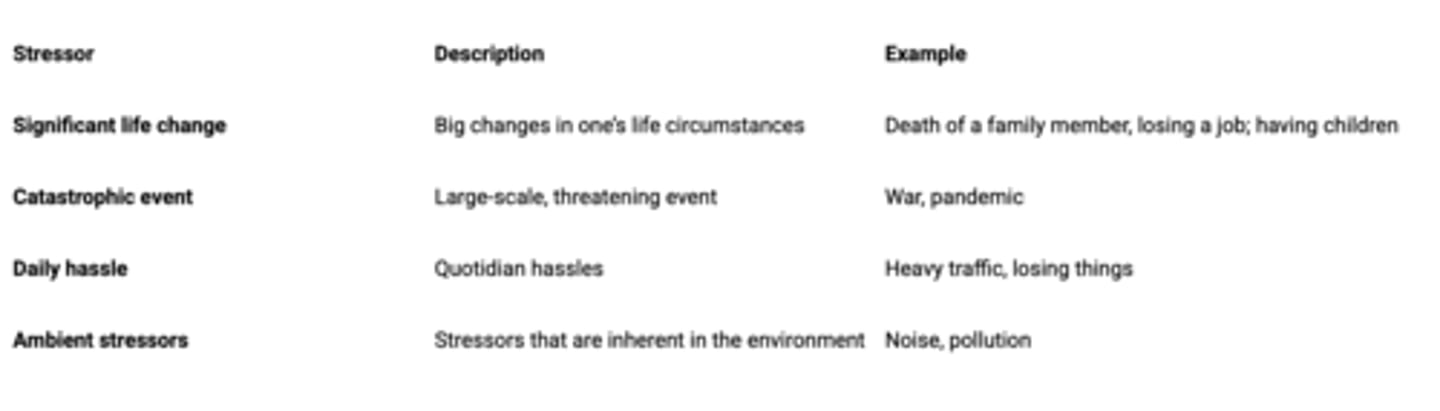
Stressor
Anything that results in physical or emotional stress
Appraisal Theory
The proposal that people's evaluations of a situation determine the emotions they feel in response.
Primary Appraisal
The initial evaluation of a situation's relevance to one's personal preferences and the likelihood of reaching one's goals. Three categories: irrelevant, benign/positive, or stressful/negative
Secondary Appraisal
One's evaluation of his or her ability to cope with the consequences of an interaction with the environment. If primary appraisal is negative: appraisal of harm (how much damage has been done), threat (how much damage could be caused), and challenge (how the problem could be solved)
Stress effects on the heart
increase in blood pressure -----> plaque and vascular disease ----> coronary artery disease
Stress effects on metabolism
increase cortisol and glucagon-----> increased levels of blood glucose ----> metabolic syndrome, heart disease
Stress effects on reproduction
Impotence, impaired sexual function
Stress effects on immune system
Decrease in immune response
Stress effects on cognition
Atrophy of hippocampus changes emotional responses: anger, anxiety, poor coping skills
Learned helplessness
a psychological phenomenon in which a subject endures repeated aversive stimuli that are beyond its control and subsequently does nothing to escape the aversive stimuli when enabled to do so; linked to depression
Emotional responses to stress
depression and anhedonia (inability to feel pleasure); also anger, anxiety, and addiction
4 categories of stressors (description, example)
quotidian means everyday, unusual
Autonomic nervous
The division of the peripheral nervous that regulates internal bodily functions and is the mechanism in homeostatic control. Comprises sympathetic and parasympathetic nervous systems.
How does the sympathetic nervous system respond to stress?
The sympathetic nervous system responds to stress by triggering the "fight-or-flight" response, increasing heart rate, dilating bronchi, and redirecting blood flow to muscles.
How does the parasympathetic nervous system respond to stress?
The parasympathetic nervous system counteracts the stress response by promoting "rest-and-digest" functions, slowing heart rate, constricting bronchi, and stimulating digestion.
Endocrine response to stress
adrenal medulla releases catecholamines (epinephrine, norepinephrine)
adrenal cortex releases glucocorticoids (cortisol)
Endocrine response to stress
adrenal medulla releases catecholamines, adrenal cortex releases glucocortids (cortisol)
Tend and befriend response
Humans, especially females, often manage stress by tending to children and seeking social connection
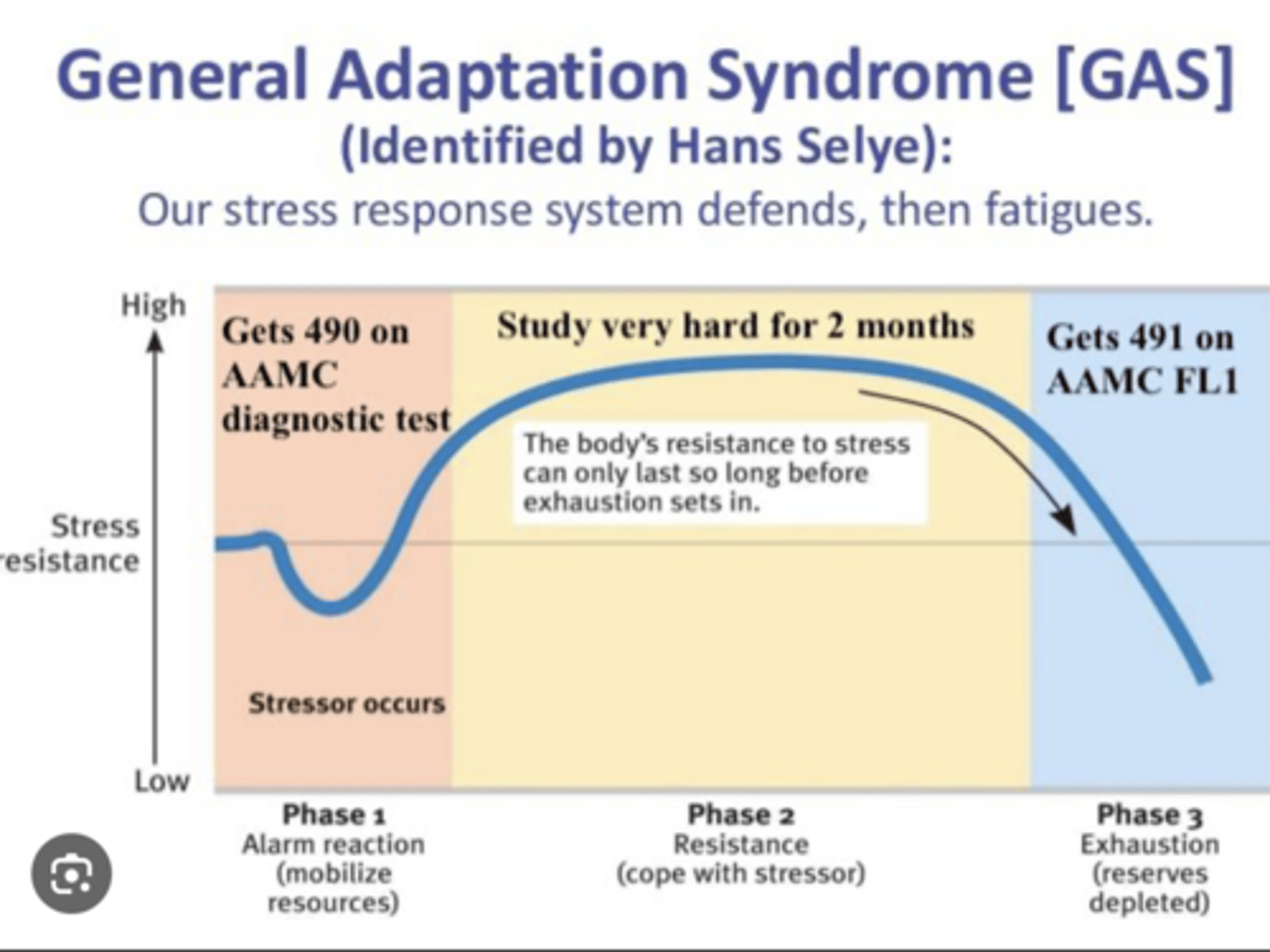
General Adaptation Syndrome (3 stages)
The physiological consequences of severe stress in three stages:
1.Alarm stage: mobilize resources
2.Resistance Phase: cope with stressor
3.Exhuastion Phase: reserves depleted
Coping
Actions taken in dealing with stressful situations
What are most effective coping techniques?
Perceived control: The belief that you are in control of the situation
Optimism: Expecting good things to happen
Social Support: Encouragement from friends and family
Adaptive Coping Techniques
Anticipation: Anticipating the effects of the stressor
Social Coping: Seeking out social support
Meaning focused coping: Understanding the role played in your life by the stressful situation
Maladaptive Coping Mechanisms
Unsucessful attempts to decrease the anxiety without attempting to solve the problem.
The anxiety remains. Ie. Escape, murder, avoidance
What are characteristics of learned behavior?
Non-inherited: learned through observation and experience Extrinsic: will not develop if organism is isolated
Permutable: Can be altered through learning and experience
Progressive: Can change over time
Low effort Syndrome
A sociological phenomenon whereby members of a minority group put forth minimal effort in the belief that their efforts will be for naught due to discrimination
Game Theory
The study of mathematical models of strategic interactions.
Evolutionary Game Theory
Applies to evolutionary biology to predict altruism, mating behavior, availability of resources.
Hypothalamus
Responsible for the regulation of many metabolic processes such as body temperature and hunger, along with other activities of the autonomic nervous system. Keeps the body in a state of homeostasis
Pituitary Gland
The anterior lobe secretes certain hormones such as growth hormone and prolactin, while the posterior lobe secretes vasopressin and oxytocin
Thyroid Gland
Regulates metabolic rate and and growth in children. Secretes the hormones T3 and T4.
Parathyroid Gland
Controls calcium and phosphate metabolism
Adrenal Glands
Cortex: produces cortisol and androgens
Medulla: produces epinephrine and norepinephrine
Gonads
Ovaries an Testes: Releases progesterone and estrogen in females and testosterone in males
Pancreas
Gland which secretes insulin and glucagon
Primary and Secondary Visual Cortex
Primary (Striate) Cortex: Receives visual input from the lateral geniculate nucleus
Secondary: Further processing of visual input in terms of motion, shape, and position
Lateral Geniculate Nucleus (LGN)
Located in the thalamus, acts as a relay station for visual information on its way from retina to the primary visual cortex
Prefrontal Cortex
Functions in executive functions such as attention, planning, working memory, and expression of emotions
Cerebellum
Part of the hindbrain which produces smooth muscular movements and maintains equilibrium
Brainstem
Connects the cerebrum with spinal cord. Includes midbrain, pons, and medulla oblongata. Controls salivation, respiration, heartbeat, and digestion
Brain Anatomy (Cerebrum)
What is hemispheric lateralization?
Certain functions are controlled more by one cerebral hemisphere than the other
What is the left hemisphere responsible for?
language and analysis
What is the right hemisphere responsible for?
music, emotions, spatial orientation
Frontal Lobe
Motor Cortex: body movement
Prefrontal Cortex: executive functions (panning, decision making, problem solving)
Broca's area: speech production
Parietal Lobe
Somatosensory Cortex: Perception of touch, temp, body potion, and pain. Spatial sense and navigation
Occipital Lobe
Processes visual input
Temporal Lobe
Wernicke's Area: responsible for language comprehension. Also functions in sound perception and memory formation
Brain Anatomy (Brainstem)
Reticular Formation: Involved in arousal, alertness, sleep-wake cycles
Cranial Nerves: 12 extending out of the brainstem
Pons: Functions in sleep and relaxing
Medulla Oblongata: breathing, heartbeat, blood pressure
CT Scan (Computerized tomography)
X-ray of brain structure, shot from many angles and images with horizontal slices of the brain are generated. Inexpensive scan of brain structure. Larger findings such as tumors and blood clots.
MRI (Magnetic Resonance Imaging)
uses magnetic fields, radio waves, computerized enhancement to map out brain structure with higher soft tissue resolution than CT. Used for the anatomy and physiological processes of the body.
EEG
electroencephalogram. Used to record the electrical activity of the brain
MEG
Magnetoencephalogram. Maps brain electrical activity using magnetic fields. Higher res than EEG
fMRI
Functional MRI, allows visualization of any active brain area. new variation of MRI that monitors blood flow and o2 consumption in the brain to identify areas of high activity. Can map activity over time with great precision.
PET (positron emission tomography) scanning
can also examine brain function, mapping activity over time. Uses radioactively tagged chemicals introduced in brain as markers of blood flow/metabolic activity. This can be monitored with X-rays. Provides color-coded map indicating which areas are active during certain stimulus.
Central Nervous System
Brain and Spinal Cord
Peripheral Nervous System
The nervous system outside of the brain and spinal cord
Somatosensation
The perception of touch, temp, body position (proprioception), and pain. Subset of the sensory nervous system
Afferent Neurons
sensory neurons, carry signals to the central nervous system
Efferent Neurons
motor sensory, carry signals from central nervous system to the muscles
Contralateral Control
Left brain controls right side of body; right brain controls left side of body. Exception: Smell
Dominant Hemisphere
In most people the left. The left produces language and math. Right produces music and emotion
Gray vs White Matter
Gray: Neuronal cell bodies, dendrites, synapses
White Matter: mylinated axons of neurons
Neuromuscular Junction
Synapse between motor neuron and a muscle fiber
Upper vs Lower Motor Neurons
Upper motor neurons are located in the central nervous system. Lower motor neurons are located in the synapses between the peripheral nervous system and the skeletal muscle, forming the neuromuscular junction
Receptor
A specialized cell in the sensory system that responds to particular stimuli in the environment. Responsible for stimulus in transduction (sensation turning into electrical signals). Examples: rods and cones in the eyes and hair cells in the cochlea
Mechanoreceptors
Receptors in the ear that translate sound waves into nerve impulses; touch receptors in the skin; and proprioceptors in the joints and muscles
Glutamate
Excitatory neurotransmitter responsible for increased cortical arousal
GABA and Glycine
Inhibitory. GABA: Brain, Glycine:spinal cord
Acetylcholine
Plays a role in memory, learning, attention, arousal and involuntary muscle movement. Lack of acetylcholine is associated with Alzheimer's disease
Histamine
Nuerotransmitter for the brain, spinal cord, and uterus. Also acts to promote a innate immune response (unlike cytokines which are merely for cell to cell communication during immune response)
Norepinephrine (Adreniline)
Functions both as a neurotransmitter and hormone. Mobilizes the brain and body for action
Serotonin
Found in the raphe nucleus and other parts of the central nervous system. Plays a role in emotional processing, mood, appetite, sleep, and pain processing
Dopamine
Plays a role in motor behavior and is implicated in numerous emotional states, drug addiction, and reward motivated behavior. Low-levels lead to Parkinson's disease
Amino Acid Neurotransmitters
Glutamte is excitatory; GABA and glycine are inhibitory
Peptide Neurotransmitters (neuropeptides)
Opioids (e.g. endorphins); involved in pain perception
Monoamine Transmitters
catecholamines (dopamine, norepinephrine, epinephrine)
indolamine (serotonin)
Mating
Activities involved in reproduction: courtship, mate selection, copulation
Conspecific
A member of the same species