workplace learning and development
 Call Kai
 Learn
Learn Practice Test
 Spaced Repetition
 Match
Match Flashcards
 Knowt Play
1/86

There's no tags or description
Looks like no tags are added yet.
Name | Mastery | Learn | Test | Matching | Spaced | Call with Kai |
|---|
No analytics yet
Send a link to your students to track their progress
87 Terms
Employee Onboarding
organized set of procedures designed to integrate new hires into an organization
Presents information about policies and employee benefits
Facilitate training to understand how processes function
Provides broad overview of the culture
Helps form social connections
New employees should receive employee handbooks
Role Clarity
breakdown of daily tasks
Employee Orientation
procedure for providing new employees with basic background information about the firm
HR Specialists
perform the first part of the orientation by explaining basic matters (ex. working hours and benefits)
Supervisors
explain the department’s organization, introduce the employee to colleagues, and help them familiarize with the workplace
1 day to 1 week
Pre-employment compliance
Familiarization of the role
Meeting colleagues from different departments
1 week to 3 months
Train new employee basic skills to perform their job
Integration and socialization with colleagues
3 months to 6 months
Evaluation of performance
Make sure they have everything they need
Provide feedback
Gauge engagement
6 months to 1 year
Complete knowledge about the role, company, and industry
Training
giving new or current employees the skills that they need to perform their jobs
Gives new or current employees the skills that they need to perform their jobs
Needed when employees are not performing up to a certain standard or at an expected level of performance
Negligent Training
when an employer trains inadequately, and the employee subsequently harms a third party
Instructional System
systematic process for designing, developing, implementing, and evaluating instruction or training programs to ensure effective learning
Problem Diagnosis
Program Design
Program Delivery
Program Evaluation
Systems Approach
gives important impetus to the establishment of objectives and evaluation criteria
helps organizations establish clear goals (objectives) and standards for measuring success (evaluation criteria) because all parts of the organization are interconnected and must work together toward desired outcomes
Training Needs Analysis
Identify needs, goals, and objectives are chieved through
identify those who need training and what kind of training is needed
ADDIE Five-Step Training Process
most common instructional systems framework
Analysis
identify learning needs, goals, and target learners
Design
plan learning objectives, instructional strategies, and assessments
Development
create and assemble instructional materials and resources
Implementation
deliver the training or educational program
Evaluation
assess effectiveness and make necessary improvements
Strategic Training Needs Analysis
Identifies the training that employees will need to fill future jobs
Having strategic goals (expansion of business) often mean the firm will have to fill new jobs
It ensures that training supports the organization's goals, not just employee development.
What training do employees need to help the organization succeed?
Task Analysis
A detailed study of the job to determine what specific skills the job requires
Job descriptions and job specifications are essential
process of studying a job in detail to identify the specific duties, knowledge, skills, and abilities needed to perform it successfully.
What does this job require a person to know and do?
Task Analysis Record Form
document used to collect and organize information about a job's tasks and the skills needed to perform them.
Consolidates information regarding required tasks and skills
Includes tasks, when and how often these are performed, quantity or quality of performance, work conditions under which task is performed (if any), skills or knowledge required, and where the task is learned best
Performance Analysis
Identifies current employees’ training needs
For underperforming current employees
Determines whether the employer should correct performance deficiencies through training or some other means
Begins with comparing the person’s actual performance to what it should be
Competencies-Oriented Training
Trainees learn through a mix of real-world exercises, teamwork, classes, and online resources under a learning coach
Aims to show mastery of competencies
Begins with a list of competences to be learned, criteria for assessing mastery, and examples of competencies
Projects are then completed by assessees and assessors evaluate their competencies
Competency Model
consolidates a precise overview of competencies someone would need to do the job well
framework that identifies the knowledge, skills, abilities, and behaviors a person needs to perform a job successfully.
It is a list of the competencies required to do a job well.
Training Design Process
Includes training objectives, delivery methods, and program evaluation
● Substeps
○ Setting performance objectives
○ Creating a detailed training outline
○ Choosing a program delivery method
○ Verifying the overall program design with management
Behavior Modification
training should provide opportunities for positive reinforcement
Expectancy Theory
trainees need to know they have the ability to succeed
Self-Efficacy
trainees must believe they have the capacity to succeed
Partial-day training than full-day training
what training is generally superior to than to training
Training Development Process
Assembling the program’s training content and materials
Choosing the specific content to be presented
Designing/choosing the specific instructional methods
Training equipment and materials
Design
focused on training program flow (no materials are created or assembled yet)
Development
more focused on training program materials
Formative Phase
in evaluation phase, this happens while students and Instructional Designers are conducting the study
Summative Phase
in evaluation phase, this occurs at the end of the program
On-the-Job Training Methods
enables the worker to get training under the same working conditions
Job Experience
Oldest method of on-the-job training
Learning by experience
Time consuming and inefficient
Coaching / Understudy
An experienced worker or trainee’s supervisor trains the employee
May involve simply observing the trainer or having the trainer show the new employee the ropes step-by-step
Special Assignment
give lower-level executives firsthand experience in working on actual problems
Peer Training
Also called Action Learning
Several employees will spend several days per week over several months learning what the technology or change will entail
Employees spread the new skills and values to their colleagues back on the job
Mentoring
A figure who is often 8-15 years older and 2 or 3 levels above provides career advice
guilt by association
Trainee often picks up mentor’s friends and enemies
Apprenticeship
a paid job with on-the-job training where an apprentice learns skills for a specific trade or profession
Trainee (must be 15) is placed under a qualified supervisor
Practical training on jobs in highly technical industries
Include theoretical (classroom) and practical (OJT) parts
Wage shall in no case be less than 75% of the applicable minimum wage rates
informal learning
learning that occurs passively through experience and through interactions with little impact
Also called Buddy System
70/20/10 Notation
70% of job learning occurs informally on or off the job
20% on social interactions (between employees)
10% on actual formal training
Examples include participating in meetings, coaching others, attending conferences, searching the net, working with customers, job rotation, reading books and journals, etc.
Job Instruction Training
Step-by-step training on the use of machines
Listing each job’s basic tasks along with key points
Provides step-by-step training for employees
Trainee tries to replicate the methods and receives feedback from the trainer
The trainer demonstrates the correct way to do the task, and the trainee practices it until they can perform it correctly.
Lectures
quick and simple way to present knowledge to large groups of trainees
Programmed Learning
step-by-step, self learning method
Consists of presenting information, allowing the person to respond, and providing feedback
Advantages: reduced training time, self-paced learning, immediate feedback, reduced risk of error for learner
Behavior Modeling
involves showing trainees the model way of doing something, letting trainees practice that way, and giving feedback
Modeling
trainees watch live or video examples of models behaving in a problem situation
Social Reinforcement
trainer provides positive reinforcement through praise and constructive feedback
Transfer of Training
trainees are encouraged to apply their new skills when they are back on their jobs
Electronic Performance Support Systems (EPSS)
computerized tools and displays that automate training, documentation, and phone support
Considered as modern job aids
Involves sets of instructions, diagrams, or similar methods available at the job to guide the worker
Work particularly well on complex jobs that require multiple steps or where it is dangerous to miss a step
Computer-Based Training
uses interactive computer-based systems to increase knowledge or skills
System lets trainees replay the lessons and answer questions
Especially effective when paired with actual practice under a trainer
Increasingly realistic because the objective is to inject realism into the training
Virtual Reality
puts the trainee in an artificial 3D environment that stimulates events and situations experienced on the job
Online / Internet Based Training
Helps by allowing employees to get their training on demand without interfering with their daily duties
Learning Management Systems
Special software tools that support online training
Helps employers identify training needs and to schedule, deliver, assess, and manage the online training itself
Learning Portals
offers employees online access to training courses
Virtual Classroom
uses collaboration software to enable multiple remote learners to participate remotely
Mobile and Micro Learning
delivering learning content on the learner’s demand via mobile devices wherever and whenever the learner has the time to access it
Lifelong Learning
Continuing learning experiences over employees’ time with the firm
Aim is to ensure opportunity to learn the skills they need for their jobs and to expand their horizons
Literacy Training
supervisors teach basic skills by giving employees writing and speaking exercises
Diversity Training
aims to improve cross-cultural sensitivity to foster more harmonious working relationships
Management Development
any attempt to improve managerial performance by imparting knowledge, changing attitudes, or increasing skills
Job Enlargement
Horizontal expansion of a job by adding more tasks and activities at the same level of difficulty and responsibility
Increases the number of tasks, but not the level of control or decision-making authority
Goal is to make a job less monotonous by increasing its variety and scope
Job Enrichment
Vertical expansion of a job, adding more challenging, meaningful tasks, increased autonomy, and greater responsibility
Goal is to add new duties that provide more control, feedback, and a sense of accomplishment
Coaching and Understudy
Trainee works directly with a senior manager
Scenario is responsible for the trainee’s coaching
Action Learning
Management trainees are allowed to work full-time analyzing and solving problems in other departments
Observer in different departments
Organizational Change
process of altering an organization's structure, strategies, processes, technology, or culture to adapt to new circumstances or achieve goals
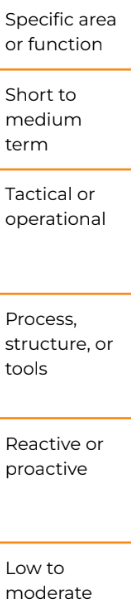
Specific alteration in how an organization operates
Connotes implementation
No reassurance for development, but it can still be changed
Tactical or operational in scope
Can be incremental or disruptive
Often short- to medium-term
Can be reactive (responding to a problem) or proactive (seizing an opportunity)
Organizational Transformation
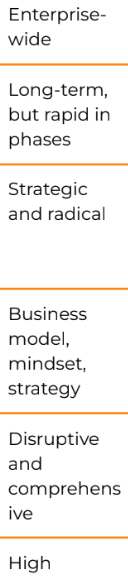
a fundamental, enterprise-wide change that radically alters how the organization functions
Strategic and large-scale
Often involves a paradigm shift
Driven by external forces
Reinventing involves a 360 change, business strategies
Also focuses on a portfolio of interdependent initiatives
High risk, high reward
Model of Change
simplifies the complex process of change into three clear stages
Developed by Kurt Lewin (1947)
Unfreezing, Changing, Refreezing
Unfreezing
preparing the organization (or individual) to accept that change is necessary
In this phase, leadership and communication are crucial
Breaking down the existing status quo
Creating awareness about why the current way is not effective or sustainable
Overcoming resistance to change by challenging beliefs, values, and attitudes
Encouraging motivation to change
ex: Management explains why a new HR system is necessary.
Changing
implementation
moving toward the new desired state
Actual implementation of new processes, behaviors, or mindsets
People start to learn new ways of working
ex: Employees learn and begin using the new HR system.
Refreezing
makes the change permanent
reinforcing and stabilizing the change as the new normal
Embedding the change into organizational culture, systems, and policies
Reinforcing new behaviors through recognition, rewards, and performance measures
Ensuring that people do not revert to old ways
This phase helps establish long-term sustainability of the change
ex: The new HR system becomes the standard way of working.
Organizational Development
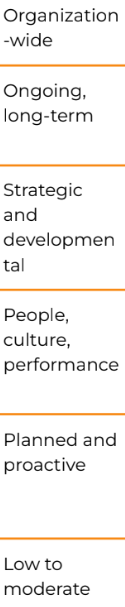
change process in which employees themselves formulate and implement the change required, often with the assistance of trained consultants
Continuous and proactive
Uses behavioral science
Focuses on employee involvement, collaboration, and performance
Emphasizes learning, development, and adaptability
Action Research
Process of collecting data about a group, department or organization
Information is then fed back to employees for analysis and hypotheses development about what the problems might be
identifying a problem, gathering information, implementing solutions, and evaluating results to improve an organization.
Team-Building Meetings
Consultant interviews the members and leader before the meeting
They are asked what their problems are, how they function, and what their obstacles are
Consultant categorizes them into themes
The group ranks these themes in terms of importance
The highest ranking theme will be the agenda of the meeting
Survey Research
Requires employees to complete attitude surveys
The data will be used as basis for problem analysis and action planning
Convenient way to unfreeze a company’s management and employees
Provide comparative, graphic illustration of
the fact that the organization does have a
problem to solve
Distributed Learning
conducting the program over a long enough period of time for the trainees to be able to digest and apply the material
Opportunity to Practice
trainees should be able to try the techniques they are being taught in order to make these methods part of their repertoire
Human Process Interventions
Focus: people and interpersonal relationships
The goal is to enhance how individuals and groups interact in the workplace
○ Include
■ Team building
■ Coaching and mentoring
■ Process consultation
■ Conflict management
■ Communication skills training
Technostructural Interventions
Focus: organizational structure, technology, and work design
○ Deal with the design of jobs, workflow, organizational hierarchy, and technical systems
○ The goal is to align structure and processes with strategic goals
○ Include
■ Job redesign or enrichment
■ Work process engineering
■ Organizational design (ex. flattening hierarchy)
■ Total Quality Management (TQM)
■ Lean and Six Sigma initiatives
Human Resource Management
Focus: Talent systems and HR practices
○ Target the way organizations manage people across the employee lifecycle
○ Include
■ Performance management systems
■ Succession planning
■ Talent acquisition and onboarding
■ Training and development
■ Diversity, equity, and inclusion (DEI) initiatives
Strategic Interventions
○ High-level OD efforts that affect the entire organization
○ Often driven by external forces, such as market shifts, globalization, or digital transformation
○ Include
■ Strategic planning
■ Cultural change initiatives
■ Mergers and acquisitions integration
■ Business model innovation
■ Enterprise-wide transformation
organizational change
scope:
duration:
nature:
focus:
approach:
risk level:
organizational development
scope:
duration:
nature:
focus:
approach:
risk level:
organizational transformation
scope:
duration:
nature:
focus:
approach:
risk level: