PIC W5 L2 memory and place
 Call Kai
 Learn
Learn Practice Test
 Spaced Repetition
 Match
Match Flashcards
 Knowt Play
1/13

Earn XP
Description and Tags
geography, exporation, empire
Name | Mastery | Learn | Test | Matching | Spaced | Call with Kai |
|---|
No analytics yet
Send a link to your students to track their progress
14 Terms
Introducing historical geographies:
- Traditionally
o Landscape evolution and change
o Agricultural change
o Descriptions of different geographical regions
o E.g. cartography of what London was like in 1600
Introducing historical geographies: - Increasingly
o Critical readings of geographical knowledge
§ Reflect on apparently neutral scientific depictions of what geography is about
§ E.g. who funded it – military etc.
§ Geography is all ready invested with social purposes – trade, Christianity, capitalism
o Relations between knowledge and power
o Implications of geography as a discipline and as ‘midwife’ of imperialism
Defining imperialism:
- Age of Empire’ – 18th and 19th centuries, especially latter-half of 19th
o Eric Hobsbawm, The Age of Empire 1875-1914
IMPERIALISM:
o The military, economic and political conquest - by European States, of much of the rest of the world
o ‘The practice, theory, and the attitudes of a dominating metropolitan centre, ruling a distant territory.’ (Said, 1993: 8)
- IDEOLOGICALLY:
o Presenting something to be natural when actually had lots of change etc
o belief in the superiority of European civilisation
o ‘natural’ right of Europeans to govern other continents, other peoples.
o Cultural belief system, reflected in art, literature, maps etc.
o Adverts produced so you can think of yourself as a consumer in a wider empire
o In novels/ literature – things you read for pleasure
§ Imaginary of distant lands – peru etc
Defining imaginative geographies:
- Study of imaginative geographies
o study of how particular cultures or societies represent both themselves and ‘others’ in art, science, literature, film etc
Defining imaginative geographies:
Classic Example
o E. Said (1978) Orientalism.
o Derek Gregory reading: ‘Imaginative Geographies’ in Progress in Human Geography
- New categories of art became popular
- Depicting strange/mystical land with different types of clothing, lighting etc
- Happened alongside actual imperial expansion
-
Defining imaginative geographies:
- Three key points:
o Imaginative geographies tell us more about those doing the depicting than about those depicted.
o Imaginative geographies are not somehow distinct from ‘real’ geographies
§ They help to shape and define the cultures of which we are a part
§ Representations (texts and images) create and mediate the cultural worlds we live in
o Imaginative geographies are not about ‘subjective’ perceptions as opposed to ‘objective’ facts
§ studied because they reveal collective cultural meanings
§ because they are matters of debate, conflict, struggle
imperialism as a geographical process:
- Age of Empire overlaps with classical age of exploration/discovery
o 1420-1700
- Geography (and geographers) either explicitly or implicitly supported and buttressed imperialist agendas.
o Provided maps, tools, data to map the world etc.
- Geography as a series of practices or activities:
o exploration, navigation, surveying, cartography, travel writing - descriptions of far-away places and peoples.
RGS: royal geographical society:
- Founded in 1830
o Not first geographical society in Europe – berlin and Paris first
- Mostly men in it – especially at first
- Exploring, surveying, observing, documenting
- Geographers, explorers, missionaries, colonial officials
o Wealthy, elite figures – financially independent explorers. Missionaries – teaching sites for Christianity across the world. Military officials
- Geographic metaphor:
o Africa as the ‘Dark Continent’
- Geography, Capital, Christianity
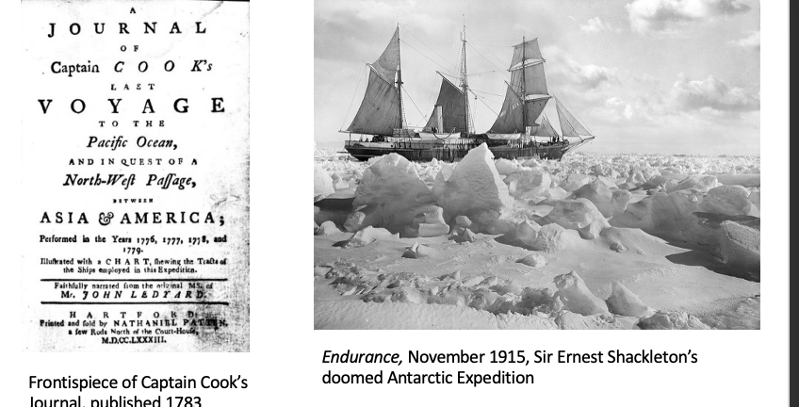
- Nations competing with other nations to master the whole world
- Rgs funded some circumnavigating expeditions
- Wasn’t established at time of captain cook – 18th C
Geography and some explorers:
- Felix Driver and imperial geographies
- Joseph Conrad’s typology:
o Geography Fabulous
o Geography Militant
o Geography Triumphant
Geographical knowledge and imperialism:
- Classification and taxonomy
- Mapping, Measuring and Surveying
o “Hints to travellers” 1854 publication (Driver, 2000, chapter 3)
- Naming & Picturing
- Exploration as conquest, the explorer as hero
o Gendered knowledges and geographical practices
Imperial legacies:
- Prestige and value of geographical knowledge stimulated the institutionalization of geography in the 2nd half of the 19th cent.
- 1830: formation of the Royal Geographical Society
- From c.1870 onwards official establishment of geography in schools, universities etc
- Notions of exploration, experiences of ‘fieldwork’, or ‘adventure’ continue to inform popular perceptions of geography
- Traditions of exploration and adventure exploited and commercialised, (esp in advertising and tourism)
-