THE SET FOR IHUM 202 EXAM
 Call Kai
 Learn
Learn Practice Test
 Spaced Repetition
 Match
Match Flashcards
 Knowt Play
1/140

There's no tags or description
Looks like no tags are added yet.
Name | Mastery | Learn | Test | Matching | Spaced | Call with Kai |
|---|
No analytics yet
Send a link to your students to track their progress
141 Terms
Ragtime
A late 19th- and early 20th-century musical style characterized by syncopated (“ragged”) rhythms and strong piano melodies; influential in the development of jazz. Often associated with Scott Joplin.
Jazz
A musical genre originating in the United States in the early 20th century, characterized by improvisation, syncopation, blues influences, and expressive rhythms. It developed from African American musical traditions.
Harlem Stride Piano
A jazz piano style developed in Harlem in the 1920s–30s in which the left hand alternates bass notes and chords (“striding”) while the right hand plays melodies and improvisations.
Scatting
A jazz vocal technique in which singers improvise using nonsense syllables, sounds, or wordless vocables instead of lyrics to imitate instrumental solos.
Cotton Club
A famous Harlem nightclub in 1920s–30s New York known for featuring prominent Black jazz musicians and entertainers, though it primarily served white audiences during segregation.
Montage
A film editing technique that combines a series of short shots or images to condense time, create meaning, or show connections between ideas, emotions, or events.
Montage of Collisions
A film theory developed by Sergei Eisenstein in which meaning is created through the “collision” or contrast of opposing shots, producing emotional or intellectual effects beyond individual images.
“Degenerate Art” Exhibit
A 1937 Nazi-organized exhibition in Germany that mocked and condemned modern art (such as Expressionism, Cubism, and Surrealism) as corrupt or un-German.
Essentialism vs. Existentialism
Essentialism argues that humans possess a fixed nature or purpose (essence), while Existentialism argues that people create meaning and identity through choices and actions rather than being born with a predetermined essence.
Teleology
The philosophical idea that things have an inherent purpose, end goal, or final cause. Often associated with Aristotle.
The Absurd
In existential thought, especially associated with Albert Camus, the conflict between humanity’s search for meaning and an indifferent or meaningless universe.
Authenticity
In existential philosophy, the idea of living genuinely according to one’s own values and choices rather than conforming to social expectations or outside pressures.
Action Painting
A style of abstract art in which the physical act of painting—such as dripping, splattering, or energetic brushstrokes—is emphasized as part of the artwork itself.
Conceptual Art
An art movement in which the idea or concept behind the artwork is more important than its physical form or appearance.
Light and Space Art
An art movement that emerged in California in the 1960s focused on perception, using light, color, transparency, and space to create immersive sensory experiences for viewers.
Installation Art
A form of art in which an entire space is transformed into an artwork that viewers can physically enter or experience.
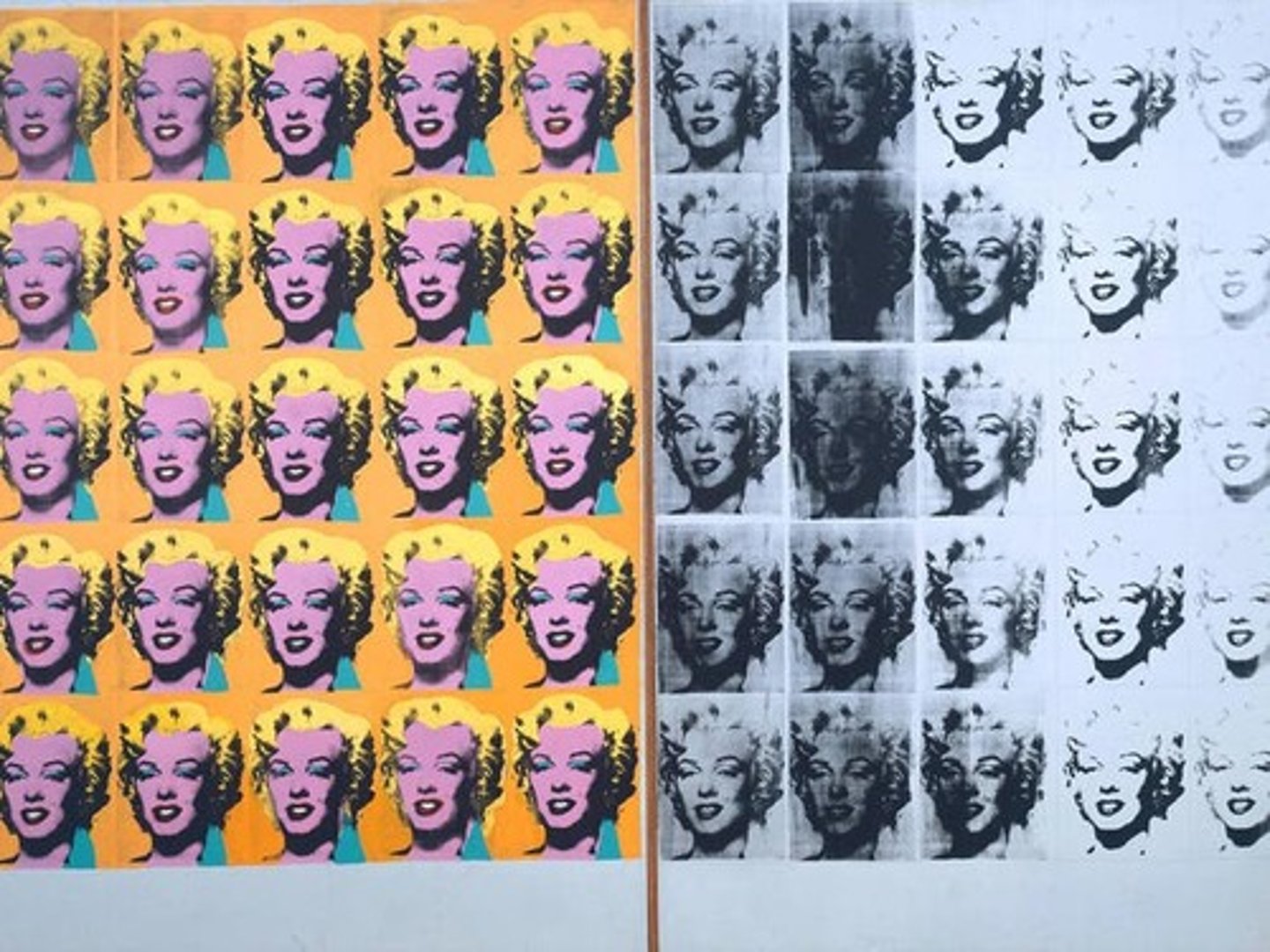
Screenprinting
A printmaking technique in which ink is pushed through a mesh screen onto a surface to create repeated images or designs.
Combine Painting
An art form developed by Robert Rauschenberg that blends painting with nontraditional materials or objects, combining painting and sculpture.
Theater of the Absurd
A mid-20th-century dramatic movement portraying life as irrational, meaningless, or illogical through disjointed dialogue and bizarre situations.
Structuralism in Music
A method of composing music using organized systems or structures, often emphasizing mathematical relationships and patterns.
Aleatoric Music
A style of music in which elements of the composition are left to chance or performer choice.
Minimalism in Music
A musical style characterized by repetition, steady rhythms, gradual change, and simple harmonies.
Bauhaus
A German school of art, architecture, and design (1919–1933) that emphasized simplicity, functionality, and the integration of art with technology.
International Architecture
An architectural style emphasizing simplicity, geometric forms, glass, steel, and functional design with minimal ornamentation.
Organic Architecture
An architectural philosophy that seeks harmony between buildings and their natural surroundings.
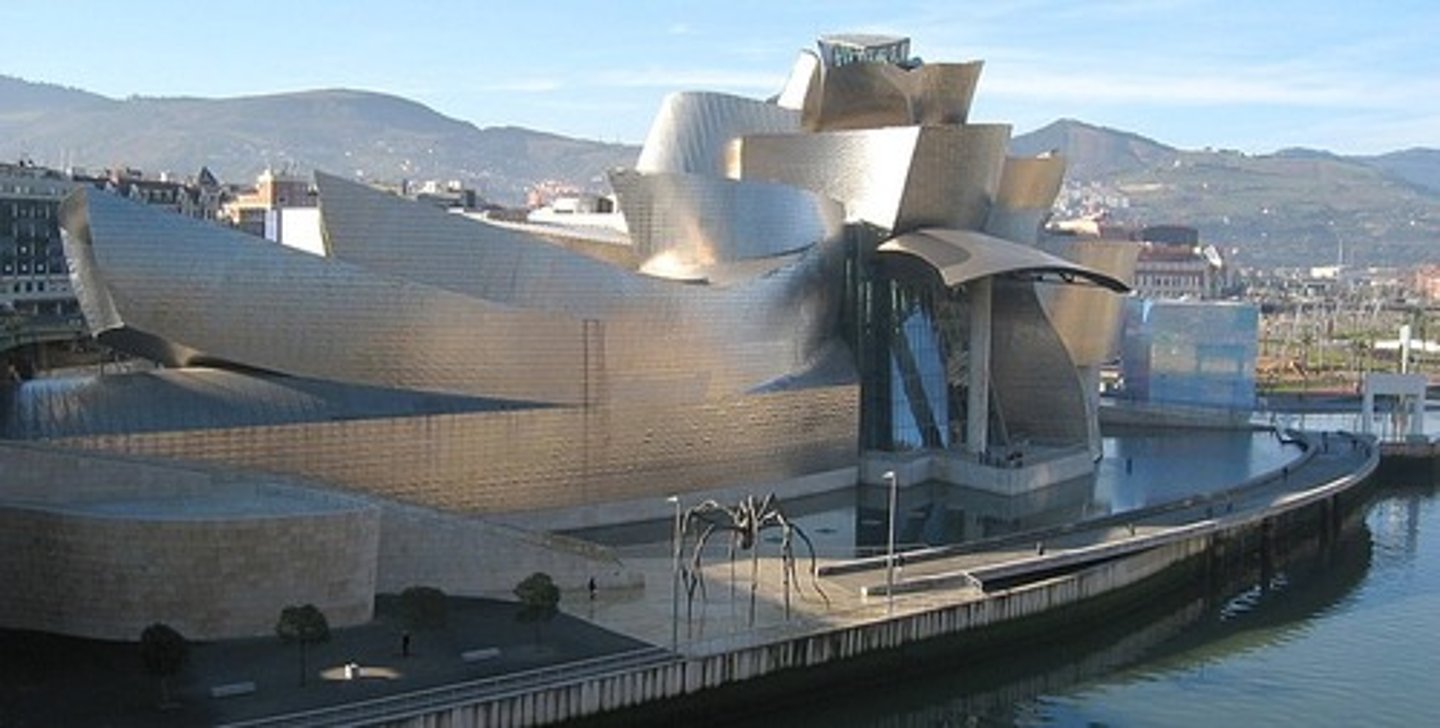
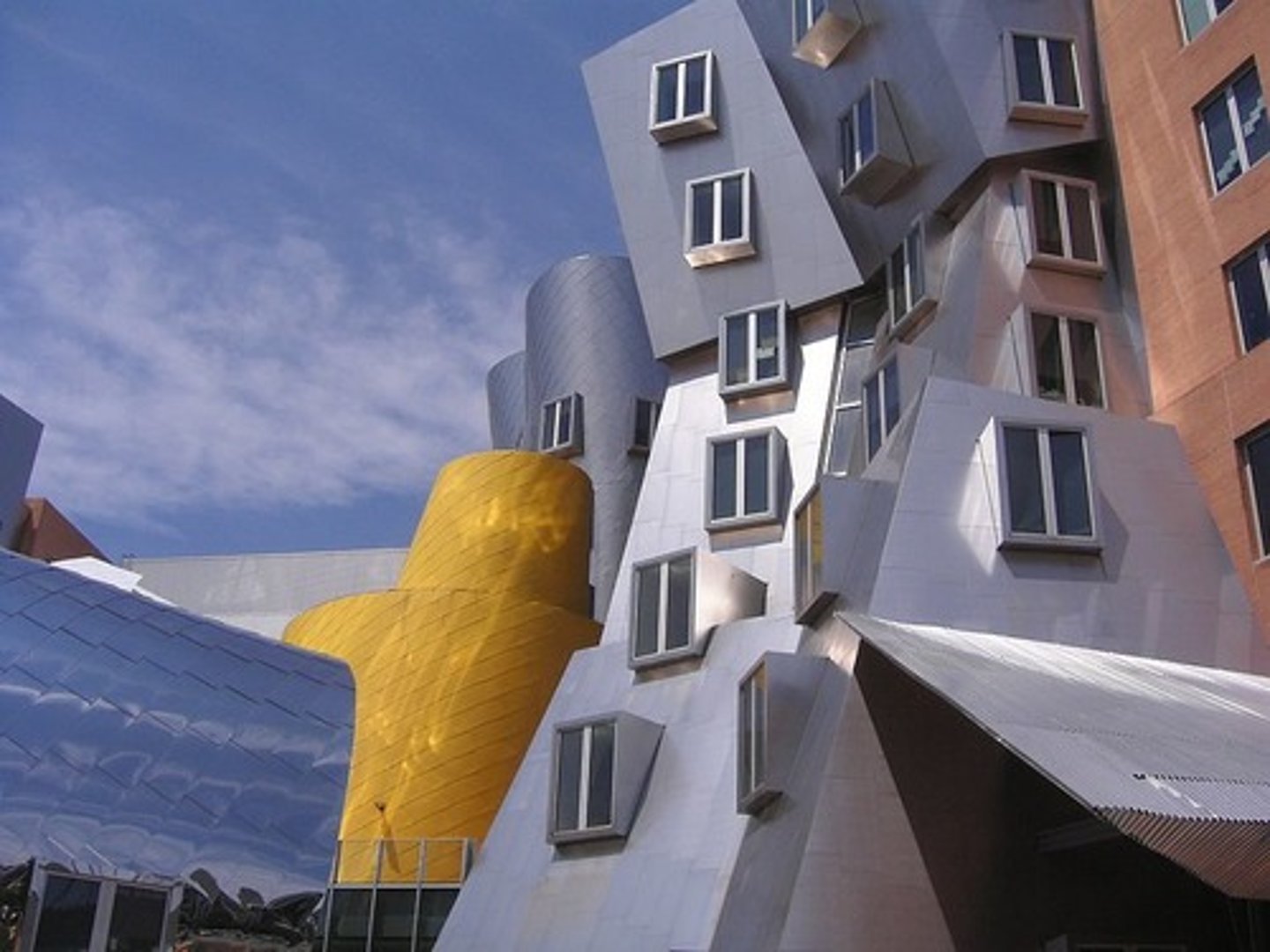
Deconstructivist Architecture
A late 20th-century architectural style characterized by fragmented forms, unusual shapes, distortion, and designs that challenge traditional order.
Scott Joplin: “Maple Leaf Rag” (Ragtime)
A work from the Transitional Fin de Siècle / Harlem Renaissance & Jazz period (1899) that became one of the most famous examples of ragtime music, characterized by syncopated rhythms and lively piano melodies.
Louis Armstrong: “West End Blues”
A landmark work from the Harlem Renaissance & Jazz period (1928) famous for its virtuosic trumpet introduction and jazz improvisation.
Billy Strayhorn / Duke Ellington: “Take the A Train”
A signature jazz composition from the Harlem Renaissance & Jazz period (1941), known for its swing rhythm and celebration of Harlem culture.
George Gershwin: “Summertime” from Porgy and Bess
A work from the Harlem Renaissance & Jazz period (1935) blending jazz, blues, classical, and folk influences.
Igor Stravinsky: excerpt from The Rite of Spring
A major Modernist work (1913) known for harsh dissonance, irregular rhythms, and themes of ritual sacrifice.
Arnold Schönberg: “Mondestrunken” from Pierrot Lunaire
A Modernist work (1912) using atonality and Sprechstimme (“speech-song”), breaking traditional harmonic rules.
Pierre Boulez: Piano Sonata No. 2, 1st Movement
A highly experimental Modernist work (1948) associated with total serialism and strict organization.
John Cage: 4’33”
A Postmodern work (1952) in which performers remain silent, encouraging audiences to hear environmental sounds as music.
Philip Glass: Company, 2nd Movement
A Postmodern minimalist work (1983) characterized by repetitive patterns and gradual musical change.
Richard Rodgers and Oscar Hammerstein: “You’ve Got to Be Carefully Taught” from South Pacific
A Musical Theater work (1949) addressing racism and prejudice as learned behaviors.
Galt Macdermot: “Aquarius” from Hair
A Musical Theater work (1967) associated with the counterculture movement and optimism of the “Age of Aquarius.”
Jonathan Larson: “Seasons of Love” from Rent
A Musical Theater work (1996) reflecting themes of love, loss, community, and the AIDS crisis.
Lin-Manuel Miranda: “96,000” from In The Heights
A Musical Theater work (2008) blending hip-hop and Latin musical styles while exploring dreams, identity, and opportunity.
Art and artists of the Harlem Renaissance: Douglas, Hughes, Joplin, Armstrong, Fitzgerald, Ellington
The Harlem Renaissance (1920s–30s) was a flourishing of African American art, music, and literature celebrating Black identity and culture through influential artists, writers, and musicians.
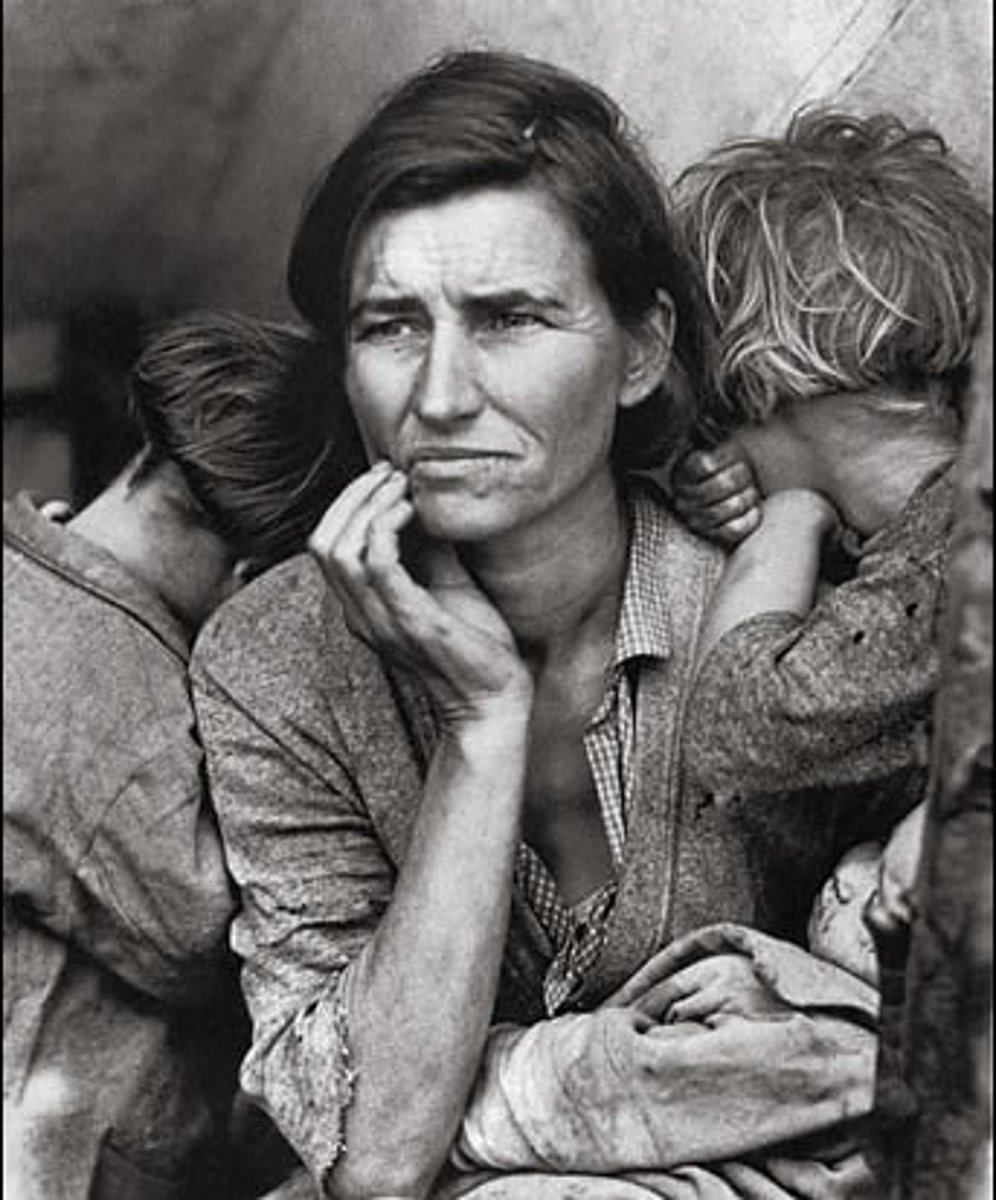
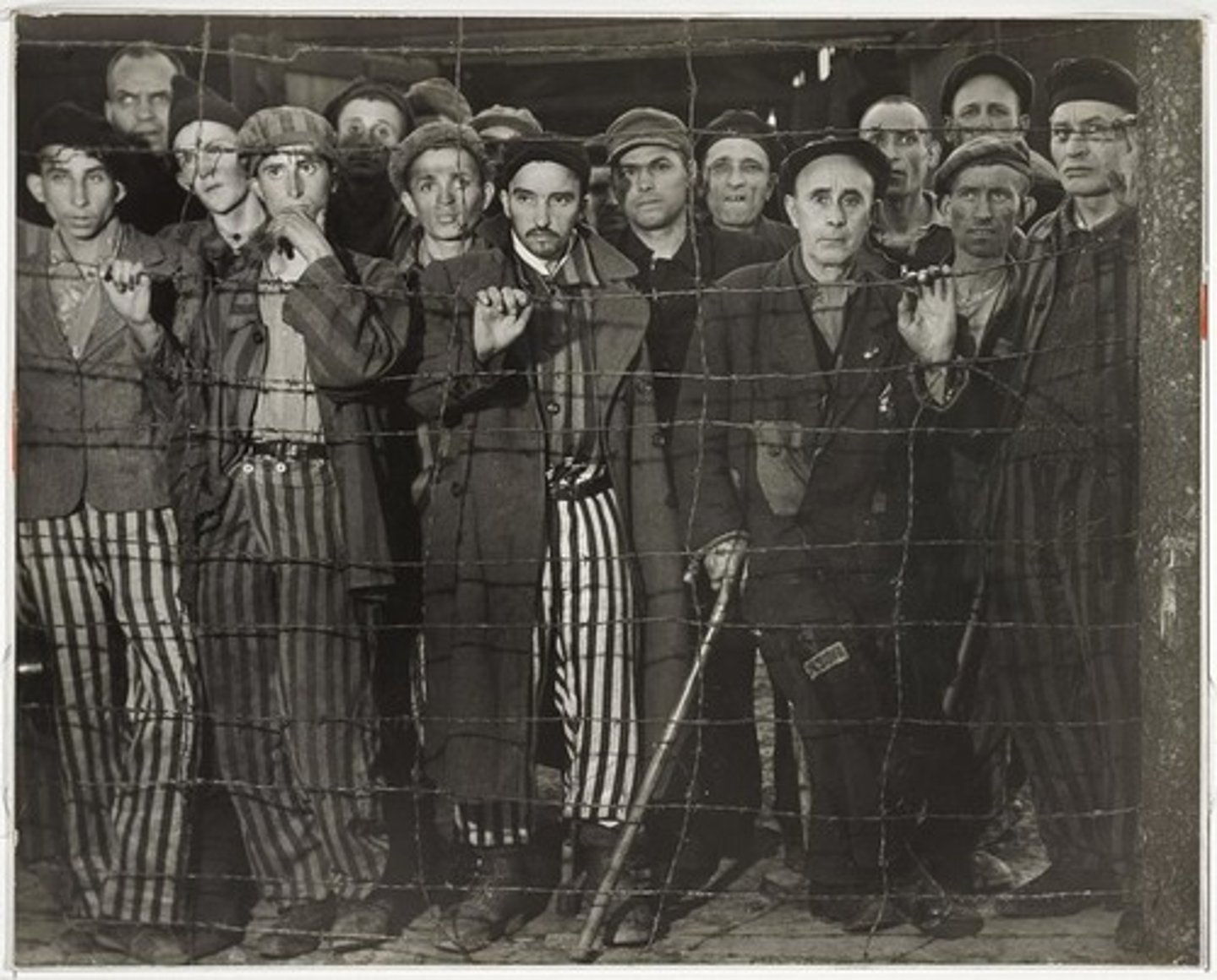
Socially-conscious photographers and filmmakers: Lange, Bourke-White, Eisenstein, and Riefenstahl
Lange and Bourke-White documented social realities through photography, while Eisenstein and Riefenstahl used innovative filmmaking techniques to shape political and cultural messages.
Contextual background information about World War II
World War II (1939–1945) was a global conflict between the Axis and Allied powers that included the Holocaust, widespread destruction, and the use of atomic weapons.
Postwar Existentialism as seen in the writings of Camus and Sartre
Postwar Existentialism focused on freedom, responsibility, authenticity, and the search for meaning in an uncertain world.
Abstract Expressionist art of Pollock, Krasner, de Kooning
An American postwar art movement emphasizing emotion, spontaneity, abstraction, and individual expression through energetic techniques and large-scale works.
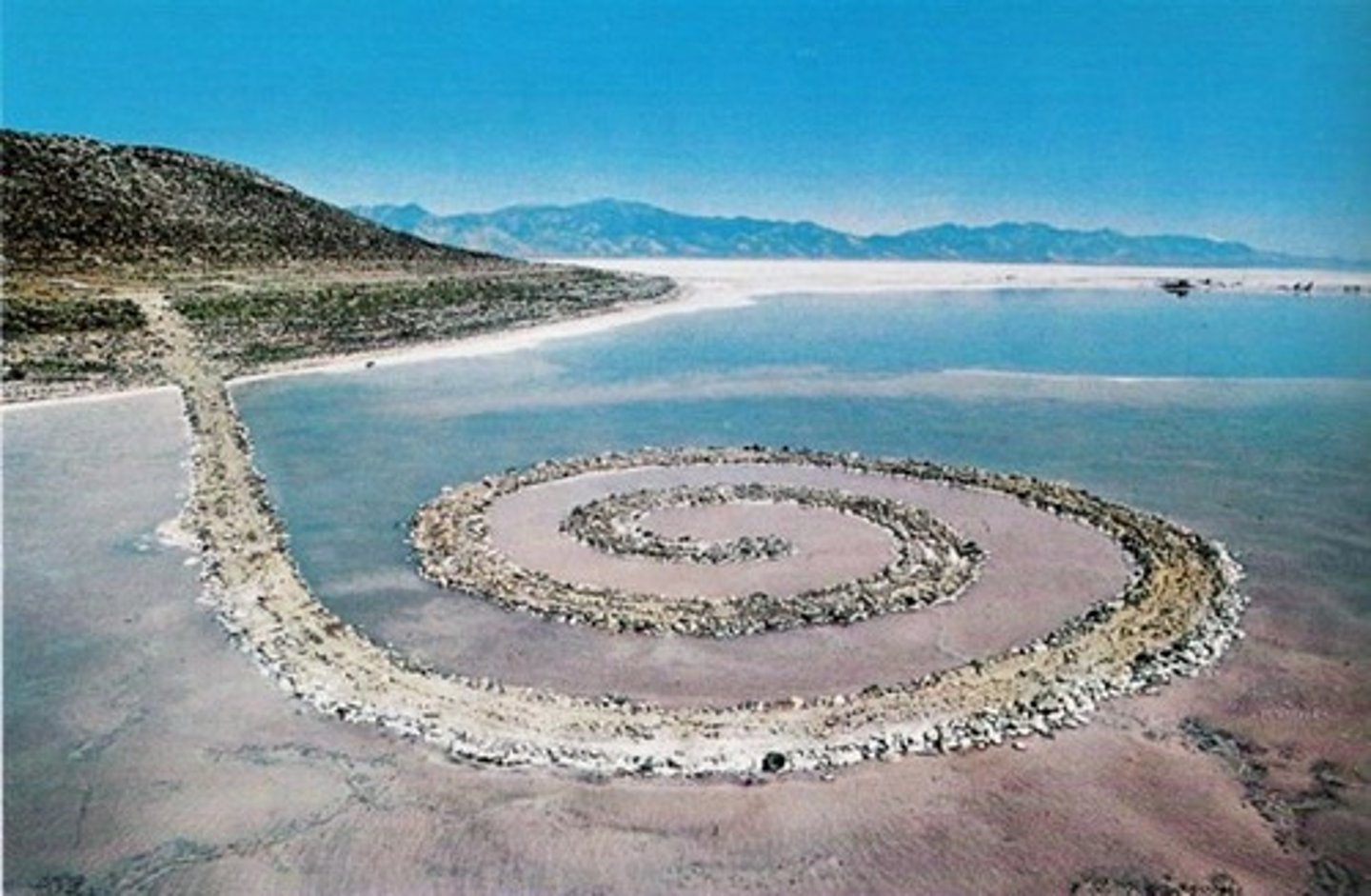
Site-specific art of Smithson, Christo, and Jeanne-Claude
Site-specific art is created for a particular location and interacts directly with its environment, often on a monumental scale.
Social consciousness in the works of the Guerilla Girls, Ringgold, Brooks, Sexton, Rodgers and Hammerstein, MacDermot, Larson, and Miranda
These artists used their work to address issues such as racism, sexism, inequality, identity, war, poverty, and social justice.
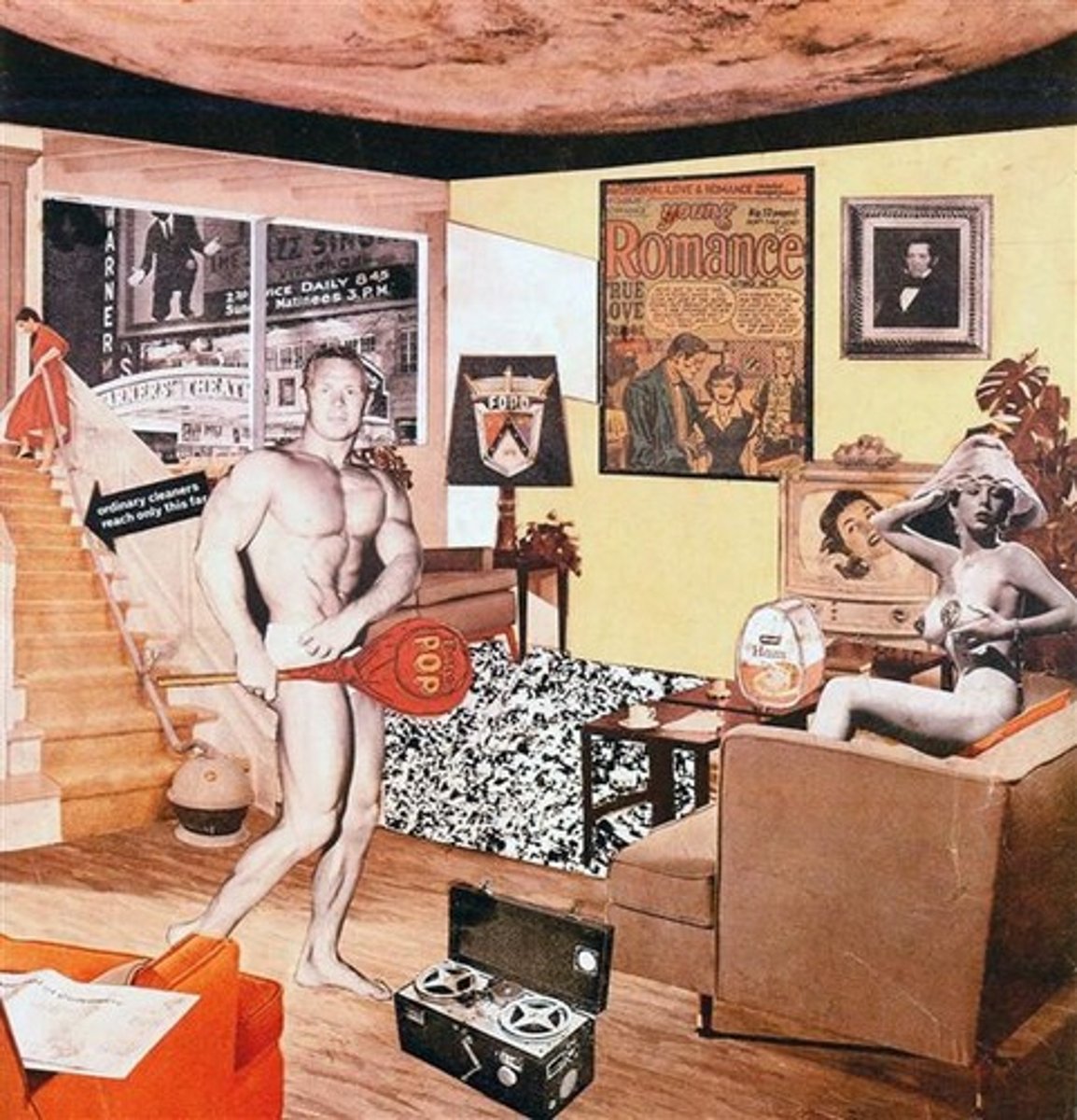
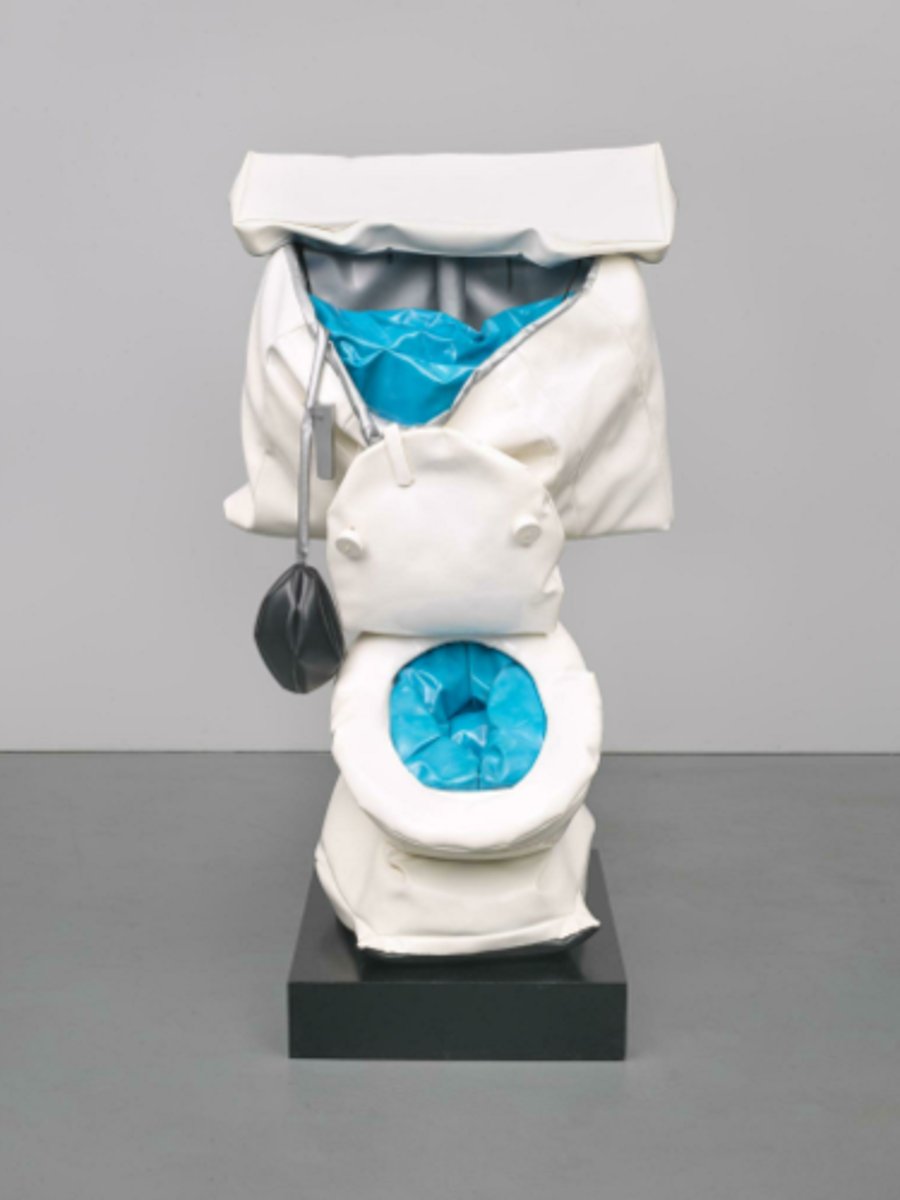
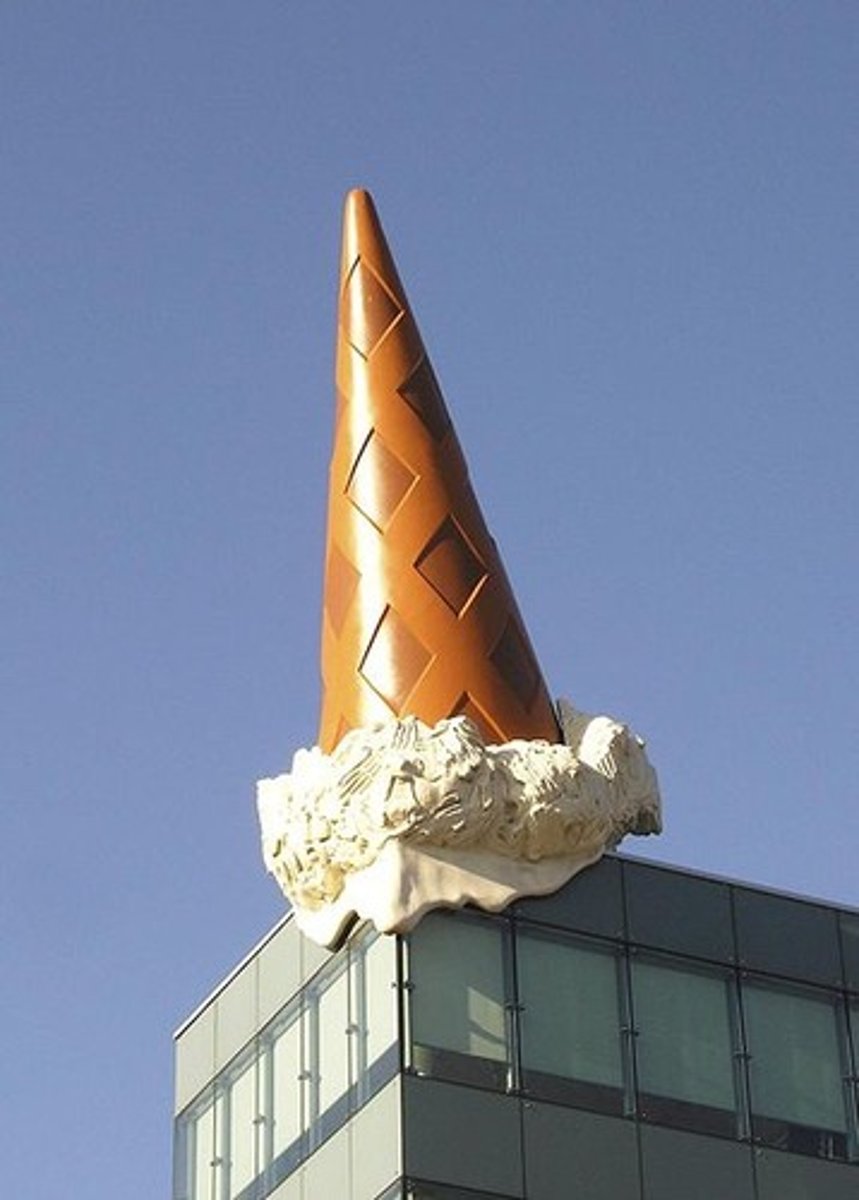
The pop art of Warhol, Hamilton, and Oldenburg
Pop Art drew inspiration from popular culture, advertising, and consumer goods, blurring the line between fine art and everyday life.
Modern to Postmodern shift in works of visual art, drama, music, and architecture
The shift from Modernism to Postmodernism moved from faith in originality, order, and universal truths toward pluralism, irony, experimentation, multiple perspectives, and questioning authority.
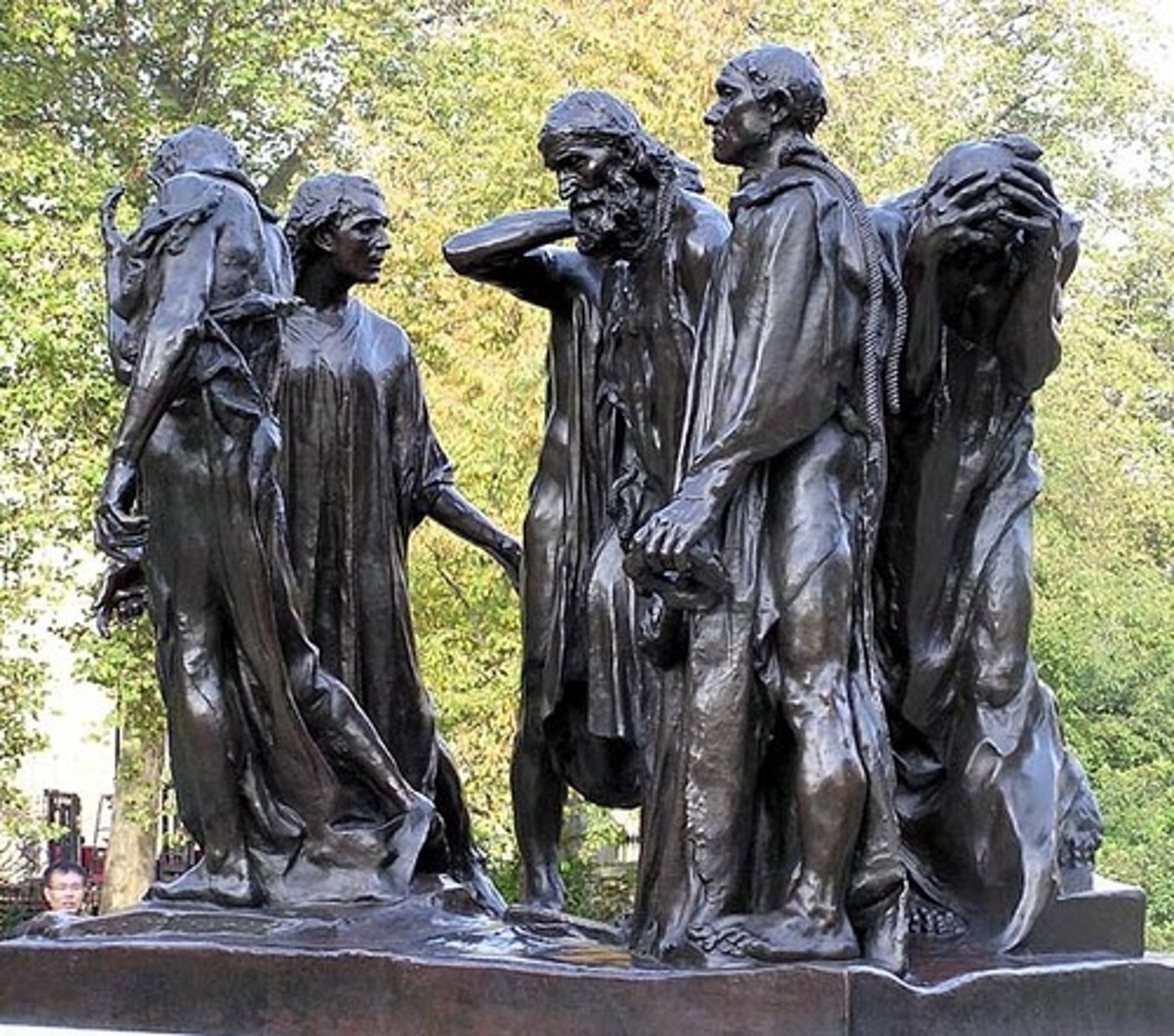
Auguste Rodin: The Burghers of Calais
Transitional Fin de Siècle Sculpture
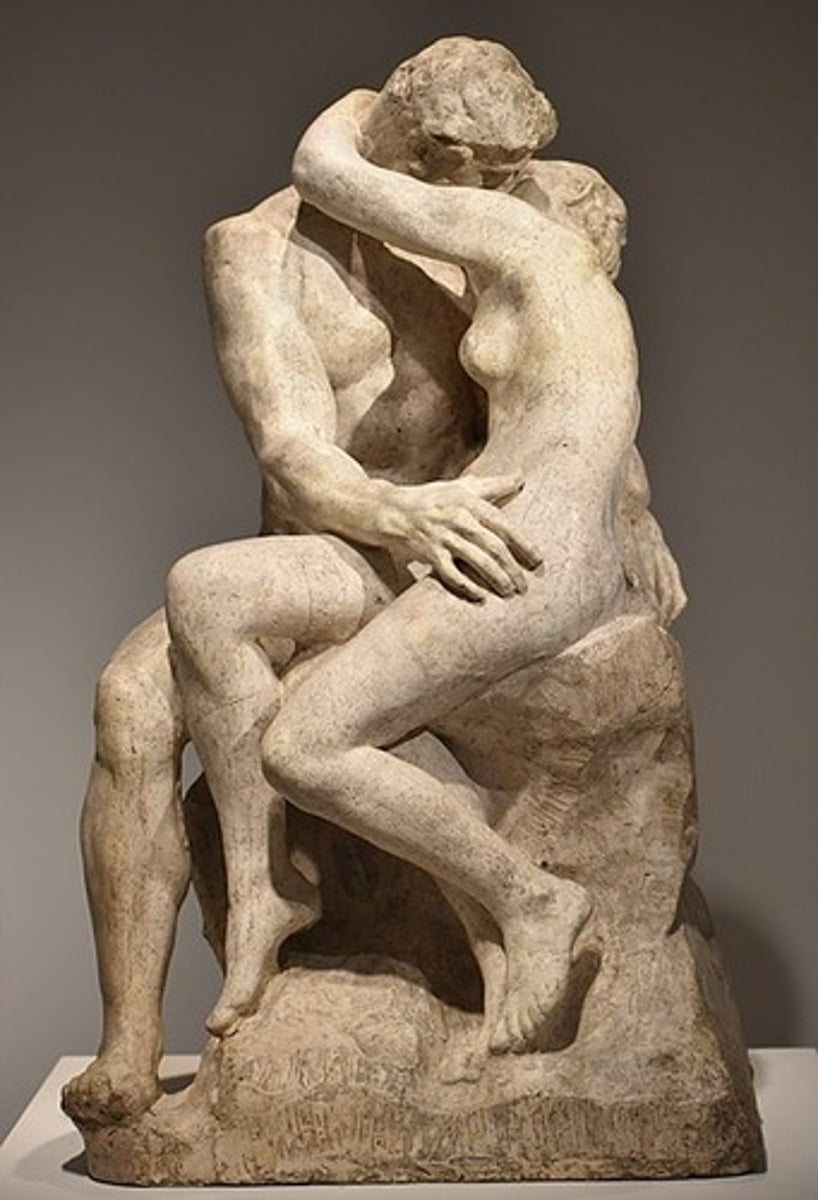
Auguste Rodin: The Kiss
Transitional Fin de Siècle Sculpture
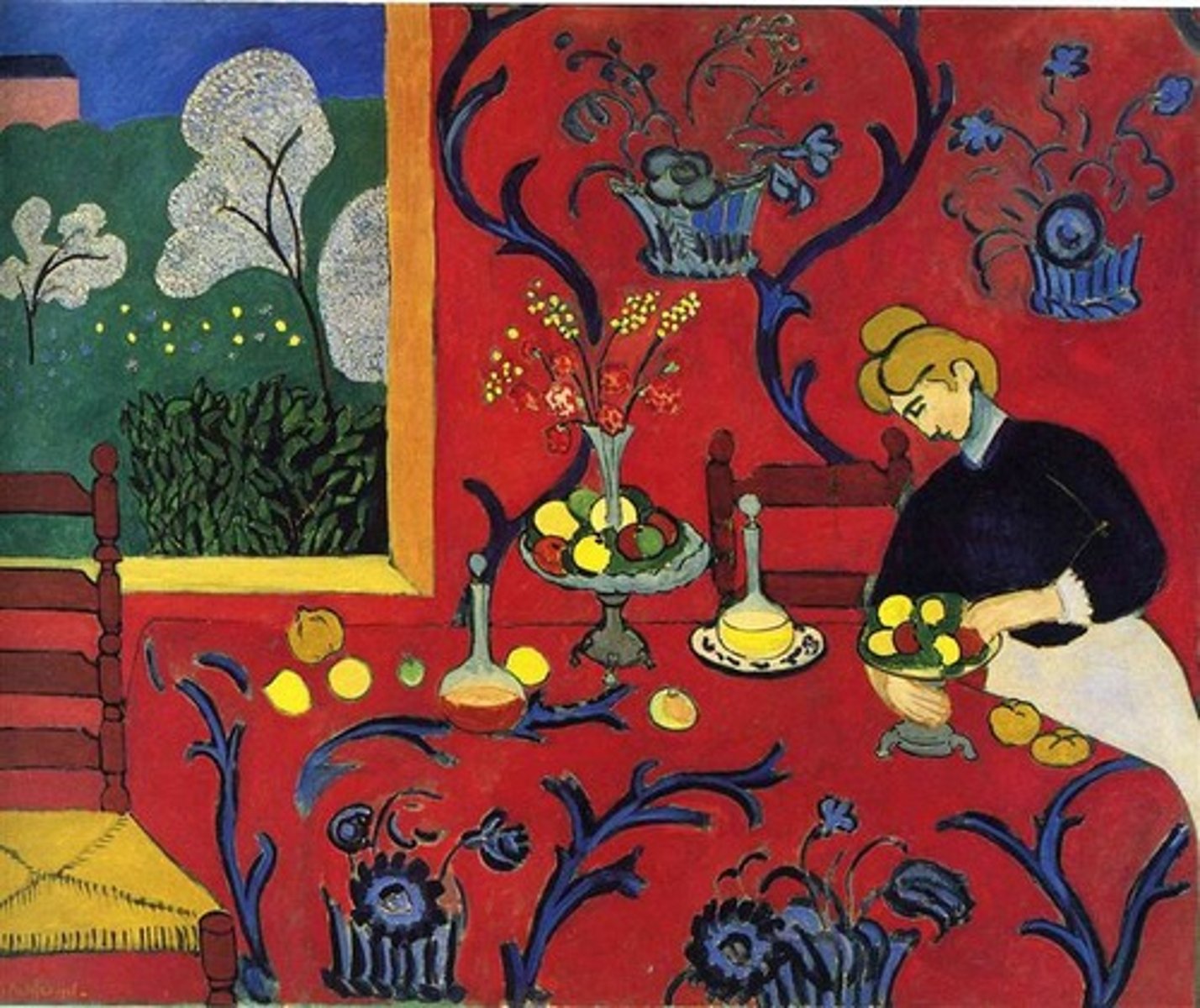
Henri Matisse: Harmony in Red (The Red Room)
Fauvism
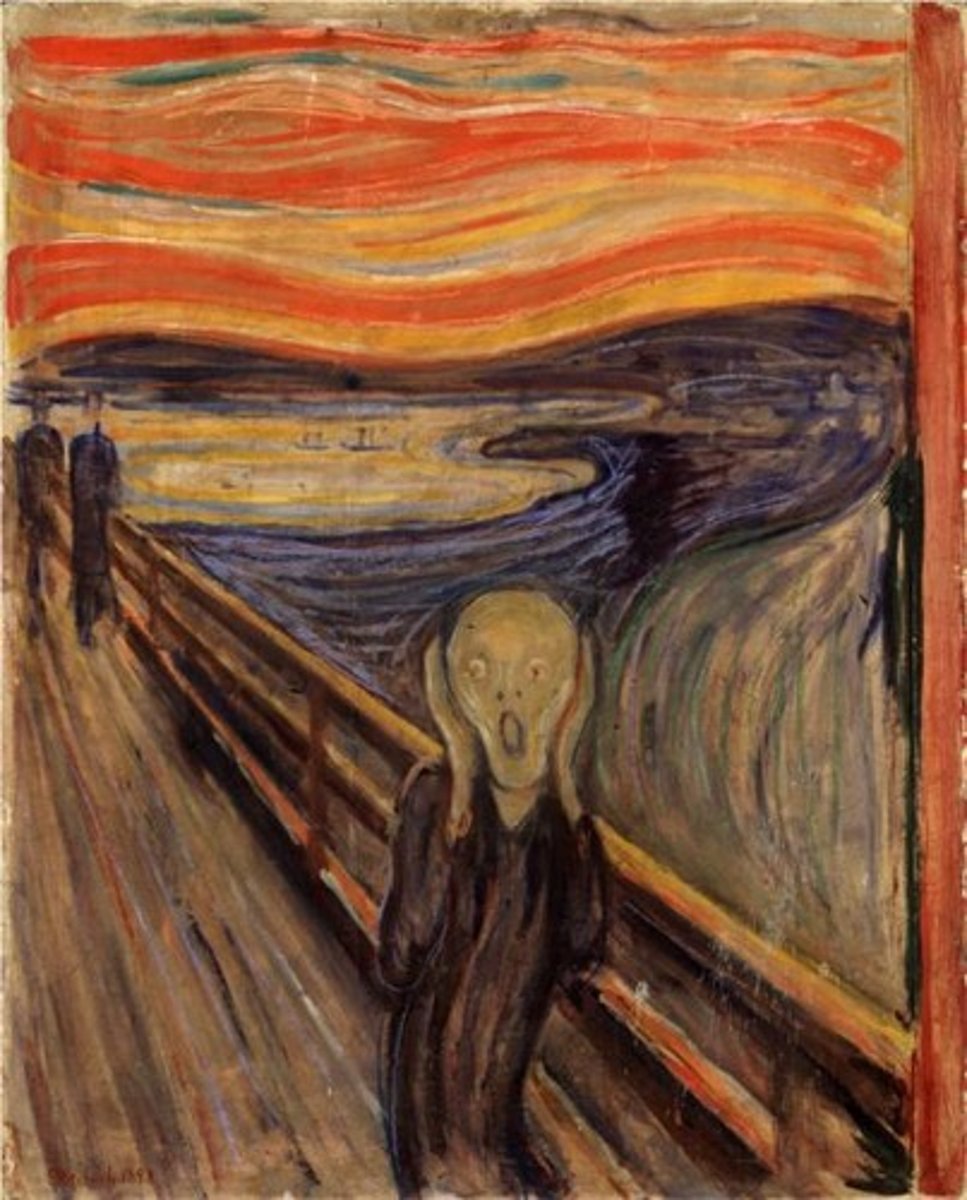
Edvard Munch: The Scream
Expressionism
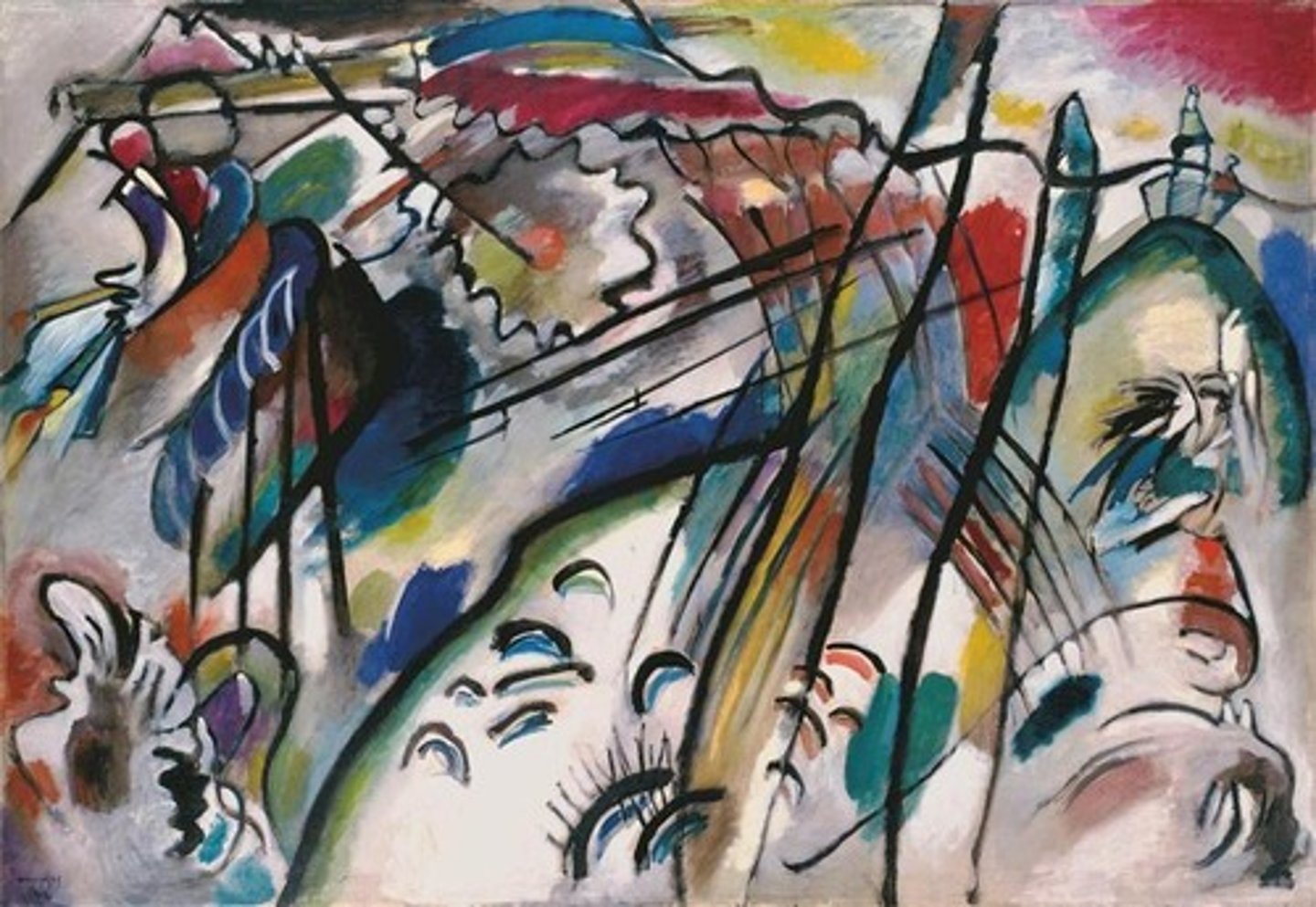
Vassily Kandinsky: Improvisation 28
Expressionism
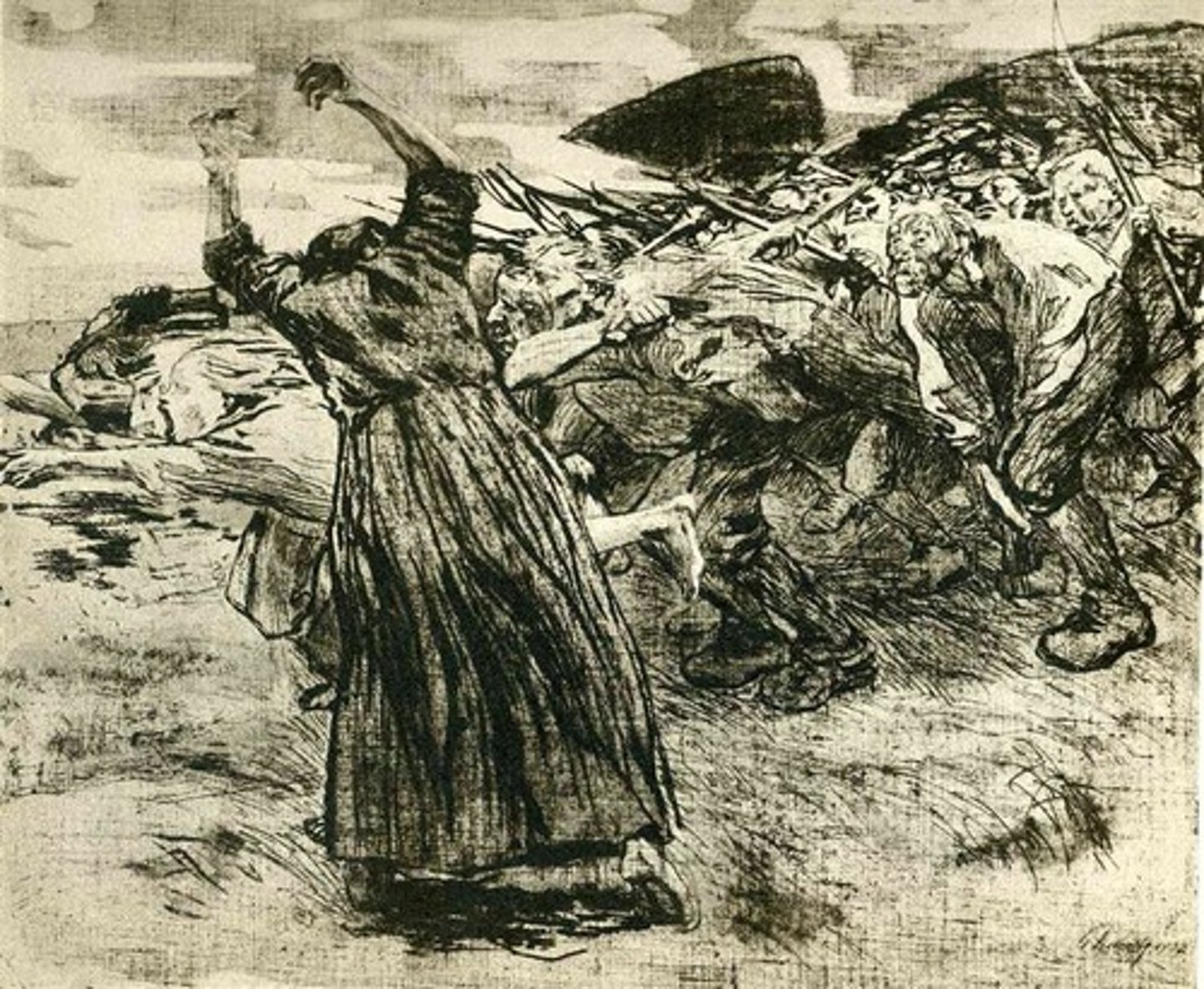
Käthe Kollwitz: The Outbreak
Expressionism
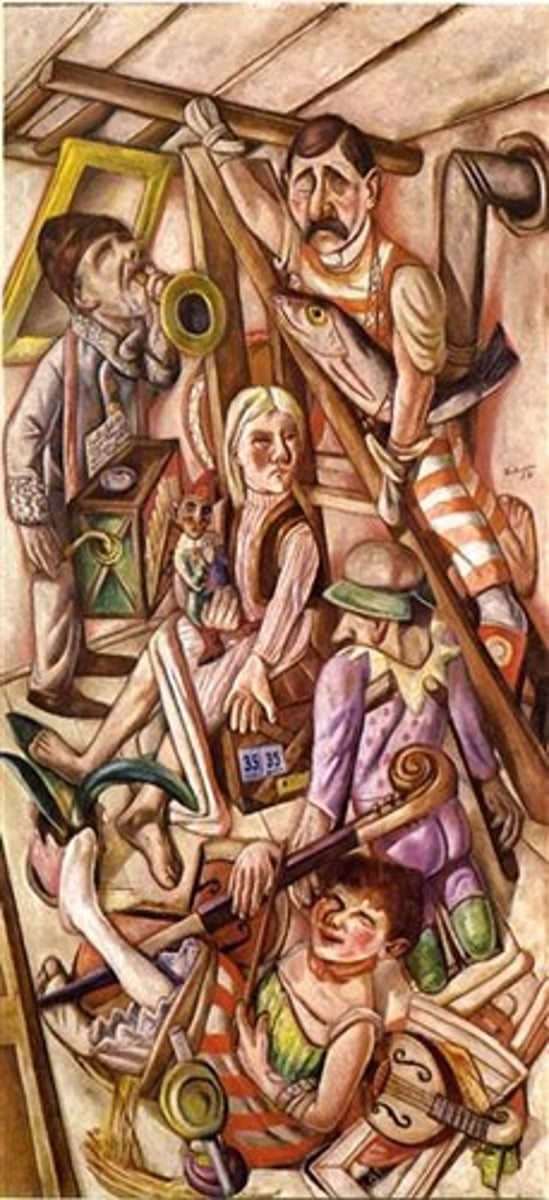
Max Beckmann: The Dream
Expressionism
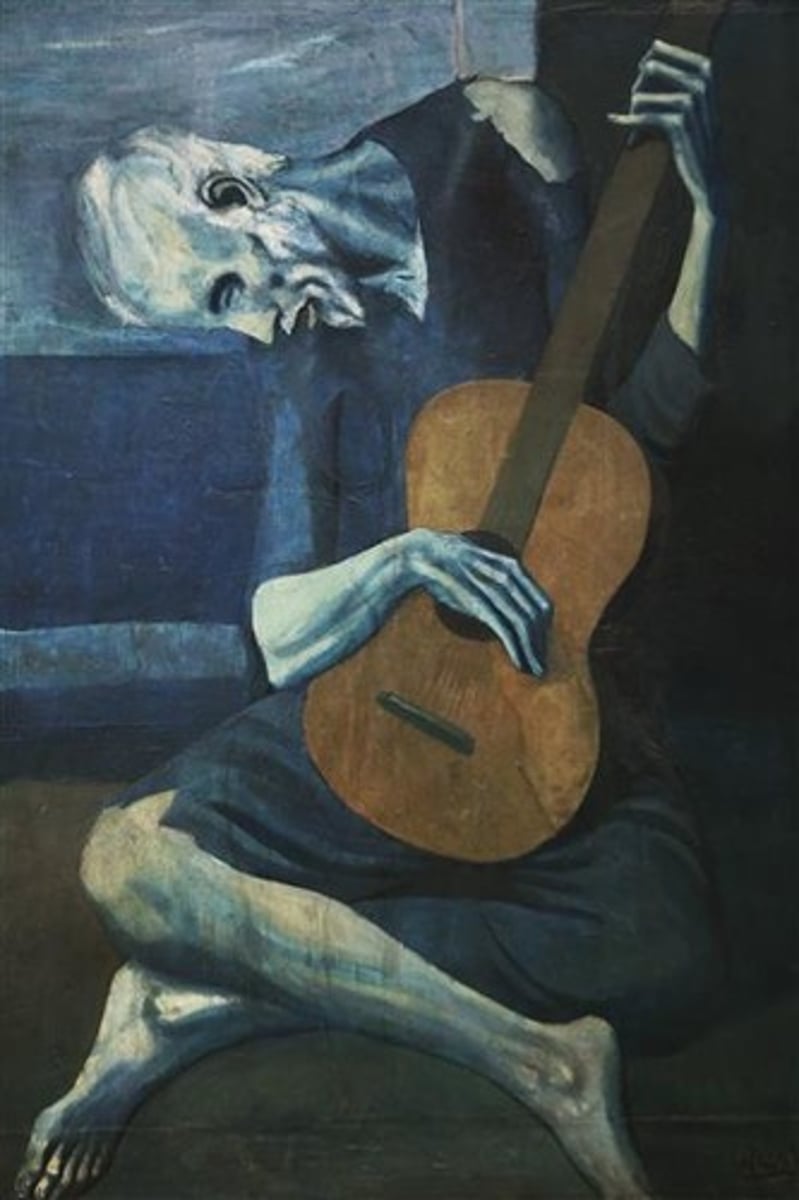
Pablo Picasso: The Old Guitarist
Cubism
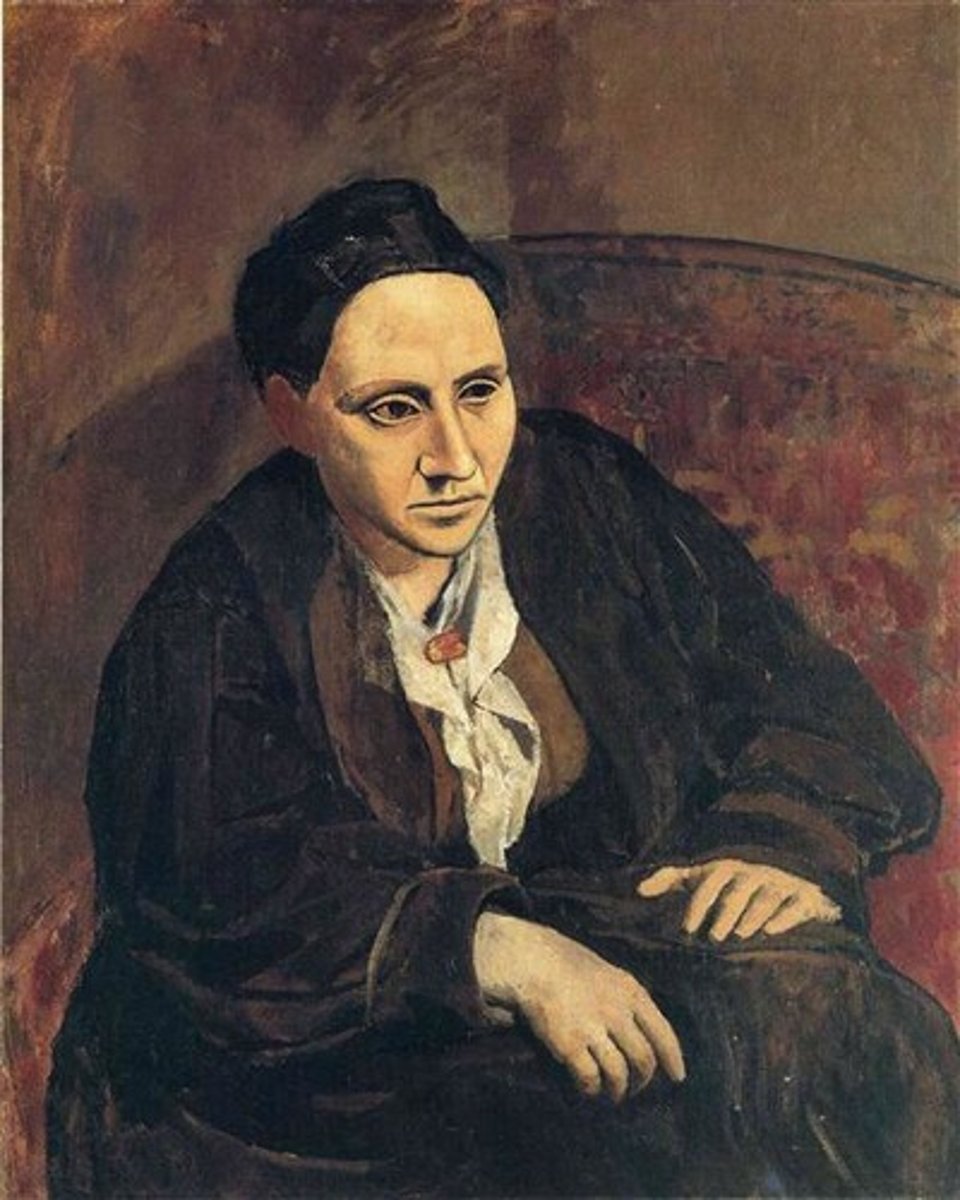
Pablo Picasso: Gertrude Stein
Cubism
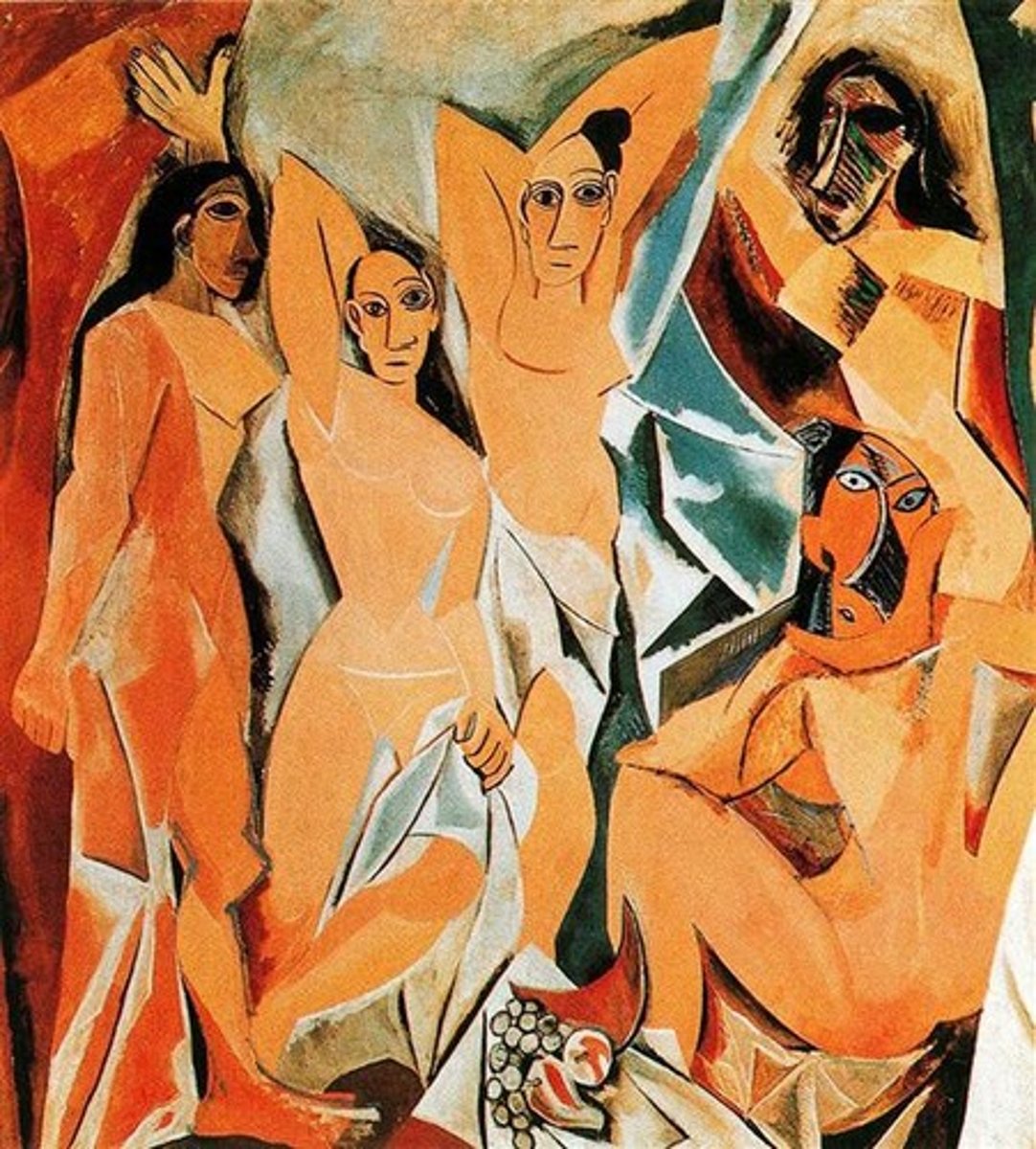
Pablo Picasso: Les Demoiselles d'Avignon
Cubism
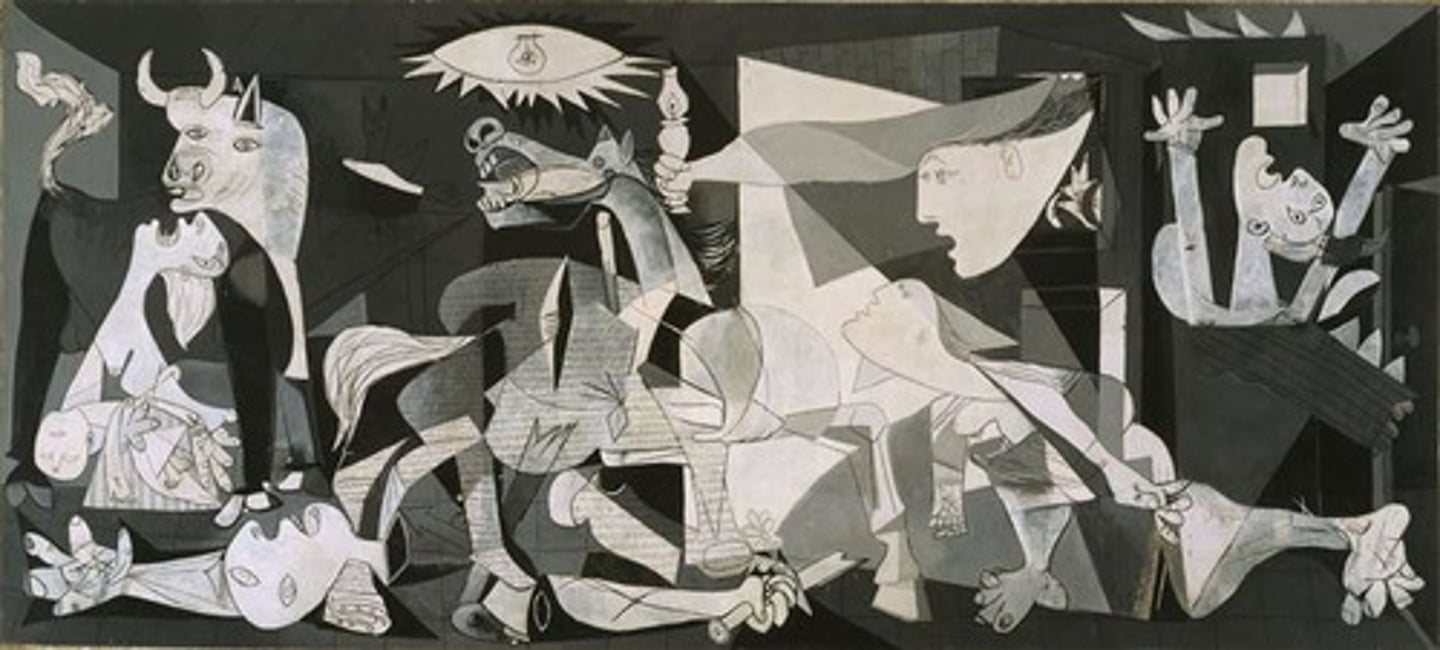
Pablo Picasso: Guernica
Cubism
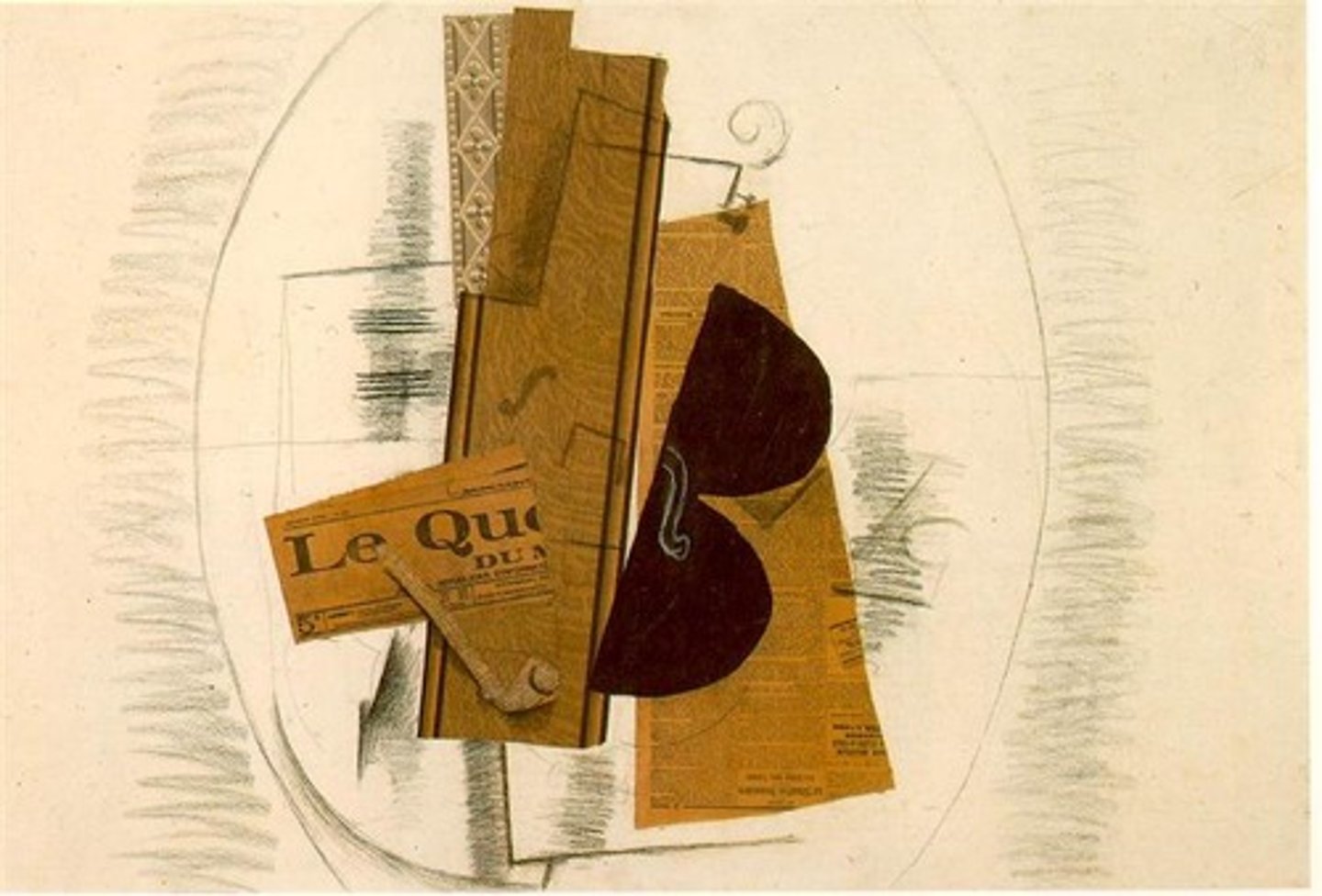
Georges Braque: Still Life with Violin and Pipe
Cubism
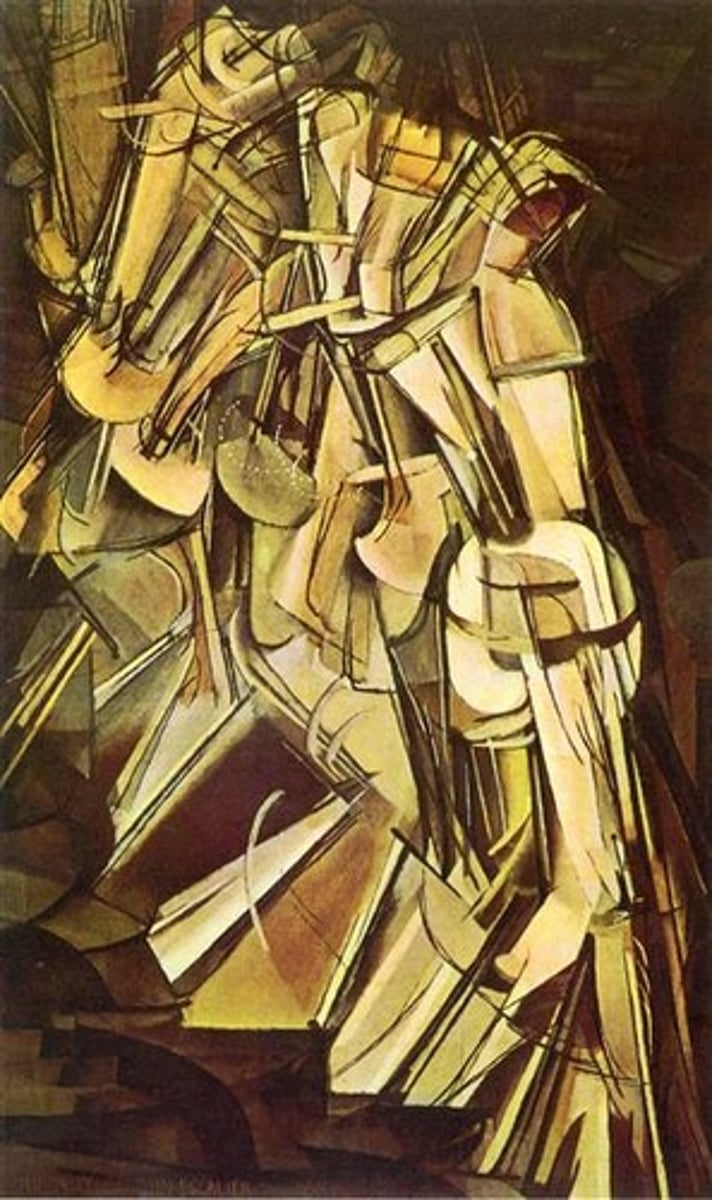
Marcel Duchamp: Nude Descending a Staircase
Cubism
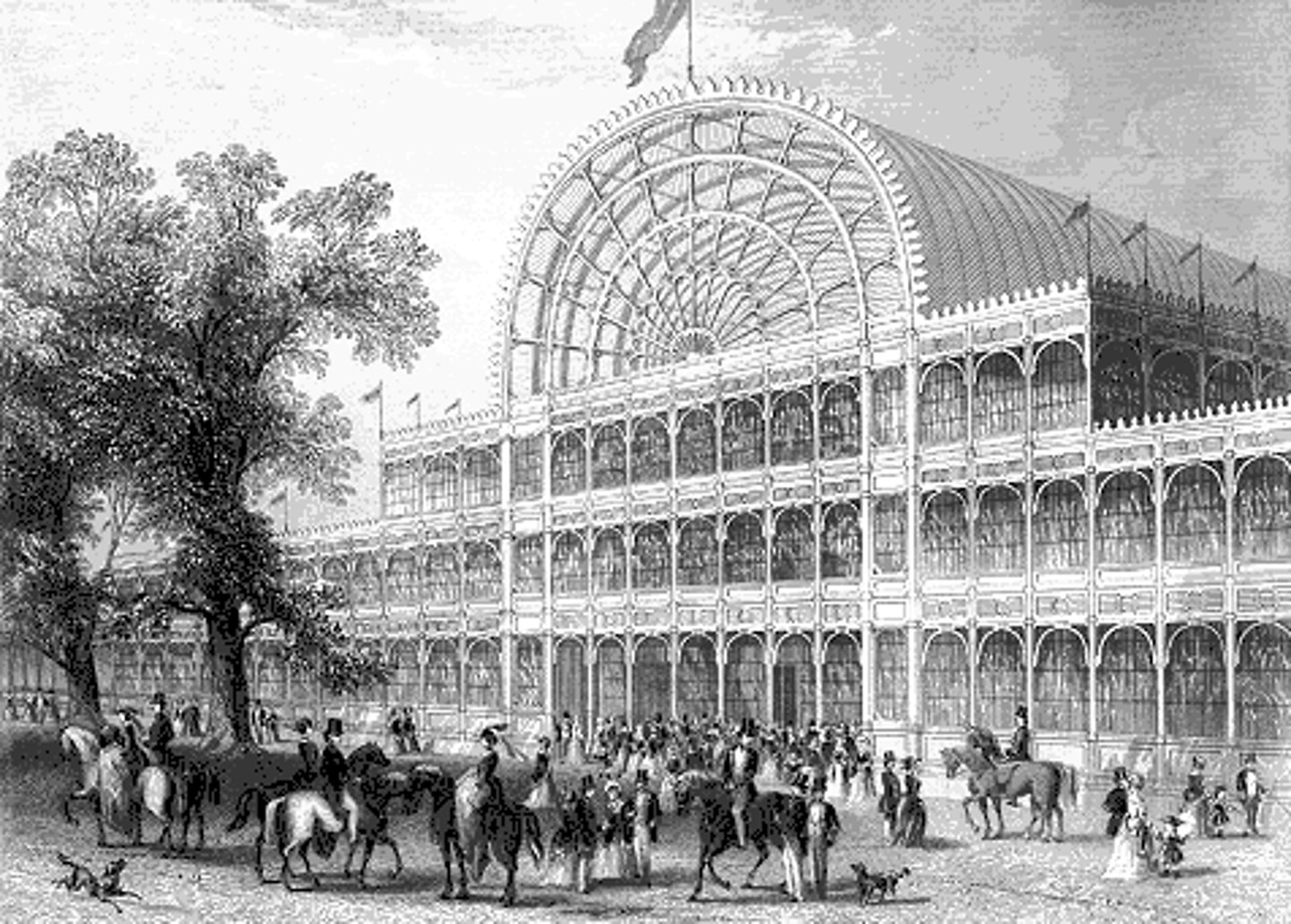
Sir Joseph Paxton: The Crystal Palace
Fin de Siècle Architecture
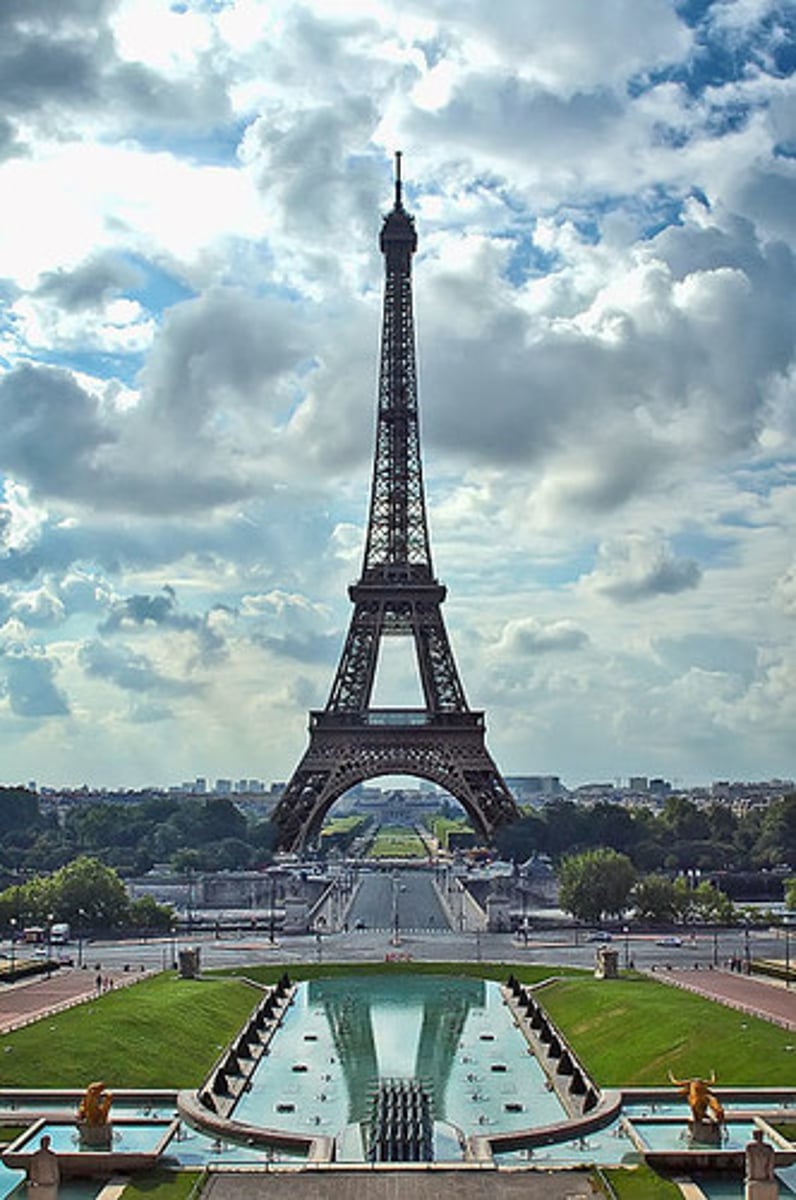
Gustave Eiffel: The Eiffel Tower
Fin de Siècle Architecture
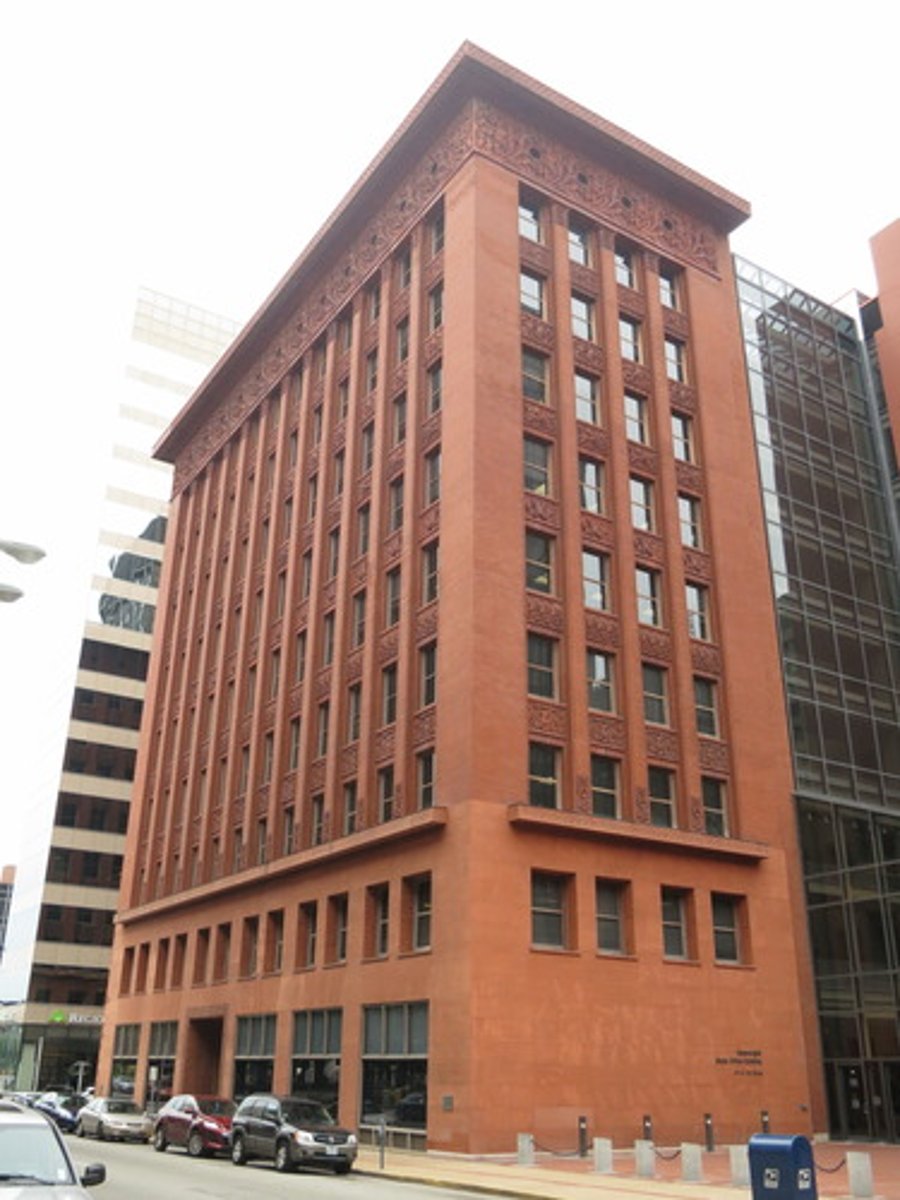
Louis Sullivan: Wainwright Building
Fin de Siècle Architecture
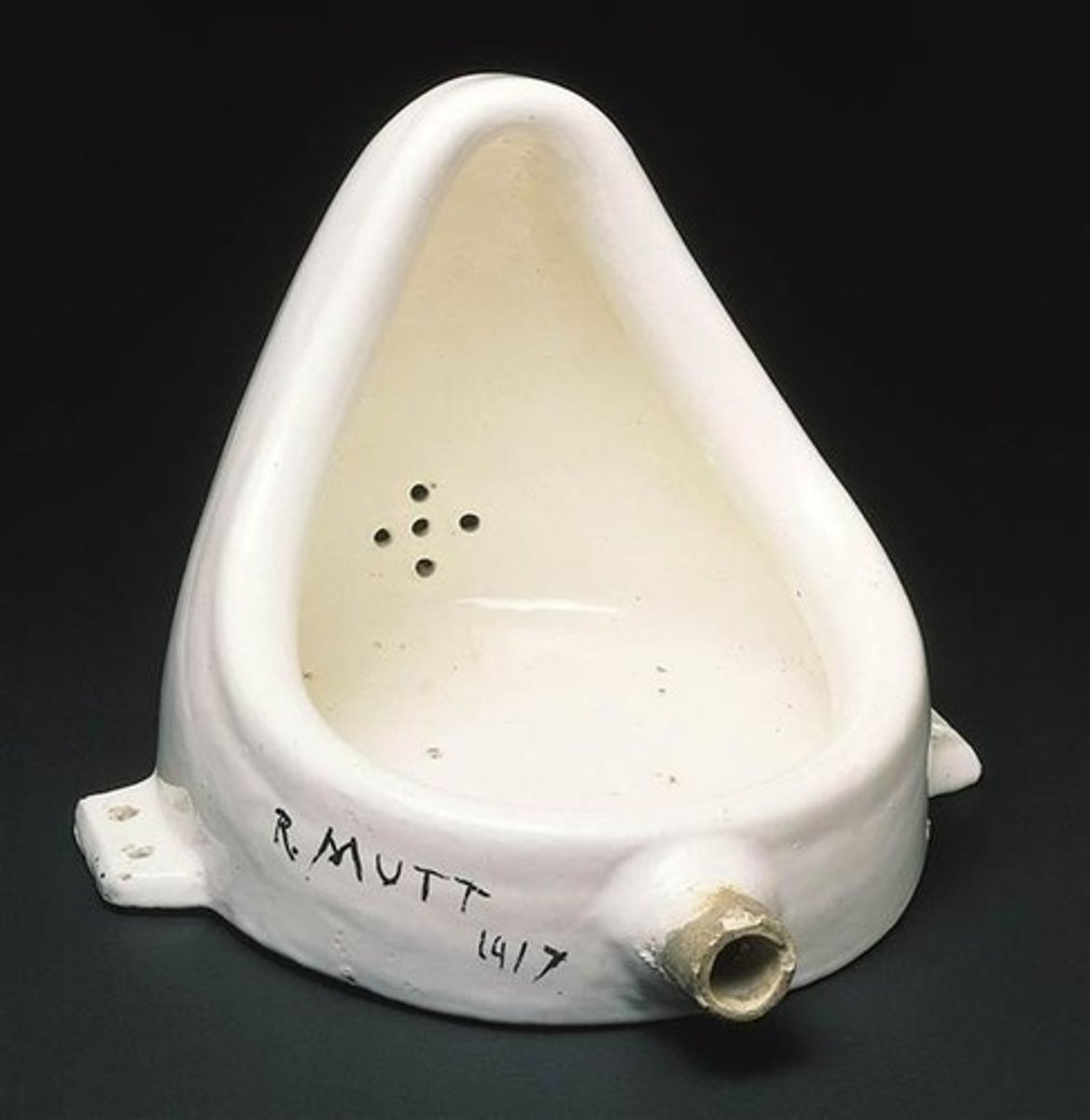
Marcel Duchamp: Fountain
Dadaism
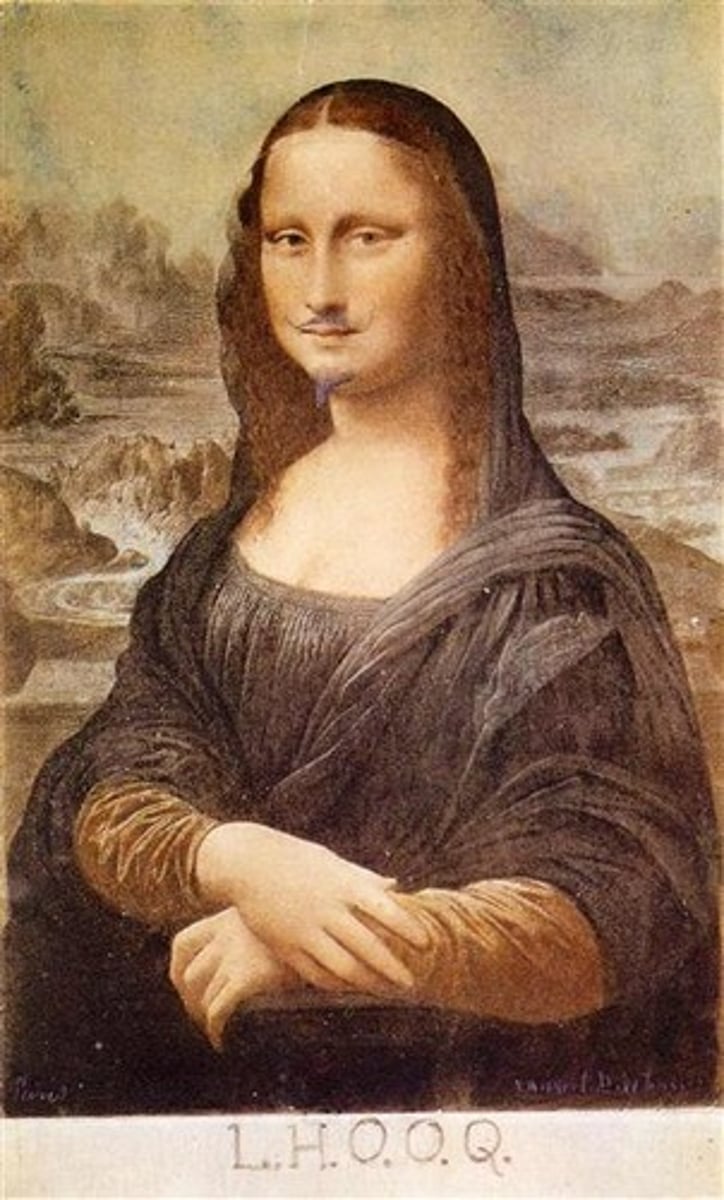
Marcel Duchamp: L.H.O.O.Q.
Dadaism
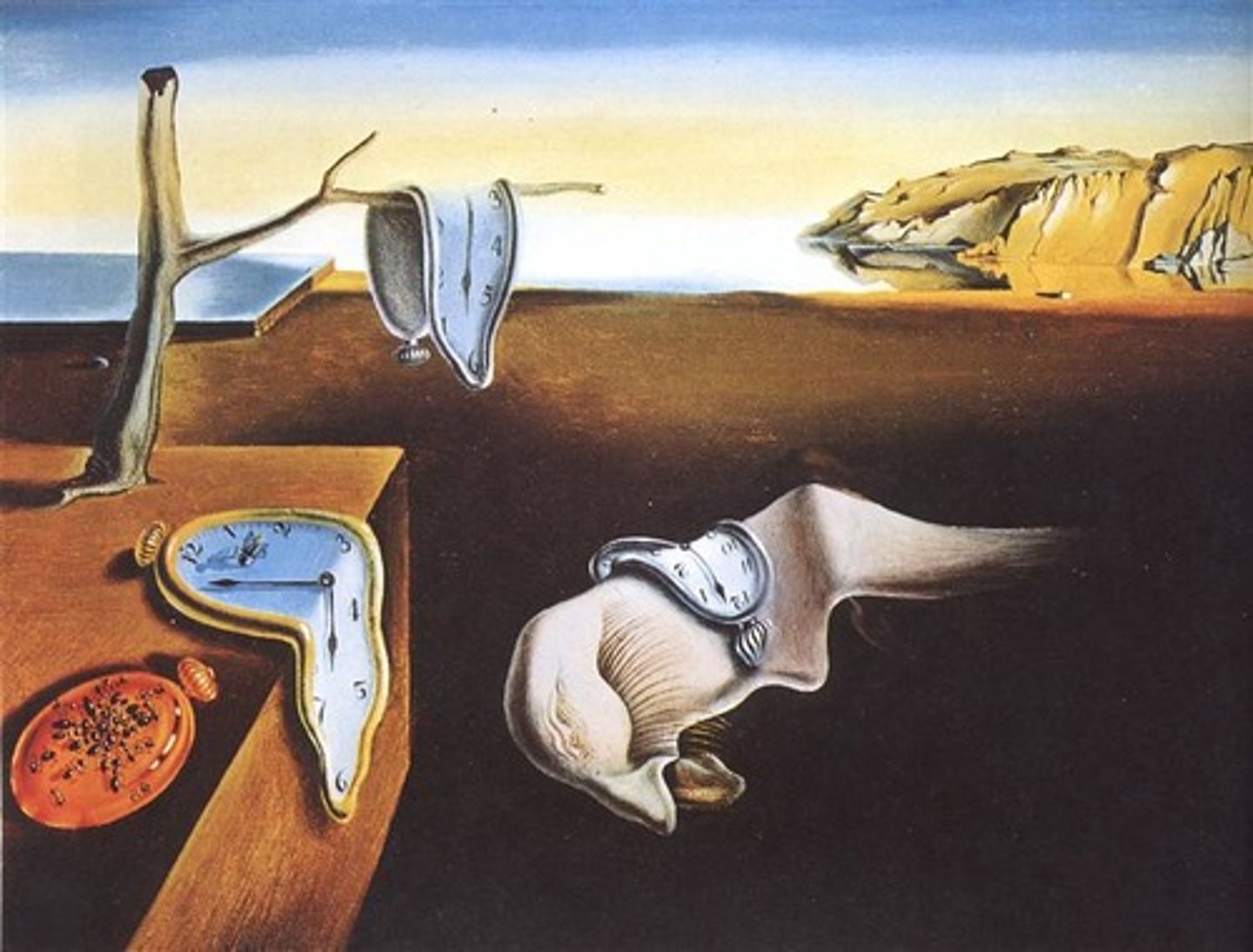
Salvador Dali: The Persistence of Memory
Surrealism
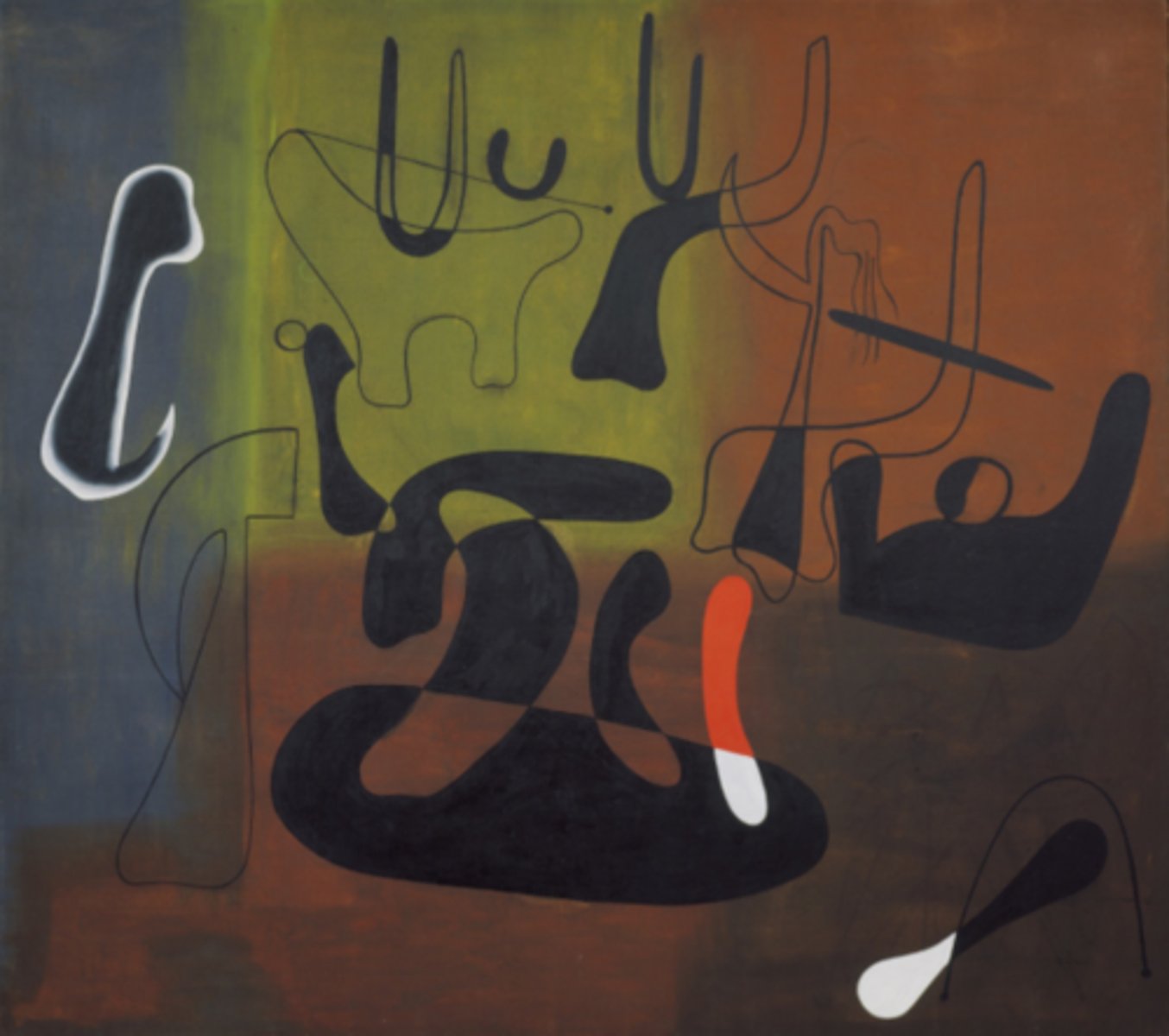
Joan Miró: Painting
Surrealism
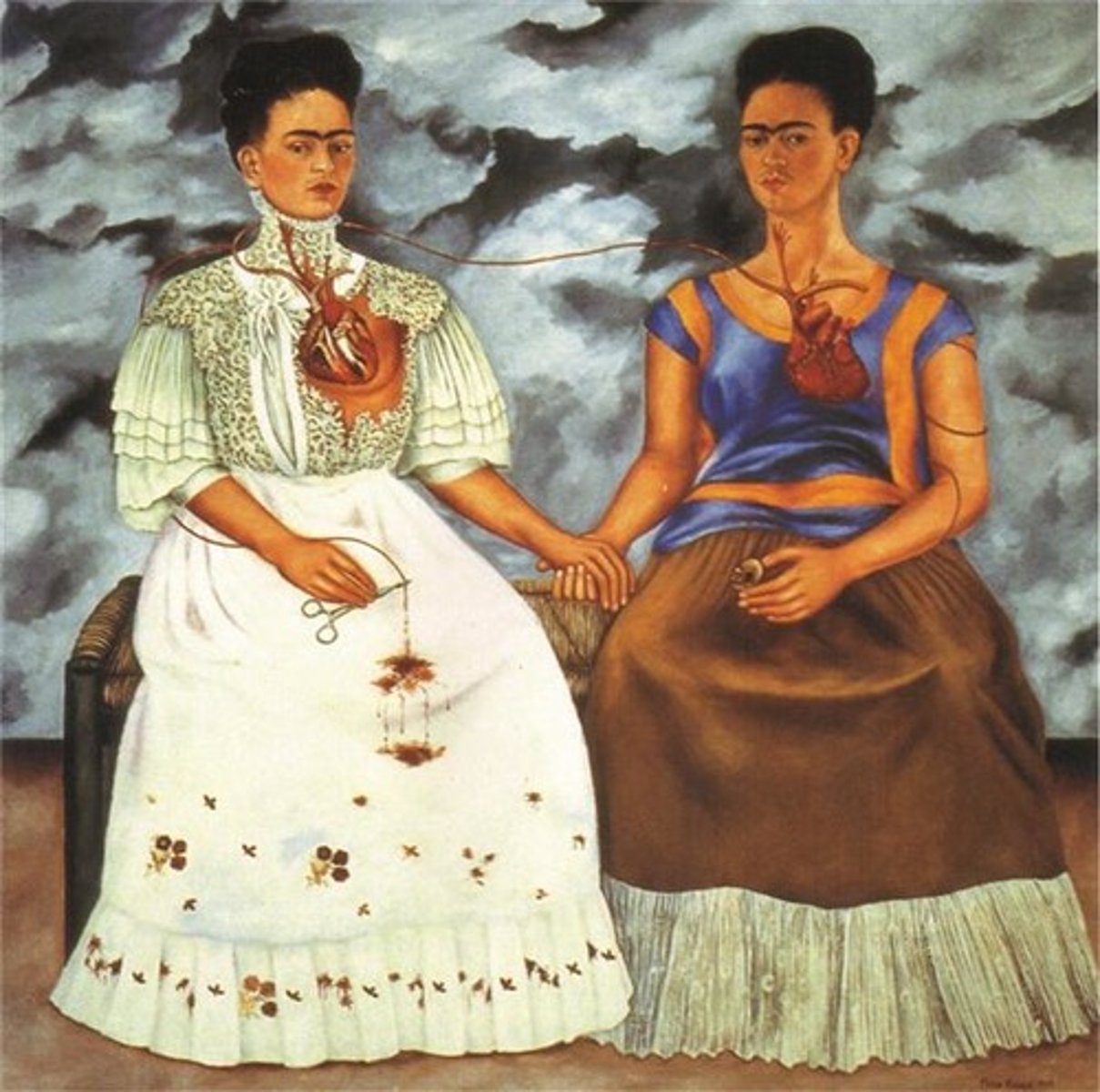
Frida Kahlo: The Two Fridas
Surrealism
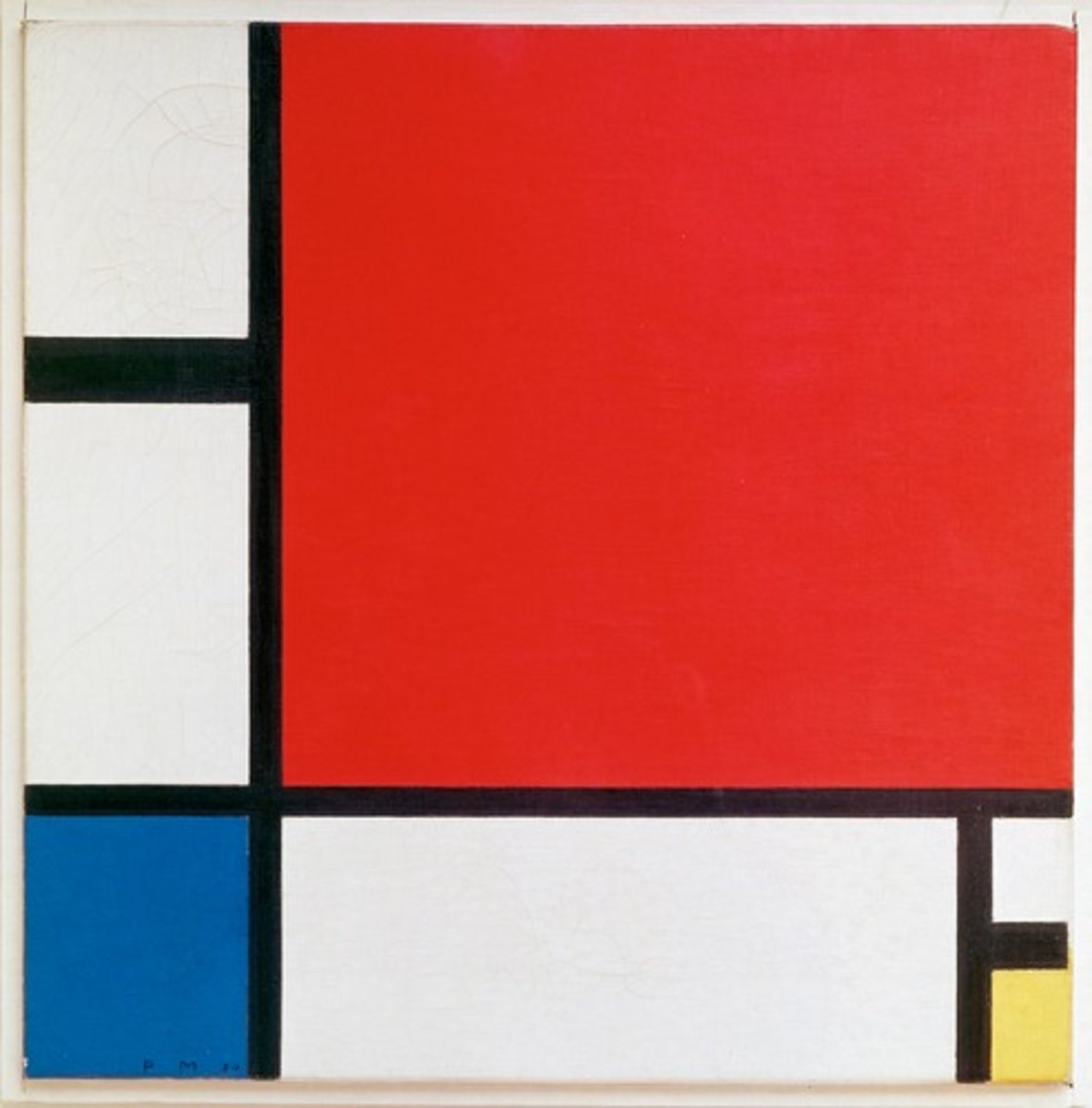
Piet Mondrian: Composition II, with Red, Blue, Black, and Yellow
De Stijl
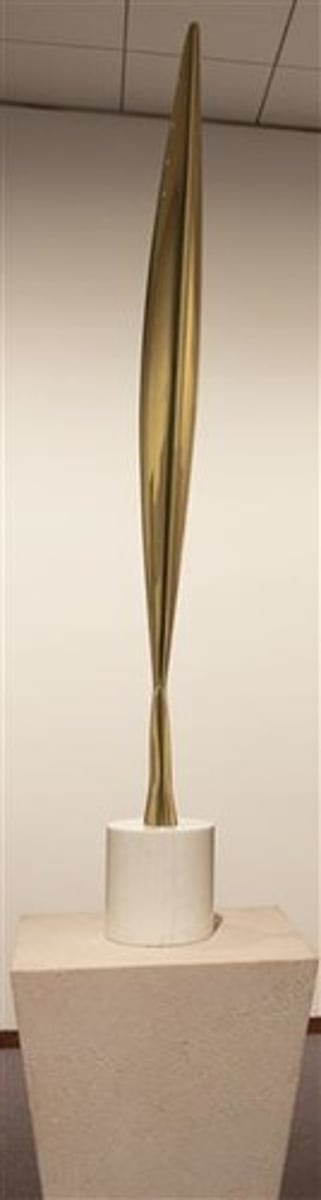
Constantin Brancusi: Bird in Space
Abstract Sculpture
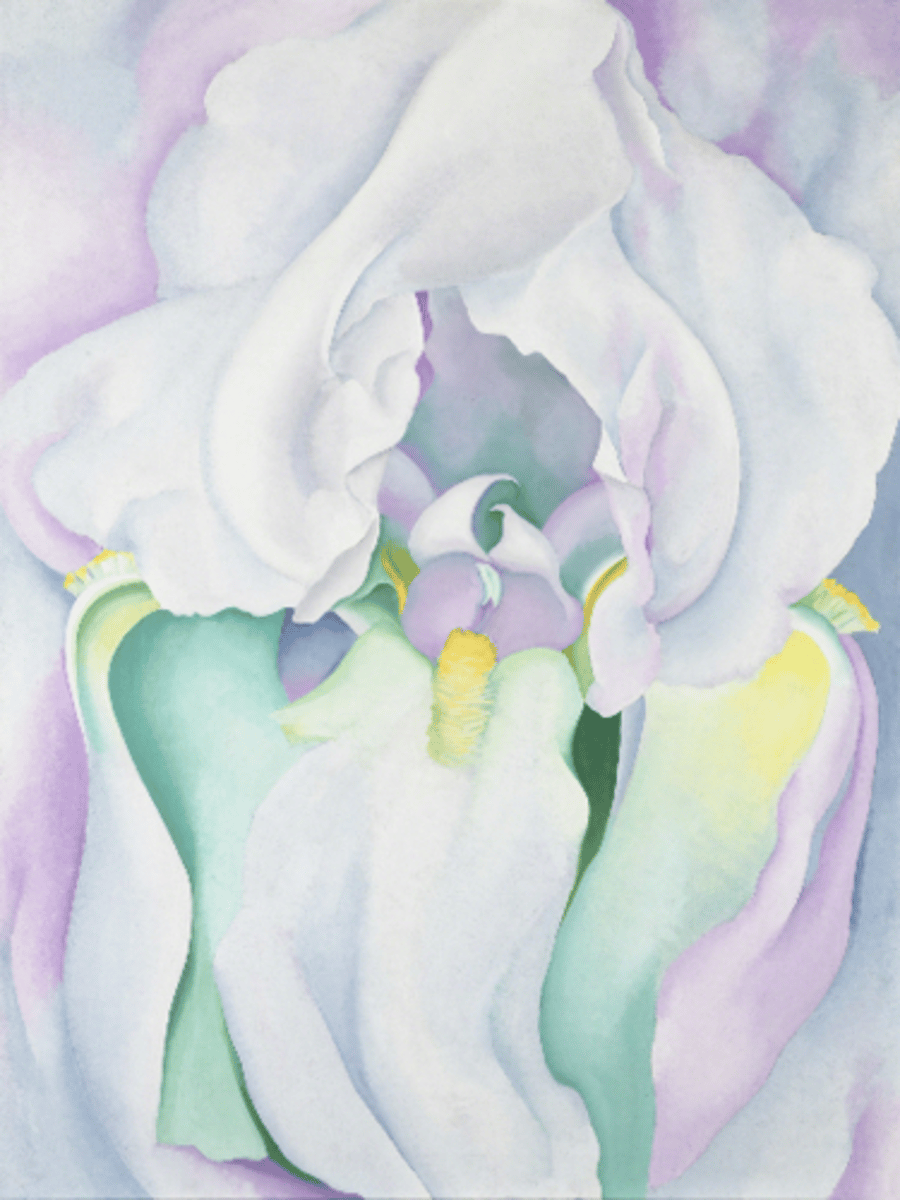
Georgia O'Keeffe: White Iris
Figurative Art
Grant Wood: American Gothic
Figurative Art

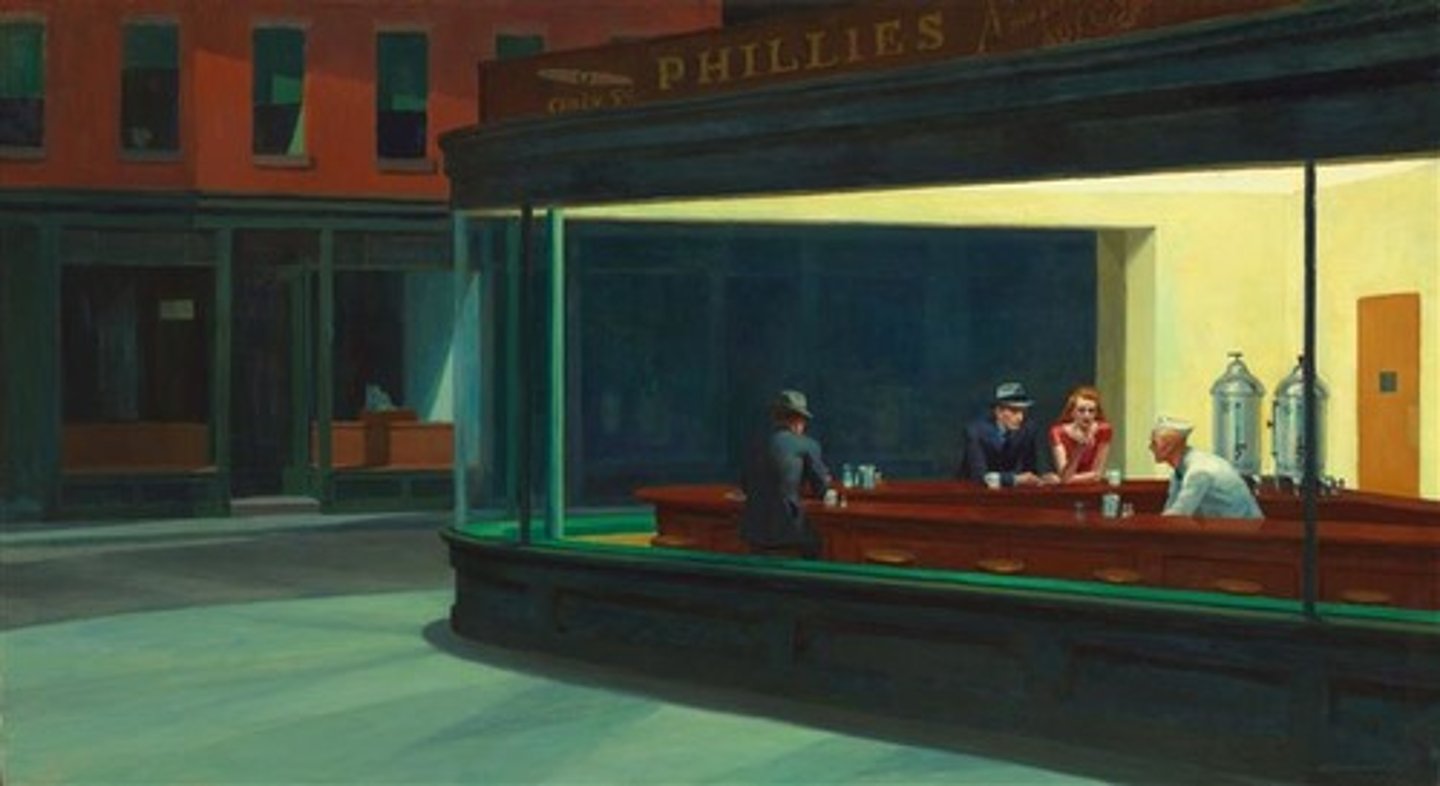
Edward Hopper: Nighthawks
Figurative Art
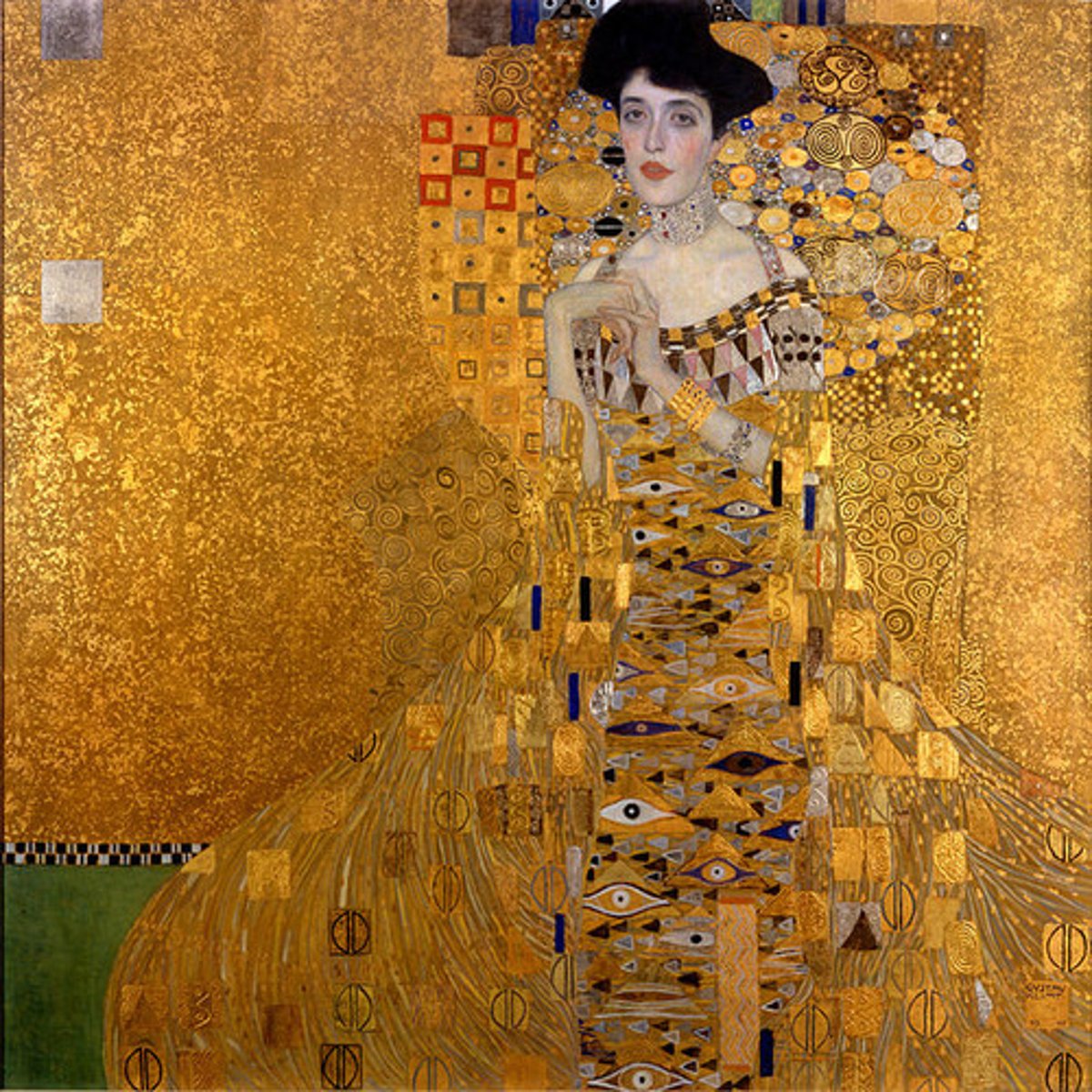
Gustav Klimt: Portrait of Adele Bloch-Bauer
Figurative Art
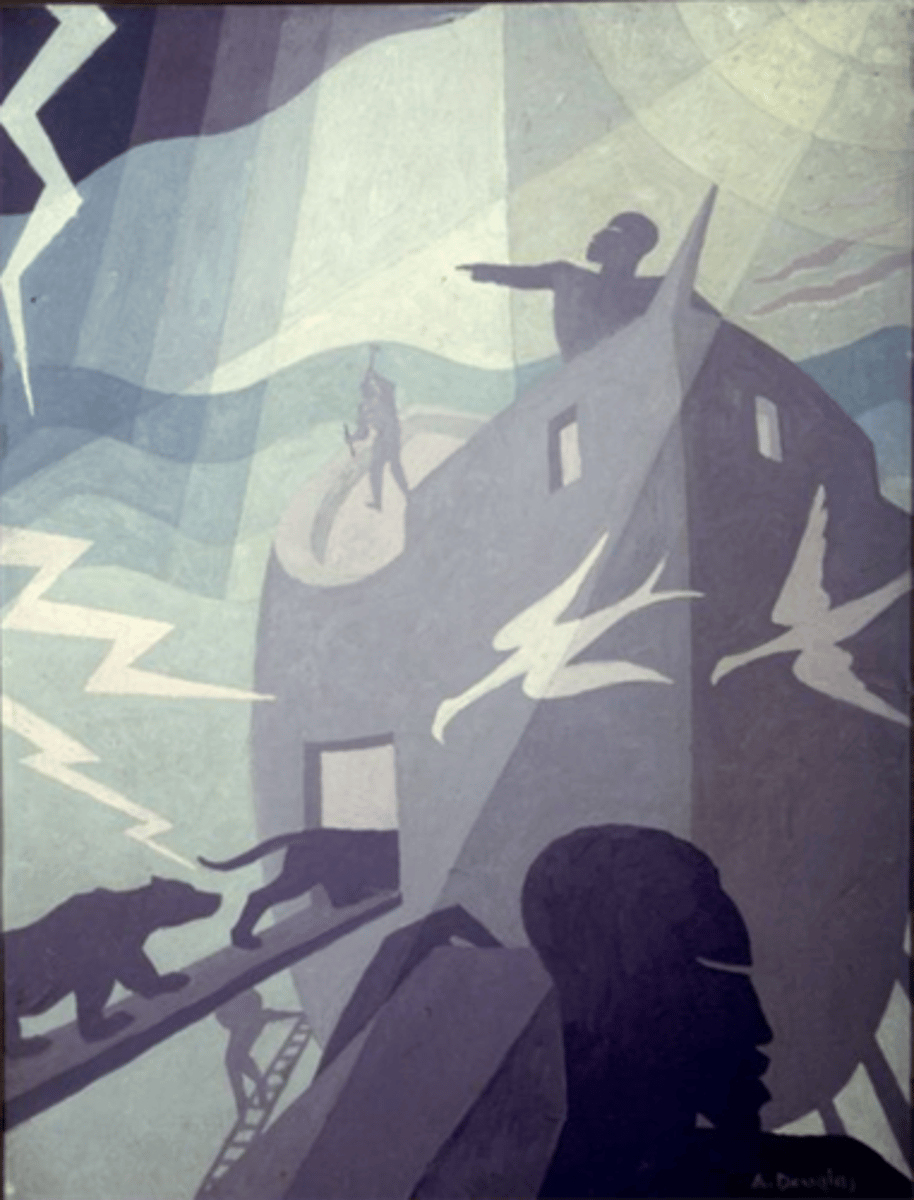
Aaron Douglas: Noah's Ark
Harlem Renaissance
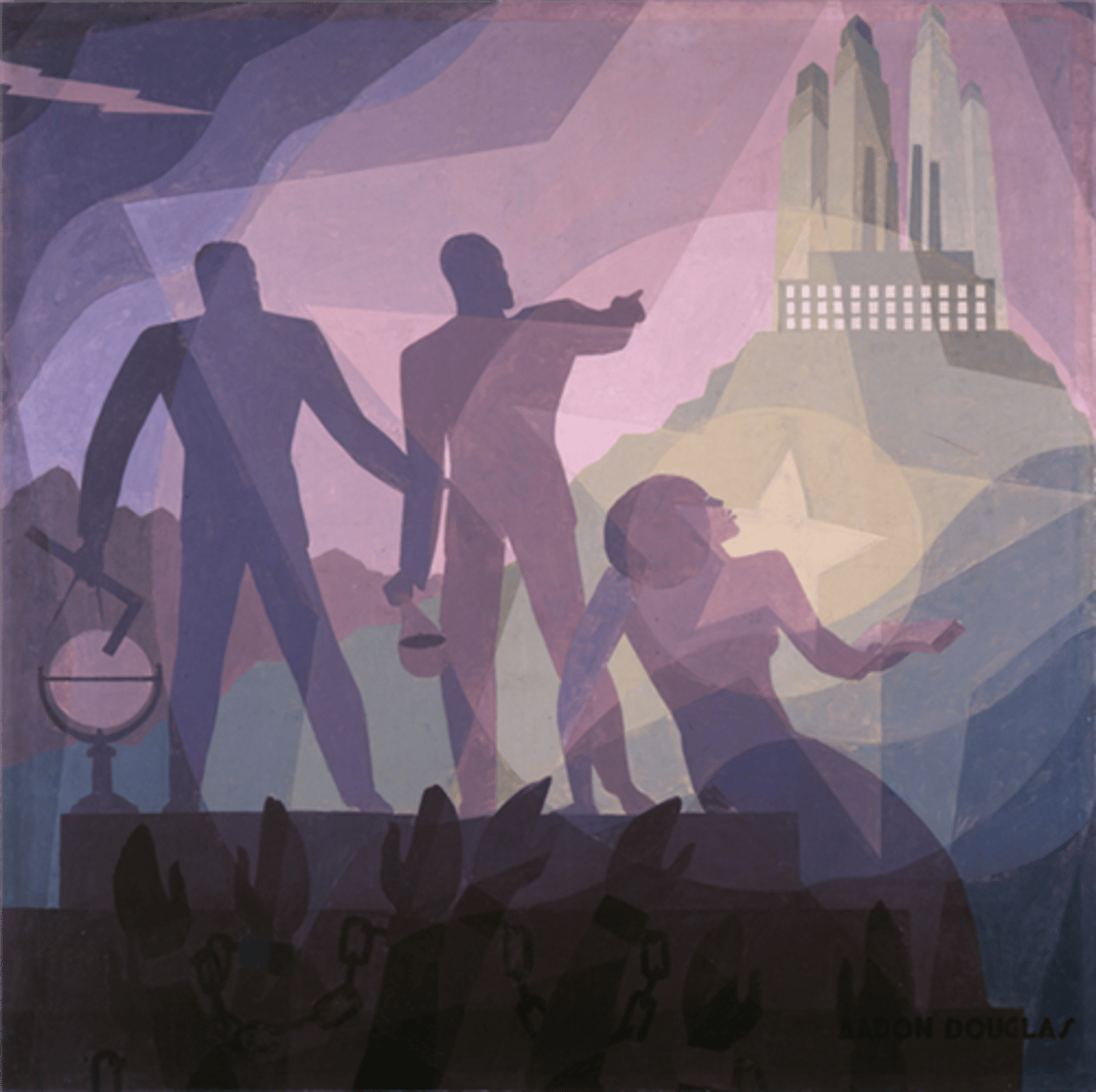
Aaron Douglas: Aspirations
Harlem Renaissance
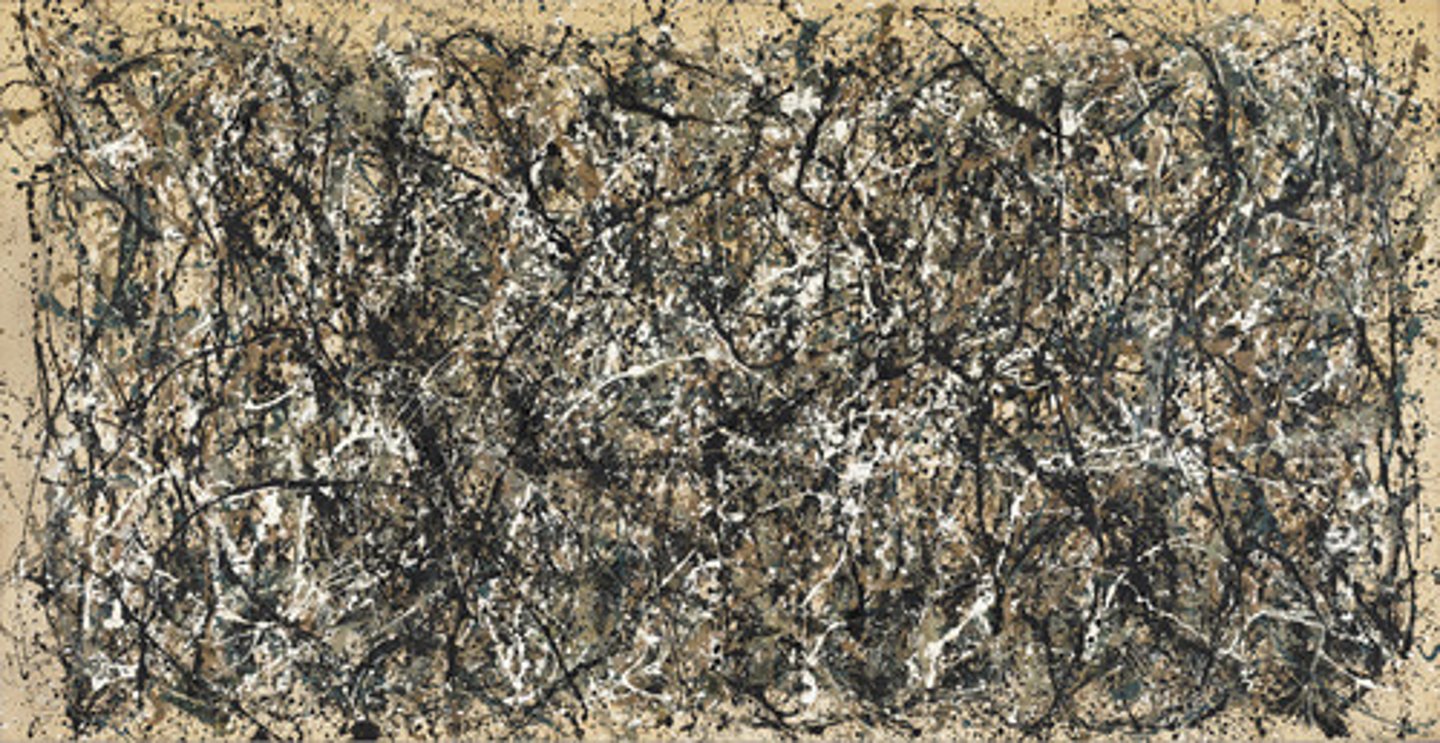
Jackson Pollock: One, Number 31
Abstract Expressionism
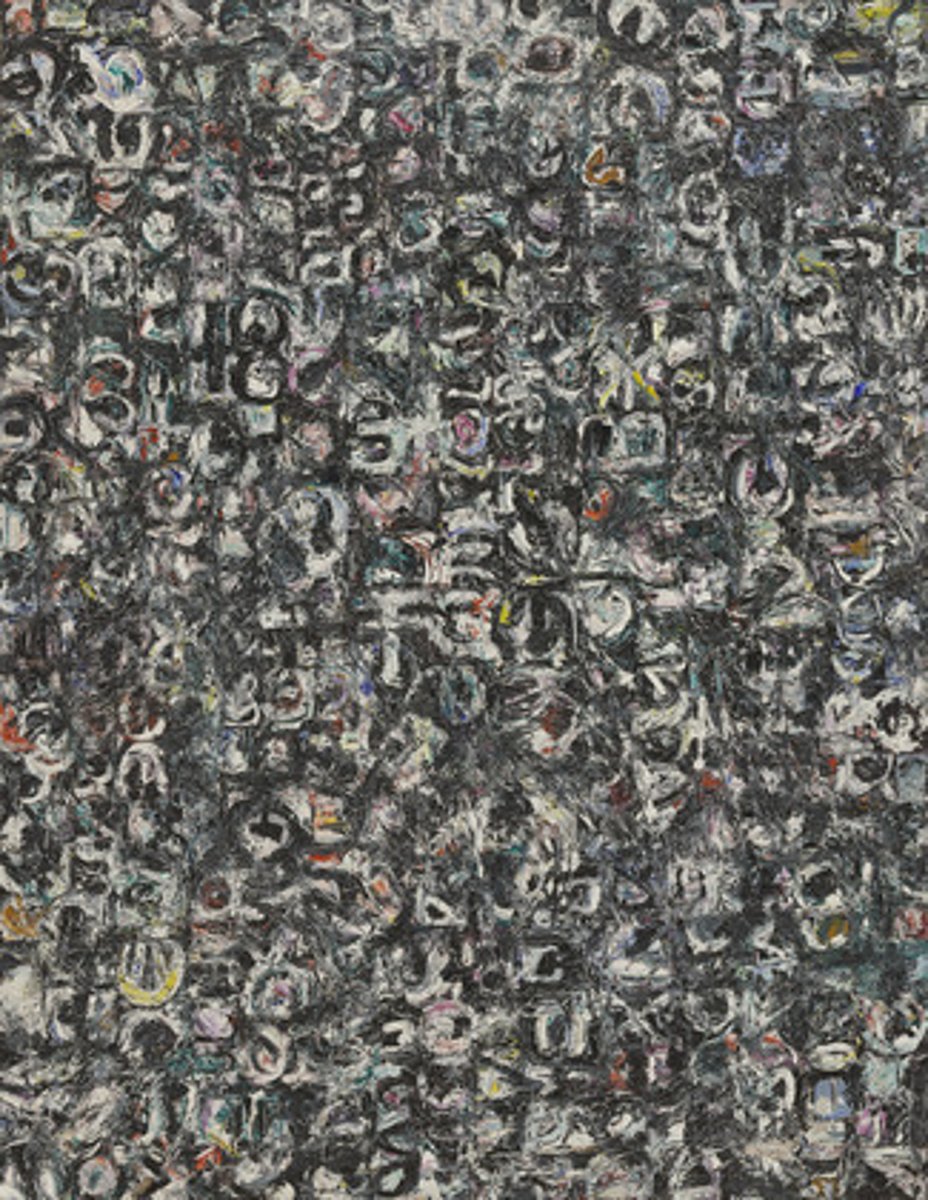
Lee Krasner: Abstract No. 2
Abstract Expressionism
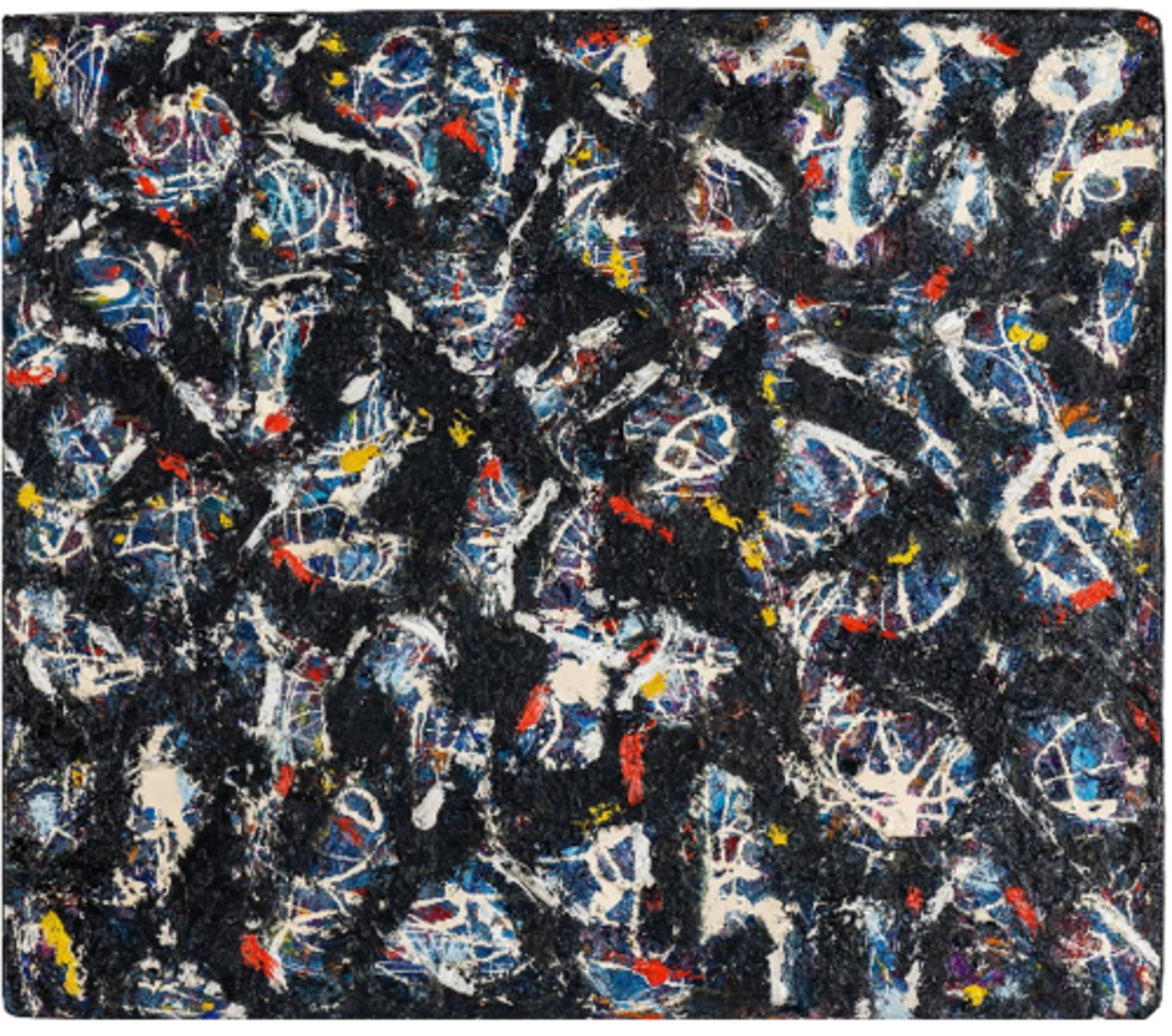
Lee Krasner: Untitled, 1949
Abstract Expressionism
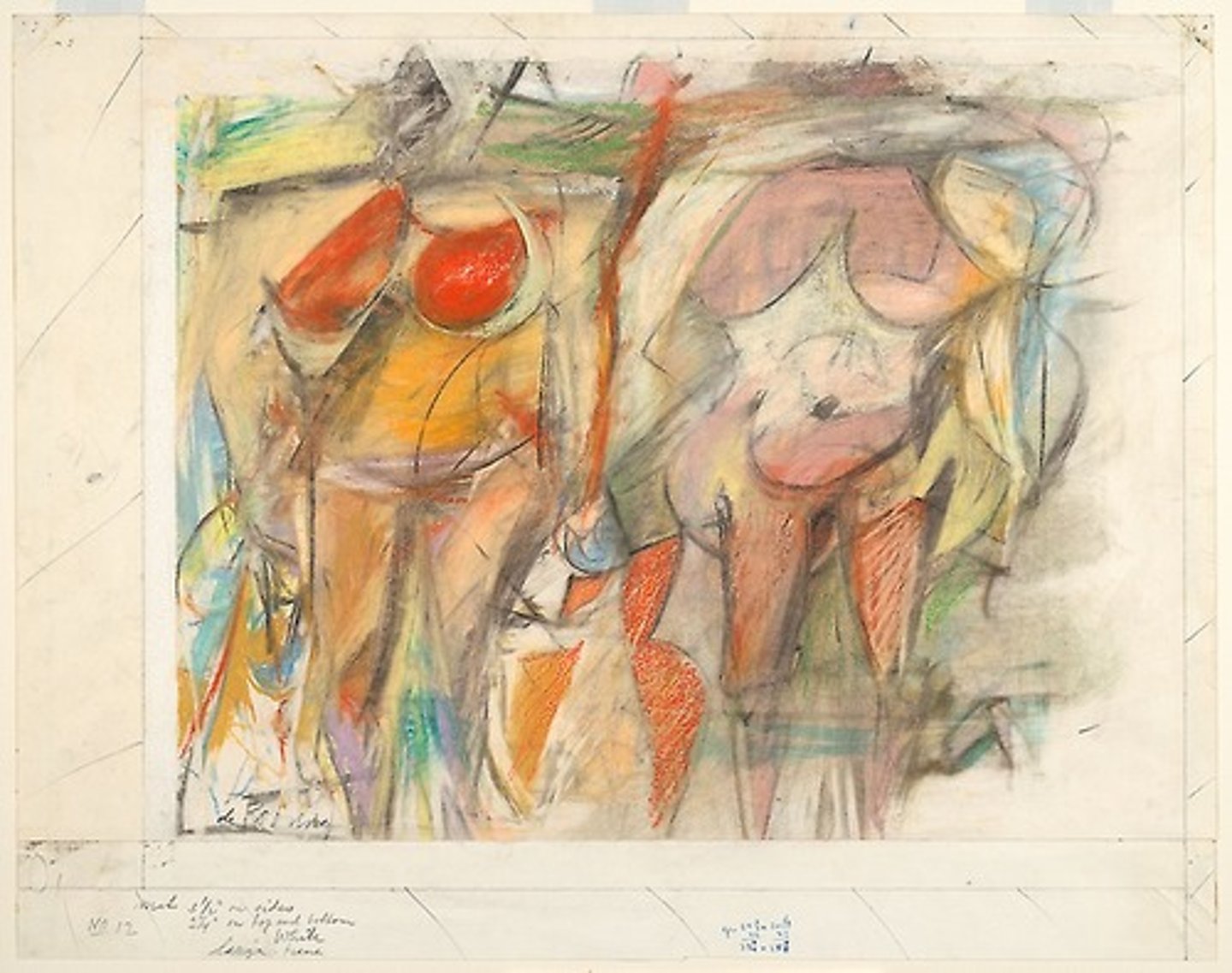
Willem de Kooning: Two Women's Torsos
Abstract Expressionism
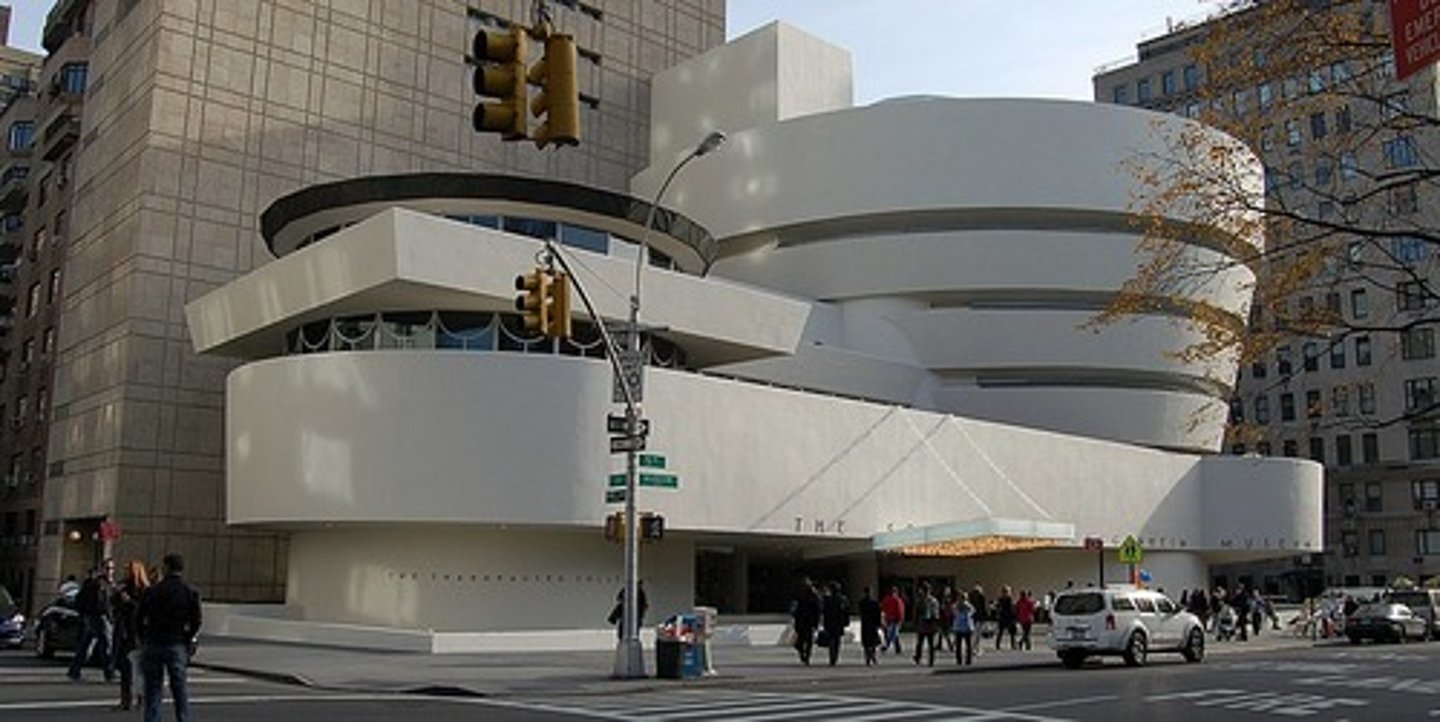
Frank Lloyd Wright: Guggenheim Museum, New York City
Modern Architecture
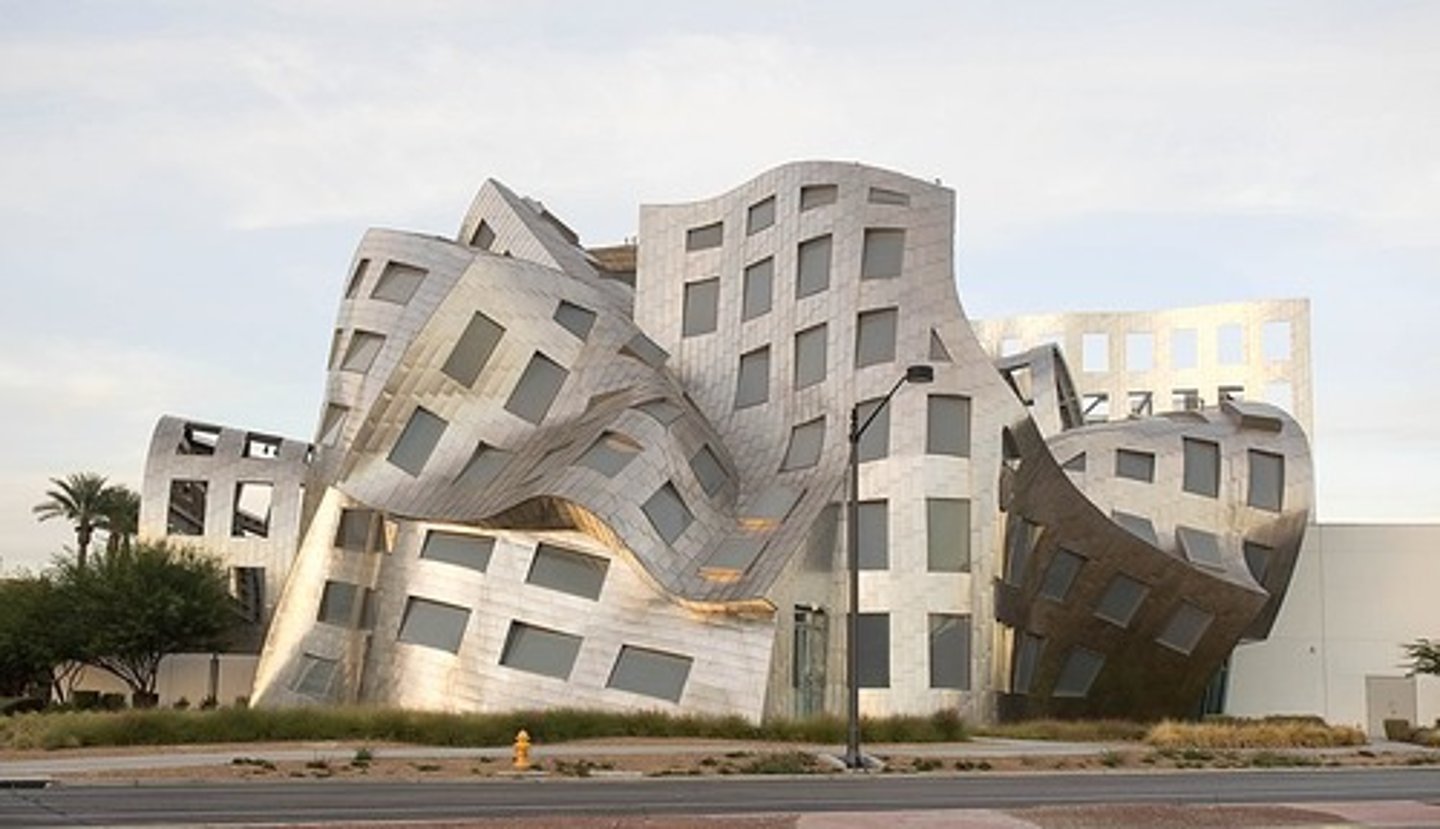
Lou Ruvo Center for Brain Health
Modern Architecture
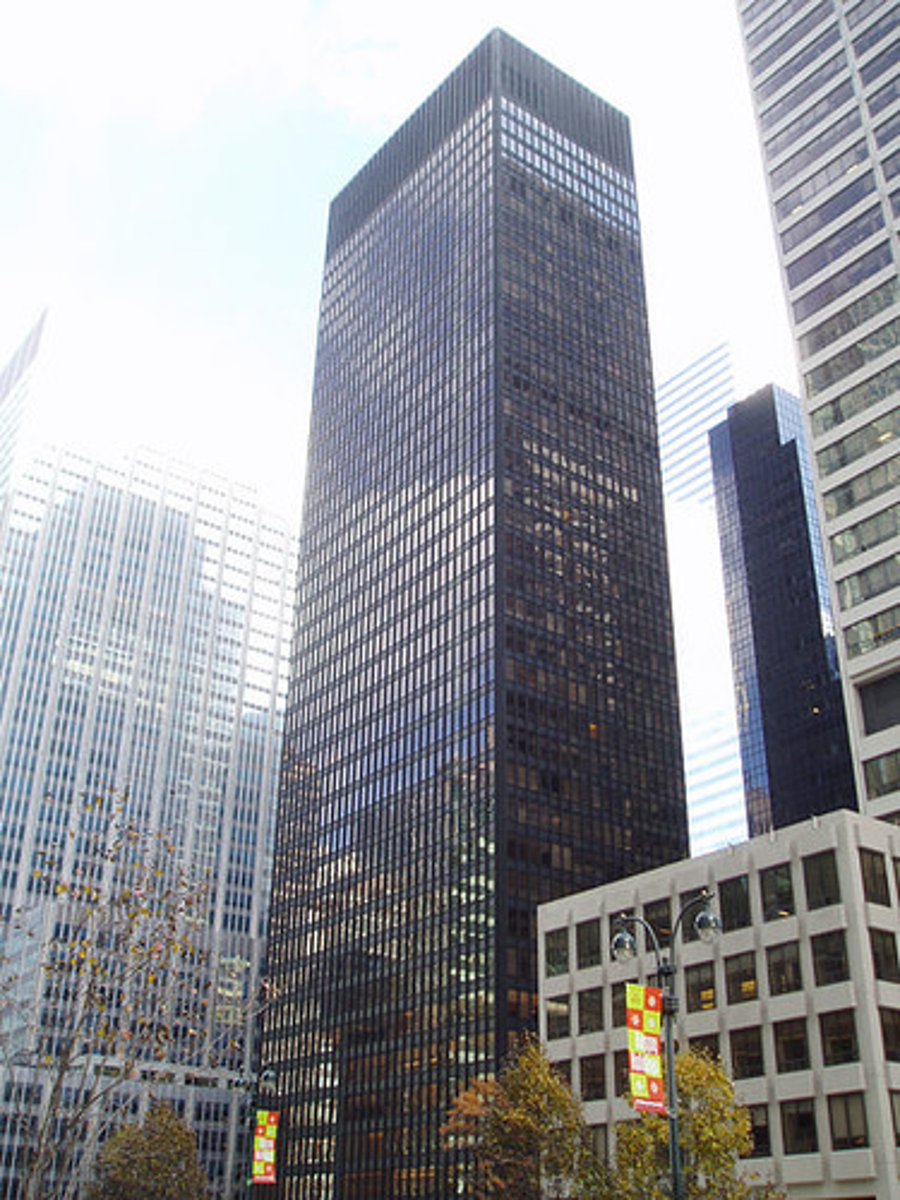
Mies van der Rohe and Philip Johnson: Seagram Building
Modern Architecture
Dorothea Lange: Migrant Mother
Photography
Margaret Bourke-White: The Living Dead at Buchenwald
Photography
Michael Graves: Humana Building
Postmodern Architecture

Frank Gehry: Guggenheim Museum, Bilbao, Spain
Postmodern Architecture
Frank Gehry: Stata Center
Postmodern Architecture
Richard Hamilton: Just What Is It that Makes Today's Homes So Different, So Appealing?
Pop Art
Andy Warhol: Marilyn Diptych
Pop Art
Claes Oldenburg: Soft Toilet
Pop Art
Claes Oldenburg: Dropped Cone
Pop Art
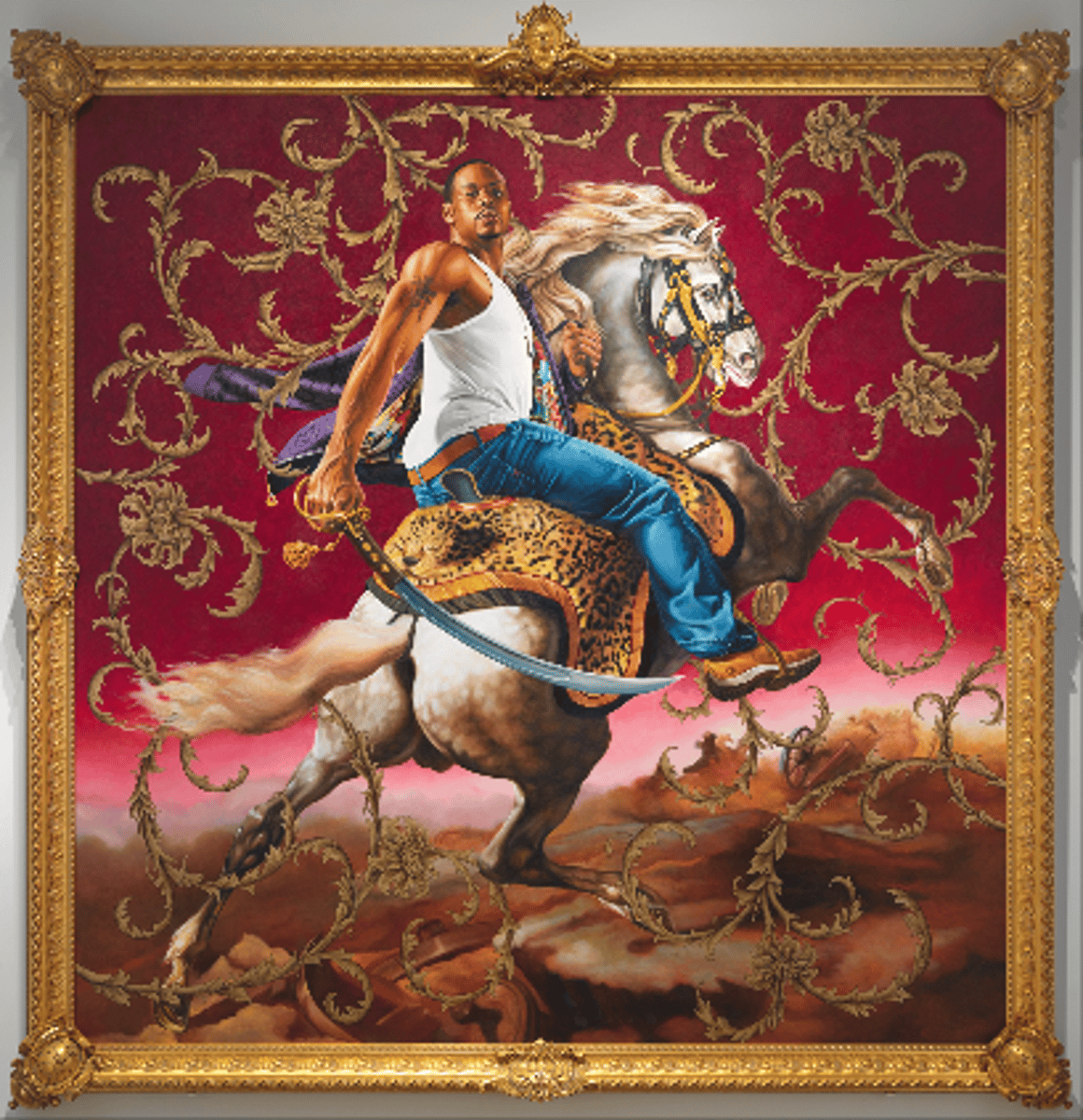
Kehinde Wiley: Officer of the Hussars
Postmodern Art
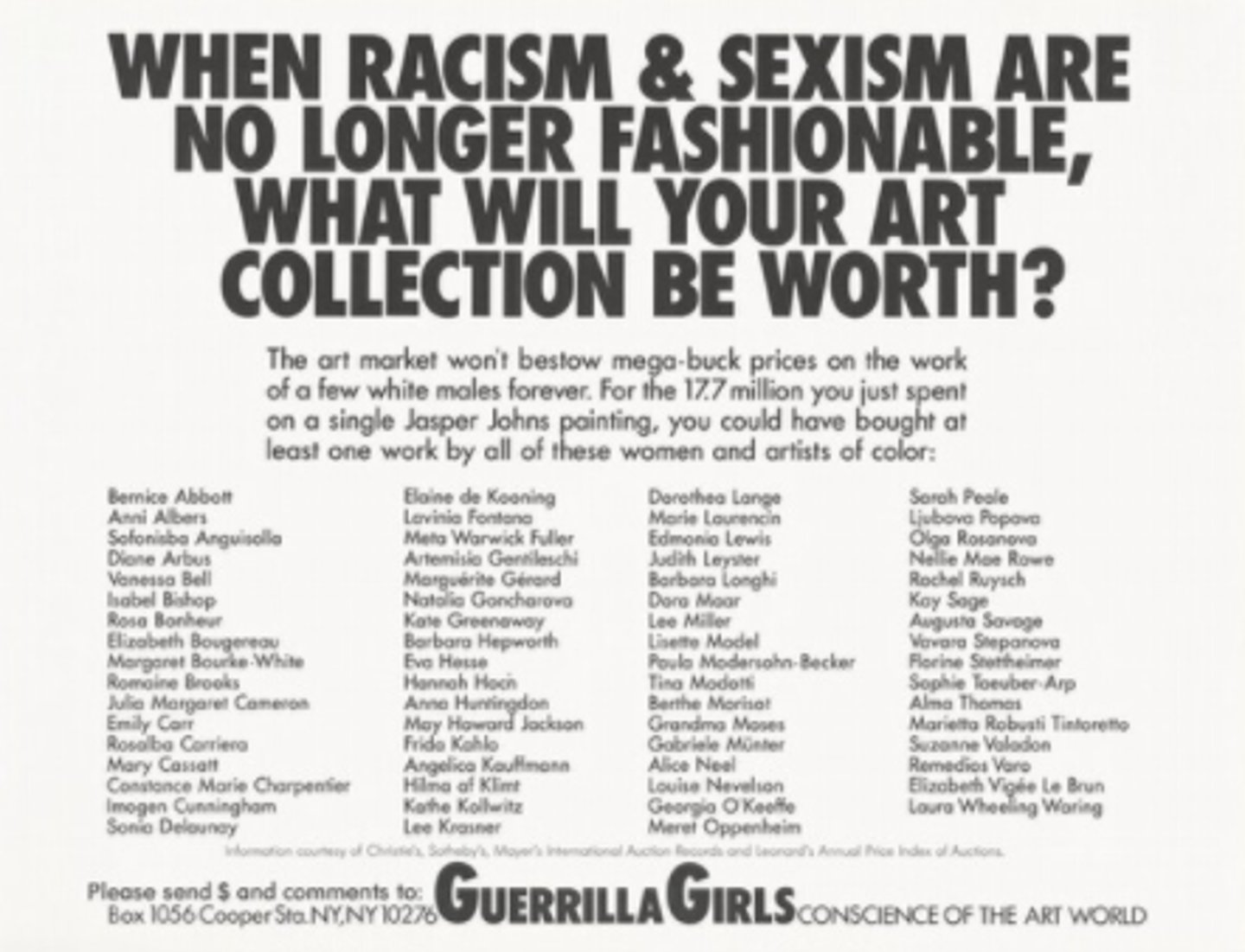
Guerilla Girls: When Racism and Sexism Are No Longer Fashionable, What Will Your Art Collection Be Worth?
Postmodern Art
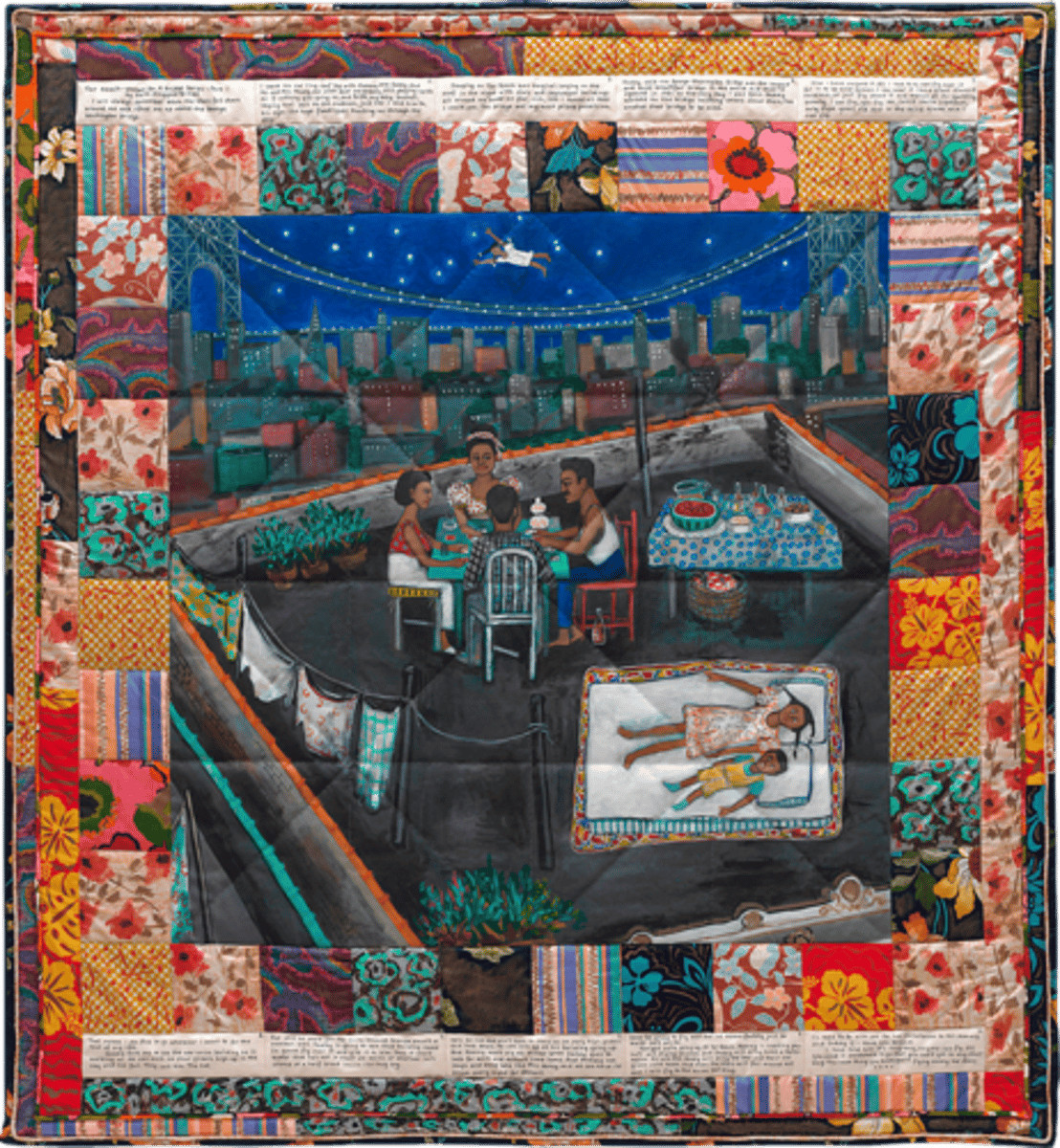
Faith Ringgold: Tar Beach #1
Postmodern Art
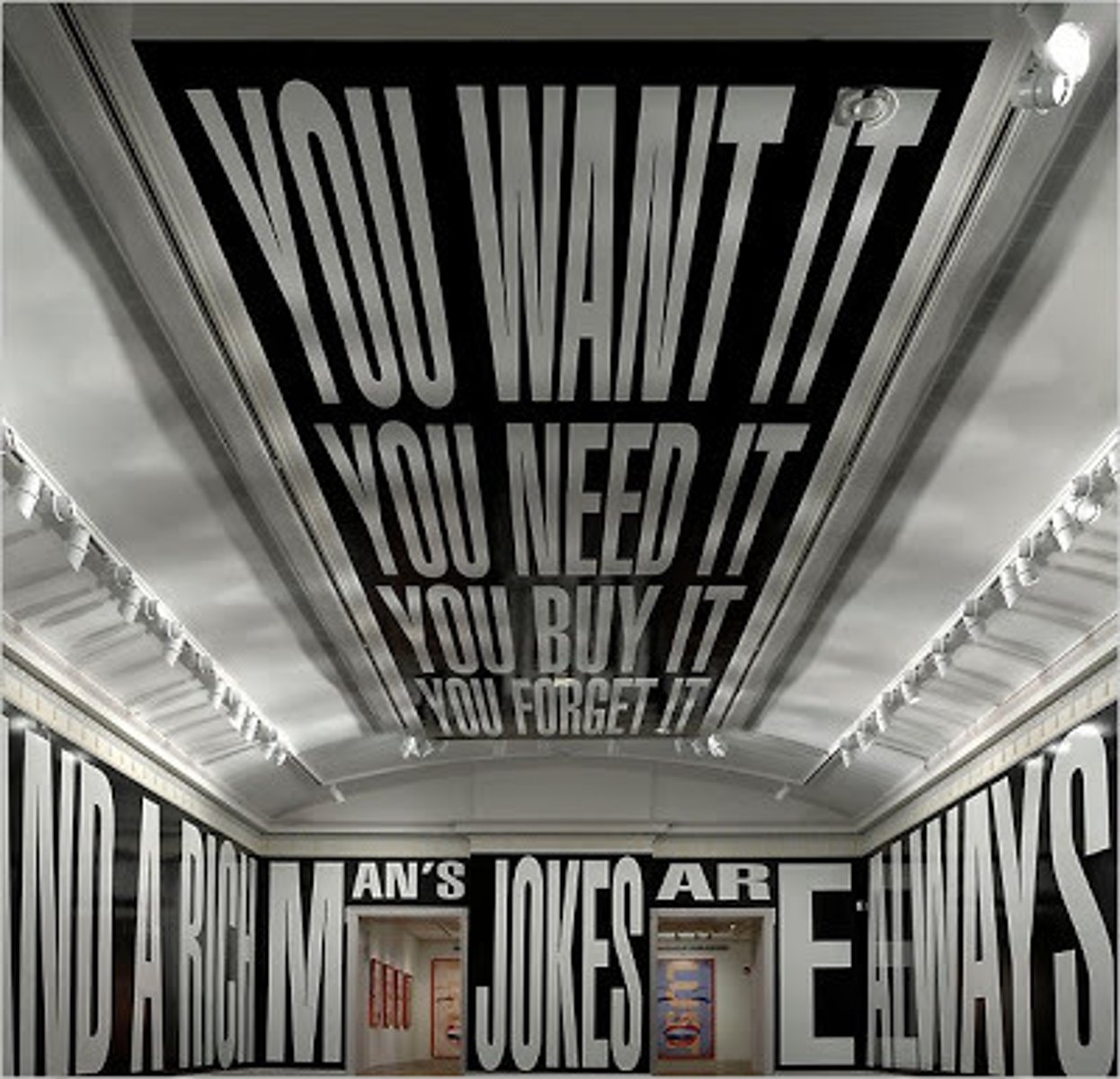
Barbara Kruger: Untitled
Postmodern Art
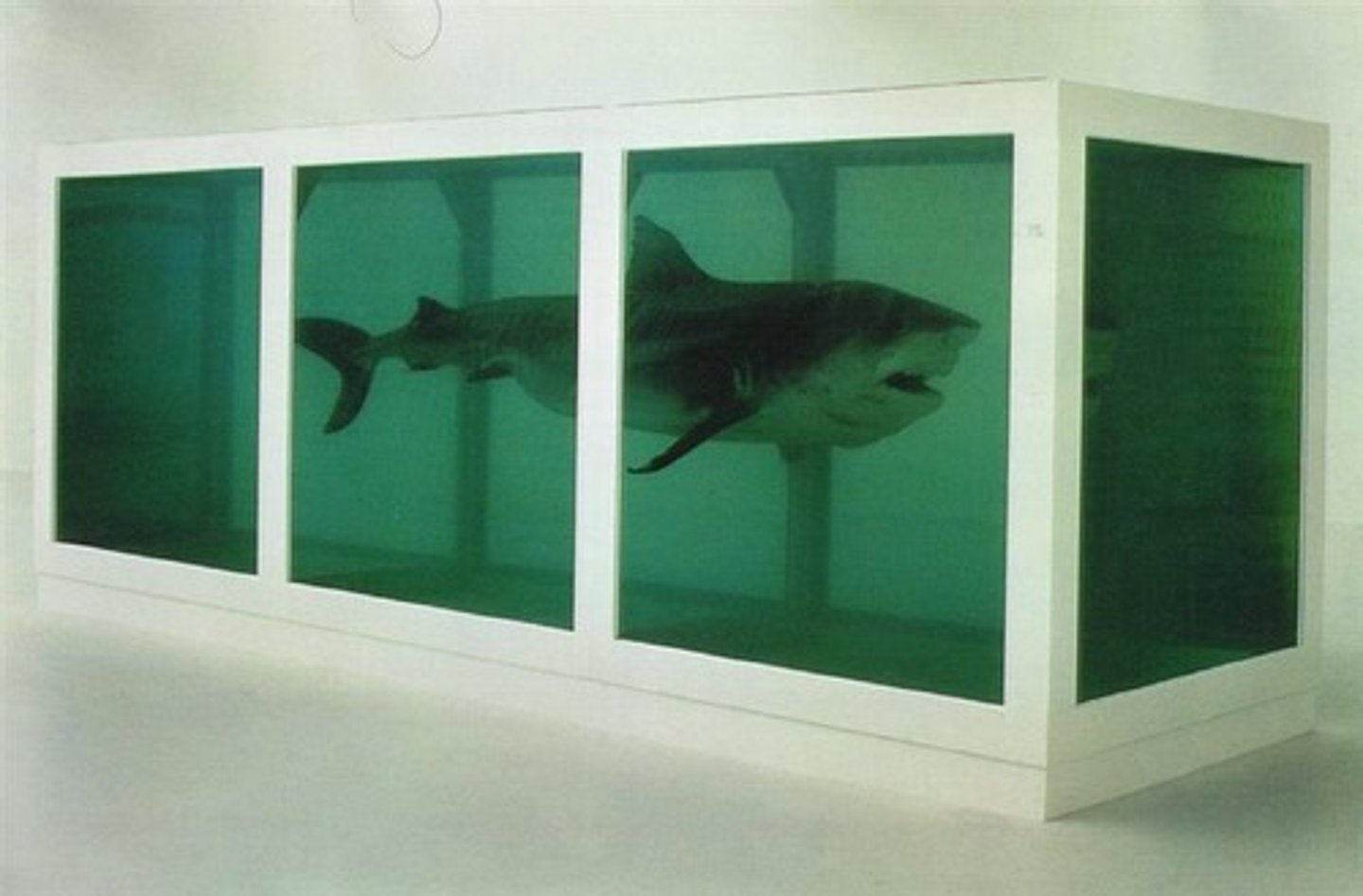
Damien Hirst: The Physical Impossibility of Death in the Mind of Someone Living
Postmodern Art
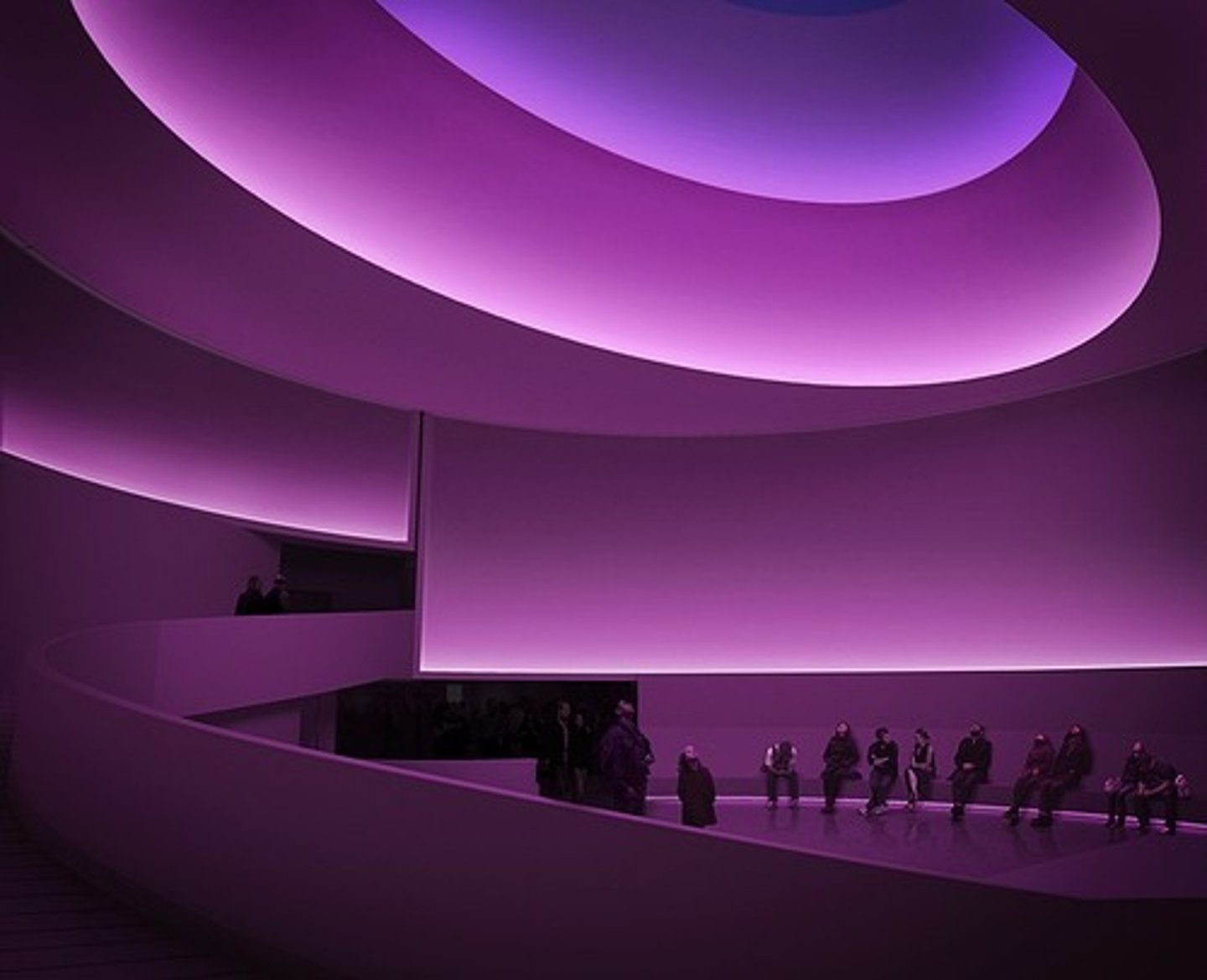
James Turrell: Aten Reign
Postmodern Art
Robert Smithson: Spiral Jetty
Postmodern Art