2: axial v refractive ametropia .
 Call Kai
 Learn
Learn Practice Test
 Spaced Repetition
 Match
Match Flashcards
 Knowt Play
1/26

There's no tags or description
Looks like no tags are added yet.
Name | Mastery | Learn | Test | Matching | Spaced | Call with Kai |
|---|
No analytics yet
Send a link to your students to track their progress
27 Terms
axial vs refractive ametropia & simulating refractive error in emmetropic eyes
axial length
the distance between the anterior and posterior poles of the eye
anterior pole
the point in the anterior surface of the cornea which constitutes the summit (located at the intersection of the conrea with the geometrical axis of the eye #
its the highest point on the front of the surface of the cornea . geometrical axis is an imaginary straight line that runs right through the centre of the eye from front and the back.
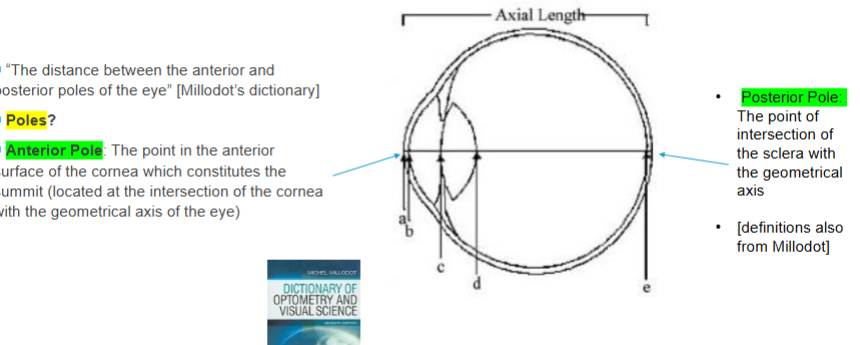
posterior pole
the point of intersection of the sclera with geometrical axis
why does a myopic eye focus light from a distant object in front of the retina
because the myopic eye is too powerful ( has too much converging power )
diverging lens is used for myopia correction so like concave lens
will accomodation help to clear the image of a distant object in a myope
no, as accom when its engaged increases the power of the eye
why is light focused in front of the retina
because the eyes optical power is too strong or eyeball is too long, light rays coming from distant objects bend too much as they pass cornea and lens
as a result they come to focus before they reach retina instead of on the retina
possibility reason relates to the optical components of the eye e.g refractive and axial myopia
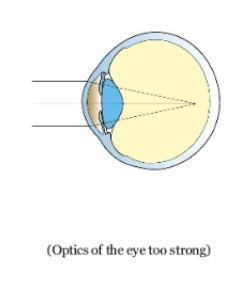
what is refractive myopia
optics of the eye too strong but length is normal
can cause cornea to be more curved and a denser lens
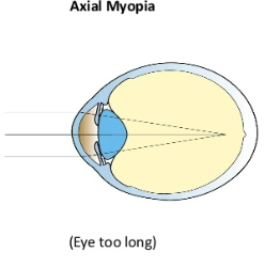
axial myopia
eye is too long even if the cornea and lens bend light normally the retina is further back so image focuses in front of it
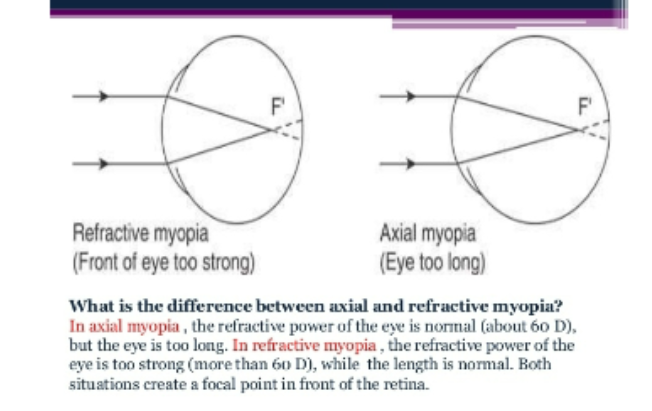
refractive vs axial
refractive is much less common, myopic eyes tend to be more long than big
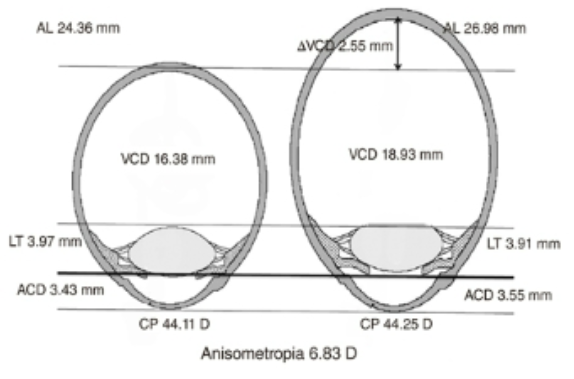
can see that one eye is much longer than the other, but is not bigger in all dimensions
its the vitreous chamber depth VCD which is too big in the longer eye
there is anisometripa as heres a big diff in refractive error between the eyes
why do hyperopic eyes focus light behind the reitna
its because a hyperopic eye is too weak, not enough converging power so converging lens is used to correct it e.g convex lens
will accom help hyperopes
yes it will help clear the image of a distant object as accom when engaged increases the power of of the eye
when accom is reaxed why does image focus behind the retina
hyperopia occurs when eyeball is too short or eyes refractive power is too weak.
means light rays dont converge enough so rays would meet behind the retina if retina werent there. focal point is beyond the retina
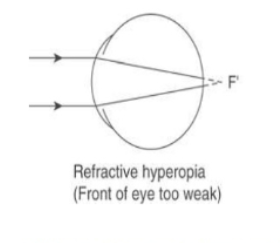
refractive hyperopia
front of the eye is too weakso D is less than 60#
eye size is okay
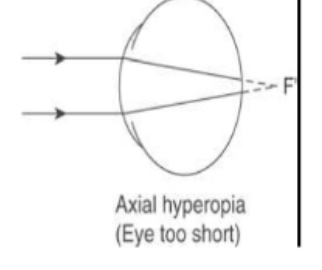
axial hyperopia
refractive components focus light where the retina should be
but eye length is too small
eye too short so light rays converge fruther from the retina as retina i scloser than where the light rays naturally converge
what are the mian refractive elementa in the eye
cornea and the lens
cornea power
accounts for 2/3 of the power of the eye i.e +40 D of the total approx power of the eye Fe (Power of the eye) is +60D
lens power
accounts for the other +20 D
so in refractive myopia, Fe > +60 D and in refractive hyperopia Fe < +60 D
ametropia is +60D
emmetropic eyes
form a clear retinal image of dtant targets whilst accomodation is relaxed
but we can simulate ametropia in an emmetropic eye by putting lenses in front of them. means we can temporarily create a refractive error using lenses
seful for teaching and experiments and see what its like to have myopia or hyperopia
similarilt we can simulate ametropia in an eye that is porperly corrected by placing lenses in front of the eye
if we place a +1.00 DS lens in front of an emmetropic eye what ind of ametropia will be generated
a plus convex lens converges light rays before they eynter the eye making light focus sooner thsn it naturally would
means focus now falls behind the retina as light converges later
hyperopia as now the eye has to increase lens power to bring the image forward onto the retins
if we place a -1.00 DS lens in front of a fully corrected myopic what kind of ametropia is this
myopic foxues light in front of the retina a corrective lens spreads the light so it focuses on the retina
minus lens diverges incoming light rays before they enter the eye making rays less converging
light rays now focus behind the retina as the eye is used to stronger rays from the corrective lens
so eye is underpowered re;ative to incoming light
hyperopiacreates
refract error: hyperoopia of +1.00 D
what happens when u put a + converging lens in front of an emmetropic eye
image is now formed in front of the retina
distant objects become blurry
plus lenses in front of emmetropes simulate myopia as ligh already converging before they reach cornea
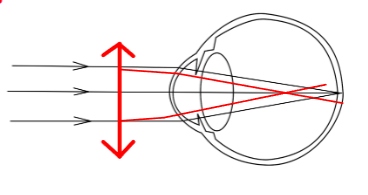
how do we generate myopia in emmetropic eyes
by using a plus lens
a +2,00 DS lens placed in front of an emmetropic eye generates 2 dioptres of myopia , which is corrected with -2.00 DS
Corrected by using a negative lens
what happens when u put a minus diverging lens in front of an emmetropic eye
image is formed behind the retina
called hyperopia
lens spreads/diverges light rays before they enter the eye
rays are now diverging instead of parallel when they reach conrea
eyes normal converging power isnt enough to bring them to focus on the retina so they fall behind the retina - light converges later
distat blurry
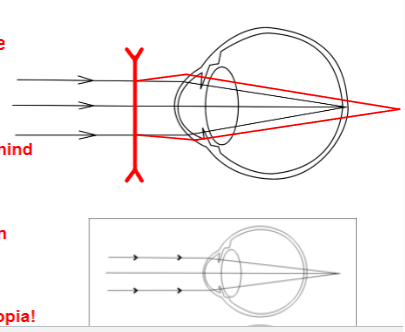
what lens u use to simulate hyperopia
minus lens
plus used to correct it
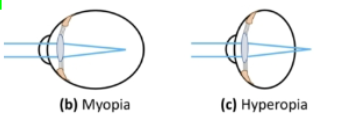
are these refractive or axial? are the diagrams showing the eyes viewing at near or at an intermediare distance or far distance? how can u tell ?
this is axial, as the lens shape is normal and corneal curvature is normal
in b eye is too long so light focuses in front of the retina
c: eye is too short so light focuses behind the retina
looking ar far as light incoming is parallel
if looking at something closer than disance, incomming rays would be diverging , so eyes must accomodate to bend diverging rays and focus on retina