C3.4 Electrolysis
 Call Kai
 Learn
Learn Practice Test
 Spaced Repetition
 Match
Match Flashcards
 Knowt Play
1/32

There's no tags or description
Looks like no tags are added yet.
Name | Mastery | Learn | Test | Matching | Spaced | Call with Kai |
|---|
No analytics yet
Send a link to your students to track their progress
33 Terms
Ions in water
H+ and OH-
H+ is attracted to
Cathode
Discharge of H+
2H+ +2e- --> H2
OH- is attracted to
Anode
Discharge of OH-
4OH- --> O2 + 2H2O + 4e-
Discharged at the cathode in solution
Least reactive element
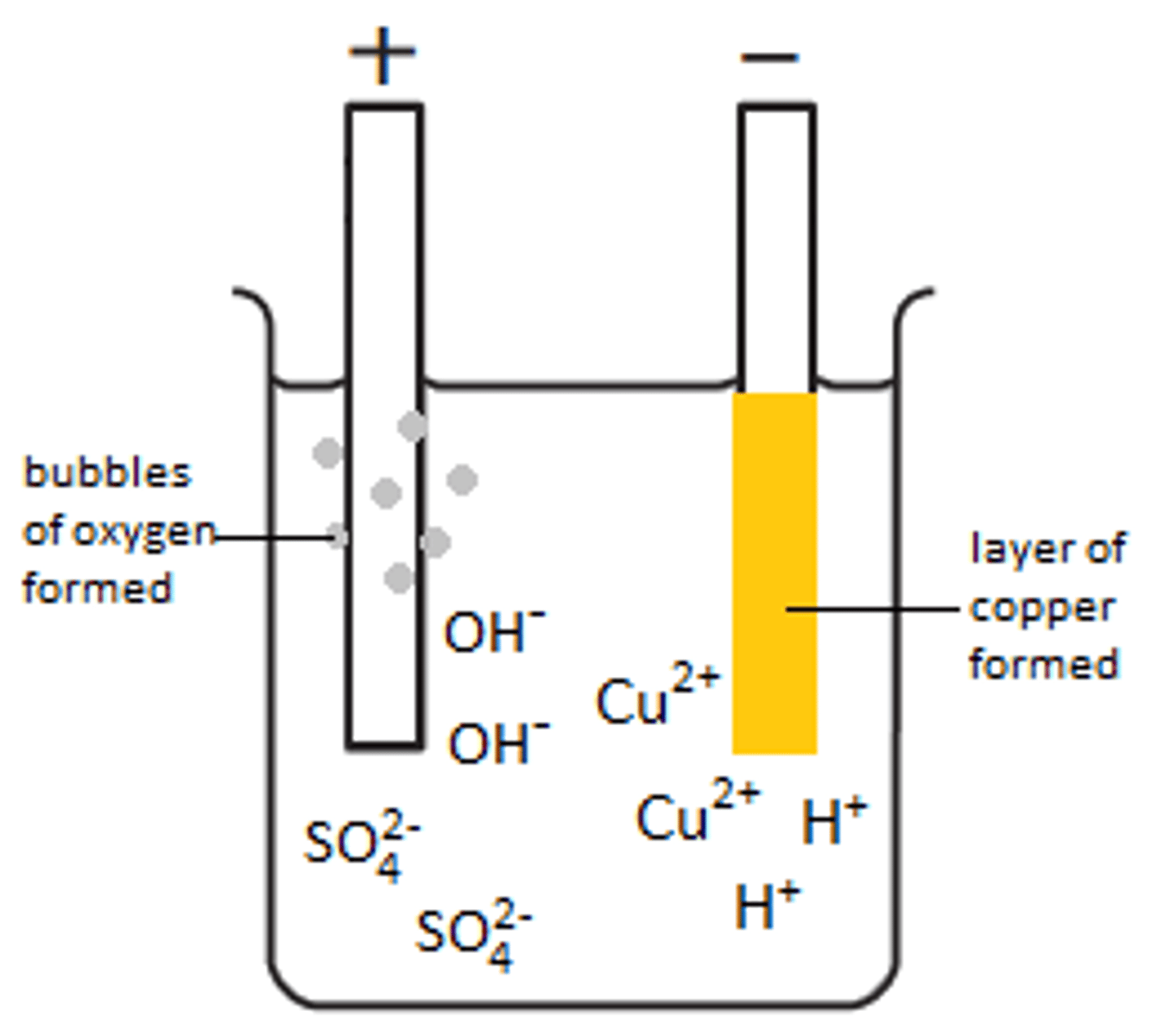
Discharged at the anode in solution
Halide ions, if present, otherwise OH-
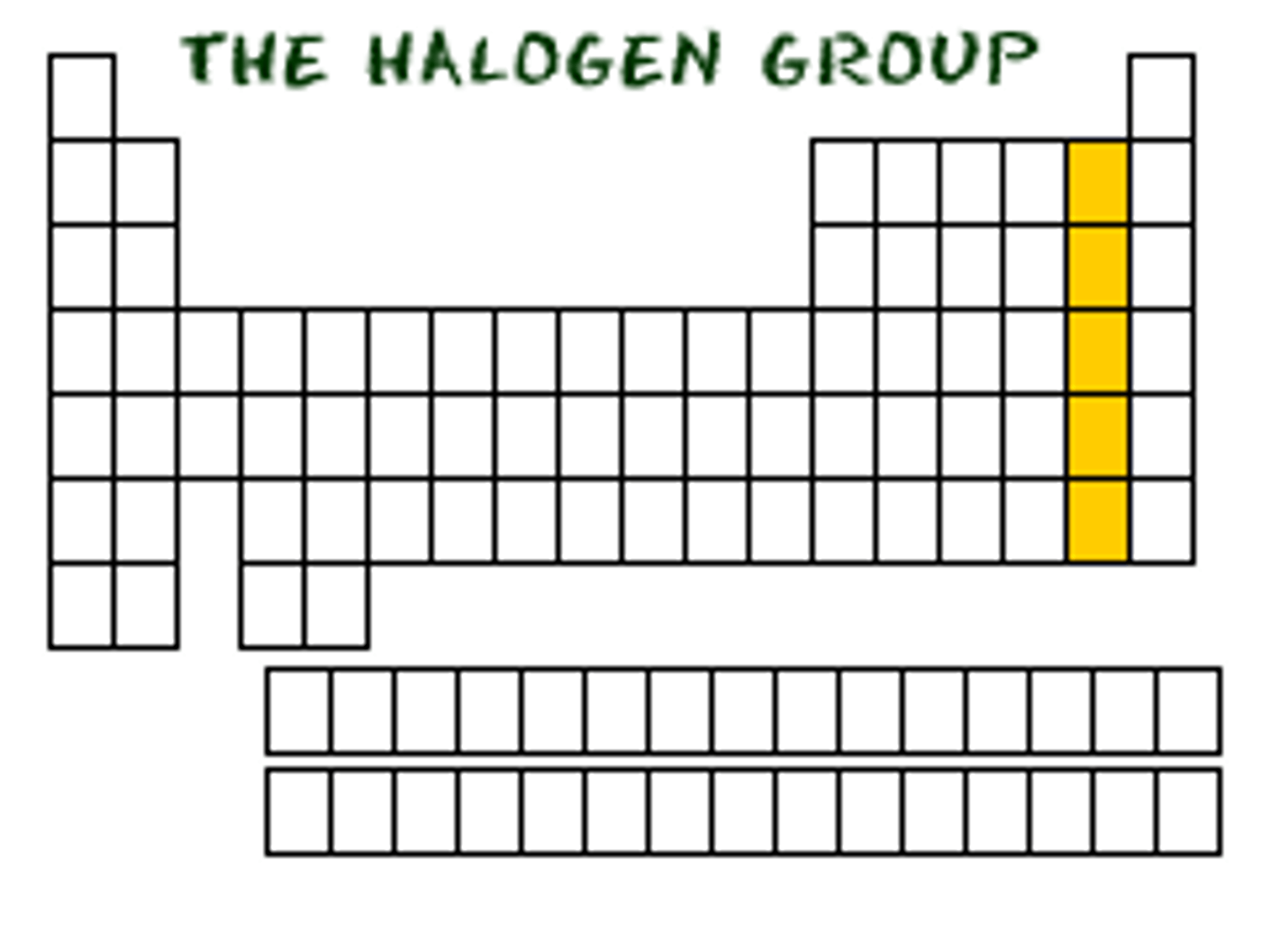
Halide ion
a negative ion formed from a group 7 element
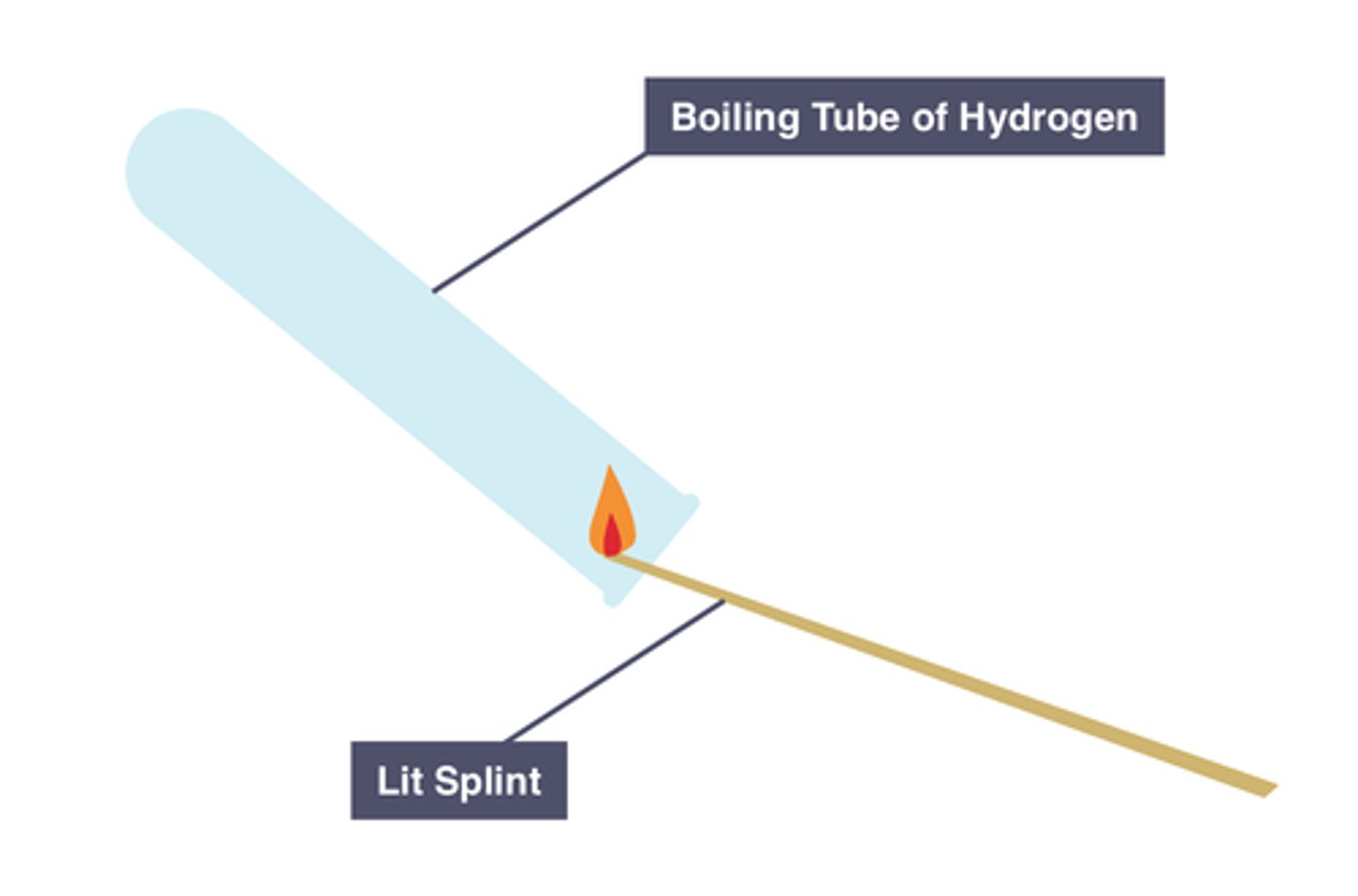
Test for hydrogen
Lit splint produces a squeaky pop
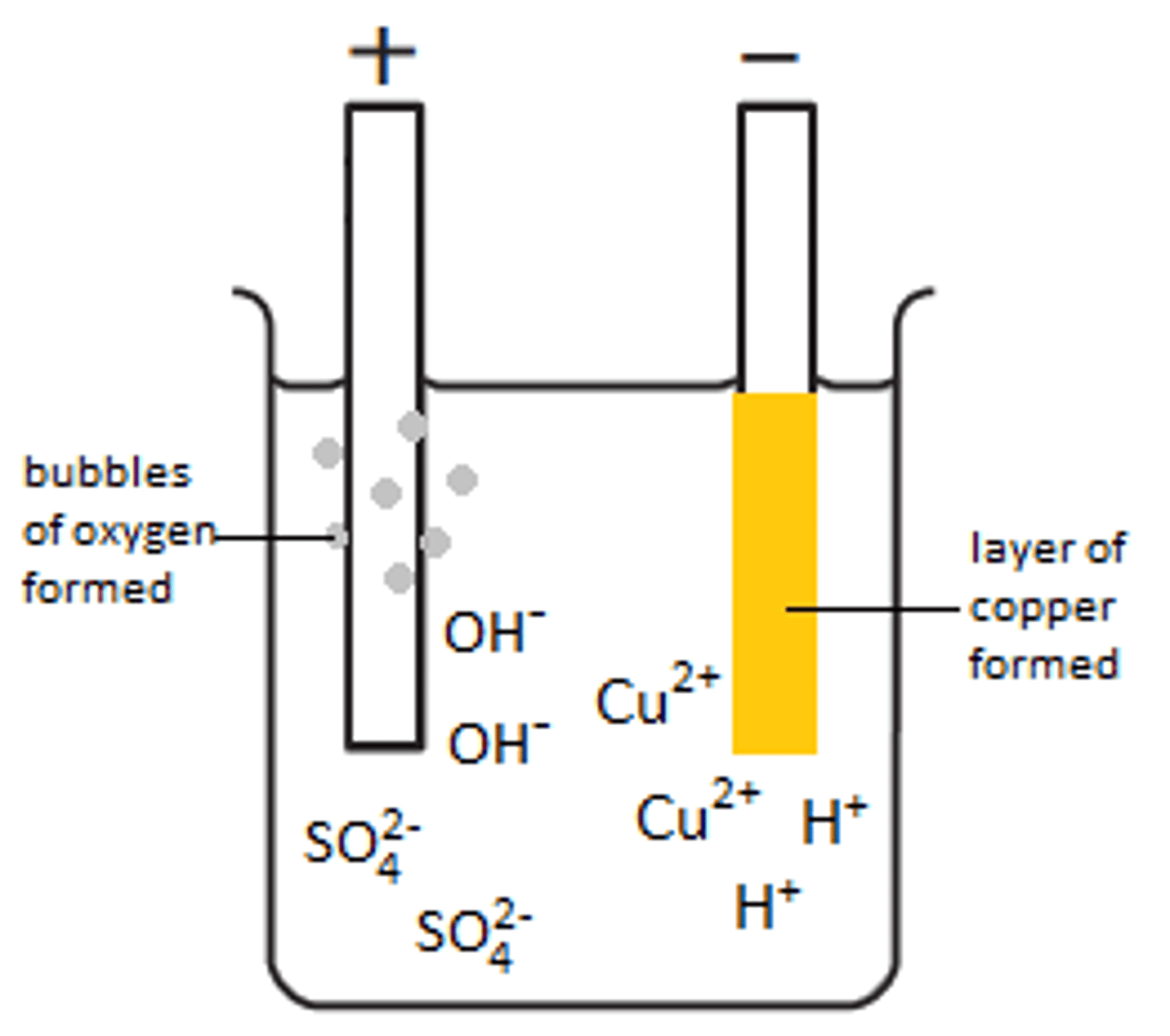
Metals discharged in preference to hydrogen
Copper, Silver, Gold, Platinum
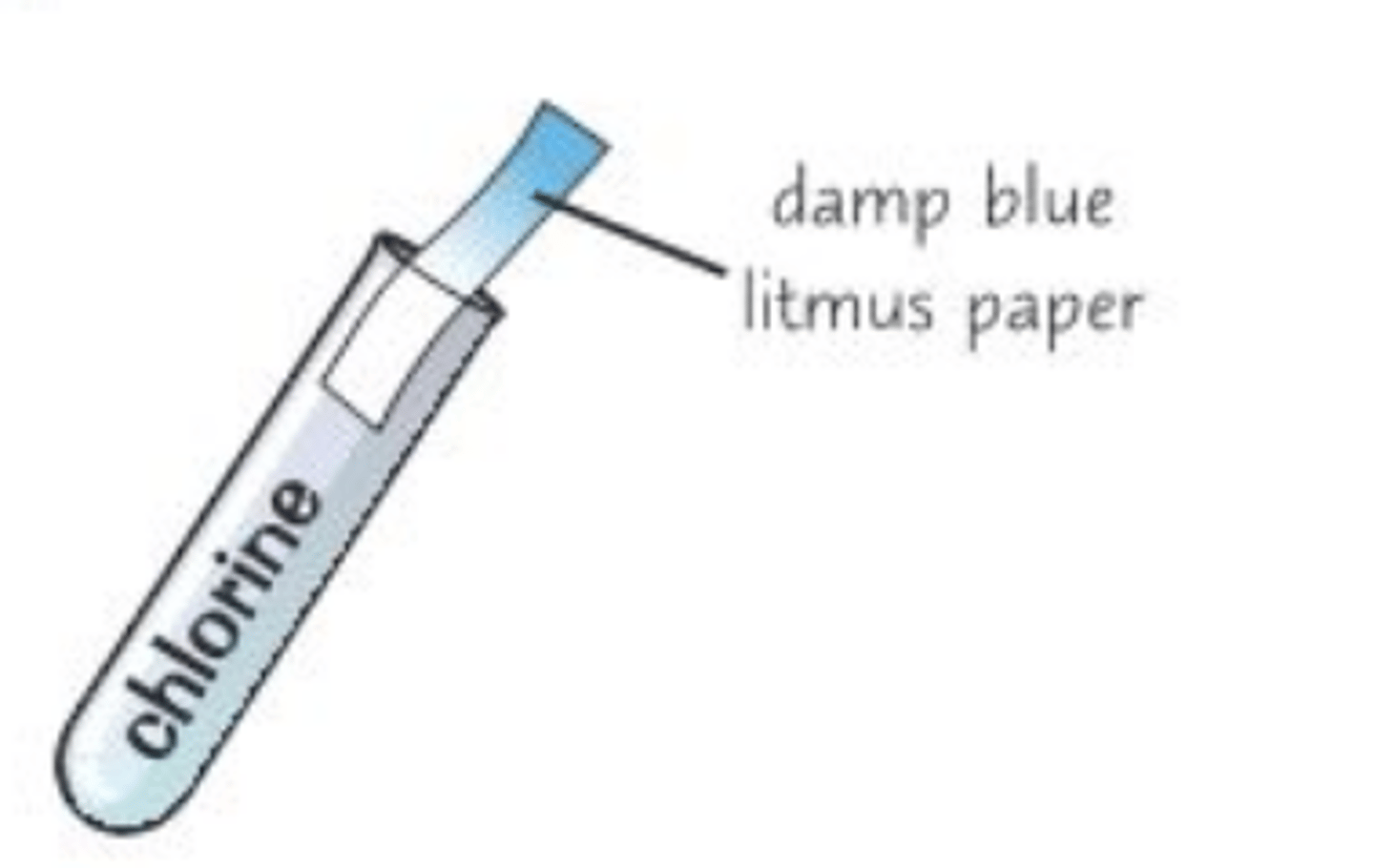
Test for chlorine
Bleaches damp litmus paper
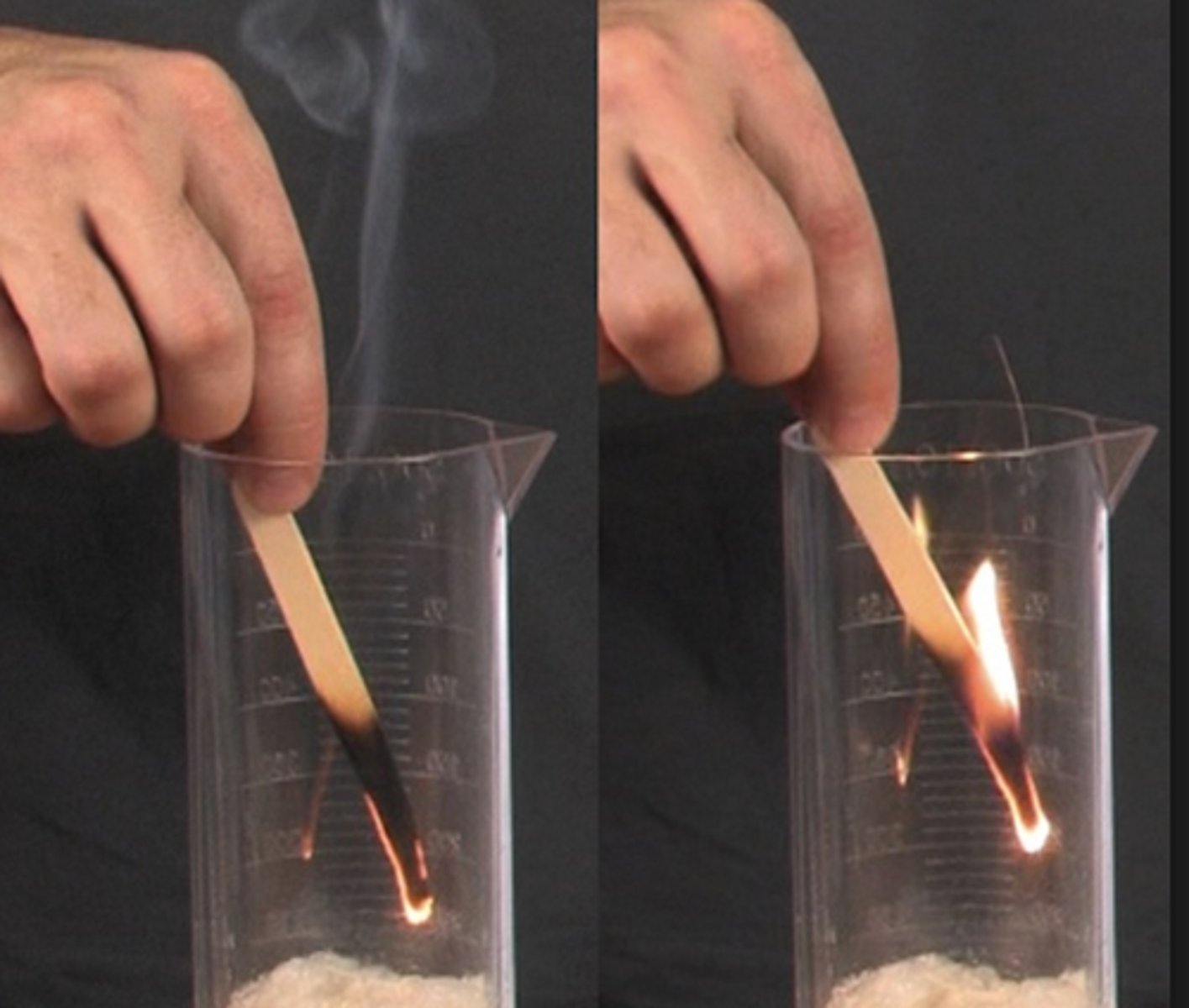
Test for oxygen
Relights a glowing splint
Electroplating
The process of depositing a thin layer of metal on an object using electrolysis.
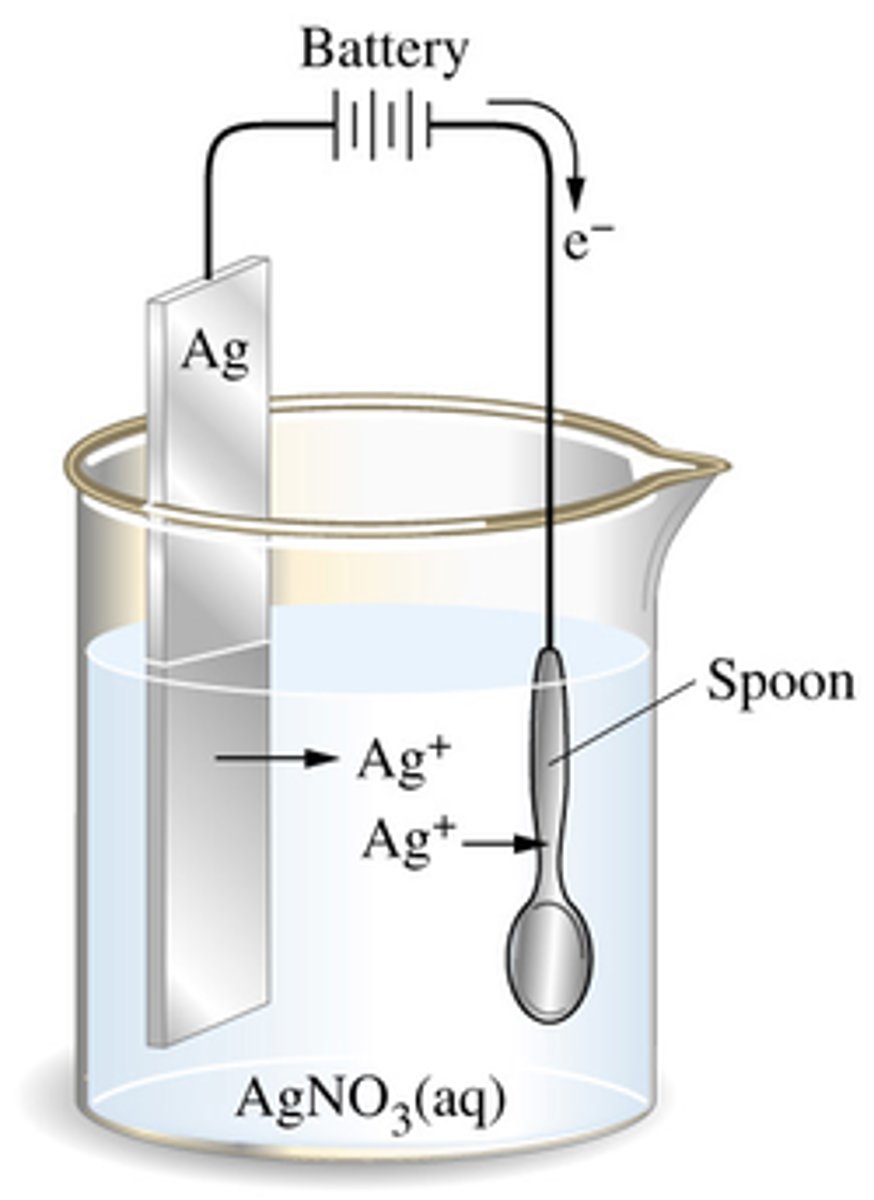
Electroplating cathode
The object to be plated.
Electroplating anode
The metal you want to plate with
Electroplating solution
Ions of the plating metal
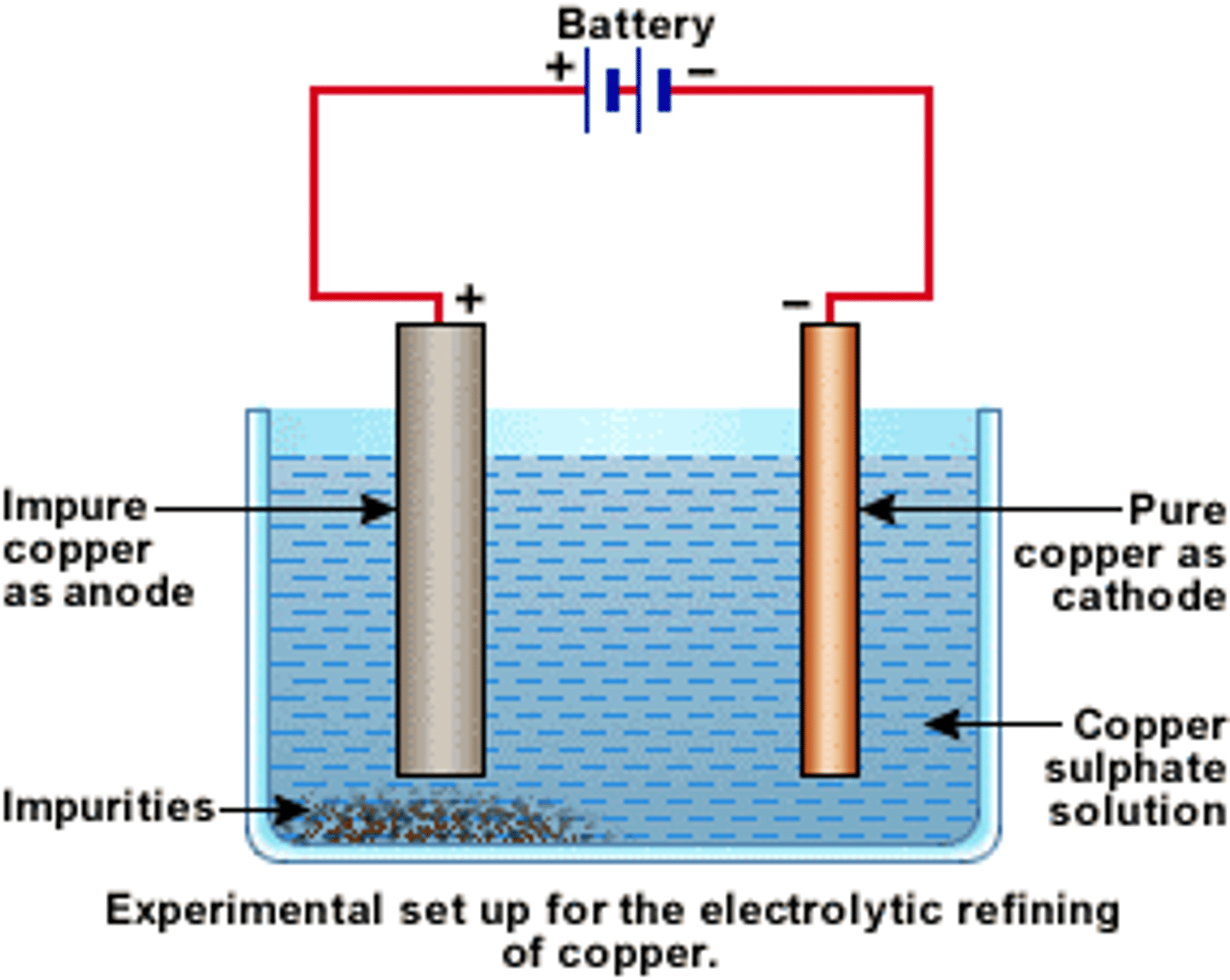
Purifying copper
A form of electrolysis where impure copper is the cathode and pure copper is the anode.
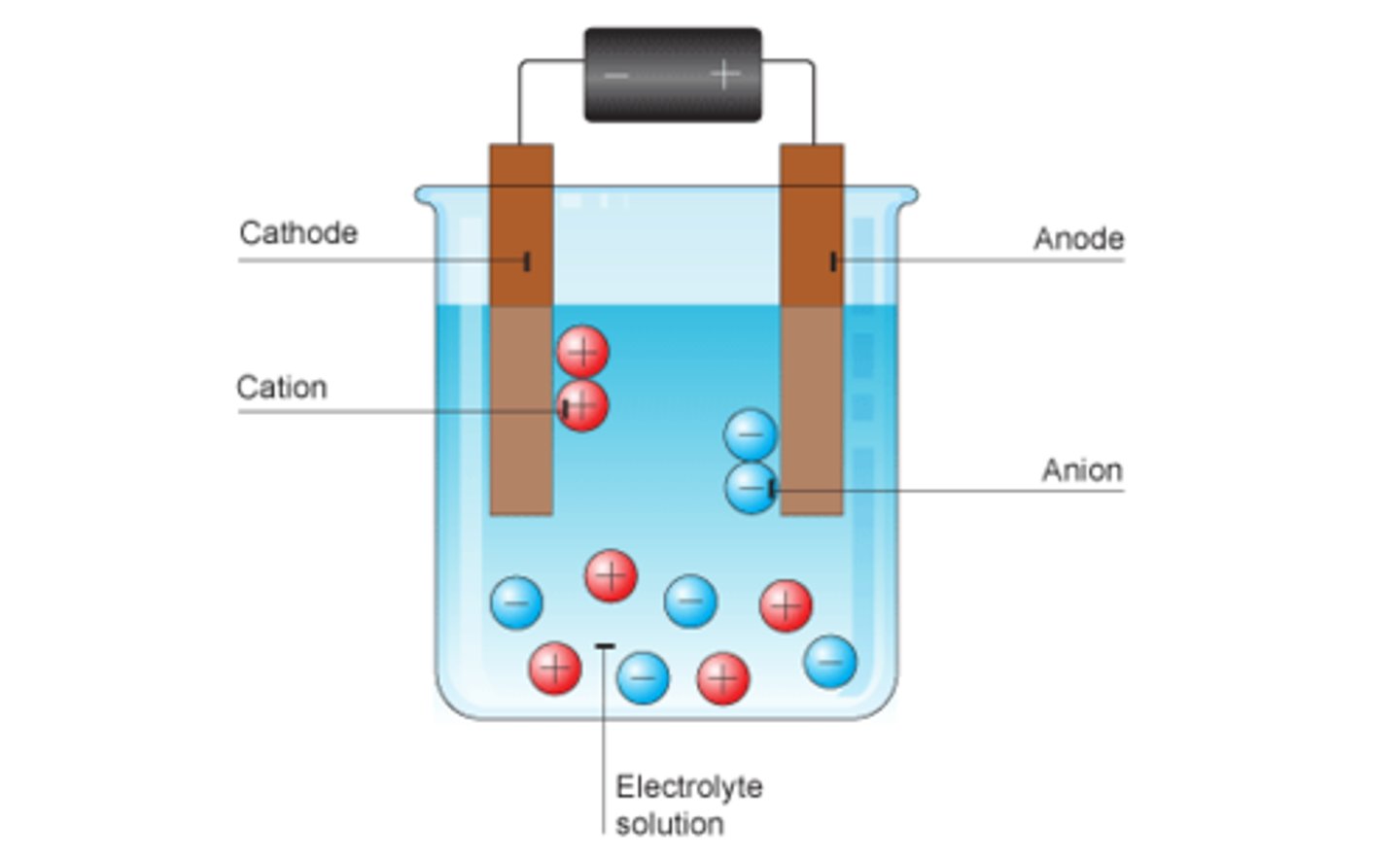
Cathode
Electrode at which reduction occurs
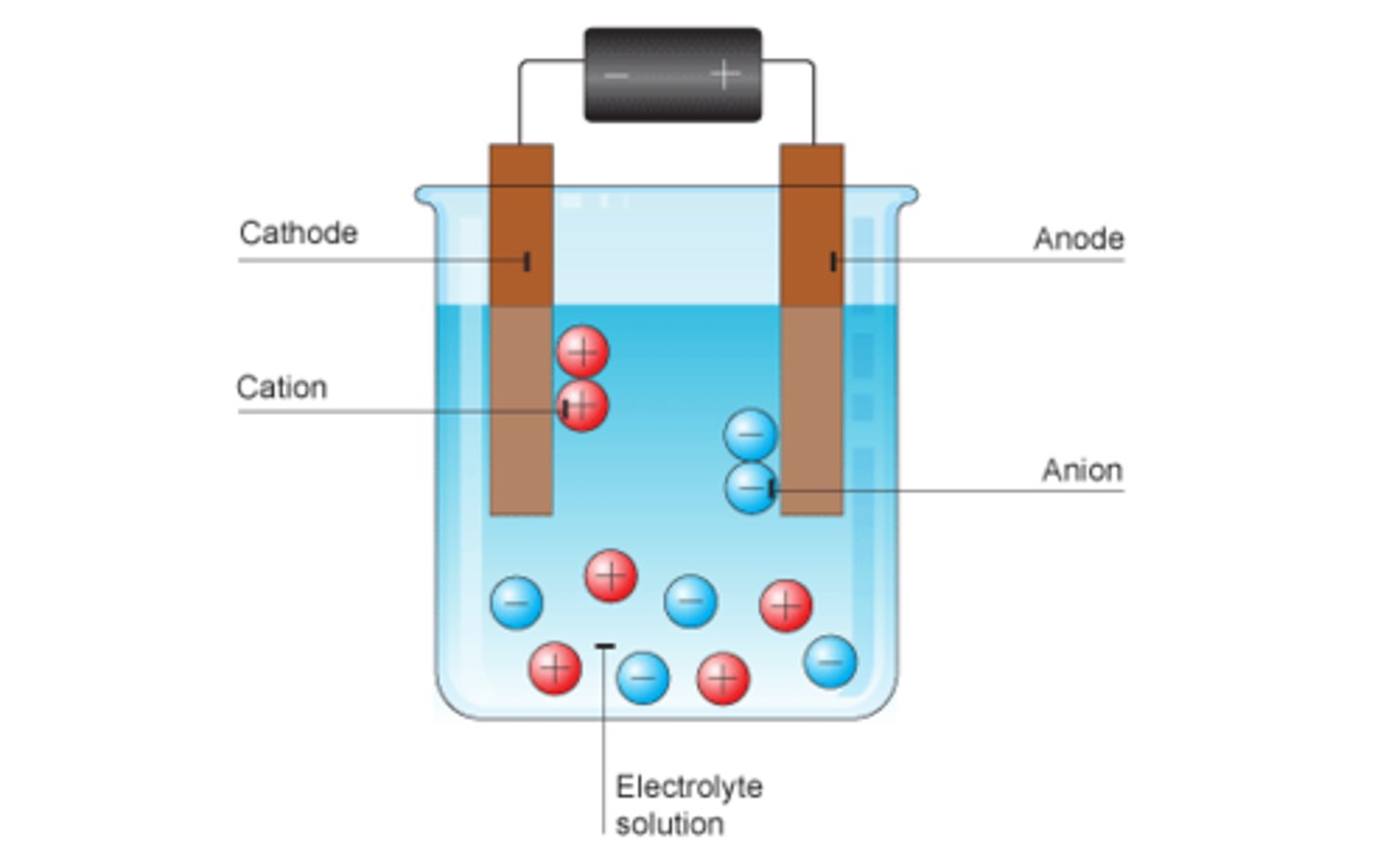
Anode
Electrode at which oxidation occurs
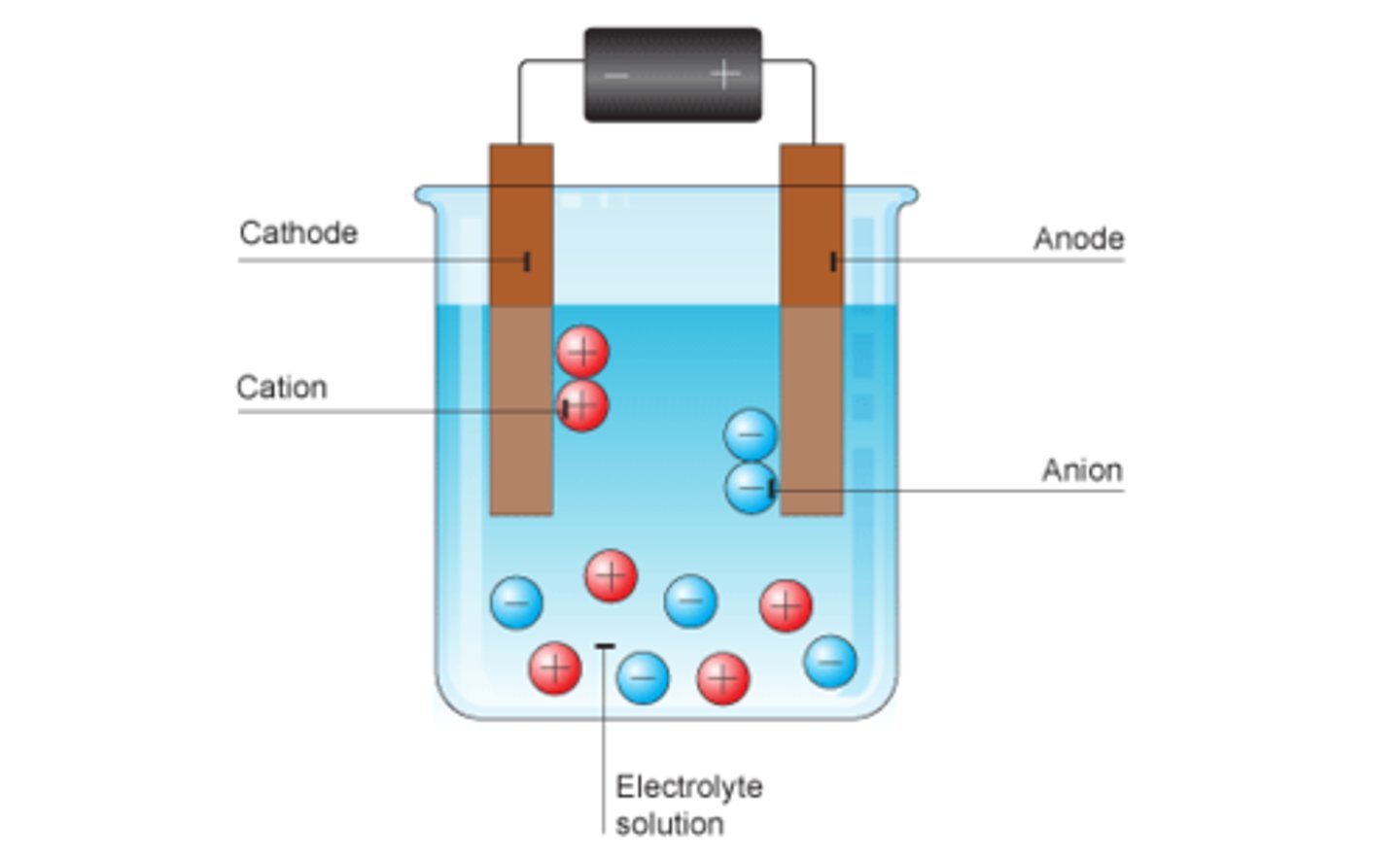
Electrode
A device for conducting electricity into the liquid
Cation
A positively charged ion
Anion
A negatively charged ion
Electrolyte
An ionic compound able to conduct an electric current
Reason solid ionic substance can't conduct electricity
Ions are in fixed positions
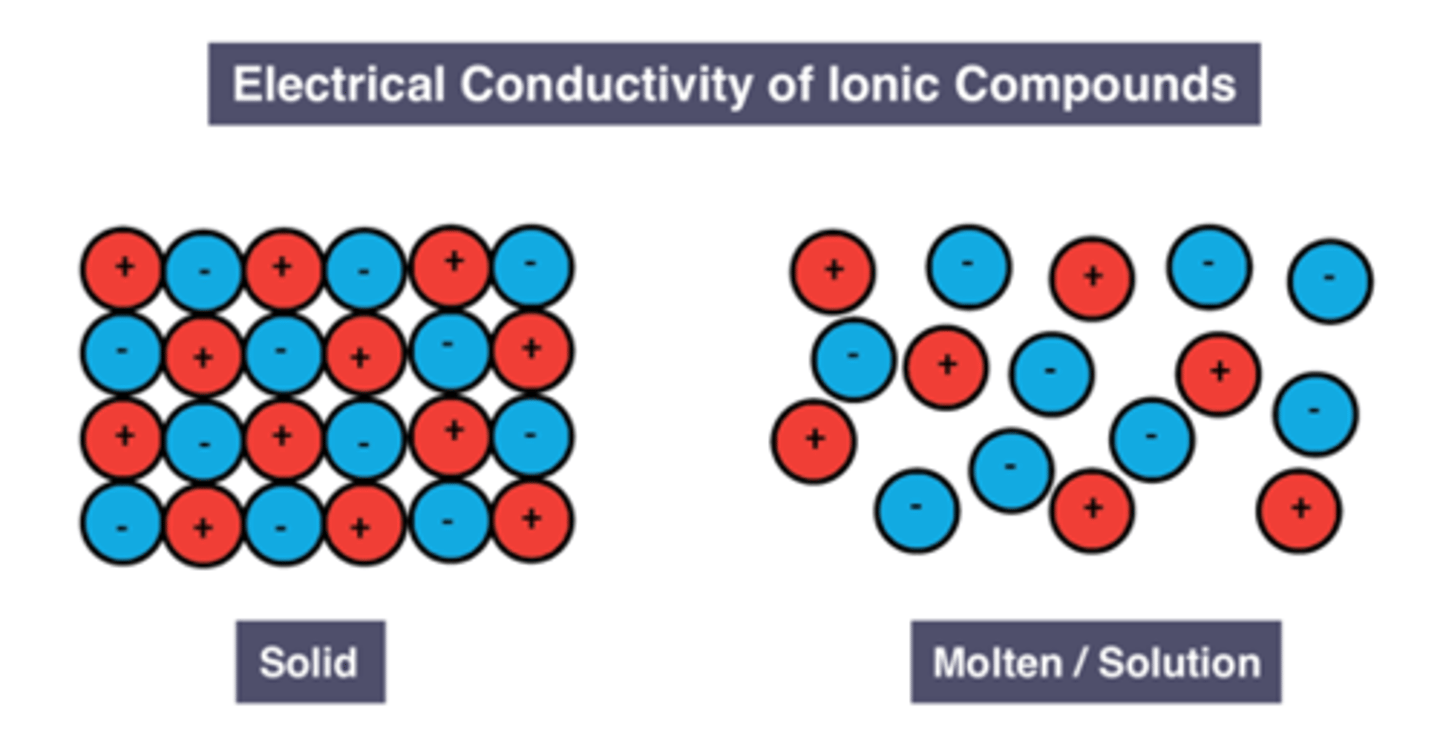
Reason molten/dissolved ionic substances can conduct electricity
Ions are free to move and carry charge
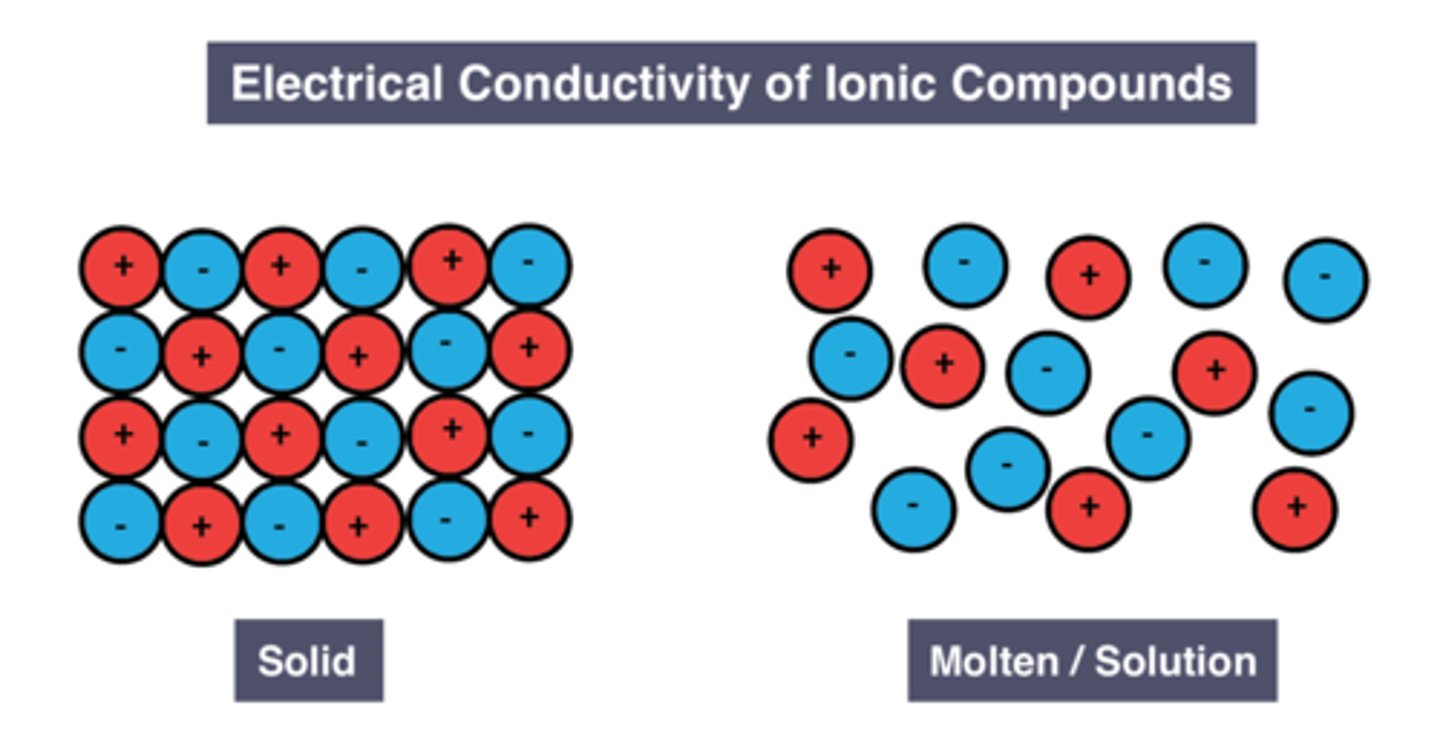
In electrolysis ions go to
Opposite charge electrode
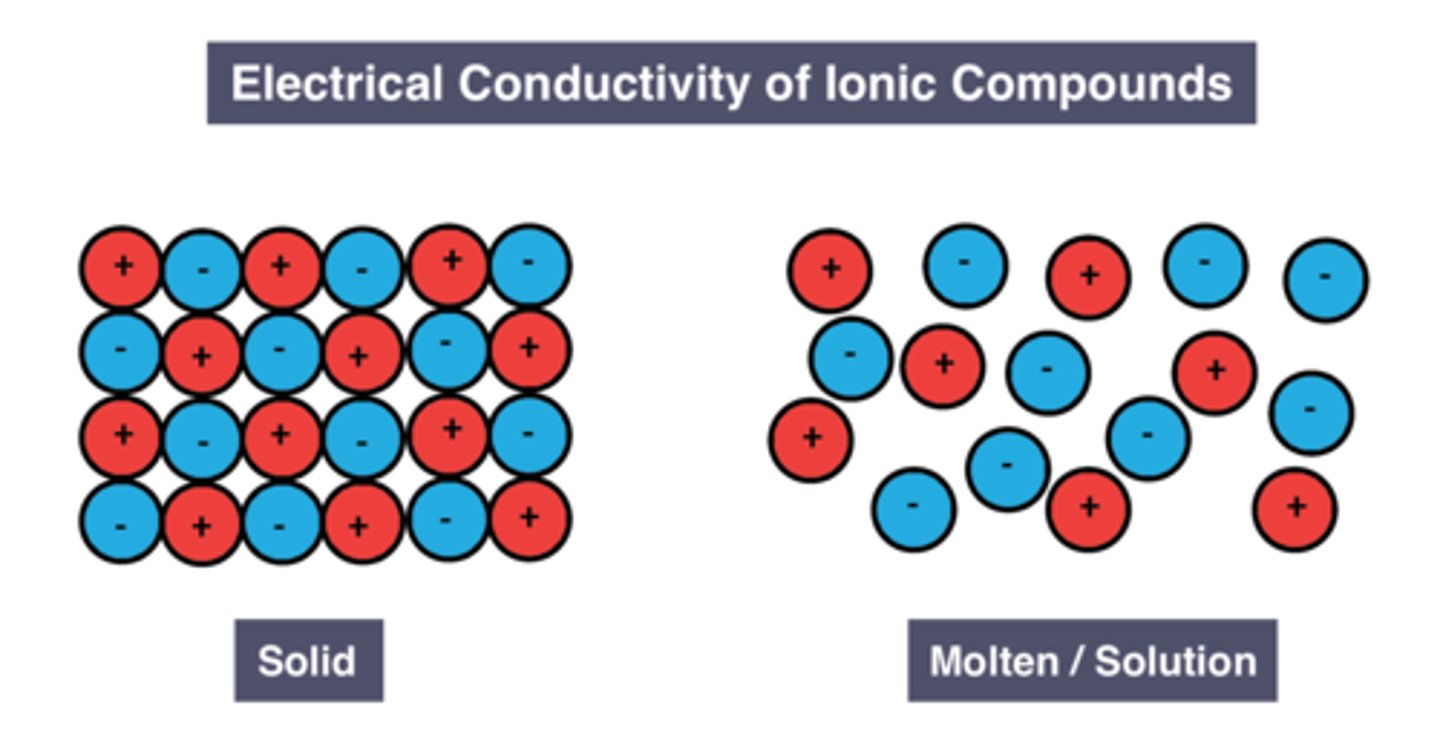
Positive ions go to
Cathode
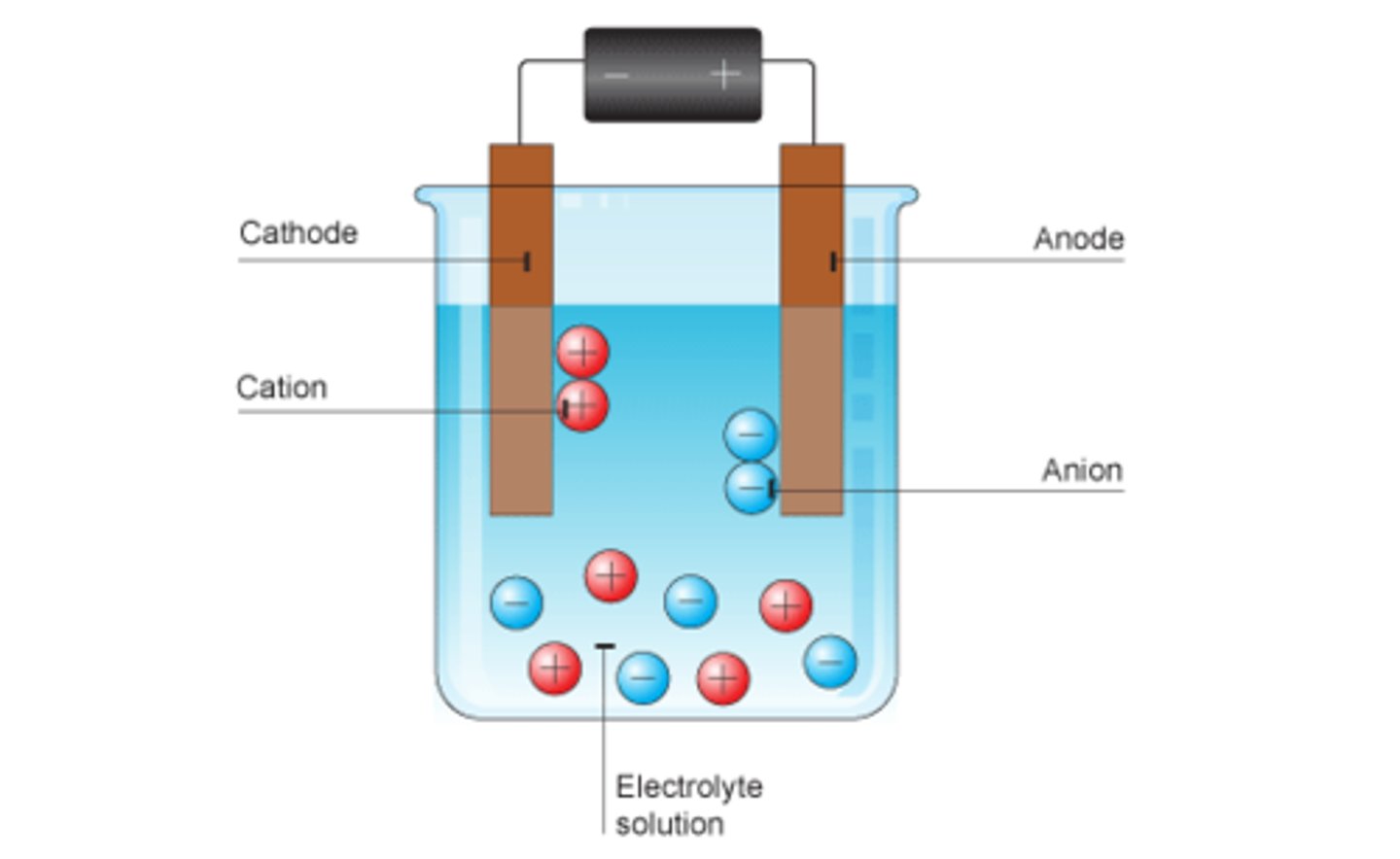
Negative ions go to
Anode
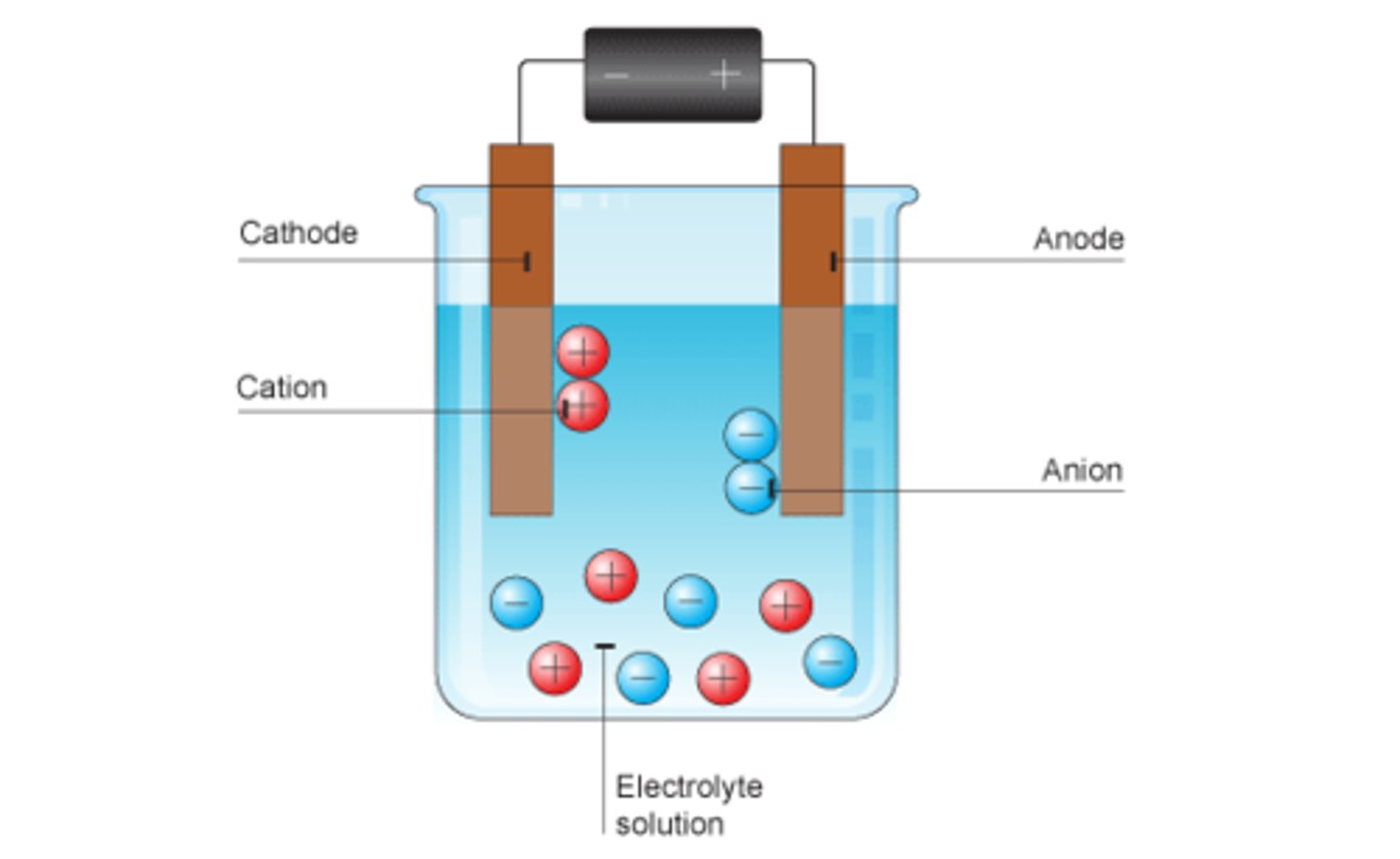
Discharged
Remove an electric charge by adding/removing electrons
Oxidation in terms of electrons
Loss of electrons
Reduction in terms of electrons
Gain of electrons
When a molten compound is electrolysed the metal forms
at the cathode
When a molten compound is electrolysed the non metal forms
at the anode