3 Cells and Methods to Observe Them
 Call Kai
 Learn
Learn Practice Test
 Spaced Repetition
 Match
Match Flashcards
 Knowt Play
1/10

There's no tags or description
Looks like no tags are added yet.
Name | Mastery | Learn | Test | Matching | Spaced | Call with Kai |
|---|
No analytics yet
Send a link to your students to track their progress
11 Terms
cell envelope
surface layers of prokaryotic cell.
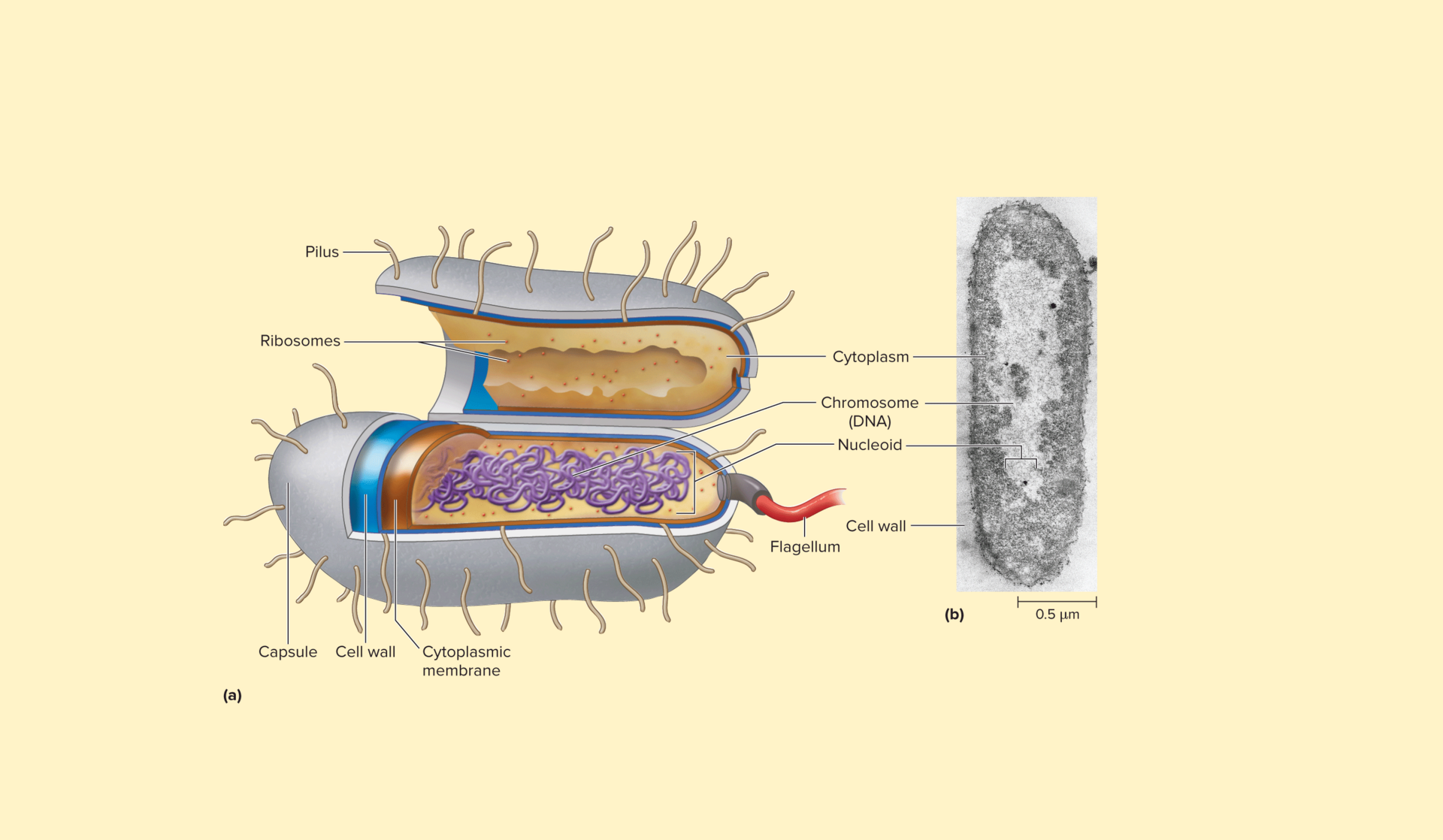
from inside out:
cytoplasmic membrane: thin structure surrounding cytoplasm and defining cell boundary. serves as crucial permeability barrier
cell wall
capsule: a layer protecting cell and allow attachment to surfaces
often present in bacteria
rarely found in archaea
cytoplasm
Enclosed by the cell envelope, __ is a thick substance filled with nutrients, ribosomes, enzymes
includes the organelles but the nucleus
is the space between the chromosomes and the cellular membrane
cytosol
Fluid portion of the cytoplasm where a prokaryote’s chromosome can be found.
nucleoid
Gel-like region in the cytoplasm where the prokaryotic cell’s chromosome is found.
fluid mosaic model
Model that describes the dynamic nature of the cytoplasmic membrane
phospholipid bilayer
hydrophilic heads faces/interacts with aqueous solutions
hydrophobic tails inward
why only:
gases → O2, CO2, N2
small hydrophobic compounds
water (polar, but small enough)
can enter
embedded with proteins that act like
selective gates → permeability barrier
sensors → transmits external environment info to inside of cell
enzymes → catalyze chemical reactions
constantly drift laterally in membrane
chemical
The general structure of bacterial and archaeal cells are the same (can be grouped as “prokaryotic” cells), but have several fundamental __ differences
phospholipids in plasma can be monolayer in archaea
more stable under extreme conditions
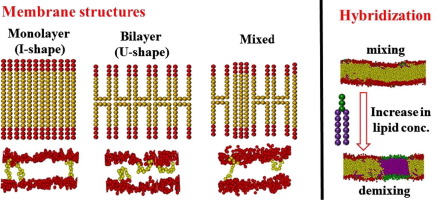
hydrophobic tails connected to hydrophilic heads via ether chemical linkage (instead of bacterial ester)
aquaporins
Pore-forming membrane proteins that facilitate water passage
simple diffusion
movement of solutes from a region of high concentration to one of low concentration until equilibrium is reached
dependent on the concentration gradient → greater conc. difference, higher rate of __.
how substances that can freely pass through the phospholipid bilayer pass through.
doesn’t involve transport proteins.
osmosis
diffusion of water across a selectively permeable membrane.
movement dependent on solute concentration across a membrane:
from high water conc. to low water conc.
from low solute conc. to high solute conc.
due to high solute conc. typically occurring from being nonpenetrating, i.e, POLAR or LARGE
such they have terms specific for non-penetrating solutes:
hypotonic: less solutes outside cell; water goes inside
hypertonic: more solutes outside cell; water goes outside
isotonic: same solutes outside as inside
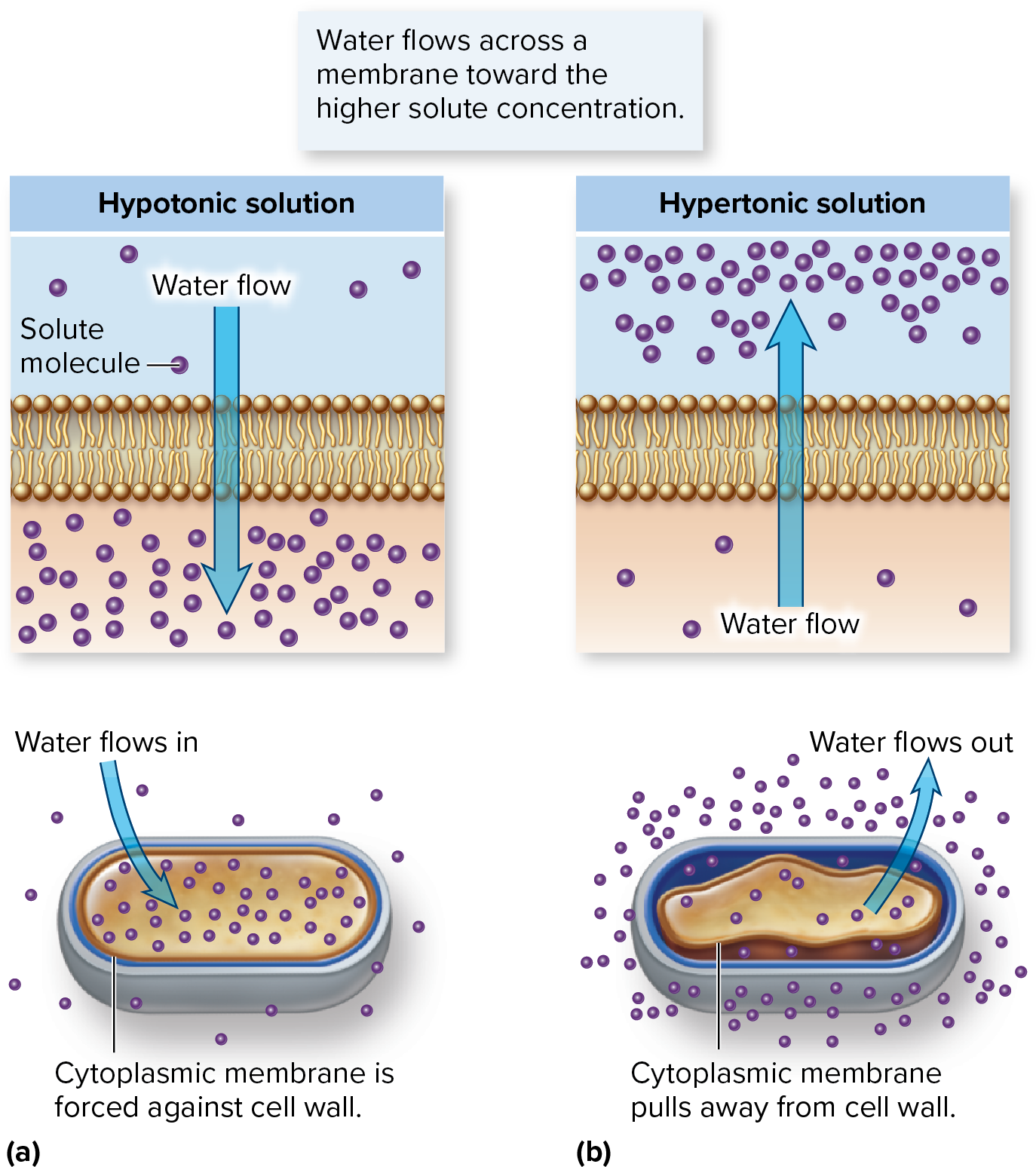
cell wall protects from lysing (bursting) in the hypotonic setting bacteria and archaea are usually found in
electron transport chain
Major difference between eukaryotes and prokaryotes is that:
eukaryotes use organelles for energy transformation
while prokaryotes utilize an __.
protons are moved out of the cell; OH- remain inside
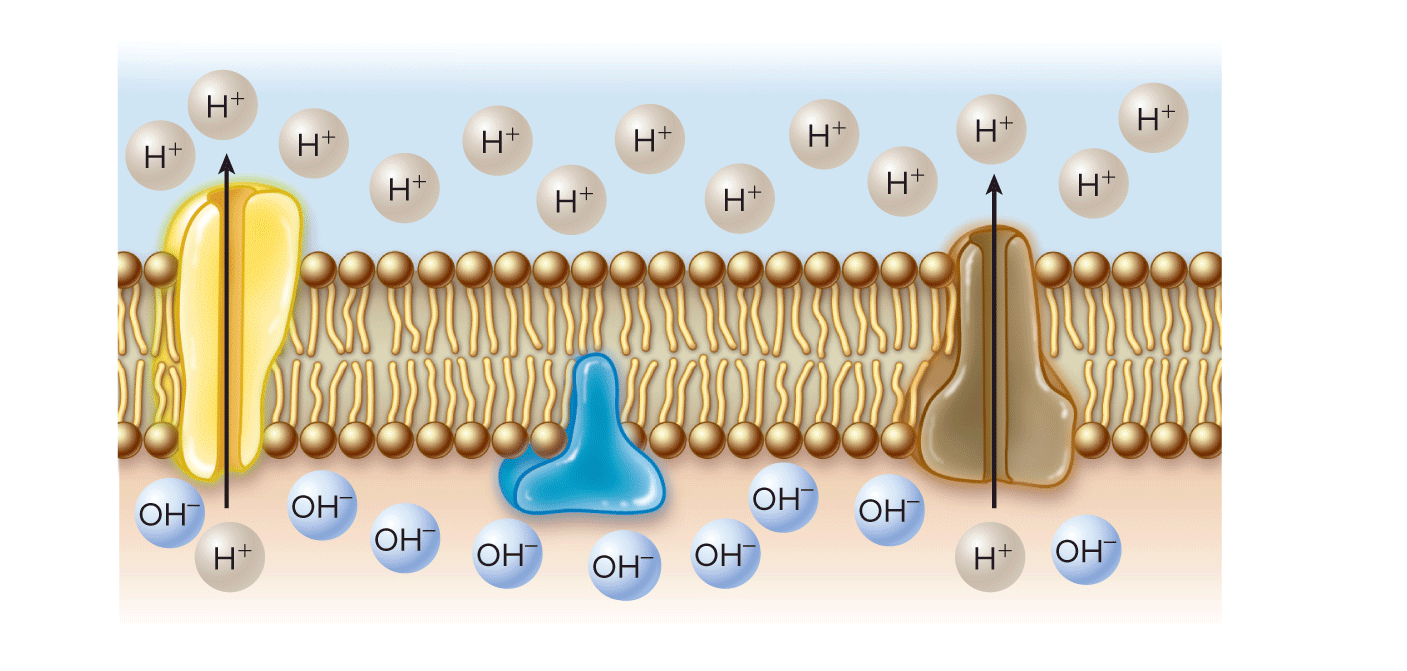
creates an electrochemical gradient across membrane
charged ions attract each other; stay close to membrane
proton motive force: form of energy that the proton gradient acts as
energy of protons’ tendency to going back into cell is utilized to power active mechanisms