Optical, Magnetic, Thermal and Electrical Properties of Engineering Materials
 Call Kai
 Learn
Learn Practice Test
 Spaced Repetition
 Match
Match Flashcards
 Knowt Play
1/95

There's no tags or description
Looks like no tags are added yet.
Name | Mastery | Learn | Test | Matching | Spaced | Call with Kai |
|---|
No analytics yet
Send a link to your students to track their progress
96 Terms
In electromagnetic radiation, what are the orientations of the electric field, magnetic field and direction of propagation in relation to each other?
Electric field and magnetic field perpendicular to each other
both components perpendicular to direction of waves propagation
What form of radiation has the largest wavelength?
radio waves
What form of radiation has the highest energy?
Gamma rays
What colour in the visible light spectrum has the longest wavelength?
red
What is the approximate range of wavelengths for visible light?
0.4μm to 0.7μm
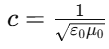
What is the equation of visible light, c?
c = 1/ rt(ε0*μ0)
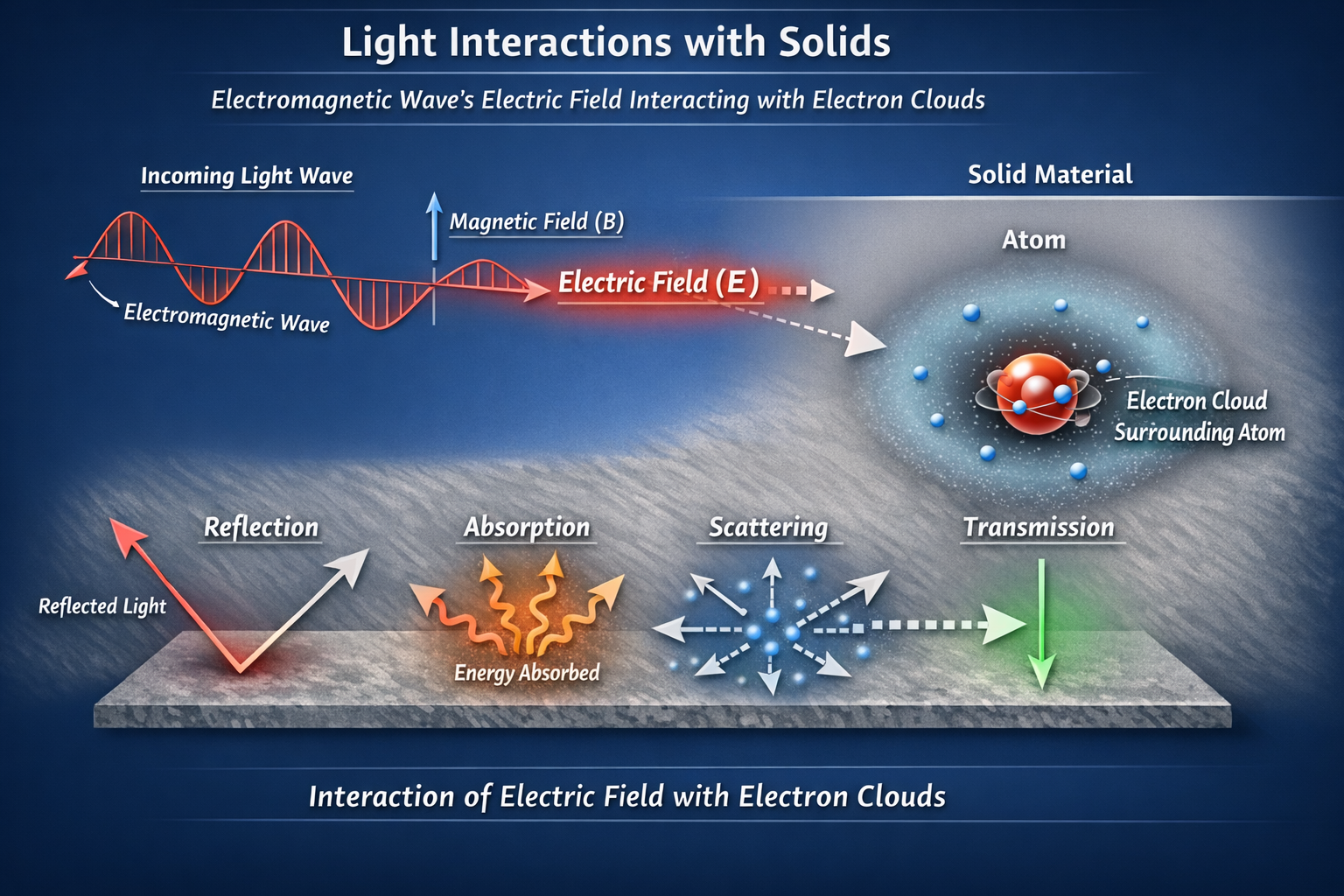
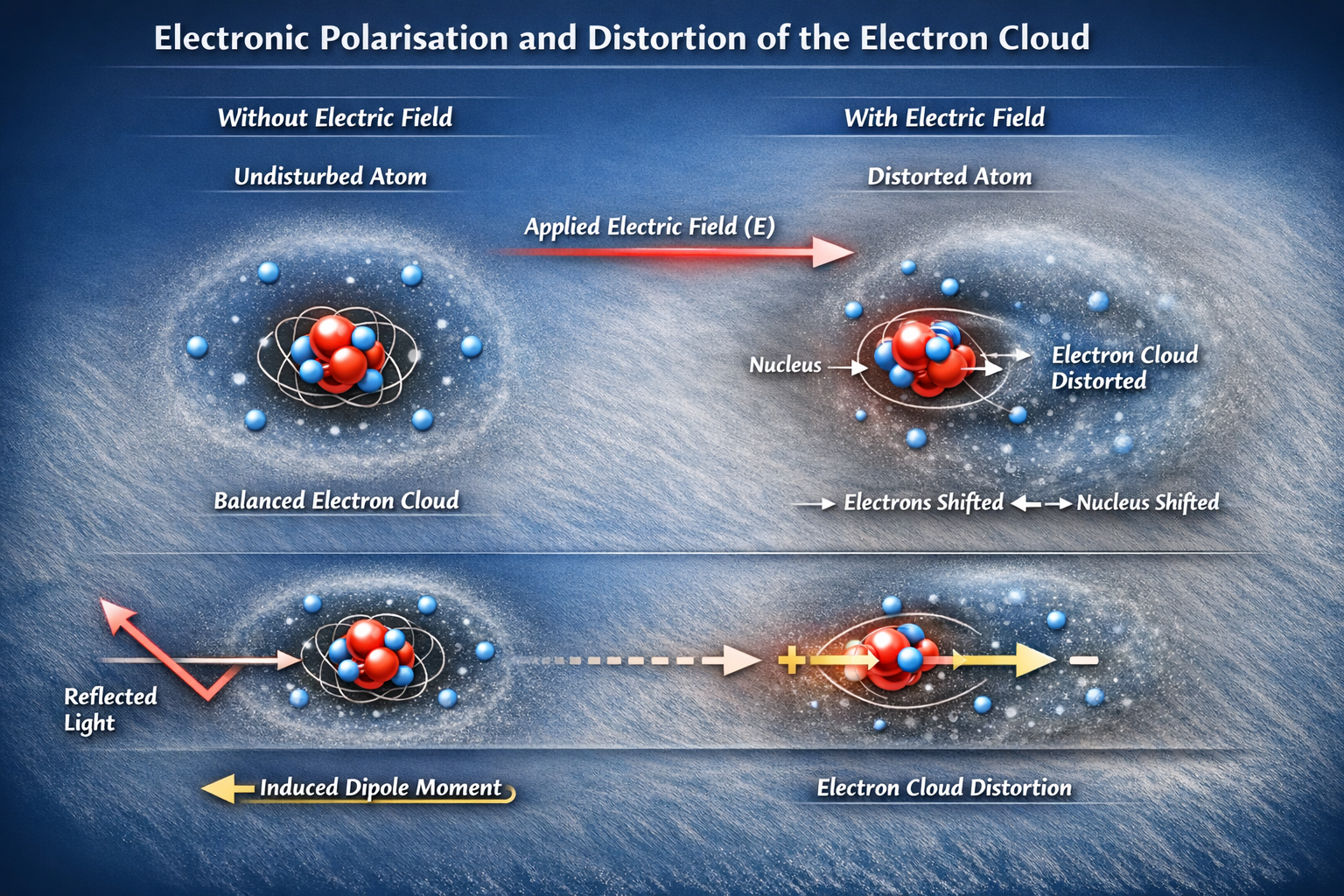
What is the result of interaction between the electric field in a light wave and the electron cloud surrounding the atom in a material?
electronic polarisation
electron cloud temporarily distorted creating a temporary dipole moment
one side of electron cloud slightly positive and the other slightly negative
Effect of overlapping energy in metallic materials and partially filled bands on optical properties
electrons easily absorb photon energy and move to higher energy states
near total absorption of visible light makes materials fundamentally opaque
What causes high reflectivity of light in metallic materials?
Absorbed photons are rapidly re-emitted
Effect of band gap separating fully occupied valence band and empty conduction bands on optical properties of non metallic materials
can exhibit` wide array of optical properties
dependent on size of band gap
Refraction in nonmetal
velocity of light reduced due to electronic polarisation
light bends
When does reflection occur?
at the interface between two materials with different refractive indices
When does transmission occur in non metals? (transparency)
if non metals band gap is larger than the energy of visible light photons
passes through without being absorbed
What happens when band gap of non metals is smaller than energy of the photons?
photons are absorbed
leading to opacity
What are the three causes of internal light scattering in non metals?
porosity
grain boundaries
secondary phases
How does porosity impact light scattering in non metals
pores of gas in ceramic or polymer material
light scatters at boundaries of pores due to significant difference in indices of refraction
How do grain boundaries cause light scattering in polycrystalline materials?
variations in crystallographic orientation between adjacent grains
leads to different refractive indices across boundaries
causes scattering
How do secondary phases impact scattering in materials?
Composite materials or materials that contain secondary phase particles have a mismatch in refractive indices between components
causing dispersion of incoming light
Define luminescence
phenomena where material absorbs energy and subsequently emits visible light
Four major applications of optical phenomena
Luminescence, photoconductivity, lasers and optical fibers
Define Photoconductivity
materials electrical conductivity becomes greater upon exposure to light
Prime application of photoconductivity
photovoltaic solar cell
What makes photovoltaic solar cell?
consists of polycrystalline silicon
fabricated to form a p-n junction
How does a photovoltaic solar cell work?
photons strike the solar cell
interact with semiconductor material
if E of photon is sufficient, electrons excite
excited electrons move from valence band to conduction band
excitation creates pair of charge carriers
puts electron in conduction band on n side and a corresponding hole on the p-side
hole is a positively charged vacancy
new holes and electrons drawn away from p-n junction in opposite directions
flow out of semiconductor material and become part of external circuit
What does laser stand for?
Light amplification by stimulated emission of radiation
Two key features of lasers:
Output beam is
monochromatic
coherent
What is a coherent light source?
all emitted waves are completely in phase with eachother
Distinctive feature of a semiconductor laser:
composed of several distinct layers of semiconducting materials
each with different compositions
What are the distinct layers of a semiconductor laser sandwiched between?
metal conductor and a heat sink
Provide an example of compounds that may make up a typical semiconductor laser (according to the summary notes):
central layer of heavily doped Gallium Arsenide (GaAs)
outer layers of p-doped and n-doped Gallium Aluminium Arsenide (GaAlAs)
What is the purpose of the distinct composite layers in the semiconductor laser?
To restrict excited electrons, generated holes, and the resulting laser beam, within the central gallium arsenide layer
Semiconductor laser needs a constant supply of …
charge carriers
constant applied voltage used to drive current through semiconductor
Result: constant and steady supply of electrons and holes
How are photons of light emitted?
Excited electron in conduction band recombines with hole in valence band
energy released in form of photon
What occurs after the first recombination?
Second recombination occurs
both photons have same wavelength and are perfectly in phase with each other
chain reaction occurs - producing avalanche of additional photons
all join the monochromatic, coherent laser beam
How is laser beam amplified?
Acts like optical cavity
one end of the beam is totally reflecting
allows beam of coherent photons to bounce entirely back into semiconductor material at fully reflective end of the beam
stimulates even more recombinations
opposite end of laser is only partially reflective
Benefits of semiconductor laser beam acting like optical cavity
allows portion of beam to be amplified
some of coherent laser beam escapes device for practical use
enough light maintained inside to maintain stimulated emission cycle
Uses of lasers:
non-contact measuring, welding, cutting, hole machining
What are optical fibers and how do they work?
application optical properties of non-metallic properties
confine light and transmit over far distances
Utilise phenomena of total internal reflection
relates directly to index of refraction of the fiber material
Benefits of optical fibers
minimal loss of light
transmit data exponentially faster than traditional copper wires
How do engineers improve performance of optical fibres
manipulate refractive index profile of the fiber
create gradual variation of the index of refraction
create a graded index near outer surface of the fiber
How do engineers create graded index of optical fibers?
deliberately add specific impurities to the material
control concentration of impurities
refractive index engineered to decrease from centre of fibre to outer edge
acts to smoothly bend straying light rays back towards centre axis of fibre
Effect of continuous variation of refractive index within optical fibres
reduces signal dispersion
allows light pulses to travel long distances without distorting
Equation for Magnetic Field Strength:
H = (N*I)/L
H - magnetic field strength (A/m)
N - # of turns in the coil
I - current
L - length
Equation for magnetic flux density/magnetic induction in a vacuum:
B = (μ0)*H
B - magnetic flux density (Tesla, T or Webers per square meter, Wb/m²)
μ0 - permeability of a vacuum
H - magnetic field strength
B = μ*H in material medium
μ - permeability of the medium
What does vector magnetization, M describe?
the magnetic state of a solid
defined as the magnetic moment per unit volume R
Relationship between B, H and M:
B = μ0*H + μ0*M
B is the sum of the external field contribution and the material’s internal contribution
Two sources of electron generated magnetic moments:
Orbital motion
Electron spinD
Describe process of orbital motion
electron orbits nucleus
behaves like small current loop
generates magnetic field along its axis of rotation
Describe process of electron spin:
electron spins on its axis
generates spin magnetic moment
magnetic moment quantised and oriented either up or down
in atoms, electrons usually spin in pairs and magnetic moments cancel each other out
net magnetic moment of atom, as a result of cancellation, usually 0
Why do some atoms have a net magnetic moment and which ones?
some transition metals and rare earth metals
incomplete electron shells result in unpaired electrons
result: net magnetic moment
What is diamagnetism?
exhibited by all matter
often masked by stronger magnetic fields
field applied which induces dipole moment
dipole moment opposes applied field direction R
Result of dipole moment opposing applied field direction:
negative magnetic susceptibility Xm
usually of order x10-5
Name some typical diamagnetic materials
Aluminium Oxide
copper
gold
silicon
zinc
What behaves as a perfect diamagnet?
Superconductor
B=0
What are the features of paramagnetic materials?
atoms possess permanent magnetic dipoles
dipoles randomly oriented in the absence of an external field
exhibit small, positive susceptibility
What happens when magnetic field applied across paramagnetic material?
dipoles align with field
enhances the magnetic field
Specific examples of paramagnetic materials
Aluminium, chromium, titanium, molybdenum
Both diamagnetism and paramagnetism are considered … because…
non-magnetic
magnetization only occurs while in an external field
effect is very weak
Ferromagnetism in materials such as….
iron, cobalt, nickel
rare earth elements such as gadolinium
Describe the magnetic behaviour of ferromagnetic materials
strong
What is the behaviour of magnetic moments of individual atoms?
spontaneously align with each other
even in absence of external field - retain magnetization when field removed
due to quantum mechanical exchange interactions
Magnetic susceptibilities of ferromagnetic materials
often high as 106
compared with -10-5 for para and dia
so very large
What is saturation magnetization in ferromagnetic materials?
As applied field increases
more domains align
all dipoles are parallel
material reaches saturation magnetization
max possible magnetization for that material
Describe the alignment of adjacent atoms in Antiferromagnetic materials
coupling between magnetic moments of adjacent atoms results in antiparallel alignment
dipoles of neighbouring atoms point in exactly opposite directions
cancel each other out
RESULT: zero net magnetic moment for solid as a whole
What is the net magnetic moment of an antiferromagnetic material?
zero
Example of an antiferromagnetic material
Manganese Oxide
Mn2+ ions have net moments that align antiparallel to their neighbours
O2- ions have no net moment
How is ferrimagnetism similar to antiferromagnetism?
magnetic moments align in an antiparallel fashion
What differentiates ferrimagnetism from antiferromagnetism?
opposing moments are unequal in magnitude in ferrimagnets
What is the result of opposing moments being unequal in magnitude in ferrimagnets?
causes incomplete cancellation and net spontaneous magnetization
What are the most common ferrimagnets?
cubic ferrites
formula: MFe2O4
looks at notes for specifics of ions
hexagonal ferrites e.g. barium ferrite - used in permanent magnets
garnets like Yttrium Iron Garnet - used in microwave electronics
What does thermal energy do to magnetic properties?
thermal energy opposes the orderly alignment of magnetic moments
What is the Curie temperature?
For Ferromagnetic and Ferrimagnetic materials
T increases - causes atomic thermal vibrations to counteract the coupling forces aligning the moments
At Curie T - the spin alignment is destroyed and material becomes paramagnetic
EG iron is ferromagnetic below 768C and paramagnetic above it
What is the Neel Temperature?
above Neel T, antiparallel alignments is destroyed
material becomes paramagnetic
Describe the alignment of dipoles (WITHIN DOMAINS) in ferromagnetic materials- even when not magnetised
in each domain
all magnetic dipoles are aligned parallel to one another - reaching saturation magnetization
in ferromagnetic materials how are adjacent domains oriented
vectors of adjacent domains are oriented randomly
summing to net zero magnetization for the bulk material
How are adjacent domains separated?
adjacent domains are separated by domain walls
narrow regions where the direction of magnetization gradually changes from the orientation of one domain to another
List the three things that occur when an external magnetic field is applied to an unmagnetized ferromagnet
Domain growth
Rotation
Saturation
What is domain growth?
domains that are parallel/nearly parallel to applied field
grow at the expense of unfavourably oriented domains
What is rotation in the magnetization process?
as the field strengthens
domains that have grown eventually rotate their magnetization vectors
to align with the external field
What is saturation in the magnetization process?
once all domains are aligned
the material reaches saturation flux density
What is hysteresis?
when applied field is reduced from saturation
curve does not retrace its original path
what is remanence, Br?
when the applied field is reduced to 0
material retains some magnetisation
residual flux density is called remanence
why does remanence exist?
resistance to the movement of domain walls
preventing them from returning to their original configuration
What is coercivity?
the magnitude of the reverse field applied in the opposite direction to bring B back to 0
What does the area enclosed by the B-H hysteresis loop represent?
the energy dissipated as heat during a complete magnetization cycle.
crucial in designing AC magnetic devices like transformers
Describe the characterisation of soft magnetic materials and what the characterisation means
characterised by narrow hysteresis loop
meaning they have low coercivity and low remanence
describe the properties of soft magnetic materials
easily magnetised and demagnetised with little energy loss
high initial permeability
low hysteresis energy loss
applications of soft magnetic materials
essential when magnetic field must be rapidly reversed:
transformer cores
motors
generator
Examples of soft magnetic materials
silicon iron alloys
amorphus metals: metallic glasses (eg. FeBSi alloys)
metallic glasses produced by rapid solidification
have non-crystalline structures
exhibit extremely low hysteresis losses
used in high efficiency transformers
describe the characterisation of hard magnetic materials and what this means
wide hysteresis loop
high coercivity and high remanencedes
describe the properties of hard magnetic materials
once magnetised, they are difficult to demagnetise - permanent magnets
high energy property BHmax - represents the energy required to demagnetise the magneta
applications of hard magnetic materials
permanent magnets in:
speakers
motors
sensors
MRI machines
Examples of hard magnetic materials
alnico
hard ferrites
what is alnico? BLURT
alloys of aluminium, nickel, cobalt and iron
precipitation hardened to create microstructure that impedes domain wall motion
result - high coercivity
rare earth magnets:
neodymium-iron-boron
currently strongest commercially available permanent magnet
essential for miniaturised electronics and electric vehicle motors
samarium cobalt
not as strong at common temperatures
performs better at T>150C
What are hard ferrites?
barium and strontium ferrites
ceramic permanent magnets
magnetic prop inferior to rare earth magnets
inexpensive and widely used in low cost applications
What is superconductivity?
observed in some materials
0 electrical resistance and perfect diamagnetism below a certain temperature
used in:
MRI
high speed maglev trains - magnetic repulsion for levitation
efficient power transmission lines
primary limitation:
need for cryogenic cooling (liquid helium or nitrogen) to maintain superconducting state