ch 2.1 ancient civilizations
 Call Kai
 Learn
Learn Practice Test
 Spaced Repetition
 Match
Match Flashcards
 Knowt Play
1/36

There's no tags or description
Looks like no tags are added yet.
Name | Mastery | Learn | Test | Matching | Spaced | Call with Kai |
|---|
No analytics yet
Send a link to your students to track their progress
37 Terms
what did ancient civilizations observe?
the skies for thousands of years
Why did ancient civilizations build astronomical structures?
To mark and observe astronomical events
How were the Earth, Moon, Sun, and stars useful to ancient civilizations?
They acted as calendars for tracking seasons and time.
Why were astronomical observations important for ancient societies?
They helped with agriculture, navigation, and calendars.
What was Stonehenge likely used for?
A primitive calendar.
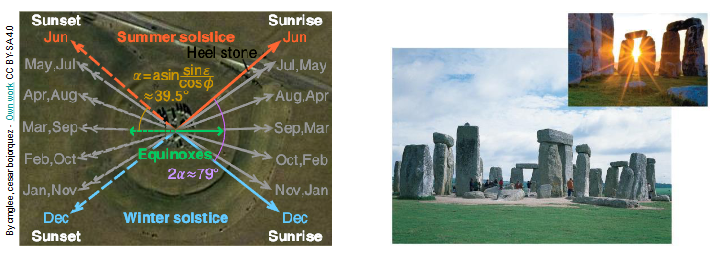
What astronomical events is Stonehenge aligned with?
The solstices.
What happens at Stonehenge on the longest day of the year?
The Sun rises directly over the Heel Stone.
perfectly aligns with sunrise in summer solstices and sunset in winter solstices
What does Stonehenge show about ancient civilizations?
They carefully observed and tracked astronomical events.
What does the spokes of the Medicine Wheel aligned with?
The rising and setting positions of the Sun and other stars.
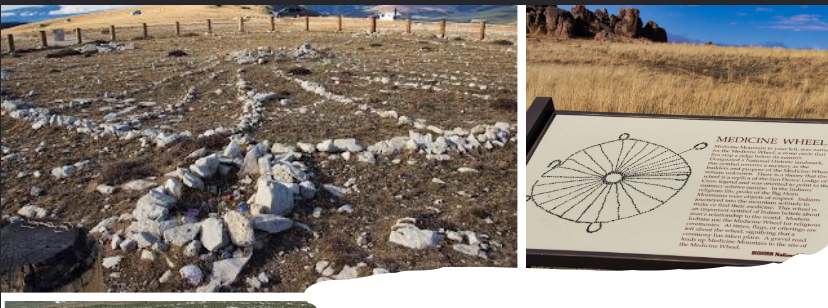
Who built the Medicine Wheel in Wyoming?
Plains Indigenous peoples.
How old is the Medicine Wheel estimated to be?
Between a few hundred and over 3000 years old.
What does the Medicine Wheel demonstrate about Indigenous astronomy?
Indigenous peoples carefully observed astronomical patterns and alignments.
What is El Caracol?
A Mayan temple/observatory at Chichen Itza in Mexico.
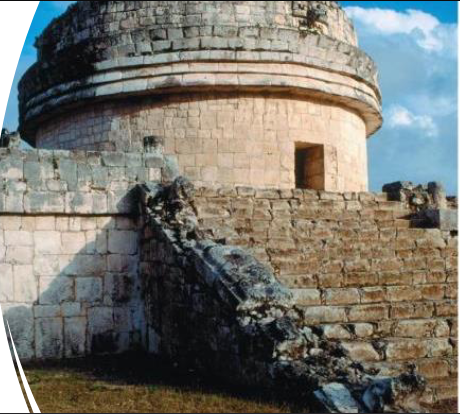
What is special about the windows of El Caracol?
They are aligned with astronomical events. (astronomical calendar)
Which civilization built El Caracol?
The Mayan civilization
Approximately how old is El Caracol?
More than 1100 years old.
Why was El Caracol possibly built?
To track the seasons and observe the heavens.
What was Machu Picchu used for astronomically?
It functioned as a mountaintop observatory for observing the heavens
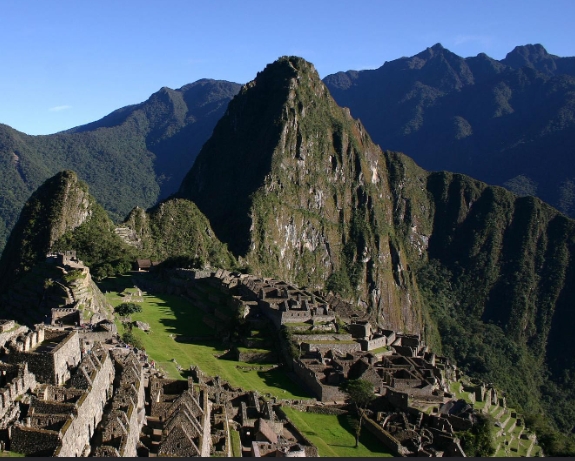
Which civilization built Machu Picchu?
The Inca civilization.
When was Machu Picchu built?
In the 15th century.
What is the Temple of the Sun at Machu Picchu aligned with?
The sunrise at the winter and summer solstices
What do the alignments at Machu Picchu show about the Incas?
They carefully observed and tracked astronomical events
What is the Temple of Amun-Ra at Karnak aligned with?
The rising Sun at the winter solstice
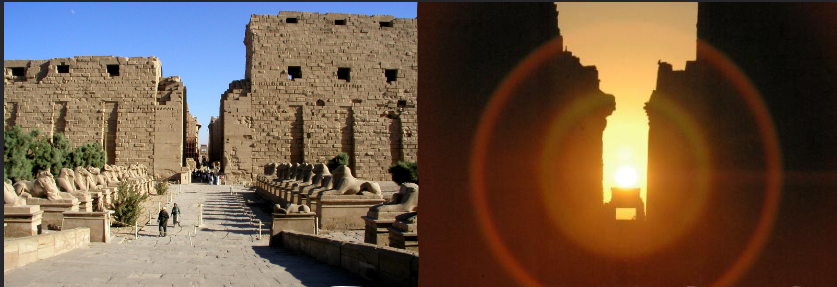
Where is the Temple of Amun-Ra located?
Egypt.
What happens at sunrise on the winter solstice at Karnak?
The Sun appears exactly in the center of the temple entrance.
What does the alignment of the Temple of Amun-Ra demonstrate?
Ancient Egyptians carefully observed astronomical events and solar motion.
What is a constellation?
A grouping of stars forming a perceived pattern or outline on the celestial sphere.
What do constellations often represent?
Animals, mythological people, or creatures
Which Greek astronomer listed 48 constellations around 200 A.D.?
Ptolemy
The constellations listed by Ptolemy were likely based on whose earlier lore?
Babylonian lore.
Approximately when did Babylonian constellation lore originate?
Around 1100 B.C.
How many officially defined constellations are there today?
88 constellations
Why were stars important before proper calendars existed?
People used the stars to determine when to plant and harvest crops.
Why were constellations useful to ancient peoples?
They made star patterns easier to recognize and remember
What did the appearance of the constellation Orion signal to ancient peoples?
That winter was approaching.
help them keep track of time; good time to harvest crops
How did constellations help with navigation?
They helped people identify directions in the sky.
Why is Polaris important for navigation?
Polaris (the North Star) helps identify north.