How the environment shapes our behaviour
 Call Kai
 Learn
Learn Practice Test
 Spaced Repetition
 Match
Match Flashcards
 Knowt Play
1/21

There's no tags or description
Looks like no tags are added yet.
Name | Mastery | Learn | Test | Matching | Spaced | Call with Kai |
|---|
No analytics yet
Send a link to your students to track their progress
22 Terms
What is environmental psychology?
‘The discipline that studies the interplay between individuals and the built and natural environment’
Psy1001 - the infleunce of individuals on the environment (eg. understanding a promoting sustainable behaviour)
Psy2002 - the infleunce of the environment on human experiences, behaviour and wellbeing
Boutellier et al (2008)
Studied the effect of office layout
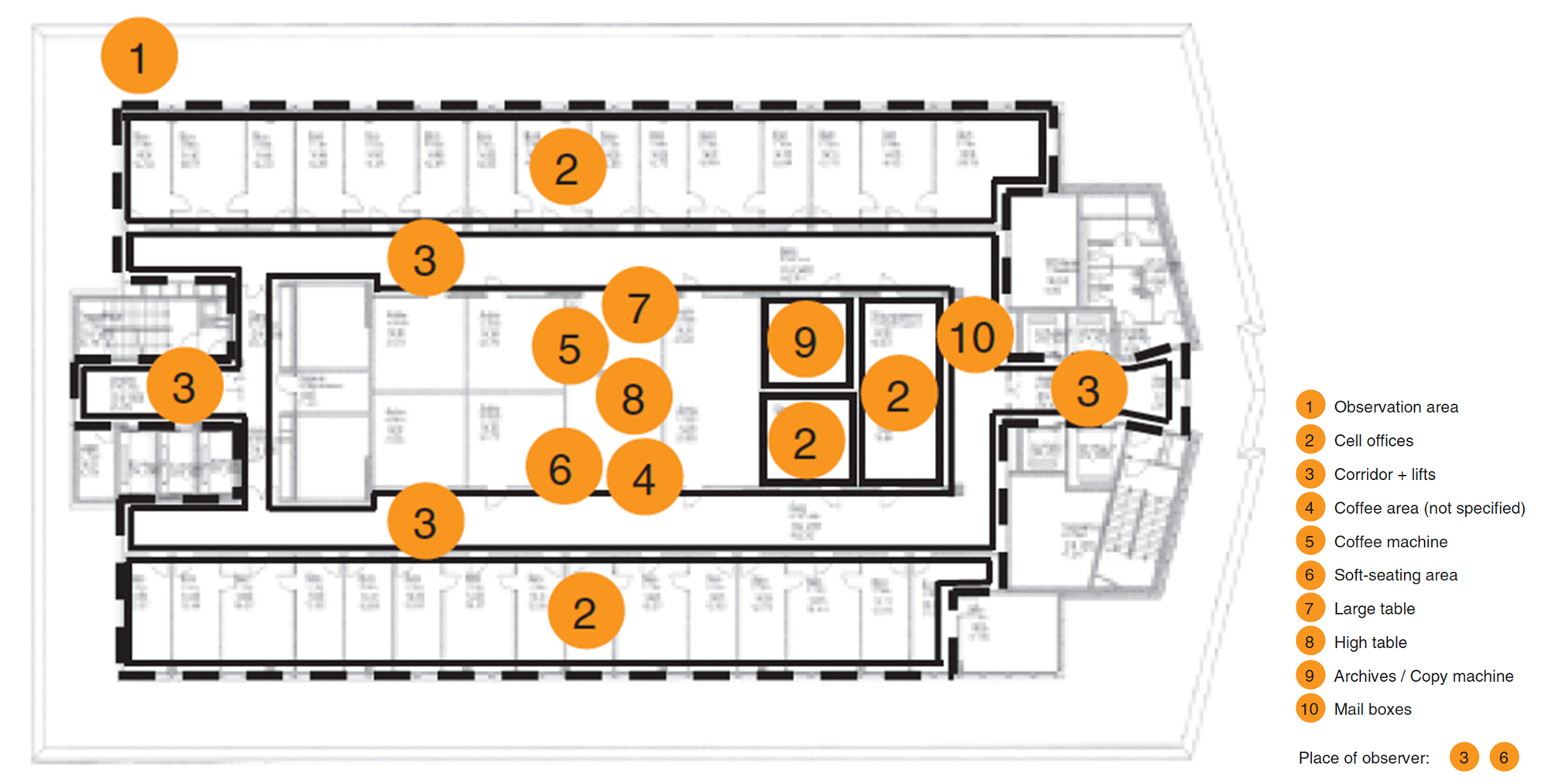
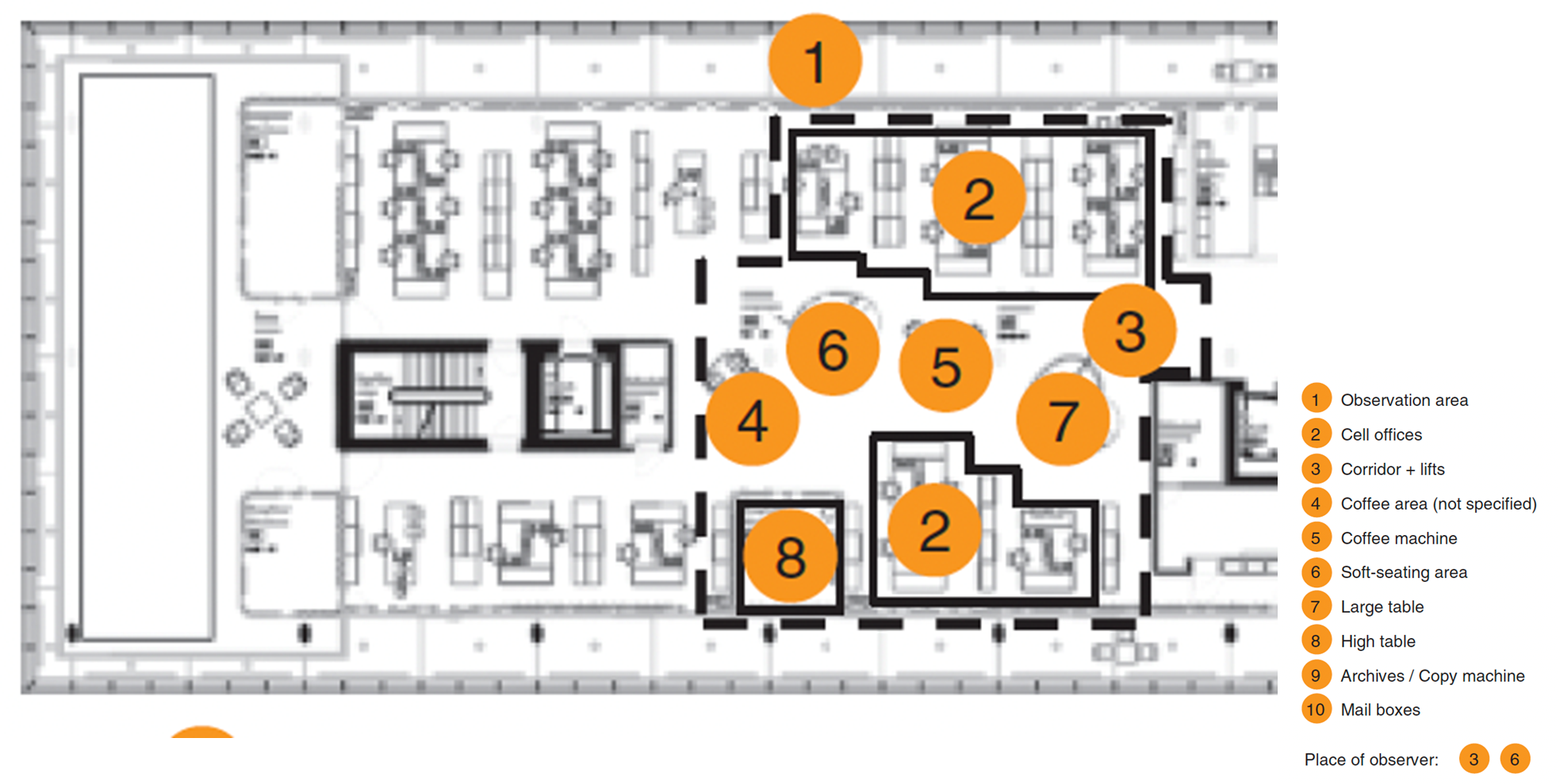
Cell offices (4 walls and a door) vs multispace layout (more open plan layout) (x 2)
Are people sharing a space or not
On communication
Frequency of face to face communication
Average duration of each event
assessed via observation
In Novartis Campus in Basel, Switzerland
Results
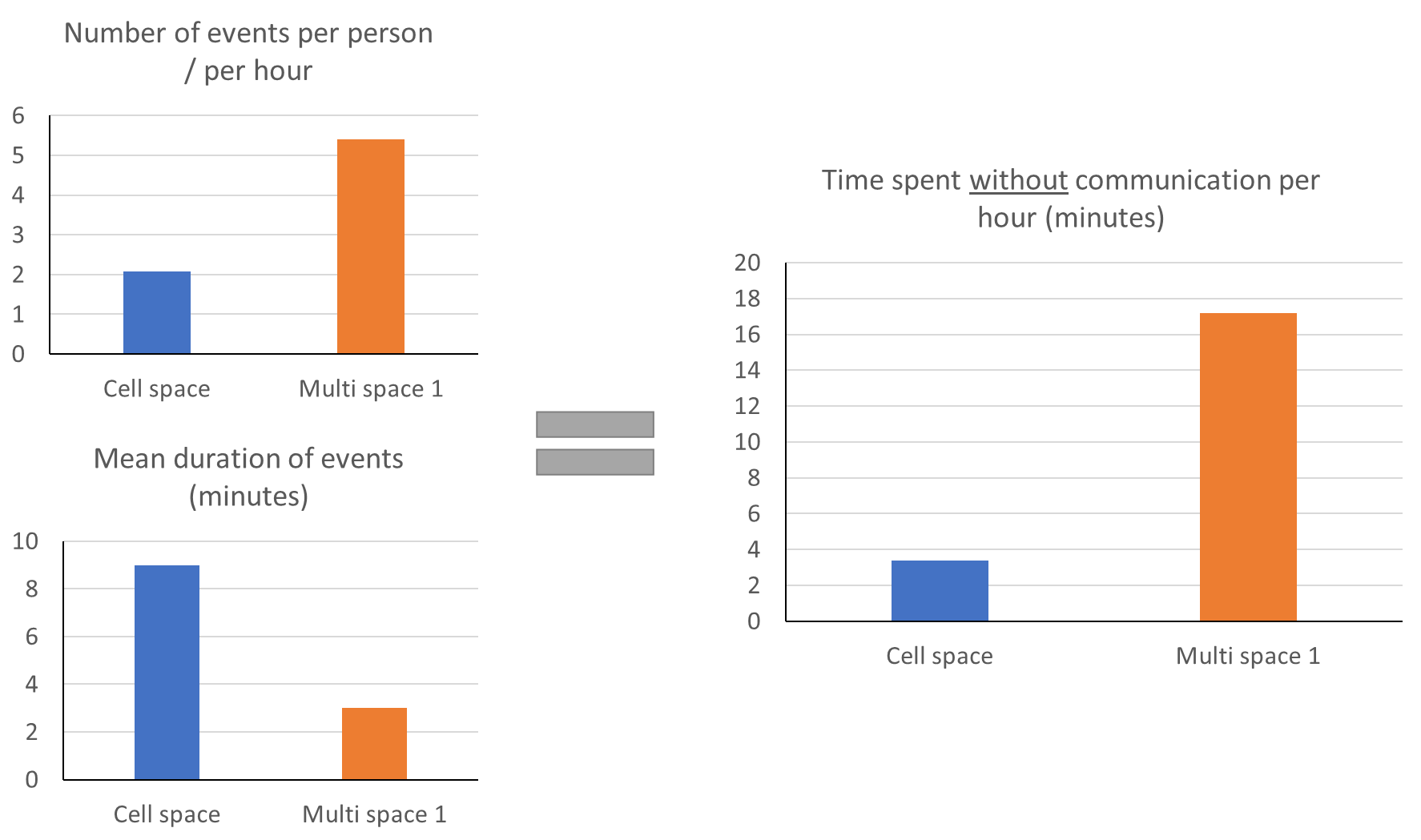
Frequency
Communicated more frequntly in open plan offices than in cell offices
Multispace - 5 ½ people per hour
Cell office - 2 people per hour
Duration
Multispace - around 3 minutes
Cell office - closer to 9 minutes
If you combine those two things how much time do people have without communication
What these open plan offices are permitting is more time without communication
Though they have more communication its for a shorter duration
On average
Multispace - 17 minutes to themselves
Cell office - 3 minutes to themselves
Would have to know whether this difference in amount of time on their own or communication effect productivity
Depends on the type of work - do you need time alone or is it better for you to have interactions
Cell offices - peopel are going to see those in individual offices for a different reason but if it was for the same reason it looks like it is taking them longer to get away
Long tail for the length of interaction in individual offices
The communication that needed to happen took place and the person just lingered there
Difficult to break their communication
Effect of the environment depends on the nature of the task
Some tasks may require frequent interaction or individual consideration
Seddigh et al (2014)
Independent variables
Office type
Cell or individual offices
Shared-room offices
Small open plan offices
Medium sized open plan offices
Large open plan offices
Flex offices
Type of task
To what extent do you have individual tasks that require concentration?
Dependent variable
Distraction
How often are you for some reason disturbed so that you do not get the opportunity to fully immerse yourself in the task you have in front of you?
Cognitive stress
How much of the time during the past 4 weeks have you found it difficult to think clearly?
Results
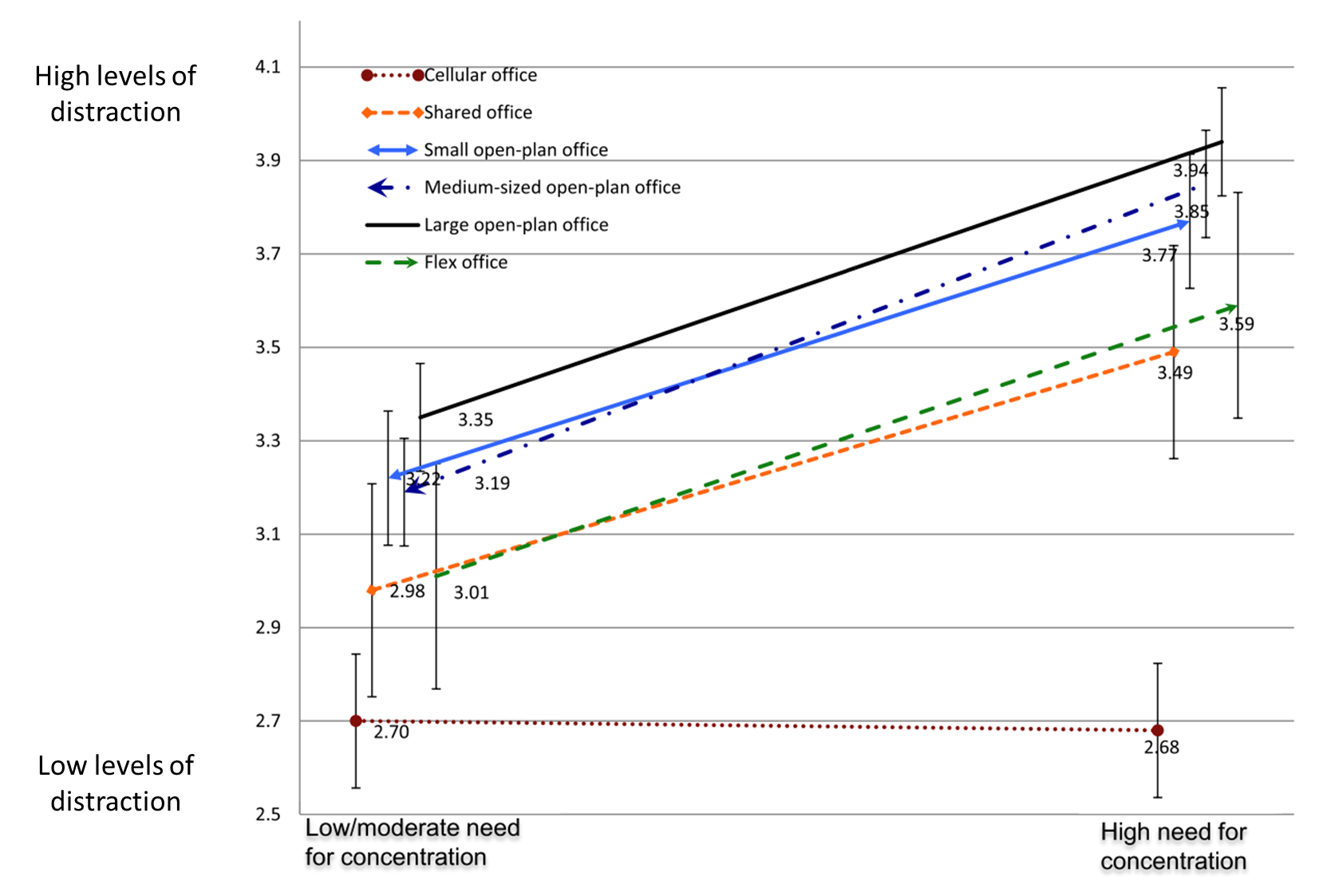
Different lines - reflect the different types of offices
Tasks which require concentration on the right and tasks which don’t on the left
Only differences is between the cell offices vs other type of office
These other types of offcies do lead people to be slightly more distracted when they are doing things which need low concentration
But the error bars overlap between the different offices so there is probably not significant differences
When you are doing a task which requires some sort of concentration and you are in a space shared with other poeple, you are more likely to feel distracted
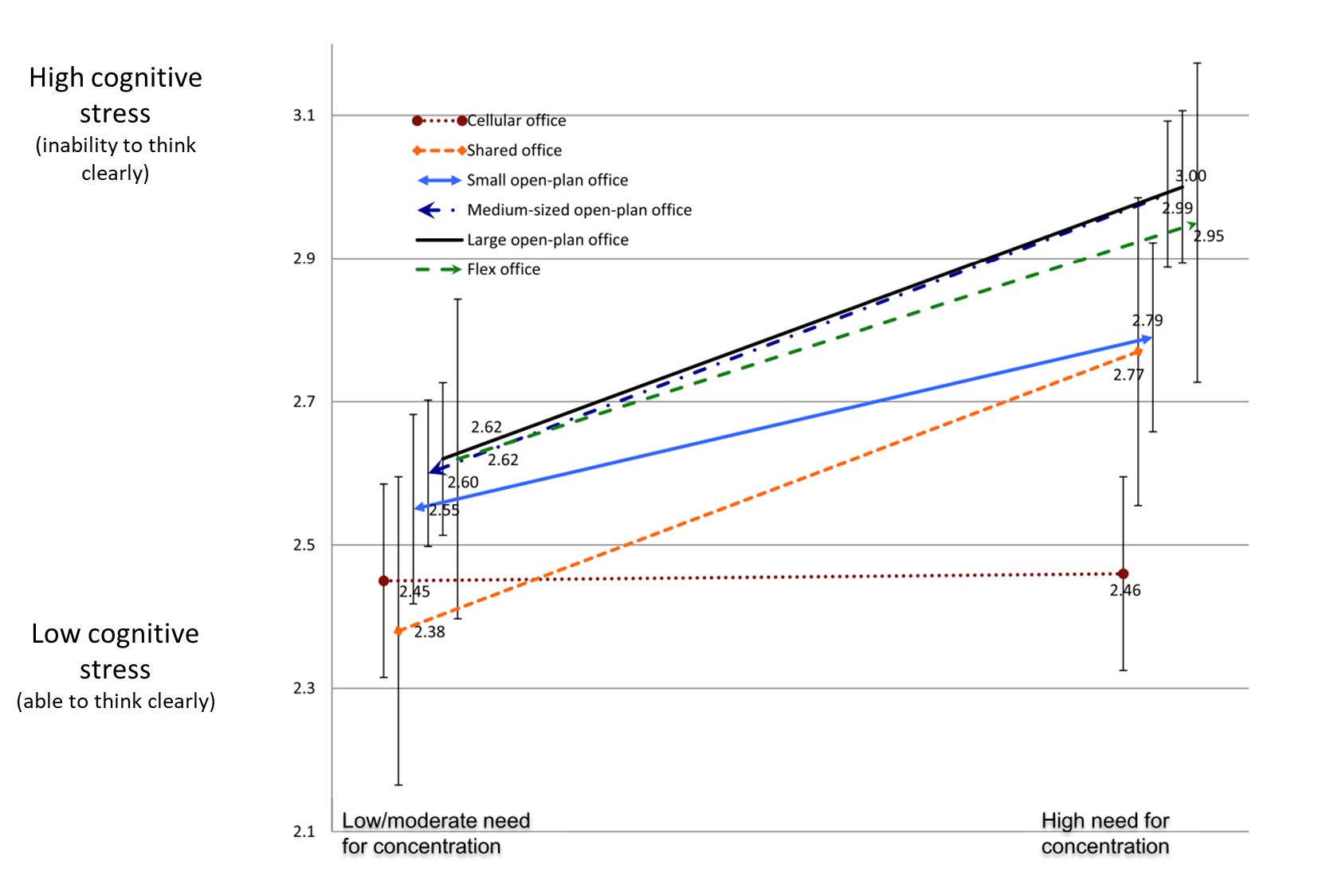
Graph has the same set up but stress on the y-axis
As a result of feeling distracted they also feel more stressed
Only really feel stressed when they are trying to do something which needs concentration
Effect of the environment depends on the nature of the person
Clear individual differences in preferences and senstivities can play a part
Field theory (Lewin, 1940)
Behaviour is determined by the interaction between a person and their environment
Lewin’s equation: B = f (P, E)
The life space
Where B is behaviour, P is person, and E is the environment
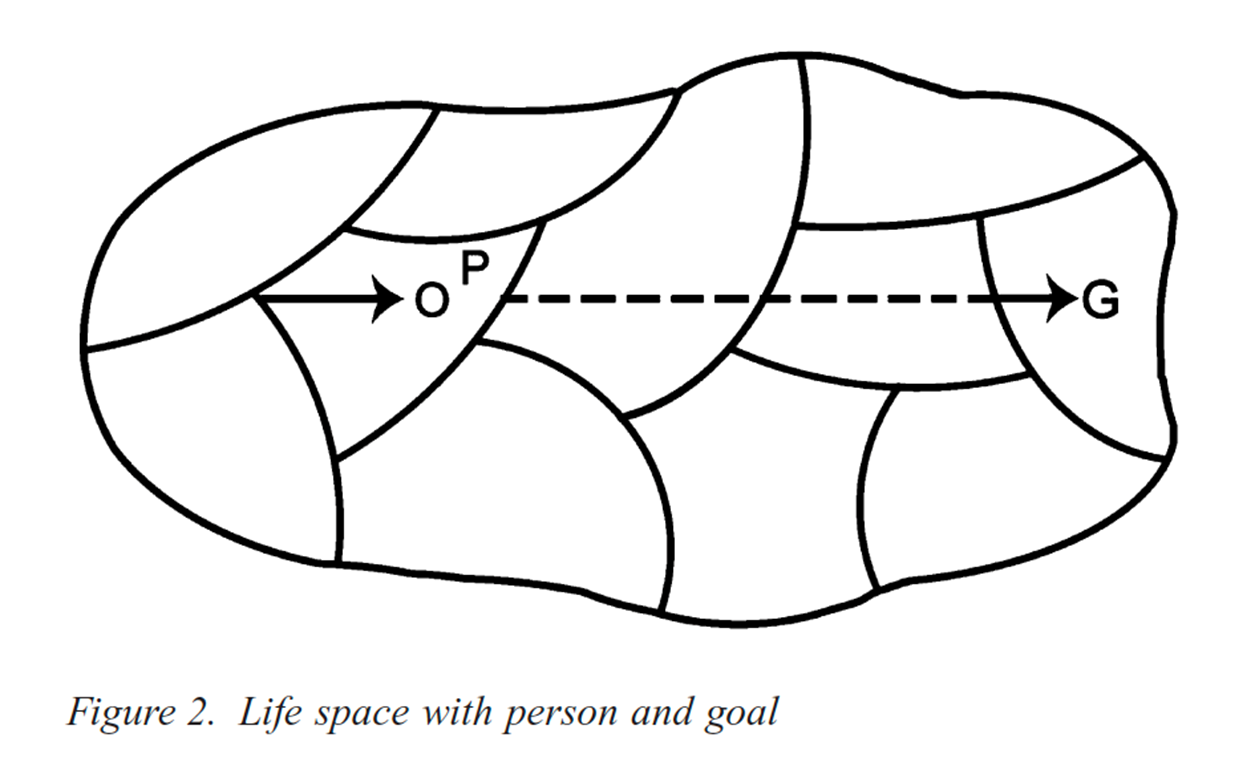
Using topology to map ‘life space’
P is the individual
O representes their current situation or behaviour
G is the goal that they wish to achieve
Need to situate the person in their life space
The person is trying to move through the life space to get to the goal from where they are now
Visual representation of the life space
There is driving and straining forces limiting the impact of this research
Tried to translate topology to a more dynamic thign → forces which work against them
Too complicated of a model
Useful heuristic for the observation
Behaviour is an interaction between the environment, person and their goals (task)
Only need to know that he tried to map this!!
Environmental Response inventory
McKechnie (1974)
Measured urbanism (living in the city) and pastoralism (living in rural areas)
Includes need for privacy
There are often times when I need complete silence
I am happiest when I am alone
I get annoyed when people drop by without warning
I am easily distracted by people moving about
Some people will display clear individual differences
Gifford (1980)
Found negative correlations between need for privacy and evaluations of a cafe (r = -0.22) and city hall (r = -0.17)
Roskams et al (2019)
There is probably a veriability in how people experience thier acoustic environment
And how this effects their wellbeing
Characteristics of the task
Task complexity
Interactivity
Characteristics of the person
Big Five Mini-Markers Extraversion sub-scale
Weinstein’s (1978) Noise Sensitivity Scale
Outcomes
Acoustic comfort
Disturbance by speech
Difficulties in concentration
Percieved stress
Work engagement
Office productivity
Results
‘Ppts with higher noise sensitivity tended to rate the acoustical quality of the office more negatively, were more disturbed by speech, had greater difficultues in concentration, were more stressed and had lower self-rated productivity…Thus, it can be be concluded that the appropriateness of open-plan office for effective work performance is largely moderated by an individuals noise sensitivty’
We need to account for individual differences when designing work spaces
Only looked at how people responded to the open plan offices
Did not compare them to other types of offices
Didn’t compare complex with simple tasks
Summary of first half
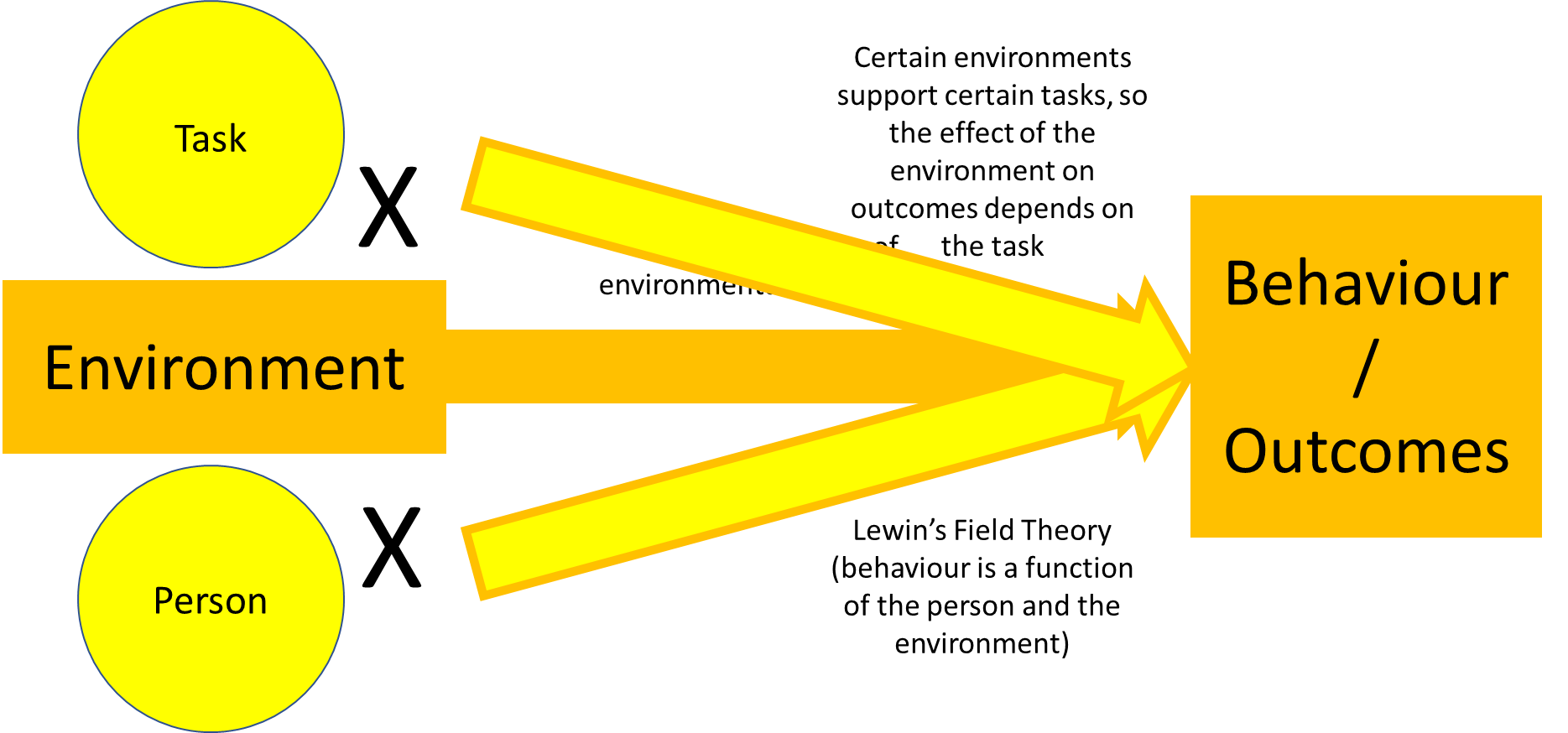
The fact that environment can shape outcome is true
But there are moderating influences
Relationship depends on the interaction between the nature of the task and environment as well as the nature of the person
The environment needs to fit what the person is trying to fo in that environment and their preferences on how the environment supports the task
Focus on the built environment - one sided
Need to also look at the effect of the natural environment
What makes an environment ‘restorative’?
Perceived Restorativeness scale (Hartig et al., 1996; 1997)
This scale measures the things that make an environment restorative
Fascination
My attention is drawn to many interesting things
Being away
Spending tiem here gives me a good break from my day-to-day routine
Coherence (extent)
There is too much going on
Comptability
I can do things I like here
What aspects of zoo attractions make them restorative?
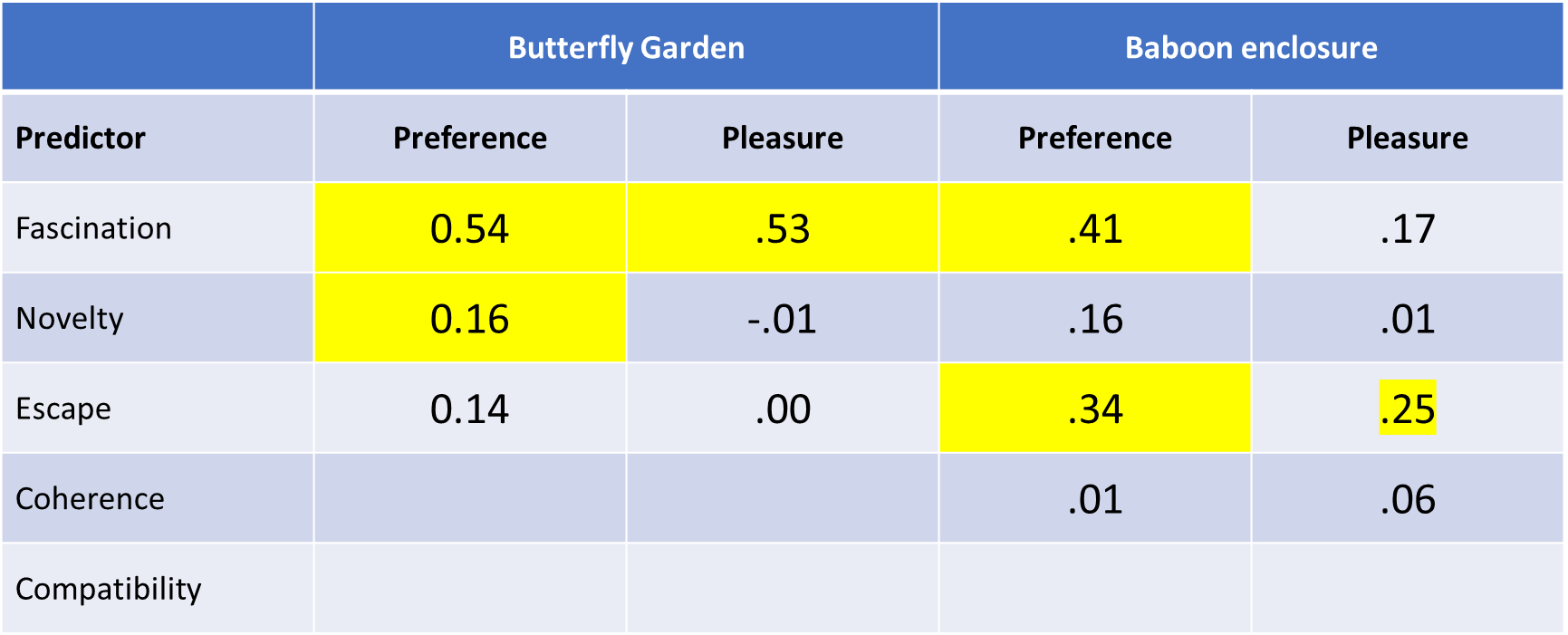
Correlation between peoples preferences
Sense of fascination seems to be important
Leads peoples to prefer that environment and they derive pleasure
Novelty
Kind of important, people like the idea of new especially in a zoo context
Do not get much pleasure from novelty
Escape is important in some environments and not in others
Eg. the baboon enclosure provided a sense of escape but the butterfly house did not
The extent of escape didn’t determine peoples preferences in the butterfly house
What make one environment restorative does not make another environment restorative
They can restorative for different reasons
That sense of escape determined preferences of baboon enclosures to the extent to which people experienced pleasre there, but not in the butterfly enclosure
Novelty seemes to be important for both of them and fascination / interest
Also suggests that perceived restorative scale has some validity
Can predict peoples preferences in the extent to which they derive pleasure from certain environments
Some subscales such as coherence and comptability did not predict here
Is it the visual environment, the acoustic environment? Are there other important features?
Jiang et al (2011)
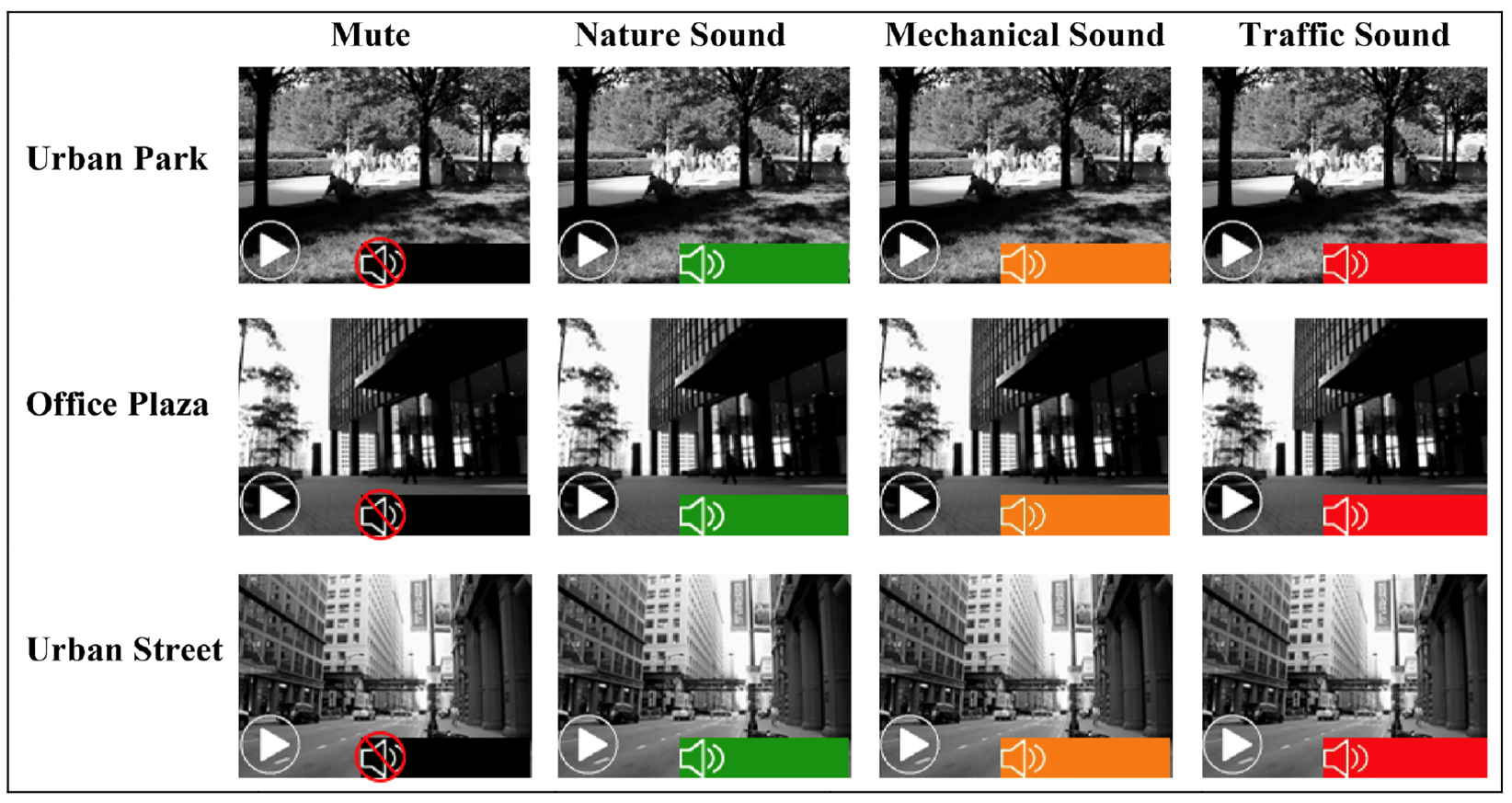
Randomly allocated to watch 1 of 12 videos
4 different types of sound
3 different visual scenes
DV
How did these video make people feel
Multidimensional mood questionnaire → mood state
Which of these environments are likely to make people feel happy
Which of these environments is likley to make people feel unhappy, angry, agitated
What factor has more of an effect, the acoustic environment or the visual environment
Results
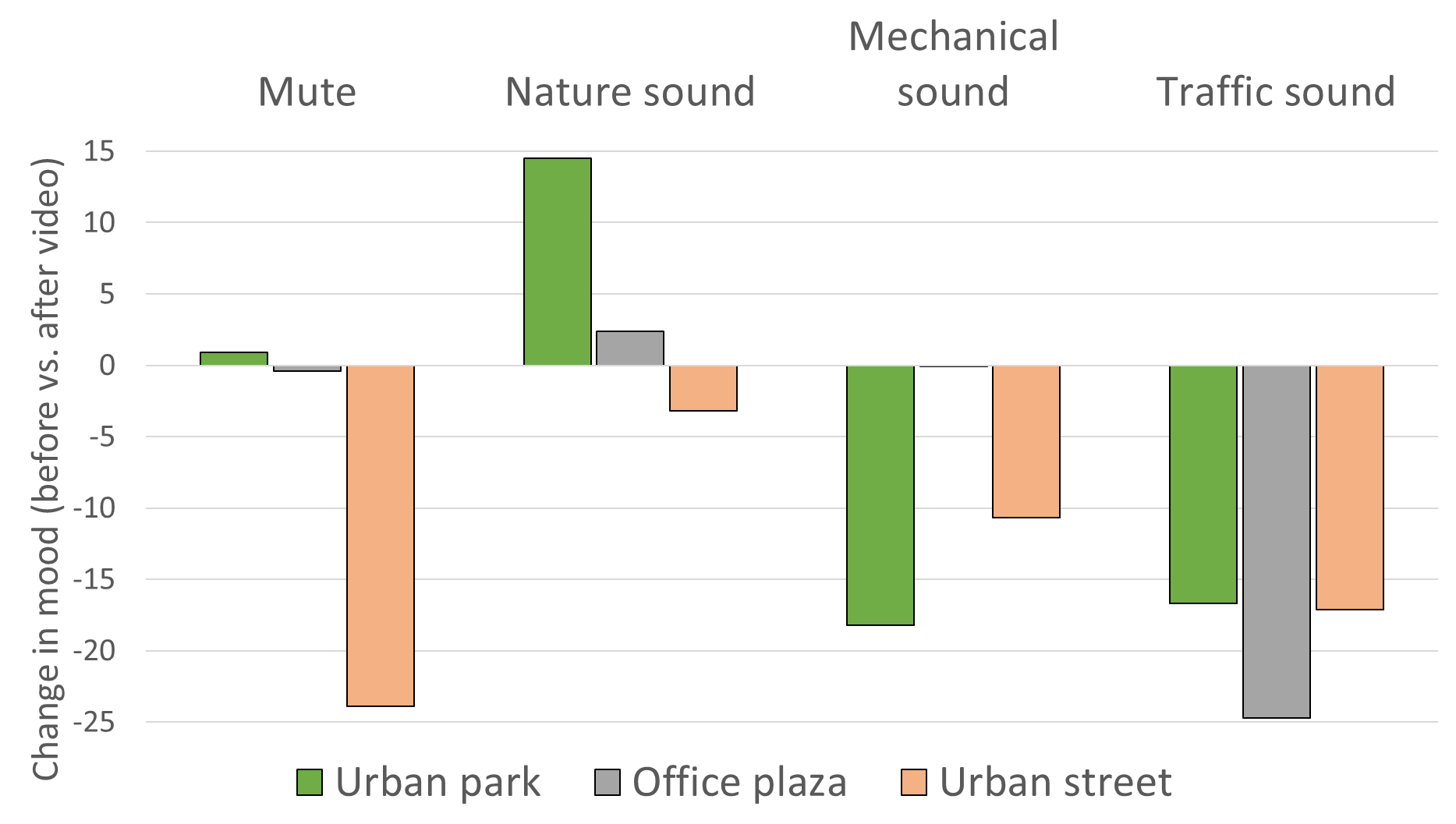
Measured the mood before and after the video and look at if that video has changed their mood
Mute
When looking at just the visual scene
Looking at the urban park or office plaza gas no effect on the ppts mood
When looking at the urban streets this makes people feel more negative
Nature sounds
Reduce the negative impact of the urban street
No impact on the office plaza
Urban park leads to a more positive mood
Mechanical sound
Park more negative than if you were listening to it in an office plaza
Idea of compatibility → we have mood effects when looking at inconsistency with environment and sound
Traffic sound
Ruins the mood in all conditions, mostly in the office plaza
The urban park only has a psoitive effect on peoples mood when it is accompanied by a corresponding compatible sound
Ruined when playing the wrong sound over it
The acoustic environment is more important than the visual environment
A place may not be visually appealing but if it is quiet, or has pleasing sound maybe it is enough to make it more pleasurable
What are the strengths and weaknesses of Jiang et al’s research?
Self report
Low ecological validity
Desirability bias
Demand characteristics
Temopral validity
how long does it need to last for it to count as restoration
Random allocation
Takes into account differences
Factorial design
What effect(s) do restorative environments have?
Mayer et al (2009) - study 1
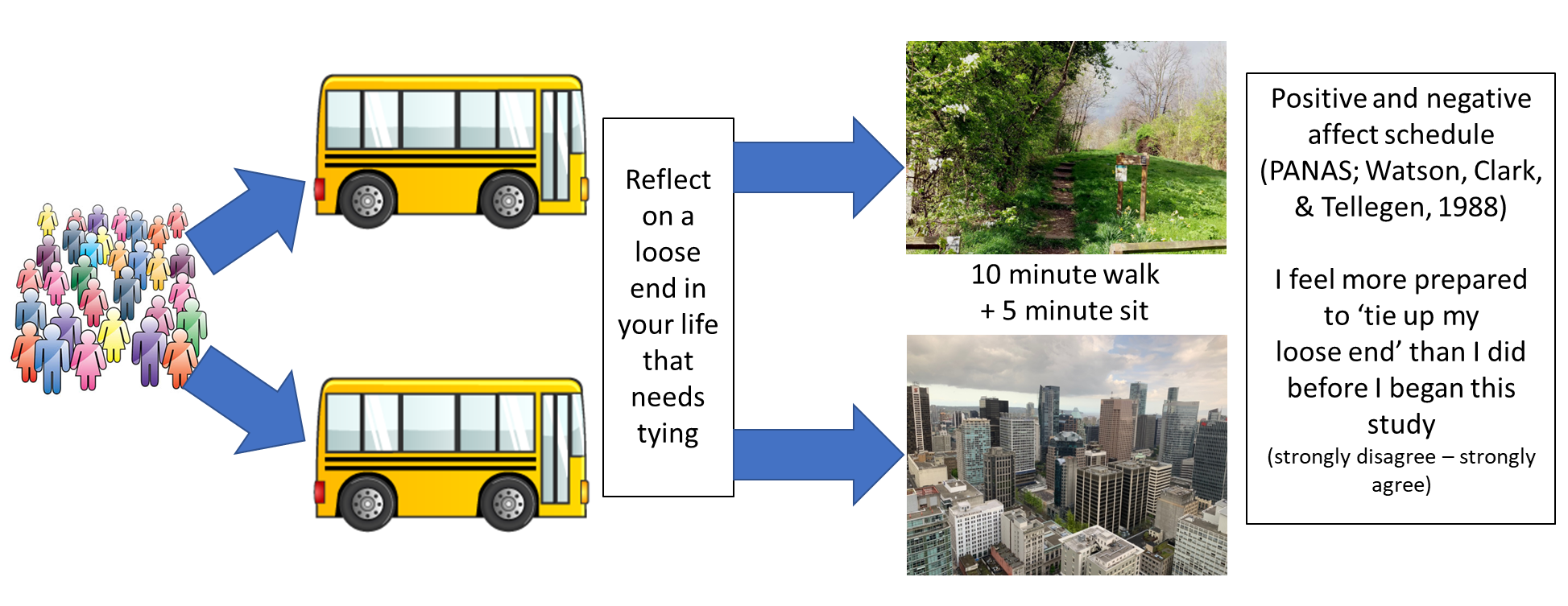
Buses went to 2 different places
Half went to a park and half went to the center of the the city
Then went on a walk
Measure how people felt after going on this walk
How they felt about their problem also
7 point strongly agree scale
Results
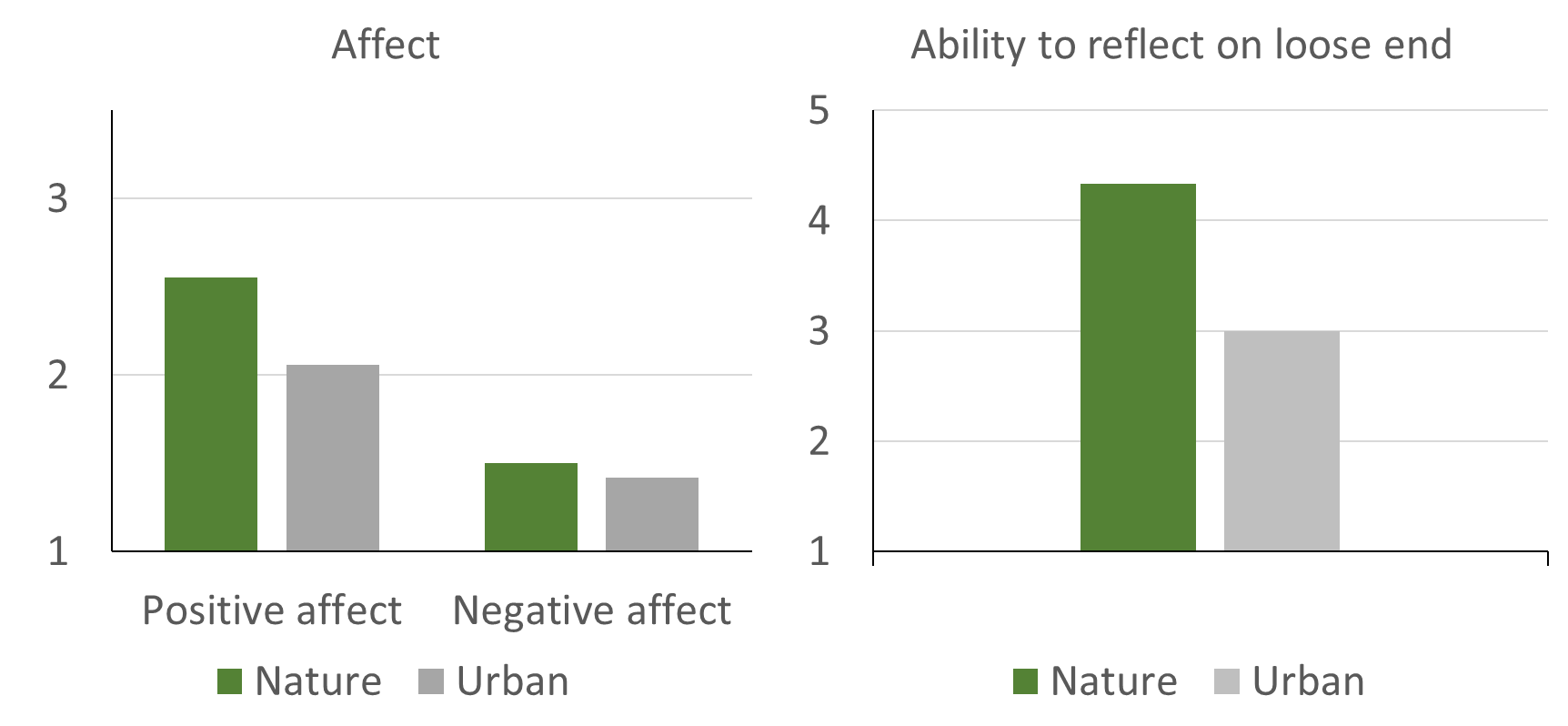
Does the environment help people to solve their problems
Yes to an extent
Nature environemnt - more positive
Urban - doesn’t make them feel more negative
Differences in positive affect but not negative
Graph explains ability to reflect on loose ends based on their environment
Compelling as people did not have particulaar connections to this environment
Also spent a relatively short time in this environment but it seemed ot be having some effects
Soga & Gaston (2024)
Does spending time in natural restorative environemnts lead people to engage in more pro-biodiversity and pro environmental behaviour?
Systematic review including 52 effects sizes from 12 case studies
Direct experiences with nature were psoitively correlated (r+ = 0.20) with actiosn undertaken with the intention of reducing environmental harms and promotin the protections of the natural environment
The environment shapes people then people shape the environment
The interplay
Stress recovery theory
Ulrich (1983); Ulrich et al (1991)
Features in natural environment (immediately) evoke positive affect, without conscious recognition
Make people immediately feel happy and positive reactions
People do not have to think or debate - automaticity
This serves to lower aorusal and reduce stress
People move through their environment with a baseline of stress, arousal, fear and negativity which they get relief from when they enter restorative environments
Low arousal and reduction of stress
DV
Proximal mediator
Immediate state of positive affects
Considers restoration as a quick affective process
Kang & Shin (2020)
Measured academic stress using the student version of the Maslach Burnout Inventory and other types of stress using the job seeking stress survey
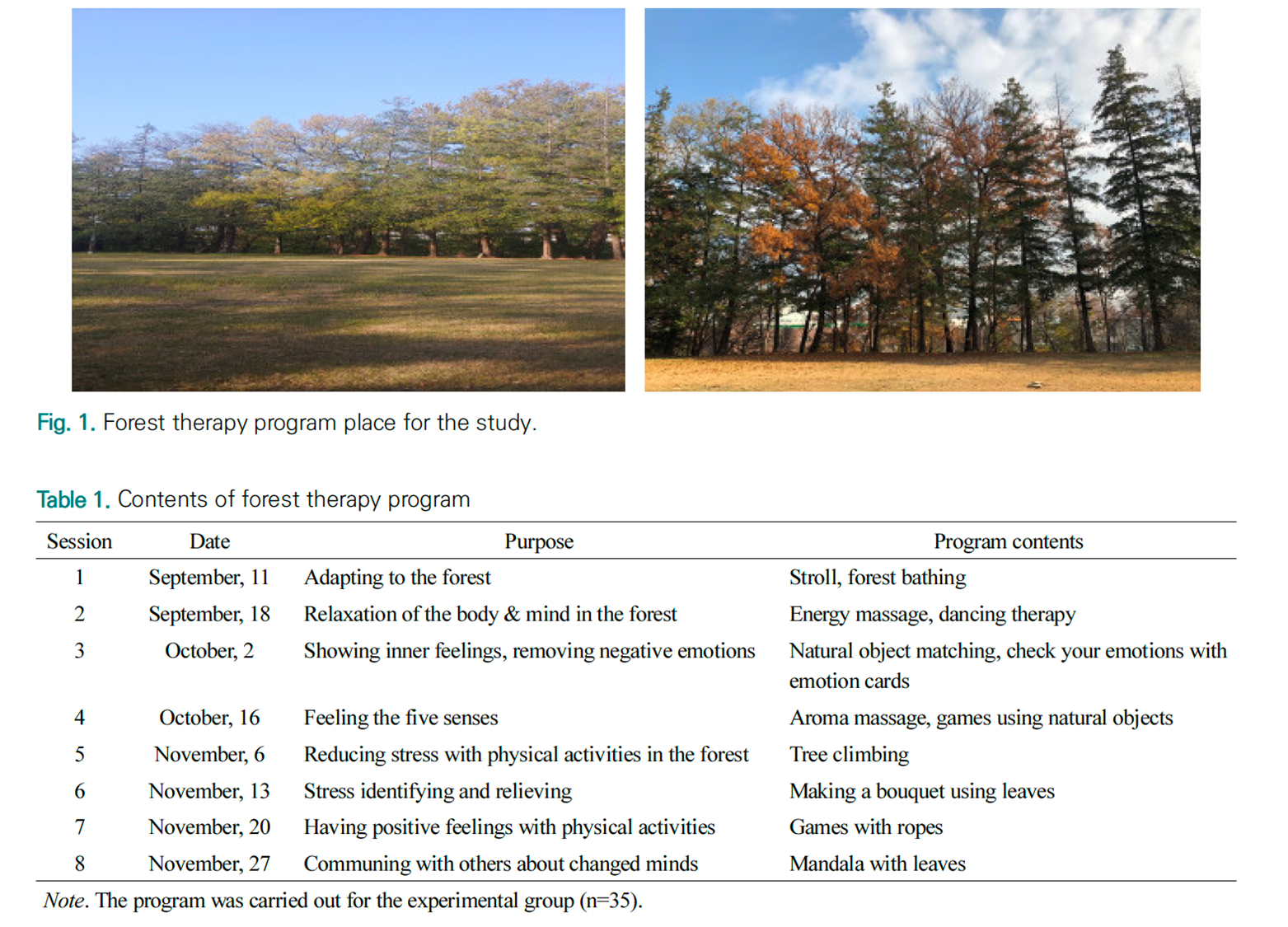
Does not test on the key predictions of immediacy
Randomly allocated to forest therapy against as control who did not get forest therapy
Measure stress before, after 8 weeks and then a further follow up
Results
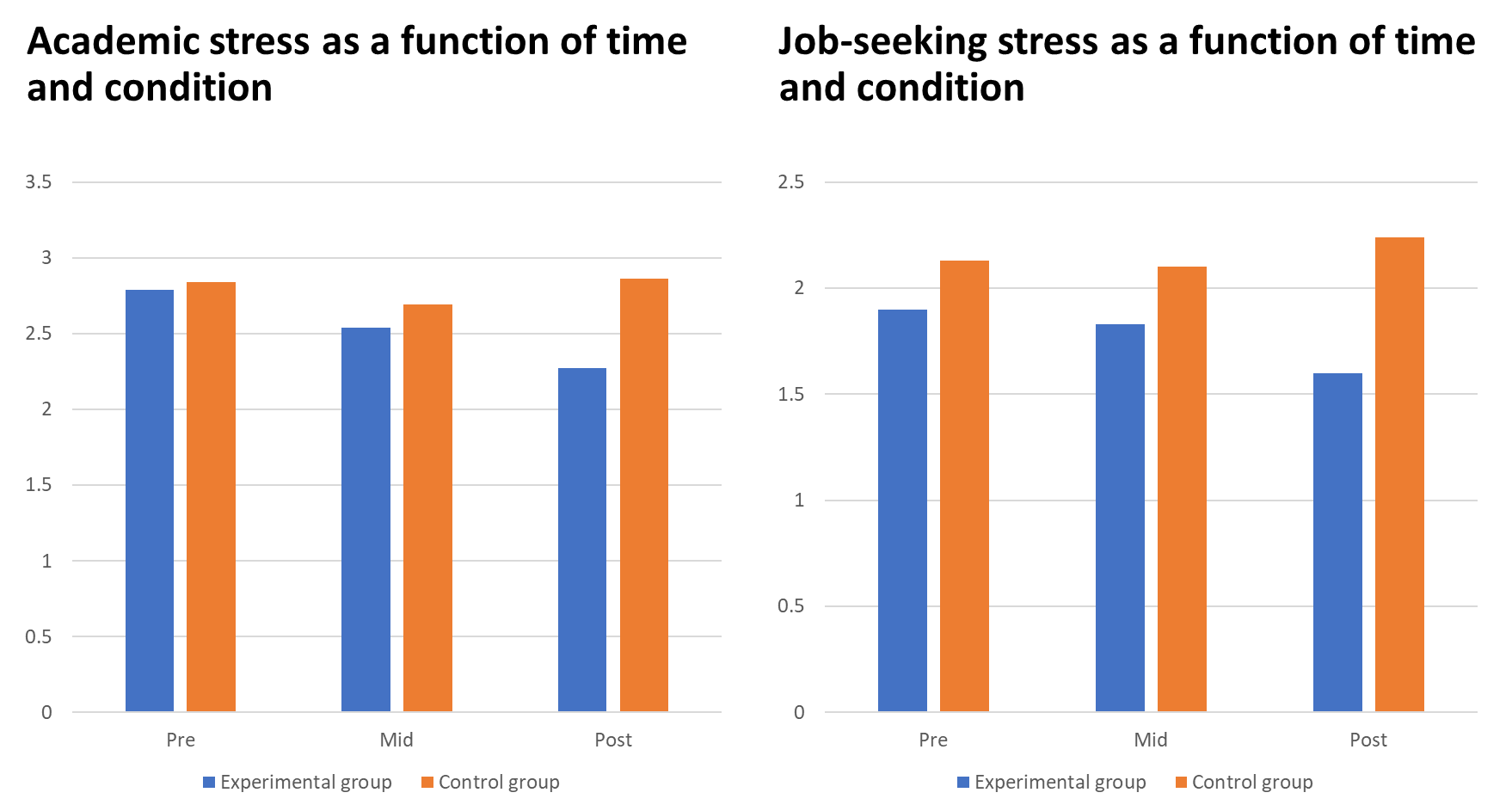
Slightly lowe levels of stress compared to control
Experimental group
Spending time in a forest reduced stress
Evidence for stress recovery theory but does not test immmediacy
Does not give an opportunity to measure this (do this for 8 weeks and after the time in the forest)
Attention Restoration Theory
Kaplan & Kaplan (1989)
Most environments ‘fight’ for our attention and so are depleting
Termed directed attentional fatigue
However, natural environments
Provide fascination
A sense of connectedness
A sense of being away from daily hassles
Are compatible with inclinations
As a result, natural environments restore attention
Allow people to restore their attention
Most environments fight for our attention
Our attention is constantly bombarded by the environment
We only have so much attentional resources for all this attention → they become depleted so we need restorative environments to restore our attention resources
Directed attentional fatigue → depletes our attention
Need natural environments to restore this attention
Mayer et al (2009) - study 1
Bus study
Measured how many errors people made on attentional tasks as well
Search for 5 letters at once within rows of digits
Like a visual search task
Hypothesis - if people’s attention was depleted they would perform worse on this task (more errors) and if it was restored they would make more errors
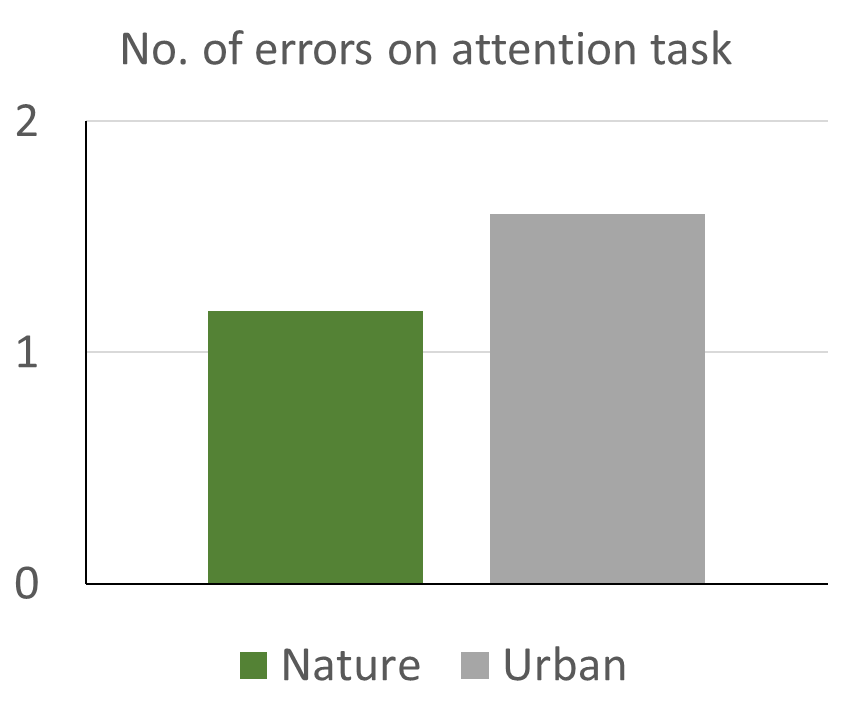
However, changes in how connected ppts felt to nature (not attentional capacity) mediated the effect of exposure to natural vs urban environments on outcomes
People who spent time in the natural environment make fewer errors on the attentional task
Provides evidence for attention restoration theory as the natural environment has restored the ppts attentional capacity
When they did the test on mediation, attention did not mediate
Test whether changes in this variable (number of errors) explained the extent to which people are able to resolve their problem
The extent to which people felt connected to nature actually mediated
Going out to the park made peopel feel more connected to nature and that is why they felt they could resolve their problems
That manipulation did have an effect on attentional capacity but it did not explain the effect
Perhaps a side effect - not clear evidence for attention restoration theory
Contact with nature helps people regulate emotions?
Bratman et al (2024) - Survey of 600 adults in the US
Frequency of contact with nature
About how often do you usually visit or pass through outdoor natural areas for any reason?
Use of distraction
To feel less upset during upsetting situations, I divert my attention away from what is happening
Rumination
I think why do I have problems other people don’t have?
Use of reappraisal
When something upsetting happens, to feel less upset, I think about the possible benefits of the situation
Emotional ill being and well being
Measures of positive and negative affect, life satisfaction, purpose in life and perceived stress
Allows poeple the attentional capacity to engage in emotion regulation strategies
Emotion regulation often requires attention
One of the most effective if the reappraise situations to think differently about it
Attentional capacity is required to stop ruminating
Does the amount of time people spend in contact with their emotions
Hypothesis - if spending time in nature restores attention people should be more likely to use emotion regulation strategies that require attention or are better able to use their strategies if they spend more time in nature
Measure frequency of contact with nature
Graph depicting Bratman et al’s results
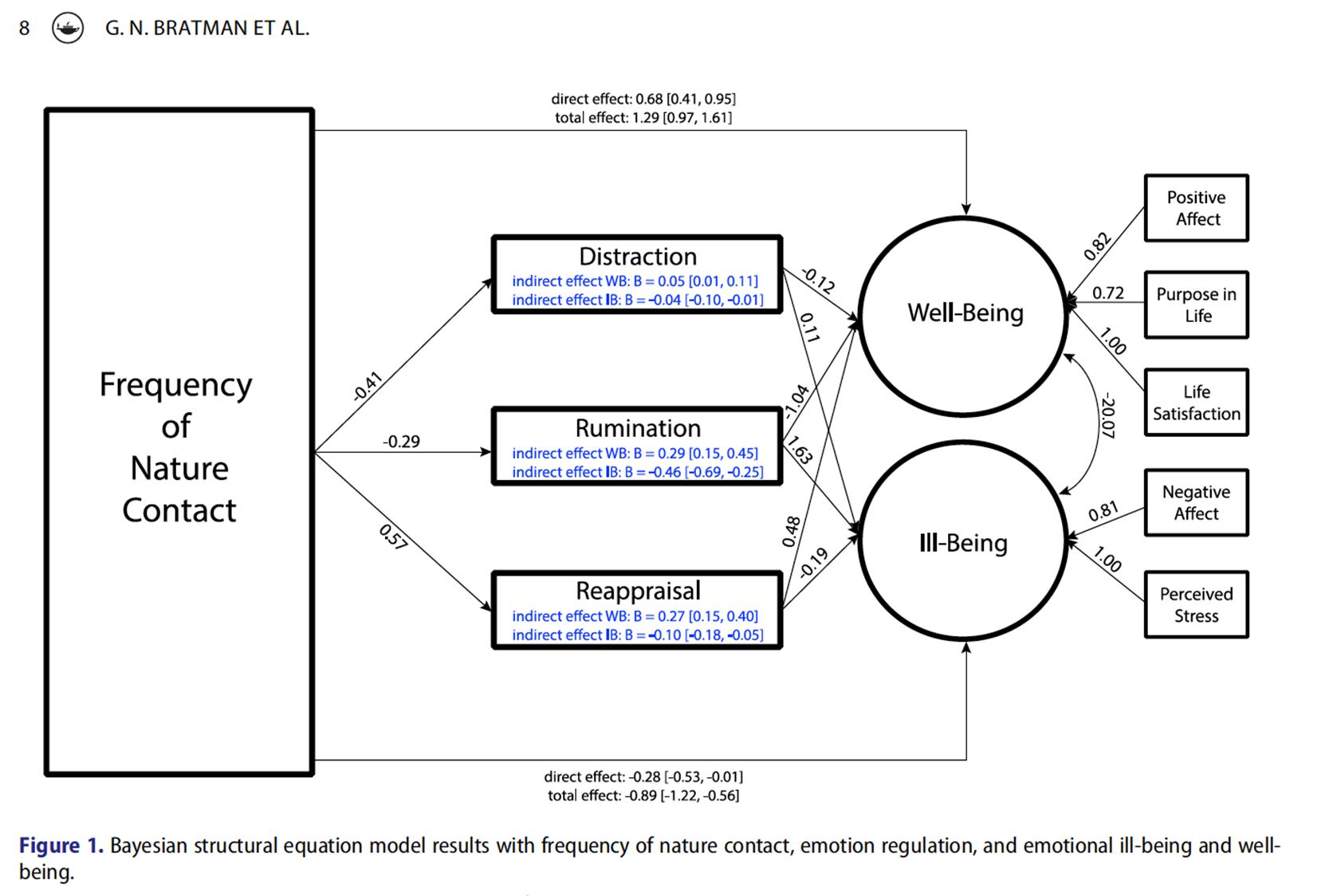
Path model
Strong correlation brtween the amount of time spent in nature and their wellbeing
What mediate the effects of frequency spent in nature on wellbeing
Mediators - variables in the middle
Reduces rumination (correlation is negative)
Reduce distraction (correlation is negative)
Increased reappraisal (correlation is 0.57)
Additional tests on if the emotion regulation factors relate to the DV
Rumination is negatively associated with wellbeing
More you ruminate the lower your wellbeing
Reappraisal is positively associated with wellbeing
Perceptual fluency account
Joye et al (2016)
Natural environments are processed more fluently than urban settings, due to their fractal patterns, which means that they contain more redundant info than urban scenes
easier to process, require less attention so are more likely to be immediate responses
Hagerhall et al (2015)
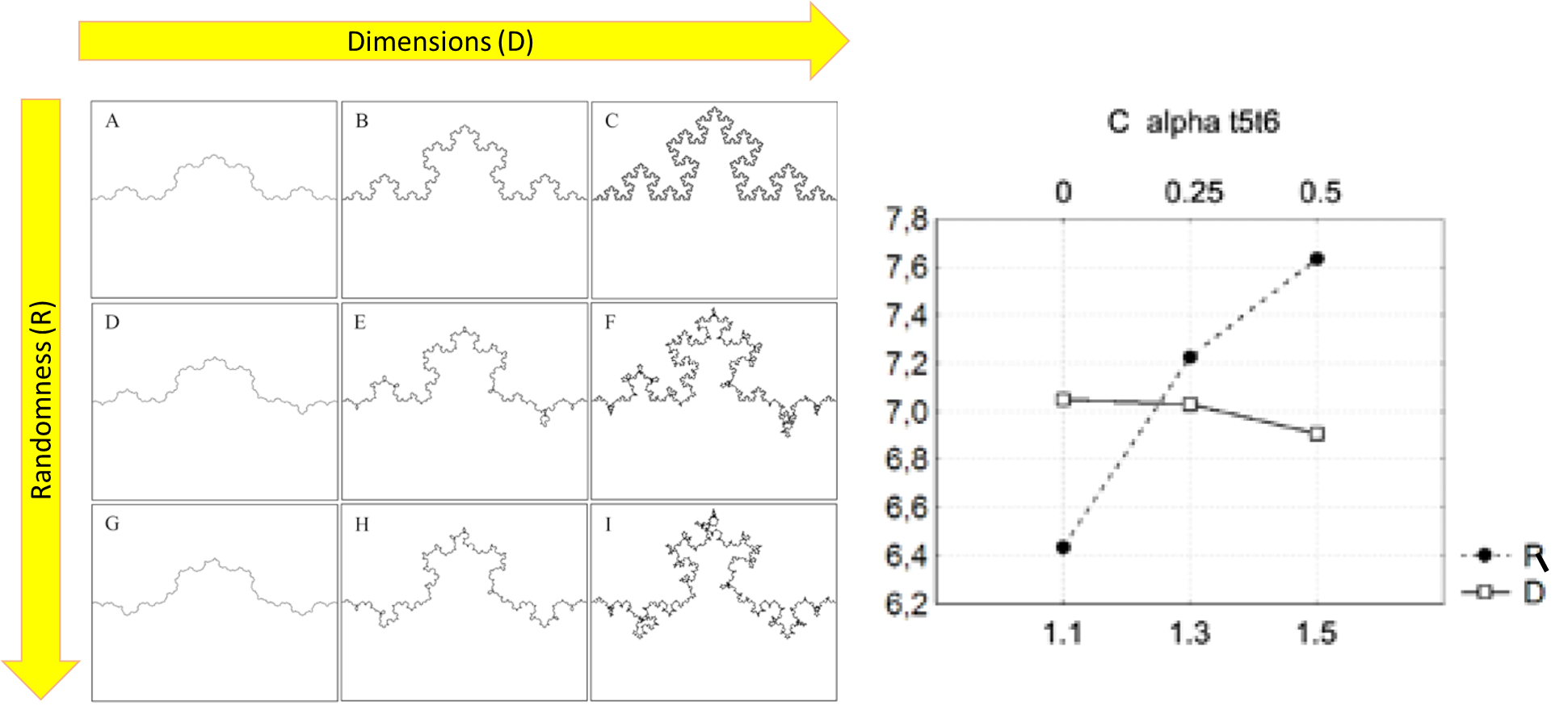
Fractal - shapes which have various dimensions
From simple to complex and they can be random or systemised
Some are more similar to what you might encounter in the real world (more organic - more random)
Top is closer to what we see in urban environments
Natural fractal have a lot of into which you do not need to attend to and process, so have redundant info so require less attention
Measured brain responses using an ERP
Alpha response shows the extent to which peoples are in a wakefully relaxed state (internalised attention)
Mindfulness
D = number of dimensions
R = randomness
You can see what infleunces this alpha response is how random these fractal are
You get a stronger alpha repsonse when the fractal are more random than when they are less random
Make people feel relaxed
When we are in the built environment we are processing unnatural fractals and so it consumes our attention
Links to attention restoration theory
Immediat so fits with stress recovery - brings both theories together