anatomy review for spring final
 Call Kai
 Learn
Learn Practice Test
 Spaced Repetition
 Match
Match Flashcards
 Knowt Play
1/69

There's no tags or description
Looks like no tags are added yet.
Name | Mastery | Learn | Test | Matching | Spaced | Call with Kai | Chat |
|---|
No analytics yet
Send a link to your students to track their progress
70 Terms
what is the role of the action potential of a motor neuron in muscle contraction?
it is the trigger, it sends the electrosignal to start the release of calcium from the sarcoplasmic reticulum
what is the role of calcium in muscle contraction?
calcium starts the contraction as it binds to troponin to expose the binding sites for myosin to attach to actin
what is the role of troponin in muscle contraction?
it covers the binding sites on actin and is then moved to the side by calcium to allow for contraction to occur
what is the role of tropomyosin in muscle contraction?
much like troponin it covers the binding sites on actin and is then moved to the side by calcium to allow for contraction to occur
what is the role of ATP in muscle contraction?
ATP allows for the contraction to even occur, it is the energy for the detachment and reattachment of myosin to actin as it contracts, it also fuels the calcium back to the sarcoplasmic reticulum to allow for muscle relaxation
what is the role of myosin in muscle contraction?
myosin is the one that attaches to actin and makes it contract by pulling it, using ATP as it’s energy
what is the role of actin in muscle contraction?
actin is the motor protein that gets pulled by myosin to make the muscle contract
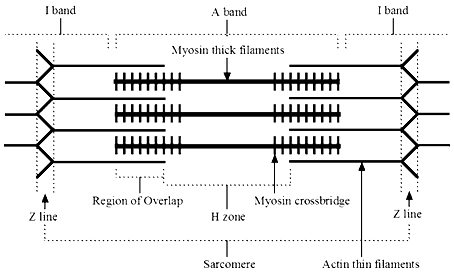
which area is minimized during muscle contraction?
h zone
what is CNS & PNS and what composes each?
CNS - central nervous system composed of the brain and spinal cord (skull & spine)
PNS - peripheral nervous system composed of all the other nerves in the body
what are the functions of dendrites and axons in nerve cells?
dendrites bring information to the cell sending a chemical signal to the rest of the cell body, axons take information away to other cells sending out electro signals through neurotransmitters
what is myelin and what is it’s function?
myelin sheaths on schwann cells keep the axon terminal and axons insulated
what is gray and white matter?
gray matter - cell bodies, it is superficial with higher level functionality, regulates & modifies voluntary motor activity to muscles
white matter - nerve fibers, deep to gray matter, relays impulses to and from gray matter
what happens during an action potential?
a neuron sends information down an axon away from the cell body to the next neuron
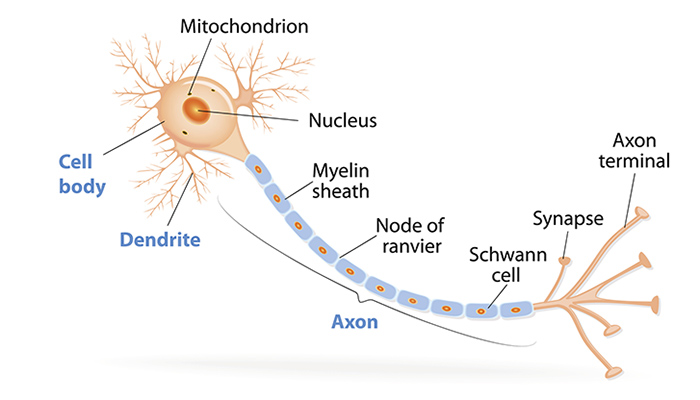
what are the structures of a nerve cell?
dendrites, soma (cell body), nucleus, axon terminal, myelin sheaths (out) /schwann cells (in), axon, neurotransmitter
what are the parts of the brain stem?
midbrain, pons and medulla oblongata
what is gyri and sulci?
gyri - elevated area of cerebrum
sulci - shallow grooves fo cerebrum
what type of neurons enter the dorsal part of the spinal cord? what about the ventral part?
sensory neurons enter the dorsal parts, and the motor/autonomic neurons exit the ventral parts of the spinal cord (sensory input to the back, motor output to the front)
what does the hypothalamus do?
the hypothalamus has many functions:
big role in endocrine (hormones), autonomic control center (blood pressure, heart rate, digestive tract, muscles, respiratory rate, eye pupil & size), emotions & instinct, expressions (along with the amygdala), body temperature regulation, sweating/shivering, regulate food/water intake/want, biological clock (sleep)
what does the medulla oblongata do?
the m.o controls the heart rate, blood pressure, swallowing, breathing, vomiting, hiccuping, coughing & sneezing
what does the cerebellum do?
maintain posture/balance, help motor learning, fine-tune motor movements (reward-seeking cognitive behavior, language, attention, emotional regulation)
what is the function of the sympathetic and parasympathetic nervous systems? and the common names of each?
sympathetic - activate during activity (fight or flight)
parasympathetic - conserve energy, housekeeping functions (homeostasis)
what are the layers of the meninges from the inside to outside?
pia mater (saran wrap), arachnoid (web-like), dura mater (hard exterior)
what are the lobes of the brain?
frontal lobe, temporal lobe, parietal lobe, & occipital lobe
what are the functions of each lobe?
frontal lobe - short term memory, reasoning, impulse control, problem-solving, personality & behavior, motor planning, language
temporal lobe - understanding language, retrieving information, hearing, memory & learning
parietal lobe - touch, taste, smell, spatial & visual perception, long term memory
occipital lobe - visual perception and interpretation
what is the function of the amygdala?
it controls emotions using sensory or cognitive information to trigger autonomic responses (emotional responses)
what are the sections of the ear?
outer ear, middle and inner ear
what are the parts in the outer ear & it’s functions?
pinna and auricle which function to capture sound and channels them into the middle ear
what are the parts in the middle ear & it’s functions?
ear canal - protect eardrum & inner ear
tympanic membrane - captures sound waves and translate to physical vibrations, physical shield from middle/inner ear
ossicles (malleus (largest), incus, stapes (wishbone shaped)) - amplify vibrations to cochlea
what are the parts in the inner ear & it’s functions?
cochlea - filled with fluid & tiny hairs to interpret sound signals to the brain by making waves
vestibule - detect change in gravity and linear acceleration for balance (static)
semicircular canals - small calcium crystals (otoliths) and tiny hairs to sense fluid movement and let the brain know which direction the head is moving (dynamic)
list the layers of the eye:
cornea, sclera, retina and choroid (order of light: cornea, aqueous humor, pupil, lens, vitreous humor, retina, optic nerve)
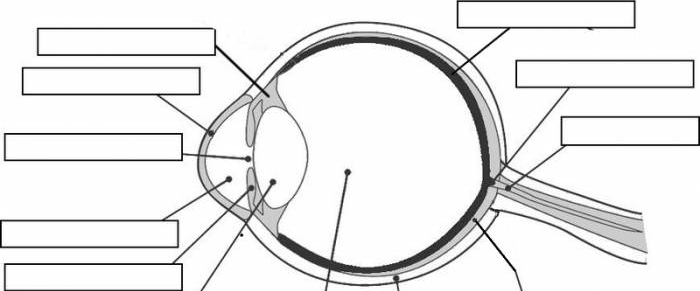
label the other parts of the eye
cornea, aqueous humor, iris, pupil, lens, ciliary body, suspensory ligaments, vitreous humor, retina, choroid, fovea (optic disc), blind spot, optic nerve
what are rods & cones, what kind of receptors are they?
rods & cones are photoreceptors that capture light (rods) and red, green and blue color (cones)
what are the medical names of the ear drum, pink eye, & blind spot?
ear drum - tympanic membrane, pink eye - conjunctivitis, blind spot - scotoma
what are the types of balance and where do they occur?
static balance - vestibule, sense gravity
dynamic balance - semicircular canals, sense head directional shifts
what are pain and touch receptors?
mechanoreceptors - pressure & touch (& thermoreceptors)
kinds of mechanoreceptors:
nocireceptors - harsh pressure/impact, damaged tissues
meissner’s corpuscle - respond to vibrations/light touch & pressure
what is myopia & hyperopia?
myopia - nearsightedness, can’t see far away
hyperopia - farsightedness, can’t see close up
what are the different types of receptors and what senses do they work with?
smell/taste - chemoreceptors
sight/color - photoreceptors
touch/hearing - mechanoreceptors
pain - nocireceptors
what is gustation, how does it work & what are some structures associated with it?
taste, the perception of flavors, gustatory cortex & taste buds, taste buds of sweet & salty (fungiform papillae/ foliate folds when younger), bitter (circumvallate), sour and umami and gustatory cortex interprets the information the taste buds give and sends to the brain
what is olfaction, how does it work & what are some structures associated with it?
olfaction is the process of interpreting smells & helps in processing flavor, olfactory cortex, bulb, cilia & nerves, cilia ‘capture’ smells, nerves send information to bulb which sends the sensory signals to relay neurons into the olfactory tract along to the olfactory cortex (processed in amygdala)
what separates the nasal cavity from the oral cavity, what’s the function of the nasal cavity?
the hard (bony roof) and soft (flexible back that closes when swallowing) palates, the nasal cavity helps to warm, humidify, filter and protect air that enters the body (and make you smell smells)
what’s the function of cilia and how does it work?
cilia works to capture bacteria, debris, etc in the respiratory tract and then pushes it out of the tract to protect the lungs
explain vital capacity and it’s components?
vital capacity is the total exchangeable amount of air, combining tidal volume (normal air inhaled/exhaled when resting), inspiratory reserve volume (forcibly inhaled) & expiratory reserve volume (forcibly exhaled volume)
what does mucus do in the nasal cavity?
mucus works with the cilia to push the debris out the respiratory tract, the cilia captures it the mucus pushes it out
what are the 4 stages of respiration, what happens in each?
breathing - pulmonary ventilation (air in & out)
external respiration - gas exchange between blood and alveoli
respiratory gas transport - gas movement through bloodstream
internal respiration - gas exchange between blood & body
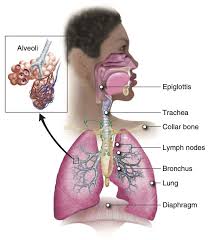
identify trachea, pharynx, larynx, bronchi, bronchioles & alveoli; in what order does air pass through them?
(order of air: pharynx, larynx, trachea, bronchi, bronchioles & finally alveoli)
common name of trachea, pharynx & larynx:
trachea - windpipe, pharynx - throat, & larynx - voicebox
what is the function of alveoli, what type of tissue makes it up?
where gas exchange occurs, made up of thin squamous epithelium with collagen/elastic fiber for stretching to help with air retention
how does gas move in and out of the lungs?
by ventilation (breathing) and diffusion (natural exchange of gases), oxygen moves from lungs to blood to be absorbed, and carbon dioxide passes from blood to lungs to be expelled
what are the functions of the respiratory system?
gas exchanges between blood and body, purify and humidify air to lungs
what is the myocardium?
middle and thickest layer of the heart, made up of cardiac muscle
what is the pericardium?
the serous low friction sac around the heart filled with serous fluid to lubricate for less fric
what are the 4 chambers of the heart, in what order do they receive and send blood?
right atrium, right ventricle, left atrium, left ventricle; they receive blood in that order
what are the 4 main blood vessels & where do they send and receive blood from?
the 4 main blood vessels are aorta (receive blood from left ventricle sending blood to the body), superior & inferior vena cava (receiving blood from body sending to right atrium), pulmonary arteries (receiving blood from right ventricle sending blood to lungs) & pulmonary veins (receiving from lungs sending to left atrium)
what are the 2 loops of the system, where do they go and what do they do?
pulmonary loop - heart to lungs to heart, sending o2 poor to lungs and getting o2 rich back
systemic loop - heart to body to heart, sending o2 rich to body, body takes o2 rich sending back o2 poor to heart
what is systole and diastole?
systole - pressure of ventricles contracting
diastole - pressure when ventricles are relaxed/filled
what are the 4 valves of the heart and where is each located?
tricuspid valve - right atrium to right ventricle
semilunar pulmonary valve - right ventricle to pulmonary artery
mitral/bicuspid valve - left atrium to left ventricle
semilunar aortic valve - left ventricle to aorta
what is the SA node?
the sinotrial node, a cluster of cardiac muscle cells embedded into the right atrium that keeps the pace of pumping blood located in the right atrium (influenced by hormones, temperature & exercise)
what are the differences between veins, arteries and capillaries?
veins - low pressure, lumen large arteries, valve to prevent backflow, skeletal muscle milk blood to heart
arteries - thicker, heavier walls for more expansion, more pressure
capillaries -exchange o2 & nutrients, co2/waste cross into blood, capillaries connect venules /arterioles
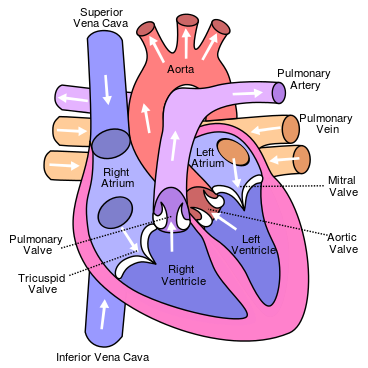
label the parts of the heart!
well it’s all labeled!
what are the 3 sections of small intestine from superior to inferior?
duodenum, jejunum & ileum
what organs are part of the alimentary canal?
mouth, pharynx, esophagus, stomach, small and large intestine (colon), rectum and hole
what are the accessory organs of the digestive canal?
teeth, tongue, liver & pancreas
what is peristalsis?
the involuntary contraction and relaxation along the digestive tract that pushes food into the stomach
what is mastication?
is the process of chewing, incisors for tearing/piercing, canine for cutting, premolars/molars for grinding
what is ingestion?
the consumption of something, taking a substance through the mouth into the GI tract through eating/drinking
how long does food spend in the stomach and then the small intestine?
stomach - 2/4 hours, small intestine 2/6 hours
how long is the entire digestive tract, small intestine & large intenstine specifically?
the entire digestive tract is 30 ft, small intestine is 20 ft, large intestine is 3 ft
where is bile produced?
bile is produced in the liver, stored in the galbladder to carry away waste and break down fat during digestion
what are some special modifications that the small intestine has developed to facilitate digestion?
circular folds, villi and microvilli help absorb the nutrients from chyme and let go of waste
what type of digestion occurs in each organ: stomach, small intestine, large intestine?
stomach - mechanical/chemical, muscles churn and mix into chyme, gastric acid & enzymes break food down
small intestine - mechanical/chemical, peristalsis push food forward, pancreas, bile and fluid from intestine fully break down carbs, fats & protein to be absorbed
large intestine - mechanical/chemical, contraction to absorb water to push feces forward, gut bacteria ferment remaining undigested fiber to usable byproduct